The difficult question of pain forms a thorny question on which volumes have been written. Why do the innocent suffer? Why do we face all these diseases? Why the suffering of millions because of natural disasters or the tyranny of demagogues? I do not pretend to have all the answers, but one thing I know: pain is a universal fact of life. Likewise, there are moral dimensions in the way we phrase our questions concerning pain, and every religion explicitly or implicitly attempts to explain pain.
But why do we even ask these questions about suffering within the context of morality? Why have we blended the fact of physical pain with the demand for a moral explanation? Who decided that pain is immoral? Indeed, almost every atheist or skeptic you read names this as the main reason for his or her denial of God’s existence.
In the Judeo-Christian framework, pain is connected to the reality of evil and to the choices made by humanity at the beginning of time. The problem of pain and the problem of evil are inextricably bound. So when we assume evil, we assume good. When we assume good, we assume a moral law. And when we assume a moral law, we assume a moral law-giver.
You may ask, Why does assuming a moral law necessitate a moral lawgiver? Because every time the question of evil is raised, it is either by a person or about a person—and that implicitly assumes that the question is a worthy one. But it is a worthy question only if people have intrinsic worth, and the only reason people have intrinsic worth is that they are the creations of One who is of ultimate worth. That person is God. So the question self-destructs for the naturalist or the pantheist. The question of the morality of evil or pain is valid only for a theist.
And only in Christian theism is love preexistent within the Trinity, which means that love precedes human life and becomes the absolute value for us. This absolute is ultimately found only in God, and in knowing and loving God we work our way through the struggles of pain, knowing of its ultimate connection to evil and its ultimate destruction by the One who is all-good and all-loving; who in fact has given us the very basis for the words good and love both in concept and in language.
Not far from my home lives a young woman who was born with a very rare disease called CIPA, congenital insensitivity to pain with anhydrosis. Imagine having a body that looks normal and acts normally, except for one thing: You cannot feel physical pain. That sounds as if it would be a blessing. But the reason it’s a problem is that she lives under the constant threat of injuring herself without knowing it. If she steps on a rusty nail that could infect her bloodstream, she wouldn’t even realize it by sensation. If she placed her hand on a burning stove, she would not know she had just burned her hand except by looking at it. She needs constant vigilance because she could sustain an injury that could take her life or cause serious debilitation. When her family was interviewed some years ago, the line I most remember is the closing statement by her mother. She said, “I pray every night for my daughter, that God would give her a sense of pain.”
If that statement were read in a vacuum, we would wonder what sort of mother she is. But because more than anyone else she understands the risks of this strange disease, there is no greater prayer she can pray than that her daughter feel pain and be able to recognize what it portends.
I ask you this simple question: If, in our finitude, we can appreciate the value of pain in even one single life, is it that difficult to grant the possibility that an infinite God can use pain to point us to a greater malady? We see through a glass darkly because all we want is to be comfortable. We cannot understand the great plan of an all-knowing God who brings us near through the value of pain—or of disappointment with pleasure.
And yet the very thing that enslaves and traps us becomes the indicator of our need for God and the means to draw us to the recognition of our own finitude and to the rescuing grace of God. The pain of pain clasps the lifesaving hand of God and draws us into God’s arms.
Ravi Zacharias is founder and chairman of the board of Ravi Zacharias International Ministries. 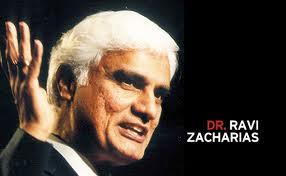






 DAILY DEVOTIONS, NEWS AND INFORMATION