Sanctified and Special

2 Timothy 2:20-21

Do you feel special, or does a sense of insignificance hang over you like a cloud? Maybe it seems as if God has wonderful plans for some Christians and is effectively using them in amazing ways, but you’re just an ordinary person living a mundane life. And you wonder, Why would He be interested in me?

The good news is that everyone is special in the Lord’s eyes, and He has an awesome plan for each one of us. When we accept Christ as our Savior, He sets us apart for a very sacred purpose. We now belong to Him, and that means we’re not here on this earth to live as we please. As God’s children, we exist to bring glory and honor to Him by becoming more and more like His Son in our character, conduct, and conversation. It’s not a matter of following a list of rules, but of letting Christ live His life through us.

The Bible calls this sanctification. It is a process whereby the Lord continually changes His followers through the power of His indwelling Holy Spirit. I’m not saying that we’ll become sinless, but the more we yield to the Spirit’s leadership, the more we will find ourselves victorious over sin. As our old attitudes and habits are replaced with godly ones, we’ll become useful servants in the household of God.

Being special to the Lord has nothing to do with what kind of work you do or how intelligent or successful you are. It’s based on whose you are. But are you living as if you belong to God? The wonderful plan He has for your life can be fully realized only when you walk in obedience to Him

Like a Dove

He saw the Spirit of God descending like a dove.

Matthew 3:16

As the Spirit of God descended upon the Lord Jesus, the head, so He also, in measure, descends upon the members of the mystical body. His descent is to us after the same fashion as that in which it fell upon our Lord. There is often a sudden swiftness about it; before we are even aware of it, we are impelled onward and heavenward beyond all expectation. Yet there is none of the hurry of earthly haste, for the wings of the dove are as soft as they are swift.

Quietness seems essential to many spiritual operations; the Lord is in the still small voice, and like the dew, His grace is distilled in silence.

The dove has always been the chosen type of purity, and the Holy Spirit is holiness itself. Where He comes, everything that is pure and lovely and of good report is made to abound, and sin and uncleanness depart. Peace reigns also where the Holy Dove comes with power; He bears the olive branch, which shows that the waters of divine wrath are assuaged. Gentleness is a sure result of the Sacred Dove’s transforming power: Hearts touched by His benign influence are meek and lowly from that point and forever.

Harmlessness follows as a matter of course; eagles and ravens may hunt their prey–the turtledove can endure wrong but cannot inflict it. We must be harmless as doves. The dove is an apt picture of love; the voice of the turtle is full of affection. And so the soul visited by the blessed Spirit abounds in love to God, in love to the brethren, and in love to sinners, and above all, in love to Jesus. The brooding of the Spirit of God upon the face of the deep first produced order and life, and in our hearts He causes and fosters new life and light. Blessed Spirit, as You did rest upon our dear Redeemer, even so rest upon us from this time forward and forever.

The family reading plan for March 3, 2012

Job 32 | 2 Corinthians 2

Waiting for God to Intervene

Psalm 27:13-14

Are you currently waiting for the Lord to intervene in some way in your life or in the life of a loved one? One of the struggles we face as Christians is trying to understand why our heavenly Father sometimes delays over matters that are so urgent to us. Only the Lord knows all the reasons. However, there are several adjustments we can make in our attitude and mindset as we wait.

Determine your focus. In the urgency of the moment, it’s easy to center our attention on the need instead of on God. We may start out waiting for the Lord but end up waiting for the answer we want. Soon we’re more interested in what He can do for us than we are in Him. Sometimes God delays until we get our focus back on Him. He wants us to delight in Him, not just in what He gives us.

Release your expectations into His hands. The Lord is working on our behalf, but sometimes we cling so tightly to a desired outcome that He must wait until we open our hands and let go of our expectations. Holding onto your own assumptions about how the Lord should intervene is emotionally exhausting. But peace awaits those who trust that He will do what is in our best interests–in every situation we encounter.

We need to remember that while we are waiting, God is working. He sees the entire picture and is active behind the scenes, arranging everything according to His will. But perhaps His most important work is the deepening of our relationship with Him as we learn to love and trust Him in the wait.

“Gods, too, Decompose”

“God is dead,” declares Nietzsche’s madman in his oft-quoted passage from The Gay Science. Though not the first to make the declaration, Nietzsche’s philosophical candor and desperate rhetoric unquestionably attribute to its familiarity. In graphic brushstrokes, the parable describes a crime scene:

“The madman jumped into their midst and pierced them with his eyes. ‘Whither is God,’ he cried; ‘I will tell you. We have killed him—you and I! All of us are his murderers…Do we not feel the breath of empty space? Has it not become colder?…Do we smell nothing as yet of the divine decomposition? Gods, too, decompose. God is dead. God remains dead. And we have killed him.'”(1)

Nietzsche’s atheism, unlike recent atheistic mantras, was more than rhetoric and angry words. He recognized that the death of God, even if only the death of an idol, introduced a significant crisis. He understood the critical role of the Christian story to the very underpinnings of European philosophy, history, and culture, and so understood that God’s death meant that a total—and painful—transformation of reality must occur. If God has died, if God is dead in the sense that he is no longer of use to us, then ours is a world in peril, he reasoned, for everything must change. Our typical means of thought and life no longer make sense; the very structures for evaluating everything have become unhinged. For Nietzsche, a world that considers itself free from God is a world that must suffer the disruptive effects of that iconoclasm.

Herein, I believe Nietzsche’s atheistic tale tells a story beneficial no matter the creed or conviction of those who hear it:  Gods, too, decompose. Within Nietzsche’s bold atheism is the intellectual integrity that refused to make it sound easy to live with a dead God—a conclusion the self-deemed new atheists are determined to undermine. Moreover, his dogged exposure of idolatrous conceptions of God wherever they exist and honest articulation of the crises that comes in the crashing of such idols is universal in its bearing. Whether atheist or theist, Muslim or Christian, the death of the God we thought we knew is disruptive, excruciating, tragic—and quite often, as Nietzsche attests, necessary.

Yet for Nietzsche and the new atheists, the shattering of religious imagery and concepts is simply deconstruction for the sake of deconstruction. Their iconoclasm ultimately seeks to reveal towers of belief as houses of cards best left in piles at our feet. On the contrary, for the theist iconoclasm remains the breaking of false and idolatrous conceptions of God, humanity, and the cosmos. But added to this is the exposing of counterfeit motivations for faith, when fear or self-interest lead a person deeper into religion as opposed to love or truth, or when the source of all knowledge becomes something finite rather than the eternal God. While this destruction certainly remains the painful event Nietzsche foretold, God’s death turns out to be one more sign of God’s presence. As C.S. Lewis observed through his own pain at the death of the God he knew:

“My idea of God is not a divine idea. It has to be shattered time after time. He shatters it himself. He is the great iconoclast. Could we not almost say that this shattering is one of the marks of his presence? The incarnation is the supreme example; it leaves all previous ideas of the Messiah in ruins. And most are ‘offended’ by the iconoclasm; and blessed are those who are not.”(2)

For Lewis, it was the death of his wife that brought about the decomposition of his God. For others, it is the prevalence of suffering or the haunt of God’s silence that begets the troubling sense that our God is dying. At some profound level, the Christian season of Lent takes us to God’s death as well, perhaps for some in more ways than one. Like the Incarnation, the crucifixion leaves most of our ideas in ruins at the foot of the cross. The journey to death and Golgotha is an offensive journey to take with God. But blessed are those who take it. Blessed are those in pain over the death of their Gods. Blessed are those who mourn at the tombs and take in the sorrow of the crime scenes. For theirs is somehow the kingdom of heaven, a kingdom somehow able to hold Golgotha, a kingdom able to hold death itself.

Jill Carattini is managing editor of A Slice of Infinity at Ravi Zacharias International Ministries in Atlanta, Georgia.

(1) Friedrich Nietzsche, The Gay Science (New York: Vintage, 1974), 181-182.
(2) C.S. Lewis, A Grief Observed (New York: HarperCollins, 1996), 66.
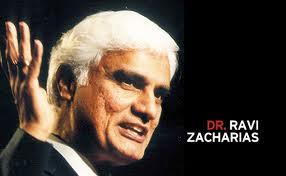

The Privilege to Speak of Christ

To me, though I am the very least of all the saints, this grace was given, to preach to the Gentiles the unsearchable riches of Christ.

Ephesians 3:8

The apostle Paul felt it a great privilege to be allowed to preach the Gospel. He did not look upon his calling as a drudgery, but he entered upon it with intense delight. Although Paul was thankful for his calling, his success in it greatly humbled him.

The fuller a ship becomes, the deeper it sinks in the water. Idlers may indulge a fond conceit of their abilities, because they are untried; but the earnest worker soon learns his own weakness. If you seek humility, try hard work; if you would know your nothingness, attempt some great thing for Jesus. If you want to feel how utterly powerless you are apart from the living God, attempt especially the great work of proclaiming the unsearchable riches of Christ, and you will know, as you never knew before, what a weak, unworthy thing you are.

Although the apostle thus knew and confessed his weakness, he was never perplexed as to the subject of his ministry. From his first sermon to his last, Paul preached Christ, and nothing but Christ. He lifted up the cross and extolled the Son of God who bled on it. Follow his example in all your personal efforts to spread the glad tidings of salvation, and let “Christ and him crucified” be your ever-recurring theme.

The Christian should be like those lovely spring flowers that, when the sun is shining, open their golden cups, as if saying, “Fill us with your beams!” But when the sun is hidden behind a cloud, they close their cups and droop their heads. So should the Christian feel the sweet influence of Jesus. Jesus must be his sun, and He must be the flower that yields itself to the Sun of Righteousness.

Oh, to speak of Christ alone–this is the subject that is both “seed to the sower and bread to the eater.”1 This is the live coal for the lip of the speaker, and the master-key to the heart of the hearer.

1 Isaiah 55:10

The family reading plan for March 2, 2012

Job 31 | 2 Corinthians 1

