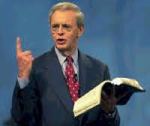
Charles Stanley

Quieting Your Soul – Charles Stanley

Psalm 131:1-2

Do you hurry through your prayer time so that you can get to other things? If so, consider the values Jesus modeled for us in His practice of spending set-apart time with His Father.

Solitude. Though Jesus was constantly surrounded by people as He tended to their needs, He also understood His own need for seclusion. Often, after an intense period of ministry, He’d retreated from the crowds–and even His disciples–to pray in private.

Safeguarded time. No matter what else was going on, Jesus made it a point to protect periods of time so He could rest in the Spirit, focus on His relationship with the Father, and build up His physical and emotional strength. Even when people were clamoring for Him, He made it a priority to safeguard this time, knowing that His ministry would flow from it.

Stillness. What does it means to “be still”? Psalm 46:10 calls us to stillness with these words: “Cease striving and know that I am God.” To learn this perpetual inner peace, periodically stop everything you’re focused on doing, and simply let your soul become aware of the Holy Spirit’s presence. In today’s reading, David described it as the state of a “weaned child” who is at perfect rest and happy just to be in his mother’s arms.

Make these essentials a priority, and you’ll reap tremendous benefits in your walk of faith. Doing so may seem challenging in this fast-paced, multitasking world. But when you quiet your heart before the Lord, you’ll discover how much you need the peace of His presence. It is a priceless gift!

Do You Still Not See? – Ravi Zacharias

Ravi Z

“Give us a sign,” demanded the Pharisees. “Give us a miraculous sign from heaven to prove yourself.”(1)

Jesus sighed deeply. “Why does this generation ask for a sign? Truly I tell you, no sign will be given to this generation.” And Jesus turned away and got into the boat with his disciples. But the disciples soon discovered they had forgotten to bring any food; there was only one loaf of bread with them in the boat. Knowing what his disciples were thinking, Jesus questioned them. “Why are you talking about having no bread? Do you still not perceive or understand?” It was a day of sighing.

“Are your hearts hardened? Do you have eyes, and fail to see? Do you have ears, and fail to hear? And do you not remember?” he asked. “When I broke the five loaves of bread for the five thousand, how many baskets full of broken pieces did you collect?”

“Twelve,” they replied.

“And the seven for the four thousand, how many baskets full of broken pieces did you collect?”

“Seven,” they said.

Unlike Matthew and Luke, who each provide detailed information about the historical scene or genealogical lineage of Christ, Mark, the teller of this story, seems to hit the ground running in his storytelling. The shortest of the Gospel accounts, Mark proceeds with intensity—skipping introductions, delving into events, speaking with immediacy. In fact, he uses the Greek word euthus—meaning immediately, straight away, at once—42 times in 16 chapters. With a breathless pace, Mark’s utmost concern appears to be getting the story out and message across so that hearers hear and seers see the person before them. And yet ironically, in this Gospel of action and miracles and astonished crowds, he repeatedly takes note of the world of people who remain unseeing, a people forever demanding signs, forever missing the message. Sighing deeply, Jesus seems to ask repetitively: Do you still not see?

I fear how many times Jesus has asked of me this same question.

Yet with the words of Jesus still ringing in our ears, Mark wastes no time in getting to the next scene. Moving from the boat, Jesus is confronted by some people who ask him to touch their blind friend. Leading the man away from the crowd, Jesus put saliva on his eyes and placed his hands upon him. “Can you see anything?” rings the now familiar question. The man looked up and said, “I can see people, but they look like trees, walking.” Putting his hands on the man’s eyes once more, Jesus restored the blind man’s sight. And he walked away seeing clearly.

Apparently, seeing takes time. Undoubtedly, we are all too often satisfied with walking trees. “Do you have eyes but fail to see, and ears but fail to hear?” It is the question Jesus placed before disciples and blind men, the very wise and the very wicked. What do you see? What do you hear? Do you understand? The blind man knew enough to know that what he saw was not as clear and coherent as eyes were intended to see. Though partial sight for him was itself a miracle, the one who touched his eyes was able to offer more.

That we might see, that we might see Christ, is the desire of God for every eye. What we see now may be like trees walking, though the Spirit is willing to open us up to further sight, and Christ remains to offer us more. As if pleased to answer his own question with lavish mystery, the divine reply comes again and again: No eye has seen, nor ear heard, nor the human heart conceived, what God has prepared for those who love him.

Jill Carattini is managing editor of A Slice of Infinity at Ravi Zacharias International Ministries in Atlanta, Georgia.

Charles Spurgeon’s Morning and Evening

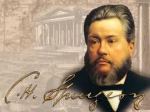
CharlesSpurgeon

Morning  “And Amaziah said to the man of God, But what shall we do for the hundred

talents which I have given to the army of Israel? And the man of God answered,

The Lord is able to give thee much more than this.” / 2 Chronicles 25:9

A very important question this seemed to be to the king of Judah, and possibly

it is of even more weight with the tried and tempted O Christian. To lose

money is at no times pleasant, and when principle involves it, the flesh is

not always ready to make the sacrifice. “Why lose that which may be so

usefully employed? May not the truth itself be bought too dear? What shall we

do without it? Remember the children, and our small income!” All these things

and a thousand more would tempt the Christian to put forth his hand to

unrighteous gain, or stay himself from carrying out his conscientious

convictions, when they involve serious loss. All men cannot view these matters

in the light of faith; and even with the followers of Jesus, the doctrine of

“we must live” has quite sufficient weight.

The Lord is able to give thee much more than this is a very satisfactory

answer to the anxious question. Our Father holds the purse-strings, and what

we lose for his sake he can repay a thousand-fold. It is ours to obey his

will, and we may rest assured that he will provide for us. The Lord will be no

man’s debtor at the last. Saints know that a grain of heart’s-ease is of more

value than a ton of gold. He who wraps a threadbare coat about a good

conscience has gained a spiritual wealth far more desirable than any he has

lost. God’s smile and a dungeon are enough for a true heart; his frown and a

palace would be hell to a gracious spirit. Let the worst come to the worst,

let all the talents go, we have not lost our treasure, for that is above,

where Christ sitteth at the right hand of God. Meanwhile, even now, the Lord

maketh the meek to inherit the earth, and no good thing doth he withhold from

them that walk uprightly.


Evening  “Michael and his angels fought against the dragon; and the dragon fought and

his angels.” / Revelation 12:7

War always will rage between the two great sovereignties until one or other be

crushed. Peace between good and evil is an impossibility; the very pretence of

it would, in fact, be the triumph of the powers of darkness. Michael will

always fight; his holy soul is vexed with sin, and will not endure it. Jesus

will always be the dragon’s foe, and that not in a quiet sense, but actively,

vigorously, with full determination to exterminate evil. All his servants,

whether angels in heaven or messengers on earth, will and must fight; they are

born to be warriors–at the cross they enter into covenant never to make truce

with evil; they are a warlike company, firm in defence and fierce in attack.

The duty of every soldier in the army of the Lord is daily, with all his

heart, and soul, and strength, to fight against the dragon.

The dragon and his angels will not decline the affray; they are incessant in

their onslaughts, sparing no weapon, fair or foul. We are foolish to expect to

serve God without opposition: the more zealous we are, the more sure are we to

be assailed by the myrmidons of hell. The church may become slothful, but not

so her great antagonist; his restless spirit never suffers the war to pause;

he hates the woman’s seed, and would fain devour the church if he could. The

servants of Satan partake much of the old dragon’s energy, and are usually an

active race. War rages all around, and to dream of peace is dangerous and

futile.

Glory be to God, we know the end of the war. The great dragon shall be cast

out and forever destroyed, while Jesus and they who are with him shall receive

the crown. Let us sharpen our swords tonight, and pray the Holy Spirit to

nerve our arms for the conflict. Never battle so important, never crown so

glorious. Every man to his post, ye warriors of the cross, and may the Lord

tread Satan under your feet shortly!

An Unlikely Heroine – John MacArthur

John MacArthur

“By faith Rahab the harlot did not perish along with those who were disobedient, after she had welcomed the spies in peace” (Heb. 11:31).

Our final Old Testament hero of faith is an unlikely addition to the list. Not only was she a prostitute, she also was a Gentile–and a Canaanite at that.

The Canaanites were an idolatrous, barbaric, debauched people, infamous even among pagans for their immorality and cruelty. Yet in the midst of that exceedingly wicked society, Rahab came to faith in the God of Israel.

Joshua 2:9-11 records her confession of faith to the two men Joshua had sent into Jericho as spies: “I know that the Lord has given you the land, and that the terror of you has fallen on us, and that all the inhabitants of the land have melted away before you. For we have heard how the Lord dried up the water of the Red Sea before you when you came out of Egypt, and what you did to the two kings of the Amorites who were beyond the Jordan, to Sihon and Og, whom you utterly destroyed. And when we heard it, our hearts melted and no courage remained in any man any longer because of you; for the Lord your God, He is God in heaven above and on earth beneath” (emphasis added).

Rahab demonstrated the genuineness of that profession by risking her life to hide the spies from the king of Jericho, who sought to capture them.

Because Rahab lied to protect the spies (vv. 4-5), some people question the validity of her faith. Surely genuine believers wouldn’t lie like that–or would they? Abraham did. Sarah did. Isaac did. Jacob did. But the important thing to understand is that God honored their faith, not their deception.

As with all the heroes of faith before her, Rahab’s faith wasn’t perfect, nor was her knowledge of God’s moral law. But because she trusted God, she was spared during Jericho’s conquest, then given an even greater honor. She became the mother of Boaz, who married Ruth, the great-great-grandmother of David, thereby becoming an ancestor of the Lord Jesus Christ (Matt. 1:5).

Suggestions for Prayer: Praise God for receiving even the vilest sinner who turns to Him in faith.

For Further Study: Read all about Rahab in Joshua 2:1-24, 6:22-25, and James 2:25.

Taking Risks – Greg Laurie

greglaurie

Now an angel of the Lord spoke to Philip, saying, “Arise and go toward the south along the road which goes down from Jerusalem to Gaza.” This is desert.—Acts 8:26

When Philip was instructed to “arise and go toward the south along the road which goes down from Jerusalem to Gaza” (Acts 8:26), how easily he could have argued. He was having a productive ministry in Samaria, but God basically told him to go to the desert. It didn’t make any sense at all. But to Philip’s credit, he obeyed the Lord.

God was preparing both the listener and the speaker for what was about to happen. He was preparing a man from Ethiopia, who went to Jerusalem and did not find what he was looking for. And God was preparing Philip to go to the desert and be in place when that man arrived.

God doesn’t always give us a detailed blueprint of what He wants us to do. Instead, He will ask us to take steps of faith. There will be risks involved. The question is, are you willing to obey? God’s way becomes plain when we start walking in it. Obedience to revealed truth guarantees guidance in matters unrevealed.

Maybe God is waiting for you to take the first step before He shows you what the second one will be. Are you willing to just take a little risk? If you say, “No, I am not,” then God will find someone else to do take that step. But it would be great if it were you.

Many times when the Lord has opened up opportunities for me to share the gospel, I was just going about my day when I sensed a nudge from the Holy Spirit. Then God showed me what to do next, and I took the next step—and the next one.

If you want to share the gospel, then you need to be open and obedient to the leading of the Holy Spirit.