Parallels between the fall of Rome and the looming collapse of the modern West.
Western Europe, traditionally viewing itself as the cultural and institutional heir to Greco-Roman antiquity, confronts anxieties reminiscent of the late Roman experience.
The Western Roman Empire did not collapse suddenly or for a single reason; rather, it disintegrated through the cumulative interaction of internal fragility and external pressures. In a comparable manner, contemporary Europe and its cultural extensions are facing demographic imbalance, institutional erosion, cultural exhaustion, and sustained migratory pressures. While historical analogy should be applied cautiously, the parallels between late antiquity and the present are striking enough to warrant closer scrutiny.
Historians have debated Rome’s fall for centuries, attributing it variously to barbarian invasions, economic stagnation, overextension, corruption, climate fluctuation or epidemic disease. Modern scholarship prefers “multi-” to “unicausality.” Thus, Rome fell because its political, demographic, economic, and cultural systems insidiously eroded, decreasing resilience in the face of external shocks. In a civilizational perspective, the modern West appears vulnerable along four analogous dimensions: (a) large-scale migration, (b) demographic decline among native populations, (c) cultural decadence or exhaustion, and (d) the erosion of core institutions. If these trends continue unchecked, the foundational achievements of Western civilization—constitutional governance, individual liberty, and the rule of law—may suffer irreparable damage.
The Western Roman Empire saw a “civilian invasion” reflecting extensive population movements during the Migration Period (c. 300–600). Not so much as raiders as displaced populations seeking security, land, and opportunity, migrating tribes—Visigoths, Ostrogoths, Vandals, Franks, and Saxons—crossed the eastern border (Limes). Incursions by Huns and other nomadic groups further destabilized border regions. At the same time, the capacity of Roman legions to repel migrants decreased. The Rhine crossing of 406 symbolized the breakdown of Roman border control, culminating in the sack of Rome in 410 and the deposition of Romulus Augustulus, the last emperor, in 476.
Westward migrations were never inherently aggressive. In fact, barbarians admired Roman civilization, determined to enjoy the benefits of order and prosperity. However, Rome’s internal challenges—political instability, reliance on foederati, and erosion of military discipline—meant that integration increasingly failed. Autonomous power structures emerged by default, Roman law lost authority, and imperial cohesion dissolved. What proved fatal was not “diversity” as such, but state inability to assimilate newcomers into a shared civic and legal culture, defining and transmitting a unifying identity.
Contemporary Europe experiences demographic transformation through sustained mass immigration, particularly from regions whose indigenous populations—Christians and Jews—have been persecuted and oppressed by Muslims since the seventh century. As of the mid-2020s, the latter constituted approximately 6% of Europe’s population, with projections varying widely depending on migration and fertility trends. A reflection of deeply entrenched dogmatism in the diasporic ummah, security services have documented disproportionate involvement of immigrants in terrorist activity. These realities place strain on intelligence, policing, and social cohesion, analogous—though not identical—to the external pressures experienced by Rome when its borders gave way.
Demographic decline constituted a critical internal challenge in late Rome. From the late Republic onward, elite fertility rates fell sharply. Augustus attempted to reverse this trend through the Lex Iulia (18 BC) and Lex Papia Poppaea (9 AD), which incentivized marriage and childbirth. Despite these measures, economic burdens, urbanization, inheritance practices, and changing social norms limited success. Recurrent epidemics—most notably the Antonine Plague (165–180)—accelerated the population reduction, contributing to labor shortages and military vulnerability.
Contemporary Western societies face comparable demographic challenges. Fertility rates across Europe and North America remain well below replacement level. Scholars identify multiple causes: secularization, delayed family formation, economic insecurity, and the prioritization of individual autonomy over collective continuity. Immigrant populations normally exhibit higher fertility, gradually reshaping demographic profiles.
Douglas Murray’s argument in The Strange Death of Europe (2017) centers on this demographic asymmetry, a looming collapse that both presupposes and aggravates a loss of cultural self-confidence. Rather than holding immigration solely responsible for decline, he emphasizes what he sees as elite reluctance to articulate or defend Western cultural norms, compounded by historical guilt. While critics fault him for “selective evidence”, his central claim—that demographic decline among native populations weakens societal continuity—is broadly supported in demographic literature. Importantly, he refuses to assert demographic “replacement” as an inevitable biological process, identifying a political and cultural failure of integration and confidence.
Rome’s own demographic weakness forced reliance on barbarian recruits and settlers, altering the composition and loyalty of its institutions. Population reduction thus became not only a numerical problem but also a structural one, undermining resilience and continuity.
In The History of the Decline and Fall of the Roman Empire (1776–1788), Edward Gibbon famously attributed Rome’s fall in part to moral decline, though modern historians interpret “decadence” less as hedonism than as institutional complacency. Much as Roman elites indulged in luxury, the deeper issue lay in decreasing civic engagement, economic rigidity, and dependence on coercive bureaucracy. Citizens disengaged from public responsibility, content with state provision of entertainment and sustenance.
In the modern West, cultural decadence manifests less through excess than through relativism and institutional self-doubt. Universities, once guardians of intellectual tradition, prioritize ideological conformity over scholarly rigor. Critics argue that identity-based frameworks displace universalist inquiry, eroding shared academic foundations. Addressing overall trends, commentators such as Eric Zemmour contend that multiculturalism undermines social cohesion—a claim with historical precedent in Rome’s gradual cultural fragmentation.
A particularly vivid symptom of this cultural exhaustion is the widespread iconoclasm directed at symbols of Western heritage by younger generations. Following the 2020 Black Lives Matter protests, activists—typically university students and indiscriminate hooligans, as ideologically uncompromising as historically ignorant—toppled or defaced statues of figures like Christopher Columbus in Boston and Minneapolis, Edward Colston (a slave trader) in Bristol, and even Founding Fathers such as George Washington and Thomas Jefferson, whose legacies include slavery despite their roles in establishing freedoms. In Portland, statues of Abraham Lincoln and Theodore Roosevelt were pulled down amid accusations of racism towards Native Americans.
Similar actions targeted colonial-era monuments in Europe, including those of King Leopold II in Belgium. Proponents view these acts as “reckoning” with historical injustices, removing glorification of oppression from public spaces. Yet critics, including Murray, see them as manifestations of profound self-loathing: a rejection of the West’s complex inheritance, where imperfect figures advanced enlightenment values, rule of law, and the individual rights underpinning modern liberty.
This turning against one’s own civilizational symbols echoes Rome’s late-era apathy towards its proud traditions. By denying pride in ancestors who, flaws notwithstanding, forged a heritage of freedom and innovation, young Westerners risk forfeiting their birthright to a confident future. Masochistic gestures do not erase history but signal a tragic reluctance to defend or transmit it, leaving societies vulnerable to invasion—just as Rome’s loss of cultural assertiveness proved fatal amid external pressures.
Cultural exhaustion erodes the willingness to defend inherited norms. As Rome’s citizens increasingly avoided military service, contemporary Western societies exhibit decreasing civic participation and trust. This erosion does not destroy societies immediately, but renders them vulnerable to disciplined ideological movements, whether Islamist or Marxist.
Institutional decline ultimately sealed Rome’s fate. The third-century crisis exposed systemic fragility: rapid imperial turnover, fiscal collapse, and military mutiny. Diocletian’s reforms delayed collapse but entrenched bureaucracy and authoritarianism. The permanent division of the empire in 395 weakened the West irreversibly. By the fifth century, taxation crushed agricultural productivity, trade plummeted, and law receded.
Parallels in the modern West include decreasing trust in democratic institutions, polarization, and executive overreach. Secularization has left a moral vacuum, with Christianity’s social influence waning sharply across Europe. While profane governance is not invariably destabilizing, the loss of shared metaphysical assumptions complicates social cohesion. In America Alone (2006), Mark Steyn’s warnings of civilizational decline—predictably criticized for “alarmism”—underscore the risks of institutional fragmentation and cultural disunity.
The fall of Rome inaugurated centuries of economic regression and cultural contraction in Western Europe. While history never repeats mechanically, it may rhyme. The modern West is caught in an identity crisis. Renewal remains possible, as demonstrated by Byzantium’s example, but only through deliberate reaffirmation of demographic vitality, institutional integrity, cultural confidence, and moral purpose. Rome’s lesson is not that decline is inevitable, but that neglect ensures it.
Here is what happened, and where the justices were coming from.
The Supreme Court’s February 20, 2026 decision in Learning Resources, Inc. v. Trump (consolidated with Trump v. V.O.S. Selections, Inc.) is a striking illustration of the enduring tension between strict adherence to constitutional procedure and the pursuit of practical policy outcomes. In a 6-3 ruling, the Court invalidated the administration’s use of the International Emergency Economic Powers Act (IEEPA) to impose its broad “reciprocal” tariffs (applied to nearly all trading partners to address trade deficits) and “trafficking” tariffs (targeting imports from Canada, Mexico, and China to combat fentanyl flows and border security threats). This outcome highlights a fundamental question: When does insistence on procedural perfection undermine effective governance?
The Binary Frame Imposed by the Court
The administration treated tariffs as a multifaceted tool capable of addressing several interconnected problems at once. Economically, they aimed to reduce persistent trade imbalances and protect domestic industries. Legally, they relied on IEEPA’s emergency authority to act swiftly. Strategically, they linked trade policy to national security imperatives, including border control and the fentanyl crisis. This approach sought to solve multiple challenges through a single mechanism, creating a layered, three-dimensional strategy.
The Supreme Court, however, reduced the issue to a simpler, two-dimensional conflict. Chief Justice Roberts, writing for the majority (joined in full by Justices Sotomayor, Kagan, Gorsuch, Barrett, and Jackson on key holdings), emphasized that tariffs are taxes and that Article I, Section 8 of the Constitution assigns the taxing power exclusively to Congress. The Court rejected the administration’s interpretation of IEEPA’s language (“regulate … importation”) as authorizing broad tariff imposition, pointing to the absence of historical precedent and invoking the Major Questions Doctrine: Significant new powers cannot be inferred from vague or ambiguous statutory wording. By enforcing this strict procedural boundary, the Court dismantled the administration’s policy, confining future action to a narrower, more conventional legislative path.
The Collapse of a Multidimensional Approach
The administration’s strategy had attempted to balance three distinct but overlapping dimensions:
Economic and trade policy
Statutory emergency authority
National security and border-related imperatives
The ruling effectively eliminated executive flexibility on the third dimension, forcing the policy back into a two-dimensional space dominated by congressional authority and explicit statutory limits. This flattening of a complex problem into a simpler opposition — executive overreach versus congressional prerogative — mirrors a broader pattern in modern governance: multidimensional challenges reduced to binary choices that limit adaptive options and increase the risk of gridlock or escalation.
The Administration’s Immediate Reorientation
Rather than accepting the Court’s two-dimensional constraint, the administration responded swiftly with alternative legal pathways. Within hours, it invoked Section 122 of the Trade Act of 1974 (balance-of-payments authority) to impose a temporary 10% global tariff for 150 days. It also signaled plans to reframe the invalidated tariffs under more targeted statutes, such as Sections 301 (addressing unfair trade practices) and 232 (national security threats). These moves preserved much of the original policy intent while aligning with procedurally narrower, more defensible statutory authority. The pivot demonstrated resilience: when one avenue is blocked, shift to others that achieve similar ends through different means.
Divisions Within the Court’s Reasoning
The 6-3 vote concealed meaningful internal differences among the justices, revealing competing priorities:
Roberts, Gorsuch, and Barrett focused on structural integrity and the Major Questions Doctrine, prioritizing the long-term stability of constitutional boundaries over short-term policy gains.
The dissenters (Thomas, Kavanaugh, and Alito) emphasized practical necessity, arguing that the emergency context — fentanyl deaths, trade imbalances, and border vulnerabilities — justified broader executive latitude.
Even within the majority, concurrences varied in emphasis — some stressing textual limits, others constitutional principles — showing that interpretive disagreements can create subtle but significant variations in how rigid rules are applied.
A Fundamental Stress Test
At its core, the decision poses a classic dilemma: Is the “perfect” enforcement of constitutional procedure the enemy of the “good” policy result? The majority viewed the constitutional framework as fixed and non-negotiable: If the legal machinery is bent to achieve immediate objectives, the system risks long-term instability and erosion of checks and balances. The administration, by contrast, contended that rigid adherence to procedure at the expense of urgent national needs — economic security, public health, border integrity — undermines the very purpose of government: to protect and serve the people.
This ruling is more than a tariff case. It is a structural stress test for American governance in an era of accelerating crises and rapid technological change. As problems grow increasingly interconnected and urgent, the tension between procedural purity and pragmatic flexibility will only intensify. The Court’s insistence on congressional primacy may safeguard institutional integrity, but it also raises the question of whether such constraints will enable timely adaptation or instead drive reliance on workarounds, political brinkmanship, and alternative power centers.
In the end, the decision reminds us that governance is not merely about following rules; it is about whether those rules remain capable of addressing the real-world challenges they were designed to manage. When perfection in process blocks progress toward the common good, the system faces a choice: Preserve the machine at all costs, or risk bending it to preserve the people it serves.
No, Mrs. Clinton: Christian Men (and Women) Are Part of the Solution to the World’s Woes
Earlier this week, former Secretary of State Hillary Clinton said out loud what many socially conservative Christian believers have long suspected radical factions of culture contend to be fact:
White, Christian, heterosexual men are the cause of all kinds of problems, and maybe even behind the collapse of Western Civilization itself.
Speaking on MS NOW’s “Morning Joe,” Mrs. Clinton stated:
We haven’t gotten to the more perfect union, and we fought a civil war over part of it. And people have been protesting, you know, for hundreds of years that, you know, things were not as they should be, given our ideals and how we should be moving toward them. So I think that’s what makes us so special as a country.
Then came the kill shot:
And the idea that you could turn the clock back and try to recreate a world that never was, dominated by, you know, let’s say it, white men of a certain persuasion, a certain religion, a certain point of view, a certain ideology, is just doing such damage to what we should be aiming for. And we were on the path toward that, I mean, imperfectly, lots of, you know, bumps along the way.
Mrs. Clinton’s claim that conservatives are trying to go back to a time that didn’t exist belies a fundamental fact:
In most cases, it’s the radicals who are trying to jump ahead and reimagine a world that never was.
Since the beginning of time, it’s been established there are two genders — male and female. Suggesting that one’s biological sex at birth is malleable is pure lunacy. There is no such thing as a “trans” anybody. It’s made up. It’s make believe. It’s rooted in mental illness.
The sexual revolution that strived to separate sex from marriage has wreaked unspeakable harm and wrecked countless lives and families.
Redefining the family is a radical act that seeks to shake upside down and inside out multi-millennia-old norms. Commodifying children via surrogacy and reckless fertility treatments is something that’s never been done before, and not simply because the technology to do so hasn’t previously existed.
Regardless of political ideology, it’s long been understood that children thrive in a family with a married mother and father. In fact, it’s been a given for thousands of years that no child should be deliberately deprived of having one of both. It’s been common sense. Until now. It’s now increasingly uncommon for the radical revolutionaries to put the interests of children in front of their own selfish lusts and desires.
Hillary Clinton’s broad swipe attack on biblical Christianity is curious in its lack of specificity. We’re left to speculate on what she meant, but she presumably doesn’t approve of the way many of us have sought to see the world through the truths of scripture: the sanctity of life, the exclusivity of one-man, one-woman marriage, two genders, etc.
But if not for Scripture’s teachings, the world would be in far worse shape than it currently is. Christianity has brought enormous advances in education, medicine, human rights, science, the arts and numerous other areas. Christian philanthropy has eased suffering and served countless people through the ages. It has been a bright light in an otherwise darkening world.
One of the great ironies surrounding attacks on America’s Judeo-Christian heritage is that the people attacking it almost all have their platforms because of it.
Yet, Hillary Clinton is right about this one thing: Biblical Christianity is doing damage to the radical ideas that comprise the agenda of those who seek to upend the teachings of God’s timeless Word — and that is a very good thing.
Cultural hegemony = a concept developed by Antonio Gramsci, refers to the dominance of a ruling class that maintains power by shaping society’s beliefs, values, and norms to appear as natural, “common sense” truths. It works through cultural institutions (media, education) rather than force, gaining the consent of subordinate groups to support the status quo.
The end of moral asymmetry in American intellectual life.
In 2023, newly disclosed documents related to the late financier Jeffrey Epstein revealed meetings and financial interactions between Epstein and the eminent linguist and public intellectual Noam Chomsky. The disclosures did not accuse Chomsky of criminal conduct. But they confirmed that, years after Epstein’s 2008 conviction for soliciting a minor, Chomsky met with him multiple times and discussed financial matters.
Chomsky’s response was characteristically blunt: his meetings with Epstein, he said, were “none of your business.” The tone may have been legally defensible. Culturally and symbolically, it was something else.
Because Chomsky is not merely a professor emeritus at MIT. For over half a century, he has been one of the central intellectual pillars of the American Left — a figure whose authority extends far beyond linguistics into foreign policy, media criticism, and moral judgment on American power. His 1988 book Manufacturing Consent shaped generations of students’ understanding of media, propaganda, and elite influence. To admirers, he has represented intellectual courage against empire; to critics, an implacable critic of Western liberal democracies.
But in either case, he has stood as a moral voice.
And that is precisely why the Epstein association matters — not as a criminal allegation, but as a symbolic rupture.
From the 1960s to Cultural Hegemony
To understand the magnitude of that rupture, one must place Chomsky within the broader intellectual ecosystem that reshaped American academia after the 1960s. While not formally a member of the Frankfurt School, his work converged with its critique of capitalist modernity, mass culture, and liberal-democratic institutions. Thinkers such as Herbert Marcuse and Theodor Adorno helped institutionalize a style of critical theory that viewed Western society as structurally oppressive beneath its democratic veneer.
Overlay that with the influence of Antonio Gramsci and his theory of cultural hegemony: the idea that ruling classes maintain dominance not only through economic power but by shaping cultural norms, education, and moral language. Change the culture, and you change the political order.
The American New Left absorbed this framework. Over decades, it migrated from street protest to faculty lounges, from counterculture to curriculum committees. The result is what we now call Critical Theory’s progeny: identity-centered scholarship, postcolonial critique, and ultimately the framework popularly labeled CRT. While Chomsky himself has often criticized certain excesses of identity politics and has not endorsed every development in “woke” culture, his lifelong assault on American institutions provided intellectual scaffolding for the suspicion of Western norms that now permeates large sectors of academia.
The point is not that Chomsky caused CRT. It is that he helped legitimize a moral architecture in which America is presumptively guilty, power is presumptively corrupt, and Western institutions are structurally suspect.
For decades, that critique carried a tacit moral asymmetry: the critics stood above the system they condemned.
The Weberian Problem
Here is where the scandal intersects with political theory.
Max Weber famously distinguished between the “ethic of conviction” and the “ethic of responsibility.” The former acts from purity of principle; the latter accounts for the foreseeable consequences of one’s actions in the public sphere.
Chomsky’s career embodies the ethic of conviction. He has consistently argued from first principles against war, imperialism, and elite hypocrisy. But when a public intellectual of such stature maintains a relationship — however defined — with a convicted sex offender embedded in elite financial networks, the question shifts from private intention to public consequence.
Even if the meetings were purely intellectual.
Even if the financial discussions were routine.
The symbolic impact is unavoidable.
A figure who built his reputation exposing the moral compromises of power was, at minimum, socially entangled with a man whose entire operation depended on elite protection.
That tension does not prove corruption. It exposes fragility.
The Collapse of Moral Asymmetry
For many on the Right, the Epstein scandal has become shorthand for elite decadence across party lines. But for the American Left, it strikes deeper. The post-1960s intellectual project has relied not only on critique, but on moral differentiation — the implicit claim that progressive institutions and thinkers occupy higher ethical ground than the corporate, military, or conservative establishments they oppose.
The Chomsky episode does not invalidate every argument he has ever made. It does something subtler: it undermines the aura of moral insulation.
If even the most relentless critic of American elite corruption can be found in the appointment book of one of the most notorious financiers in recent memory, then the narrative of unilateral moral superiority begins to erode.
And once moral asymmetry collapses, the logic of cultural hegemony weakens.
Because Gramscian influence depends on credibility. Cultural authority must appear ethically elevated to justify reshaping curricula, institutions, and norms. If the intellectual class is perceived as subject to the same gravitational pull of wealth, access, and prestige as everyone else, its claim to exceptional moral insight diminishes.
A Myth from the Sixties Meets the Twenty-First Century
The myth born in the 1960s was that radical critique purified the critic. That standing outside “the system” conferred immunity from its temptations. Over time, that myth helped fuel a worldview in which America’s sins were magnified, while the critic’s own milieu was presumed enlightened.
The Epstein revelations do not topple Chomsky’s scholarly contributions to linguistics. They do not erase his influence. But they puncture the myth that critique equals virtue.
And that puncture comes at a moment when the intellectual descendants of the New Left are facing growing resistance from parents, voters, and lawmakers who question the premises of CRT and institutionalized “wokeness.”
The Chomsky moment, then, is not about scandal in the tabloid sense. It is about the exposure of a structural paradox: those who claimed to unmask power were not immune to its proximity.
Cultural hegemony depends on the perception of moral altitude. When that altitude drops, even slightly, the entire architecture wobbles.
The collapse is not judicial.
It is symbolic.
And symbols, in politics, often matter more than verdicts.
Samuel Robert Piccoli is a blogger and the author of several books, among them Being Conservative from A to Z (2014) and Blessed Are the Free in Spirit (2021). He lives in the Venice area.
Green activists may be appalled by the Trump administration’s placement of economic growth, national security, and energy affordability ahead of fighting climate change — but they don’t have the final word.
Qn February 12, President Donald Trump rescinded the “endangerment finding” by the Environmental Protection Agency which asserted in 2009 that so-called greenhouse gases were a threat to public health. It became the legal basis, absent action by a divided Congress, for efforts to rein in emissions for vehicles, power plants, the oil and gas sector, high-energy manufacturing, methane from landfills (and perhaps cattle), even aircraft; anything the EPA wanted to target. This recission supports three of the pillars of the “Powering the Great American Comeback” initiative the EPA announced last February: supporting energy “dominance,” the domestic auto industry, and AI data centers with their massive demand for electricity.
The EPA deregulation followed an executive order issued the day before “directing the Department of War to prioritize long-term Power Purchase Agreements with America’s beautiful, clean coal fleet to ensure military installations and critical defense facilities have uninterrupted, on-demand baseload power.”
A day earlier, the Tennessee Valley Authority, the nation’s largest public utility (and sixth largest utility in the country), to which President Trump has just appointed four new board members, announced it would not close two coal-fired power plants it had planned to shutter. TVA explained, “As power demand grows, TVA is looking at every option to bolster our generating fleet to continue providing affordable, reliable electricity to our 10 million customers, create jobs and help communities thrive.” Emphasis will be on new generating capacity based on natural gas and nuclear power.
Green activists are appalled by the Trump administration’s placement of economic growth, national security, and energy affordability ahead of fighting climate change. However, the U.S. President is not an outlier among world leaders on setting these priorities, as was demonstrated at the 30th annual United Nations Climate Conference of the Parties (COP30) held in Belem, Brazil last November. Ambitions had been lowered as expressed by UN Secretary-General António Guterres when reporting on the release of the 2025 Emissions Gap Report. It concluded that even if Nationally Determined Contributions are fully implemented by 2035, global warming would reach 2.3 degrees Celsius, well above the UN target of 1.5 C or the 2.0 C rise developing countries wanted the UN to shift to so as not to impede their economic growth. However, Guterres still claimed that “1.5 degrees by the end of the century remains our North Star.” Yet everyone knows “end of the century” goals are not serious.
The UN remains a membership organization, whose members are nation-states endowed with sovereign authority over their own actions. The UN has no authority to mandate anything, nor should it have. Even President Barack Obama held to this core principle. Though given the Nobel Peace Prize in the hope that he would embrace the UN climate campaign, he ended the notion that the UN could mandate national actions even though he expressed support for meeting UN goals. The result are Nationally Determined Contributions which can vary widely between countries and within countries when governments change as demonstrated by President Donald Trump’s rejection of the UN climate agenda and the U.S. boycott of COP30.
The target for Net Zero — the cutting of greenhouse gas emissions to as close to zero as possible, with any continued emissions being reabsorbed by carbon “offsets” — has been moved from 2035 to 2050, with many major emitters (including China and India) saying they cannot meet that goal because improving living standards and building economic strength are higher priorities. India’s coal consumption will likely double by 2050.
Bill Gates made headlines less than three weeks before COP30 by reversing his former views on climate. In his memo he wrote, “Although climate change will have serious consequences — particularly for people in the poorest countries — it will not lead to humanity’s demise. People will be able to live and thrive in most places on Earth for the foreseeable future.” And even in the poorest countries, Gates noted climate “will not be the only or even the biggest threat to their lives and welfare. The biggest problems are poverty and disease, just as they always have been.” The way out is more economic growth driven by innovation and the expansion of resources which Gates finds more finite today than they should be. He wants policy to “be prioritized by its ability to save and improve lives cost-effectively” which is what all those who have objected to the restrictions posed by the Greens want.
No such reform was on the UN agenda. The meetings and documents of COP30 make the gray mire of Soviet bureaucracy look enlightened. It is no wonder that the man in the street, whose has been bombarded for over thirty years with climate alarmism generated by an inwardly spiraling echo chamber, is unimpressed and unwilling to make sacrifices. A recent Gallup survey of global opinion found only 3% placed environment issues at the top of their concerns which were dominated by economic anxieties. Another Gallup poll of American opinion did not even list climate as an issue.
Green activists had hoped there would be a “roadmap” of policies nations would have to adopt to eliminate the use of fossil fuels. This idea was discarded early as the developing countries know this is impossible. The real world intruded with the annual report of the International Energy Agency (IEA) which was released during COP30. It projected that oil and gas demand will continue to grow until 2050 at least. Between today and 2035, half of the growth in the global automotive fleet comes from emerging and developing economies outside China, while Chinese growth will continue as well. Whether motive power comes from gasoline or electricity, energy demand will go up.
Coal will continue to be a major generator of electricity. While renewable energy, particularly solar, is growing as its technology evolves, it is being used to expand output more than replace existing fossil fuels use. China leads the world in both new solar energy and expanded coal use as it seeks every way it can to expand and do so with domestic sources for security reasons. Across Asia, coal generates half of the electricity. Natural gas has been used as a replacement for coal, but the Greens count is as a fossil fuel to be eliminated, but it won’t be.
The IEA had good news for the nuclear power industry. Surging demand for electricity means that “after more than two decades of stagnation, global nuclear power capacity is set to increase by at least one-third to 2035.” Nuclear is a clean power source. On the sidelines of COP30, the World Nuclear Association confirmed continued expansion of its nuclear coalition of 33 nations (including the U.S.) supporting the global tripling of nuclear power by 2050. Last month, German chancellor Friedrich Merz admitted it had been a “huge mistake” to close all of his country’s nuclear power plants, driving up costs and weakening national security. COP28 had listed nuclear power as one of the “low emissions” technologies that needed to be accelerated (see my earlier reports on COP27, COP28 and COP29).
The Economist reported “COP30 ends with a whimper.” This was shown by Secretary-General Guterres when in a late plea to the conference asked, “how much more must we suffer?” He was referring to the planet, but it was more accurately aimed at the UN itself, which again found its expensive, anti-growth Green agenda not to the liking of leaders of nations operating in the real world where people expect their living standards to continually improve.
William R. Hawkins is a former economics professor who has worked for several Washington think tanks and on the staff of the U.S. House Foreign Affairs Committee. He has written widely on international economics and national security issues for both professional and popular publications including for the Army War College, the U.S. Naval Institute, and the National Defense University, among others.
‘Ignoring Human Nature’: Using Biblical Reasoning, Rubio Pinpoints Why Globalism Is A Recipe For Disaster
US Secretary of State Marco Rubio’s powerful message at the Munich Security Conference (MSC) has garnered well-deserved attention. Standing before a room of European and Western leaders, Rubio boldly exposed the folly of globalist policies and how they have been used to undermine sovereignty, national strength, and the Judeo-Christian foundation of Western civilization.
One particular statement was truly profound, and its tremendous accuracy stems from being bred out of a Biblical worldview.
Discussing the collapse of communism in Germany, Rubio warned that the celebration of this success in the West quickly morphed into an ill-conceived fantasy about the future of nations.
“The euphoria of this triumph led us to a dangerous delusion: that we had entered, ‘the end of history;’” Rubio emphasized, “that every nation would now be a liberal democracy; that the ties formed by trade and by commerce alone would now replace nationhood; that the rules-based global order – an overused term – would now replace the national interest; and that we would now live in a world without borders where everyone became a citizen of the world.”
This globalist mentality, he stressed, “was a foolish idea that ignored both human nature and it ignored the lessons of over 5,000 years of recorded human history. And it has cost us dearly.”
The Secretary of State correctly pinpointed the fatal flaw of today’s globalism: “human nature.”
This vital truth is confirmed by Scripture.
By man’s naivete, globalism sounds like a perfect ideal. What could be wrong with a world united together in harmony? Even popular science fiction series like Star Trek envision a future in which we have “evolved” past the supposedly barbaric concept of individual nations into a global system of governance. No more bloody wars, corruption, violations of human rights, hunger, and wicked regimes. Surely no one could argue against a future like that!
To many, especially the young, those who fight against globalism are viewed as selfish, power-hungry, and lacking humanity. This is not reality. Those who resist globalism do so out of wisdom.
Equipped with an understanding of human nature and history, we know that globalism would not produce a worldwide “utopia” but rather the creation of a global regime—equipped with all the wicked qualities of human nature—whose power would be limitless. The danger is obvious.
Unfortunately, despite the discernment of Rubio’s warning from Munich, his impactful words will ultimately fall on deaf ears.
God, who knows the future, told us that a day is coming when there will be a global government—and it looks nothing like the appealing picture of peace and harmony presented from the buildings of Davos.
This global government will fall under the leadership of an individual whom the Bible refers to as “the anti-Christ.” While he will come with lofty and deceptive words promising “peace,” his global regime will be blood-soaked and freedom-crushing (Daniel 9:27, Rev. 6:2). Its leader will impose his own religious system, and, like all good tyrants, he will demand to be worshipped as god (2 Thess. 2:3-4). Those who refuse will be unable to buy and sell and will be systematically killed (Revelation 13:15-18). Jesus Christ will be the only one with the power to decisively end his rule—and He will do just that (Rev. 19:20, 2 Thess. 2:8).
Even prior to this global government, as Rubio highlighted, globalist-driven policies have “cost us dearly.” The Secretary of State said plainly that the push for open borders has resulted in disastrous mass immigration, the “climate cult” has impoverished societies, and the hostility toward national sovereignty has weakened the West and emboldened global bad actors.
Far from bringing harmony and peace, the agenda-driven goals of globalists have sown instability and catered to the power-hungry.
Which brings us to the other side of globalism. Is “ideal globalism” possible? You might be surprised to learn that it is… but only when sinful human nature is no longer a factor. The Bible tells us that after the collapse of the anti-Christ’s regime, Jesus Christ will establish a global kingdom for a thousand years, with Himself as the head. Those who rule and reign with Him will be resurrected saints—those who, through Christ’s shed blood, have had the chains of sinful human nature broken.
During this time, the world “shall beat their swords into plowshares, and their spears into pruninghooks: nation shall not lift up sword against nation, neither shall they learn war any more” (Isaiah 2:4).
There will be no need to train for war, no injustice or government corruption, and no ideology driven supression of freedom. People are not wrong to want to live in a world like that; however, ignoring sinful human nature and attempting to bring it about with the exclusion of Christ is a recipe for a disaster that is global in scope.
Breanna Claussen is the Founder, President, and Editor-in-Chief of Harbinger’s Daily, working with ministries across the globe to educate and equip believers to stand boldly with a Biblical worldview.
Five years ago today, a couple of hours before airtime, I was pottering about getting ready to guest-host The Rush Limbaugh Show when the telephone rang. It was Kraig Kitchin, his longtime friend (and head of the network that distributed his show), calling to break the news that Rush had died earlier that morning.
Post-Limbaugh, talk radio seems smaller to me than it once did – not just because Rush had a big personality, but because he managed to fit the flotsam and jetsam of the news cycle into the big picture. Whatever topic he’d alight on, he would enlarge, and connect to the great coursing currents of the age. He was also incredibly, naturally funny. I have nothing against any of his successors up and down the dial, but, on the very rare occasions I switch on the radio in his time-slot, it’s not the same.
Three years ago, the anniversary of Rush’s death fell on the day of our weekly Clubland Q&A. It wasn’t intended to be a one-hour remembrance of America’s anchorman, but, because listeners had so many questions about him and his show, it somehow turned into one. Listening to it later, I thought it was worth a re-broadcast – not just for the questions and answers, but for other aspects, too: a musical selection courtesy of his beloved Kathryn, a brief evocation of my guest-hosting days, and the last words Rush ever spoke on air.
Click above to listen.
As you can hear toward the end, I was still recuperating from my (first two) heart attacks. Nothing like a spot of ill health to prompt intimations of mortality. We all deal with it in our own way, as I reflect re Rush in the course of the show. Two years ago, in the witness box of the DC Superior Court, I was asked by Michael E Mann’s lead counsel John Williams whether it was not the case that I was a guest-host of The Rush Limbaugh Show. I said I was.
A lot of trial observers seem to think that was the moment when the DC lefties on the jury determined to convict me, of whatever they could. Some of those close to hand suggested that I should have finessed the question: “Oh, I may have guest-hosted that show a couple of times over the years …long time ago …can’t really recall all the shows I’ve guest-hosted …Anne Robinson on the BBC, all kinds of things…”
Instead, as Steve from Manhattan, who was present in the courtroom, reminded me:
Mark, I remember that, when John Williams asked you if you had guest-hosted for Rush, your response was: ‘Till his dying day.’ As with all of your testimony: well said.
As I say, intimations of mortality: If I’m going down, I’d rather go down as who I am than try to thread a needle of lies. Rush was profoundly decent to me – especially when it mattered. He was very decent to untold legions of people, and certainly a much better man than either the revenge-obsessed misogynist psycho or his shyster sitting across the courtroom from me – both since sanctioned by the Court for misleading the jury. So please click away and enjoy the show.
We just witnessed one of the most important speeches by an American official since the end of World War II. Secretary of State Marco Rubio’s address at the Munich Security Conference in Germany over the weekend was extraordinarily timely and impactful—and it was delivered before an audience that badly needed to hear it in these perilous times.
The assembled leaders and diplomats, mostly from Europe and across the Western world, heard Secretary Rubio deliver a rousing defense of Judeo-Christian Western civilization. It was a call for the West to unite around our shared history, values, and Christian heritage—and to proudly stand for faith, family, and freedom. Rubio received a standing ovation when he was done, and for good reason.
The Secretary of State powerfully articulated:
For the United States and Europe, we belong together. America was founded 250 years ago, but the roots began here on this continent long before. The man who settled and built the nation of my birth arrived on our shores carrying the memories and the traditions and the Christian faith of their ancestors as a sacred inheritance, an unbreakable link between the old world and the new.
We are part of one civilization — Western civilization. We are bound to one another by the deepest bonds that nations could share, forged by centuries of shared history, Christian faith, culture, heritage, language, ancestry, and the sacrifices our forefathers made together for the common civilization to which we have fallen heir.
He’s exactly right. Rubio went on to say that the fate of the United States and Europe is intertwined. And yet in recent decades, Europe has turned away from that history and those values that made Western civilization the freest, most powerful, and most prosperous the world has ever known.
European nations, not to mention Canada and Australia, have embraced open borders and mass Muslim migration. They have pushed woke gender madness and climate change hysteria. They have refused to take their own national defense seriously. They have seen a rise in anti-Christian and antisemitic sentiments. They have not hesitated to censor, even arrest, anyone who dares speak out against the madness.
Secretary Rubio implored Europe to remember what they’re giving away before it’s too late:
The fundamental question we must answer at the outset is what exactly are we defending, because armies do not fight for abstractions. Armies fight for a people; armies fight for a nation. Armies fight for a way of life. And that is what we are defending: a great civilization that has every reason to be proud of its history, confident of its future, and aims to always be the master of its own economic and political destiny.
It was here in Europe where the ideas that planted the seeds of liberty that changed the world were born. It was here in Europe where the world — which gave the world the rule of law, the universities, and the scientific revolution… They testify not just to the greatness of our past or to a faith in God that inspired these marvels. They foreshadow the wonders that await us in our future. But only if we are unapologetic in our heritage and proud of this common inheritance can we together begin the work of envisioning and shaping our economic and our political future.
Very well said!
Rubio called for a new Western century. But that cannot happen if mass migration continues to transform Western societies into something unrecognizable.
Together, we can not only take back control of our own industries and supply chains — we can prosper in the areas that will define the 21st century.
But we must also gain control of our national borders. Controlling who and how many people enter our countries, this is not an expression of xenophobia. It is not hate. It is a fundamental act of national sovereignty. And the failure to do so is not just an abdication of one of our most basic duties owed to our people. It is an urgent threat to the fabric of our societies and the survival of our civilization itself.
Mass migration is not, was not, some fringe concern of little consequence. It was, and continues to be, a crisis which is transforming and destabilizing societies all across the West.
If you have any doubt about what Secretary Rubio is saying, consider that in practically every European nation, Islam is the fastest-growing religion—and it’s not even close.
That’s why Rubio had to deliver some hard truths in Munich, but he did it all in a tone of optimism and encouragement:
This is what we did together once before, and this is what President Trump and the United States want to do again now, together with you.
And this is why we do not want our allies to be weak, because that makes us weaker. We want allies who can defend themselves so that no adversary will ever be tempted to test our collective strength. This is why we do not want our allies to be shackled by guilt and shame. We want allies who are proud of their culture and of their heritage, who understand that we are heirs to the same great and noble civilization, and who, together with us, are willing and able to defend it.
And this is why we do not want allies to rationalize the broken status quo rather than reckon with what is necessary to fix it, for we in America have no interest in being polite and orderly caretakers of the West’s managed decline. We do not seek to separate, but to revitalize an old friendship and renew the greatest civilization in human history.
What an incredible speech from Secretary Rubio, channeling great leaders of the past like Reagan and Churchill. It came during a very critical hour; the stakes have never been higher. China, Russia, North Korea, Iran, Islam on the march, and an unholy alliance between the woke left and Islam that seeks to destroy the Judeo-Christian West and replace it with something from your worst nightmare.
Colonel Richard Kemp, a good friend and the former commander of all British forces in Afghanistan, talked recently about what could lie ahead for his country, the UK, and it should make everyone sit up and take notice. Remember, this is Great Britain we’re talking about.
“No government—neither the government now nor a prospective government of the UK—has the guts to stop it,” Kemp warned. “If they want to take strong action to prevent the Islamification of the UK, then it’s going to mean big trouble for them. They don’t want trouble. They look four years ahead. They will kick the can down the road to somebody else.”
“I think the end result of that is very likely to be civil war in Britain,” he emphasized. “I’m not talking about the American Civil War… something more like Northern Ireland, but on a much more intensive scale, where you have the indigenous British, some of the immigrant population, and the British government, all on three different sides fighting against each other. I’d be very surprised if that doesn’t happen, because there’s no prospect of the government—any government today—stopping this from occurring.”
America, are you paying attention? Great Britain is arguably our closest ally in the world, our cousin across the pond, and because of weak leadership that despises its own people, the abandonment of Christian heritage and values, and an embrace of mass Muslim migration, Great Britain—a nuclear-armed nation—could be staring at civil war in the not-so-distant future.
Now you see why Secretary Rubio’s speech in Munich was delivered with such urgency. And now you see why preserving our history and way of life is so important.
Erick Stakelbeck is an author, analyst, host of “The Watchman” program, and the Director of Christians United for Israel’s CUFI Watchman Project.
It has been one year since Vice PresidentJD Vancelaid a smackdown on European nations over the issue of free speech. You may remember that last year, when Vance spoke at theMunich Security Conference(MSC), he castigated the countries in attendance for their interpretation of freedom of speech, among other things.
JUST IN: Vice President JD Vance rips European leaders to their faces at the Munich security conference, calls them out for criminalizing free speech.
Vance specifically called out the United Kingdom for being the worst of them all. “I wish I could say that this was a fluke, a one-off crazy example of a badly written law being enacted against a single person. But no… Free speech, I fear, is in retreat.”
The BBC remembers that Vance told the audience that the “greatest threat the (European) continent faces comes from within,” and that “the audience were visibly stunned.”
Since then, Europe has intensified its enforcement of the oppressive and OrwellianDigital Services Act(DSA), which mandates the censorship of speech over allegations of “illegal content,” “hate speech,” and “disinformation.”
Against this backdrop, Poland’s Minister of Foreign Affairs Radosław Sikorski showed up at this year’s MSC and, during a panel discussion, offered his own rebuttal of sorts to what Vance said last year.
NOW – Poland’s FM Radosław Sikorski says the U.S. should not impose its free speech values on Europeans: “In the U.S., it’s almost absolute… whereas in Europe, for good historical reasons… we believe in freedom of speech with responsibility.”
That’s a lot to “unpack,” as the kids say, but it’s something we need to do in order to better understand where Europe is coming from and just how wrong they are even by their own so-called standards.
We have a genuine civilizational difference on how we understand freedom of speech. In the United States, it’s almost absolute. It’s almost impossible to win a case of defamation or libel…In Europe, for good historical reasons, for example, in Poland it is forbidden to speak up on behalf of fascism and communism for very good historical reasons, Sikorski said.
The “good historical reasons” are that Poland, in particular, was trampled by fascist Germany under Hitler and by the Communist Soviet Union after him. Poland did not get to experience life outside of fascism and communism until after U.S. PresidentRonald Reaganled the effort to end the Cold War in the 1980s.
Sikorski may remember that one of the world’s—and Poland’s—most iconic figures from that time,Lech Wałęsa, emerged to free Poland from communist rule through his Solidarity movement. Without Wałęsa, Poland would not have so boldly driven back communism.
Walesa has had a lot to say about free speech over the years. Like the time he said, “When you silence people, you weaken your own country.” Or when he said, “We wanted freedom, and freedom includes the right to criticize.” Or that time he shared, “Censorship is the enemy of truth.” And finally, when he said, “Freedom of speech is the foundation of every democracy.”
Listening to Sikorski, it feels like he either forgot about Walesa’s words, or he wants us to do so.
Using Sikorski’s logic, and that of the people who made it illegal to praise fascism and communism, if you allow people to openly praise that thing you don’t like, your own values and systems of governing aren’t capable of mounting an effective defense. Therefore, you must suppress these things.
To arrive at these conclusions, you have to ignore the timeless messages thatLech Wałęsashared: that you cannot have freedom or democracy if you do not allow people to say what you dislike; that you will likely lose the truth once you start down the path of governmental censorship.
We believe in freedom of speech with responsibility. And what happened here a year ago was that the vice president of the United States was telling us that our notion of free speech was censorship, and I just don’t accept that. So, the difficulty we now have is that one side of the Atlantic is trying to impose on the other side, Sikorski added.
For an American to read that or to hear that, it would be easy to misunderstand where “freedom of speech with responsibility” comes from. At first, it sounds like a trite justification for the unjustifiable denial of free speech rights, but the term does have a history.
Viktor Frankl was a Holocaust survivor and the author of the classic Man’s Search for Meaning. He was held in Nazi concentration camps, including Auschwitz (in Sikorski’s Poland) and Dachau (in Germany, not that far from where Sikorski made his comments) between 1942 and 1945.
Frankl said two things about “responsibleness” that may provide necessary context for Sikorski’s comments. First, he said, “Freedom is in danger of degenerating into mere arbitrariness unless it is lived in terms of responsibleness.” And second, he stated, “Responsibleness is the very essence of human existence.”
When Frankl talked of “responsibleness,” he was saying that with freedom comes responsibility – not responsibility in the form of following rules or being prepared to take blame – but something deeper. He was talking about something that must come from within each of us and cannot be imposed on us. If we want freedom, we must personally accept responsibility for how we handle that freedom. This is a natural counterbalance he often described.
What Frankl did not mean was that if the government grants you a freedom – like free speech – it should then assign certain responsibilities and conditions for the exercise of that freedom.
When Sikorski described “freedom of speech with responsibility,” he was jumping to the wrong conclusion about what Frankl intended. Sikorski doesn’t see free speech as a right, but as a privilege granted by government that can be taken away by government. He sees free speech “with responsibility” as a compliance issue, not a freedom issue.
Last year, when Vance took the whole of Europe out to the woodshed to make the point that it’s not government’s job to interfere with free speech rights, that wasn’t absolutism. He was simply recognizing that there are certain limits to government power – such as censorship – in a healthy democracy.
Sikorski heard that and now says that when Vance was telling Europe that its “notion of free speech was censorship,” he didn’t accept that.
That’s where Sikorski totally exposed his ignorance on the very issue of free speech as a human right. When you advocate for controls and limits on speech, that is by its very nature censorship. It doesn’t matter what your history is or your stated intent now. It’s still censorship. If you believe in the meaning of words and logic itself, you have to accept that. But Sikorski and the rest of Europe do not.
This is the mindset that enables Europe to slide from censoring speech on fears over the potential for a return of another Hitler or Stalin, to arresting and censoring a man who’s praying to himself in public over the loss of his unborn son. Only a European could miss the absurdity of this and the potential peril that comes with it. When you suppress the populace in the name of combatting fascism, you become that thing you hate.
Lillian, a senior at the University of Virginia, is taking a step that has scandalized her parents, peers, and professors.
It has nothing to do with her performance at UVA. Lillian is killing it academically. She is a dedicated volunteer in Charlottesville, and looks primed to make her mark on the world. In these ways, she is a typical student at Mr. Jefferson’s university. But what makes her really stand out from the crowd at UVA is that she is planning on getting married this year, in November, at the age of twenty-two.
Her early marriage plans did not go over well with her parents, at least not initially. When Lillian told her parents, they “weren’t immediately supportive”—in fact, they were “angry, maybe heartbroken.” She added, “They want what’s best for me, and they defined that as seeing the world, working for [awhile], and ‘realizing my full potential’ before settling down. While I understand the appeal of that [conventional] path—and sure, a random weekend trip to Spain sounds nice—it simply doesn’t measure up to the importance of marriage for me.”
Her parents’ concerns about her marrying young were echoed by many of her professors, friends, and other family members. “Marrying young is [viewed as] abnormal” for many of her college friends and mentors, she said. They think your twenties are for “figuring out who you are,” having fun, and—above all—getting your career launched. One professor at UVA put it this way: “You’re throwing your whole life away. Why would I help you get a job if you’re not going to work that long? You could be something really cool on Wall Street, and you’re choosing marriage instead.”
The pushback has been profound because so many of her peers and professors are devoted to what I’ve called the “Midas Mindset”—the idea that what matters most in your life is building your own individual brand, seeing work as the summit of your life, and steering clear of the encumbrances of family life in your twenties. Your twenties are supposed to be devoted to education, work, and fun. This decade is for self-development and having the freedom and independence to do what you want, when you want. Only after you have gotten all your ducks in a row, around the age of thirty, are you supposed to even think about something or someone beyond yourself—to lean into love, marriage, and family life.
“I’ve had to fight off [so much] unsolicited ‘advice’ and cling to what I know to be true: I am ready to be married,” she told me. Her relationship is strong, she and her boyfriend are mature, she is eager to start a family, and she is devoted to her Christian faith. What matters most to her (besides her faith) is marriage and family and she’s ready to get started on both. “Why should I delay the life I truly want and know is right just because society calls it ‘abnormal’?”
Although Lillian is in the minority at UVA, her pursuit of early marriage is supported by a growing chorus of voices on the right. From online influencers such as Riley Gaines to White House press secretary Karoline Leavitt, from conservative pundits like Ben Shapiro to tech billionaires like Palmer Luckey, young marriage is getting renewed attention as a valuable option. But no one has given voice to the case for young marriage more prominently and insistently on the right than Charlie Kirk, who was killed five months ago.
To be honest, I had not paid a lot of attention to Kirk prior to his assassination on September 10, beyond knowing that he was a prominent Republican political organizer and campus activist. But after he was killed, I learned that besides being a big player in politics, Kirk had also been a powerful and prophetic voice on behalf of something bigger than politics: the American family. I also came to learn that this man, a man who never even graduated from college, was possessed of more wisdom than many academics when it came to our most fundamental social institution, marriage. Not only did he frequently and eloquently articulate the value of marriage and family in general, but he also made the case for young marriage in particular. In fact, Lillian named Kirk as one of the thinkers who shaped her decision to embrace young marriage.
Kirk’s case for twenty-something marriage to young adults was three-fold. First, the culture is telling you to lean into work and travel. But working for the man and “traveling to Thailand” is not going to bring you the fulfillment you think it will. Second, you will minimize your odds of being miserable and maximize your odds of living a meaningful and happy life by getting married and having kids. So, don’t wait to embark on life’s most important journey. Third, do not assume that you can wait until your thirties to find a spouse and start your family. If you wait, you may miss out.
Of course, as Lillian’s experience indicates, Kirk’s view is by no means the majority view today. Most professors, peers, and parents encourage young adults to steer clear of a trip down the altar and focus instead on money and work. A recent Pew survey found that nearly nine in ten parents say financial independence and career fulfillment are crucial for their kids. But when it comes to marriage and children? Only one in five think those are extremely or very “important” for their kids when they reach adulthood. As Kay Hymowitz observed, “college-educated professionals and devoted parents [prod] their kids to prepare for the Big Career. When it [comes] to that other crucial life goal—finding a loyal, loving spouse, a devoted parent for their grandchildren—their lips [are] sealed.”
This helps explain why students such as Holly, a recent UVA graduate, told me that “UVA students are definitely more focused on their education and getting their career started than getting into a serious relationship,” adding: “If it happens, great, but the focus is definitely on building our own brands first. The thought process is, relationships and love are a risk, but you will always have your career and success to fall back on— at least while you are young.” She’s not alone. Young adults overwhelmingly prioritize the Midas Mindset over marriage: while 75 percent of eighteen- to forty-year-olds consider making a good living crucial to fulfillment and 64 percent say the same about education, according to one recent poll, just 32 percent view marriage as essential.
But the path to living a meaningful and fulfilling life, as Kirk realized, is much more likely to run through marriage and family than it is through money and work, not to mention traveling to Thailand. Of course, there are plenty of voices in mainstream and social media today telling young women and men otherwise. From the left, we have writers like Amy Shearn in TheNew York Times insisting that “married heterosexual motherhood in America … is a game no one wins.” From the right, online influencers like Andrew Tate assure us that “the problem is, there is zero advantage to marriage in the Western world for a man.”
Elizabeth, a thirty-four-year-old lawyer living in Texas, would beg to differ with these marriage and family naysayers. She’s living the dream valorized by the Midas Mindset—she has graduated from a top college in the South, gotten a fancy law degree, works for Big Law, and pulls down a large six-figure salary. But financial and professional success have not been enough. She is feeling alone and dissatisfied with a life that hasn’t yet led to marriage and motherhood.
A recent visit to her sister’s home crystalized her sense of dissatisfaction. “My sister just had her third baby,” she told me, also noting that her sister and her husband are struggling financially to stay afloat supporting their growing family. Meanwhile, on the very day she was visiting them, Elizabeth got news from her boss that she had received a promotion and salary boost at the Texas law firm where she works.
But visiting with her sister and newest niece at their home that day, Elizabeth didn’t feel happy about her promotion; she just felt sad about the absence of family in her life. “I sat there on the stairs in the house with her [and the baby],” she said, continuing, “And I would have given every dollar in my bank account to have my sister’s life… How empty the promotion felt when my sister has her third baby.”
Charlie Kirk would not be surprised by Elizabeth’s dissatisfaction. He knew young adults’ faith in the Midas Mindset was mistaken. In a podcast the day before he was killed, Kirk said that young women without families were more likely to be “miserable.”
Kirk’s way of framing the issue is off-putting to many. But he is onto something. Young women (aged 22-35) who are single like Elizabeth are indeed more likely to report that they are lonely and unsatisfied with their lives. Fifty-five percent report that they are frequently lonely compared to 36 percent who are married; likewise, 47 percent of unmarried young women say they are “not satisfied” with their lives, compared to just 18 percent who are married, according to the American Family Survey.
It’s not just women. Young men (22-35) who are single and childless are also more likely to be lonely and unsatisfied with their lives. Unmarried young men are 23 percentage points more likely to be frequently lonely and more than twice as likely to be unsatisfied with their lives compared to their married peers. One thirty-something man pulling in a healthy six-figure salary in New York City underlined his frustrations with his love life in this way: “Even for those of us who are successful in other areas of life, the [way] these dating apps [rate us] feels futile and transactional,” adding he had not been able to find a good relationship. “The experience is immensely lonely.”
The inverse is also true. Kirk was a big booster of twenty-something marriage in part because he saw it as the best path to forging a meaningful and happy life for young adults. He noted the “happiest women in America are married with children” and encouraged his followers to “Live life to the full” by forming families.
Here again, Kirk knew what he was talking about. You might not guess it from watching the latest episode of Emily in Paris, but the happiest young women (22-35) today are not footloose and fancy free, they are married moms. And the ones least likely to be happy are single and childless. Data from the General Social Survey indicate that 41 percent of young married moms (22-35) are “very happy” with their lives, compared to just 14 percent of their female peers who are single and childless. That’s a big gap.
What is particularly striking about this gap is that it flies in the face of conventional wisdom among single women today. A majority (55 percent) of unmarried women today believe that single women are typically happier than married women, according to a recent poll from the Survey Center on American Life. Conditioned by social and mainstream media to view marriage and family as constraints on women’s freedom, exposed to one pop cultural offering after another depicting urban single life as the best, and occasionally frustrated by lackluster dating experiences, many young women have grown skeptical of our oldest social institution.
But these marriage skeptics haven’t met Samantha. This young woman met her future husband in New York City in her early twenties, while working in the theater. At that point, she was “eat, sleep, and breathe Broadway” and living in a world where most of her friends put “career first, family second.” But after meeting and falling in love with Joey, who shared her Catholic faith and love of family, she decided to forge a different path. Samantha got married, left New York for the more family-friendly environs of Texas and started a family.
“I don’t miss that season, because I love the season that I made,” said this twenty-nine-year-old wife and mother of two young children, who now works part time in the theater. “I don’t want to miss a moment with the kids and with Joey, and it brings me even more joy to sit down and be able to have dinner with my husband every night than to be off on a stage every night” without them. Samantha is clearly happy amidst the hubbub of family life.
What about young men? Kirk once observed that for men, getting married amounted to a kind of death—“It’s the death of the bachelor mindset. It’s the death of the wondering eye. It’s the death of ‘I get what I want to do.’ It’s the death of playing video games until 1 a.m..” That may seem off-putting to some young men, but Kirk went on to say, of marriage and men, that “it’s the birth of a man” who now finds meaning, direction, purpose in something larger than himself, and is happy for it.
Samantha’s husband, Joey, whom I taught when he was an undergraduate at UVA, would certainly agree with the idea that twenty-something marriage has involved sacrifices, though not quite the ones Kirk mentioned. Once they decided to get married, Joey left his high-flying finance job in New York City for a more “family-oriented” firm in Dallas that would give him more time with Samantha and the kids they hoped to have.
This twenty-nine-year-old finds family life in Texas much more meaningful than his single phase in New York. “When you’re single, there’s a lot of excitement. But it’s all individual, right? Everything is experienced just by yourself,” he said, adding, “The world opens up so much more when you have a life partner, and a family that you can experience it with together.” Getting married and having kids, for Joey, means “experiencing their joy on top of your joy—it is exponential.”
Indeed, young married men (22-35) who are married with children are almost three times as likely to be “very happy” with their lives compared to their peers who are single and childless. Only 14 percent of young men who are single and childless are “very happy” compared to 37 percent of their peers who are married fathers. Not only are young adults who put a ring on it happier with their lives in general, the research also suggests they enjoy marriages that are somewhat happier and more sexually satisfying than those who marry later. These data suggest young men and women who take their cues from pop culture—whether classic shows like Friends or contemporary series like Adults, both celebrating single life in New York City—may be in for a rude surprise. Because the reality is that today’s young men and women who reject this path, like Joey and Samantha, are the ones truly thriving.
Most of the students that I teach at the University of Virginia are planning on waiting until around thirty to marry and start a family. One reason this is their plan is that it is the current social convention—the median age at first marriage is close to thirty for today’s young adults, according to the census. Another is that most of their parents expect them to wait until around thirty to put a ring on it.
Zach’s experience with his parents is typical. Although the twenty-two-year-old senior at UVA is personally hoping to marry his long-term girlfriend in the next two years, his parents had more conventional expectations for him. Their message to him was “you’re very young, definitely don’t tie yourself down,” he told me, adding that from their perspective “obviously college and career are the important things to focus on right now.” Like most parents, they assumed Zach could focus on building a relationship in his late twenties and then get married as he approached thirty.
This was Elizabeth’s view, as well, when she was in college and law school in her early and mid-twenties. She had dated successfully in high school growing up in Texas, describes herself as “reasonably attractive” and “friendly” and simply assumed that it would be easy to date in her twenties, after she had finished law school. Back in her early twenties, she said, “I was thinking more about just, you know, education and work,” adding, “I wanted to get married, but pursuing it wasn’t a priority.” She thought she had time to focus on education and work in her early twenties and then pivot to finding a husband in her late twenties. This approach to sequencing education, work and marriage that “was in the air” when she was in her twenties. Hence, she did not “feel any urgency in pursuing a relationship” in her early twenties.
She now regrets that. Because after graduating from law school in her mid-twenties, she spent almost two years in New York City working long hours at a big law firm until she was twenty-seven. She found the New York dating scene difficult, in part because her job required “insane” hours that did not leave much time for socializing. But when she returned to Texas, she did not find dating—primarily through online platforms—much easier in her late twenties. In fact, online dating was hard, because there is no easy “way of figuring out chemistry” through online profiles. And she was getting nervous in her late twenties, realizing that she would have to find a good guy, establish a relationship, marry, and start having kids before her biological clock might make getting pregnant more difficult.
Her concerns about the timeline for forming a family were legitimate. That’s because even though she did find a serious boyfriend in her early thirties, that relationship recently ended when he made it clear he did not want children. So, right now, at the age of thirty-four, Elizabeth has no clear path towards marriage and motherhood.
Looking back, Elizabeth wishes she had dated seriously in college. The students in her selective college were smart and hard-working; she thinks she could have found a guy back then who would have been a good fit for her—both “roughly the same intelligence” and the “same nerdy personality” that she has. But her parents did not encourage her to date when she was in college or law school “because I think they just had no idea how difficult it actually would be” to date later. In fact, “they’re very surprised that I’m not married.”
What her parents—and many other parents, professors, and peers of today’s young adults—don’t know is that dating has become much more difficult now than it used to be. A new Wheatley-Institute for Family Studies (IFS) report finds that about two-thirds of young adults (22-35) who are not married but interested in marrying had not dated or dated only a few times in the last year, in part because they lack the confidence to approach the opposite sex. Another survey from Pew found that more than one-third of single young adults (18-39) are not looking to date. Trends like these help explain why a record share of today’s young adults—one-in-three—are projected never to marry.
They also explain why Charlie Kirk made this provocative claim about young women’s odds of having a child: “If you don’t have kids by the age of thirty, you have a 50 percent chance of not having kids.” His comment struck even me as a stretch, and I’ve been studying the American family for the last twenty-fix years. But, again, he was onto something. An analysis of retrospective demographic data by Grant Bailey at IFS found that women who are middle-aged today and reached thirty without starting a family did indeed have only a 52 percent chance of having children. It’s true that delayed motherhood is increasingly common, and that may nudge the statistics in a slightly more optimistic direction for women reaching thirty childless. Still, the fundamental calculation remains: Cross that threshold without children, and your odds of having children fall closer to almost one-in-two.
Statistics like this can seem abstract, but they’re not for women and men like Elizabeth who are struggling to find love and get started on a family in their mid-thirties. This is even more so for the record share of never-married adults in their forties. One never-married female colleague at UVA who falls into this demographic jokingly told me that more college students need to start thinking again about the BA as the place to find a Mrs. or Mr. degree.
She’s onto something. In my sociology of family class at the University of Virginia, I tell my students that they’ll never again be surrounded by such a large pool of eligible dating prospects as they are in college. What’s more: Given the difficulties so many young adults face when it comes to dating today, I add, they should be extra attentive to seizing the manifest opportunities college presents to find a potential mate.
This is not to say there are no risks associated with twenty-something marriage or that everyone should marry their college love. The biggest risk is divorce, given that couples who marry in their early twenties are more likely to land in divorce court, in part because they are more likely to be immature. But those risks can be minimized, I also tell my students, by focusing on finding a mate who is a good friend, as well as by embracing a common faith and avoiding cohabitation. Younger couples who are religious and do not cohabit prior to marriage are less likely to divorce.
But marrying in your twenties also has upsides that don’t get enough play in today’s culture. It maximizes your odds of forging a meaningful life as a young adult, and of having the number of kids you would like to have. It minimizes the odds that your own parents’ “time as grandparents is shortened,” as Elizabeth told me. And, by lending direction, meaning, and a sense of solidarity to your life, it gives you a much better shot at succeeding in the classically American “pursuit of happiness.”
Of course, marrying in your twenties is predicated on finding the right someone. I was fortunate enough to spot the woman who would become such a friend in a UVA classroom more than thirty years ago. It took Danielle and I three years after our first date at Mr. Jefferson’s University to find our way to the altar, at the age of twenty-four. But one thing is certain: Graduate school, work, and parenthood in our twenties and thirties were immeasurably happier and more meaningful because we had marital love as the foundation of our young adult lives.
The value of a young marriage doesn’t just matter for young adulthood. It extends into mid-life. As we head into this Valentine’s Day, I’m so grateful that I did not hesitate to pursue and marry Danielle in our early twenties. I cannot imagine mid-life without her and our kids.
This is another reason that I tell my students they need not wait until thirty. If you find the right person in your twenties, don’t hesitate to commit—or risk missing what may be the most important opportunity of your life: building a marriage and family.
Analysis of GOP strategies and accountability from Benghazi to current political challenges.
Earlier this month, U.S. Attorney General Pam Bondi announced the arrest of Zubayr Al-Bakoush, one of the alleged leaders of the September 11, 2012, terrorist attack on the US Mission in Benghazi, Libya.
Fourteen years after the deaths of Chris Stevens, Sean Smith, Glen Doherty, and Tyrone Woods, and serious injuries to mission security personnel David Ubben and Mark Geist, this is accountability far too long in coming, though nonetheless greatly welcome.
In 2014, I was part of a group that pressed for answers to the Benghazi disaster. We dubbed it the “Benghazi Accountability Coalition,” and through a “select” House committee that was established to investigate the attack and in many months following, we pursued that “accountability,” but mainly to little effect against an arrogant Obama administration and a wholly — and typically — unconcerned mainstream press.
This month’s apprehension is a perfect microcosm of the maddening and incessant frustration — not just of conservative activists such as myself — but of the American people. And it’s that elite arrogance and dismissiveness (as has been frequently noted in these intervening years) that led to the 2016 political primal scream that elected Donald Trump.
The egregious leadership failure on the part of then-Secretary of State Hillary Clinton and President Barack Obama led directly to the Benghazi debacle. They have yet to answer for it. Or Hillary’s email scandal. Or the IRS targeting of conservative groups. Or the DOJ “Fast and Furious” gun-running scandal. Or the Russia Hoax. Or take your pick of a good half-dozen or more euphemized scandals.
So, forgive me if Pam Bondi and D.C. U.S. Attorney Jeanine Pirro making shop-worn declarations to hunt down the violators rings hollow. Where is the indictment of John Brennan? James Clapper? Peter Strzok? (In the interim, Strzok has even secured a settlement from the government for invading his privacy!) His co-FBI conspirator/adulterous snuggle-bunny Lisa Page? The promised re-indictment of James Comey? Again, the list is seemingly never-ending.
Republicans in Washington are in the typical mid-term panic of a majority party. They’re pinning their hopes on a rebounding economy carrying them in November. A couple little inconvenient reminders – bad economies didn’t torpedo Barack Obama in 2012 or produce the highly-touted anti-Biden mid-term “red wave” in 2022.
People are tired of seeing the “big shots” get away with it. Some commentators noted that it was perhaps not a coincidence that this arrest was announced the same day as Hillary and Bill Clinton made a deal to testify on their Epstein dealings before Congress. Maybe – maybe not. But as we’ve seen in his two terms now, Donald Trump is the embodiment of the little guy’s middle finger to the establishment. If Republicans know what’s good for them, they’d better hold Bill and Hill’s feet to the fire on Epstein, and that testimony had better be broadcast far and wide. And Trump, via Bondi, must get the political hacks in the dock and roll out the subpoenas and indictments, and in sufficient time to see some results – ideally, verdicts. You might call it Republican Lawfare.
A recovering – and ideally – booming economy is the standard political cure-all. But we’re not living in standard times – THAT is certainly an “80 percent poll question,” as is the popular reference today. Trump as middle-finger is no longer available as a choice this November, so for Republicans to become his proxy, voters must see some evidence.
As the president frequently inveighed during his first run, it’s HIGH time for him and the Republicans to “lock them (the Democrats) up!”
Greenpeace challenges a US court verdict via EU laws, raising issues of judicial sovereignty and transatlantic legal trust.
In a troubling departure from longstanding legal norms, the environmental activist group Greenpeace has turned to the European Union in an effort to undo an unfavorable verdict rendered against it in the United States. If successful, the implications would extend well beyond the nullification of a judgment unanimously decided by a jury of our peers.
At the center of the dispute is the landmark Energy Transfer v. Greenpeace decision handed down in March 2025 by a North Dakota district court. A jury found Greenpeace International and several of its affiliates liable on several counts related to their involvement in the destructive Dakota Access Pipeline protests in 2016. Energy Transfer, the pipeline’s owner, was initially awarded $667 million in damages. Although the trial judge later reduced to $334 million, Greenpeace’s response was not confined to the ordinary appellate process.
Instead, during the trial, Greenpeace International filed a separate lawsuit in the District Court of Amsterdam, where the organization is headquartered. Invoking the EU’s newly enacted Anti-SLAPP Directive – a legal directive intended to deter lawsuits designed to suppress lawful public speech – Greenpeace accused Energy Transfer of pursuing an “unfounded and abusive” lawsuit, despite offering no new evidence beyond what had already been presented in the North Dakota proceedings.
Setting aside the shaky merits of the EU case, Greenpeace’s pursuit of parallel litigation represents an affront to judicial sovereignty. Our legal system provides established mechanisms for contesting adverse judgments, including post-trial motions and appellate review. Allowing any litigant to pursue a more favorable forum once a lawful judgment has been rendered undermines confidence in the judiciary by weakening its ability to provide finality. A nation’s courts must retain the authority to adjudicate disputes under their own laws without foreign second-guessing.
The doctrine of res judicata exists precisely for this reason. As a doctrine of finality, res judicata exists to bar parties from relitigating claims that have already been decided by a competent court. While limited exceptions do exist – most commonly where new evidence emerges or where enforcing a judgment would result in a clear and grave injustice – Greenpeace satisfies neither. The absence of new evidence is plain, and any claim of injustice is hindered by the court’s careful post-trial review and partial reduction of damages, which largely reaffirmed the jury’s findings.
As concerning are the ripple effects Greenpeace’s actions would have on transatlantic trust and commercial relations. According to Texas-based attorney Charles Meyer, transatlantic judicial respect has served as a bedrock principle of international law for centuries. When legal principles are weaponized for political retribution, that trust erodes, along with the willingness to honor mutually beneficial agreements like the $750 billion EU-US energy pact.
Faced with the prospect that lawful U.S. judgments can be undone abroad, it is no surprise that American energy companies would think twice before aiding our closest allies.
Our courts have a duty not only to deliver justice to those who appear before them, but to safeguard the authority of the judicial system itself. Judicial sovereignty is not a discretionary principle; it is a constitutional necessity. Allowing foreign courts to second-guess duly rendered American verdicts would weaken the rule of law at home, erode confidence abroad, and reward those who seek to evade accountability rather than respect it.
Sen. Kennedy humorously criticizes Schumer over Democrats’ DHS bill demands and ICE restrictions amid funding battles.
Democrats and Republicans are still battling over the funding for the Department of Homeland Security bill as Democrats demand restrictions on ICE.
They didn’t give a darn about ICE under Barack Obama or Joe Biden, but suddenly they care because they want to attack President Donald Trump.
Friday is the deadline when we will go into a partial shutdown, according to DHS, unless they pass a further stopgap/extension.
The funny thing is that because of the One Big Beautiful Bill passed last year, ICE was already given a lot of money to pursue its mission, so this might not truly affect them. What it would affect is the other agencies in the DHS, like FEMA, TSA, and the Secret Service. But for Democrats, what do those facts matter? It’s all about posturing to their base that they’re being tough on ICE.
But Sen. John Kennedy (R-LA) had a very direct message to Senate Minority Leader Chuck Schumer (D-NY) about the Democrats’ demands about ICE, which include things like not wearing masks, as well as no immigration enforcement at places like schools, courts, and polling places. The Democrats really tell on themselves when they say they don’t want ICE around polling places. Why would illegal aliens be around polling places – unless they were trying to vote?
“The Karen wing of the Democratic Party wants to defund ICE, just like they wanted to defund the police,” Kennedy explained.
“And we know how that vampire movie turned out. The Karen wing of the Democratic Party is in control of the Democratic Party. Even if we agreed to every one of Sen. Schumer’s conditions – and I wouldn’t vote for ’em – he couldn’t deliver the Democratic votes. Because the Karen wing will punish any Democrat who votes to keep the DHS open.”
Kennedy said that’s why Schumer was kind of “wandering around” like a “roomba, looking like a man who has just lost his luggage.” That’s a pretty perfect description of Schumer, who always seems to be in a perpetual state of confusion when it comes to decisions about his own party. He can’t deliver the votes, even if we agree, Kennedy said. “And we wouldn’t agree anyway.”
The DHS did agree to body cams, but the minute they did so, the Democrats flipped on a dime and then started terming it “mass surveillance” and started demanding that their use face certain restrictions to protect “privacy.”
Translation? The Democrats realized that body cams weren’t going to help their narratives, and it was likely to nail leftists doing bad things.
So if Democrats want to play this game of demonizing ICE here, they’re going to hurt the other agencies far more than ICE. That’s going to come back on them, and their base should realize they’re being played.
Immigration is reshaping political parties in Britain, Europe, and the US, challenging longstanding party stability.
As British Prime Minister Keir Starmer faces calls to resign for his appointment of Epstein-tied Peter Mandelson as ambassador to the United States, one is struck by the sudden instability of British governments. In the 28 years between 1979 and 2007, Britain had only three prime ministers, while in the 19 years since 2007, it has had seven, and may soon have eight. Only one of those, David Cameron, carried his party to a reelection victory, and he resigned a year after being beaten in the Brexit referendum.
It’s not just leaders who have stumbled. Even historically long-lasting parties have. Britain’s Conservatives, who, since the party’s founding in 1846, 180 years ago, have been the most electorally successful party anywhere, are polling at 19 percent today. So is the Labour Party, founded in 1900 and Britain’s second party since 1923, 103 years ago.
Similarly, elsewhere in Europe, France’s historic socialist, communist and Gaullist parties have more or less disappeared, and the National Rally, dismissed as unthinkable, to the point that the judicial establishment disqualified it from the ballot, still leads the polls under its 30-year-old successor.
Germany’s Social Democrats, founded in the 1880s, were swept in and promptly swept out of office, while the Christian Democrats, the descendants of the anti-Nazi Catholic Center party, have barely been holding their own against the oft-denounced AfD.
Italy’s dominant asymmetric duo, for two generations after World War II, the Christian Democrats and the Communists, fell on bad times in the 1990s, with the fading of belief in their founding faiths, Catholicism and communism. Dominant since then have been media millionaire Silvio Berlusconi, the Five Star Movement party, founded by a comedian, and the current prime minister, Giorgia Meloni, whose party’s roots were once dismissed as neo-fascist.
The two American political parties, the oldest and third-oldest in the world, have shown more stability. In the first half of the 20th century, Democrats survived the landslide rejection of Woodrow Wilson in 1920, and Republicans survived the landslide rejection of Herbert Hoover in 1932.
The two parties’ resilience prevented Americans from succumbing, as many feared they would, to the totalitarian temptations that swept much of continental Europe in the 1920s and 1930s.
In the volatile years after what was then called the Great War, communists took over Russia in 1917 through 1920, fascists took over Italy in 1922 through 1924, and Nazis took over Germany in 1933 through 1934. No one could be sure that a similar upheaval would not succeed in France, Britain or America.
Before that war, American presidents opposed restrictions on immigration, confident that assimilation efforts, such as big-city public schools and Henry Ford’s English-language classes, would Americanize the Ellis Island generation of 1892-1914. Fears of revolution and the wartime capacity to control people’s movements led to bipartisan majorities for the 1924 law that cut off immigration from eastern and southern Europe.
Now, a century later, immigration is the problem that, more than anything else, is threatening the hold of longstanding political parties. Old parties’ leaders in Britain and Europe, nervous that below-replacement birth rates would halt economic growth and endanger their welfare states, encouraged massive immigration of Muslims from North Africa, the Middle East and Pakistan. Prime example: former German Chancellor Angela Merkel’s unilateral decision, without consultation internally or with European Union partners, in 2015 to admit 1 million mostly male Muslims to Germany.
Police authorities and established journalists suppressed evidence that many migrants lived off welfare rather than productive labor, and that many such men felt justified in raping headscarf-less young women and beating up gay men. It has come to the point that British authorities are arresting and prosecuting citizens who send private emails that are thought to be unwelcoming to some immigrants.
Authorities seemed to regard any qualms about immigrants with unfamiliar customs as equivalent to the bigotry that fed the Holocaust and ignored the obvious moral difference between excluding people from your country and murdering your fellow citizens.
Whether Starmer survives politically is unclear, but it is clear that the Labour Party, like the Conservatives before it, is in perhaps terminal trouble. Conservatives won 44 percent of the popular vote in 2019, and 365 seats (out of 650) in the House of Commons in December 2019; Labour, with only 33 percent of the popular vote, won 411 seats in July 2024.
Despite some campaign rhetoric, neither party staunched the flow of immigrants, and neither has visibly changed government bureaucracies’ bias against those who protest it. Unsurprisingly, both are now polling below 20 percent, well behind Nigel Farage’s Reform UK, founded in 2018.
The situation in America, and concerning its parties, is less drastic. The nation has a much stronger tradition of assimilation of immigrants, although many American liberals regard that as something like persecution. And our great immigration surge between 1982 and 2007 came primarily from Latin America and Asia. The Christian and European cultures of Latins, and the test-driven literacy and numeracy of Asians, have made them more assimilable than the Muslims thronging Britain and Europe.
Nonetheless, immigration has affected our politics, and the Clinton Democrats’ and Bush Republicans’ implicit acquiescence in the 1982-2007 surge are things of the past. Even though immigration was reduced sharply by the 2007-08 financial crisis and the illegal immigrant population plateaued thereafter, President Donald Trump’s border-strengthening efforts in his first and second terms have made the Republicans a skeptical-of-immigration party.
Trump has demonstrated that under current legislation, border enforcement, which most Americans support, can work, and his second-term use of Immigration and Customs Enforcement has shown that hundreds of thousands of illegal immigrants can be deported, and that even more may be incentivized to self-deport. But the harsh footage and the two protesters’ deaths in Minnesota suggest that the immigration problem could become a liability for Trump and his party.
Democrats have also changed in response to Trump. Former Presidents Bill Clinton and Barack Obama proclaimed that they were enforcing immigration laws. Former President Joe Biden scarcely bothered, even as his appointees put in place an open-borders policy. Today, most Democratic officeholders are intent on obstructing and, in the tradition of Democrats John C. Calhoun and George C. Wallace, nullifying federal law enforcement. Few Democratic voters seem to mind, but that could become a political liability too.
On both sides of the Atlantic, we are seeing in the 2020s something like reenactments of the 1920s — the overthrowing of political establishments in Britain and Europe, and the sometimes awkward and painful reshaping, but not overthrowing, of the political parties of the U.S.
Michael Barone is a senior political analyst for the Washington Examiner, resident fellow at the American Enterprise Institute and longtime co-author of The Almanac of American Politics. His new book, “Mental Maps of the Founders: How Geographic Imagination Guided America’s Revolutionary Leaders,” is now available.
.How many times have we heard the Democrats smear President Donald Trump as a “fascist”? I don’t think they know what a fascist is, but they keep slinging around the term hoping it sticks.
We’re also told he wants to suppress the media, even though he’s constantly talking to them, unlike his predecessor, Joe Biden. It was Biden’s team that tried to limit media contact, likely afraid they couldn’t control what might be revealed on Biden’s issues.
Meanwhile, Trump has no fear and regularly takes on the media in briefings. Indeed, one of the reporters Trump has battled with a bit is Kaitlan Collins of CNN. Not only is she from CNN, which Trump doesn’t think much of, but he thinks that she has been unfair to him in the past.
So the story Kaitlan Collins shared on a recent podcast, about how the Trump administration came to her defense – and the defense of press freedom – has some extra meaning. Collins appeared on the “Absolutely Not” podcast with host Heather McMahan on Wednesday, as our sister site Townhall reported.
Collins explained how they were in Saudi Arabia with the White House pool of reporters following Trump, “They famously do not like the media there, to put it lightly.” She tried to ask a question, which caused the Saudi royal guard to freak out, “because they don’t have press freedom there.” They told her she couldn’t come to the next event.
Collins said some of the press people weren’t sure what to do in that situation, so they went to White House Press Secretary Karoline Leavitt.
Leavitt interceded on Collins’ behalf, and said that Collins was coming in with the rest of the pool; they should not stop her.
Collins praised that as important in that moment abroad, to communicate a message on press freedom.
“And to her credit, she said, no, Kaitlin is coming in with the rest of the U.S. press. And we went in. And so it didn’t become this huge issue,” Collins said. “And so to her credit, she, without a doubt, was like, no, you’re coming in. Which I do think is important in that moment, especially when you’re the U.S. contingent abroad, and we don’t do things like they do in Saudi Arabia.”
So while the Trump team might not think Collins is fair, while they might think CNN is “fake news,” in a foreign country, they’re still going to stand up for her right to be there with the rest of the reporters, if that right is threatened.
Good for Karoline Leavitt!
It also kind of blows up that whole Democrat “fascist” narrative about the Trump administration when they’re actually standing up for the press. And maybe it also caused Collins to appreciate a little more the press freedom she has here. Trump or Leavitt criticizing her for not being fair is not an “attack on a free press” – it’s a call for the media to be more accountable. No one is stopping the media from printing all the silly/wrong things they have published.
That doesn’t mean that the administration should not get to comment on those things or how wrong they might be.
A provocative take on the layoffs at the Washington Post and the author’s unapologetic reaction.
If it’s wrong tospend a week celebratingthe misery of your opponents, like that of the scores of just-fired Washington Post hacks who are crying like teenage girls learning there are no more “Twilight”movies coming, then I’m incredibly, totally, enthusiasticallywrong.The former journos/current drive-thru operators still have not shut up about the WaPo’s mass layoffs, andI am taking unmitigated delight in their pain. Their suffering energizes me. Their tears nourish me. Their humiliation fuels my joy. Hey, maybe democracy dies in darkness, but as long as the WaPo dies, I’m good.
I would tell them to learn the code, but that’s old and cliché. Instead, I’ve been on X, inviting them to earn a little money for their kombucha and rent by buffing out my sweet luxury ride, which I paid for with my writing jobs.I’m a professional writer, and they’re not.
But hey, I’m sure that journalism degree from the University of College is going to get them anothergigsoon. Say it with me – “Would you like to supersize that, sir?”
They haven’t taken their involuntary career tangent particularly well. They are all over X moaning about it and about us being giddy about it. Some people have told me that, because of my hysterical laughter at their situation, I’m going to be the victim of karma, but I think I’m actually karma’senforcer. After all, these are the people who have done nothing but lie to us and about us for decades. From Russian collusion to Hunter’s laptop to J6 pogrom cheerleading to every otherfraudand scam, they’ve obediently held to the Democrat line and done everything they could to screw with us patriots. Now that they’re being laid offen masse, we owe it to ourselves to take a moment and laugh at their pain.
Look, how about if I agree to care about them as much as they’ve cared about me for the last few decades? Agreed? Great. Now, back to reveling in their agony.
It’s been a few days, and I’m still laughing, and there is a smorgasbord of facets of their misery to laugh at. Certainly, the fact that a bunch of people who wanted us to lose everything – like our ability to govern ourselves, to be secure from criminals, and to keep our jobs (which they wanted sacrificed on the altar of their angry weather goddess) –are themselveslosing everything is funny. There’s a glorious symmetry in their suffering, but there’s so much more. There’s their incessant whining about Jeff Bezos refusing to continue to subsidize their little bubble, like some bratty girl at Wellesley who graduates and finds that Daddy is cutting off her money and she’s got to actually work. Did these people actually work? They told themselves consistently how important and vital their “work” was, but mostly searched the thesaurus for admiring adjectives for dead monsters and retyped Democrat talking points for their dwindling coterie of readers. I guess that’s a kind of work, but it’s kind of hilarious how proud of it they were. If theycould monetize patting themselves on the back, they’d be richer than the guy who founded Amazon and owned their paper, and who just owned them.
Personally, I love their incessant whining that Jeff Bezos somehow owes them sinecures. Why, he’s got so much money he could easily continue paying for them to provide zero value! It’s his moral duty! One even referred to his “stewardship” of the Washington Post in a typically overwrought X post. Stewardship? He’s a steward? What, like some sort of ink-stained Denethor? Well,they’vegot the funeralpyrepart down.
No, the word they’re looking for and not finding is “owner.” Jeff Bezos owns the Washington Post. He can do what he wants with it. If he wants to turn it into a newsprint version of Maxim–is Maxim still a thing?–he can do it, although judging from the avatars of the canned reporters, they wouldneedto seek out some outside talent. Most of theformerwriters look exactly like you think they would, SSRI-gobblingneuroticasand push-upaphobicsoyboyzwho, if they weren’tscribblingforadying tabloid, would probably be out yelling obscenities at the heroic middle-class men of ICE who protect them from the savages.
What was Jeff Bezos getting for his money? Did you know that they had 13 people on the climate change beat? They were paying over a dozen people to write about a giant hoax. I think I’m going to go approach Storm Paglia at Townhall to see if I can get a personal research assistant to put on the Unicorn beat. Just kidding. We have to earn our views because we don’t have a zillionaire daddysubsidizing us.
You see, in the real world, you’ve got to make a profit. Obviously, the Washington Post was always kind of a vanity project, but also a way to get some influence in Capitol City. That still doesn’t mean Jeff Bezos wants to flush a couple hundred million dollars a year down the toilet so a bunch of Kadens and Ashleighs can pursue their leftistfetisheswithout having to worry about whether or not people wanted the dreck they crapped out.
Its subscription base was shrinking as the boomers who read newspapers were dying. I grew up with newspapers. I look back fondly on papers, just like I look back fondly on rotary phones. It’s part of the past. The Internet does the job more efficiently and effectively, butthe regime media never changed its mindset. The Washington Post, and almost every other newspaper, has failed to evolve, and now it will die. The New York Times branched out into other things that were profitable. The same with The Wall Street Journal. Everybody else that isstilltrying to be a newspaper, as we once understood newspapers, is headed for theashheap of history.
But even as the trend lines were headed downhill, they strapped a rocket to their back in their race to failure. They were always hard left, and theywentharderleft, not really understanding that the entire world is not a bunch of frustrated women,deviants, and neutered eunuchs searching for affirmation of their bizarre race-commie conceits. Even today, they’re still assuring each other that none of this is their fault. In fact, it’s all their fault.
Bezos tried to help them by refusing to allow them to endorse Kamala Harrisin 2024, which really bothered them, as if the failure of the Washington Post to endorse Kamala Harris was the thing that put Trump over the top. And Bezos tried to push for an opinion section that contained voices that actually represent America, but that was way toomuch for them. The inhabitants of the Washington Post couldn’t stand the idea of the 50 percent of America that voted for Donald Trump having representation on their sacred opinion page. They had house “conservatives” all right, in the sense that that’s where you might’ve lumped Jennifer Rubin and George Will 30 years ago. But did they have anyone who was genuinely America First? Did they have anybody who was genuinely MAGA? We shouldn’t really complain that what was once one of the major regime media outlets of the ruling class never bothered explaining the ruling class’s opponents to its readers. One of our great advantages is that our enemies just don’t understand us, which is why Trump is able to run circles around them and slip out of their snares time and time again. But even the most minor concession to the notion that there are people who might disagree with liberal received wisdom was too much for the WaPo’s woke readership. The Washington Post had not earned the trust of the Right, and the Left was furious that the editorial page was not calling for conservative genocide. The Washington Post was all out of friends, and now the hackson its mastheadare almost all out of jobs.
Some people on the Right were kinder than I about the layoffs, cautioning that we shouldn’t take pleasure in our enemies’ suffering. This is so very wrong. I’ve never been a fan of the idea of conservatism without the concept of retribution. Too often, we are told that to be good people, we must forgo just consequences. But failing to payback our enemies is only going to get us more reason to need vengeance. Our enemies aren’t going to take our weakness for anything but weakness. Time to give pain a chance. Time to laugh our tails off at the suffering of the fired Democrat transcriptionists of the Washington Post.
ReadKurt Schlichter’sJUST RELEASEDnewbestseller in the KellyTurnbullPeople’s Republicconservative action novelseries, “Panama Red,” and follow Kurt on Twitter @KurtSchlichter.
Picture Credit: From Wikimedia Commons: Pericles Gives the Funeral Speech (Philipp von Foltz, 1852)
In periods of civilizational stress, the defining intellectuals are rarely those who echo prevailing orthodoxies. Rather, they are individuals insisting on the legitimacy of first principles when those principles have become unfashionable or even dangerous to articulate. In contemporary Britain, Natasha Hausdorff, Douglas Murray, and Matt Goodwin exemplify this truth-seeking, altruistic calling. Each operates within a distinct professional domain—law, cultural criticism, and political science—yet all share a deeply anti-totalitarian idealism rooted in the defense of liberal democracy against ideological capture. Their engagement is not abstract but personal, involving reputational risk, social ostracism, and sustained public hostility. What unites them is not only dissent, but also a principled refusal to surrender truth, legality or democratic consent to coercive moral narratives.
Natasha Hausdorff’s contribution is distinguished by its juridical precision and moral clarity. As an international lawyer, she confronts one of the most ideologically distorted arenas of contemporary discourse: the legal treatment of Israel. Her merit lies not only in her mastery of international law but also in her insistence that law must remain tethered to evidence, context, and equal standards. In an environment where legal language is routinely weaponized to achieve political ends, her work exposes how selective interpretation and institutional bias corrode the credibility of the legal order itself.
Hausdorff’s anti-totalitarianism manifests in her resistance to what might be termed “normative inversion”: the process by which democratic self-defense is reframed as criminality, while terror, incitement, and authoritarian violence are excused as resistance. This inversion, which includes “victim blaming” at the national level, is not accidental but ideological, sustained by international bodies and NGOs that claim neutrality while advancing a rigid moral hierarchy. Hausdorff’s idealism consists in her refusal to abandon universal legal principles even when doing so would grant her professional safety. By applying the same standards to Israel as to any other state—and insisting those standards be applied universally—she challenges a deeply corrupt system that depends on exception and scapegoating.
The personal courage involved in this stance should not be underestimated. Defending Israel in contemporary legal and academic spaces often entails professional isolation, harassment, and reputational damage. Hausdorff’s willingness to endure these costs reflects a deeper conviction: that the erosion of legal objectivity in one case endangers all liberal democracies. Her engagement is therefore not parochial but civilizational. She understands that when law becomes a tool of ideological enforcement, it ceases to restrain power and instead legitimizes its abuse.
Douglas Murray’s singular merit lies in his capacity to articulate civilizational questions with philosophical depth and rhetorical force at a time when such questions are actively suppressed by mainstream media and academia. His legendary appearance at the Oxford Union twelve years ago became the precursor to numerous daring charges. Time and again, he has taken on Islamists and left-wing celebrities in front of menacing audiences. Importantly, he is not only a shrewd polemicist, who remains calm under pressure, but also a moral diagnostician of Western self-doubt. His anti-totalitarian idealism emerges from his insistence that liberal societies must believe in themselves to remain liberal. Against the prevailing assumption that self-criticism is the highest virtue, he argues that relentless self-denunciation becomes indistinguishable from moral abdication.
Murray’s battleground is primarily cultural. He confronts what might be called the “soft totalitarianism” of consensus enforcement: the informal but pervasive mechanisms by which dissenting views are marginalized without overt coercion. By challenging dogmas surrounding mass immigration, identity politics, and historical guilt, he violates the unspoken rules of acceptable discourse. The ferocity of the response to his work—character assassination, deplatforming campaigns, and persistent misrepresentation—testifies to the power of those rules.
Murray’s idealism is not reactionary nostalgia but a defense of Enlightenment inheritance: reason, individual moral agency, and universal rights. He rejects the reduction of individuals to group identities and resists the moral determinism that excuses behavior based on origin or grievance. This position places him in direct opposition to ideologies that divide society into permanent oppressors and victims, a framework mirroring the propagandistic logic of totalitarian systems even when expressed in therapeutic language.
Crucially, Murray’s engagement is animated by empathy rather than contempt. His unwavering critique of Islamism, for instance, is paired with a compassionate defense of Muslims who seek to live freely within liberal societies. What he rejects is not “diversity” as such but the refusal to draw moral boundaries. His courage consists in naming those boundaries when institutions and elites prefer ambiguity. In doing so, he exposes the paradox of a liberalism unwilling to defend its own conditions of existence. His deep concern is that the West, instead of standing firm on its Judeo-Christian ideals, is giving in to barbarism and thus preparing its own suicide.
Matt Goodwin’s merit is anchored in democratic realism. As a political scientist, he confronts the gap between elite consensus and popular consent, particularly on immigration, national identity, and sovereignty. His anti-totalitarian idealism is grounded in a simple but increasingly radical proposition: that democracy requires listening to voters even when their views are considered “inconvenient.” His work challenges the technocratic assumption that policy legitimacy flows from expertise alone rather than from democratic authorization.
Goodwin’s courage lies in his tireless determination to document and articulate patterns that many academics prefer to obscure for fear of ostracism or collapse of preferred theses. By analyzing electoral data, public opinion, and class realignments, he reveals how large segments of the population have been systematically excluded from meaningful representation. His critics often accuse him of “legitimizing extremism,” yet this accusation itself reflects a totalitarian impulse: the belief that certain preferences are illegitimate by definition and must therefore be managed rather than debated.
What distinguishes Goodwin’s idealism is his refusal to moralize disagreement. He does not portray voters as dupes or villains but as rational actors—fellow citizens with a claim to respect in that very capacity—responding to lived experience. In doing so, he restores dignity to democratic participation. This stance is costly in an academic environment increasingly aligned with activist (and, occasionally, extremist) priorities. Professional sanction, media hostility, and institutional marginalization (cancellation) are familiar risks for scholars who deviate from progressive orthodoxy. Goodwin accepts these risks as the price of intellectual honesty.
Taken together, Hausdorff, Murray, and Goodwin exemplify different dimensions of liberal, anti-totalitarian resistance. Hausdorff defends the integrity of law against ideological capture; Murray defends cultural confidence against moral coercion; Goodwin defends democratic consent against technocratic paternalism. Their idealism is not utopian but grounded in institutional realism. Unlike utopians, they do not imagine a conflict-free society, but they insist that conflict must be governed by rules, reason, and accountability rather than by intimidation or narrative dominance.
Hausdorff, Murray, and Goodwin have not spared themselves in the never-ending fight for justice. What makes the engagement of these three individuals particularly significant is that it occurs within liberal democracies that deny any resemblance to totalitarianism. Yet totalitarian tendencies rarely announce themselves openly. They emerge through the normalization of double standards, the stigmatization of dissent, and the substitution of moral certainty for empirical inquiry. Each in their own way, Hausdorff, Murray, and Goodwin recognize these patterns and refuse to accommodate them, even when accommodation would be personally advantageous.
The courage of those three modern heroes is therefore not performative but structural. It consists in sustained engagement over time—under conditions of persistent pressure. They do not retreat into irony or detachment but remain publicly accountable for their arguments. In doing so, behaving like true students of Socrates, they uphold a model of intellectual citizenship that is increasingly rare: one that treats truth as an honorable responsibility rather than a (narcissistic) posture.
Ultimately, the significance of Hausdorff, Murray, and Goodwin lies not only in the positions that they defend but also in the example that they set. They demonstrate that idealism need not be naïve, that realism need not be cynical, and that courage remains possible even in environments intrinsically hostile to independent thought. Their work reminds us that liberal democracy is not self-sustaining. It survives only so long as individuals are willing to defend its principles against both overt enemies and internal corrosion. In that defense, these three individuals stand as serious, if controversial, guardians of a fragile inheritance.
Normalizing Sin And Removing Responsibility: Scientific Studies Attempt To Prove That People Are Born Gay
Recent scientific studies claim that some people are born gay. Could this be?
Many Christian parents have asked me this question. They are struggling with a child who has recently “come out” and are trying to grapple with this new reality. These parents have lovingly taught their children the Bible, taken them to church all their young lives, and can’t understand how their children could possibly choose this sinful sexual behavior. They think biology may help explain what they are wrestling to explain any other way. So can it? And if biology can explain it, is homosexual behavior still sinful if God made them that way?
An ‘Evolutionary’ Dead End
From a secular evolutionary perspective, it really wouldn’t make any sense for homosexuality to have a biological basis. One of the major tenets of evolution is reproduction and passing on one’s genes to the next generation. As one author put it, “The existence of homosexuality amounts to a profound evolutionary mystery, since failing to pass on your genes means that your genetic fitness is a resounding zero.”
And if homosexual behavior has a genetic component, how could it even be passed on to future generations? In many ways, it’s an evolutionary dead end. Some evolutionists have tried to explain it with the idea of kin selection. Even though homosexuals won’t pass on their genes, they help raise nieces and nephews who will have some of their genetic information. However, studies have shown no difference in how homosexual and heterosexual individuals treat their close relations, so this work-around seems to fall short.
A Series of Inconclusive Studies
Historically speaking, the search for a biological explanation for homosexuality has been unsuccessful or at the very least inconclusive. Two prominent studies were those of geneticist Dean Hamer and neuroscientist Simon LeVay in the early 1990s. Hamer tried to show that a region on the X chromosome was linked to homosexuality. He suggested a gene or genes existed in that region that had variants more often associated with homosexual behavior. However, later scientists failed to find this linkage.
LeVay looked to see if differences existed in the hypothalamus in the brain of homosexual men versus heterosexual men. He reported that a particular structure in the hypothalamus (known as INAH-3) was smaller in homosexual men. However, there were several problems with the study. The sample size was small, and the size of this region of the brain was in the same range for both homosexual and heterosexual men.
Two recent studies have once again shined the spotlight on possible biological causes for homosexuality but with still very inconclusive results. It’s important to remember that both studies assumed that sexual orientation has at least some measure of biological causation, which may or may not be the case.
One study found certain variations (known as single nucleotide polymorphisms—SNPs) in regions associated with two genes, SLITRK6 on chromosome 13 and TSHR on chromosome 14, were more commonly found in homosexual men. The proteins produced by these genes are involved in the development of the brain and thyroid cell metabolism, respectively.
However, it is unknown whether these proteins play any role in sexual orientation. Even the scientists who performed the research admitted there were problems with the study. For example, all of the participants were from one ancestral group (European), so the question arises whether these variants (SNPs) are just normal variations in people with that ancestry and not related to homosexuality. They also admit to having a small sample size, which may affect the results.
Another study looked at a possible biological cause for a supposed phenomenon that has been observed among homosexual men, known as the fraternal birth order effect. In summary, homosexual men tend to have more older brothers than heterosexual men. Why would this be? Some scientists proposed that the mother’s immune system develops antibodies against a protein important for the development of her male baby’s brain while in her womb.
If the mother’s body develops the ability to make antibodies against this protein when she is pregnant with her first son, when she becomes pregnant with subsequent sons, the antibodies will be produced and inhibit the actions of those proteins, making it more likely that these sons will exhibit homosexual behavior. The study found that these mothers did, indeed, have high levels of antibodies that attack this protein (NLGN4Y). However, it found that mothers of gay sons with no older brothers also had high levels of these antibodies, so the result seems inconclusive at best. The sample size was also small.
Even the authors themselves admitted they don’t know how this protein might have a role in determining behavior. They stated, “It is not certain how NLGN4Y might operate at the cellular level on the neuropsychology of men’s sexual orientation” and “sexual orientation is clearly a complex phenomenon with likely many factors influencing it.”
Both past and present scientific studies have shown no conclusive evidence that homosexual behavior is biological; and even if there is a biological basis, the researchers themselves admit that it would likely make a relatively small contribution (less than one-third if at all, with the environment and other cultural factors having a much greater influence).
The Root Problem Is Not Biology
In many ways, the attempt to tie behavior to biology is an effort to normalize sin and remove responsibility for people’s feelings and actions. The idea of genetic determinism is rampant and important in evolutionary thought, as humans would have to be nothing more than “matter in motion” with no soul and merely the preprogrammed product of their genes.
However, starting with a biblical worldview, we know that we are made in the image of God (Genesis 1:27) and have a soul (Matthew 16:26, 22:37). We are much more than the sum of our genes. We also know that we have a will and can make choices for or against God (Joshua 24:15; Matthew 12:30). God’s Word makes it clear that homosexual behavior is sinful (Romans 1:26–28; 1 Timothy 1:9–11; 1 Corinthians 6:9–11) but so are many other things like alcoholism, drug addiction, promiscuity, lying, cheating, stealing, and many other sins. If a gene was found that made it harder for people not to commit adultery, would that excuse adulterers who were born that way?
Ever since Adam’s rebellion, all of us are born sinners (Psalm 51:5), and all of us struggle with sin, but we must remember, “No temptation has overtaken you that is not common to man. God is faithful, and he will not let you be tempted beyond your ability, but with the temptation he will also provide the way of escape, that you may be able to endure it” (1 Corinthians 10:13).
True hope for those struggling with homosexuality is found only in the gospel of Jesus Christ.
Answers In Genesis is an apologetics ministry founded by Ken Ham that is dedicated to enabling Christians to defend their faith and proclaim the Gospel of Jesus Christ effectively.
Analysis of the PR fallout from the all-Spanish Super Bowl halftime show and its impact on American audiences.
The problem was the show’s conceit: It was a message of unity, inclusion, and togetherness — in a language that 85% of the population doesn’t understand and cannot speak.
That’s not unity. That’s division.
Lo siento, Bad Bunny and/or the NFL, but the underlying metrics of the NFL’s Super Bowl halftime show didn’t make a lick of sense:
The number of Latinos/Hispanics who speak English exclusively is growing, not shrinking: 78% of Latinos spoke Spanish at home in 2000; today, it’s just 68%.
Let’s break it down further: 14% of the NFL’s audience is Hispanic — and 68% of that audience speaks Spanish. Which means, the NFL just dedicated its Hispanic-themed, Spanish-only halftime show to “entertain” just 9.52% of its total audience!
The other 90.48%? They were left in the cold.
But it was worse than that, because the English-only audience also felt ignored, marginalized, spurned, and excluded: The Super Bowl halftime show went from being a national celebration of the all-American sport of football to something 9 out of 10 Americans simply couldn’t follow.
(Probably more than 90%: My wife speaks fluent Spanish, but between the shoddy audio and Bad Bunny’s thick Puerto Rican accent, she struggled to make heads or tails of his singing, too. Plenty of other Spanish-speakers made similar comments.)
After all, if you truly care about “unity” and “togetherness,” sharing a common language is indispensable. Otherwise, your country risks Balkanizing.
Question: How did those 73% of Americans feel about Bad Bunny’s all-Spanish halftime show?
Answer: It probably ticked a (very) large percentage of ‘em off — and in numbers that exponentially dwarfed the 9.52% of the audience it was designed to entertain.
Yet each of the previous times, the Spanish-speaking performers understood they were performing before an English-speaking audience — and went out of their way to make their shows accessible to everyone.
Often by doubling down on their sexuality, but still:How many 10, 11, 12, 13, 14 year old girls just watched the Pepsi Half Time show and got the message they need to show their body to get noticed? How many 10-14 year old boys got the message that women’s bodies are what they should value by watching the Pepsi Half Time show?
Here’s the Pepsi Half Time show that the NFL thought was great for all ages! It featured stripper poles, butt shots with kids standing behind them, adults grinding & gyrating, rope to tie yourself with and plenty of crotch shots! What a wholesome show for little kids to watch.
Bad Bunny didn’t bother making his performance accessible. Which is why, to many Americans, it came across as rude and unwelcoming.
Many moments and elements in the show could also be perceived as a rebuke to the Trump administration and its brutal anti-immigration policies.
[…]
In perhaps the performance’s most loaded political moment, Bad Bunny’s Grammy acceptance speech last weekend, during which he’d said “ICE out” and gave an impassioned speech in English about racism, was replayed on a small television as a young boy — who certainly resembled Liam, the 5-year-old who was incarcerated by ICE in Minneapolis last month — and then the singer handed him his Grammy Award.
And that’s why liberal tastemakers and/or the mainstream media will give it glowing reviews: From the decision to speak exclusively in Spanish to the intersplicing symbolism, it was just as much a political statement as it was a musical performance.
If you favor Bad Bunny’s anti-ICE, anti-Trump politics, you gave it two thumbs up. Nothing else really mattered.
President Trump made his opinion crystal clear:
The Super Bowl Halftime Show is absolutely terrible, one of the worst, EVER! It makes no sense, is an affront to the Greatness of America, and doesn’t represent our standards of Success, Creativity, or Excellence. Nobody understands a word this guy is saying, and the dancing is disgusting, especially for young children that are watching from throughout the U.S.A., and all over the World. This “Show” is just a “slap in the face” to our Country, which is setting new standards and records every single day — including the Best Stock Market and 401(k)s in History! There is nothing inspirational about this mess of a Halftime Show and watch, it will get great reviews from the Fake News Media, because they haven’t got a clue of what is going on in the REAL WORLD — And, by the way, the NFL should immediately replace its ridiculous new Kickoff Rule. MAKE AMERICA GREAT AGAIN! President DONALD J. TRUMP
Music is so culturally powerful because it heightens emotions. Certain songs are “emotional bookmarks”: Just a few notes will instantly transport you to a different place and time.
Your wedding song. The albums you played over and over again in your teens. The songs you shared with your children. The music that uplifted you when you were at your lowest.
We won’t always remember the lyrics or the names of the artists — but we’ll never forget how their music made us feel.
Last night at the Super Bowl, Bad Bunny’s performance made millions of Americans feel excluded, spurned, and left out. None of them will forget how they felt, either.
The end-result and the PR fallout?
In all probability, more Americans will now favor English as our national language than ever before — because they just got a sneak preview of what their lives will be like if it isn’t.
Hope it was worth it to entertain 9.52% of the audience.
One Last Thing: 2026 is a critical year for America First: It began with Mayor Mamdani declaring war on “rugged individualism” and will reach a crescendo with the midterm elections. Nothing less than the fate of the America First movement teeters in the balance.
Never before have the political battlelines been so clearly defined. Win or lose, 2026 will transform our country.
A few years ago, things looked pretty bleak for skeptics of transgenderism — those of us who have great compassion for those afflicted by what the Diagnostic and Statistical Manual of Mental Disorders long referred to as the “disorder” of gender dysphoria, but who refuse to accept the lie that a man can become a woman or a woman can become a man.
During the 2020 presidential race, then-candidate Joe Biden tweeted, “Transgender equality is the civil rights issue of our time.” As president in 2023, Biden followed up by stating, “Transgender people are some of the bravest Americans I know.” That same year, the transgender fad achieved unprecedented reach among impressionable youngsters: While Gallup reported that (an already-high) 7% of all Americans identified as LGBTQ, that number soared to 20% of all Gen Z — and as high as 38% on some elite Ivy League campuses.
But the social craze began to face setbacks. In the UK, the National Health Service’s Cass Review cast substantial doubt on the underlying scientific evidence purporting to support “gender-affirming care.” Enterprising investigative journalists, such as Christopher F. Rufo, began to expose rampant ethical concerns with America’s gender clinics. Polling began to reflect broader concerns with the transgender narrative on issues such as women’s athletic competition. President Donald Trump, intuiting that law can shape culture just as culture can shape law, signed numerous transgender-related executive orders in the first few weeks of his second term.
Now, it seems the dam may be breaking.
In a landmark legal judgment on Jan. 30, a 22-year-old biological woman named Fox Varian was awarded $2 million in Westchester County Supreme Court. Varian, a “detransitioner,” had an irreversible double mastectomy when she was 16 years old. The New York court held her psychologist and surgeon liable for $1.6 million for past and future suffering, and an additional $400,00 for any future medical expenses. Varian, whose mother initially opposed the operation but consented following the surgeon’s “emphatic” insistence, became deeply depressed following the procedure. Now, she has become the first “detransitioner” to win a medical malpractice lawsuit at trial.
The message out of Westchester County is clear: Doctors and psychologists are now potentially on the hook for irrevocable mutilation of patients in the name of gender ideology.
The response has been swift. On Tuesday, the American Society of Plastic Surgeons became the first major medical association to recommend that transgender “surgeries” be delayed until a patient is at least 19 years old. Immediately, the American Medical Association, in a statement to National Review, reversed its previous enthusiasm for teenage “gender-affirming care”: The AMA now “agrees with ASPS that surgical interventions in minors should be generally deferred to adulthood.” On Thursday, the American Academy of Pediatrics followed suit: “The guidance from the (AAP) for health care for young people with gender dysphoria does not include a blanket recommendation for surgery for minors.”
Transgenderism is having a tough time on the legal front as well. In United States v. Skrmetti, a 6-3 Supreme Court majority held that Tennessee’s comprehensive ban on transgender-related medical procedures passes constitutional muster. Justice Amy Coney Barrett, one of the more centrist Republican-nominated jurists, went out of her way to argue in a concurring opinion that transgender-identifying individuals do not constitute a “suspect class” or “discrete and insular minority,” in the court’s Fourteenth Amendment jurisprudential jargon, such that heightened judicial scrutiny is required. This term at the high court, Idaho and West Virginia recently defended their own laws that prohibit biological males from competing in women’s sports; most court-watchers expect the two states to prevail.
The fundamental problem for transgender activists was always easy to spot: Transgenderism is premised on a lie, and in the long run the truth has a stubborn tendency to prevail. We know from the biological truth of sexual dimorphism, the chromosomal truth of dichotomous XX and XY structure, the biblical truth that “God created man in His image … male and female He created them,” millennia of unquestioned human experience, and basic common sense that there are precisely two sexes. That is not to deny that there are intersex, or androgynous, individuals — there are, and there always have been. And that is not to deny the very real psychological malady of gender dysphoria.
But one cannot change his or her sex by subjectively identifying as such or by subjecting oneself to either hormonal treatments or a surgeon’s knife. It is simply not possible. And the notion that it ever was possible, advanced by so many cultural and societal elites for so many years, was always going to end in pain, suffering, massive legal liability and the desecration of the Hippocratic Oath-based medical profession itself. Clicks and fads may sometimes rule the day, but the truth is eternal. Kudos to the American people for beginning to realign political, legal and social mores with the truth.

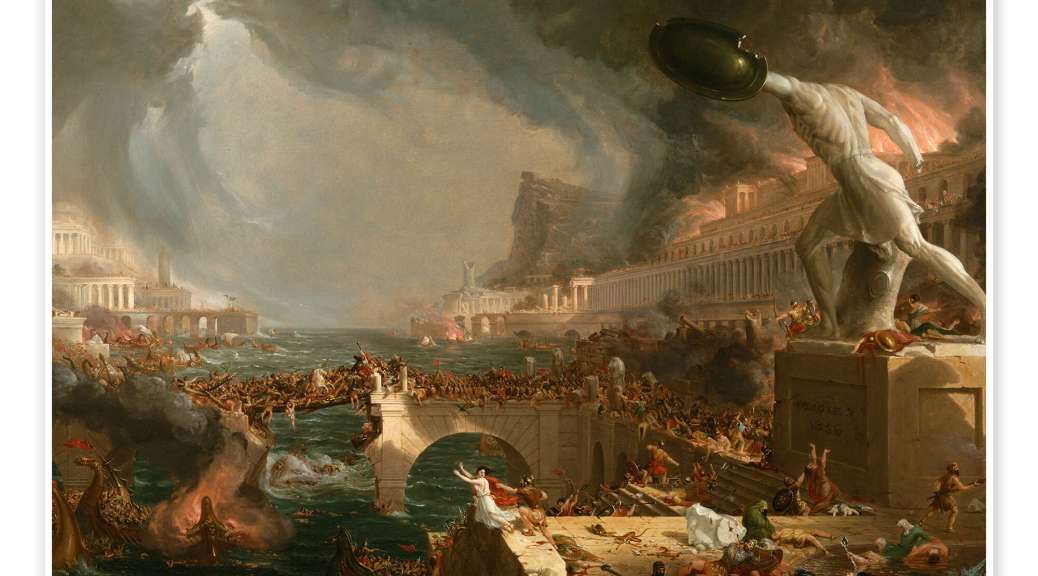





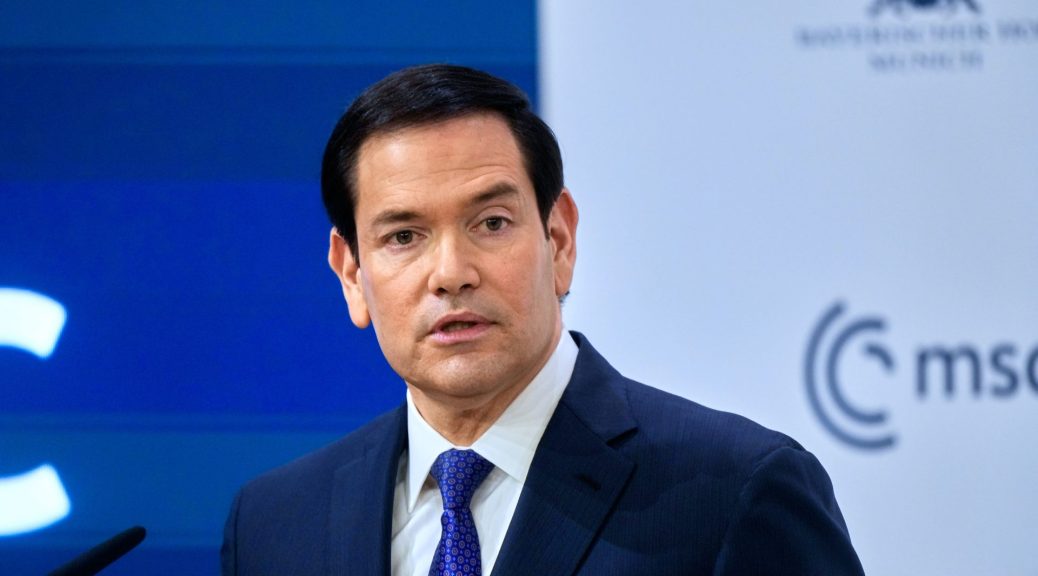
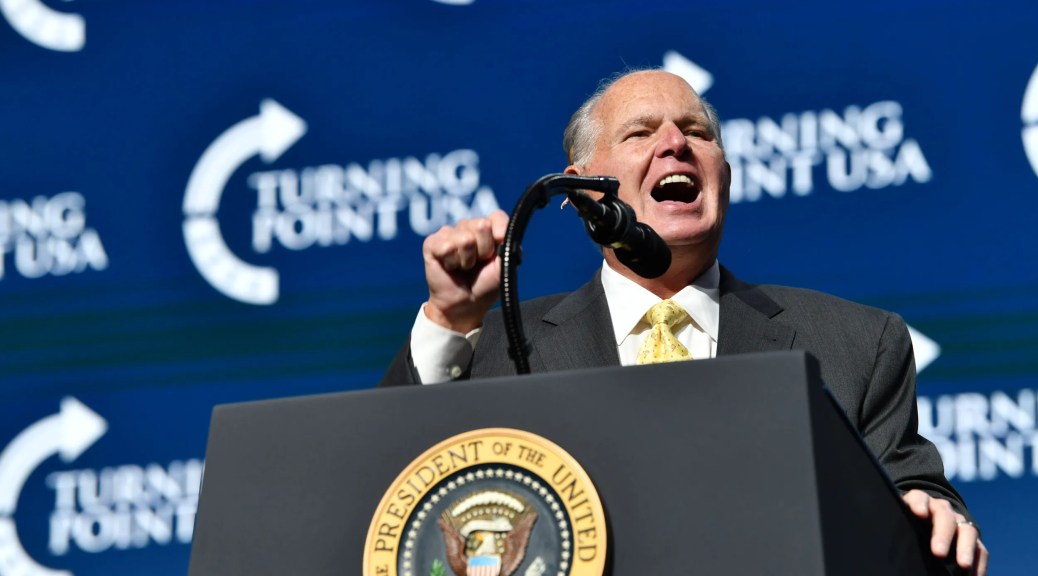
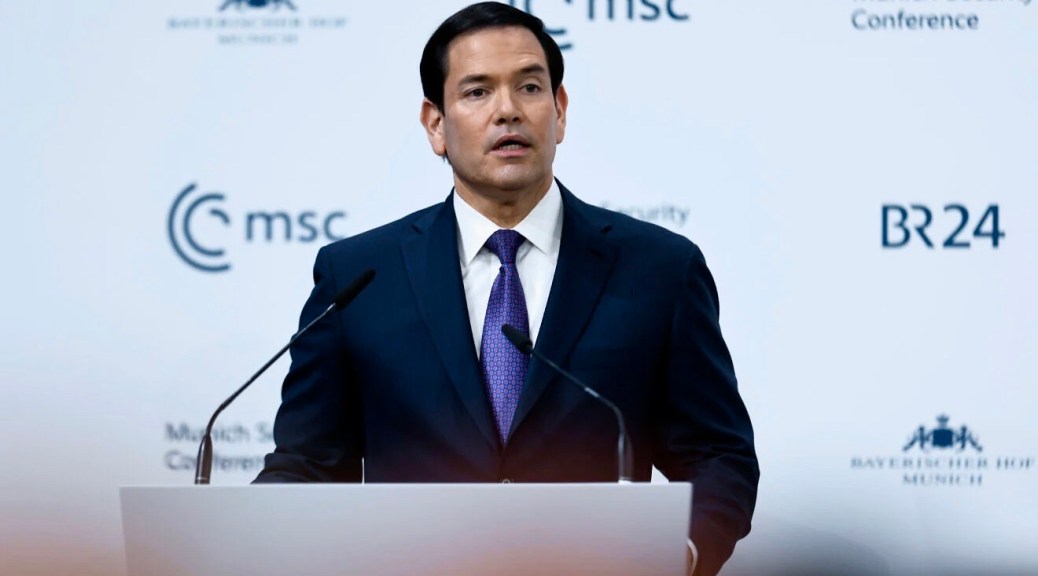




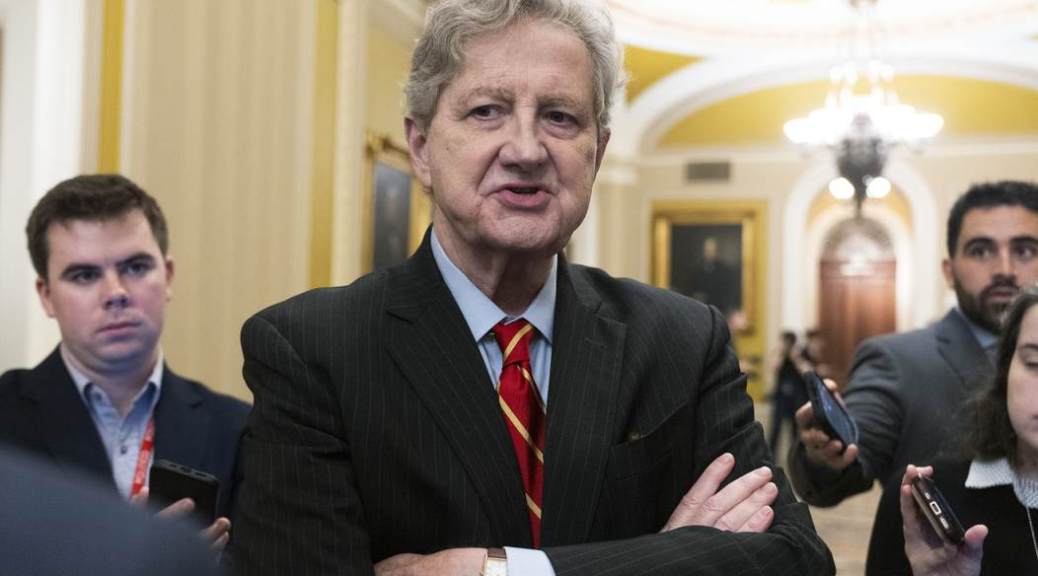


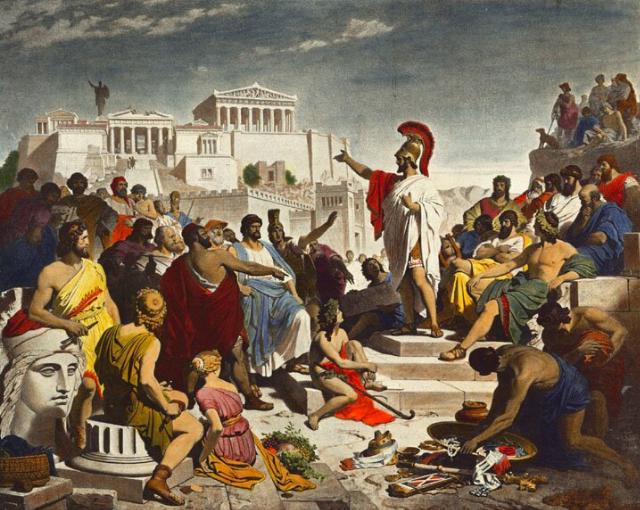

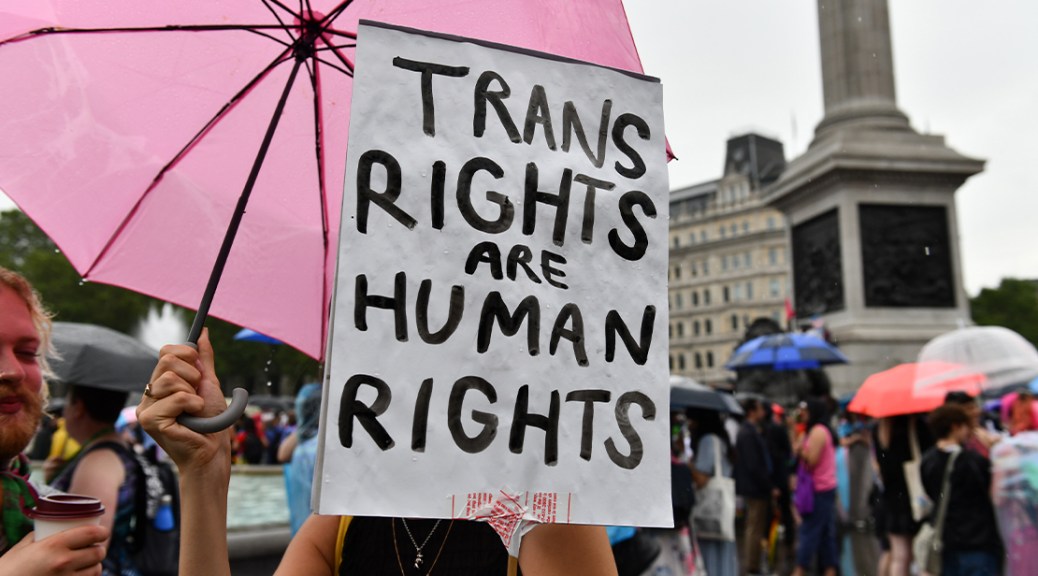
 DAILY DEVOTIONS, NEWS AND INFORMATION