Category Archives: News and Info

News and Information Posts from Bro Bo

God’s Design: The Left’s Nightmare

Explore how God’s design influences culture, biology, energy, economics, justice, and life amid modern ideological conflicts.


There is a thread that runs through nearly every major debate consuming our culture today. It shows up in conversations about gender, energy, economics, justice, foreign policy—even the very meaning of life itself.

At the center of all of it is a single, unavoidable truth: Gods design works.

And the modern Left cant stand it.

Thats not hyperbole. Its not partisan chest-thumping. Its the unavoidable conclusion drawn from watching how these debates actually play out in the real world. Because over and over again, when humanity aligns itself with the way God designed things to function, life flourishes. And when we rebel against that design, things fracture, decay, and ultimately collapse.

Start with the most personal and volatile debate of the moment: the human body itself.

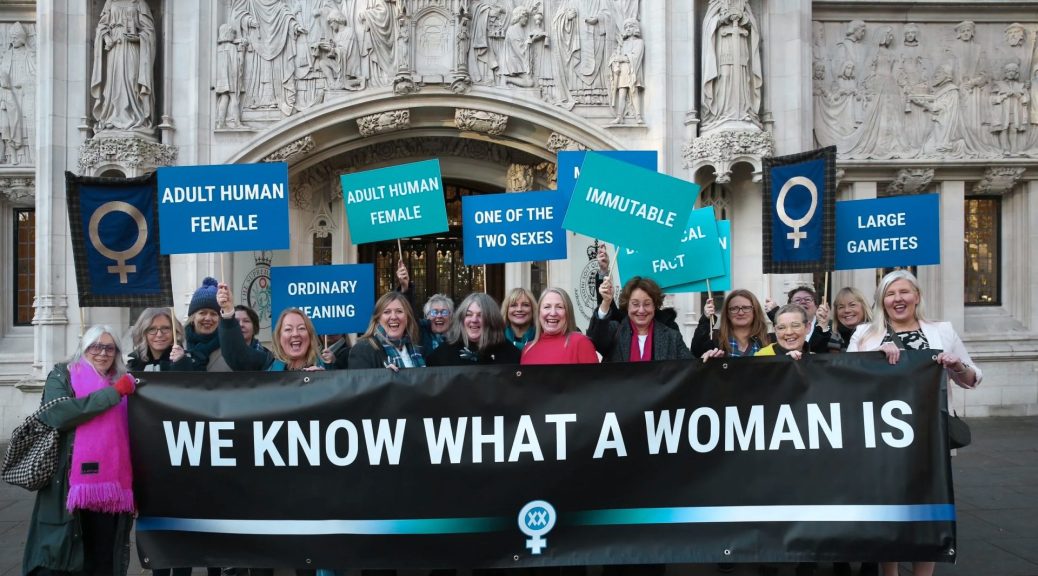
For thousands of years, every civilization understood something simple and profound: male and female are not arbitrary categories. They are foundational realities embedded into the very fabric of human existence. Modern biology hasnt undone that truth—it has confirmed it at the cellular level. Every cell in the human body carries the imprint of sex. XX or XY. It is written into our DNA.

And yet, in defiance of both ancient wisdom and modern science, we are told that identity can be declared apart from biology—that surgical alteration and hormonal intervention can override what is literally encoded into every cell.

But reality doesnt bend.

Study after study has raised serious concerns about long-term physical and psychological outcomes tied to aggressive medical interventions, particularly among minors. The human body was not designed to be dismantled and reassembled according to ideology. It was designed with intention. With purpose.

Affirming that design leads to health, coherence, and stability. Rejecting it leads to confusion, fragmentation, and harm.

The same pattern emerges when you step into the energy debate.

For centuries, human flourishing has depended on reliable, scalable energy. Entire civilizations have risen on the back of it. And yet today, we are told to abandon the very systems that power modern life—not because viable alternatives are ready to fully replace them, but because ideology demands it.

The result?

Energy shortages. Rising costs. Strained infrastructure. Nations forced to make desperate compromises just to keep the lights on.

Gods design for the earth included abundance—resources to be stewarded wisely, not rejected blindly. When we pursue innovation within that framework, we thrive. When we attempt to override it with utopian fantasies detached from reality, people suffer.

Look at economics.

There are moral underpinnings to how economies function best—principles that echo biblical truths: honesty, stewardship, personal responsibility, reward for work, protection of property. These arent just nice ideas. They are the foundation of every prosperous society in history.

Undermine them—through corruption, redistribution schemes detached from productivity, or the erosion of accountability—and what happens?

Because economic systems are not immune from moral reality. They depend on it.

Justice tells the same story.

At the heart of true justice is the concept of the imago Dei—the belief that every human being is made in the image of God and therefore possesses inherent dignity and worth. That idea has shaped Western legal systems for centuries. It is why we value life. Why we pursue fairness. Why we punish wrongdoing.

But strip that foundation away, and justice becomes something else entirely.

It becomes selective. Political. Weaponized.

Weve seen it play out—where theft of public resources is excused, where law enforcement is undermined, where victims are forgotten, and criminals are rationalized. When justice is no longer anchored in the inherent value of every human life, it stops being justice at all.

It becomes power.

And then theres peace.

Peace is not achieved by appeasement. It is not sustained by weakness. History has proven that time and time again. Real peace comes through strength, clarity, and moral conviction—the willingness to confront evil and restrain it.

Scripture understood this long before modern geopolitics ever existed.

Blessed are the peacemakers” does not mean blessed are the passive. It means blessed are those willing to do the hard, often costly work of establishing and maintaining order.

We are watching that principle play out on the world stage even now.

And finally, there is life itself.

Populations dont survive by accident. They survive when families are formed, when children are welcomed, when communities are built around love, sacrifice, and continuity. Every civilization that has thrived has honored those truths in some form.

But reject them—devalue family, diminish the importance of children, redefine the very structure of human relationships—and the consequences are immediate.

Birth rates collapse. Loneliness rises. Societies age and weaken. Life withers. Because life flourishes when it aligns with design.

All of this points to a reality that many would rather avoid: this isnt ultimately about politics.

Its about authority.

Gods design stands as a constant, unchanging reference point. It doesnt shift with cultural trends. It doesnt bend to ideological pressure. It simply is. And that presents a problem for any worldview that insists on self-definition above all else.

Because if Gods design is true, then we are not the ultimate authors of reality. And that is the tension at the heart of it all.

The anger. The insistence. The relentless push to redefine what has always been.

Its not just disagreement with other people. Its resistance to the One who designed it all.

But heres the part that should give every one of us pause—and hope.

Gods design is not arbitrary. It is not restrictive for the sake of restriction. It is ordered toward life, toward flourishing, toward love.

When we live within it, we dont lose freedom—we find it.

When we honor it, we dont diminish humanity—we elevate it.

And when we reject it, the consequences arent just philosophical.

They are painfully, unmistakably real.

Because in the end, reality always wins.

And reality, whether we acknowledge it or not, still belongs to God.


Kevin McCullough | Mar 18, 2026

Source: God’s Design: The Left’s Nightmare

New Study Challenges Climate Establishment’s Key Warming Metric

The implications could be significant.


For years, the public has been told that the science of climate change is settled.  Governments, media outlets, and international organizations frequently assert that the evidence for dangerous planetary warming is overwhelming.

Yet one of the most important measurements supporting that claim is now being challenged by new scientific research.

An international team of scientists has published a study arguing that the primary method used to estimate global ocean heat content — a central metric used in modern climate assessments — may be fundamentally flawed.  If their analysis is correct, one of the pillars supporting claims of a steadily warming planet could be far less certain than widely believed.

The implications could be significant, because ocean heat measurements play a crucial role in the conclusions reached by the United Nations’ Intergovernmental Panel on Climate Change (IPCC).

Why Ocean Heat Matters

In recent years, climate scientists have increasingly focused on the oceans when trying to determine whether the Earth is accumulating excess heat.

The reasoning is straightforward.  The oceans store vastly more heat than the atmosphere.  If the planet is truly warming due to greenhouse gases, the oceans should be absorbing much of that energy.

According to IPCC assessments, the Earth is currently accumulating energy at roughly 0.065 watts per square foot of the planet’s surface.  That number may sound small, but spread across the entire globe, it represents an enormous amount of heat.

But measuring something as complex as the heat content of the entire global ocean is far from simple.

The Global Network of Floating Sensors

Many of the data used to estimate ocean heat content come from the international Argo Program.

The Argo system consists of approximately 4,000 autonomous floats drifting throughout the world’s oceans.  These instruments periodically descend into the water column, measuring temperatures at various depths before resurfacing every ten days to transmit their data via satellite.

But the new study argues that the way these measurements are used to estimate global heat accumulation contains several serious weaknesses.

Vast Areas of Ocean Remain Unmeasured

Although 4,000 instruments may sound like a large number, the world’s oceans cover more than 930 million square miles.

Argo floats are typically separated by distances of 125 to 300 miles.  This means enormous regions of the ocean are never directly measured.

Instead, scientists estimate conditions in those regions using mathematical interpolation — essentially filling in gaps with computer models.

The floats themselves also introduce additional uncertainties.  While submerged, they drift with ocean currents and do not know their precise location.  Their positions are recorded only when they surface to transmit data.

As a result, temperature measurements may be assigned to locations that differ significantly from where the measurements were actually taken.

The floats also generally measure temperatures only down to depths of about 6,500 feet.  Yet much of the ocean lies far deeper.  Roughly half the ocean’s volume remains largely unobserved.

Polar regions present further difficulties, since sea ice prevents floats from operating normally.

Taken together, these limitations raise important questions about how accurately current observations represent the true thermal state of the global ocean.

The Problem of Uncertainty

The new research examines how these measurement gaps and uncertainties affect estimates of global ocean heat content.

The IPCC’s widely cited estimate suggests the Earth is gaining energy at about 0.065 watts per square foot.

But when the researchers recalculated the uncertainty surrounding that figure, they found something striking: The true uncertainty may exceed ±0.09 watts per square foot.  In statistical terms, this means the estimated warming signal could be indistinguishable from zero.

That does not prove the Earth is not warming.  But it does mean that current observational data may not be capable of measuring the planetary energy imbalance with the precision often claimed.

A Deeper Scientific Issue

The paper also touches on a more fundamental theoretical problem that has been debated among physicists for years.

Temperature describes the state of a system at a particular location and time.  Averaging temperatures across vastly different regions of a complex system that is not in thermodynamic equilibrium can produce numbers that may lack clear physical meaning.

The Earth’s atmosphere and oceans are precisely such systems.

Some researchers have long argued that global temperature averages and related metrics may therefore be less physically meaningful than commonly assumed.

The new study extends this critique to calculations of global ocean heat content.

The Policy Implications

Why does this matter?  Because climate policy is increasingly being built on the assumption that scientists possess precise measurements of the planet’s energy balance.

Governments are redesigning energy systems, imposing regulations on industry, and directing trillions of dollars in investment based on those assessments.  If the foundational measurements behind those assessments turn out to be far more uncertain than believed, the policy implications could be substantial.

Scientific debate should not be viewed as a threat to science.  Measuring data is how science progresses.  Yet the public discussion of climate change often discourages open examination of underlying assumptions and measurements.

When new research raises fundamental questions about key metrics used in climate assessments, those questions deserve serious attention.

The climate debate is often presented as settled.  But as this new study illustrates, some of the most important measurements used to support that conclusion may still be subject to significant scientific uncertainty.


Mark Keenan | March 18, 2026

Mark Keenan is a former United Nations technical expert and an independent writer on science, technology, political economy, and human freedom.  He is the author of Climate CO2 HoaxGodless Fake ScienceThe AI Illusion, and The Debt Machine.  He publishes essays at markgerardkeenan.substack.com and comments on X (@TheMarkGerard).


Source: New Study Challenges Climate Establishment’s Key Warming Metric – American Thinker

A ‘Michigan Man,’ a ‘Virginia Man,’ and a ‘New York Man’ All Walk Into a Bar…

An analysis of recent U.S. terrorist attacks highlighting concerns over Islamist extremism and national security.


Stop me if you’ve heard this one. A doddering old sock puppet from Delaware takes the podium and, with a straight face, alleges that the greatest threat to America comes from white supremacy. And, get this… half the country believes him!

Hilarious, right?

Let’s review the threat from “white supremacy” from the last two weeks alone.

On March 1, the college bar district in downtown Austin was attacked by Ndiaga Diagne. Diagne is from Senegal. Or, as NPR put it, he is a man “who lived in an Austin suburb.”

This man “who lived in an Austin suburb” had snuck in on a tourist visa under the Clinton administration. Almost immediately, he began racking up a criminal record. But he was never deported. Instead, he was granted citizenship in 2013 under the Obama administration. His social media feed was full of pro-Islamic, anti-American, anti-Christian, and anti-Jewish rants. He committed the attack while wearing a “Property of Allah” shirt.

On March 7, a pro-civilization protest in New York City was attacked by ISIS-inspired terrorists Emir Balat and Ibrahim Kayumi. Balat is the son of Turkish immigrants. Kayumi is the son of Afghan immigrants. Or, as local news put it, they are “Bucks County men.”

Both of these “Bucks County men” traveled extensively to Turkey and Saudi Arabia in the months leading up to the attack. Both pledged allegiance to ISIS, and one of these “Bucks County men” shouted “Allahu akbar” before throwing an improvised explosive at the peaceful protestors.

This past Thursday, an ROTC meeting at the University of Virginia was attacked by Mohamed Bailor Jalloh. Jalloh is from Sierra Leone and has connections with ISIS; he yelled “Allahu akbar” as he gunned down a professor. Or, as USA Today put it, Jalloh was a “former member of the Army National Guard” who had enlisted “out of a patriotic desire to give back to his adopted country.”

His “patriotic desire” notwithstanding, Jalloh was imprisoned in 2017 under the first Trump administration for attempting to carry out a terrorist attack. He was released in 2024 under the Biden administration. No attempt was made to deport this convicted terrorist. His “patriotic desire” must have moved the deportation judge to tears.

The very same day, the Temple Israel synagogue and preschool in West Bloomfield, Michigan, was attacked by Ayman Mohamed Ghazali. Ghazali is from Lebanon. He was let into the country and granted citizenship by the Obama administration. Or, as the New York Times put it, Ghazali had was a “naturalized citizen” who had “worked at a popular restaurant.”

Aww, a citizen who works hard at the local diner to pay for grampaw’s dentures. Who hasn’t heard that rags-to-riches, as-American-as-apple-pie story? Several other news outlets rushed to cover for Ghazali’s terrorist attack by explaining that some relatives of his were killed in Lebanon by a recent IDF counterattack.

Spare me. You know who else had relatives killed just a few days ago in the ongoing conflict? The families of Army Captain Cody Khork, Sgt. 1st Class Noah Tietjens, Sgt. 1st Class Nicole Amor, Sgt. Declan Coady, Major Jeffrey O’Brien, Chief Warrant Officer 3 Robert Marzan, and Sgt. Benjamin Pennington. These soldiers were killed by Iranian drone attacks on bases across the Middle East.

Do you know how the families of these murdered soldiers reacted? I can tell you what they didn’t do. They didn’t plow a car into a mosque and then attempt to mass murder dozens of Muslim preschoolers.

Ndiaga Diagne, a Muslim from Senegal.

Emir Balat, a Muslim from Turkey.

Ibrahim Kayumi, a Muslim from Afghanistan.

Mohamed Jalloh, a Muslim from Sierra Leone.

Ayman Mohamed Ghazali, a Muslim from Lebanon.

That’s quite an accurate cross-section of your run-of-the-mill white supremacists, isn’t it?

To be fair to the friskier elements of the Religion of Peace, there have been plenty of white terrorists over the past few years. There are plenty of homegrown terrorists raised and incubated in the cult of transgenderism victimology, and they’ve wreaked almost as much havoc across America as have their Islamist brethren.

It’s a good rule of thumb to assume that if a Christian school is attacked, the attacker is a transgender lunatic. If a Jewish school is attacked, the attacker is an Islamic supremacist.

But getting back to my original point, it is well past nigh to come out and state clearly the plain truth which is being obfuscated by deceptive headlines. The problem isn’t Bucks County men, or men who live in Austin suburbs, or former guardsmen, or dedicated restaurant busboys.

The problem is Islam.

Islam and the West have proven totally incompatible with one another. There is nothing “phobic” about this statement. This isn’t an attack or a defense of one race or ethnicity at the expense of another. This is an obvious conclusion about two diametrically opposing systems of values and worldviews.

The West is a civilization founded on Judeo-Christian principles of freedom of conscience, grace, tolerance, forgiveness, humility, equality under the law, and the God-given divine value of every human being. Islam is a civilization founded on genocidal conquest and coerced conversion, and rests of the principles of ideological supremacy, misogyny, censorship, and forced submission with the stated goal of world conquest.

Fourteen hundred years of history has proven that these two opposing systems cannot coexist peacefully in the same sphere, and that the influence of one expands in direct proportion to the retreat of the other. And don’t think this inability to coexist is a result of a lack of effort. For the past half-century, the West has bent over backwards trying to accommodate Islam. The efforts have not been reciprocated, to say the very least.

It’s both hard and insensitive to try to find a silver lining to terrorist attacks that leave innocent people dead. But if there is a silver lining to be found in the past two weeks, I think it is this:

People are sick of it.

Whether they are conservatives who say it aloud, liberals who say it only to themselves, or “independents” who finally found a spine and are finally taking a side, everybody is sick of it.

We’re sick of the constant coddling. We’re sick of the cultural concessions. We’re sick of our leaders’ placating, unwarranted apologies. We’re sick of being told we need to understand things from their perspective, rather than asking them to understand things from ours. We’re sick of the double standards.

We’re sick of the migrant invasions of military age male “refugees.” We’re sick of seeing more and more Muslim slaves women at shopping malls and public swimming pools wearing the full head-to-toe beekeeper suit and having to pretend that it’s completely normal. We’re sick of ignorant troglodytes who come here from third world Islamic s***holes, benefit from our welcoming generosity, and then behave in a manner so ungrateful as to defy all bounds of human decency.

We’re sick of the knives, the guns, and the bombs. We’re sick of the subway attacks and the concert attacks and the church attacks and the synagogue attacks and the festival attacks and the Christmas market attacks and the school attacks and the vehicle attacks and the random street attacks.

And we’re sick of noticing all the terrorism, noticing the patterns that underlie it, and then be told that the act of our noticing makes us bigots.

I have my ideas about what a solution to this problem would entail. But before we can solve the problem, we need to come to a collective agreement on what the problem is. Even back in 2024, majorities of both Republicans and Democrats viewed terrorism as a major threat. As this was at a time when Sleepy Joe was imploring us to pay no attention to the guys in the white pajamas and to keep looking for the guys in the white hoods.

I’m not sure if America is at the tipping point yet, but we are trending in that direction.

UPDATE: As I was prepping this article for submission, news came through that an Iraqi-born man named Muhi Mohanad Najm had been able to enter an elementary school in Texas wearing a fake security uniform and brandishing a loaded firearm. He was unable to get past the secure vestibule and left the scene, only to be arrested minutes later.

Something very bad is going to happen. It’s not a matter of if, but when. Stay locked and loaded, America.


A.J. Christopher | 7:14 AM on March 14, 2026

Source: A ‘Michigan Man,’ a ‘Virginia Man,’ and a ‘New York Man’ All Walk Into a Bar… – PJ Media

‘Experts’ Know Less than They Think

All ‘authorities’ should be challenged.


Occasionally I hear credentialed professionals with prestigious titles whine about the so-called “war on expertise.”  It really bothers people who see themselves as “experts” that a growing share of society ignores them.  A psychologist might intuit something revealing from the lack of self-confidence plaguing our “expert” class.  If all the fancy degrees, voluminous curricula vitae, and lofty career positions have failed to instill a resilient modicum of self-esteem, then perhaps all those things are not the true measures of a person’s worth.

“Experts” do not like to be challenged.  They say things such as, “I have a PhD in this,” or, “I get paid a lot of money to talk about that,” and expect everybody listening to stop thinking and immediately agree with everything the “expert” has to say.  I once witnessed a young “race studies” professor intrude into an online debate and tell everyone that she was correct and everybody else was wrong.  Her evidence?  She cited the costs of her education, her recent promotion, and her new annual salary.  Traditionally, that’s considered a specific kind of logical fallacy known as an appeal to authority.  When appeals to “expertise” replace reason and rationality, false conclusions are more easily justified.

We have been living in an era rife with appeals to authority masquerading as truth.  In fact, I came across something hilariously unsurprising as I was writing this essay.  Because Internet search engines no longer operate as research tools but rather as propaganda aggregators, I often have to peruse many pages of search results before I find topical and pertinent sources.  Leftwing disinformation index Wikipedia routinely receives prime placement for any online query.  I decided to check how the propagandists at Wikipedia describe appeals to authority these days, and the editors did not disappoint (someone as cynical as I):

“While all sources agree this is not a valid form of logical proof, and therefore, obtaining knowledge in this way is fallible, there is disagreement on the general extent to which it is fallible — historically, opinion on the appeal to authority has been divided: it is listed as a non-fallacious argument as often as a fallacious argument in various sources.”  My sides, they hurt so much as I laugh uncontrollably!  Then Wikipedia’s meaningless equivocation ends with this gem: “Some consider it a practical and sound way of obtaining knowledge that is generally likely to be correct when the authority is real.”

There you go, kids!  So long as the “authority” is “real,” it’s quite “practical” and “sound” to hand your brain over to the resident “expert” or AI machine and let he/she/it do your thinking for you!  It’s not a “logical fallacy” if the “authority” says it’s not!  How very twenty-first-century of the 1984-like censors, history rewriters, and information warfare specialists who manage the world’s “free” encyclopedia.  Wikipedia may be “free,” but it still levies a steep tax.  The “price” of offshoring one’s thinking to “experts” is a life filled with few cogent thoughts.  That’s too high of a cost for any human seeking wisdom.

Appeals to authority are often absurd.  Since the mid-twentieth-century, most of the handsome or beautiful news anchors who tell the world what to believe have been empty-headed script-readers with subpar intellects (Hello, Dan Rather!).  According to renowned climate scientist Al Gore, Miami and Manhattan should have spent the last decade submerged under ten feet of water.  At the 2018 United Nations Climate Change Conference, then-fifteen-year-old Swede Greta Thunberg told world leaders that they were “not mature enough to tell it like it is.”  Those world leaders — prone to lean directly into appeals to authority themselves — immediately told the planet’s youngest generations to listen to the Swedish teenager if they wanted to survive the carbon apocalypse.  Similarly, noted virologist Bill Gates (I forget: Does he have Nobels in both chemistry and medicine?) assured us that we would all die unless we allowed his corporate friends to inject us regularly with experimental serums and did everything government officials say.  All the very smartest people spent at least two years telling us that only totalitarianism and censorship could save us from COVID.

It may be absurd to mindlessly trust the “expertise” of Dan Rather, Al Gore, Greta Thunberg, and Bill Gates, but it’s no less dangerous to mindlessly trust the “expertise” of someone whom Wikipedia would no doubt describe as a “real authority.”  Dr. Anthony Fauci has all the credentials that people who enjoy credentials salivate over.  He has a medical degree.  He has a trophy room full of awards.  He’s a member of the best institutions.  He was the director of the National Institute of Allergy and Infectious Diseases for nearly forty years, for goodness’ sake!  Wasn’t he even the highest paid employee in the federal government?  Money, accolades, social status — Fauci has it all.  His prestige drips with prestige.

Yet he told us that COVID couldn’t possibly have come from a Chinese bio-lab (that he and his associates partially funded).  He told us that experimental mRNA “vaccines” would prevent infection…er, reduce spread…er, make symptoms less severe.  He told us that natural immunity was no good (because the pharmaceutical companies can’t profit from that).  He told us to wear one mask (cloth or paper or whatever), then two masks, then three masks, then three masks and a plastic shield.  He told us that small businesses should close their doors, but that “critical” businesses — such as Walmart — should remain open.  He told us that kids should be kept out of school…but perhaps they’d be safe behind plexiglass walls…so long as the powerful heads of public school teachers’ unions thought that “science” was sound.  And plenty of people around the world (including America’s cult of “authority”-worshiping Karens and government-worshiping Democrats) admired Fauci’s lustrous prestige, ignored his illogical and contradictory pronouncements, and did whatever he said.

That’s the danger with appeals to authority.  When you hand your brain to third-parties, don’t be surprised to discover that “experts” value your life less than you do.

Europeans are learning this lesson the hard way right now.  For decades, the “elites” have shunned hydrocarbon energies and made their economies too dependent upon unreliable wind and solar alternatives.  European “authorities” decommissioned nuclear power plants, even though doing so meant that European industries became more dependent upon Russian natural gas.  Then came the War in Ukraine and the sabotage of the Nord Stream pipelines.  Eventually, Ukraine’s martial-law-holdover-president/dictator, Volodymyr Zelenskyy, blocked oil deliveries from Russia through the Druzhba pipeline to Poland, Hungary, Slovakia, the Czech Republic, and Germany.  And President Trump’s strikes on Iran made it much more difficult for Europe to obtain critical hydrocarbons from the Middle East.

European “authorities” have spent decades using the “global warming” hobgoblin to scare the public into accepting expensive and unreliable sources of energy whose use will do nothing to “save the planet.”  Those “authorities” have managed, however, to cripple most European industries and make Europe’s cost of living prohibitively expensive.

Inevitably, whenever I even passingly mention Ukraine President/Dictator Zelenskyy, some unhappy readers call me names.  Regular commenter “Megan Draper, M.S.” recently wondered, “how much money the Russian government” must be giving me.  Another commenter going by the handle “asherpat” implied that I am “a Russian influencing agent.”  Putting aside their casual libel, I will point out that both commenters employ another kind of logical fallacy: appeal to ridicule.  Although besmirching my character is one way to counter my arguments, it is not one based on solid reasoning.

I suggest that all authorities be challenged regardless of their credentials.  Just as degrees are incomplete measures of one’s education, titles of “authority” are poor substitutes for wisdom.  It is our capacity for reasoned debate that helps us separate the wheat from the chaff.


J.B. Shurk | March 13, 2026

Source: ‘Experts’ Know Less than They Think – American Thinker

Roll Your Eyes All You Want… The Rapture Is Real

Is the Rapture real? There’s always debate around this topic.

Let’s start with the obvious: the Rapture sounds crazy. Jesus descends from Heaven, dead people rise from their graves, and living believers are suddenly caught up into the sky—like the world’s strangest episode of “Stranger Things.” Sounds like the stuff your uncle mutters about after three cups of church coffee. Except—the Rapture is right there in Scripture. Paul says it. John says it. Jesus says it.

Opposing Views 

Now, critics like to pounce: “But the word Rapture isn’t even in the Bible!” Neither are the words Trinity or even Bible. And yet, here we are, still believing in all three. The word comes from the Latin rapturus, which translates the Greek word harpazo—meaning “to snatch up, grab by force.” Imagine a parent reaching out and pulling their child away from danger just in time. That’s the picture Scripture gives us of the Rapture.

Some say, “Oh, the Rapture is just a modern invention, some 19th-century gimmick.” Nonsense. Yes, J.N. Darby helped popularize it in more recent times, but long before him, the early Church Fathers like Irenaeus and Cyprian wrote about believers being “snatched up” before judgment.

It’s not new—it’s biblical.

The Rapture in Scripture

We also hear about the Rapture straight from Paul, Peter, James, and most importantly, Jesus Himself: “‘And if I go and prepare a place for you, I will come again and receive you to Myself; that where I am, there you may be also’” (John 14:3 NKJV).

The most familiar passage on the Rapture is 1 Thessalonians 4:16–18“For the Lord Himself will descend from heaven with a shout, with the voice of an archangel, and with the trumpet of God. And the dead in Christ will rise first. Then we who are alive and remain shall be caught up together with them in the clouds to meet the Lord in the air. And thus we shall always be with the Lord. Therefore comfort one another with these words.”

And if that sounds far-fetched, remember Enoch—who literally walked off the face of the earth into God’s presence—and Elijah, who rode to Heaven in a fiery chariot. The prototypes are already in the Old Testament.

Why the Rapture Matters

Here’s why this isn’t just a fun theological parlor game: the Rapture gives hope. Paul calls it the “blessed hope.” When you’ve buried a loved one, you don’t need vague talk about them being “in a better place.” You need the solid promise that in one split second you’ll be with them again. Parents reunited with children. Husbands with wives. Brothers and sisters together again. And at the center of it all—Jesus Christ Himself.

And it does more than comfort grief. It motivates godliness. If you really believe Jesus could return at any moment, maybe don’t binge sin like it’s Netflix. You wouldn’t invite your best friend into a house piled with dirty laundry and Taco Bell wrappers. Don’t greet your Savior that way either. You want to be ready—walking with Him, keeping your spiritual house in order.

When Will the Rapture Happen?

People get themselves into trouble trying to date-set the Rapture.

Jesus made it pretty clear: “No one knows the day or the hour” (see Matthew 24:36). Which, funnily enough, includes you, me, and that guy on YouTube with the chart and the whiteboard. Yet, periodically, there’s always that someone with their calendar: “88 Reasons Jesus Will Return in 1988!” Let’s just stop with the speculation.

The Rapture isn’t about prediction—it’s about preparation.

The Takeaway

What do we do with all this? We wake up. We stay alert. And we stop living like the world is a Vegas buffet that never closes. Paul said: “The night is almost gone; the day of salvation will soon be here…” (Romans 13:12). Translation: Time is short. Knock it off. If you’re a believer, live clean, live holy, live hopeful. If you’re not—well, get right or get left.

Because one day, maybe in our lifetime, maybe tonight—in a blink, in the twinkling of an eye—everything changes. Loved ones raised. The Church caught up. Judgment delayed until after the Bride has been rescued.

It’s not escapism. It’s not fantasy. As C.S. Lewis reminded us, looking forward to the eternal world is one of the things a Christian is meant to do.

So, laugh if you want. Roll your eyes. Write your snarky post. But the Rapture is real. And when it happens—when the shout comes, when the trumpet blows—mockery won’t matter. Only hope will.


Source: Roll Your Eyes All You Want… The Rapture Is Real – Harbinger’s Daily

And the Next President of Venezuela Will Be…

Insightful analysis of Venezuela’s political future and key figures shaping its path to democracy.


On Monday, after hosting the historic first Shield of the Americas Summit in Doral, Fla., Donald Trump stopped by a Venezuelan restaurant, El Arepazo, on his way to the airport to fly back to Washington, D.C. He was greeted with cheers and applause and chants of “Trump!” and “USA!” The crowd loved him, as they often do during these types of appearances, but this one was, potentially, a bit more meaningful.

Sometimes referred to as “Dorazuela,” the city of Doral has one of the largest Venezuelan diaspora communities in the United States. The president owns a hotel here — it’s where the summit, which was focused largely on rallying like-minded Latin American leaders to come together in the name of regional security and combating the cartels that plague every country in the Western Hemisphere, took place just days before.

At the restaurant, Trump shook hands, chatted with staff and patrons, and even took some Venezuelan food back on the plane for his staff. Those who were there said it was one of the warmest political appearances they’ve ever seen, which doesn’t surprise me. Whether they live in Doral or Caracas or somewhere else in the world, the Venezuelan people love Donald Trump. On January 3, he did more for that country than almost anyone else probably ever has.

But the language he uses leaves many wary and understandably so. The constant praise of Delcy Rodríguez and saying she’s doing a good job is tough to hear when you know that she’s just as bad and every bit as much as corrupt as Nicolás Maduro was. She’s a communist by birth and was radicalized even further when her Marxist father died in police custody after being arrested for kidnapping a business executive from the United States. After his death, she vowed to go into politics as her own form of personal vengeance.

“Delcy Rodríguez knows how to present herself as a ‘moderate,'” Venezuelan opposition-aligned lawyer Estrella Infante told me earlier this year. “That is why she has always handled international negotiations. She has extensive global connections, and many actors prefer her continuity because it protects their interests. That is her power.” (For what it’s worth, those global connections are largely our adversaries — Iran, China, Russia, Cuba, etc.)

The thing is, Delcy has a little help with maintaining her “moderate” reputation, and it comes from the United States. If it’s not the New York Times literally calling her a “moderate” and writing a glowing review of what a great leader she’d be, it’s what Venezuelan lawyer and writer Emmanuel Rincón calls the “hidden lobby war against Venezuela’s democratic transition.”

In a recent op-ed in the Washington Times, Rincón asserts, “Alongside the brave men and women who genuinely fight to end the socialist dictatorship, there has emerged a growing ecosystem of false opposition figures, fake activists, opportunistic lobbyists and self-proclaimed ‘conservatives’ who have found a way to profit from Venezuela’s tragedy.”

Here’s more:

From Day 1, certain groups have tried to persuade President Trump and key conservative policymakers that the leadership chosen by Venezuelans themselves is ‘inconvenient,’ ‘too radical’ or ‘not viable,’ and that accommodation with elements of the dictatorship would somehow be more ‘pragmatic.’

That is not pragmatism; it’s surrender disguised as strategy.

The money behind these efforts is murky. Not every initiative aimed at weakening Venezuela’s democratic transition is openly coordinated, but the outcome is the same: Divide the opposition, fracture its leadership, and weaken the possibility of a real break from socialism.

The motives vary. For some, it is money. For others, political ambition. For others, ego. For a smaller but destructive group, resentment and envy.

Thankfully, despite the language he uses publicly, Trump hasn’t been persuaded. Thankfully, he has the man in U.S. politics who knows more about Venezuela than anyone else whispering in his ear: Secretary of State Marco Rubio.

Rubio’s fingerprints have been all over this entire operation, and they were long before everyone else was paying attention, long before Maduro was sitting in the Metropolitan Detention Center. For every time Trump praises Delcy, Rubio or another cabinet member comes behind him and reminds us all that she’s temporary. Trump himself even said at the Shield of the Americas Summit that he’s only praising her because she’s doing what he’s telling her to do, and that if she wasn’t, that wouldn’t be the case.

You see it in the media notes released by the State Department. You see it in the legal paperwork at the Department of Justice.

“Our engagement is focused on helping the Venezuelan people move forward through a phased process that creates the conditions for a peaceful transition to a democratically elected government.”

Delcy is not running the show. The United States is. As I like to say, the Marxist woman didn’t suddenly see the light on January 3 and decide to become a proud partner of Trump and U.S. ally. She saw the writing on the wall. She saw Delta Force. She saw a United States president with the ability and cajones to do whatever the heck he pleases to make the world a better place. She just agreed to be the puppet, the pawn who would handle everything to save her life.

Despite the fact that most of us understand this now, much of the U.S. media and some of the other people within that “hidden lobby war” seem determined to make Delcy the focus, when the real story is María Corina Machado. The U.S. mainstream media has spent two months now pretending that she’s irrelevant, that Trump and Rubio have “jilted” her or cast her aside. But again, if you get past the rhetoric and look at the physical evidence, you see a different story.

Since escaping Venezuela and accepting her Nobel Peace Prize in December, Machado has been in Europe and the United States, meeting with political leaders, business leaders, investors, and think tanks. She’s the one who is advocating for Venezuela. She’s the one securing the country’s future. She’s the one who has impressed Trump and countless others.

As I reported over the weekend, it was rumored that she’d had a secret meeting with Trump, Rubio, and Susie Wiles last Friday. Machado herself has since confirmed it. They meeting lasted nearly two hours, and she’s expected to return to the White House in the weeks to come for more talks. That doesn’t sound like someone who has been jilted to me.

Over the weekend, after the Shield of the Americas Summit, Trump was having dinner with some of his team and actually pulled out his phone and called Machado. “Everyone loves you here,” he said as he put her on speaker. And on Wednesday, she was a guest of honor as the new Chilean president, José Antonio Kast, was sworn in. Delcy didn’t receive an invitation. Video from the event shows Machado meeting with everyone from everyday Venezuelans who gathered outside to the numerous leaders and heads of state who were in attendance, and she was treated like a freaking rock star. She may have even overshadowed Javier Milei, and that’s hard to do.

Machado was the favorite to become Venezuela’s president in 2024 before Maduro banned her from running. Polls out of there today show that nothing has changed. If anything, people are losing their fear and speaking up even louder in support of her. She’s the most popular politician in a county where the opposition is more united than anything I’ve ever seen. She’s ready to return home and have elections as soon as possible, so that her country can be free and its people safe and prosperous.

That’s exactly why the bad actors that Rincón mentioned are ramping up their game. “…if one’s true objective is to end the socialist dictatorship, then attempting to sabotage the opposition’s bridge to the White House or to American conservative allies is politically irrational,” he said. “A country that cannot consolidate around strong leadership during a liberation struggle becomes easy prey not only for its internal oppressors but also for foreign actors seeking leverage. Dividing leadership strengthens the regime.”

“Those who cannot understand this, who prioritize headlines, applause or proximity to power over liberation, are either profoundly naive or knowingly serving the interests of the regime. Experience suggests the latter is far more common than the former,” he continues. “Today, Venezuela stands closer to freedom than at any other point in recent years. That is not accidental. It is the result of alignment between Venezuelan democratic forces and American leadership that understands the stakes: Socialism in our hemisphere is not merely a Venezuelan issue; it is also a strategic threat.”

He’s exactly right. None of this would have happened if Machado hadn’t rallied her country. None of this would have happened if she hadn’t connected with Rubio, and he hadn’t taken a vested interest. And none of this would have happened if Donald Trump was not president and hadn’t hired Rubio as his secretary of State. And the only way it will continue toward liberty is if these connections continue. And they will.

“First, we must have a country. Only then can we argue about how to govern it,” Rincón says, and he’s right about that, too. You don’t undo decades of dictatorship overnight. But when that time comes to decide how to govern it, there is no doubt in my mind that Machado will be the one to lead, while Delcy, if she’s lucky, lives out her years somewhere across the Atlantic.


Sarah Anderson

Source: And the Next President of Venezuela Will Be… – PJ Media

Behind the Curtain: The big lie warping America

Most Americans are too busy for social media, too normal for politics, too rational to tweet.


Watch TV, scroll social media or listen to politicians, and the verdict seems clear: Americans are hopelessly divided and increasingly hateful.

  • It’s a ubiquitous, emphatic, verifiable … lie.

Why it matters: Most Americans are too busy for social media, too normal for politics, too rational to tweet. They work, raise kids, coach Little League, go to a house of worship, mow their neighbor’s lawn — and never post a word about any of it.

This isn’t a small minority. It’s a monstrous, if silent, majority. Most Americans are patriotic, hardworking, neighbor-helping, America-loving, money-giving people who don’t pop off on social media or plot for power.
  • The hidden truth: Most people agree on most things, most of the time. And the data validates this, time and time again.

Oh, but you’re so naive, so delusional and detached from reality. Everywhere I look, I see dispute and decline!

But it’s the terminally online news junkies who are detached from the actual reality.

  • We’ve been manipulated by algorithms and politicians amplifying the worst of humanity. Our feeds and screens spread a twisted, inaccurate view of America.
  • It makes it seem like the nation is hopelessly broken … Political enemies are evil … Facts are no different than fiction … Morality, honesty and service don’t matter … And salvation can only come from magical technologies or a powerful few.

What if we told you it’s a big lie that makes you stop believing your own two eyes?

  • Every day, people battle over outrageous things said on X. Did you know that four out of five Americans don’t use X, and therefore don’t see what you see? Pew Research Center found last year that only 21% of U.S. adults use X, and just 10% visit it daily. The loudest platform in politics reaches barely one in five Americans.
  • But what about the wacky claims made on cable TV? Did you know that during most hours of most prime-time nights, less than 1% of the country watches Fox News, CNN or MS NOW, combined?

Maybe, just maybe, it’s the very people on these platforms who are the crazy ones.

  • Maybe, just maybe, most people are simply normal, sane, real.
  • Gallup World Poll out last week found Americans are more anxious about their political system than citizens of almost any other country — yet the data consistently shows this anxiety is driven by the noise, not the neighbors. The system feels broken. The people are not.

Here’s a good test: In a given year, you see hundreds of people frequently enough to appraise their character. Are they good people? Would they help shovel after a snowstorm or lift groceries for an aging neighbor? Do they volunteer and give to others?

  • We bet the answer is a resounding yes. This is America’s Super Majority.

The numbers back this up. Americans gave $592.5 billion to charity in 2024 — a record, with individuals accounting for two-thirds of it.

  • Over 75 million Americans formally volunteer each year, and 130 million informally help their neighbors. Gallup research out last month found that 76% of U.S. adults gave money to a religious or other nonprofit organization in the past year, and 63% volunteered their time.
  • This isn’t a broken nation. This is a generous one, where the vast majority quietly do the right thing every single day.

The bottom line: The next time your screen tells you America is broken, close it. Walk outside. Talk to your neighbor. Coach the team. Go to the town meeting. That’s the real America — and it’s a hell of a lot better than the one being manufactured for clicks, clout and cash.


📱 Watch our “Behind the Curtain” YouTube on America’s big lie.


Source: Behind the Curtain: The big lie warping America

March 4, 1801

Analysis of Thomas Jefferson’s 1801 inaugural address emphasizing religion, government, and American virtues.


On March 4, 1801, Thomas Jefferson delivered his inaugural address as our third president. Here is part of what he said:


“Enlightened by a benign religion, professed, indeed, and practiced in various forms, yet all of them inculcating honesty, truth, temperance, gratitude, and the love of man; acknowledging and adoring an overruling Providence, which by all its dispensations proves that it delights in the happiness of man here and his greater happiness hereafter. With all these blessings, what more is necessary to make us a happy and prosperous people? Still one thing more, fellow citizens—a wise and frugal Government, which shall restrain men from injuring one another, shall leave them otherwise free to regulate their own pursuits of industry and improvement, and shall not take from the mouth of labor the bread it has earned…”


Let me provide a brief analysis of his words.

1. “Enlightened by a benign religion…” He obviously meant Christianity, for it was nearly universally practiced in early America. Notice: true Christianity “enlightened” the country, and was “benign”—not harmful to anyone.

2. “Professed, indeed, and practiced in various forms…” Meaning: the many denominations of post-Reformation Christendom, none of which could become an “established religion,” i.e., a national church like England had (First Amendment).

3. “Yet all of them inculcating honesty, truth, temperance, gratitude, and the love of man.” Yes, this is the essence of the true, original teachings of Jesus. Obviously, such would be beneficial to any society. But now, thanks to the atheistic, Marxist Left, the world has known 100-plus years of dishonesty, lies, uncontrolled radicalism, murder, ingratitude, and the hatred of mankind. Un-enlightenment and malignancy in the name of “progressivism.”

4. “Acknowledging and adoring an overruling Providence.” The virtues Jefferson listed (honesty, truth, etc.) are indeed “enlightening” and are taught to us by the “Providence” (God) who rules. If followed faithfully, the blessings of a successful society will surely develop. Any wise person will recognize and acknowledge this, and the early Americans certainly did. Those Americans, though far from perfect, still acknowledged this God Who gave them the wise counsel they should follow, and all, including Jefferson, accredited His “overruling” guidance.


5. “Which by all its dispensations proves that it delights in the happiness of man here and his greater happiness hereafter.” The bounty which all the earth is blessed with—evident in Jefferson’s day and ours—was used by the president as evidence that “Providence” (the guidance and direction of God) wished for man to be happy here and in the hereafter. Whatever the intellectual Jefferson meant, in his own mind, by “Providence,” he was smart enough to realize that his fellow citizens, adherents of Christianity almost to a man, would believe he was talking about their God and their religion.

6. “With all these blessings, what more is necessary to make us a happy and prosperous people?” What lack we yet? What responsibilities has this Providence given us to make sure we fully obtain the happiness and prosperity that we have access to through the blessings available to us?

7. “Still one thing more, fellow citizens—a wise and frugal Government.” “Wise” and “frugal”? Wise? Is there an ounce of wisdom in Washington, D.C., today? None at all in the Democratic Party, minuscule in the Republican. Frugal? Don’t make me laugh. “Wisdom” and “frugality” don’t buy votes, Tom, and power is the only game in town now. Our politicians learned well—or didn’t, depending on how you look at it—Benjamin Franklin’s warning, “When the people discover they can vote themselves money from the Treasury, that will herald the doom of the Republic.” That trumpet blast has been sounding, at least since the New Deal, and there appears to be no recovering from it. “Democracy always collapses over loose fiscal policy,” (Sir Alexander Fraser Tytler). The trumpet has sounded, but the army is not marching.


8. “Which shall restrain men from injuring one another.” That is the purpose of government: to protect our personal property, starting with our lives. Look at America’s big cities to inquire if government is doing its job. Chicago, anyone?

9. “Shall leave them otherwise free to regulate their own pursuits of industry and improvement.” Notice the idea here of “industry.” People should work for a living, not sponge off others, and government is intended to be structured to encourage such positive behavior. Not only “industry” but “improvement”—growth in beneficial virtues which will advance a society, not retard or degrade it. Government is to incentivize “industry” (hard work) and “improvement” (moral advancement), not encourage slothful, debauched, perverted behavior.

10. “And shall not take away from the mouth of labor the bread it has earned.” Another joke. There was no income tax in early America. The “frugal” government only received its income from land sales and tariffs. People got to keep the money they earned from the sweat of their brow and hard work.

Enter Karl Marx and the Left. And when that happened, Jefferson, God, a “benign” religion promoting “honesty, truth, temperance, gratitude, and the love of man”—virtues which an “adored” and “overruling Providence” supplied for our guidance and well-being, went flying out the window. And were replaced by malignancy, debauchery, profligacy, murder, mayhem, sexual hedonism and perversion, and a government that steals from its citizens rather than protects them. And that is on both sides of the aisle.


Thomas Jefferson told us, 225 years ago, what America needed. We haven’t listened. The country is virtually unrecognizable from what it was founded to be. We must return to these Jeffersonian virtues before it is too late. Such a return must begin with a restoration to its proper place of that “benign” religion which once “enlightened” us, but disastrously, is the bane of the Marxist, atheistic, murdering Left. Time is running out.


Mark Lewis | Mar 04, 2026

My substacks are a little unique. Not just current events, but history, our Founding Fathers, what America was meant to be, and Biblical exegesis. Check them out. “Mark It Down! (mklewis929.substack.com) and “Mark It Down! Bible Substack” (mklbibless.substack.com). Both free. Follow me on X: @thailandmkl. Read my western novels, “Whitewater,” “River Bend,” “Return to River Bend,” and Allie’s Dilemma,” all available on Amazon.

Source: March 4, 1801

The Clash of Civilizations Restarts History

Western globalists won’t last long.


Thirty-five years ago, American political scientist Francis Fukuyama made a name for himself by advancing the proposition that the end of the Cold War and the dissolution of the Soviet Union promised the ascendency and universalization of so-called Western liberal democracy.  As a Marxist-Hegelian who saw the progression of history as an evolutionary process with a natural and predetermined conclusion, Fukuyama envisioned Western-styled liberalism as both “the endpoint of mankind’s ideological evolution” and “the final form of human government.”  Expecting all human struggles to barrel toward a state of imminent equilibrium and future peace, Fukuyama stated out loud what many other late-twentieth century thinkers also believed: Humanity had reached the end of history.

After the 9/11 Islamic terror attacks in the United States, two decades of the “Global War on Terrorism,” communist China’s expansive “Belt and Road Initiative,” immigration-fueled social strife, the collapse of public trust in government institutions, the prevalence of pre-civil war conditions across Europe, the rise of Indian economic power, the emergence of Donald Trump’s nationalism as a counterbalance to the World Economic Forum’s vaunted globalism, the return of the Russian Federation as a major source of European angst, the growth of “multiculturalism” and its attendant fracturing of national unity, the “great powers” competition for hydrocarbon energies and other natural resources, the new geopolitical race to project strength in the Arctic, and the ever-present discussion of an impending World War III — just to name a few of the numerous global conflicts of the first quarter of the present century — Fukuyama’s “end of history” argument has probably reached the end of its usefulness.

Before the curse of humanity’s short memory stores Fukuyama’s “end of history” thesis in the cupboard until it can be retrieved, dusted off, and recycled for practical use next century (just as Fukuyama had done with the historical conceptions of Hegel and Marx), it is worth noting how much of the academic world bought into this argument.  I remember listening to two young political science professors discussing Fukuyama’s work after the 9/11 terror attacks, and even then — in the midst of such a horrific rebuke to the proposition that a globalized form of Western liberalism was preordained — both academics were staunch believers in the “end of history” and disagreed only about whether Professor Fukuyama was worthy of so much praise for having merely stated what was glaringly obvious.

I was around another man at the time named Samuel P. Huntington, and he had written an essay and book that took Fukuyama’s thesis to task.  In The Clash of Civilizations and the Remaking of World Order, Professor Huntington argued that unbridgeable cultural conflicts would continue to remake the world.  Although critics called him “racist,” “Islamophobic,” “ignorant,” and even “Hitlerian” for dismissing the unifying effects of “diversity” and “multiculturalism,” Huntington’s predictions for a volatile twenty-first century were much more accurate than anything coming from the “end of history” camp.  Still, even after death, the man who dispassionately forecasted a civilizational clash and an emerging period of global uncertainty is still maligned as “prejudicial,” “white supremacist,” “bigoted,” and “imperialist.”

Is there any conflict raging in the world today that can’t be described in terms of competing cultural values?  Israel and its Islamic neighbors have been in a perennial state of war for eighty years.  Indian Hindus and Pakistani Muslims remain at each other’s throats.  Christianity and Islam have added fuel to fiery tribal conflicts that continue to rage across the continent of Africa.  Armenia’s Christians and Azerbaijan’s Muslims struggle to maintain peace.  The Balkans remain a potpourri of combative cultures and ethnic groups whose simmering passions can quickly boil over.  Burma, India, Bangladesh, Thailand, China, Cambodia, Vietnam, and Laos fight against each other and themselves as civilizational loyalties turn ancient resentments into recurring bouts of violence.  The War in Ukraine centers around the contested Donbas region whose people more closely align with the language, religion, and culture of Russia than with the historic identity that unites the people living in the western two-thirds of Ukraine.

Everywhere in the world, battle lines are drawn around civilizational identity.  Religious conflict, historic grievance, and cultural incompatibility drive violence around the planet.

Yet Western globalists in Europe and North America pretend not to notice.  They organize annual conventions where members of the World Economic Forum or the Council on Foreign Relations or the Royal Institute of International Affairs can bloviate about “multiculturalism,” “open borders,” “established norms,” and the “rules-based international order.”  They speak about “nationalism” and “patriotism” as if they were diseases requiring quarantine for those showing symptoms.  They like Islam and are willing to imprison anyone seen as violating Sharia Law or causing offense to Muslims.  But they generally despise Christians and Jews and don’t mind when medieval cathedrals mysteriously burn to the ground or Hamas terrorists rape Israeli women and kill Israeli babies.  They pray fanatically at the altar of their “green energy” religion, while replacing entire domestic industries with the coal-powered, slave-labor-produced, government-subsidized exports of the Chinese Communist Party.  White, Western globalists prefer to ignore the threats of Islamic jihad and Chinese totalitarianism, sip from glasses brimming with crisp Sauvignon blanc, and stew in the intoxicating vapors of their own haughty uselessness.


One might think that the last twenty-five years of global volatility would have given globalism’s biggest promoters some measure of pause as the “end of history” arrived and passed.  But Western “elites” generally suffer from cerebral deficiency, shameless incuriosity, and pathological stubbornness.  According to the blue bloods on both sides of the Atlantic — such as Canada’s banker-turned-prime-minister Mark Carney, France’s banker-turned-president Emmanuel Macron, Germany’s BlackRock-board-member-turned-chancellor Friedrich Merz, and the European Commission’s noble-aristocrat-turned-installed-president Ursula von der Leyen — “multiculturalism” is our future, “diversity is our strength,” and “cultural nationalism” is a “terrorist ideology” that breeds “hate.”

Even after President George W. Bush’s failed “nation-building” gambit to bring “democracy” and “women’s rights” to Afghanistan and the Middle East, Western globalists insist that civilizational clashes aren’t real.  Even after the exposure of Muslim “rape gangs” trading local girls as sex slaves in the United Kingdom, the Netherlands, Belgium, Germany, and France, Western globalists insist that “diversity is our strength” and “multiculturalism” is our future.  Even after communist China’s increasingly provocative saber-rattling regarding Taiwan, pervasive espionage and sabotage within the United States, and public promises of world domination, Western globalists insist on transferring huge sums of national wealth to the Chinese Communist Party in exchange for China’s lip service to “international norms.”  What Talleyrand said of the Bourbons applies equally well to the West’s suicidal cult of self-hating globalists: “They have learned nothing and forgotten nothing.”


As we enter the second quarter of the twentieth century, the world is about to receive a harsh education in the persistent reality of civilizational conflict.  The “end of history” tripe was always a figment of self-deluding theoreticians who envision themselves as philosopher kings.  In the real world, values matter.  Culture matters.  Religion matters.  The past matters.  Honor matters.  Violent conflict does not disappear in a puff of smoke when Marxist-Hegelians hold up their dog-eared copies of Das Kapital and declare it must be so.  In the real world — where bullets fly faster than words — theories written on scraps of paper are rolled up into cigarettes or left under a rock near the trench latrine.  In the real world, people fight.  Cultures compete.  And civilizations clash.

Western globalists who refuse to learn the basics won’t long last.  From the Arctic to the Antarctic, battle lines are being drawn and redrawn everywhere.  The past informs the present.  The present informs the future.  The rest of history is just now beginning.


J.B. Shurk | February 25, 2026

Source: The Clash of Civilizations Restarts History – American Thinker

Defending Western Civilization Is Not Bigotry, It’s Wisdom

When Secretary of State Marco Rubio spoke in Munich last week about the necessity of preserving Western Civilization, critics labeled his remarks “far right” and “sugar coated racism.” While that reaction is nearly reflexive for the modern left, it avoids the point Secretary Rubio was trying to make: Western Civilization is good and worth preserving.

This is not a remotely racist thing to say because Western Civilization is not an ethnicity. It’s not a genetic inheritance passed down through European bloodlines or a cultural preference for pastries and Bach. It is, at its core, a set of ideas about human dignity and the purpose of government; all men are created equal and endowed by their creator with inalienable rights that precede government itself. Because of this, the West determined that good government would serve the individual when the historical norm was that people served their government. The result has been unprecedented freedom and prosperity, but it still has serious competition.

Islamic theocracies believe the proper role of government is to compel submission to Islamic law for believers and infidels alike. In its most rigid forms, this produces governments with little respect for individual liberty—which explains why the most strictly Islamic nations rank among the world’s most oppressive.

Progressivism presents perhaps the most insidious challenge to Western ideals because it speaks the language of justice and equal rights while fundamentally rejecting Western principles. Where the West sees individuals, progressivism sees group identities. Where Western thought enshrines equal treatment under law, progressivism demands equal outcomes.

Under progressivism’s framework, government always takes the side of “the oppressed” who are to be believed and even obeyed regardless of facts, character, or competence. If you say you are a woman, then you are. Meanwhile, those deemed “oppressors” can expect to have their concerns ignored, their feelings dismissed, and their possession redistributed in the name of “equality.”

While these are not the only civilizational models, they illustrate that civilizational values can be mutually exclusive. You cannot merge Western Civilization and an Islamic theocracy. While it’s necessary to peacefully coexistence with people who are different than you, some differences are irreconcilable. Someone heading north cannot accommodate a travel companion determined to go south. At some point, we must agree to the same destination or part ways.

The disproportionate flow of migration into Western nations suggests there is something uniquely good about what the West has built.

None of this is racist.

Yes, Western Civilization developed in Europe, but the ideas on which Western Civilization is built have been embraced by people of every ethnicity because they’re good, true, and beautiful. The notion that we should reject these principles because of their European heritage is the actual racism—judging ideas not by their merit but by the skin color of their earliest proponents. Condemning Western Civilization because long-deceased Europeans did bad things is like refusing to use electricity because Thomas Edison mistreated animals in some of his experiments. It’s virtue signaling to your own detriment.

Does this mean Western Civilization is intolerant? In a sense, yes. If Western civilization is worth preserving, then we must oppose efforts to destroy it. But this is the productive intolerance of an immune system fighting disease, not the arbitrary bigotry of prejudice. It’s the kind of intolerance wisdom demands and survival requires.

None of this means Western Civilization is static. The arrival of an Indian restaurant is not a sign of civilizational collapse. In fact, the disproportionate flow of migration into Western nations suggests there is something uniquely good about what the West has built. But the kind of diversity that strengthens rather than destroys requires an understanding of why some places are better than others and a willingness to help move in that direction. Provided the people who love curry also come to understand that God made us in His image and gave us rights the government is obligated to protect, their curry makes us stronger.

Marco Rubio wasn’t engaging in coded racism last week. He was acknowledging and reasserting the choice every society must make: Which foundational principles will guide us? Refusing to have this conversation doesn’t make the question disappear—it simply ensures we’ll end up somewhere on accident. Despite the well-document imperfections of the people involved, Western Civilization represents humanity’s best answer yet to the question of how people should live together.

Defending that isn’t bigotry. It’s wisdom.


Source: Defending Western Civilization Is Not Bigotry, It’s Wisdom – Harbinger’s Daily

One of the Most Important Small-Town Papers of the Industrial Age Closing

The Derrick, a historic small-town newspaper in Oil City, PA, ceases publication after 150 years amid industry decline.


OIL CITY, Pennsylvania — The Derrick will be no more.

Derrick Publishing Company, publisher of The Derrick and The News-Herald, announced on Feb. 5 that it will cease publication. Employees were told the decision was driven by the long-term decline in support for newspapers, along with regional losses in employment, retail activity, advertising revenue and readership.

The last day of publication of both newspapers will be March 20.

Founded in 1871 as the Daily Derrick by C.E. Bishop & Company, The Derrick earned an international reputation for the quality of its reporting. Its correspondents’ dispatches and wire stories were circulated around the world, including its authoritative publication of oil spot prices — set in Oil City — as well as widely used annual statistical compendiums.

By 1871, this region was firmly established as oil country, a transformation that began just 13 years earlier when Edwin Drake struck oil in what had been the rugged wilderness of western Pennsylvania, a land of dense forests and more bears than people.

People who lived here in the mid-18th century always noticed the green-black oil that lingered on the top of Oil Creek. Aside from using it for a primitive medical salve, locals mostly ignored its presence.

At the time, the nation stood on the cusp of the Industrial Revolution, but meeting the growing demand for reliable illuminating oil posed a major challenge. Whale oil had become prohibitively expensive, and whaling was rapidly depleting the population. Alternatives such as lard oil, tallow oil and coal oil distilled from shale existed, but none were yet abundant or affordable enough to meet the country’s needs.

The shortage of affordable lighting fuel was slowing both industrial expansion and urban growth. Without reliable light after dark, factories stood idle, and businesses closed their doors at sunset.

That changed when Drake successfully drilled for oil — the first person to deliberately extract it from beneath the earth’s surface. His breakthrough sparked the oil boom and made kerosene a practical, widely available commodity.

Land prices soared, and boomtowns such as Pithole City sprang up almost overnight. Speculators drilled wells wherever they could, sometimes erecting derricks directly beside, or even atop, one another. Fortunes were chased at a fever pitch, with little regard for the toll on the land or on rival workers. Conditions in the fields were perilous, and accidents were frequent, often fatal.

Fortunes were won, lost, won again, and lost sometimes forever as these wildcatters would try to make sense of the fluctuations of the price of oil.

At the time, nowhere else in the world was drilling for oil. The region’s economy exploded with growth, but the boom came at a steep cost as vast stretches of lush, green wilderness were cleared and scarred in the rush for petroleum.

And until The Daily Derrick began reporting on it, there was little sustained coverage of the industrial engine transforming the region — the oil trade that fueled the rising steel centers of Pittsburgh and Cleveland. There was also scant attention paid to a Cleveland bookkeeper named John D. Rockefeller, whose financial discipline and business instincts would eventually allow him to dominate the industry as founder of Standard Oil.

As energy author Bob McNally put it in his 2017 book “Crude Volatility: The History and the Future of Boom-Bust Oil Prices,” “The Derrick’s the sole source for continuous reporting on prices, news, and fundamentals for the early decades of the modern oil industry.”

The Derrick’s reporting, research and daily documentation of the oil industry became an essential source for Ida Tarbell, the famed muckraking journalist, as she chronicled the “oil wars” of the 1870s.

Tarbell, whose family life was affected by the domination of the industry because her father had been an independent oil man, is known by journalists for her 19-part series “The History of the Standard Oil Company,” published from November 1902 through October 1904 in McClure’s Magazine and published as a book in 1904.

Her work brought national attention to the untapped impact industrial monopolies would have on American businesses and was considered a catalyst to the Supreme Court’s decision to break up the Standard Oil monopoly.

Without the reporting of The Derrick, she may have never been able to write her serial or her book.

In a month, it will be gone. Its passing will likely draw less attention than the possible closure of the Pittsburgh Post-Gazette 90 miles to the south, the 300 jobs recently cut at The Washington Post 300 miles away, or the 50 positions eliminated at the Atlanta Journal-Constitution 800 miles from here.

It is part of a crisis no one seems able to solve. Last year alone, more than 135 newspapers across the country shut their doors, the latest chapter in a two-decade decline. Since 2005, the number of newspapers published in the United States has fallen from 7,325 to fewer than 4,500.

Today’s front page of the Derrick featured a story on tempers flaring at a Sugarcreek Borough meeting, alongside coverage of township council sessions and local school board debates. It also included reporting on the everyday issues shaping life in the region — snow removal, flooding, road closures and legislation in Harrisburg that could affect residents’ lives.

That kind of coverage will now disappear. So will the ability to speak truth to power. The power here may not be what it was in the 1870s, but someone still needs to hold water authorities, county commissioners and school boards accountable — and soon, no one will be left to do it.

It’s troubling when a major city such as Pittsburgh or a powerful hub like Washington, D.C., loses local journalism. But it may matter even more in a small community such as Oil City, where the loss creates a true news desert, weakening the region’s social fabric, eroding its sense of connection, and leaving those in power with no guardrails at all.

In small towns especially, the loss can depress local voter engagement and open the door to government corruption and incompetence when no one is left to hold officials accountable.

There are no easy answers. Newspapers, long sustained by benevolent — and often wealthy — owners, have seen the revenue streams that once supported them evaporate: legal notices, classifieds, major retail advertising and paid print subscriptions have all declined in the internet era.

But the loss of local newspapers doesn’t just affect the journalists who worked there. It harms residents too — people who may never learn that a water authority decision could raise their taxes, or that there was even a public meeting where they could have voiced objections.


    Salena Zito is a staff reporter and columnist for the Washington Examiner. She reaches the Everyman and Everywoman through shoe-leather journalism, traveling from Main Street to the beltway and all places in between. To find out more about Salena and read her past columns, please visit the Creators Syndicate webpage at http://www.creators.com.

Salena Zito 2:00 PM | February 21, 2026

Source: One of the Most Important Small-Town Papers of the Industrial Age Closing – HotAir

Echoes of Empire

Parallels between the fall of Rome and the looming collapse of the modern West.


Western Europe, traditionally viewing itself as the cultural and institutional heir to Greco-Roman antiquity, confronts anxieties reminiscent of the late Roman experience.

The Western Roman Empire did not collapse suddenly or for a single reason; rather, it disintegrated through the cumulative interaction of internal fragility and external pressures. In a comparable manner, contemporary Europe and its cultural extensions are facing demographic imbalance, institutional erosion, cultural exhaustion, and sustained migratory pressures. While historical analogy should be applied cautiously, the parallels between late antiquity and the present are striking enough to warrant closer scrutiny.

Historians have debated Rome’s fall for centuries, attributing it variously to barbarian invasions, economic stagnation, overextension, corruption, climate fluctuation or epidemic disease. Modern scholarship prefers “multi-” to “unicausality.” Thus, Rome fell because its political, demographic, economic, and cultural systems insidiously eroded, decreasing resilience in the face of external shocks. In a civilizational perspective, the modern West appears vulnerable along four analogous dimensions: (a) large-scale migration, (b) demographic decline among native populations, (c) cultural decadence or exhaustion, and (d) the erosion of core institutions. If these trends continue unchecked, the foundational achievements of Western civilization—constitutional governance, individual liberty, and the rule of law—may suffer irreparable damage.

The Western Roman Empire saw a “civilian invasion” reflecting extensive population movements during the Migration Period (c. 300–600). Not so much as raiders as displaced populations seeking security, land, and opportunity, migrating tribes—Visigoths, Ostrogoths, Vandals, Franks, and Saxons—crossed the eastern border (Limes). Incursions by Huns and other nomadic groups further destabilized border regions. At the same time, the capacity of Roman legions to repel migrants decreased. The Rhine crossing of 406 symbolized the breakdown of Roman border control, culminating in the sack of Rome in 410 and the deposition of Romulus Augustulus, the last emperor, in 476.

Westward migrations were never inherently aggressive. In fact, barbarians admired Roman civilization, determined to enjoy the benefits of order and prosperity. However, Rome’s internal challenges—political instability, reliance on foederati, and erosion of military discipline—meant that integration increasingly failed. Autonomous power structures emerged by default, Roman law lost authority, and imperial cohesion dissolved. What proved fatal was not “diversity” as such, but state inability to assimilate newcomers into a shared civic and legal culture, defining and transmitting a unifying identity.


Contemporary Europe experiences demographic transformation through sustained mass immigration, particularly from regions whose indigenous populations—Christians and Jews—have been persecuted and oppressed by Muslims since the seventh century. As of the mid-2020s, the latter constituted approximately 6% of Europe’s population, with projections varying widely depending on migration and fertility trends. A reflection of deeply entrenched dogmatism in the diasporic ummah, security services have documented disproportionate involvement of immigrants in terrorist activity. These realities place strain on intelligence, policing, and social cohesion, analogous—though not identical—to the external pressures experienced by Rome when its borders gave way.

Demographic decline constituted a critical internal challenge in late Rome. From the late Republic onward, elite fertility rates fell sharply. Augustus attempted to reverse this trend through the Lex Iulia (18 BC) and Lex Papia Poppaea (9 AD), which incentivized marriage and childbirth. Despite these measures, economic burdens, urbanization, inheritance practices, and changing social norms limited success. Recurrent epidemics—most notably the Antonine Plague (165–180)—accelerated the population reduction, contributing to labor shortages and military vulnerability.


Contemporary Western societies face comparable demographic challenges. Fertility rates across Europe and North America remain well below replacement level. Scholars identify multiple causes: secularization, delayed family formation, economic insecurity, and the prioritization of individual autonomy over collective continuity. Immigrant populations normally exhibit higher fertility, gradually reshaping demographic profiles.

Douglas Murray’s argument in The Strange Death of Europe (2017) centers on this demographic asymmetry, a looming collapse that both presupposes and aggravates a loss of cultural self-confidence. Rather than holding immigration solely responsible for decline, he emphasizes what he sees as elite reluctance to articulate or defend Western cultural norms, compounded by historical guilt. While critics fault him for “selective evidence”, his central claim—that demographic decline among native populations weakens societal continuity—is broadly supported in demographic literature. Importantly, he refuses to assert demographic “replacement” as an inevitable biological process, identifying a political and cultural failure of integration and confidence.


Rome’s own demographic weakness forced reliance on barbarian recruits and settlers, altering the composition and loyalty of its institutions. Population reduction thus became not only a numerical problem but also a structural one, undermining resilience and continuity.

In The History of the Decline and Fall of the Roman Empire (1776–1788), Edward Gibbon famously attributed Rome’s fall in part to moral decline, though modern historians interpret “decadence” less as hedonism than as institutional complacency. Much as Roman elites indulged in luxury, the deeper issue lay in decreasing civic engagement, economic rigidity, and dependence on coercive bureaucracy. Citizens disengaged from public responsibility, content with state provision of entertainment and sustenance.

In the modern West, cultural decadence manifests less through excess than through relativism and institutional self-doubt. Universities, once guardians of intellectual tradition, prioritize ideological conformity over scholarly rigor. Critics argue that identity-based frameworks displace universalist inquiry, eroding shared academic foundations. Addressing overall trends, commentators such as Eric Zemmour contend that multiculturalism undermines social cohesion—a claim with historical precedent in Rome’s gradual cultural fragmentation.

A particularly vivid symptom of this cultural exhaustion is the widespread iconoclasm directed at symbols of Western heritage by younger generations. Following the 2020 Black Lives Matter protests, activists—typically university students and indiscriminate hooligans, as ideologically uncompromising as historically ignorant—toppled or defaced statues of figures like Christopher Columbus in Boston and Minneapolis, Edward Colston (a slave trader) in Bristol, and even Founding Fathers such as George Washington and Thomas Jefferson, whose legacies include slavery despite their roles in establishing freedoms. In Portland, statues of Abraham Lincoln and Theodore Roosevelt were pulled down amid accusations of racism towards Native Americans.

Similar actions targeted colonial-era monuments in Europe, including those of King Leopold II in Belgium. Proponents view these acts as “reckoning” with historical injustices, removing glorification of oppression from public spaces. Yet critics, including Murray, see them as manifestations of profound self-loathing: a rejection of the West’s complex inheritance, where imperfect figures advanced enlightenment values, rule of law, and the individual rights underpinning modern liberty.

This turning against one’s own civilizational symbols echoes Rome’s late-era apathy towards its proud traditions. By denying pride in ancestors who, flaws notwithstanding, forged a heritage of freedom and innovation, young Westerners risk forfeiting their birthright to a confident future. Masochistic gestures do not erase history but signal a tragic reluctance to defend or transmit it, leaving societies vulnerable to invasion—just as Rome’s loss of cultural assertiveness proved fatal amid external pressures.

Cultural exhaustion erodes the willingness to defend inherited norms. As Rome’s citizens increasingly avoided military service, contemporary Western societies exhibit decreasing civic participation and trust. This erosion does not destroy societies immediately, but renders them vulnerable to disciplined ideological movements, whether Islamist or Marxist.

Institutional decline ultimately sealed Rome’s fate. The third-century crisis exposed systemic fragility: rapid imperial turnover, fiscal collapse, and military mutiny. Diocletian’s reforms delayed collapse but entrenched bureaucracy and authoritarianism. The permanent division of the empire in 395 weakened the West irreversibly. By the fifth century, taxation crushed agricultural productivity, trade plummeted, and law receded.

Parallels in the modern West include decreasing trust in democratic institutions, polarization, and executive overreach. Secularization has left a moral vacuum, with Christianity’s social influence waning sharply across Europe. While profane governance is not invariably destabilizing, the loss of shared metaphysical assumptions complicates social cohesion. In America Alone (2006), Mark Steyn’s warnings of civilizational decline—predictably criticized for “alarmism”—underscore the risks of institutional fragmentation and cultural disunity.

The fall of Rome inaugurated centuries of economic regression and cultural contraction in Western Europe. While history never repeats mechanically, it may rhyme. The modern West is caught in an identity crisis. Renewal remains possible, as demonstrated by Byzantium’s example, but only through deliberate reaffirmation of demographic vitality, institutional integrity, cultural confidence, and moral purpose. Rome’s lesson is not that decline is inevitable, but that neglect ensures it.


Lars Møller | February 22, 2026

Source: Echoes of Empire – American Thinker

What Happened with the Tariffs Ruling

Here is what happened, and where the justices were coming from.


The Supreme Court’s February 20, 2026 decision in Learning Resources, Inc. v. Trump (consolidated with Trump v. V.O.S. Selections, Inc.) is a striking illustration of the enduring tension between strict adherence to constitutional procedure and the pursuit of practical policy outcomes.  In a 6-3 ruling, the Court invalidated the administration’s use of the International Emergency Economic Powers Act (IEEPA) to impose its broad “reciprocal” tariffs (applied to nearly all trading partners to address trade deficits) and “trafficking” tariffs (targeting imports from Canada, Mexico, and China to combat fentanyl flows and border security threats).  This outcome highlights a fundamental question: When does insistence on procedural perfection undermine effective governance?

The Binary Frame Imposed by the Court

The administration treated tariffs as a multifaceted tool capable of addressing several interconnected problems at once.  Economically, they aimed to reduce persistent trade imbalances and protect domestic industries.  Legally, they relied on IEEPA’s emergency authority to act swiftly.  Strategically, they linked trade policy to national security imperatives, including border control and the fentanyl crisis.  This approach sought to solve multiple challenges through a single mechanism, creating a layered, three-dimensional strategy.

The Supreme Court, however, reduced the issue to a simpler, two-dimensional conflict.  Chief Justice Roberts, writing for the majority (joined in full by Justices Sotomayor, Kagan, Gorsuch, Barrett, and Jackson on key holdings), emphasized that tariffs are taxes and that Article I, Section 8 of the Constitution assigns the taxing power exclusively to Congress.  The Court rejected the administration’s interpretation of IEEPA’s language (“regulate … importation”) as authorizing broad tariff imposition, pointing to the absence of historical precedent and invoking the Major Questions Doctrine: Significant new powers cannot be inferred from vague or ambiguous statutory wording.  By enforcing this strict procedural boundary, the Court dismantled the administration’s policy, confining future action to a narrower, more conventional legislative path.

The Collapse of a Multidimensional Approach

The administration’s strategy had attempted to balance three distinct but overlapping dimensions:

  • Economic and trade policy
  • Statutory emergency authority
  • National security and border-related imperatives

The ruling effectively eliminated executive flexibility on the third dimension, forcing the policy back into a two-dimensional space dominated by congressional authority and explicit statutory limits.  This flattening of a complex problem into a simpler opposition — executive overreach versus congressional prerogative — mirrors a broader pattern in modern governance: multidimensional challenges reduced to binary choices that limit adaptive options and increase the risk of gridlock or escalation.

The Administration’s Immediate Reorientation

Rather than accepting the Court’s two-dimensional constraint, the administration responded swiftly with alternative legal pathways.  Within hours, it invoked Section 122 of the Trade Act of 1974 (balance-of-payments authority) to impose a temporary 10% global tariff for 150 days.  It also signaled plans to reframe the invalidated tariffs under more targeted statutes, such as Sections 301 (addressing unfair trade practices) and 232 (national security threats).  These moves preserved much of the original policy intent while aligning with procedurally narrower, more defensible statutory authority.  The pivot demonstrated resilience: when one avenue is blocked, shift to others that achieve similar ends through different means.

Divisions Within the Court’s Reasoning

The 6-3 vote concealed meaningful internal differences among the justices, revealing competing priorities:

  • Roberts, Gorsuch, and Barrett focused on structural integrity and the Major Questions Doctrine, prioritizing the long-term stability of constitutional boundaries over short-term policy gains.
  • The dissenters (Thomas, Kavanaugh, and Alito) emphasized practical necessity, arguing that the emergency context — fentanyl deaths, trade imbalances, and border vulnerabilities — justified broader executive latitude.

Even within the majority, concurrences varied in emphasis — some stressing textual limits, others constitutional principles — showing that interpretive disagreements can create subtle but significant variations in how rigid rules are applied.

A Fundamental Stress Test

At its core, the decision poses a classic dilemma: Is the “perfect” enforcement of constitutional procedure the enemy of the “good” policy result?  The majority viewed the constitutional framework as fixed and non-negotiable: If the legal machinery is bent to achieve immediate objectives, the system risks long-term instability and erosion of checks and balances.  The administration, by contrast, contended that rigid adherence to procedure at the expense of urgent national needs — economic security, public health, border integrity — undermines the very purpose of government: to protect and serve the people.

This ruling is more than a tariff case.  It is a structural stress test for American governance in an era of accelerating crises and rapid technological change.  As problems grow increasingly interconnected and urgent, the tension between procedural purity and pragmatic flexibility will only intensify.  The Court’s insistence on congressional primacy may safeguard institutional integrity, but it also raises the question of whether such constraints will enable timely adaptation or instead drive reliance on workarounds, political brinkmanship, and alternative power centers.

In the end, the decision reminds us that governance is not merely about following rules; it is about whether those rules remain capable of addressing the real-world challenges they were designed to manage.  When perfection in process blocks progress toward the common good, the system faces a choice: Preserve the machine at all costs, or risk bending it to preserve the people it serves.


David DeMay | February 22, 2026

Source: What Happened with the Tariffs Ruling – American Thinker
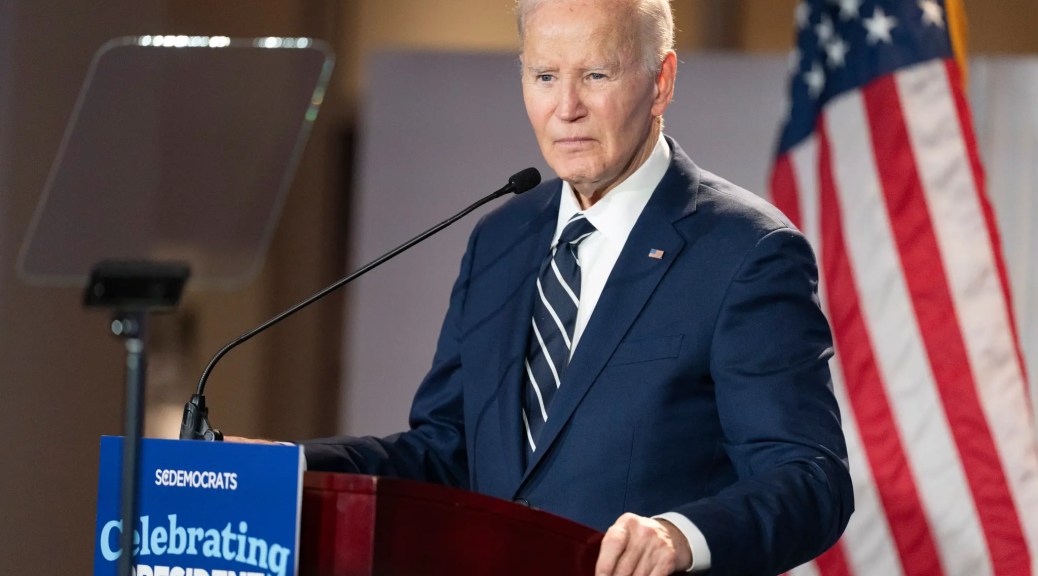
Hillary Clinton Says White Christian Men Are the Problem

No, Mrs. Clinton: Christian Men (and Women) Are Part of the Solution to the World’s Woes


Earlier this week, former Secretary of State Hillary Clinton said out loud what many socially conservative Christian believers have long suspected radical factions of culture contend to be fact:

White, Christian, heterosexual men are the cause of all kinds of problems, and maybe even behind the collapse of Western Civilization itself.

Speaking on MS NOW’s “Morning Joe,” Mrs. Clinton stated:

We haven’t gotten to the more perfect union, and we fought a civil war over part of it. And people have been protesting, you know, for hundreds of years that, you know, things were not as they should be, given our ideals and how we should be moving toward them. So I think that’s what makes us so special as a country.

Then came the kill shot:

And the idea that you could turn the clock back and try to recreate a world that never was, dominated by, you know, let’s say it, white men of a certain persuasion, a certain religion, a certain point of view, a certain ideology, is just doing such damage to what we should be aiming for. And we were on the path toward that, I mean, imperfectly, lots of, you know, bumps along the way. 

Mrs. Clinton’s claim that conservatives are trying to go back to a time that didn’t exist belies a fundamental fact:

In most cases, it’s the radicals who are trying to jump ahead and reimagine a world that never was.

Since the beginning of time, it’s been established there are two genders — male and female. Suggesting that one’s biological sex at birth is malleable is pure lunacy. There is no such thing as a “trans” anybody. It’s made up. It’s make believe. It’s rooted in mental illness.

The sexual revolution that strived to separate sex from marriage has wreaked unspeakable harm and wrecked countless lives and families.

Redefining the family is a radical act that seeks to shake upside down and inside out multi-millennia-old norms. Commodifying children via surrogacy and reckless fertility treatments is something that’s never been done before, and not simply because the technology to do so hasn’t previously existed.

Regardless of political ideology, it’s long been understood that children thrive in a family with a married mother and father. In fact, it’s been a given for thousands of years that no child should be deliberately deprived of having one of both. It’s been common sense. Until now. It’s now increasingly uncommon for the radical revolutionaries to put the interests of children in front of their own selfish lusts and desires.

Hillary Clinton’s broad swipe attack on biblical Christianity is curious in its lack of specificity. We’re left to speculate on what she meant, but she presumably doesn’t approve of the way many of us have sought to see the world through the truths of scripture: the sanctity of life, the exclusivity of one-man, one-woman marriage, two genders, etc.

But if not for Scripture’s teachings, the world would be in far worse shape than it currently is. Christianity has brought enormous advances in education, medicine, human rights, science, the arts and numerous other areas. Christian philanthropy has eased suffering and served countless people through the ages. It has been a bright light in an otherwise darkening world.

One of the great ironies surrounding attacks on America’s Judeo-Christian heritage is that the people attacking it almost all have their platforms because of it.

Yet, Hillary Clinton is right about this one thing: Biblical Christianity is doing damage to the radical ideas that comprise the agenda of those who seek to upend the teachings of God’s timeless Word — and that is a very good thing.


by Paul Batura February 19, 2026 | Culture – Daily Citizen

Source: Hillary Clinton Says White Christian Men Are the Problem

The Chomsky Moment And The Cracks In Cultural Hegemony


Cultural hegemony = a concept developed by Antonio Gramsci, refers to the dominance of a ruling class that maintains power by shaping society’s beliefs, values, and norms to appear as natural, “common sense” truths. It works through cultural institutions (media, education) rather than force, gaining the consent of subordinate groups to support the status quo.


The end of moral asymmetry in American intellectual life.

In 2023, newly disclosed documents related to the late financier Jeffrey Epstein revealed meetings and financial interactions between Epstein and the eminent linguist and public intellectual Noam Chomsky. The disclosures did not accuse Chomsky of criminal conduct. But they confirmed that, years after Epstein’s 2008 conviction for soliciting a minor, Chomsky met with him multiple times and discussed financial matters.

Chomsky’s response was characteristically blunt: his meetings with Epstein, he said, were “none of your business.” The tone may have been legally defensible. Culturally and symbolically, it was something else.

Because Chomsky is not merely a professor emeritus at MIT. For over half a century, he has been one of the central intellectual pillars of the American Left — a figure whose authority extends far beyond linguistics into foreign policy, media criticism, and moral judgment on American power. His 1988 book Manufacturing Consent shaped generations of students’ understanding of media, propaganda, and elite influence. To admirers, he has represented intellectual courage against empire; to critics, an implacable critic of Western liberal democracies.

But in either case, he has stood as a moral voice.

And that is precisely why the Epstein association matters — not as a criminal allegation, but as a symbolic rupture.

From the 1960s to Cultural Hegemony

To understand the magnitude of that rupture, one must place Chomsky within the broader intellectual ecosystem that reshaped American academia after the 1960s. While not formally a member of the Frankfurt School, his work converged with its critique of capitalist modernity, mass culture, and liberal-democratic institutions. Thinkers such as Herbert Marcuse and Theodor Adorno helped institutionalize a style of critical theory that viewed Western society as structurally oppressive beneath its democratic veneer.

Overlay that with the influence of Antonio Gramsci and his theory of cultural hegemony: the idea that ruling classes maintain dominance not only through economic power but by shaping cultural norms, education, and moral language. Change the culture, and you change the political order.

The American New Left absorbed this framework. Over decades, it migrated from street protest to faculty lounges, from counterculture to curriculum committees. The result is what we now call Critical Theory’s progeny: identity-centered scholarship, postcolonial critique, and ultimately the framework popularly labeled CRT. While Chomsky himself has often criticized certain excesses of identity politics and has not endorsed every development in “woke” culture, his lifelong assault on American institutions provided intellectual scaffolding for the suspicion of Western norms that now permeates large sectors of academia.

The point is not that Chomsky caused CRT. It is that he helped legitimize a moral architecture in which America is presumptively guilty, power is presumptively corrupt, and Western institutions are structurally suspect.

For decades, that critique carried a tacit moral asymmetry: the critics stood above the system they condemned.

The Weberian Problem

Here is where the scandal intersects with political theory.

Max Weber famously distinguished between the “ethic of conviction” and the “ethic of responsibility.” The former acts from purity of principle; the latter accounts for the foreseeable consequences of one’s actions in the public sphere.

Chomsky’s career embodies the ethic of conviction. He has consistently argued from first principles against war, imperialism, and elite hypocrisy. But when a public intellectual of such stature maintains a relationship — however defined — with a convicted sex offender embedded in elite financial networks, the question shifts from private intention to public consequence.

Even if the meetings were purely intellectual.

Even if the financial discussions were routine.

The symbolic impact is unavoidable.

A figure who built his reputation exposing the moral compromises of power was, at minimum, socially entangled with a man whose entire operation depended on elite protection.

That tension does not prove corruption. It exposes fragility.

The Collapse of Moral Asymmetry

For many on the Right, the Epstein scandal has become shorthand for elite decadence across party lines. But for the American Left, it strikes deeper. The post-1960s intellectual project has relied not only on critique, but on moral differentiation — the implicit claim that progressive institutions and thinkers occupy higher ethical ground than the corporate, military, or conservative establishments they oppose.

The Chomsky episode does not invalidate every argument he has ever made. It does something subtler: it undermines the aura of moral insulation.

If even the most relentless critic of American elite corruption can be found in the appointment book of one of the most notorious financiers in recent memory, then the narrative of unilateral moral superiority begins to erode.

And once moral asymmetry collapses, the logic of cultural hegemony weakens.

Because Gramscian influence depends on credibility. Cultural authority must appear ethically elevated to justify reshaping curricula, institutions, and norms. If the intellectual class is perceived as subject to the same gravitational pull of wealth, access, and prestige as everyone else, its claim to exceptional moral insight diminishes.

A Myth from the Sixties Meets the Twenty-First Century

The myth born in the 1960s was that radical critique purified the critic. That standing outside “the system” conferred immunity from its temptations. Over time, that myth helped fuel a worldview in which America’s sins were magnified, while the critic’s own milieu was presumed enlightened.

The Epstein revelations do not topple Chomsky’s scholarly contributions to linguistics. They do not erase his influence. But they puncture the myth that critique equals virtue.

And that puncture comes at a moment when the intellectual descendants of the New Left are facing growing resistance from parents, voters, and lawmakers who question the premises of CRT and institutionalized “wokeness.”

The Chomsky moment, then, is not about scandal in the tabloid sense. It is about the exposure of a structural paradox: those who claimed to unmask power were not immune to its proximity.

Cultural hegemony depends on the perception of moral altitude. When that altitude drops, even slightly, the entire architecture wobbles.

The collapse is not judicial.

It is symbolic.

And symbols, in politics, often matter more than verdicts.


S.R. Piccoli | February 18, 2026

Samuel Robert Piccoli is a blogger and the author of several books, among them Being Conservative from A to Z (2014) and Blessed Are the Free in Spirit (2021). He lives in the Venice area.


Source: The Chomsky Moment And The Cracks In Cultural Hegemony – American Thinker

President Trump Not an Outlier on Climate

Green activists may be appalled by the Trump administration’s placement of economic growth, national security, and energy affordability ahead of fighting climate change — but they don’t have the final word.


Qn February 12, President Donald Trump rescinded the “endangerment finding” by the Environmental Protection Agency which asserted in 2009 that so-called greenhouse gases were a threat to public health. It became the legal basis, absent action by a divided Congress, for efforts to rein in emissions for vehicles, power plants, the oil and gas sector, high-energy manufacturing, methane from landfills (and perhaps cattle), even aircraft; anything the EPA wanted to target. This recission supports three of the pillars of the “Powering the Great American Comeback” initiative the EPA announced last February: supporting energy “dominance,” the domestic auto industry, and AI data centers with their massive demand for electricity.

The EPA deregulation followed an executive order issued the day before “directing the Department of War to prioritize long-term Power Purchase Agreements with America’s beautiful, clean coal fleet to ensure military installations and critical defense facilities have uninterrupted, on-demand baseload power.”

A day earlier, the Tennessee Valley Authority, the nation’s largest public utility (and sixth largest utility in the country), to which President Trump has just appointed four new board members, announced it would not close two coal-fired power plants it had planned to shutter. TVA explained, “As power demand grows, TVA is looking at every option to bolster our generating fleet to continue providing affordable, reliable electricity to our 10 million customers, create jobs and help communities thrive.” Emphasis will be on new generating capacity based on natural gas and nuclear power.

Green activists are appalled by the Trump administration’s placement of economic growth, national security, and energy affordability ahead of fighting climate change. However, the U.S. President is not an outlier among world leaders on setting these priorities, as was demonstrated at the 30th annual United Nations Climate Conference of the Parties (COP30) held in Belem, Brazil last November. Ambitions had been lowered as expressed by UN Secretary-General António Guterres when reporting on the release of the 2025 Emissions Gap Report. It concluded that even if Nationally Determined Contributions are fully implemented by 2035, global warming would reach 2.3 degrees Celsius, well above the UN target of 1.5 C or the 2.0 C rise developing countries wanted the UN to shift to so as not to impede their economic growth. However, Guterres still claimed that “1.5 degrees by the end of the century remains our North Star.” Yet everyone knows “end of the century” goals are not serious.

The UN remains a membership organization, whose members are nation-states endowed with sovereign authority over their own actions. The UN has no authority to mandate anything, nor should it have. Even President Barack Obama held to this core principle. Though given the Nobel Peace Prize in the hope that he would embrace the UN climate campaign, he ended the notion that the UN could mandate national actions even though he expressed support for meeting UN goals. The result are Nationally Determined Contributions which can vary widely between countries and within countries when governments change as demonstrated by President Donald Trump’s rejection of the UN climate agenda and the U.S. boycott of COP30.

The target for Net Zero — the cutting of greenhouse gas emissions to as close to zero as possible, with any continued emissions being reabsorbed by carbon “offsets” — has been moved from 2035 to 2050, with many major emitters (including China and India) saying they cannot meet that goal because improving living standards and building economic strength are higher priorities. India’s coal consumption will likely double by 2050.

Bill Gates made headlines less than three weeks before COP30 by reversing his former views on climate. In his memo he wrote, “Although climate change will have serious consequences — particularly for people in the poorest countries — it will not lead to humanity’s demise. People will be able to live and thrive in most places on Earth for the foreseeable future.” And even in the poorest countries, Gates noted climate “will not be the only or even the biggest threat to their lives and welfare. The biggest problems are poverty and disease, just as they always have been.” The way out is more economic growth driven by innovation and the expansion of resources which Gates finds more finite today than they should be. He wants policy to “be prioritized by its ability to save and improve lives cost-effectively” which is what all those who have objected to the restrictions posed by the Greens want.

Green activists had hoped there would be a “roadmap” of policies nations would have to adopt to eliminate the use of fossil fuels. This idea was discarded early as the developing countries know this is impossible. The real world intruded with the annual report of the International Energy Agency (IEA) which was released during COP30. It projected that oil and gas demand will continue to grow until 2050 at least. Between today and 2035, half of the growth in the global automotive fleet comes from emerging and developing economies outside China, while Chinese growth will continue as well. Whether motive power comes from gasoline or electricity, energy demand will go up.

Coal will continue to be a major generator of electricity. While renewable energy, particularly solar, is growing as its technology evolves, it is being used to expand output more than replace existing fossil fuels use. China leads the world in both new solar energy and expanded coal use as it seeks every way it can to expand and do so with domestic sources for security reasons. Across Asia, coal generates half of the electricity. Natural gas has been used as a replacement for coal, but the Greens count is as a fossil fuel to be eliminated, but it won’t be.

The IEA had good news for the nuclear power industry. Surging demand for electricity means that “after more than two decades of stagnation, global nuclear power capacity is set to increase by at least one-third to 2035.” Nuclear is a clean power source. On the sidelines of COP30, the World Nuclear Association confirmed continued expansion of its nuclear coalition of 33 nations (including the U.S.) supporting the global tripling of nuclear power by 2050. Last month, German chancellor Friedrich Merz admitted it had been a “huge mistake” to close all of his country’s nuclear power plants, driving up costs and weakening national security. COP28 had listed nuclear power as one of the “low emissions” technologies that needed to be accelerated (see my earlier reports on COP27,  COP28 and COP29).

The Economist reported “COP30 ends with a whimper.” This was shown by Secretary-General Guterres when in a late plea to the conference asked, “how much more must we suffer?” He was referring to the planet, but it was more accurately aimed at the UN itself, which again found its expensive, anti-growth Green agenda not to the liking of leaders of nations operating in the real world where people expect their living standards to continually improve.


William R. Hawkins | February 19, 2026

William R. Hawkins is a former economics professor who has worked for several Washington think tanks and on the staff of the U.S. House Foreign Affairs Committee. He has written widely on international economics and national security issues for both professional and popular publications including for the Army War College, the U.S. Naval Institute, and the National Defense University, among others. 


Source: President Trump Not an Outlier on Climate – American Thinker

Using Biblical Reasoning, Rubio Pinpoints Why Globalism Is A Recipe For Disaster

‘Ignoring Human Nature’: Using Biblical Reasoning, Rubio Pinpoints Why Globalism Is A Recipe For Disaster


US Secretary of State Marco Rubio’s powerful message at the Munich Security Conference (MSC) has garnered well-deserved attention. Standing before a room of European and Western leaders, Rubio boldly exposed the folly of globalist policies and how they have been used to undermine sovereignty, national strength, and the Judeo-Christian foundation of Western civilization.

One particular statement was truly profound, and its tremendous accuracy stems from being bred out of a Biblical worldview.

Discussing the collapse of communism in Germany, Rubio warned that the celebration of this success in the West quickly morphed into an ill-conceived fantasy about the future of nations.

“The euphoria of this triumph led us to a dangerous delusion: that we had entered, ‘the end of history;’” Rubio emphasized, “that every nation would now be a liberal democracy; that the ties formed by trade and by commerce alone would now replace nationhood; that the rules-based global order – an overused term – would now replace the national interest; and that we would now live in a world without borders where everyone became a citizen of the world.”

This globalist mentality, he stressed, “was a foolish idea that ignored both human nature and it ignored the lessons of over 5,000 years of recorded human history. And it has cost us dearly.”

The Secretary of State correctly pinpointed the fatal flaw of today’s globalism: “human nature.”

This vital truth is confirmed by Scripture.

By man’s naivete, globalism sounds like a perfect ideal. What could be wrong with a world united together in harmony? Even popular science fiction series like Star Trek envision a future in which we have “evolved” past the supposedly barbaric concept of individual nations into a global system of governance. No more bloody wars, corruption, violations of human rights, hunger, and wicked regimes. Surely no one could argue against a future like that!

To many, especially the young, those who fight against globalism are viewed as selfish, power-hungry, and lacking humanity. This is not reality. Those who resist globalism do so out of wisdom.

Equipped with an understanding of human nature and history, we know that globalism would not produce a worldwide “utopia” but rather the creation of a global regime—equipped with all the wicked qualities of human nature—whose power would be limitless. The danger is obvious.

Unfortunately, despite the discernment of Rubio’s warning from Munich, his impactful words will ultimately fall on deaf ears.

God, who knows the future, told us that a day is coming when there will be a global government—and it looks nothing like the appealing picture of peace and harmony presented from the buildings of Davos.

This global government will fall under the leadership of an individual whom the Bible refers to as “the anti-Christ.” While he will come with lofty and deceptive words promising “peace,” his global regime will be blood-soaked and freedom-crushing (Daniel 9:27Rev. 6:2). Its leader will impose his own religious system, and, like all good tyrants, he will demand to be worshipped as god (2 Thess. 2:3-4). Those who refuse will be unable to buy and sell and will be systematically killed (Revelation 13:15-18). Jesus Christ will be the only one with the power to decisively end his rule—and He will do just that (Rev. 19:202 Thess. 2:8).

Even prior to this global government, as Rubio highlighted, globalist-driven policies have “cost us dearly.” The Secretary of State said plainly that the push for open borders has resulted in disastrous mass immigration, the “climate cult” has impoverished societies, and the hostility toward national sovereignty has weakened the West and emboldened global bad actors.

Far from bringing harmony and peace, the agenda-driven goals of globalists have sown instability and catered to the power-hungry.

Which brings us to the other side of globalism. Is “ideal globalism” possible? You might be surprised to learn that it is… but only when sinful human nature is no longer a factor. The Bible tells us that after the collapse of the anti-Christ’s regime, Jesus Christ will establish a global kingdom for a thousand years, with Himself as the head. Those who rule and reign with Him will be resurrected saints—those who, through Christ’s shed blood, have had the chains of sinful human nature broken.

During this time, the world “shall beat their swords into plowshares, and their spears into pruninghooks: nation shall not lift up sword against nation, neither shall they learn war any more” (Isaiah 2:4).

There will be no need to train for war, no injustice or government corruption, and no ideology driven supression of freedom. People are not wrong to want to live in a world like that; however, ignoring sinful human nature and attempting to bring it about with the exclusion of Christ is a recipe for a disaster that is global in scope.


Source: ‘Ignoring Human Nature’: Using Biblical Reasoning, Rubio Pinpoints Why Globalism Is A Recipe For Disaster – Harbinger’s Daily

Remembering Rush: Five Years On – Mark Steyn

Five years ago today, a couple of hours before airtime, I was pottering about getting ready to guest-host The Rush Limbaugh Show when the telephone rang. It was Kraig Kitchin, his longtime friend (and head of the network that distributed his show), calling to break the news that Rush had died earlier that morning.

Post-Limbaugh, talk radio seems smaller to me than it once did – not just because Rush had a big personality, but because he managed to fit the flotsam and jetsam of the news cycle into the big picture. Whatever topic he’d alight on, he would enlarge, and connect to the great coursing currents of the age. He was also incredibly, naturally funny. I have nothing against any of his successors up and down the dial, but, on the very rare occasions I switch on the radio in his time-slot, it’s not the same.

Three years ago, the anniversary of Rush’s death fell on the day of our weekly Clubland Q&A. It wasn’t intended to be a one-hour remembrance of America’s anchorman, but, because listeners had so many questions about him and his show, it somehow turned into one. Listening to it later, I thought it was worth a re-broadcast – not just for the questions and answers, but for other aspects, too: a musical selection courtesy of his beloved Kathryn, a brief evocation of my guest-hosting days, and the last words Rush ever spoke on air.

Click above to listen.

As you can hear toward the end, I was still recuperating from my (first two) heart attacks. Nothing like a spot of ill health to prompt intimations of mortality. We all deal with it in our own way, as I reflect re Rush in the course of the show. Two years ago, in the witness box of the DC Superior Court, I was asked by Michael E Mann’s lead counsel John Williams whether it was not the case that I was a guest-host of The Rush Limbaugh Show. I said I was.

A lot of trial observers seem to think that was the moment when the DC lefties on the jury determined to convict me, of whatever they could. Some of those close to hand suggested that I should have finessed the question: “Oh, I may have guest-hosted that show a couple of times over the years …long time ago …can’t really recall all the shows I’ve guest-hosted …Anne Robinson on the BBC, all kinds of things…”

Instead, as Steve from Manhattan, who was present in the courtroom, reminded me:

Mark, I remember that, when John Williams asked you if you had guest-hosted for Rush, your response was: ‘Till his dying day.’ As with all of your testimony: well said.

As I say, intimations of mortality: If I’m going down, I’d rather go down as who I am than try to thread a needle of lies. Rush was profoundly decent to me – especially when it mattered. He was very decent to untold legions of people, and certainly a much better man than either the revenge-obsessed misogynist psycho or his shyster sitting across the courtroom from me – both since sanctioned by the Court for misleading the jury. So please click away and enjoy the show.

© 2026 Mark Steyn Enterprises (US) Inc. All rights reserved.
No part of this website or any of its contents may be reproduced, copied, modified or adapted, without the prior written consent of Mark Steyn Enterprises.


Source: Remembering Rush: Five Years On :: SteynOnline

Rubio Delivers One Of The Most Important Speeches Since The End Of World War II

We just witnessed one of the most important speeches by an American official since the end of World War II. Secretary of State Marco Rubio’s address at the Munich Security Conference in Germany over the weekend was extraordinarily timely and impactful—and it was delivered before an audience that badly needed to hear it in these perilous times.

The assembled leaders and diplomats, mostly from Europe and across the Western world, heard Secretary Rubio deliver a rousing defense of Judeo-Christian Western civilization. It was a call for the West to unite around our shared history, values, and Christian heritage—and to proudly stand for faith, family, and freedom. Rubio received a standing ovation when he was done, and for good reason.

The Secretary of State powerfully articulated:

For the United States and Europe, we belong together. America was founded 250 years ago, but the roots began here on this continent long before. The man who settled and built the nation of my birth arrived on our shores carrying the memories and the traditions and the Christian faith of their ancestors as a sacred inheritance, an unbreakable link between the old world and the new.


We are part of one civilization — Western civilization. We are bound to one another by the deepest bonds that nations could share, forged by centuries of shared history, Christian faith, culture, heritage, language, ancestry, and the sacrifices our forefathers made together for the common civilization to which we have fallen heir.

He’s exactly right. Rubio went on to say that the fate of the United States and Europe is intertwined. And yet in recent decades, Europe has turned away from that history and those values that made Western civilization the freest, most powerful, and most prosperous the world has ever known.

European nations, not to mention Canada and Australia, have embraced open borders and mass Muslim migration. They have pushed woke gender madness and climate change hysteria. They have refused to take their own national defense seriously. They have seen a rise in anti-Christian and antisemitic sentiments. They have not hesitated to censor, even arrest, anyone who dares speak out against the madness.

Secretary Rubio implored Europe to remember what they’re giving away before it’s too late:

The fundamental question we must answer at the outset is what exactly are we defending, because armies do not fight for abstractions. Armies fight for a people; armies fight for a nation. Armies fight for a way of life. And that is what we are defending: a great civilization that has every reason to be proud of its history, confident of its future, and aims to always be the master of its own economic and political destiny.


It was here in Europe where the ideas that planted the seeds of liberty that changed the world were born. It was here in Europe where the world — which gave the world the rule of law, the universities, and the scientific revolution… They testify not just to the greatness of our past or to a faith in God that inspired these marvels. They foreshadow the wonders that await us in our future. But only if we are unapologetic in our heritage and proud of this common inheritance can we together begin the work of envisioning and shaping our economic and our political future.

Very well said!

Rubio called for a new Western century. But that cannot happen if mass migration continues to transform Western societies into something unrecognizable.

Together, we can not only take back control of our own industries and supply chains — we can prosper in the areas that will define the 21st century.


But we must also gain control of our national borders. Controlling who and how many people enter our countries, this is not an expression of xenophobia. It is not hate. It is a fundamental act of national sovereignty. And the failure to do so is not just an abdication of one of our most basic duties owed to our people. It is an urgent threat to the fabric of our societies and the survival of our civilization itself.


Mass migration is not, was not, some fringe concern of little consequence. It was, and continues to be, a crisis which is transforming and destabilizing societies all across the West.

If you have any doubt about what Secretary Rubio is saying, consider that in practically every European nation, Islam is the fastest-growing religion—and it’s not even close.

That’s why Rubio had to deliver some hard truths in Munich, but he did it all in a tone of optimism and encouragement:

This is what we did together once before, and this is what President Trump and the United States want to do again now, together with you. 


And this is why we do not want our allies to be weak, because that makes us weaker.  We want allies who can defend themselves so that no adversary will ever be tempted to test our collective strength.  This is why we do not want our allies to be shackled by guilt and shame.  We want allies who are proud of their culture and of their heritage, who understand that we are heirs to the same great and noble civilization, and who, together with us, are willing and able to defend it. 


And this is why we do not want allies to rationalize the broken status quo rather than reckon with what is necessary to fix it, for we in America have no interest in being polite and orderly caretakers of the West’s managed decline.  We do not seek to separate, but to revitalize an old friendship and renew the greatest civilization in human history.

What an incredible speech from Secretary Rubio, channeling great leaders of the past like Reagan and Churchill. It came during a very critical hour; the stakes have never been higher. China, Russia, North Korea, Iran, Islam on the march, and an unholy alliance between the woke left and Islam that seeks to destroy the Judeo-Christian West and replace it with something from your worst nightmare.

Colonel Richard Kemp, a good friend and the former commander of all British forces in Afghanistan, talked recently about what could lie ahead for his country, the UK, and it should make everyone sit up and take notice. Remember, this is Great Britain we’re talking about.

“No government—neither the government now nor a prospective government of the UK—has the guts to stop it,” Kemp warned. “If they want to take strong action to prevent the Islamification of the UK, then it’s going to mean big trouble for them. They don’t want trouble. They look four years ahead. They will kick the can down the road to somebody else.”

“I think the end result of that is very likely to be civil war in Britain,” he emphasized. “I’m not talking about the American Civil War… something more like Northern Ireland, but on a much more intensive scale, where you have the indigenous British, some of the immigrant population, and the British government, all on three different sides fighting against each other. I’d be very surprised if that doesn’t happen, because there’s no prospect of the government—any government today—stopping this from occurring.”

America, are you paying attention? Great Britain is arguably our closest ally in the world, our cousin across the pond, and because of weak leadership that despises its own people, the abandonment of Christian heritage and values, and an embrace of mass Muslim migration, Great Britain—a nuclear-armed nation—could be staring at civil war in the not-so-distant future.

Now you see why Secretary Rubio’s speech in Munich was delivered with such urgency. And now you see why preserving our history and way of life is so important.


Source: Rubio Delivers One Of The Most Important Speeches Since The End Of World War II – Harbinger’s Daily

Poland’s Foreign Minister Exposes Europe’s Ignorance on America and Freedom of Speech

It has been one year since Vice President JD Vance laid a smackdown on European nations over the issue of free speech. You may remember that last year, when Vance spoke at the Munich Security Conference (MSC), he castigated the countries in attendance for their interpretation of freedom of speech, among other things.


JUST IN: Vice President JD Vance rips European leaders to their faces at the Munich security conference, calls them out for criminalizing free speech.

 Vance specifically called out the United Kingdom for being the worst of them all. “I wish I could say that this was a fluke, a one-off crazy example of a badly written law being enacted against a single person. But no… Free speech, I fear, is in retreat.”


The BBC remembers that Vance told the audience that the “greatest threat the (European) continent faces comes from within,” and that “the audience were visibly stunned.”

Since then, Europe has intensified its enforcement of the oppressive and Orwellian Digital Services Act (DSA), which mandates the censorship of speech over allegations of “illegal content,” “hate speech,” and “disinformation.”

Against this backdrop, Poland’s Minister of Foreign Affairs Radosław Sikorski showed up at this year’s MSC and, during a panel discussion, offered his own rebuttal of sorts to what Vance said last year.


NOW – Poland’s FM Radosław Sikorski says the U.S. should not impose its free speech values on Europeans: “In the U.S., it’s almost absolute… whereas in Europe, for good historical reasons… we believe in freedom of speech with responsibility.”


That’s a lot to “unpack,” as the kids say, but it’s something we need to do in order to better understand where Europe is coming from and just how wrong they are even by their own so-called standards.


We have a genuine civilizational difference on how we understand freedom of speech. In the United States, it’s almost absolute. It’s almost impossible to win a case of defamation or libel…In Europe, for good historical reasons, for example, in Poland it is forbidden to speak up on behalf of fascism and communism for very good historical reasons, Sikorski said.

The “good historical reasons” are that Poland, in particular, was trampled by fascist Germany under Hitler and by the Communist Soviet Union after him. Poland did not get to experience life outside of fascism and communism until after U.S. President Ronald Reagan led the effort to end the Cold War in the 1980s.

Sikorski may remember that one of the world’s—and Poland’s—most iconic figures from that time, Lech Wałęsa, emerged to free Poland from communist rule through his Solidarity movement. Without Wałęsa, Poland would not have so boldly driven back communism.

Walesa has had a lot to say about free speech over the years. Like the time he said, “When you silence people, you weaken your own country.” Or when he said, “We wanted freedom, and freedom includes the right to criticize.” Or that time he shared, “Censorship is the enemy of truth.” And finally, when he said, “Freedom of speech is the foundation of every democracy.”

Listening to Sikorski, it feels like he either forgot about Walesa’s words, or he wants us to do so.

Using Sikorski’s logic, and that of the people who made it illegal to praise fascism and communism, if you allow people to openly praise that thing you don’t like, your own values and systems of governing aren’t capable of mounting an effective defense. Therefore, you must suppress these things.


To arrive at these conclusions, you have to ignore the timeless messages that Lech Wałęsa shared: that you cannot have freedom or democracy if you do not allow people to say what you dislike; that you will likely lose the truth once you start down the path of governmental censorship.

We believe in freedom of speech with responsibility. And what happened here a year ago was that the vice president of the United States was telling us that our notion of free speech was censorship, and I just don’t accept that. So, the difficulty we now have is that one side of the Atlantic is trying to impose on the other side, Sikorski added.

For an American to read that or to hear that, it would be easy to misunderstand where “freedom of speech with responsibility” comes from. At first, it sounds like a trite justification for the unjustifiable denial of free speech rights, but the term does have a history.

Viktor Frankl was a Holocaust survivor and the author of the classic Man’s Search for Meaning. He was held in Nazi concentration camps, including Auschwitz (in Sikorski’s Poland) and Dachau (in Germany, not that far from where Sikorski made his comments) between 1942 and 1945.

Frankl said two things about “responsibleness” that may provide necessary context for Sikorski’s comments. First, he said, “Freedom is in danger of degenerating into mere arbitrariness unless it is lived in terms of responsibleness.” And second, he stated, “Responsibleness is the very essence of human existence.”


When Frankl talked of “responsibleness,” he was saying that with freedom comes responsibility – not responsibility in the form of following rules or being prepared to take blame – but something deeper. He was talking about something that must come from within each of us and cannot be imposed on us. If we want freedom, we must personally accept responsibility for how we handle that freedom. This is a natural counterbalance he often described.

What Frankl did not mean was that if the government grants you a freedom – like free speech – it should then assign certain responsibilities and conditions for the exercise of that freedom.

When Sikorski described “freedom of speech with responsibility,” he was jumping to the wrong conclusion about what Frankl intended. Sikorski doesn’t see free speech as a right, but as a privilege granted by government that can be taken away by government. He sees free speech “with responsibility” as a compliance issue, not a freedom issue.

Last year, when Vance took the whole of Europe out to the woodshed to make the point that it’s not government’s job to interfere with free speech rights, that wasn’t absolutism. He was simply recognizing that there are certain limits to government power – such as censorship – in a healthy democracy.

Sikorski heard that and now says that when Vance was telling Europe that its “notion of free speech was censorship,” he didn’t accept that.

That’s where Sikorski totally exposed his ignorance on the very issue of free speech as a human right. When you advocate for controls and limits on speech, that is by its very nature censorship. It doesn’t matter what your history is or your stated intent now. It’s still censorship. If you believe in the meaning of words and logic itself, you have to accept that. But Sikorski and the rest of Europe do not.


This is the mindset that enables Europe to slide from censoring speech on fears over the potential for a return of another Hitler or Stalin, to arresting and censoring a man who’s praying to himself in public over the loss of his unborn son. Only a European could miss the absurdity of this and the potential peril that comes with it. When you suppress the populace in the name of combatting fascism, you become that thing you hate.


Tim O’Brien  | 3:18 AM on February 15, 2026

Source: Poland’s Foreign Minister Exposes Europe’s Ignorance on America and Freedom of Speech – PJ Media