Tag Archives: christianity

Presidential Prayer Team; C.P. – The Wise Heart


Don Aslett, author of Done!: How to Accomplish Twice As Much in Half the Time at Home and at the Office, says average people can accomplish more than they think. “Time doesn’t need to be found,” he says. “It’s in plain sight, loudly ticking away. How we use time is the real question.”

For there is a time and a way for everything, although man’s trouble lies heavy on him. Ecclesiastes 8:6

Just before today’s verse, Ecclesiastes 8:5 says, “The wise heart will know the proper time and the just way.” And remember, “If any of you lacks wisdom, let him ask God, who gives generously to all without reproach, and it will be given him.” (James 1:5)

How often have you said “I don’t have time to pray?” God equips you with what you need – wisdom, energy, resources, educations, skills and opportunity – to do what He wants you to do. And, as it implies in today’s verse, He does this even if you’re going through trials. Ask the Lord for insight concerning when and how to pray, and He will give it to you. When He does call you to that time of prayer, intercede for the nation and its leadership to take time to seek God’s priceless wisdom.

Recommended Reading: Proverbs 3:5-18

Charles Stanley – The Discipline of Love


Hebrews 12:5-11

Loving mother and fathers will discipline their children, yet even when

motives and methods are appropriate, no one enjoys undergoing correction. With a long-term perspective, however, we remember that the benefits of discipline far outweigh its momentary discomforts.

A parent’s ultimate goal for corrective measures should be to train children in righteousness. Specifically, there’s a key principle I believe each child should learn before setting off on his own: Whether at home or away from home, every person is accountable to God for his own life, actions, and attitudes. With this in mind, you can see that applying discipline properly takes perseverance, effort, and wisdom on the part of the parent. But it’s an act of selfless, purposeful love.

God, too, disciplines His children. And the fact that we experience His correction proves His love for us. Though this redirection seems unpleasant at the time, it spares us much difficulty later on and leads us toward joy and a fulfilling life.

Our response will determine whether we learn the necessary lesson: we can react with anger about the difficulty, we can repent of our unholy ways and ask to learn whatever God wants to teach us. In seeking Him through His Word, prayer, and counsel, we should then obey.

Human wisdom may seem right at the time, but it leads to destruction. Thankfully, we’re dearly cared for by our heavenly Father, who redeemed us with Jesus’ blood so He could call us His children. When we’re headed in the wrong direction, He lovingly redirects us so we can know the fullness of living His way.


Our Daily Bread — Strength Of A Man


1 Corinthians 16:9-13

Watch, stand fast in the faith, be brave, be strong. —1 Corinthians 16:13

Some years ago I found myself in an elevator with a couple of men. It was late at night, and we all looked weary. The elevator came to a stop, and a larger-than-life cowboy ambled in, wearing a battered hat, an old, stained sheepskin coat, and rundown logger boots. He looked us up and down, met our eyes, and growled, “Good evening, men.” All of us straightened up and squared our shoulders. We were trying to live up to the name.

On this day, which is given over to honoring guys, let’s talk about living up to the name man. We try to be strong and macho, but often it’s just a façade. For all our effort, we realize we don’t measure up. Underneath the bravado we harbor a host of fears, insecurities, and shortcomings. Much of our manliness is pure bluff.

Paul was man enough to admit it: “We also are weak,” he said (2 Cor. 13:4). That’s not pious chatter; it’s a humbling fact. Yet in what seems to be a contradiction, Paul insisted that we are to be “men of courage” (1 Cor. 16:13 NIV).

How can we be the strong person that God meant for us to be? Only by putting ourselves in God’s hands and asking Him to make us that way through His power and enablement. —David Roper

Come, Lord, and give me courage,

Thy conquering Spirit give;

Make me an overcomer—

In power within me live. —Anon.

True strength is the power of God in the soul.


Alistair Begg – The Danger of Unbelief


I give them eternal life, and they will never perish.  John 10:28

The Christian should never think or speak lightly of unbelief. For when a child of God mistrusts His love, His truth, His faithfulness, it is greatly displeasing to Him. How can we ever grieve Him by doubting His upholding grace?

Christian, it is contrary to every promise of God’s precious Word that you would ever be forgotten or left to perish. If it could be so, how could He be true who has said, “Can a woman forget her nursing child, that she should have no compassion on the son of her womb? Even these may forget, yet I will not forget you.”1 What would be the value of the promise–“‘The mountains may depart and the hills be removed, but my steadfast love shall not depart from you, and my covenant of peace shall not be removed,’ says the LORD, who has compassion on you”?2 What truth would there be in Christ’s words–“I give them eternal life, and they will never perish, and no one will snatch them out of my hand. My Father, who has given them to me, is greater than all, and no one is able to snatch them out of the Father’s hand”?3 What value would there be in the doctrines of grace? They would be all disproved if one child of God should perish. What value could be placed in the veracity of God, His honor, His power, His grace, His covenant, His oath, if any of those for whom Christ died, and who have put their trust in Him, should nevertheless be cast away?

Banish then those unbelieving fears, which so dishonor God. Arise, shake yourself from the dust, and put on your beautiful clothes. Remember, it is sinful to doubt His Word in which He has promised you that you will never perish. Let the eternal life within you express itself in confident rejoicing.

The gospel bears my spirit up:

A faithful and unchanging God

Lays the foundation for my hope,

In oaths, and promises, and blood.

1 – Isaiah 49:15

2 – Isaiah 54:10

3 – John 10:28-29

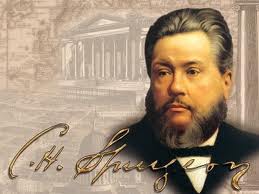
Charles Spurgeon – Unimpeachable justice


“Against thee, thee only, have I sinned, and done this evil in thy sight: that thou mightest be justified when thou speakest, and be clear when thou judgest.” Psalm 51:4

Suggested Further Reading: 1 Samuel 15:1-31

We have heard of men who have confessed their guilt, and afterwards tried to extenuate their crime, and show some reasons why they were not so guilty as apparently they would seem to be; but when the Christian confesses his guilt, you never hear a word of extenuation or apology from him. He says, “Against thee, thee only, have I sinned, and done this evil in thy sight:” and in saying this, he makes God just when he condemns him, and clear when he sentences him for ever. Have you ever made such a confession? Have you ever thus bowed yourselves before God? Or have you tried to palliate your guilt, and call your sins by little names, and speak of your crimes as if they were but light offences? If you have, then you have not felt the sentence of death in yourselves, and you are still waiting till the solemn death-knell shall toll the hour of your doom, and you shall be dragged out, amidst the universal hiss of the execration of the world, to be condemned for ever to flames which shall never know abatement. Again: after the Christian confesses his sin, he offers no promise that he will of himself behave better. Some, when they make confessions to God, say, “Lord, if thou forgive me I will not sin again;” but God’s penitents never say that. When they come before him they say, “Lord, once I promised, once I made resolves, but I dare not make them now, for they would be so soon broken, that they would increase my guilt; and my promises would be so soon violated, that they would sink my soul deeper in hell. I can only say, if thou wilt create in me a clean heart, I will be thankful for it, and will sing to thy praise for ever; but I cannot promise that I will live without sin, or work out a righteousness of my own. I dare not promise, my Father, that I shall never go astray again.”

For meditation: Does your confession of sin to God include the excuses of a King Saul or the acquiescence of a King David, the man after God’s own heart (1 Samuel 13:14)?

Sermon no. 86

16 June (Preached 15 June 1856)

Presidential Prayer Team; J.K. – Steps to Walk By


Dr. Charles Stanley’s seven steps can help you know what David knew about living God’s way and having abiding confidence in Him.

Teach me your way, O Lord, and lead me on a level path because of my enemies. Psalm 27:11

1. Cleansing – keep short accounts. If there is something hindering your relationship with God, confess it. 2. Surrendering – come before Him with a humble heart so that He may exalt you (I Peter 5:6). 3. Asking – “You do not have, because you do not ask.” (James 4:2) Remember that your requests must be in line with what God would want.

4. Meditating – God’s promise is that His Word will be a light to your path, so the more you think on what He says, the more clear the way will become (Psalm 119:105). 5. Believing – you must believe that He will answer your prayer (Mark 11:22-24). 6. Waiting – if you run ahead or manipulate the circumstances, you will miss the good the Lord has in store for you. Choose to wait for His move (Isaiah 40:31).

7. Receiving – as you are obedient and diligent in seeking His will, He will hear and give you the wisdom you need (James 1:5). Now intercede for this nation…that its people will walk in the way of the Lord.

Recommended Reading: Psalm 1

Charles Stanley – A God You Can Count On


Ephesians 2:4-10

On the basis of God’s character, what assurances can we depend upon every single day?

1. God will extend His loving kindness to us. Sending His Son to die in our place proves the Father’s love for us, and His unchanging nature confirms that He will love us forever (Ps. 100:5; (1 John 4:10).

2. The Lord will help us do what He requires of us. He provides not only the spiritual wisdom to carry out our tasks but also the inner strength to complete them. We will receive from Him everything that we need. (Heb. 13:21).

3. God will limit the temptations and pressures He allows in our life. Like a master craftsman, He knows what force can be applied to shape us into Jesus’ image without breaking us (2 Cor. 4:8).

4. God will strengthen and protect us so we do not have to compromise or yield. Though we are weak, He understands how strong we can be when His divine power is working in us. And the Holy Spirit gives us the spiritual strength to say no to temptation (1 Cor. 10:13).

5. Our Father will forgive our sins. He stands ready to receive our confession, forgive us, and bring us back into fellowship with Him—every time (1 John 1:9).

In addition to these blessings for our days on earth, we also have assurances about the future. We can trust that life does not end when our earthly body dies (2 Cor. 5:8), that we will live in heaven forever, and that Jesus Christ will return someday to set all things right.

Life certainly has trials (John 16:33). But when challenges press in, think about all the reasons we can depend upon God.

Our Daily Bread — Imaginary Friend?


Romans 1:18-25

Abraham believed God . . . and he was called the friend of God. —James 2:23

Not long ago, I heard about this billboard along the highway: “God is an imaginary friend—choose reality. It will be better for all of us.”

Obviously, the bold statement compares Christians to children whose vivid imaginations invent a make-believe companion. But is that what God is—an imaginary friend?

Actually, the evidence favors His reality. Ponder these ideas: The creation of the world shows there is a Designer behind the universe (Rom. 1:18-20). The conscience indicates a Lawgiver behind each human’s sense of right and wrong (Rom. 2:14-15). The creativity we express in music and art reflect the same attribute that the Creator possesses (Ex. 35:31-32). Christ reveals what God is like in human form (Heb. 1:1-4). And the communion or fellowship of the Spirit in the Christian heart manifests the reality of God (Gal. 5:22-23).

The Bible tells us there will be those who deny the reality of God (2 Peter 3:4-6). But James reminds us of His reality and how an Old Testament believer befriended Him: “‘Abraham believed God, and it was accounted to him for righteousness.’ And he was called the friend of God” (James 2:23). Have you met the redeeming God? He gave His Son to become your real, eternal Friend (John 15:15). —Dennis Fisher

I’ve found a Friend, O such a Friend!

He loved me ere I knew Him;

He drew me with the cords of love,

And thus He bound me to Him. —Small

The dearest friend on earth is but a mere shadow compared to Jesus. —Chambers

Charles Spurgeon – Israel in Egypt


“And they sing the song of Moses the servant of God, and the song of the Lamb, saying, Great and marvellous are thy works, Lord God Almighty; just and true are thy ways, thou King of saints.” Revelation 15:3

Suggested Further Reading: Exodus 15:1-18

One part of the song of Moses consisted in praising the ease with which God destroyed his enemies. “Thou didst blow with thy wind, the sea covered them; they sank as lead in the mighty waters.” If we had gone to work to destroy the hosts of Pharaoh, what a multitude of engines of death should we have required. If the work had been committed to us, to cut off the hosts, what marvellous preparations, what thunder, what noise, what great activity there would have been. But mark the grandeur of the expression. God did not even lift himself from his throne to do it: he saw Pharaoh coming; he seemed to look upon him with a placid smile; he did just blow with his lips, and the sea covered them. You and I will marvel at the last how easy it has been to overthrow the enemies of the Lord. We have been tugging and toiling all our lifetime to be the means of overthrowing systems of error: it will astonish the church when her Master shall come to see how, as the ice dissolveth before the fire, all error and sin shall be utterly destroyed in the coming of the most High. We must have our societies and our machinery, our preachers and our gatherings, and rightly too; but God will not require them at the last. The destruction of his enemies shall be as easy to him as the making of a world. In passive silence unmoved he sat; and he did but break the silence with “Let there be light” and light was. So shall he at the last, when his enemies are raging furiously, blow with his winds, and they shall be scattered.

For meditation: Creation took God a matter of a few days; the destruction of a great power will take him only a fraction of the time (Revelation 18:8,10,17,19).

Sermon no. 136

14 June (1857)

Max Lucado – Sheep Can’t Sleep


Millions of Americans have trouble sleeping!  You may be one of them. Only one other living creature has as much trouble resting as we do.  They are woolly, simpleminded, and slow…sheep. Sheep can’t sleep!  For sheep to sleep, everything must be just right. No predators. No tension in the flock.  Sheep need help.  They need a shepherd to “lead them” and help them “lie down in green pastures.” Without a shepherd, they can’t rest.

Without a shepherd, neither can we!  Psalm 23:2 says, “He, (the Shepherd) makes me to lie down in green pastures; He leads me beside the still waters.”  Who’s the active one?  Who’s in charge? The Shepherd!  With our eyes on the Shepherd, we’ll get some sleep. Isaiah 26:3 reminds us of the promise,  “You will keep him in perfect peace, whose mind is stayed on You.”


Charles Spurgeon – The wicked man’s life, funeral, and epitaph


“And so I saw the wicked buried, who had come and gone from the place of the holy, and they were forgotten in the city where they had so done: this also is vanity.” Ecclesiastes 8:10

Suggested Further Reading: Luke 16:19-23

Go into Bunhill Fields, and stand by the memorial of John Bunyan, and you will say, “Ah! There lies the head that contained the brain which thought out that wondrous dream of the Pilgrim’s Progress from the City of Destruction to the Better Land. There lies the finger that wrote those wondrous lines which depict the story of him who came at last to the land Beulah, and waded through the flood, and entered into the celestial city. And there are the eyelids which he once spoke of, when he said, “If I lie in prison until the moss grows on my eyelids, I will never make a promise to withhold from preaching.” And there is that bold eye that penetrated the judge, when he said, “If you will let me out of prison today, I will preach again tomorrow, by the help of God.” And there lies that loving hand that was ever ready to receive into communion all them that loved the Lord Jesus Christ: I love the hand that wrote the book, “Water Baptism no bar to Christian Communion.” I love him for that sake alone, and if he had written nothing else but that, I would say, “John Bunyan, be honoured for ever.” And there lies the foot that carried him up Snow Hill to go and make peace between a father and a son, in that cold day, which cost him his life. Peace to his ashes! Wait, O John Bunyan, till thy Master sends his angel to blow the trumpet; and methinks, when the archangel sounds it, he will almost think of thee, and this shall be a part of his joy, that honest John Bunyan, the greatest of all Englishmen, shall rise from his tomb at the blowing of that great trump. You cannot say so of the wicked.

For meditation: In Heaven the saved are still known by name—Abraham, Lazarus; in hell the lost are at best known only by a description—Dives is just the Latin for “a rich man”. See the contrast in Proverbs 10:7. Are the names and burial-places of John Bunyan’s enemies well known even on earth?

Sermon no. 200

13 June (1858)

Joyce Meyer – Well-Aimed Stones


And the Word (Christ) became flesh (human, incarnate) and tabernacled (fixed His tent of flesh, lived awhile) among us. —John 1:14

Jesus is the Word made flesh who came to dwell among men. Scripture also refers to Jesus as “the Rock,” or a stone, as in Luke 20:17, where He is called the chief Cornerstone. If Jesus is the Word made flesh, and if He is the Rock, then each portion of the Word is like a stone.

Instructions were given to the Israelites concerning how to handle their enemy in Deuteronomy 13:10, “And you shall stone him to death with stones, because he has tried to draw you away from the Lord your God.” Remember that David defeated Goliath with a well-aimed stone.

You too can “stone” your enemy, Satan, in accordance with Deuteronomy 30:14, “But the word is very near you, in your mouth and in your mind and in your heart.” Learn the Word and allow the Holy Spirit to teach you how to speak it effectively.

Campus Crusade for Christ; Bill Bright – Produce Lovely Fruit


“You didn’t choose Me! I chose you! I appointed you to go and produce lovely fruit always, so that no matter what you ask for from the Father, using My name, He will give it to you” (John 15:16).

Some time ago I asked a leading theologian and dean of faculty of a renowned theological seminary if he felt that one could be a Spirit-filled person without sharing Christ as a way of life.

His answer was an emphatic, “No!” On what basis could he make such a strong statement? The answer is obvious. Our Savior came to “seek and to save the lost” and He has “chosen and ordained” us to share the good news of His love and forgiveness with everyone, everywhere.

To be unwilling to witness for Christ with our lips is to disobey this command just as much as to be unwilling to witness for Him by living holy lives is to disobey His command. In neither case can the disobedient Christian expect God to control and empower his life.

There are those who say, “I witness for Christ by living a good life.” But it is not enough to live a good life. Many non-Christians live fine, moral, ethical lives.

According to the Lord Jesus, the only way we can demonstrate that we are truly following Him is to produce fruit, which includes introducing others to our Savior as well as living holy lives. And the only way we can produce fruit is through the power of the Holy Spirit.

Bible Reading: John 15:7-15

TODAY’S ACTION POINT: My part of the “bargain” is to share the good news which will produce lovely fruit; God’s part is to provide the wisdom, love and power, through the enabling of the Holy Spirit, to be a fruitful witness. “Lord help me to be faithful in my part, knowing You will be faithful in Yours.”

Our Daily Bread — Unfinished Business


Luke 23:32-43

Lord, remember me when You come into Your kingdom. —Luke 23:42

At age 99, Leo Plass received his college diploma from Eastern Oregon University. He had stopped working on his teaching degree during the 1930s when he left college to earn an income in the logging industry. Seventy-nine years later, he completed the three credits necessary to graduate and resolve this important unfinished business in his life.

Many of us can relate to Leo. Our unfinished business may include apologies left unsaid or, even more important, unfinished spiritual decisions. One of the criminals who was crucified with Jesus needed desperately to make such a decision. Just a few breaths away from eternity, he realized who Jesus was and wanted to be with Him in heaven. He recognized his sin and Jesus’ innocence, and said, “Lord, remember me when You come into Your kingdom” (Luke 23:42). Jesus replied, “Assuredly, . . . today you will be with Me in Paradise” (v.43).

God does not want anyone to perish (2 Peter 3:9). His offer of salvation is open to anyone, regardless of age, health, or stage in life. His offer is open to you. Don’t delay receiving Jesus as Savior (2 Cor. 6:2). Resolve this important, unfinished business, and you’ll look forward to eternity with Him. —Jennifer Benson Schuldt

Time after time, He has waited before,

And now He is waiting again

To see if you’re willing to open the door;

Oh, how He wants to come in!

—Ralph C. Carmichael. © 1958 SpiritQuest Music.

To be saved here means to be safe hereafter.

John MacArthur – Persevering in the Word


“One who looks intently at the perfect law, the law of liberty, and abides by it, not having become a forgetful hearer but an effectual doer, this man shall be blessed in what he does” (James 1:25).

The phrase “and abides by it” in James 1:25 demands our close attention. “Abide” translates a Greek word that means “to stay beside,” “remain,” or “continue.” The idea is that a doer of the Word continually and habitually gazes into God’s perfect law. In other words, he is a persevering learner.

When you have that level of commitment to the Word, you will be an effectual doer–one who is in union with God’s will and seeks to obey it above all else. As you do, God will bless you. That doesn’t necessarily mean you’ll be successful in the eyes of the world, but your priorities and perspectives will be right and the Lord will honor what you do.

This verse is a call to carefully examine yourself in light of God’s standards. That’s not a popular thing in our society because many people have an aversion to serious spiritual thought and self-examination. I believe that’s why Christian television, music, and other forms of entertainment are so popular. Escaping reality through entertainment is far more appealing to most people than gazing into the mirror of God’s Word and having their spiritual flaws and blemishes exposed. But if you desire to be like Christ, you must see yourself for what you are and make any needed corrections. To do that, you must continually examine your life in the light of Scripture.

Can you imagine what the church would be if every Christian did that? Can you imagine the changes in your own life if you did it more consistently? Only the Holy Spirit can enable you to be a doer of the Word. So yield to His leading through prayer and confession as you continue to study and apply God’s Word.

Suggestions for Prayer:

Whenever you study Scripture, ask the Spirit to illuminate your mind and heart, and to use the Word to transform you more and more into the image of Christ.

For Further Study:

Read Colossians 3:16-17, noting what Paul says about responding to the Word.

Alistair Begg – The Origin


There is no light in the planet but that which proceeds from the sun; and there is no true love for Jesus in the heart but that which comes from the Lord Jesus Himself. From this overflowing fountain of the infinite love of God, all our love to God must spring.

This truth is foundational, that we love Him for no other reason than because He first loved us. Our love for Him is the result of His love for us. When studying the works of God, anyone may respond with cold admiration, but the warmth of love can only be kindled in the heart by God’s Spirit.

What a wonder that any of us, knowing what we’re like, should ever have been brought to love Jesus at all! How marvelous that when we had rebelled against Him, He should, by a display of such amazing love, seek to draw us back. We would never have had a grain of love toward God unless it had been sown in us by the sweet seed of His love for us.

Love, then, has for its parent the love of God shed abroad in the heart: But after it is divinely born, it must be divinely nourished. It is not like a plant, which will flourish naturally in human soil–it must be watered from above. Love for Jesus is a flower of a delicate nature, and if it received no nourishment but that which could be drawn from the rock of our hearts, it would soon wither. As love comes from heaven, so it must feed on heavenly bread. It cannot exist in the wilderness unless it be fed by manna from on high. Love must feed on love. The very soul and life of our love for God is His love for us.

I love Thee, Lord, but with no love of mine,

For I have none to give;

I love Thee, Lord; but all the love is Thine,

For by Thy love I live.

I am as nothing, and rejoice to be

Emptied, and lost, and swallowed up in Thee.

Joyce Meyer – Make Mercy a Way of Life


It is because of the Lord’s mercy and loving-kindness that we are not consumed, because His [tender] compassions fail not. They are new every morning; great and abundant is Your stability and faithfulness. —Lamentations 3:22-23

Aren’t you thankful for God’s abundant mercy? It is new every morning. Surely we would all live miserable, defeated lives if it were not for His compassion and willingness to forgive us.

When we meditate on God’s mercy and truly realize how much He willingly forgives us, we can much more easily show mercy to others. Good relationships are impossible unless we are generous with mercy and forgiveness. Being merciful simply means forgiving others even though their actions would warrant our anger.

Jesus said that we are to forgive our enemies and be kind. In this way we show ourselves to be like our Father in heaven, for He is merciful and kind.

God’s mercy is new every morning, and I am glad—because I am sure I use my allotted portion every day. I am grateful for a new, fresh start each day. When we make mistakes, He does not want us to try to sacrifice to make up for them. When others hurt or offend us, He wants us to extend mercy to them.

Learn to give and receive mercy regularly; and let mercy become a way of life for you.

Love Others Today: God’s mercies are new for you right now! Receive the mercy He has for you and extend mercy to everyone around you.

Charles Stanley – Serving God in Ways That Honor Him


2 Timothy 2:4, 16-25

In Paul’s second letter to Timothy, he shared helpful instructions, which apply to all Christians. That epistle is a rich compendium of life lessons he’d learned in full-time service to the Lord.

The apostle knew that while certain people were serving God out of love, others were “preaching Christ even from envy and strife” and out of “selfish ambition, rather than from pure motives” (Phil. 1:15, 17). As for himself, Paul said that from the beginning of his Christian walk, he had been serving God with a clear conscience (2 Tim. 1:3).

Then, to introduce some guidelines for godly service, he gave Timothy this word picture: “No soldier in active service entangles himself in the affairs of everyday life, so that he may please the one who enlisted him as a soldier” (2:4).

There are undoubtedly hundreds of ways to become “entangled,” but Paul gave one specific example—in verse 14, he cautioned against quarreling about words, since that can lead to ruin. He also warned Timothy to avoid “worldly and empty chatter” (v. 16), and urged him to “refuse foolish and ignorant speculations, knowing that they produce quarrels” (v. 23). Paul summarized the idea in the next verse by saying that “the Lord’s bond-servant must not be quarrelsome,” but instead ought to be “kind to all, able to teach, patient when wronged.”

How quickly our service to God can degenerate into an angry debate. We at times think the only way to deal with error is by strong argument, but there are often opportunities to correct opponents with gentleness (v. 25).


Alistair Begg – Love the Lord, Hate Evil


O you who love the Lord, hate evil!

Psalm 97:10

You have good reason to “hate evil,” for just consider what harm it has already caused you. What a world of mischief sin has brought into your heart! Sin blinded you so that you could not see the beauty of the Savior; it made you deaf so that you could not hear the Redeemer’s tender invitations. Sin turned your feet into the way of death and poured poison into the very fountain of your being; it tainted your heart and made it “deceitful above all things, and desperately sick.”1

What a creature you were when evil had done its utmost with you, before divine grace intervened! You were an heir of wrath just like others; you ran with the crowd to do evil. We were all like this, but Paul reminds us, “but you were washed, you were sanctified, you were justified in the name of the Lord Jesus Christ and by the Spirit of our God.”2

We have good reason, indeed, for hating evil when we look back and trace its deadly workings. We were in such a sorry state that our souls would have been lost if omnipotent love had not intervened to redeem us. Even now it is an active enemy, always looking for ways to harm us and to drag us to perdition.

Therefore “hate evil,” Christian, unless you desire trouble. If you want to cover your path with thorns and plant nettles in your pillow, then fail to “hate evil”; but if you would live a happy life and die a peaceful death, then walk in all the ways of holiness, hating evil right to the end. If you truly love your Savior and want to honor Him, then “hate evil.” We know of no cure for the love of evil in a Christian like daily communion with the Lord Jesus. Be often with Him, and it is impossible for you to be at peace with sin.

Order my footsteps by Thy Word,

And make my heart sincere;

Let sin have no dominion, Lord,

But keep my conscience clear.

1 – Jeremiah 17:9

2 – 1 Corinthians 6:11

Charles Spurgeon – Presumptuous sins


“Keep back thy servant also from presumptuous sins.” Psalm 19:13

Suggested Further Reading: 2 Samuel 11

This prayer was the prayer of a saint, the prayer of a holy man of God. Did David need to pray thus? Did the “man after God’s own heart” need to cry, “Keep back thy servant”? Yes, he did. And note the beauty of the prayer. If I might translate it into more metaphorical style, it is like this: “Curb thy servant from presumptuous sins.” “Keep him back, or he will wander to the edge of the precipice of sin. Hold him in, Lord; he is apt to run away; curb him; put the bridle on him; do not let him do it; let thine overpowering grace keep him holy; when he would do evil, then do thou draw him to good, and when his evil propensities would lead him astray, then do thou check him.” “Keep back thy servant from presumptuous sins.” What, then? Is it true that the best of men may sin presumptuously? Ah! It is true. It is a solemn thing to find the apostle Paul warning saints against the most loathsome of sins. He says, “Mortify therefore your members which are upon the earth, fornication, uncleanness, idolatry, inordinate affection,” and such like. What! Do saints want warning against such sins as these? Yes, they do. The highest saints may sin the lowest sins, unless kept by divine grace. You old experienced Christians, boast not in your experience; you may yet trip up unless you cry, “Hold thou me up, and I shall be safe.” You whose love is fervent, whose faith is constant, whose hopes are bright, say not, “I shall never sin,” but rather cry out, “Lord, lead me not into temptation, and when there leave me not there; for unless thou hold me fast I feel I must, I shall decline, and prove an apostate after all.”

For meditation: Five ways to lay hold of the power of God against temptation:

Pray (Luke 22:40)

Obey (Psalm 17:5)

Watch (1 Corinthians 16:13)

Exhort (Hebrews 3:13)

Read (Psalm 119:11)

Sermon no. 135

7 June (1857)