
Tag Archives: christianity

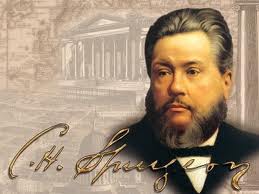
Charles Spurgeon – Constraining love


“Oh love the Lord, all ye his saints.” Psalm 31:23

Suggested Further Reading: 1 John 4:7-12

Christ’s love to us we sometimes guess at, but, ah, it is so far beyond our thoughts, our reasonings, our praises, and our apprehension too, in the sweetest moments of our most spiritual ecstasy,—who can tell it? “Oh, how he loved us!” When Jesus wept at the grave of Lazarus, the Jews exclaimed with surprise—“Behold how he loved him.” Verily, you might say the like with deeper emphasis. There was nothing in you to make him love you, but he left heaven’s throne for you. As he came down the celestial hills, methinks the angels said “Oh, how he loved them.” When he lay in the manger an infant, they gathered round and said, “Oh how he loves.” But when they saw him sweating in the garden, when he was put into the crucible, and began to be melted in the furnace, then indeed, the spirits above began to know how much he loved us. Oh Jesus! When I see thee mocked and spat upon—when I see thy dear cheeks become a reservoir for all the filth and spittle of unholy mouths—when I see thy back rent with knotted whips—when I behold thy honour and thy life both trailing in the dust—when I see thee charged with madness, with treason, with blasphemy—when I behold thy hands and feet pierced, thy body stripped naked and exposed—when I see thee hanging on the cross between heaven and earth, in torments dire and excruciating—when I hear thee cry “I thirst,” and see the vinegar thrust to thy lips—when I hear thy direful cry, “My God, my God, why hast thou forsaken me,” my spirit is compelled to say, “Oh how he loves!”

For meditation: How cold and hardhearted we must be to ever question the Lord’s love towards us (Malachi 1:2).

Sermon no. 325

4 June (Preached 3 June 1860)

John MacArthur – Be Slow to Speak


“Let everyone be . . . slow to speak” (James 1:19).

It is reported that when the Scottish Reformer John Knox was called to preach, he shed many tears and withdrew himself to the privacy of his room. He was grieved and greatly troubled at the prospect of such an awesome responsibility. Only the compelling grace of the Holy Spirit Himself enabled Knox to fulfill his calling.

John Knox understood the importance of being slow to speak. He knew that God holds teachers of the Word accountable for what they say, and will dispense a stricter judgment to them if they violate their ministry (James 3:1- 2).

In one sense, God holds everyone accountable for what they say. You are to “let no unwholesome word proceed from your mouth, but only such a word as is good for edification according to the need of the moment, that it may give grace to those who hear” (Eph. 4:29). But being slow to speak doesn’t refer to vocabulary or opinions. It refers to teaching the Word. You are to pursue every opportunity to hear God’s Word, but exercise reluctance in assuming the role of a teacher. Why? Because the tongue reveals the subtle sins of one’s heart and easily offends others (James 2:2).

Does that mean you should never teach the Bible? No, because God commands every believer to “make disciples . . . teaching them to observe all” that Jesus taught (Matt. 28:19-20, emphasis added). And the Spirit gifts many believers to be preachers and teachers of the Word. Paul said, “I am under compulsion; for woe is me if I do not preach the gospel” (1 Cor. 9:16).

You must take every opportunity to share the gospel with others, and if God has called and gifted you to teach the Word, be faithful to do so. But remember, those are serious and sacred responsibilities. Be sure your motives are pure and your teaching accurate. If someone is offended, let it be by the convicting power of the Word, not by something you said at an unguarded moment.

Suggestions for Prayer:

Ask the Lord to teach you to guard your tongue and to speak only what is edifying to others.

For Further Study:

Read Proverbs 10:19, 13:3, 17:28, and 29:20, noting what each teaches about wise speech.


Campus Crusade for Christ; Bill Bright – Praise Brings Results


“And at the moment they began to sing and to praise, the Lord caused the armies of Ammon, Moab, and Mount Seir to begin fighting among themselves, and they destroyed each other!” (2 Chronicles 20:22).

The armies of Ammon, Moab and Mount Seir had declared war on King Jehoshaphat and the people of Judah. So Jehoshaphat called the people together and prayed, “Oh, our God. Won’t you stop them. We have no way to protect ourselves against this mighty army. We don’t know what to do but we are looking to You.”

Then the Lord instructed the people, “Don’t be afraid, don’t be paralyzed by this mighty army for the battle is not yours, but God’s! Tomorrow, go down and attack them!…But you will not need to fight. Take your places; stand quietly and see the incredible rescue operation God will perform for you” (2 Chronicles 20:15-17).

After consultation with the leaders of the people, Jehoshaphat determined that there should be a choir, clothed in sanctified garments and singing the song, “His Loving kindness Is Forever,” leading the march. As they walked along praising and thanking the Lord, He released His mighty power in their behalf.

One of the greatest lessons I have ever learned about the Christian life is the importance of praise and thanksgiving. The greater the problem, the more difficult the circumstances, the greater the crisis, the more important it is to praise God at all times, to worship Him for who He is; for His attributes of sovereignty, love, grace, power, wisdom and might; for the certainty that He will fight for us, that He will demonstrate His supernatural resources in our behalf.

As in the case of Jehoshaphat and the people of Judah when they began to praise God and He caused the three opposing armies to fight against each other and destroy one another, God will fight for us if we trust and obey Him. There is no better way to demonstrate faith and obedience than to praise Him and to thank Him, even when our world is crumbling around us and the enemy is threatening to destroy. God honors praise. Hebrews 13:15 reminds us, “With Jesus’ help, we will continually offer our sacrifice of praise to God by telling others of the glory of His name.”

Bible Reading: Psalm 136:1, 21-26

TODAY’S ACTION POINT: Today I will continue to praise God and give thanks to Him for who He is. When difficulties arise, I will praise Him all the more and thank Him for His faithfulness. I will depend upon the supernatural resources of God which enable me to live the supernatural life, regardless of the circumstances.

Greg Laurie – Start with a Step


So He said, “Come.” And when Peter had come down out of the boat, he walked on the water to go to Jesus. —Matthew 14:29

Sometimes people are critical of Peter because he sank during his walk on the water to Jesus. But apart from Jesus himself, Peter is the only one to ever walk on water. And, by the way, it wasn’t a presumptuous act on Peter’s part. He did ask permission, and Jesus granted it.

I can imagine Peter swinging one leg over the side of the boat and testing his weight a little. Next, he brings the other leg around. Soon, he is standing on the water. Then he takes a step . . . then another step.

But the waves were high, the sea was rough, and Peter probably thought, What am I doing? Then he began to sink.

As he cried out to Jesus, the Lord reached down, grabbed him, and pulled him up. Then He said, “O you of little faith, why did you doubt?” (Matthew 14:31). I find it interesting that in the original language, “little faith” is one word. There is a tenderness implied in the language, almost as though it were a nickname. Oh, Littlefaith. You were doing so well. I’m so proud of you, Peter. Jesus lifted him up, and they walked back to that boat. But Peter had taken a step of faith.

This reminds us that God can take even a little faith and turn it into big faith if we will just take a step of faith. So many times we want the detailed blueprint. But just start with a step. Just start where you are. Do what you can.

You have your world. You have your opportunities. Start with someone you can think of who needs Christ this year. Pray for him. Share with her. And remember that doors don’t necessarily stay open forever. Everything starts with a little step.

John MacArthur – Examining Your Faith


“Prove yourselves doers of the word, and not merely hearers who delude themselves” (James 1:22).

Our studies this month center on James 1:19þ2:26, which deals with the issue of true faith–a most important consideration indeed. Knowing your faith is genuine is a wonderful assurance, but thinking you’re saved when you’re not is the most frightening deception imaginable. In Matthew 7:21-23 Jesus speaks of those who call Him Lord and even do miracles in His name, but aren’t redeemed. Second Timothy 3:5 speaks of those who have a form of godliness but deny its power. They’re religious but lost. Sadly, many people today are victims of the same deception. They think they’re Christians, but they’re heading for eternal damnation unless they recognize their true condition and repent.

Deception of that magnitude is a tragedy beyond description, but you need never fall prey to it because James gives a series of tests for true faith. This month we’ll be applying one of those tests: your attitude toward God’s Word. That’s an especially crucial test because the Word is the agency of both your salvation and sanctification. The Holy Spirit empowered it to save you, and He continually works through it to conform you to the image of Christ. That’s why Peter said, “You have been born again not of seed which is perishable but imperishable, that is, through the living and abiding word of God. . . . [Therefore] like newborn babes, long for the pure milk of the word, that by it you may grow in respect to salvation” (1 Pet. 1:23þ2:2).

Jesus Himself characterized believers as those who abide in His Word and obey His commandments. They receive the Word with an attitude of submission and humility. However, unbelievers resist and disobey the Word (John 8:31, 43-45). Psalm 119:155 says, “Salvation is far from the wicked, for they do not seek Thy statutes.”

As you study this test of true faith, ask yourself, Do I pass the test? I pray that your answer will echo the words of the psalmist: “I have inclined mine heart to perform thy statutes always, even unto the end” (Ps. 119:112).

Suggestions for Prayer:

Ask God for clarity and confidence about your faith in Christ.

For Further Study:

Read the book of James, noting the instructions he gives regarding Christian living.

Joyce Meyer – Under Construction


My brethren, count it all joy when you fall into various trials, knowing that the testing of your faith produces patience. But let patience have its perfect work, that you may be perfect and complete, lacking nothing. —James 1:2-4 NKJV

As God is working out His perfect plan for us, we often want it to happen right now. But character development takes time and patience. James tells us that when patience has had its perfect work, we will be perfect (fully developed) and complete, lacking nothing. James also speaks about trials of all kinds, and it is during these trials that we are instructed to be patient. Patience is not the ability to wait; it is the ability to keep a good attitude while waiting. Patience is a fruit of the Spirit that manifests itself in a calm, positive attitude despite the circumstances.

“Due season” is God’s season, not ours. We are in a hurry, but God isn’t. He takes time to do things right–He lays a solid foundation before He attempts to build a building. We are God’s building under construction. He is the Master Builder, and He knows what He is doing. God’s timing seems to be His own little secret. The Bible promises that He will never be late, but I have also discovered that He is usually not early. It seems that He takes His every available opportunity to develop the fruit of patience in us.

Love Yourself Today: When you’re feeling impatient, remember: You’re still under construction.

Campus Crusade for Christ; Bill Bright – Life-giving Fruit


“Godly men are growing a tree that bears life-giving fruit, and all who win souls are wise” (Proverbs 11-30).

“The monument I want after I am dead,” said Dwight L. Moody, “is a monument with two legs going around the world – a saved sinner telling about the salvation of Jesus Christ.”

When a young minister asked the Duke of Wellington whether he did not consider it useless to attempt to evangelize India, the Iron Duke sternly replied:

“What are your marching orders, sir?”

No doubt one of Satan’s greatest weapons of deceit in the world today is that of procrastination. Tomorrow I am going to become a soul-winner. Next month, after an evangelistic training program, I will become a great witness. As soon as I finish seminary or Bible college, I’ll begin sharing the good news of the gospel.

But “today is the day of salvation, now is the accepted time,” declares the Word of God. Sensitivity to God’s Holy Spirit – dwelling within to give me supernatural ability – will enable me to tell others what Christ means to me, and what He has done for me.

In God’s economy, the truly wise person, is that one who is redeeming the time, buying up every opportunity to share his faith, refusing to put off that which he knows should become a natural, every-day, moment-by-moment part of his life. Wonder of wonders, God even promises to put the very words in our mouths, if we ask Him, as we go in His name.

Bible Reading: II Corinthians 5:11-17

TODAY’S ACTION POINT: I will do what God leads me to do this day to bear life-giving fruit.

Charles Stanley – How to Advance through Adversity


Romans 8:16-18

When difficulties arise, how can you be sure you’re responding in a way that would please the Lord? Here is an acrostic, based on the word adversity, that suggests the steps you should take:

Accept the events of your life as part of how God equips you.

Decide to follow Jesus’ ways of responding to trials.

Veer to neither the right nor left from the path of obedience.

Expect the Holy Spirit to help you grow through your difficulties.

Remember how the Lord has helped you in the past.

Set your face like flint (Isa. 50:7) to endure the trial without wavering.

Invest additional time in your relationship with God.

Trust the Lord, especially when you do not understand.

Yearn to be made ready for the return of our Savior.

Adversity will either harden or soften us. Some people become hardhearted and resist God in times of adversity, but those who know how to respond are softened by troubles and broken. But when it is of the Lord, brokenness is a positive thing that prepares, equips, energizes, and empowers us as children of the King. We will come to know the fellowship of Jesus’ sufferings and proclaim with Paul, “For our light and momentary troubles are achieving for us an eternal glory that far outweighs them all” (2 Cor. 4:17 NIV).

Let us take as our position the words of James 1:2-4, which says to “consider it all joy” when we encounter trials, because such testing of our faith produces endurance and perfects us.

Campus Crusade for Christ; Bill Bright – Walk in the Light


“Later, in one of His talks, Jesus said to the people, ‘I am the Light of the world. So if you follow me, you won’t be stumbling through the darkness, for living light will flood your path” (John 8:12).

The living room of our home was dark when I quietly slipped a key into the lock and opened the door one night, walking slowly and softly so as not to awaken Vonette and our sons who were very young. Though they had been trained to put away their toys, somehow in the rush to get ready for bed that night they had left cars and a train and other favorite play things scattered throughout the living room.

You guessed it! I stepped on one with wheels that almost threw me to the floor before I could regain my balance. Many a person has broken a leg or an arm under similar circumstances, and some have even fallen and hit their heads on sharp objects, resulting in a fatal accident.

So it is in the spiritual realm. If we insist on walking in the darkness, we will inevitably stumble and take risks that can greatly jeopardize our spiritual health and, in some cases, lead to our spiritual death by cutting ourselves off from God.

Jesus said, “I am the light of the world. He that followeth me shall not walk in darkness.” In the first epistle of John we are told, “God is light, and in Him is no darkness at all. If we say that we have fellowship with Him, and walk in darkness, we lie and do not tell the truth. If we walk in the light, as God is in the light, we have fellowship one with another and the blood of Jesus Christ, God’s Son, cleanses [and keeps on cleansing] us from all sin.”

There is only one person who qualifies to be the light of the world. That is Jesus. So how do we follow Him? What does it mean to walk in the light? Basically, it means that there is no unconfessed sin. It means that we are filled with the Holy Spirit, that we are feasting upon the Word of God and obeying His commands which include sharing our love for Christ with others.

Bible Reading: I Thessalonians 4:5-8

TODAY’S ACTION POINT: Through the enabling of the Holy Spirit, I shall walk in the light with Christ who is the light of the world, and reflect His light in such an attractive way that those who walk in darkness will be drawn to the light as moths are drawn to a burning candle.

Joyce Meyer – God Knows and Sees


The secret [of the sweet, satisfying companionship] of the Lord have they who fear (revere and worship) Him, and He will show them His covenant and reveal to them its [deep, inner] meaning. —Psalm 25:14

Nobody else may see the things you do, but God sees them all. Every time you pray, God sees it. Every time you do an act of kindness secretly, God sees it and plans a reward to give you openly (see Matthew 6:1–6).

Serve the Lord in all that you do today. The Word says, “In the morning sow your seed, and in the evening withhold not your hands, for you know not which shall prosper, whether this or that, or whether both alike will be good” (Ecclesiastes 11:6). God will prosper what you do for Him.

Campus Crusade for Christ; Bill Bright – Our Treasuries Filled


“My paths are those of justice and right. Those who love and follow Me are indeed wealthy. I fill their treasuries” (Proverbs 8:20,21).

“How does it feel to be a millionaire?” someone once asked the maker of Pullman cars, George M. Pullman.

“I have never thought of that before,” replied Pullman, “but now that you mention it, I believe I am no better off – certainly not happier, than when I did not have a dollar to my name and had to work from daylight to dark.

“I wore a good suit of clothes then, and I only wear one suit at a time now. I relished three meals a day then a good deal more than I do three meals a day now. I had fewer cares, I slept better and may add that I believe I was generally far happier in those days than I have been many times since I became a millionaire.”

As Pullman learned, true wealth is not found in earthly riches. The heart can never be fully satisfied with anything of the world; beside, the world passes away. True wealth is found in the knowledge of Christ and of His great salvation, and in the possession of the abiding riches which He bestows on all who believe in Him.

True wealth has to do with spiritual health – inner peace, clear conscience and sins forgiven. That man, woman or young person with abiding faith in Christ, who is yielded to the control of God’s indwelling Holy Spirit, has true wealth – the supernatural life.

Bible Reading: Proverbs 8:22-31

TODAY’S ACTION POINT: I’ll begin to look more to the “Bank of Heaven” for my true wealth.

Charles Spurgeon – Characteristics of faith


“Then said Jesus unto him, Except ye see signs and wonders, ye will not believe.” John 4:48

Suggested Further Reading: Matthew 12:38-42

Trust in the Lord; wait patiently for him; cast all thy confidence where he put all thy sins, namely, upon Christ Jesus alone, and thou shalt be saved, with or without any of these signs and wonders. I am afraid some Christians in London have fallen into the same error of wanting to see signs and wonders. They have been meeting together in special prayer-meetings to seek for a revival; and because people have not dropped down in a fainting fit, and have not screamed and made a noise, perhaps they have thought the revival has not come. Oh that we had eyes to see God’s gifts in the way God chooses to give them! Where the Spirit works in the soul, we are always glad to see true conversion, and if he chooses to work in the church in London, we shall be glad to see it. If men’s hearts are renewed, what matter it though they do not scream out. If their consciences are quickened, what matters it though they do not fall into a fit; if they do but find Christ, who is to regret that they do not lie for five or six weeks motionless and senseless. Take it without the signs and wonders. For my part I have no craving for them. Let me see God’s work done in God’s own way—a true and thorough revival, but the signs and wonders we can readily dispense with, for they are certainly not demanded by the faithful, and they will only be the laughing-stock of the faithless.

For meditation: A demand for signs and wonders regularly meets with the same response in the New Testament—Matthew 12:38-40; 16:1-4; John 2:18-22; 1 Corinthians 1:22-24.

Sermon no. 317

28 May (Preached 27 May 1860)

Campus Crusade for Christ; Bill Bright – Wait Patiently and Confidently


“But if we must keep trusting God for something that hasn’t happened yet, it teaches us to wait patiently and confidently” (Romans 8:25).

During my college days, I was not a believer. Only in retrospect can I appreciate in some measure the testimony of one of my professors, who was the head of the education department.

He and his wife were devout Christians. They had a Mongoloid child, whom they took with them wherever they went, and I am sure that their motivation for doing so – at least in part – was to give a testimony of the fruit of the Spirit, patience and love.

They loved the child dearly and felt that God had given them the responsibility and privilege to rear the child personally as a testimony of His grace, rather than placing her in a home for retarded children. The Bible teaches us that God never gives us a responsibility, a load or a burden without also giving us the ability to be victorious.

This professor and his wife bore their tremendous burden with joyful hearts. Wherever they went, they waited on the child, hand and foot. Instead of being embarrassed and humiliated, trying to hide the child in the closet, they unashamedly always took her with them, as a witness for Christ and as an example of His faithfulness and sufficiency.

They demonstrated patience and love by drawing upon the supernatural resources of the Holy Spirit in their close, moment-by-moment walk with God. Because of the working of the Holy Spirit in their lives, they were able to bear their trials supernaturally without grumbling or complaining. This is not to suggest that every dedicated Christian couple would be led of God to respond in the same way under similar circumstances. In their case, their lives communicated patience.

Bible Reading: Romans 8:18-24

TODAY’S ACTION POINT: Knowing that God’s Holy Spirit indwells me and enables me to live supernaturally, I will claim by faith the fruit of the Spirit (Galatians 5:22,23) with special emphasis on patience for today and every day.

Previous Day: Sunday, May 26, 2013

Next Day: Tuesday, May 28, 2013

Charles Stanley – The Cost of Uncontrolled Anger

James 1:19-20

Anger is an extremely powerful emotion. It can destroy lives, tear relationships apart, and ruin a believer’s witness.

The apostle Paul understood the negative potential of resentment, and he offered this advice on how to deal with it: “Let all bitterness and wrath and anger and clamor and slander be put away from you, along with all malice. And be kind to one another, tender-hearted, forgiving each other, just as God in Christ also has forgiven you” (Ephesians 4:31-32).

When we’re right in the middle of tense situations, Paul’s recommendations may seem unrealistic and impractical. But unless we apply his advice, we could easily face the devastating consequences of uncontrolled rage. For example, our anger can shut down communication with others. It can also lead to a silent but very damaging type of resentment—the “passive-aggressive” person takes out his bitterness on others in subtle ways. One of the most harmful consequences of uncontrolled anger is depression. Over time, inner turmoil and unresolved conflicts will take their toll on a person’s mental health.

But we have a choice. We can let our anger control us—which means we opt to suffer the consequences. Or we can release this debilitating emotion by forgiving those we feel have stirred our bitterness.

Try to identify causes of anger in your life, and bring them before the Lord. Trust that He will empower you to overcome these sources of strife. Read Ephesians 4:31-3 once more, and let the truth of God’s Word strengthen you.

Our Daily Bread — A Debtor


2 Corinthians 5:12-17

The love of Christ compels us. —2 Corinthians 5:14

As a young man, Robert Robinson (1735–1790) enjoyed getting into trouble with his friends, so the stories go. At age 17, though, he heard a sermon by George Whitefield from Matthew 3:7, and realized his need for salvation in Christ. The Lord changed Robinson’s life, and he became a preacher. He also wrote several hymns, including his best-known “Come, Thou Fount of Every Blessing.”

Lately I’ve been pondering God’s amazing grace toward us and the last stanza of that hymn: “O to grace how great a debtor daily I’m constrained to be!” The hymn brings to mind the apostle Paul’s words: “The love of Christ compels [or constrains] us . . . that those who live should live no longer for themselves, but for Him who died for them and rose again” (2 Cor. 5:14-15).

We can’t earn God’s love and grace. But because He has lavished it on us, how can we help but love Him in return by living for Him! I’m not exactly sure what that looks like, but it must include drawing near to Him, listening to His Word, serving Him, and obeying Him out of gratitude and love.

As debtors, we are called to live each day for Jesus who gave Himself for us. —Anne Cetas

Come, Thou Fount of every blessing,

Tune my heart to sing Thy grace;

Streams of mercy, never ceasing,

Call for songs of loudest praise. —Robinson

Those who know God’s grace show God’s grace.


Alistair Begg – Do You Care Too Much?


Cast your burden on the Lord, and he will sustain you.  Psalm 55:22

Care, even when addressed to legitimate matters, if it is carried to excess, has in it the nature of sin. Again and again Jesus exhorted His followers to avoid anxious care. The apostles reiterated the call; and it is one that cannot be neglected without involving transgression: For the very essence of anxious care is imagining that we are wiser than God and putting ourselves in His place as if we could do for Him what He has undertaken to do for us. We attempt to think of things that we imagine Him forgetting; we work to take upon ourselves a heavy burden, as if He were unable or unwilling to take it for us.

Now this disobedience to His plain precept, this unbelief in His Word, this presumption that intrudes upon His province, is all sinful. But more than this, anxious care often leads to acts of sin. If we cannot calmly leave our affairs in God’s hand but attempt to carry our own burden, we will be tempted to use wrong means to help ourselves. This sin leads to a forsaking of God as our counselor and resorting instead to human wisdom. This is going to the broken well instead of to the fountain, a sin of which Israel was guilty in the past.

Anxiety makes us doubt God’s loving-kindness, and so our love to Him grows cold; we feel mistrust, and in this we grieve the Spirit of God, so that our prayers are hindered, our consistent example spoiled, and our life one of self-seeking. Such lack of confidence in God leads us to wander far from Him; but if through simple faith in His promise we cast each burden as it comes upon Him and are “not . . . anxious about anything”1 because He undertakes to care for us, it will keep us close to Him and strengthen us against temptation. “You keep him in perfect peace whose mind is stayed on you, because he trusts in you.”2

1 – Philippians 4:6

2 – Isaiah 26:1

Campus Crusade for Christ; Bill Bright – Long, Satisfying Life


“If you want a long and satisfying life, closely follow my instructions” (Proverbs 3:2).

A famous children’s specialist declared, “When it comes to a serious illness, the child who has been taught to obey has four times the chance of recovery that the spoiled and undisciplined child has.”

Every parent should consider well the implications of that statement. We have all been taught that one of the Ten Commandments was for children to obey their parents.

But it is doubtful that many of us have ever considered that obedience might mean the difference between the saving or losing of a child’s life.

The hymnwriter who said that we should “trust and obey, for there’s no other way to be happy in Jesus” well knew what he was saying. A “long and satisfying life” certainly would be synonymous with a “happy life.”

Many Christians have every intention of following God’s instructions – without ever really knowing what those instructions are. That is why it is supremely important for every believer to spend time in God’s Word, the book of instructions for Christians.

Are you one of those who truly want a long satisfying life? Then, are you willing to follow God’s instructions for your life? Are you willing to familiarize yourself thoroughly with His instructions so that you will have no difficulty knowing and following them?

Bible Reading: Proverbs 3:1-8

TODAY’S ACTION POINT: I will follow closely God’s instructions in order that I may live a long and satisfying life.

Alistair Begg – He Begins and Completes


The Lord will fulfill his purpose for me. Psalm 138:8

It is clear that the confidence that the psalmist expresses is a divine confidence. He did not say, “I have enough grace to perfect that which concerns me–my faith is so steady that it will not falter–my love is so warm that it will never grow cold–my resolution is so firm that nothing can move it.” No, his dependence was on the Lord alone. If we display a confidence that is not grounded on the Rock of ages, our confidence is worse than a dream; it will fall upon us and cover us with its ruins, to our sorrow and confusion.

The psalmist was wise; he rested on nothing less than the Lord’s work. It is the Lord who has begun the good work within us; it is He who has carried it on; and if He does not finish it, it never will be completed. If there is one stitch in the celestial garment of our righteousness that we must insert ourselves, then we are lost; but this is our confidence–what the Lord begins, He completes. He has done it all, must do it all, and will do it all. Our confidence must not be in what we have done, nor in what we have resolved to do, but entirely in what the Lord will do.

Unbelief insinuates: “You will never be able to stand. Look at the evil of your heart–you can never conquer sin; remember the sinful pleasures and temptations of the world that beset you–you will be certainly allured by them and led astray.” True, we would certainly perish if left to our own strength. If by ourselves we navigate the most frail vessels of our lives over so rough a sea, we might well give up the voyage in despair; but thanks be to God, He will complete that which concerns us and bring us to the desired haven. We can never be too confident when we confide in Him alone, and never too eager to have such a trust.

John MacArthur – Marveling at God’s Forgiveness


The twelve apostles included “Matthew the tax-gatherer” (Matt. 10:3).

Matthew describes himself as “Matthew the tax-gatherer” (Matt. 10:3). He is the only apostle whose name is associated with an occupation. Apparently Matthew never forgot what he had been saved from, and never lost his sense of awe and unworthiness over Christ’s forgiveness.

This is how he set the scene of his own conversion: Matthew 9:1-8 tells us Jesus forgave the sins of a paralytic man and then healed him of his paralysis. When the Jewish scribes accused Him of blasphemy for claiming to have the authority to forgive sins, He said to them, “Why are you thinking evil in your hearts? For which is easier, to say, ‘Your sins are forgiven,’ or to say, ‘Rise, and walk’?” He wanted them to know His miracles testified of His deity. As God, He could as easily forgive sins as He could heal diseases.

Immediately after that account, Matthew gave the account of his own call. It’s as if he wanted his own salvation to serve as an illustration of Christ’s ability to forgive even the vilest of sinners. Matthew 9:9 says, “As Jesus passed on from there, He saw a man, called Matthew, sitting in the tax office; and He said to him, ‘Follow Me!’ And he rose, and followed Him.”

When the Pharisees questioned Jesus’s practice of associating with tax-gatherers, He said to them, “It is not those who are healthy who need a physician, but those who are sick. . . . I did not come to call the righteous, but sinners” (vv. 12-13). The Pharisees were sick with sin but thought they were healthy. Matthew and his associates knew they were sinners who needed a Savior.

Do you share Matthew’s humility and sense of awe at receiving Christ’s precious gift of forgiveness? I pray that you do and that you are continually praising Him for it.

Suggestions for Prayer:

Thank God for the wonder of forgiveness.

If you have lost your sense of awe over God’s forgiveness, perhaps you’re taking His grace for granted. Confess your apathy and ask Him to give you a deep appreciation for the enormous price He paid for your salvation.

For Further Study:

As a reminder of what Christ endured for you, read Matthew 26:17–27:56, which chronicles the events of His betrayal and crucifixion.

Joyce Meyer – Let Go of the Ashes


The Lord has anointed . . . me . . . to grant [consolation and joy] to those who mourn . . . to give them an ornament (a garland or diadem) of beauty instead of ashes, the oil of joy instead of mourning. —Isaiah 61:1,3

This passage specifically says God wants to give consolation and joy—beauty instead of ashes—for those who mourn. But in order for Him to do that you must let go of the ashes of your past.

Some people have their loved ones cremated and keep their ashes in a box or urn. Eventually they may carry the ashes to a meaningful spot and throw them to the wind. It’s a way of letting them go—permanently.

That is what God wants you to do if you have been hurt in the past and are hanging on to the ashes. If you want real joy, let go of those ashes, allowing the wind of the Holy Spirit to blow them out of your life . . . permanently!