

Tag Archives: John MacArthur

John MacArthur – Strength for Today – Commitment to God’s Standards


“I, therefore, the prisoner of the Lord, entreat you to walk in a manner worthy of the calling with which you have been called” (Ephesians 4:1).

Just as organizations have rules their members must follow, God has standards Christians must live by.

When someone is part of a group, he or she is obligated to follow its laws or standards. American citizens are required to obey the laws of the United States. Employees must conform to the rules of their company. Athletic teams are expected to listen to their coach.

Most of us want to be part of a group because with belonging comes acceptance. This desire to conform can be quite strong, sometimes dangerously so. During Jesus’ time, “many even of the rulers believed in Him, but because of the Pharisees they were not confessing Him, lest they should be put out of the synagogue; for they loved the approval of men rather than the approval of God” (John 12:42-43). Those rulers were so committed to their religious system that they damned their souls by rigidly adhering to its code.

Continue reading John MacArthur – Strength for Today – Commitment to God’s Standards
John MacArthur – Our Sympathetic High Priest


“Assuredly He does not give help to angels, but He gives help to the descendant of Abraham. Therefore, He had to be made like His brethren in all things, that He might become a merciful and faithful high priest in things pertaining to God, to make propitiation for the sins of the people. For since He Himself was tempted in that which He has suffered, He is able to come to the aid of those who are tempted” (Heb. 2:16-18).

Jesus came to sympathize with us, so He could be our merciful and faithful High Priest.

In his letters to Timothy, Paul counseled and encouraged his young associate about many things—his health, his critics, his moral and spiritual warfare. His counsel is well summed up in these words: “Remember Jesus Christ, risen from the dead, descendant of David” (2 Tim. 2:8).

Like Timothy, we need to be reminded of Christ’s humanity, especially when life becomes particularly tough. Then we can pray, “Lord, You know what You endured while You were here. I’m going through it now.” We can be sure He knows and will encourage us.

Jesus came not only to save us but also to sympathize with us. He experienced what we experience so He could be a “merciful and faithful high priest.” After all, “we do not have a high priest who cannot sympathize with our weaknesses, but one who has been tempted in all things as we are, yet without sin” (Heb. 4:15).

Jesus felt everything we will ever feel—and more. Most of us will never know the full degree of any given temptation because we usually succumb long before we reach it. But since Jesus never sinned, He took the full measure of every temptation.

Ours is not a cosmic God, powerful and holy, but indifferent. He knows when we hurt, where we are weak, and how we are tempted. Jesus is not just our Savior, but our loving Lord who sympathizes with us. Rejoice in the greatness of His love for us.

Suggestion for Prayer

Ask God to remind you of your need of Him at all times, not just when times are tough.

For Future Study

Memorize 1 Corinthians 10:13 for quick recall whenever you are faced with any trial.

John MacArthur – Satan’s Conqueror


“Since . . . the children share in flesh and blood, He Himself likewise also partook of the same, that through death He might render powerless him who had the power of death, that is, the devil; and might deliver those who through fear of death were subject to slavery all their lives” (Heb. 2:14-15).

Christ came to break the power of Satan which He did by conquering death.

To be free to live with God and share in all His blessings, someone had to shatter Satan’s death grip on us. Sin is what gives Satan his powerful hold on us, but the power itself is death.

Satan knew that God required death for us because of sin. He knew that all died in Adam—that death became a certain fact of life. And he knew that men, if they remained as they were, would die and go out of God’s presence into hell forever. So he wants to hang onto men until they die because once they are dead, the opportunity for salvation is gone forever.

To wrest the power of death from Satan’s hand, God sent Christ into the world. If you have a greater weapon than your enemy, then his weapon is useless. You can’t fight a machine gun with a bow and arrow. Satan’s weapon is death, but eternal life is God’s weapon, and with it Jesus destroyed death.

How was He able to do it? He rose again, proving He had conquered death. That’s why He said, “Because I live, you shall live also” (John 14:19). His resurrection provides the believer with eternal life.

Nothing terrifies people more than the fear of death. But when we receive Christ, death in reality holds no more fear for us since it simply releases us into the presence of our Lord. We can say with Paul, “To me, to live is Christ, and to die is gain” (Phil. 1:21). Rejoice that you have placed your hand into the hand of the conqueror of death, who will lead you through death and out the other side.

Suggestion for Prayer

Ask God to give you a greater realization that He has conquered death to help you live life more fully to His glory.

For Further Study

Read 1 Corinthians 15:50-58. How are we to live our lives based on what we know about death?

John MacArthur – He Who Sanctifies


“Both He who sanctifies and those who are sanctified are all from one Father; for which reason He is not ashamed to call them brethren, saying, ‘I will proclaim Thy name to My brethren, in the midst of the congregation I will sing Thy praise.’ And again, ‘I will put My trust in Him.’ And again, ‘Behold, I and the children whom God has given Me'” (Heb. 2:11-13).

Our holy Christ has made us holy; thus He can now call us His brothers.

From our own perspective and experience, it is difficult to think of ourselves as holy. Sin simply is too much a part of us in this fallen world. In thought and practice we are far from holy, but in Christ we are perfectly holy.

We may not always act holy, but because of our faith in Christ we are perfectly holy in God’s sight. Just as a child may not always act like his father, he is nonetheless still his son. We are holy in the sense that before God, the righteousness of Christ has been applied and imputed on our behalf through faith. We were made holy through His sacrifice and have become “those who are sanctified.”

“By one offering He has perfected for all time those who are sanctified” (Heb. 10:14). We are as pure as God is pure, righteous as Christ is righteous, and therefore entitled to be called His brothers because we now share in His righteousness.

The Sanctifier and sanctified now have “one Father,” and the Sanctifier “is not ashamed” to call the sanctified His brothers. What an overwhelming truth!

The practical experience of a Christian’s life in this world includes sin, but the positional reality of his or her new nature is holiness. “In Him [we] have been made complete” (Col. 2:10). Yet practically we have a long way to go. So the overriding purpose of our lives is to become in practice what we are in position. Now that we are Christ’s brothers and God’s children, let that be all the motivation we need to live like it.

Suggestion for Prayer

Thank the Lord for His sanctifying work on the cross, which enables you to be holy.

For Further Study

Read Romans 1:16. Based on what God has done for you through Christ, can you wholeheartedly echo Paul’s statement?

John MacArthur – The Author of Our Salvation


“It was fitting for Him, for whom are all things, and through whom are all things, in bringing many sons to glory, to perfect the author of their salvation through sufferings” (Heb. 2:10).

Through His death, Christ became the perfect leader for His people.

As we look at what Christ has done, we must never forget that He was fulfilling the sovereign plan of God. The writer of Hebrews tells us it was fitting in God’s sight for Christ to bring many sons to glory. That means everything God did through Christ was consistent with His character.

The cross was a masterpiece of God’s wisdom. It displayed His holiness in His hatred of sin. It was consistent with His power: Christ endured in a few hours what it would take an eternity to expend on sinners. The cross displayed His love for mankind. And Christ’s death on the cross agreed with God’s grace because it was substitutionary.

To bring “many sons to glory,” God had “to perfect the author of their salvation through sufferings.” The Greek word translated “author” (archēgos) means “pioneer” or “leader.” It was commonly used of a pioneer who blazed a trail for others to follow. The archēgos never stood at the rear giving orders; he was always out front blazing the trail. As the supreme Archēgos, Christ has gone before us—He is our trailblazer.

Life seems most anxious and dreadful when death is near. That’s a trail we cannot travel by ourselves. But the Author of our salvation says, “Because I live, you shall live also” (John 14:19). Only the perfect Pioneer could lead us out of the domain of death into the presence of the Father. All you have to do is put your hand in His nail- scarred hand and He will lead you from one side of death to the other. Then you can say with the apostle Paul, “O death, where is your victory? O death, where is your sting?” (1 Cor. 15:55).

Suggestion for Prayer

Praise God for all His attributes, specifically for each one displayed in Christ’s death for you.

For Further Study

Read Hebrews 5:8-9 and 1 Peter 2:19-25. How do those verses expand on Hebrews 2:10?

John MacArthur – The Humiliation of Christ


“We . . . see Him who has been made for a little while lower than the angels, namely, Jesus, because of the suffering of death crowned with glory and honor, that by the grace of God He might taste death for everyone” (Heb. 2:9).

In serving as our substitute, Christ humbled Himself supremely.

Jesus’ death on the cross was not easy or costless—it was a horrific death. It was not calm and peaceful; it was accompanied by outward torture and inward agony. The death He tasted was the curse of sin. In a few hours on that cross, He suffered the total agony of every soul for all eternity. He was guilty of no sin, yet He chose to suffer the weight of all sins committed for all time.

God sent His Son, and His Son willingly came to die to redeem mankind. Paul writes, “When the fulness of time came, God sent forth His Son, born of a woman, born under the Law, in order that He might redeem those who were under the Law” (Gal. 4:4-5).

Only by tasting death as a man could He free mankind from death. Historically, kings have had someone taste their food and drink before they consumed it. Christ drained to the dregs the cup of poison rightfully meant for us before it could ever touch our lips. He substituted His death for ours, releasing us from the deadness of sin to life with God.

What moved Jesus to suffer for us? Grace. What we did not deserve (salvation) we received, and what we did deserve (death) we did not receive. Unbounded love prompted Christ’s gracious work on our behalf: “In this is love, not that we loved God, but that He loved us and sent His Son to be the propitiation for our sins” (1 John 4:10).

After He accomplished the work of His substitutionary death, He was “crowned with glory and honor” and exalted to the right hand of the Father, where He will reign forever and ever. He is our great Substitute, whom we can thank and praise throughout all eternity.

Suggestion for Prayer

Ask God to give you opportunities to communicate the gospel to new people, even if you might suffer in the process.

For Further Study

Read Isaiah 52:13—53:12 to understand what the God of the universe had to endure at the hands of men.

John MacArthur – Born to Die


“We . . . see Him who has been made for a little while lower than the angels, namely, Jesus, because of the suffering of death crowned with glory and honor, that by the grace of God He might taste death for everyone” (Heb. 2:9).

Jesus Christ was born to die as our substitute.

At this time of year, it is difficult for us to see Jesus other than as a little baby. We of course know why He came, but we usually focus on His death on the cross at another time of year. But we must never forget that He came to die.

Those soft baby hands fashioned by the Holy Spirit in Mary’s womb were made to have two great nails hammered through them. Those little chubby feet were to walk up a hill and be nailed to a cross. That sacred head was made to wear a crown of thorns. His tender body wrapped in swaddling clothes would be pierced by a spear to reveal a broken heart. The death of Christ was no accident; He was born to die.

Jesus died to remove the curse so we could regain our dominion. But to do that, He had to come as a man. Even though in doing so He temporarily became lower than the angels, He accomplished something no angel could: our restoration.

The first and foremost reason for the incarnation is that Christ might taste death on behalf of every man and woman. He came to die in our place—to be our substitute. God had two options: Either let us die and pay for our own sins, or allow a substitute to take our punishment and die in our place. He mercifully chose the latter.

It is vital that we affirm the fact of Christ’s substitutionary death because modern liberal theology claims Jesus died merely as an example, like a martyr dying for some cause. But He died as a substitute for you and me. As a result He freed us to live for and with God. Rejoice that the creator of angels, the Lord of hosts, would become lower than His creation for our sakes.

Suggestion for Prayer

Thank the Lord for His willingness to humble Himself to become a man to save you.

For Further Study

Read Psalm 22 and note which verses prophesy Jesus’ suffering on the cross.

John MacArthur – The Purpose of Christ’s Exaltation


“God highly exalted Him . . . to the glory of God the Father” (Philippians 2:9, 11).

When the Son is glorified, so is the Father.

The purpose of Christ’s exaltation is to glorify God. Philippians 2:11 says Jesus will be acknowledged as Lord “to the glory of God the Father.” In Isaiah 45:5 God says, “I am the Lord, and there is no other; besides Me there is no God.” None can be compared to God. He does not ask anyone for advice. He knows all and does exactly what He wants to do. All His purposes come to pass.

In light of who God says He is, one might assume that it would be blasphemous for everyone to bow to Jesus Christ and confess Him as Lord. To so honor Christ would seem to put Him in competition with the Father.

But the mystery of the Trinity is that when the Son is glorified, the Father is glorified. Perfect glory given to the Son is perfect glory given to the Father. John 5:23 says the Father has given all judgment to the Son “that all may honor the Son, even as they honor the Father. He who does not honor the Son does not honor the Father who sent Him.” That’s why the Father said of Jesus, “This is My beloved Son, with whom I am well pleased; hear Him!” (Matt. 17:5). When you believe in Jesus Christ and confess Him as Lord, you exalt not only the Son but also the Father. There is no competition within the Trinity. The Father is exalted by what He accomplishes in the Son. They are one.

What a joy to know that our confessing of Jesus as Lord glorifies God. Let’s continue to glorify Him as Lord by bearing spiritual fruit in our lives (see John 15:8).

Suggestions for Prayer

Jesus said, “Whatever you ask in My name, that will I do, that the Father may be glorified in the Son” (John 14:13). Whatever you ask in Christ’s name, do so by acknowledging His sovereignty and desiring that God be glorified.

For Further Study

What do Romans 9:5, 1 Corinthians 15:28, and John 13:31-32 show about the glory of the Father and the Son?

John MacArthur – The Restriction of Man’s Destiny


“But now we do not yet see all things subjected to him” (Heb. 2:8).

God’s original destiny for man was restricted by man’s sin.

God gave man dominion over all the earth, and the earth supplied his every need. All he had to do was accept and enjoy the earth as provided for him. But Adam sinned and Satan usurped the crown. A new chain of command was born: the earth now rules man.

To know how true that is, all you need do is look at the amount of effort expended on restoring the ecological balance of the earth. Environmentalism is a popular watchword of our day. Yet with all our modern technology, we are still unable to gain control over the earth.

Look what happened once Adam sinned: no longer could man easily harvest what the earth provided—now he had to toil by the sweat of his brow (Gen. 3:18). Women would experience pain in childbirth (3:16). Murder soon followed in Adam’s family. God had to destroy virtually all mankind in the Flood because they had become so debauched.

Much of the animal kingdom now lives in fear of man and cannot be tamed. Where once the earth produced good things naturally and abundantly, now it produces thorns, weeds, and other harmful things. Extremes of heat and cold, poisonous plants and reptiles, earthquakes, typhoons, floods, hurricanes, and disease were all products of the Fall. Man was no longer a king but a slave—a dying creature fighting a losing battle with a dying earth.

Amazingly, the earth is aware of its condition: “For the creation was subjected to futility, not of its own will, but because of Him who subjected it” (Rom. 8:20). Now it eagerly awaits for the day when the sons of God, believers, are manifest in the kingdom, for then it will be liberated from the bondage of corruption (vv. 19, 21-22).

There is coming a day, in the wonderful plan of God, when man will receive once again the dominion that he lost. May our Lord hasten its coming!

Suggestion for Prayer

Thank God that He will one day redeem the earth from its subjection to the curse.

For Further Study

Read Isaiah 60:21, 65:25, 2 Peter 3:13, and Revelation 21:27. What will characterize the new earth?

John MacArthur – The Revelation of Man’s Destiny


“He did not subject to angels the world to come, concerning which we are speaking. But one has testified somewhere, saying, ‘What is man, that Thou rememberest him? Or the son of man, that Thou art concerned about him? Thou hast made him for a little while lower than the angels; Thou hast crowned him with glory and honor, and hast appointed him over the works of Thy hands; Thou hast put all things in subjection under his feet.’ For in subjecting all things to him, He left nothing that is not subject to him” (Heb. 2:5-8).

Man’s original intended destiny was to be king of the earth.

When we look at the vast, seemingly endless universe and then think about the little dot we call earth in the middle of it all, we cannot help but wonder, “What is man? What right do we have to be so much on God’s mind?”

David had an answer: “Thou hast made him for a little while lower than the angels . . . crowned him with glory and honor . . . appointed him over the works of Thy hands . . . put all things in subjection under his feet” (Heb. 2:6-8). The writer of Hebrews was quoting one of the Psalms (Ps. 8:4-6) to show that God made man to be king.

David undoubtedly penned his psalm based on what God said in the beginning: “Let Us make man in Our image, according to Our likeness; and let them rule over the fish of the sea and over the birds of the sky and over the cattle and over all the earth, and over every creeping thing that creeps on the earth” (Gen. 1:26). God’s original design for man in his innocence was to be king over an undefiled earth.

When God made Adam, who was pure and innocent, He gave Him honor and glory. God crowned man king of the earth: “Thou hast put all things in subjection under his feet” (Heb. 2:8). One day we again will be given the right to rule the earth, and all God’s creation will be put under our feet.

Suggestion for Prayer

Read Psalm 8 and offer it as your own praise to God.

For Further Study

Read Daniel 7:18, 27 and note the extent of the saints’ ultimate rule.


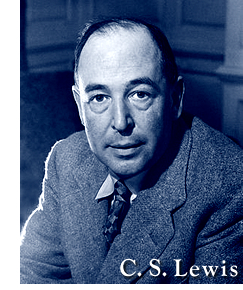
C.S. Lewis Daily – Today’s Reading


On truth

“I suppose there are two views about everything,” said Mark.

“Eh? Two views? There are a dozen views about everything until you know the answer. Then there’s never more than one.”

From That Hideous Strength

Compiled in Words to Live By

John MacArthur – The Confirmation from God


“How shall we escape if we neglect so great a salvation? After it was at the first spoken through the Lord, it was confirmed to us by those who heard, God also bearing witness with them, both by signs and wonders and by various miracles and by gifts of the Holy Spirit according to His own will” (Heb. 2:3-4).

God confirmed the truth of the gospel preached through Christ with many miracles.

When Jesus preached the gospel, He performed miracles that made what He said believable. He said, “Though you do not believe Me, believe the works” (John 10:38). Jesus claimed to be from God, then made it obvious He really was from God.

Nicodemus came to Jesus by night and said to Him, “No one can do these signs that You do unless God is with Him” (John 3:2). Jesus confirmed His ministry by His own miracles. Peter reiterated that fact on the day of Pentecost: “Jesus the Nazarene [was] a man attested to you by God with miracles and wonders and signs” (Acts 2:22).

God also gave these same confirming signs to His second generation of preachers—the apostles—so no one could dispute the validity of their message. What the apostles said was not their own opinion; it was divine truth substantiated by signs, wonders, and miracles.

Signs, wonders, and miracles are synonyms referring to all the supernatural things the apostles did. But the apostles also confirmed the Word with “gifts of the Holy Spirit.” That’s a reference to the temporary sign gifts described in Scripture, such as tongues and healings, not to the permanent edifying gifts given to the church for all time.

Today God attests to the gospel with the miracle of His written Word. Let it not be said that you neglected Jesus Christ. History confirms that hours of neglect cost Napoleon Waterloo. Neglecting Christ’s salvation will cost you eternal blessing and joy and bring you damnation. Don’t allow yourself to drift past God’s grace.

Suggestion for Prayer

Thank God for His Word, and that through it you have all the truth you need to communicate the gospel.

For Further Study

Read Acts 5-19 and list all the miracles performed by the apostles to confirm the gospel.

John MacArthur – The Certainty of Judgment


“If the word spoken through angels proved unalterable, and every transgression and disobedience received a just recompense, how shall we escape if we neglect so great a salvation?” (Heb. 2:2-3).

There is certain judgment for everyone who does not receive Christ as Savior and Lord.

Today the majority believes that God is a God of love and grace, but not of justice. One brief look at Hebrews 2:2-3 ought to convince anyone otherwise. The writer’s point is this: Since the Old Testament makes it clear that transgression and disobedience met with severe and just punishment, how much more so will equal or greater punishment be rendered under the New Testament, which was revealed by the Lord Jesus Christ Himself?

Both the Old and New Testaments confirm that angels were instrumental in bringing the law (Deut. 33:2; Acts 7:38). The law the angels spoke, primarily the Ten Commandments, was steadfast. That meant if someone broke the law, the law would break the lawbreaker. The law was inviolable; punishment for breaking it was certain.

“Every transgression and disobedience received a just recompense” (v. 2). Transgression refers to stepping across a line—a willful, purposeful sin. Disobedience, however, refers to imperfect hearing—the sin of shutting one’s ears to the commands, warnings, and invitations of God. It is a sin of neglect or omission, doing nothing when something should be done.

Hebrews 2:2 also puts to rest the notion that God is not fair. The writer says every sin received a “just recompense.” God, by His very nature, is just. Every punishment He meted out to those who defied Him was a deterrent to the sin He wanted to stop.

God severely punished the nation of Israel because they knew better. That leads to the important principle that punishment is always related to how much truth one knows but rejects. The person who knows the gospel, who has intellectually understood it and believed it, yet drifts away will experience the severest punishment of all.

Suggestion for Prayer

Ask God to give you an even greater appreciation of the punishment He has saved you from to motivate you to pursue the lost more vigorously.

For Further Study

Read Matthew 11:20-24, 12:38-42, and Luke 12:47-48 to discover Christ’s attitude toward those who know the truth yet rebel against it.

John MacArthur – Throwing out the Anchor


“For this reason we must pay much closer attention to what we have heard, lest we drift away from it” (Heb. 2:1).

God’s Word is the anchor that will prevent people from drifting past the harbor of salvation.

While English explorer William Edward Parry and his crew were exploring the Arctic Ocean, they needed to go further north to continue their chartings. So they calculated their location by the stars and began a treacherous march.

After many hours they stopped, exhausted. After taking their bearings, they discovered they were now further south than when they started! They had been walking on an ice floe that was traveling faster south than they were walking north.

That is similar to the situation people who continue rejecting Christ find themselves in. Therefore Hebrews 2:1 says, “We must pay closer attention to what we have heard, lest we drift away from it.”

Why would anyone knowingly reject Christ? He came into the world as God incarnate, died on a cross to forgive our sins, paid our penalty, showed us divine love, and gives us blessing and joy beyond imagination.

The Greek words translated “pay much closer attention to” and “drift away from” both have a nautical usage. The first means “to tie up a ship” and the second can be used of a ship that has been carelessly allowed to drift past the harbor because the sailor forgot to attend to the steerage or chart the wind, tides, and current. Hebrews 2:1 could be translated: “We must diligently anchor our lives to the things we have been taught, lest the ship of life drift past the harbor of salvation and be lost forever.”

Most people don’t deliberately turn their backs on God; they almost imperceptibly slip past the harbor of salvation and are broken on the rocks of destruction. Be sure you warn those you know who might be slipping past that harbor.

Suggestion for Prayer

Ask God to strengthen your resolve when you know you need to confront someone regarding his or her relationship with the Lord.

For Further Study

Memorize Proverbs 4:20-22 as your own reminder of how important it is to hold on to God’s Word.


John MacArthur – A Warning to the Intellectually Convinced


“How shall we escape if we neglect so great a salvation? After it was at first spoken through the Lord, it was confirmed to us by those who heard” (Heb. 2:3).

Many people know the facts of the gospel but won’t make a commitment to it.

I will never forget a lady who came to my office, confessing that she was a prostitute and was desperate for help. I presented the claims of Christ to her and asked if she wanted to confess Christ as Lord of her life. She said yes and prayed, seemingly inviting Christ into her life.

Then I suggested that we burn her book of contacts. She looked at me incredulously and said, “What do you mean?” “If you want to live for Jesus Christ,” I explained, “and you’ve truly accepted His forgiveness and embraced Him as Lord, then you need to prove it.” “But that book is worth a lot of money,” she said. “I don’t want to burn it.” After putting it back in her purse, she looked me right in the eye and said, “I guess I don’t really want Jesus, do I?”

When it came to counting the cost, she wasn’t ready. I don’t know whatever became of her, but my heart aches for her and others like her.

I’m sure you know people like her—they know and believe that Christ is the Savior, they know they need Him, but they are unwilling to make a commitment to Him. Perhaps they even go to church and hear the Word of God. They are like the proverbial man who says he believes a boat will keep him afloat, but never sets foot in one.

Those people are the most tragic of all. They need to be warned—to be given a powerful shove toward Christ. May the Lord use you as His instrument for that purpose in the lives of many who are on the edge of a decision for Christ.

Suggestion for Prayer

Ask God to soften the hearts of people you know who understand the facts of the gospel, but haven’t yet made a commitment to it.

For Further Study

Read Matthew 19:16-22. What kinds of questions should you ask of someone who appears eager to become a Christian?

John MacArthur – Bearing with an Exhortation


“I urge you, brethren, bear with this word of exhortation” (Heb. 13:22).

Invitations to salvation must provide both exhortation and warning.

Hell is undoubtedly full of people who did not actively oppose Jesus Christ, but simply drifted into damnation by neglecting to respond to the gospel. These are the kinds of people the writer challenges in Hebrews 2:1-4. They were aware of the good news of salvation in Jesus Christ, but weren’t willing to commit their lives to Him. As a result, they were drifting past the call of God into eternal disaster.

The Word of God always demands a response. Any effective teacher of it must do more than just dispense facts; he must warn, exhort, and extend an invitation. He may have impressive knowledge of the truth, but if he doesn’t have a passionate concern for how people react to it, he is not a worthy representative of Jesus Christ.

Jesus had that kind of compassion. Despite the rejection of His own people, He ached for their salvation: “O Jerusalem, Jerusalem, who kills the prophets and stones those who are sent to her! How often I wanted to gather your children together, the way a hen ushers her chicks under her wings, and you were unwilling” (Matt. 23:37). You can feel His heart go out to the people.

Paul had similar compassion: “I have great sorrow and unceasing grief in my heart. For I could wish that I myself were accursed, separated from Christ for the sake of My brethren, my kinsman according to the flesh” (Rom. 9:2-3). A true teacher is interested in more than just academics; he is concerned that people respond rightly to what is taught.

Just as the writer of Hebrews had to warn and exhort his readers, at times it becomes necessary for us to warn those we are witnessing to. If you want to see unbelieving friends, relatives, or associates come to Christ, warn them. Let them see the passion in your heart and your love for them. Please don’t allow anyone to slip into eternal destruction without being warned sufficiently.

Suggestion for Prayer

Ask God to give you wisdom regarding when to warn the people you are witnessing to.

For Further Study

Read Hebrews 3:7—4:13, 6:4-8, 10:26-31, and 12:25-29 noting the pattern the writer followed in presenting these other warnings.

John MacArthur – Christ’s Superior Destiny


“To which of the angels has He ever said, ‘Sit at My right hand, until I make Thine enemies a footstool for Thy feet’? Are they not all ministering spirits, sent out to render service for the sake of those who will inherit salvation?” (Heb. 1:13-14).

The destiny of Jesus Christ is that ultimately everything in the universe will be subject to Him.

“At the name of Jesus every knee [will] bow, of those who are in heaven, and on earth, and under the earth” (Phil. 2:10). That great promise confirms that Jesus Christ is destined to be the ruler of the universe.

Yet notice this about Christ’s rule: “When all things are subjected to Him, then the Son Himself also will be subjected to the One who subjected all things to Him, that God may be all in all” (1 Cor. 15:28). Christ is subordinate to His Father, but only in His role as the Son. While the eternal Son is equally divine, He is officially in subjection to God.

Eventually God will put all kingdoms, authorities, and powers of the world in subjection under Christ when He comes in glory at His second coming. “He will rule [the nations] with a rod of iron; and He treads the wine press of the fierce wrath of God, the Almighty. And on His robe and on His thigh He has a name written, ‘KING OF KINGS, AND LORD OF LORDS'” (Rev. 19:15-16). Christ’s eternal destiny is to reign over the new heavens and the new earth.

But what about the angels? While Christ has the greater destiny, it is their destiny to serve forever those who will inherit salvation (Heb. 1:14)—and that’s us!

Angels protect and deliver the believer from temporal danger. They rescued Lot and his family from the destruction of Sodom. They went into the lions’ den with Daniel and protected him. In addition to being forever in God’s presence, our destiny is to be served by angels forever—service that begins the moment of our salvation.

Suggestions for Prayer

Thank God for the many ways He takes care of you: by saving you, having Christ intercede for you, giving you the Holy Spirit to teach you, and sending His angels to serve you.

For Further Study

Read 2 Kings 6:8-23 and note the amazing way that angels served the prophet Elisha.

John MacArthur – Christ’s Eternal Existence


“Thou, Lord, in the beginning didst lay a foundation of the earth, and the heavens are the works of Thy hands; they will perish, but Thou remainest; and they all will become old as a garment. And as a mantle Thou wilt roll them up; as a garment they will also be changed. But Thou art the same, and Thy years will not come to an end” (Heb. 1:10-12).

Christ existed before the beginning of the world; thus He is without beginning.

Jesus Christ is no creature. To be able to lay the foundation of the earth and create the heavens in the beginning implies that He must have existed before the beginning. The apostle John testified to this when he said, “In the beginning was the Word” (John 1:1). Christ is eternal.

Jesus is also immutable, which means He never changes. Hebrews 13:8 says, “Jesus Christ is the same yesterday and today, yes and forever.” We need to hang onto this truth as we approach a day when much of what we know will change drastically.

One day what looks so permanent will fold up. Like the people Peter warned, we are tempted to think that “all continues just as it was from the beginning of creation” (2 Pet. 3:4). But Hebrews 1:11 tells us that one day Jesus will discard the heavens and the earth, just as we would a useless garment.

Even more amazing, verse 12 specifies that Christ will roll up the heavens. Revelation 6:14 says, “The sky was split apart like a scroll when it is rolled up; and every mountain and island were moved out of their places.” During the time of the tribulation, the heavens, as if stretched to all corners, will roll right up like a scroll.

But we can be confident that although creation will perish, Jesus will not, and He will create a new heaven and a new earth. Living creatures, worlds, and stars are subject to decay, but not Christ. He never changes and is never subject to change. What confidence that should give us for the daily issues of life we face each day!

Suggestion for Prayer

Thank the Lord for His unchanging plan for your life and His ability to keep it.

For Future Study

Read 2 Peter 3 and develop an approach to answering charges unbelievers make about biblical prophecies regarding the end times.

John MacArthur – The Lover of Righteousness


“‘Thy throne, O God, is forever and ever, and the righteous scepter is the scepter of His kingdom. Thou hast loved righteousness and hated lawlessness; therefore God, Thy God, hath anointed Thee with the oil of gladness above Thy companions'” (Heb. 1:8-9).

As the eternal God and King, Christ loves righteousness and hates lawlessness.

In these days it’s difficult for us as Christians to be totally supportive of our governmental leaders when we see so much of what God calls righteous compromised or ridiculed. But the King of kings—Christ Himself—is the only leader who has a perfectly right attitude toward righteousness.

Christ rules from an eternal throne, and He rules eternity as God and King. The scepter He holds is symbolic of His rule, particularly as a rule of righteousness.

But there’s more to it than that: He just doesn’t act righteously; He loves righteousness itself. How often have we obeyed without joy, expressing an attitude of willing condescension? But Jesus gives us a different model.

James 1:17 says, “Every good thing bestowed and every perfect gift is from above, coming down from the Father of lights, with whom there is no variation, or shifting shadow.” True righteousness never varies from what is true, just, and good. And 1 John 1:5 says, “God is light, and in Him there is no darkness at all.” God is total light and total righteousness. Everything Jesus did resulted from His love of righteousness.

Because Christ loves righteousness, He hates lawlessness. Since He loves what is right, He must hate what is wrong. The two are inseparable—one cannot exist without the other. You cannot truly love righteousness and also like sin. When there is true love for God, there will also be true love for righteousness and total hatred of sin.

The more you and I become conformed to Jesus Christ, the more we will love righteousness. Our attitudes toward righteousness and sin will ultimately reveal how closely we are conformed to Christ. Check out your attitudes and actions. How are you doing?

Suggestion for Prayer

Like the psalmist, ask God to show you any hurtful way in you (Ps. 139:24).

For Further Study

Read Psalm 119 and note how many times the psalmist makes reference to either his love for God’s law or righteousness.

John MacArthur – Christ’s Superior Nature


“Of the angels He says, ‘Who makes His angels winds, and His ministers a flame of fire.’ But of the Son He says, ‘Thy throne, O God, is forever and ever'” (Heb. 1:7-8).

Jesus Christ is God, and He created the angels.

People today who claim that Jesus was just a man, an angel, a prophet, or some inferior god are in error and bring upon themselves the curse of God. The Bible, and especially the writer of Hebrews, are clear about who Christ is.

First, the writer deals with the nature of angels when he says, “Who makes His angels winds, and His ministers a flame of fire.” “Makes” simply means “to create.” The antecedent of “who” is Christ. Therefore it is obvious that Christ created the angels.

They are also His possession: “His angels.” They are His created servants, who do not operate on their own initiative, but on the direction of Christ.

But the greatest difference between the nature of angels and Christ is that He is the eternal God. The Father says to the Son, “Thy throne, O God, is forever and ever.” That is one of the most powerful, clear, emphatic, and irrefutable proofs of the deity of Christ in Scripture.

Jesus throughout His ministry claimed equality with God. He said, “I and the Father are one” (John 10:30). The apostle John closed his first epistle by saying, “We know that the Son of God has come, and has given us understanding, in order that we might know Him who is true, and we are in Him who is true, in His Son Jesus Christ. This is the true God and eternal life” (1 John 5:20).

God the Son came to help us understand that God is truth and that Christ Himself is the true God. Our faith is based on the deity of our Lord Jesus Christ.

Suggestion for Prayer

Ask God to give you a greater understanding of the reality that Jesus is in fact God.

For Further Study

Read John 1:1-18 and mark the verses that define Christ’s relationship to God. If an unbeliever were to ask you what that passage means, how would you answer him or her?