Tag Archives: Prayer

Campus Crusade for Christ; Bill Bright – He Protects Worshipers


“He protects all those who love Him, but destroys the wicked” (Psalm 145:20).

Throughout Scripture one is reminded over and over again that when a person obeys Him, God blesses that person. And when a person – or a nation – disobeys Him, God disciplines, just as a loving father disciplines his disobedient child because he loves him, not because of his wrath or any evil intent.

The Israelites, though warned many times that if they disobeyed God He would destroy them, finally had to be destroyed – after numerous warnings and disciplinings (including grievous plagues) – because of their disobedience (Deuteronomy, chapters 8 and 28; Amos, chapter 4). God still disciplines men and nations. It is a sobering thing to disobey God.

Someone has said, “We do not break God’s laws, but God’s laws break us.” If we obey them, we are blessed. If we disobey them, we must suffer the consequences.

Scripture suggests that what applies to individuals and to nations also applies to Christian movements or organizations such as the one with which I have the privilege of serving our Lord. So long as I and the now more than 16,000 full-time and associate staff members continue to obey God, His hand of blessing will remain upon our worldwide efforts. If we disobey Him, He will not only withhold His blessings, but will discipline us as individuals and as a movement.

I pray daily that each one of us may determine to obey God implicitly.

Bible Reading: Psalm 45:14-17

TODAY’S ACTION POINT:  Recognizing that the laws of God in the spiritual realm are just as inviolate as the laws of the physical realm, and that God blesses those who obey Him and disciplines those who are disobedient, with the enabling of the Holy Spirit I will seek to express my love for God by living a life of faith and obedience for His glory.

Presidential Prayer Team; C.P. – Spiritual Soldiers


More than two million men and women are currently enlisted in the United States Armed Forces. Taking a stand against visible enemies is important for the protection and well-being of the nation. But equally important is taking a stand against invisible enemies – and you’re enlisted. “For we do not wrestle against flesh and blood, but against…spiritual forces of evil in the heavenly places.” (Ephesians 6:12) As one of God’s spiritual soldiers, you are to put on the full armor of God, “praying at all times in the Spirit, with all prayer and supplication.” (Ephesians 6:18)

I will take my stand at my watchpost and station myself on the tower. Habakkuk 2:1

When Israel was in a sinful state, God looked for an intercessor. “And I sought for a man among them who should build up the wall and stand in the breach before me for the land, that I should not destroy it, but I found none.” (Ezekiel 22:30) Yet you take your post as a prayer warrior for America as Habakkuk says in today’s verse, knowing prayer ushers in God’s will on earth (Matthew 6:10).

Renew your commitment to stand at your watchpost…and as the Holy Spirit brings the nation’s leaders or issues to mind, go to battle and make prayer your top priority.

Recommended Reading: Ephesians 6:10-20

Max Lucado – A Trio of Peaks


You can’t run the world, nor are you expected to be all-powerful. You may think you can. But when you face your own grave or your own guilt,  your power will not do the trick.

The Bible says “Thine is the kingdom, and the power and the glory forever.” (Matthew 6:13).

A trio of peaks. Admire them, applaud them, but don’t climb them. You weren’t made to run a kingdom, or to be all-powerful. And you certainly can’t handle all the glory. Mount Applause is the most seductive of the three peaks. More than one person has stood at the top and shouted, “Mine is the glory!”—only to lose their balance and fall.

As you confess that God is in charge, you admit you aren’t. As you proclaim that God has power, you admit you don’t. And as you give God all the applause, there is none left to dizzy your brain!

Responding to Suffering By Charles F. Stanley


A hurricane wreaks havoc and devastation on a coastal town. Economic hardship pushes families out of their homes. Yet another school shooting leaves young people dead. Perhaps you’ve wondered, “God, why don’t You prevent these tragedies? Why all this suffering?”

The truth is that God could intervene. The Bible teaches that He is sovereign, no matter what happens. But many times, He chooses to allow people the freedom to destroy life, or He lets nature devastate an entire region. As believers, what should our response be when adversity, unexpected tragedy, or suffering comes?

Reaffirm your position in Christ. Remind yourself of who you are and what you have in Him. It helps to do this out loud. You can say something like this:

I know that I am a child of God. I am saved. I have become united with Christ. I am sealed with the Holy Spirit. My eternal destiny is determined, and nothing can change that. The Lord will never leave me nor forsake me. Nothing can touch me apart from what my heavenly Father allows. All things will work together for my good since I love God and have been called according to His purpose in Christ.

The truths listed in the paragraph above are essential to maintaining the right perspective on adversity. Self-esteem and confidence in God are usually the two things most affected by tragedy. In moments of despair, you need a strong dose of truth to relieve your troubled heart and set your feet on the immovable foundation of scriptural reality. Then you are ready to . . .

•Ask God to remove adversity from your life. This is where we usually begin, but it is best to ask after we have gained perspective. In 2 Corinthians 12:8-9, Paul pleaded for his struggle to be removed. Although God did not answer that request, He didn’t chastise the apostle for it. Neither will He be displeased by your request. Even your prayer for mercy is an expression of dependence and faith.

•Reaffirm the promise of God’s sustaining grace. The Lord may not choose to remove adversity from your life immediately. In that case, it’s important for you to rely on His grace—not your own abilities. People who try to endure suffering in their own strength collapse under the weight of it all. Admit from the start that you do not have the power to withstand the pressure. Cry out to God for mercy. He will hear you. His grace will be sufficient moment by moment to get you through.

•Thank God for this unique opportunity to grow spiritually. You must look for the Lord’s part in your adversity, or you’ll miss it. You are not simply to endure suffering; you are to grow and mature through it. The best way to develop this attitude is to thank Him every day for the spiritual growth in your life.

•Receive adversity as if it were from God. Most of the time, you don’t know for sure who’s behind your suffering, and believe it or not, the source of your adversity makes little difference. God has a purpose for each difficulty He allows.

When you respond to adversity as if it were from Satan, the tendency is to fight it. When trouble lingers, you may begin to doubt God. So, as long as the Lord accomplishes His purpose through adversity in your life, receive it as from Him. And remember, God’s grace is sufficient for you (2 Cor. 12:9).

•Read and meditate on passages of scripture that describe adversity faced by God’s servants. Read the story of Joseph, or look at the way God provided for Abraham when he was left with undesirable land. Imagine how foolish Noah felt while building the ark. The Bible contains illustration after illustration of God’s faithfulness in adverse circumstances.

Fill your mind with these truths. Ask God to open your eyes to the human side of these characters so you can identify with their pain and sorrow. Then, dwell on Christ’s promise to care for those who love Him (Matt. 6:25-34.) Just as He was faithful to men and women in the Bible, He will also demonstrate His faithfulness to you.

Suffering is unavoidable. It comes without warning and can shatter or strengthen us. The outcome hinges on our response, not the nature of our adversity. If your heart’s desire is to see God glorified through you, hard times will not leave you without hope.

—Adapted from “How to Handle Adversity,” by Charles F. Stanley

Our Daily Bread — Terrifying Moments


Psalm 23

Yea, though I walk through the valley of the shadow of death, I will fear no evil; for You are with me; Your rod and Your staff, they comfort me. —Psalm 23:4

When our first child was born, my wife, Marlene, was in labor for more than 30 hours, creating tremendous stress for both her and the baby. The doctor, a fill-in for her regular physician, was unfamiliar with her and her pregnancy. As a result, he waited too long to make the decision to perform an emergency Caesarean section, and the resulting trauma put our infant son in the neo-natal intensive care unit. There was nothing they could do to help our baby to overcome his trauma-induced condition.

By God’s grace, Matt recovered—but I cannot remember any moment in my life as terrifying as when I stood by his crib in intensive care. Yet I knew the Lord was near as I talked with Him through prayer.

In the terrifying moments of life (and all the other moments as well) nothing can bring comfort to the hurting heart like the reality of God’s presence and care. The psalmist David wrote, “Yea, though I walk through the valley of the shadow of death, I will fear no evil; for You are with me; Your rod and Your staff, they comfort me” (Ps. 23:4).

When fear is overwhelming, the Lord is there. His comforting presence will carry us through our deepest trials. —Bill Crowder

When peace, like a river, attendeth my way,

When sorrows like sea billows roll—

Whatever my lot, Thou has taught me to say,

“It is well, it is well with my soul.” —Spafford

Peace is the presence of God.

Alistair Begg – Claiming God’s Promises


Remember your word to your servant, in which you have made me hope. – Psalm 119:45

Whatever your particular need may be, you will find some promise in the Bible related to it. Are you faint and feeble because your way is rough and you are weary? Here is the promise–“He gives power to the faint.” When you read such a promise, take it back to the great Promiser and ask Him to fulfill His own word. Are you seeking for Christ and thirsting for closer communion with Him? This promise shines like a star upon you–“Blessed are those who hunger and thirst for righteousness, for they shall be satisfied.” Take that promise to the throne continually; do not plead anything else, but go to God over and over again with this–“Lord, You have said it; do as You have said.”

Are you distressed because of sin and burdened with the heavy load of your iniquities? Listen to these words–“I, I am he who blots out your transgressions for my own sake, and I will not remember your sins.” You have no merit of your own to plead why He should pardon you, but plead His written promises and He will perform them. Are you afraid that you might not be able to hold on to the end and that after having thought yourself a child of God you should prove a castaway? If that is your condition, take this word of grace to the throne and plead it: “The mountains may depart and the hills be removed, but my steadfast love shall not depart from you.”

If you have lost the sweet sense of the Savior’s presence and are seeking Him with a sorrowful heart, remember the promises: “Return to me . . . and I will return to you.” “For a brief moment I deserted you, but with great compassion I will gather you.” Feast your faith upon God’s own Word, and whatever your fears or wants, take them to the Bank of Faith with your Father’s note, which reads, “Remember your word to your servant, in which you have made me hope.”

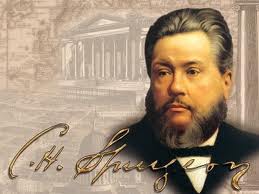
Charles Spurgeon – The desolations of the Lord, the consolations of his saints.


“Come, behold the works of the Lord, what desolations he hath made in the earth. He maketh wars to cease unto the end of the earth; he breaketh the bow, and cutteth the spear in sunder; he burneth the chariot in the fire.” Psalm 46:8-9

Suggested Further Reading: 1 Samuel 5:1-7

Jehovah still standeth, “the same yesterday, to-day, and for ever.” One generation of idols has passed away, and another comes, and the desolations stand—memorials of the might of God. Turn now your eyes to Assyria, that mighty empire. Did she not sit alone? She said she should see no sorrow. Remember Babylon, too, who boasted with her. But where are they, and where are now their gods? With ropes about their necks they have been dragged in triumph by our archaeologists; and now in the halls of our land, they stand as memorials of the ignorance of a race that is long since extinct. And then, turn to the fairer idolatries of Greece and Rome. Fine poetic conceptions were their gods! Theirs was a grand idolatry, one that never shall be forgotten. Despite all its vice and lust, there was such a high mixture of the purest poetry in it, that the mind of man, though it will ever recollect it with sorrow, will still think of it with respect. But where are their gods? Where are the names of their gods? Are not the stars the last memorials of Jupiter, Saturn, and Venus? As if God would make his universe the monument of his destroyed enemy! Where else are their names to be found? Where shall we find a worshipper who adores their false deity? They are past, they are gone! To the moles and to the bats are their images cast, while many an unroofed temple, many a dilapidated shrine, stand as memorials of that which was, but is not—and is passed away for ever. I suppose there is scarce a kingdom of the world where you do not see God’s handiwork in crushing his enemies.

For meditation: The gods created by man can be destroyed by man, but the Lord made the heavens (Psalm 96:5; Isaiah 37:15-20). The false religions of today become the museum pieces of tomorrow.

Sermon no. 190

28 April (1858)

John MacArthur – Three Kinds of Persecution


“Blessed are those who have been persecuted for the sake of righteousness, for theirs is the kingdom of heaven. Blessed are you when men cast insults at you, and persecute you, and say all kinds of evil against you falsely, on account of Me” (Matt. 5:10-11).

Jesus mentioned three broad categories of suffering that Christians will experience. The first is persecution. “Persecuted” (Matt. 5:10) and “persecute” (v. 11) both come from the same Greek root meaning “to pursue” or “chase away.” Over time it came to mean “to harass” or “treat in an evil manner.” Verse 10 literally reads, “Blessed are those who have been allowing themselves to be persecuted.” You are blessed when people harass you for your Christian stance and you willingly accept it for the sake of your Lord.

The second form of suffering is “insults” (v. 11), which translates a Greek word that means “to reproach,” “revile,” or “heap insults upon.” It speaks of verbal abuse–attacking someone with vicious and mocking words. It is used in Matthew 27:44 of the mockery Christ endured at His crucifixion. It happened to Him and it will happen to His followers as well.

The final category Jesus mentioned is slander–people telling lies about you. That’s perhaps the hardest form of suffering to endure because our effectiveness for the Lord is directly related to our personal purity and integrity. Someone’s trying to destroy the reputation you worked a lifetime to establish is a difficult trial indeed!

If you’re going through a time of suffering for righteousness’ sake, take heart: the Lord went through it too and He understands how difficult it can be. He knows your heart and will minister His super-abounding grace to you. Rejoice that you are worthy of suffering for Him and that the kingdom of heaven is yours.

Suggestions for Prayer:

Pray for those who treat you unkindly, asking God to forgive them and grant them His grace.

Pray that you might always treat others with honesty and fairness.

For Further Study:

Throughout history God Himself has endured much mocking and slander. Read 2 Peter 3:3-9, then answer these questions:

What motivates mockers?

What do they deny?

Why doesn’t God judge them on the spot?

Joyce Meyer – God Speaks to Correct Us


The Lord corrects and disciplines everyone whom He loves. —Hebrews 12:6

We all need to be corrected at times and I believe God’s desire is to speak to us and do the correcting Himself before using other people or situations to correct us. Correction is one of the most difficult things to receive, especially when it comes through others, so God prefers to first help us deal with matters privately. But, if we do not know how to let Him correct us privately or will not receive it, He may correct us in more public ways.

One time we were ministering in a foreign country. I was in a restaurant trying to convey to the waiter what I wanted to eat, but he did not speak much English and I did not speak his language at all. Frustration soon became evident in my attitude and tone of voice. I was behaving poorly in front of people who knew I was in that country to minister and, of course, my example to them was important.

I knew I had behaved badly, but God wanted me to really know, so when Dave and I returned to our hotel room, Dave mentioned the incident and said I had not set a good example for others.

Although I knew he was right, and I knew God was using him to make sure I fully realized how important my behavior is, my inclination was to point out that Dave had acted similarly before. Had I done that, I would not have genuinely received the word of correction and then God would have had to correct me some other way—perhaps in a way that would have been more embarrassing or painful.

Begin to pray and ask God to help you receive correction from Him and to help you recognize when He is sending correction through others, knowing it is always for your good.

God’s word for you today: Don’t resist God’s correction.

Campus Crusade for Christ; Bill Bright – Fullness of Joy


“Thou wilt show me the path of life; in thy presence is fullness of joy; at thy right hand there are pleasures for evermore” (Psalm 16:11, KJV).

“If you have lost the joy of the Lord in your life,” someone once observed, “who moved, you or God? For in His presence is fullness of joy.”

That saint and prophet of earlier years, A. W. Tozer, suggested several ways for the believer to achieve real joy:

Cultivate a genuine friendship with God. He is a Friend who sticks closer than a brother.

Take time to exercise yourself daily unto godliness. Vow never to be dishonest about sin in your life, never to defend yourself, never to own anything (or let anything own you), never to pass on anything hurtful about others, never to take any glory to yourself.

No known sin must be allowed to remain in your life. “Keep short accounts with God” – never allow unconfessed sins to pile up in your life.

Set out to build your own value system based on the Word of God. Meditate on the Word; practice the presence of God. Set priorities as you realize what is truly important. It will be reflected in the standard of values you set for yourself.

Share your spiritual discoveries with others.

Bible Reading: John 15:7-11

TODAY’S ACTION POINT:  Knowing that the best witness in the world is a joyful, radiant Christian, I will try to be that kind of believer, trusting the indwelling Holy Spirit to thus empower me and radiate His love and joy through me. I will share my spiritual discoveries with others.

Charles Stanley – A Lifetime of Holiness


Romans 12:1-3

By placing faith in Jesus Christ, a new believer is sanctified—that is, he is set apart for God’s purpose. Unlike salvation, which takes place in a single moment, sanctification is a lifelong process. We who have trusted in Christ as Savior and allow His Holy Spirit to control our lives are currently being sanctified, no matter what we may feel or how our actions appear to others. We are progressively maturing in our faith.

If we are progressing, then we must be working our way toward something. The apostle Paul explained the Christian’s mission this way: “For those whom [God] foreknew, He also predestined to become conformed to the image of His Son” (Rom. 8:29). The character, conduct, and conversation of a believer are to reflect Christ, who lives within through His Spirit.

On our own, we would place too much emphasis on conduct and get caught up following rules and rituals that look Christian but do not actually reflect Christ. God, however, has given each believer His Spirit as a teacher and guide. The Holy Spirit’s work is to transform our minds and hearts so our character is markedly different from that of our unsaved peers. Only when we are under the Spirit’s control can we speak and act according to who we truly are: God’s sons and daughters.

Our heavenly Father wants His children to be living examples and reflections of who He is. He doesn’t expect perfection from us—He knows that we cannot be totally sinless as long as we remain in our human body. Rather, He shows us how to think and act so we may “walk in a manner worthy of the calling to which [we] have been called” (Eph. 4:1).

Presidential Prayer Team; J.K. – True Experience


Isaiah’s prophecies for Israel included ones of great judgment by God because of their disobedience and constant rejection of God’s plan for them. Plush lands would become wilderness with no human occupation. Great sorrow would be upon them.

They shall obtain gladness and joy, and sorrow and sighing shall flee away. Isaiah 35:10

What exactly is your attitude in times of difficulty and trial? For you, as for Israel, circumstances are fleeting. Israel would be driven from its land and taken captive, but God would enable their return and deliver them as they trusted in Him.

The Lord is your deliverer, too…from sorrow due to circumstance, as well as from spiritual pain due to the conviction of sin. Sorrow can be beneficial if it produces a change of heart and a fresh sensitivity to God. Joy can be yours. Being committed to Him and enjoying His sweet fellowship will give you hope and strengthen your faith.

Experience the true joy of a saving relationship with God. Ask for deliverance from the sadness of sin. Then intercede for this nation, that it may have a change of heart and an openness for the Lord. After all, joy is not the absence of sorrow – but it is the presence of God!

Recommended Reading: Psalm 16:1-11

Campus Crusade for Christ; Bill Bright – When He’s in Control


“But when the Holy Spirit controls our lives, He will produce this kind of fruit in us:…self-control” (Galatians 5:22,23).

Sue insisted that she was Spirit-filled, and she frequently challenged others to be filled with the Spirit. But there was no evidence that the Holy Spirit was in control of her life, because she was completely undisciplined in everything she did. She knew nothing about self-control. She knew all about the Holy Spirit, in her mind, but there was no evidence that He was in her life – and in control of her life.

Dr. Henrietta Mears, as director of Christian education at the First Presbyterian Church in Hollywood, had one of the greatest spiritual ministries of her time. Hundreds of young men and women became church members and missionaries under her influence. She lived in a palatial home, owned priceless antiques and dressed beautifully. Most people assumed that she was a woman of great wealth. Actually, she was a person of relatively modest means. She simply knew how to take her regular salary, a modest inheritance, plus savings, and maximize them for God’s glory.

For example, she would advise young people, “Do not eat in expensive restaurants where you spend excessively except on rare occasions. Instead, prepare your own lunch, and over a period of a year you can save enough money by not eating out to take a trip around the world and enrich your spirit, your soul and your cultural sensitivities. Or you can use the money you save to buy something which will enhance the beauty of your home or person.”

We see disciplined people all around us in the world. Athletes discipline themselves to strict training, soldiers are drilled in military discipline, artists and writers are disciplined to sharpen their talents through dedicated practice. On the other hand, we also see examples of a lack of discipline in the lives of many people around us.

Whether a person is a Christian or a non-believer, the development of self-control as a quality of character seems to be difficult for most people. Yet we are told in the Bible that the Spirit-filled Christian will exhibit self- control as a part of the fruit of the Spirit.

Bible Reading: I Chronicles 28:9-13

TODAY’S ACTION POINT:  I acknowledge that to walk in the fullness and control of the Holy Spirit will enable me to demonstrate a life of discipline and self-control. Therefore, by faith, and with the help of the Holy Spirit, I shall live a life of discipline and self-control for the glory of God. Self- control is essential for supernatural living.

Charles Stanley – Christ’s Blood: The Necessity


Romans 3:21-26

Romans 3 communicates the very heart of Scripture. Apart from the cross of Christ and His atoning death, no one can be declared righteous.

In other words, there is only one way to become a child of God—through the blood of the Savior (John 14:6). Good works and right living will not earn the Lord’s favor, because every person inevitably sins, and a sinner cannot enter the presence of holy God. The shedding of Christ’s blood on the world’s behalf made it possible for anyone to be cleansed of sin and have a relationship with the Creator. The only requirement is trusting Jesus as Savior.

For God to be just, He must remain true to His own principles. His holiness dictated that “the soul who sins will die” (Ezek. 18:4). The penalty for sin—namely, death—had to be paid in a way that was acceptable to God. He explained through Moses why a blood sacrifice was required: “For the life of the flesh is in the blood, and I have given it to you on the altar to make atonement for your souls; for it is the blood by reason of the life that makes atonement” (Lev. 17:11). A life must be given for a life to be spared.

On that basis, the heavenly Father provided a perfectly sinless sacrifice for all mankind. The only way God’s justice could be satisfied and His holiness could be maintained was for Jesus Christ to take our guilt and sin upon Himself and die in our place.

When we say that there is only one way to the Father, we mean that a person must believe Jesus Christ died as a perfect sacrifice. To trust in anything else is to ignore God’s holiness and the admonition of His Word (Acts 4:12).

Our Daily Bread — Faithful To The Finish


Hebrews 12:1-4

Let us run with endurance the race that is set before us. —Hebrews 12:1

After running 32 kilometers (20 miles) of the Salomon Kielder Marathon in Great Britain, a runner dropped out and rode a bus to a wooded area near the finish line. Then, he re-entered the race and claimed third prize. When officials questioned him, he stated that he stopped running because he was tired.

Many of us can relate to the exhaustion of a worn-out athlete as we run the race of the Christian faith. The book of Hebrews encourages us to “run with endurance the race that is set before us” (12:1). Running with endurance requires that we lay aside the sin that stands in our way and shed the weights that hold us back. We may even have to press on through persecution (2 Tim. 3:12).

To prevent weariness and discouragement in our souls (Heb. 12:3), the Bible urges us to focus on Christ. When we pay more attention to Him than to our struggles, we will notice Him running alongside us—supporting us when we stumble (2 Cor. 12:9) and encouraging us with His example (1 Peter 2:21-24). Keeping our eyes on “the author and finisher of our faith” (Heb. 12:2) will help us stay close to the source of our strength and remain faithful to the finish. —Jennifer Benson Schuldt

Turn your eyes upon Jesus,

Look full in His wonderful face;

And the things of earth will grow strangely dim

In the light of His glory and grace.

—H. H. Lemmel. © Renewal 1950. H. H. Lemmel

We can finish strong when we focus on Christ.

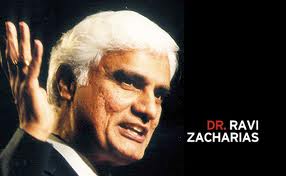
Ravi Zacharias Ministry – Breaking Time


“Uncanny” was one of the vocabulary words on my sixth grade vocabulary list, which was to be found within the book we were reading as a class. I remember thinking Madeleine L’Engle’s A Wrinkle in Time was exactly that—uncanny, peculiar, and uncomfortably strange. Yet I also remember that it stayed with me—the story of a quirky girl named Meg, her overly-intelligent little brother, and their time-transcending journey to save their physicist father with the help of three mysterious beings. L’Engle’s book, which recently celebrated its fiftieth anniversary, invites readers to see time itself differently. Her stories will no doubt continue to perplex sixth graders, and stay with us long after we have set them aside.

L’Engle is the writer who first showed me the incredible difference between two words in Greek, which we unfortunately translate identically. To the English reader, chronos and kairos both appear to us as “time.” But in Greek, these words are vastly different. Chronos is the time on your wrist watch, time on the move, passing from present to future and so becoming past. Kairos, on the other hand, is qualitative rather than quantitative. It is time as a moment, a significant occasion, an immeasurable quality. In the New Testament, kairos is God’s time, it is real time—it is the eternal now.

Thus, when Jesus stepped into time to proclaim the kingdom of God among us, he came to show us in chronos the reality of kairos. “Jesus took John and James and Peter up the mountain in ordinary, daily chronos,” writes L’Engle. “Yet during the glory of the Transfiguration they were dwelling in kairos.”(1) With this story in mind, L’Engle describes kairos as that time which breaks through chronos with a shock of joy, time where we are completely unselfconscious and yet paradoxically far more real than we can ever be when we are continually checking our watches. “Are we willing and able to be surprised?” L’Engle asks. “If we are to be aware of life while we are living it, we must have the courage to relinquish our hard-earned control of ourselves.”(2) For the Christian, the thought is particularly consequential. We must have the courage to see counterculturally beyond ourselves and our self-importance. We must have the courage to live aware that the kingdom of God is close at hand.

I imagine Jacob discovered this difference between chronos and kairos when he set aside both the past that was about to catch up with him and his paralyzing fear of the future only to find himself living in “none other than the house of God” (Genesis 28:17). The prophets and others describe similar moments of waking to the present and finding the eternal dimensions of time. The shepherds in Bethlehem were going about their ordinary work when an angel appeared before them and the glory of the Lord shone around them.  ”Do not be afraid,” the angel announced. “I bring you good news of great joy that will be for all the people. Today in the town of David a Savior has been born to you” (Luke 2:13-14).  At this invasion of kairos into the routine of chronos, the shepherds chose to respond with action: “Let’s go to Bethlehem and see this thing that has happened, which the Lord has told us about” (2:15).

In the life, death, resurrection, and ascension of Christ, where eternity steps into time and invites us to see far beyond our watches, we are presented with a similar decision. Are we willing to be surprised again by Christ’s coming? Are we willing to act on it? Are we able to release the nervous control of our daily schedules in order to stop and see the resurrected Christ, the eternal now in our midst? With every prophet who proclaimed the coming of the Messiah in history, the apostle calls out today, “Behold, now is the time (kairos) of God’s favor, now is the day of salvation” (2 Corinthians 6:2).

Whether we are ready for our sense of time and self to stop at such an invasion, Christ has come. He comes quietly and unexpectedly; he comes and upsets our very notions of time and all we discover within it. The eternal Word steps into flesh, into our bounded realm of time, and literally embodies the reality that time is meaningful because of the eternal one in our midst. His presence reminds us that kairos is breaking into chronos and transforming it, transforming us. It proclaims, “The kingdom of God is close at hand”—and invites us to join the world breaking in along with it. In moments of life and death, present fears and plans for the future, might this radical invasion move us and our vantage points, as we find ourselves continually surprised by the one who comes so near.

Jill Carattini is managing editor of A Slice of Infinity at Ravi Zacharias International Ministries in Atlanta, Georgia.

(1) Madeleine L’Engle, Walking on Water: Reflections on Faith and Art (New York: Bantam, 1982), 93.

(2) Ibid., 99.

Alistair Begg – Renew Your Covenant


Because of all this we make a firm covenant.  Nehemiah 9:38

There are many occasions in our experience when we may very rightly, and with benefit, renew our covenant with God. After recovery from sickness when, like Hezekiah, we have had a new lease of years added to our life, we may do so appropriately. After any deliverance from trouble, when our joys spring forth anew, let us again visit the foot of the cross and renew our consecration. Especially let us do this after any sin that has grieved the Holy Spirit or brought dishonor upon the cause of God; let us then look to that blood that can make us whiter than snow and again offer ourselves to the Lord.

We should not only let our troubles confirm our dedication to God, but our prosperity should do the same. If we ever meet with occasions that deserve to be called “crowning mercies,” then surely, if He has crowned us, we ought also to crown our God; let us bring out again all the jewels of the divine regalia that have been stored in the jewel-closet of our heart, and let our God sit upon the throne of our love, arrayed in royal apparel. If we could learn to profit by our prosperity, we would not need to face so much adversity. If we would gather from a kiss all the good it might confer upon us, we would not have to bear the imprint of punishment so often.

Have we recently received some blessing that we hadn’t expected? Has the Lord opened our way? Can we sing of mercies multiplied? Then this is the day to put our hand upon the horns of the altar and say, “Bind me here, my God; bind me here with cords, even forever.” Just as we need the fulfillment of new promises from God, let us offer renewed prayers that our old vows may not be dishonored. This morning let us make with Him a firm covenant because of the sacrifice of Jesus that we have been considering with gratitude for the last month.


Charles Spurgeon – A vision of the latter day glories

“And it shall come to pass in the last days, that the mountain of the Lord’s house shall be established in the top of the mountains, and shall be exalted above the hills; and all nations shall flow unto it.” Isaiah 2:2 & Micah 4:1

Suggested Further Reading: 2 Thessalonians 2:1-15

I am looking for the advent of Christ; it is this that cheers me in the battle of life—the battle and cause of Christ. I look for Christ to come, somewhat as John Bunyan described the battle of Captain Credence with Diabolus. The inhabitants of the town of Mansoul fought hard to protect their city from the prince of darkness, and at last a pitched battle was fought outside the walls. The captains and the brave men of arms fought all day till their swords were knitted to their hands with blood; many and many a weary hour did they seek to drive back the Diabolonians. The battle seemed to waver in the balance; sometimes victory was on the side of faith, and then, triumph seemed to hover over the crest of the prince of hell; but just as the sun was setting, trumpets were heard in the distance; Prince Emmanuel was coming, with trumpets sounding, and with banners flying; and while the men of Mansoul pressed onward sword in hand, Emmanuel attacked their foes in the rear, and getting the enemy between them both, they went on, driving their enemies at the sword’s point, till at last, trampling over their dead bodies, they met, and hand to hand the victorious church saluted its victorious Lord. Even so must it be. We must fight on day by day and hour by hour; and when we think the battle is almost decided against us, we shall hear the trump of the archangel, and the voice of God, and he shall come, the Prince of the kings of the earth; at his name, with terror shall they melt, and like snow driven before the wind from the bare side of a mountain shall they fly away; and we, the church militant, trampling over them, shall salute our Lord, shouting, “Hallelujah, hallelujah, hallelujah, the Lord God omnipotent reigneth.”

For meditation: The Lord’s second coming is an encouragement for us to hold fast to what we have (Revelation 2:25; 3:11). “Hold the fort, for I am coming!”

Sermon no. 249

24 April (1859)

John MacArthur – Christ Is Our Peace


“Blessed are the peacemakers, for they shall be called sons of God” (Matt. 5:9).

After World War II the United Nations was created to promote world peace. But since its inception in 1945 there has not been a single day of global peace. That’s a sad commentary on man’s inability to make peace. In fact, someone once quipped that Washington D.C. has so many peace monuments because they build one after every war!

It hasn’t always been that way. Prior to the Fall of man peace reigned on the earth because all creation was in perfect harmony with its Creator. But sin interrupted peace by alienating man from God and bringing a curse upon the earth. Man couldn’t know true peace because he had no peace in his heart. That’s why Jesus came to die.

I once read a story about a couple at a divorce hearing whose conflict couldn’t be resolved. They had a four-year-old boy who became distressed and teary-eyed over what was happening. While the couple was arguing, the boy reached for his father’s hand and his mother’s hand and pulled until he joined them.

In a sense that’s what Christ did: He provided the righteousness that allows man and God to join hands. Romans 5:1 says that those who are justified by faith have peace with God through the Lord Jesus Christ. Colossians 1:20 says that God reconciled all things to Himself through the blood of Christ’s sacrifice on the cross.

Yet on the surface, the scene at the cross wasn’t peaceful at all. Pain, sorrow, humiliation, hatred, mockery, darkness, and death were oppressively pervasive, but through it all Christ was doing what He alone could do: making peace between man and God. He paid the supreme price to give us that precious gift.

In the future, Jesus will return as Prince of Peace to establish a kingdom of peace that will usher us into an eternal age of peace. In the meantime He reigns over the hearts of all who love Him. Let His peace reign in your heart today!

Suggestions for Prayer:

Thank God for the peace of heart that comes from knowing Christ.

For Further Study:

Read Philippians 4:6-9. What must a person do to know God’s peace?

Joyce Meyer – Show Jesus


And become useful and helpful and kind to one another, tenderhearted (compassionate, understanding, loving-hearted), forgiving one another [readily and freely], as God in Christ forgave you.—Ephesians 4:32

I hope to show to everyone I meet the character of Jesus through my words and actions. I pray that everyone who contacts our ministry team will say: “Those people are full of Jesus. They are patient, kind, and sweet.”

We are containers capable of being filled to overflowing with the Spirit of Jesus, who dwells in our hearts. If we understand that everywhere we go we can demonstrate His character and virtue, we will be as the Word says—lights in a dark world (see Philippians 2:15).

Jesus called us the salt of the earth (see Matthew 5:13). Salt gives flavor to what is otherwise bland or tasteless. Be salt today—at home, at your job, wherever you go.