Tag Archives: theology

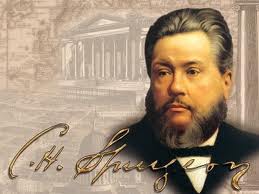
Charles Spurgeon – Regeneration


“Except a man be born again, he cannot see the kingdom of God.” John 3:3

Suggested Further Reading: Luke 13:22-30

“Angels, principalities, and powers, would you be willing that men who love not God, who believe not in Christ, who have not been born again, should dwell here?” I see them, as they look down upon us, and hear them answering, “No! Once we fought the dragon, and expelled him, because he tempted us to sin! We must not, and we will not, have the wicked here. These alabaster walls must not be soiled with black and lustful fingers; the white pavement of heaven must not be stained and rendered filthy by the unholy feet of ungodly men. No!” I see a thousand spears bristling, and the fiery faces of a myriad seraphs thrust over the walls of paradise. “No, while these arms have strength, and these wings have power, no sin shall ever enter here.” I address myself moreover to the saints of heaven, redeemed by sovereign grace: “Children of God, are you willing that the wicked should enter heaven as they are, without being born again? You say you love men, but are you willing that they should be admitted as they are?” I see Lot rise up, and he cries, “Admit them into heaven! No! What! Must I be vexed by the conversation of Sodomites again, as once I was!” I see Abraham; and he comes forward, and he says, “No; I cannot have them here. I had enough of them whilst I was with them on earth—their jests and jeers, their silly talkings, their vain conversation, vexed and grieved us. We want them not here.” And, heavenly though they be, and loving as their spirits are, yet there is not a saint in heaven who would not resent, with the utmost indignation, the approach of any one of you to the gates of paradise, if you are still unholy, and have not been born again.

For meditation: Matthew 13:41-43; Luke 16:23-26 — at best the unsaved will have a distant view of heaven which will only add to their torment.

Sermon no. 130

3 May (1857)

John MacArthur – Overcoming Spiritual Inadequacies


“Having summoned His twelve disciples” (Matt. 10:1).

Most people think of the disciples as stained-glass saints who didn’t have to struggle with the faults and frailties of normal people. But they had inadequacies just like we all do. Seeing how Jesus dealt with them gives us hope that He can use us too.

One inadequacy common to all the disciples was their lack of understanding. For example, Luke 18 tells us Jesus gave them details about His future suffering, death, and resurrection, but they didn’t understand anything He said (vv. 31-34). Jesus overcame their lack of understanding by constantly teaching them until they got it right.

Another inadequacy was their lack of humility. More than once they argued among themselves about who would be the greatest in the kingdom of heaven (e.g., Mark 9:33-37). Jesus dealt with their lack of humility by His own example. He likened Himself to a servant, and even washed their dirty feet.

In addition to their lack of understanding and humility, they also lacked faith. Jesus often said to them, “O men of little faith.” In Mark 16:14 He rebuked them for not even believing the reports of His resurrection.

They also lacked commitment. Just prior to Christ’s death Judas betrayed Him, Peter denied Him, and the others deserted Him. Jesus dealt with their lack of commitment by praying for them (e.g., John 17:15; Luke 22:31-32).

Finally, they lacked spiritual power, which Christ overcame by giving them the Holy Spirit.

Those are significant inadequacies, but despite all that, the book of Acts records that the disciples turned the world upside down with their powerful preaching and miraculous deeds. They were so much like Christ that people started calling them Christians, which means “Little Christs.”

Jesus still transforms inadequacies into victories. He does it through the Spirit, the Word, and prayer. Don’t be victimized by your inadequacies. Make those spiritual resources the continual focus of your life.

Suggestions for Prayer:

Thank the Lord for your inadequacies because they help you realize your dependence on Him.

Ask for grace always to rely on your spiritual resources rather than human abilities.

For Further Study:

Read Matthew 20:20-28.

Who spoke to Jesus on behalf of James and John?

What was His response?

How did the other disciples respond?

What was Jesus’ concluding principle?


Campus Crusade for Christ; Bill Bright – Perfect Harmony


“Most of all, let love guide your life, for then the whole church will stay together in perfect harmony” (Colossians 3:14).

Martha had a very poor self-image. The distress she felt because of her physical appearance was compounded by the guilt of being grossly overweight. She hated herself and was despondent to the point of seriously considering suicide.

I counsel many students and older adults who are not able to accept themselves. Some are weighted down with guilt because of unconfessed sins. Others are not reconciled to their physical handicaps or deformities. Still others feel inferior mentally or socially.

My counsel to such people is this: God loves you and accepts you as you are. The love of God which is shed abroad in our hearts by the Holy Spirit enables us to love ourselves as God made us. We can be thankful for ourselves, loving ourselves unconditionally as God does, and we can love others unconditionally, too.

It is Satan who is the great accuser, causing us to hate ourselves and others. God, having commanded us to love Him with all of our heart, soul, mind and strength, and our neighbor as ourselves, and our enemies, will enable us to do what He commands us to do as we claim His promise.

The great tragedy of many families is that resentment, bitterness and hate overtake their members like an all-consuming cancer, ultimately destroying the unity among husband, wife and children. Love of the husband and wife for each other, and of parents and children for one another, is so basic that it should not need to be mentioned. Yet, sadly and alarmingly, children are alienated from their parents, and even many Christian marriages are ending in divorce – in fact, in greater numbers today than at any other time in history.

God’s kind of love is a unifying force. Paul admonishes us to “put on love, which is the perfect bond of unity.”

Bible Reading: Colossians 3:18-25

TODAY’S ACTION POINT: Since God commands us to love Him, our neighbors, our enemies and ourselves, today I will claim that supernatural love by faith on the basis of God’s command to love and the promise that if I ask anything according to His will, He will hear and answer me.

Presidential Prayer Team; J.R. – Grace for Everyone


Winning a war is call for celebration and, usually, humiliation of the vanquished. But that’s not what Ulysses S. Grant had in mind when he accepted the surrender of Robert E. Lee at the close of the Civil War. As Union artillery began to pound the air in jubilation, Grant sent word to have it stopped. “The war is over,” he told his staff. “The rebels are our countrymen again.”

A light for revelation to the Gentiles, and for your glory to your people Israel. Luke 2:32

Many of the Jewish leaders in Jesus’ day firmly believed there was no place for Gentiles in God’s kingdom. Yet when Jesus was presented at the Temple, a righteous man named Simeon proclaimed that He would be the Savior not just of Israel…but of the Gentiles and all the world. It was a shocking, heretical and distasteful proclamation for some back then to be sure. There remains a natural inclination in people today to think that some are less worthy than others, forgetting that Christ is “not wishing that any should perish.” (II Peter 3:9)

As you pray for your leaders in America today, resist the urge to intercede only for those you like. Lift up all of your countrymen, remembering that no one is beyond God’s grace.

Recommended Reading: Romans 1:5-16

Greg Laurie – The Bible’s Most Popular Verse


“Judge not, that you be not judged. For with what judgment you judge, you will be judged; and with the measure you use, it will be measured back to you.” —Matthew 7:1–2

There was a time when probably the best-known Bible verse would have been John 3:16: “For God so loved the world that He gave His only begotten Son, that whoever believes in Him should not perish but have everlasting life.” It seemed as though everyone either knew this verse or knew a little bit about it.

But that is no longer the favorite verse of most people, especially nonbelievers. In fact, I believe the nonbeliever’s favorite verse is Matthew 7:1. I don’t think they know the actual reference, but they love to quote it: “Judge not, that you be not judged.”

That is usually what they say to a Christian who has the audacity to hold a biblical worldview. If we dare say that something is right or wrong, or if we make an evaluation about something, they will shoot back, “How can you say that? That is so judgmental! That is so narrow-minded! That is so bigoted! Doesn’t the Bible say, ‘Judge not, lest you be judged’?”

Don’t be put off by that. A better translation of this verse would be, “Condemn not, that you be not condemned.” I am not in the position to say who will get into heaven or who will end up in hell. Ultimately that is up to God.

But I am to make judgments in life. Every day, I make judgments. If I am stepping into the street, I look both ways to make sure it is safe. That is a judgment. If I see a dog and decide to pet it, only to change my mind when he suddenly bares his teeth and growls, then that is a judgment.

So I am to make judgments and evaluations as a follower of Jesus Christ. We must make judgments. But we must not condemn.

Charles Stanley – 1 Corinthians 2:12-3:3


“I just don’t understand the Bible.” That’s a comment I hear quite often, even from believers. It is no mystery why those without Christ are unable to comprehend biblical concepts, but why do those who know Him struggle? Some people think that a seminary education is the answer, but I have met several trained pastors and teachers who didn’t really understand the Word of God. They knew facts, but they had no excitement for the Scriptures or for the Lord.

The key is not education but obedience. As we act on what we read, the Holy Book comes alive, and we begin to hear and understand the voice of God. However, if we have not obeyed what He’s previously revealed to us, why would He give us His deeper truths? “The secret of the LORD is for those who fear Him” (Ps. 25:14). So who are “those who fear Him”? They’re the ones who obey His commandments and are promised “a good understanding” (111:10).

Living a fleshly lifestyle amounts to disobedience before the Lord. It will cloud our eyes, diminish our ability to hear, and fog our thinking. Although we, as believers, have full access to the mind of Christ, attachment to our own sinful ways can prevent us from tapping into the rich treasures of wisdom that are found in His Word.

As you read the Scriptures each day, look for God’s instructions. Then with reliance upon the Holy Spirit, commit to do what He tells you. When you obey His voice, He will reveal deeper truths, and your understanding will grow. Soon your time in the Word will become a delight instead of a duty.


Our daily bread – A Plea For Prayer


A missionary recently visited the Bible study I was attending. She described what it had been like to pack up her household, part with friends, and relocate to a distant country. When she and her family arrived, they were greeted with a flourishing drug-trade and hazardous roadways. The language barrier brought on bouts of loneliness. They contracted four different stomach viruses. And her oldest daughter narrowly escaped death after falling through a railing on an unsafe stairwell. They needed prayer.

The apostle Paul experienced danger and hardship as a missionary. He was imprisoned, shipwrecked, and beaten. It’s no surprise that his letters contained pleas for prayer. He asked the believers in Thessalonica to pray for success in spreading the gospel—that God’s Word would “run swiftly and be glorified” (2 Thess. 3:1) and that God would deliver him from “unreasonable and wicked men” (v.2). Paul knew he would need to “open [his] mouth boldly” and declare the gospel (Eph. 6:19), which was yet another prayer request.

Do you know people who need supernatural help as they spread the good news of Christ? Remember Paul’s appeal, “Brethren, pray for us” (2 Thess. 3:1), and intercede for them before the throne of our powerful God.

Commit to pray and intercede—

The battle’s strong and great’s the need;

And this one truth can’t be ignored:

Our only help comes from the Lord. —Sper

Intercede for others in prayer; God’s throne is always accessible.


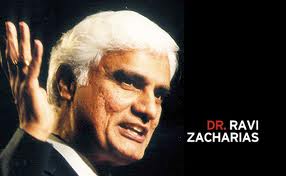
Ravi Zacharias – Of Isms and Rabbit Trails


Among my toughest audiences in apologetics are undoubtedly my two little boys. From the time words started forming on their lips, questions of various kinds have been a staple around our home—the most formidable one being, “Why, daddy?” More than any other of our appetites, I strongly suspect that thirst for knowledge and the occasional thrill of discovery have played the greatest role in shaping history. From the vast machinery of the news media to the intricate systems of the educational enterprise, from specialized research institutions to the multifaceted world of religious devotion, human hunger for knowledge is the oil that greases the mill of civilization.

So pervasive is this drive for knowledge that it can become an end in itself, opening up a rudderless detour along even the journey to God. This is true in religious systems that claim knowledge for a select few, with secretly guarded rituals forever hidden from the uninitiated. Gnosticism, from the Greek word gnosis, which means knowledge, was built upon the premise that there exists a category of knowledge privileged to a select few. Most Eastern religions insist that the problem with humanity is not sin but ignorance; hence, their solution to the human predicament is enlightenment, not forgiveness. Similarly, scientific naturalism stakes its fortunes on the bare, cold facts of particles and quarks; to know them is to know ultimate reality—never mind the minor detail that, logically, there is a gaping missing link between knowing how something works and the conclusion that it was not made.

But according to the Bible, at the end of our incessant pursuit of knowledge lies a Person, not an ideology or impersonal reality. God is not only the beginner of all that is; God has also shown his face in the earthliest of terms. Jesus was born in circumstances accessible to the lowliest of the shepherds as well as to the most majestic of kings. He spoke to large crowds in public places and was crucified outside the city walls, thereby silencing forever the voices of self-appointed guardians of alleged esoteric knowledge. In biblical terms, no pursuit of knowledge is ever complete without the discovery of the one who is the truth; to know this one is to know not only ultimate reality but also ourselves.

For the Christian, then, it is a solemn thought to remember that reducing apologetics to a contest in the abstract can actually keep us from knowing God. Determined to demonstrate the consistency of our beliefs, Christians can easily find themselves on endless rabbit trails—pursuing every form of ism, striving to tie each and every loose end in one’s belief system, finding comfort when we succeed and frustration when we fail—all the time unaware of the beckoning arms of our loving Father who is Himself the treasure we so diligently seek and hope to show others. Like Jewish leaders of old who diligently searched the scriptures but failed to recognize the one to whom they point when he stood before them in human flesh, we can perfect the art of dissecting biblical and philosophical truths with little progress in our knowledge of God—so enamored with the map that we never take a step towards the destination. As C.S. Lewis observes, “There have been men before now who got so interested in proving the existence of God that they came to care nothing for God Himself…as if the good Lord had nothing to do but exist!“(1)

The God we meet in apologetics is mostly a subject to be studied, a case to be argued, a conclusion to be drawn—a far cry from the God who has been revealed both in the scriptures and ultimately in the Person of Jesus Christ. When the pursuit of knowledge becomes an end in itself, the conclusions we accept are decidedly driven by our most cherished passions. Just as it is possible to pursue knowledge simply to satisfy our belief in God without much concern for God, it is also possible to seek it passionately precisely because we disbelieve in God. Here is a trustworthy saying that deserves full acceptance: In our thirst for knowledge, “intent is prior to content.”(2) Our finitude guarantees that there will always be gaps in our knowledge which only omniscience can fill, but God has put enough content in the world to satisfy any honest intent to find God.

Is it pointless then to pant for knowledge? Far be it from me to suggest such a thing! This very piece of writing is an attempt to convey knowledge! And, besides, “It is God’s privilege to conceal things and the king’s privilege to discover them” (Proverbs 25:2, NLT). Whenever I am tempted to disparage the passion for painstaking attention to the seemingly minutiae, I am reminded of the faithful souls who have labored for years to sift through ancient manuscripts and translate them into a language that I can read. We are all beneficiaries of the dedication of others in almost all areas of our lives. Worshiping at the altar of ignorance is no more pious than worshipping at the altar of mental abundance. But those whose pursuit of truth is infused with the purity of spirit discover that, all along, the Father has been seeking such to worship Him.(3)

J.M. Njoroge is a member of the speaking team at Ravi Zacharias International Ministries in Atlanta, Georgia.

(1) C.S. Lewis, The Great Divorce (New York: Simon and Schuster, 1996), 71.

(2) Ravi Zacharias, Can Man Live Without God (Nashville: Thomas Nelson, 1996), 98.

(3) See John 4:23.

John MacArthur – “Having summoned His twelve disciples” (Matt. 10:1).


Matthew 10:1 is Christ’s official commissioning of the twelve men He hand-picked to serve beside Him during His earthly ministry. Mark 3:13 says He “summoned those whom He Himself wanted, and they came to Him.” In John 15:16 He tells them, “You did not choose Me, but I chose you, and appointed you, that you should go and bear fruit.” This is not their call to salvation, but to service. With the exception of Judas, they were already saved. Before the foundation of the world God chose them to be redeemed in Christ, and they had responded accordingly. Now Jesus was calling them to a specific ministry.

God always chooses those who will be saved and serve within His church. But between salvation and service there must be a time of training. For the disciples it was a period of three years in which Jesus Himself trained them as they experienced life together from day to day. That’s the best form of discipleship. Classrooms and lectures are helpful, but there’s no substitute for having a living pattern to follow–someone who models Christian virtue and shows you how to apply biblical principles to your life.

Paul understood the importance of such an example. In Philippians 4:9 he says, “The things you have learned and received and heard and seen in me, practice these things.” He said to Timothy, “Let no one look down on your youthfulness, but rather in speech, conduct, love, faith and purity, show yourself an example of those who believe” (1 Tim. 4:12). Peter followed suit, admonishing the church elders not to lord their authority over those in their charge, but to be godly examples (1 Pet. 5:3).

Whether you’ve been a Christian for many years or just a short time, you are an example to someone. People hear what you say and observe how you live. They look for a glimpse of Christ in your life. What do they see? How would they do spiritually if they followed your example perfectly?

Suggestions for Prayer:

Thank the Lord for those who are examples of godliness to you.

For Further Study:

What do these verses indicate about your salvation: John 15:16, Romans 8:28, Ephesians 1:4, and 2 Thessalonians 2:13?

According to Ephesians 2:10, why were you saved?

Presidential Prayer Team; J.K. Today is the Annual National Day of Prayer


It’s Here!

“Heaven is a wonderful place / Filled with wonder and grace / I want to see my Savior’s face / Heaven is a wonderful place.” It’s a traditional chorus sometimes sung following a song called “Take the Name of Jesus with You.”

Your kingdom come, your will be done, on earth as it is in heaven.Matthew 6:10

The songwriter knew that the days on Earth are beset with trials and mockers of Christian values. One Bible commentator wrote that on this Earth “the wills of lost men and demons vigorously oppose God.”

But Jesus talked often of His kingdom on Earth. “Truly, truly, I say to you, unless one is born again he cannot see the kingdom of God.” (John 3:3) Once you believe, His kingdom is here on Earth because He is a part of you. Jesus reigns in your heart and manifests Himself in your actions, all to give a foretaste of resurrected life in the age to come.

On this National Day of Prayer, join believers across this nation in prayer for mercy on this country. Intercede for those who oppose God that they would accept Jesus as Savior…and find life in His name. Then their actions will be transformed to make this Earth more like Christ’s heavenly kingdom.

Recommended Reading: John 20:24-31

Greg Laurie – Sending It Ahead


“Do not lay up for yourselves treasures on earth, where moth and rust destroy and where thieves break in and steal; but lay up for yourselves treasures in heaven, where neither moth nor rust destroys and where thieves do not break in and steal.” — Matthew 6:18-20

Heaven is the real deal, the eternal dwelling place. Earth is the temporary dwelling place. Heaven is the original, and Earth is the copy. Take the best things you have ever seen or felt on this earth, the best days of your life, whether it was your wedding day or the birth of a child or a special moment with someone you love, and these were simply glimpses of glory, tastes of what is to come.

C. S. Lewis wrote in Letters to Malcom, “The hills and valleys of heaven will be to those you now experience not as a copy is to an original, but as the flower to the root, or the diamond to the coal.”

The Bible tells us that one day as believers, we will stand before the judgment seat of Christ, also known as the Bema Seat, where believers will receive rewards for their faithfulness to God. Paul wrote to the churches of Galatia, “And let us not grow weary while doing good, for in due season we shall reap if we do not lose heart” (Galatians 6:9).

And we are also reminded in 1 Corinthians 3:8, “Now he who plants and he who waters are one, and each one will receive his own reward according to his own labor.”

Yes, there is a reward. And this should cause us to want to do everything we can for God’s glory. As I have often said, we can’t take it with us, but we can send it on ahead. Every investment we make of our lives for God’s glory will result in an eternal reward: the giving of our time, the use of our gifts, the investment of our resources. By being faithful to the Lord, we are laying up treasure in heaven for ourselves.

Max Lucado – Deception is Never an Option


For the Christian, deception is never an option. It wasn’t an option for Jesus.

Isaiah 53:9 says, “He had done nothing wrong, and he had never lied.”  His every sentence true.  No cheating on tests. No altering the accounts.  Not once did Jesus stretch the truth.  He simply told the truth. No deceit was found in His mouth.  And if God has His way with us, none will be found in ours. He longs for us to be just like Jesus.

Proverbs 12:22 says, “The Lord hates those who tell lies but is pleased with those who keep their promises.”  Why the hard line?  Why the tough stance?  One reason is that dishonesty is absolutely contrary to the character of God.  God always speaks truth.  When He makes a covenant, He keeps it. When He proclaims the truth, we can believe it!  Because He cannot be false to Himself.

Charles Stanley – Discovering God’s Will


Colossians 1:9-12

Would you say that discovering God’s will is like trying to catch a butterfly that’s always just out of reach? Or is it more like fishing, where you cast your lure and hope for the best? In either case, you lack the assurance that you can know what His will is. Jesus, on the other hand, was absolutely certain that He knew what His Father had planned (John 6:38-39). In fact, the heavenly Father gives believers His Holy Spirit to reveal His purposes for each one.

Scripture is the Lord’s primary means of communication. It is both complete and comprehensive in content. Containing principles that address all areas of life, the Bible is the Father’s instruction book for godly living. You cannot maintain the Christian life apart from a steady diet of His Word.

The Bible’s purpose is to give us guidelines for living, and—through the influence of the Holy Spirit—the wisdom to apply them to our daily decisions. The more familiar we are with Scripture, the easier it will be to see the relevance of biblical precepts to our lives. Not adhering to the Lord’s plan will result in missing out on the abundant spiritual life that Christ has promised. Even more importantly, veering from God’s way will mean failure to bring Him the glory He deserves—glory that would result from following His plan.

Unless the Word of God has a central place in our lives, we’ll find it almost impossible to be certain we are in His will. Today is the day to change all that. God is waiting to meet with you in His Word. Won’t you join Him—nothing on your schedule could possibly be more valuable than time spent with your Father.

Our Daily Bread — All That Is Precious


1 Peter 2:1-10

Coming to Him as to a living stone, rejected indeed by men, but chosen by God and precious. —1 Peter 2:4

Throughout my life, I’ve accumulated a lot of stuff. I have boxes of things that at one time were important but over time have lost their intrigue. And, as an unrepentant collector, I’ve realized that the thrill is in searching for and acquiring a new piece to add to the collection. Then my attention turns toward the hunt for the next item.

While we pile up many things that are important to us, very little of it is really precious. In fact, over time I have learned that the most precious things in life are not material items at all. Rather, it’s the people who have loved me and built into my life who are precious. When I find my heart saying, “I don’t know what I’d do without them,” I know that they are indeed precious to me.

So when Peter refers to Jesus as “a chief cornerstone, elect, precious” (1 Peter 2:6), it should resonate in our hearts that He is truly precious—our prized possession above everything and everyone else. Where would we be today without the constant unfailing companionship of His faithful presence, wise and perfect guidance, merciful patience, comfort, and transforming reproof? What would we do without Him? I can’t even imagine! —Joe Stowell

Lord, help us not to focus on fleeting treasures but on

You, our most precious treasure. Teach us the joy

of reveling in You and Your loving presence

and provision in our lives.

Of all that is precious, Jesus tops the list.

Charles Spurgeon War! War! War!


“Fight the Lord’s battles.” 1 Samuel 18:17

Suggested Further Reading: James 3:13-18

It is the Christian’s duty always to have war with war. To have bitterness in our hearts against any man that lives is to serve Satan. We must speak very strongly and sternly against error, and against sin; but against men we have not a word to say, though it were the Pope himself. I have no enmity in my heart against him as a man, but as anti-Christ. With men the Christian is one. Are we not every man’s brother? “God hath made of one flesh all people that dwell upon the face of the earth.” The cause of Christ is the cause of humanity. We are friends to all, and are enemies to none. We do not speak evil, even of the false prophet himself, as a man; but, as a false prophet, we are his sworn opponents. Now, Christians, you have a difficult battle to fight, because you fight with all evil and hostility between man and man: you are to be peacemakers. Go wherever you may, if you see a quarrel you are to abate it. You are to pluck firebrands out of the fire, and strive to quench them in the waters of lovingkindness. It is your mission to bring the nations together, and weld them into one. It is yours to make man love man, to make him no more the devourer of his kind. This you can only do by being the friends of purity. Smite error, smite sin, and you have done your best to promote happiness and union among mankind. Oh, go, Christian, in the Spirit’s strength, and smite your own anger—put that to the death; smite your own pride—level that; and then smite every other man’s anger. Make peace wherever you can, scatter peace with both your hands.

For meditation: “Blessed are the peacemakers.” (Matthew 5:9) Men need to hear of the Prince of Peace (Isaiah 9:6) who alone can give them peace with God and, as a result, peace with man (Ephesians 2:14-17).

Sermon no. 250

1 May (1859)

John MacArthur – The Master’s Men


“The names of the twelve apostles are these: The first, Simon, who is called Peter, and Andrew his brother; and James the son of Zebedee, and John his brother; Philip and Bartholomew; Thomas and Matthew the tax-gatherer; James the son of Alphaeus, and Thaddaeus; Simon the Zealot, and Judas Iscariot, the one who betrayed Him” (Matt. 10:2- 4).

We live in a qualification-conscious society. Almost everything you do requires you to meet someone else’s standards. You must qualify to purchase a home, buy a car, get a credit card, or attend college. In the job market, the most difficult jobs require people with the highest possible qualifications.

Ironically, God uses unqualified people to accomplish the world’s most important task: advancing the kingdom of God. It has always been that way: Adam and Eve plunged the human race into sin. Lot got drunk and committed incest with his own daughters. Abraham doubted God and committed adultery. Jacob deceived his father. Moses was a murderer. David was too, as well as an adulterer. Jonah got upset when God showed mercy to Nineveh. Elijah withstood 850 false priests and prophets, yet fled in terror from one woman–Jezebel. Paul murdered Christians. And the list goes on and on.

The fact is, no one is fully qualified to do God’s work. That’s why He uses unqualified people. Perhaps that truth is most clearly illustrated in the twelve disciples, who had numerous human frailties, different temperaments, different skills, and diverse backgrounds, yet Christ used them to change the world.

This month you will meet the disciples one by one. As you do, I want you to see that they were common men with a very uncommon calling. I also want you to observe the training process Jesus put them through, because it serves as a pattern for our discipleship as well.

I pray you will be challenged by their strengths and encouraged by the way God used them despite their weaknesses and failures. He will use you too as you continue yielding your life to Him.

Suggestions for Prayer:

Memorize Luke 6:40. Ask God to make you more like Christ.

For Further Study:

Read 2 Timothy 1:3-5, noting the weaknesses Timothy may have struggled with, and how Paul encouraged him. How might Paul’s words apply to you?

Joyce Meyer – Use the Keys


They who seek (inquire of and require) the Lord [by right of their need and on the authority of His Word], none of them shall lack any beneficial thing. –Psalm 34:10

Jesus said, “I will give you the keys of the kingdom of heaven; and whatever you bind (declare to be improper and unlawful) on earth must be what is already bound in heaven; and whatever you loose (declare lawful) on earth must be what is already loosed in heaven” (Matthew 16:19).

As a believer, you have authority to live a life of victory and to forbid the devil to torment you. It is not lawful for him to destroy you in heaven, so it is not lawful for him to destroy you during your days on earth. Use the keys of the kingdom of heaven that Jesus has passed to you. Loose God’s blessings upon your efforts and bind the evil works that come against the fruit of your labors today.

Campus Crusade for Christ; Bill Bright – The Lord Forgave You


“Since you have been chosen by God who has given you this new kind of life, and because of His deep love and concern for you, you should practice tenderhearted mercy and kindness to others. Don’t worry about making a good impression on them but be ready to suffer quietly and patiently. Be gentle and ready to forgive; never hold grudges. Remember, the Lord forgave you, so you must forgive others” (Colossians 3:12,13).

J. C. Penney, a devout Christian whom I knew personally, built one of America’s leading businesses on the principle of the Golden Rule, taught by our Lord:

“Do unto others as you would have them do unto you.”

He and other gentle men have developed tenderness and sensitivity to others through their years of maturing, often through many difficult and trying experiences. So should we as Christians seek to develop gentle spirits through the trials and tribulations that God permits us to go through.

Do you lack gentleness in your life?

Do you have a tendency to be arrogant, proud, boastful?

Are you overbearing or even coarse and rude with others?

By faith you can become a gentle person. By faith you can confess your sins and know that they have been forgiven. By faith you can appropriate the filling of the Spirit of Christ. By faith you can practice tenderhearted mercy and kindness to others.

The Lord has commanded us to be gentle people, so by faith we can ask for that portion of the fruit of the Spirit, gentleness and love, and know that He is changing us for the better.

As I have cautioned with regard to other Christlike traits, this is one which usually develops over an extended period of time, usually through the maturing process that comes only with time and trials and sometimes tribulation. Pray that God will give you patience with yourself as you mature into the gentle and humble person He wants you to be.

Bible Reading: Colossians 3:14-17

TODAY’S ACTION POINT:  God’s promise to me is that He forgives; with His help I will forgive and practice tenderhearted mercy and kindness to others, with the prayer that I may be more and more conformed to the image of my Lord.

Greg Laurie – If Only . . .


“Only an evil, adulterous generation would demand a miraculous sign; but the only sign I will give them is the sign of the prophet Jonah.” —Matthew 12:39

Have you ever thought, If someone were raised from the dead, I know people would believe? Or, If I could do a miracle for my friends, I know they would believe?

Remember the story of the rich man and the beggar named Lazarus? They both died and went into eternity. The rich man had no place for God, but Lazarus was a believer. At that time before the death and resurrection of Jesus, Hades was divided into a place of comfort and a place of torment. Lazarus went to the place of comfort on the heart and bosom of Abraham. The nonbelieving rich man went to the place of torment.

The rich man called out to Abraham, wanting to go back and warn his family about the horrible place he was in. But Abraham told him, “They have Moses and the prophets; let them hear them” (Luke 16:29 NKJV).

But the rich man persisted. He thought if someone were to rise from the dead, they surely would believe.

Here is what Abraham told him: “If they do not hear Moses and the prophets, neither will they be persuaded though one rise from the dead” (verse 31).

Maybe, like the rich man, you think that if only your friends and family could witness a miracle, they would believe.

Jesus said, “Only an evil, adulterous generation would demand a miraculous sign; but the only sign I will give them is the sign of the prophet Jonah. For as Jonah was three days and three nights in the belly of the great fish, so will the Son of Man be three days and three nights in the heart of the earth” (Matthew 12:39). Jesus was saying, “You want a sign for a nonbelieving world? Here it is: My death and resurrection from the dead.”

Here is our message to lost humanity: Christ died. He rose. He can forgive you of your sin. That is the message we have to share.

Charles Stanley – Telling It like It Is


John 9:13-25

The blind man was willing to answer questions about his healing, regardless of who was asking. Responses to his testimony varied. The neighbors argued over the genuineness of his story and demanded to know how he came to see. The man explained what had happened, with no embellishments: he’d met a man named Jesus, who gave him some instructions. When he obeyed, he was healed. Though the neighbors couldn’t deny what had happened, they had trouble accepting the account, because they could not understand it. The world still does the same thing—what they can’t explain, they try to deny.

The Pharisees also questioned how he had received his sight. Again the man reported, “He applied clay to my eyes, and I washed, and I see” (John 9:15). These leaders refused to believe him because they didn’t want to accept the One responsible for the healing. When they questioned the man a second time, he simply repeated his testimony: “I was blind, now I see” (v. 25). Again they rejected his words, because they refused to change their beliefs. Many people reject God’s truth and instead cling to their own interpretation of the facts.

A third response is seen in the man’s parents, whom the Pharisees asked to verify his testimony. They refused because they were afraid of the authorities. Fear of someone’s reaction can keep us from speaking about our transformed life.

Next time you have an opportunity to talk about the Lord, share something that has changed since you met Him. Say, “I was ___ , and now I am ___ because of Jesus.”