Tag Archives: theology

Greg Laurie – Don’t Wait for the Rooster


Peter’s denial of Jesus did not happen over a period of seconds or minutes, but over a period of hours. An hour passed from the time the first person said, “You were one of those with Jesus the Galilean,” to the time Peter denied his Lord for the second time. He had ample opportunity to hightail it out of there, but for some reason he hung around.

His story reminds me that no person is safe from temptation except the one who flees from it. Peter, having been warned by Jesus Himself, should have avoided any place where he could fall. He definitely should have steered clear of all roosters! The Lord had said that before the rooster crowed, he would deny Jesus three times (see Matthew 26:69-75). I would have asked, “Are there any roosters here? Because if there are, I’m leaving!”

But seriously, if someone like Simon Peter could fall, then surely we can, too. First Corinthians 15:33 tells us, “Bad company corrupts good character.” Peter hung around people who were dragging him down spiritually. Are you in a similar situation? Have you entered into relationships where people are dragging you down? Maybe it’s a romance. Maybe it’s a close friendship. Are you finding yourself compromising your principles to fit in, or so that you don’t offend anyone? Perhaps you need to reconsider your friendships. Perhaps you need to make some immediate changes. And even if you have made some mistakes, there is still time to commit yourself to the Lord. That time is now. Don’t wait for the rooster to crow.

Charles Stanley – Sanctification


Romans 6:17-22

The Lord has a grand plan for the life of every person, and it can be summed up in a single word: sanctification. If you are scratching your head about what that terms means, you are not alone. Many people—even some longtime Christians—do not know its definition. However, believers should see to it that they acquire that knowledge because it’s an important word, and it defines them.

In its verb form—sanctify—the term means “to make holy” or “to separate.” So when something is sanctified, it is separated from a common use to a sacred one. In the Old Testament, we are told that the Lord sanctified a number of things: He made the seventh day holy, set aside the Levite tribe as priests, and even consecrated places like the Holy of Holies in the tabernacle (Gen. 2:3; Num. 3).

The Lord still sanctifies people today. Before a person receives salvation, he is spiritually dead (Eph. 2:1-3). What’s more, Romans 5:10 tells us that before we come to faith, we’re actually enemies of God. Yet the moment someone trusts in Jesus as his personal Savior, his sins are wiped away, and he is adopted into the Lord’s family. That individual is then set apart as a child of God for a sacred purpose. This means believers are not here simply to chase after personal gain. Rather, they are to serve God and bring Him honor and glory.

As members of God’s family who are called to reflect His glory, believers are referred to as “saints.” This word shares a root with sanctification. We are referred to this way, not because we live sinless lives but because we live a life consistent with the One we represent.

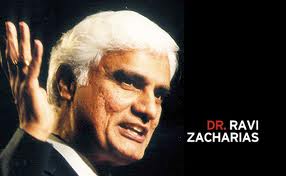
Ravi Zacharias Ministry – Unhindered


My high school band director was adamant about many things, but none so much as what he called the obligatory rule of good musicianship. That is, the two most important notes in any musical composition are the first and the last. “The audience might forgive you for what comes in the middle,” he would say, “but they will forget neither your very first impression nor your final remark.”

The last word of the book of Acts in the Greek New Testament is the word akolutos. The word literally means “unhindered,” though many translations render it with multiple words. Others move the word from its final position for the sake of syntax. In both cases, I think something is lost in translation. Luke was intentionally making a statement with this last word of his two volume testimony to the life of Jesus Christ. I think he intended readers to pause at the conclusion of his words, leaving us with the provocative thought of a gospel that is unhindered. After the stories of Jesus’s ministry were told, after recollections of his death and ruminations of his resurrection, after Jesus’s ascension and the church’s beginnings, after all the resistance, disappointment, and surprises along the way, Luke concludes, “Then Paul dwelt two whole years in his own rented house, and received all who came to him, preaching the kingdom of God and teaching the things which concern the Lord Jesus Christ with all confidence, unhindered” (Acts 28:30-31).

Through prisons and angry crowds, the book of Acts traces the birth and growth of the early church. The book begins with a few hundred believers in Christ and a collective will to be his witnesses in Jerusalem, in Judea and Samaria, and to all the ends of the earth. Opposition to this witness is described at every turn. Persecution, beatings, death, and imprisonment all threatened the voice of the early church and ultimately the spread of the gospel itself. But in spite of all this, Luke epitomizes the history of the early church and the spread of the gospel by boldly describing the progression of God’s kingdom as going forth without so much as the slightest of hindrances. The Good News of God to all the world, he seems to want the world to remember, goes forth in power.

For any man or woman who will hear his testimony, Luke wants to conclude his eyewitness account with the dimension of the gospel that is most striking—namely, that these evidences are far from the end of the story. Luke wants hearers to be well aware that eyewitnesses to the power of the kingdom will go well beyond his own eyes, his stories, his lifetime; your eyes, your stories, your lifetime. Though variant theologies and distorted gospels will abound, though the world will delight in yet another conspiracy theory that promises to be the downfall of Christianity, the great narration of God’s kingdom will go forth unhindered. For the Christian, this means we need not live defeated by every emerging plot to undermine Christ. And for the one who has yet to accept him, it is continually and powerfully an invitation. Won’t you consider living into a victory like his, walking further up and farther into the great unhindered kingdom of God?

Luke begins on a note intent on crescendo: “Many have undertaken to set down an orderly account of the events that have been fulfilled among us” (Luke 1:1). He sets out to sing the beginnings of the early church and the work of God from the very start to the ends of time. He wants to be clear that we are invited to be a part of a story that will not fade away. Despite all appearances, despite dim turns in melody, the gospel was and will continue to be Good News that resounds without hindrance. No person or power can thwart the resonant sounds of the kingdom Jesus proclaimed, for it is moved by a Spirit who presses it ever-onward, ringing invitingly into the unexpected places of the world. The redemptive song of Christ and the Spirit who enables creation to add its praise will continue to move forth, unhindered.

Jill Carattini is managing editor of A Slice of Infinity at Ravi Zacharias International Ministries in Atlanta, Georgia.

Alistair Begg – Remember Me


Do this in remembrance of me.  1 Corinthians 11:24

It appears that Christians may forget Christ! There would be no need for this loving exhortation if there were not a fearful possibility that our memories might prove treacherous. Nor is this an empty notion: It is, sadly too well confirmed in our experience, not as a possibility, but as a lamentable fact. It appears almost impossible that those who have been redeemed by the blood of the dying Lamb and loved with an everlasting love by the eternal Son of God could forget that gracious Savior; but if startling to the ear, sadly it is too apparent to the eye to allow us to deny the crime. Forget Him who never forgot us! Forget Him who poured His blood out for our sins! Forget Him who loved us even to death! Can it be possible? Yes, it is not only possible, but conscience confesses that it is too sadly a fault with all of us that we treat Him as a stranger, like an overnight guest. Instead of Him being a permanent resident in our memories, we treat Him as a visitor. The cross where one would expect that memory would linger and disinterest would be an unknown intruder is desecrated by the feet of forgetfulness.

Doesn’t your conscience say that this is true? Don’t you find yourselves forgetful of Jesus? Some other love steals away your heart, and you are unmindful of Him upon whom your affection ought to be set. Some earthly business engrosses your attention when you ought to be fixed steadily upon the cross. It is the incessant turmoil of the world, the constant attraction of earthly things, that takes the soul away from Christ. While memory works to preserve a poisonous weed, it allows the rose of Sharon to wither. Let us charge ourselves to tie a heavenly forget-me-not around our hearts for Jesus our Beloved, and whatever else we let slip, let us hold tight to Him.

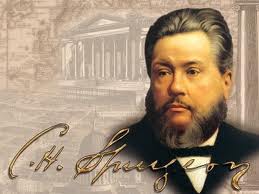
Charles Spurgeon – David’s dying prayer


“Let the whole earth be filled with his glory; Amen, and Amen.” Psalm 72:19

Suggested Further Reading: Isaiah 6:1-8

Is there not one among you that can win a laurel wreath? Have I not one true Christian heart here that is set for work and labour? Have I not one man that will devote himself for God and for his truth? Henry Martyn! Thou art dead; and is thy mantle buried with thee? Brainerd, thou sleepest with thy fathers; and is thy spirit dead too, and shall there never be another Brainerd? Knibb, thou hast ascended to thy God; and is there nowhere another Knibb? Williams, thy martyred blood still crieth from the ground; and is there nowhere another Williams? What! Not among this dense mass of young and burning spirits? Is there not one that can say in his heart, “Here am I, send me”? “This hour, being saved by God’s grace, I give myself up to him, to go wherever he shall be pleased to send me, to testify his gospel in foreign lands”? What! Are there no Pauls now? Have we none who will be apostles for the Lord of hosts? I think I see one who, putting his lips together, makes this silent resolve—“By God’s grace I this day devote myself to him; through trouble and through trial I will be his, if he will help me; for missionary work or for anything else I give up my all to God; and if I may die as Williams did, and wear the blood-red crown of martyrdom, I will be proud; and if I may live to serve my Master, like a Brainerd, and die at last worn out, here I am, do but have me, Master; give me the honour of leading the forlorn hope, of leading the vanguard of Christianity; here I am, send me.”

For meditation: The earth is going to be filled with the knowledge of the glory of God (Habakkuk 2:14). Every believer has a contribution to make towards that goal, big or small. Are you playing your part?

Sermon no. 129

26 April (1857)

John MacArthur – Paying the Price of Righteousness


“Blessed are those who have been persecuted for the sake of righteousness” (Matt. 5:10).

Unlike many today who try to make the gospel palatable for reluctant sinners, Jesus made it clear that following Him had its price. Rather than acceptance, fame, prestige, and prosperity, you can expect rejection and persecution. That’s not a popular approach to evangelism, but it’s honest. Also it insures that no one will try to enter the kingdom on the wrong basis.

Jesus wanted His hearers to count the cost of discipleship. He knew that many of them would be disowned by their families and excommunicated from the Jewish synagogues. Many would suffer persecution or martyrdom at the hands of the Roman government. They needed to count the cost!

Persecution did come to those early Christians. The Emperor Nero smeared many of them with pitch, crucified them, and then burned them to light his garden parties. He condemned Christians for refusing to worship him as a god, and blamed them for the burning of Rome in [sc]A.D. 64. Christians were accused of cannibalism because Jesus said, “He who eats My flesh and drinks My blood abides in Me, and I in him” (John 6:56). They were said to be revolutionaries because they believed that God would one day destroy the earth.

The world’s animosity toward Christians hasn’t changed. You might not face the severe persecutions the first- century believers faced, but you will be persecuted (Phil. 1:29). Even new Christians often face difficulties. If they refuses to join their former friends in sinful activities, they might be rejected. If they work for a dishonest boss who expects them to participate in or condone his evil practices, they might be fired or have to quit their jobs. That might bring extreme financial hardship to their families.

God won’t always shield you from persecution, but He will honor your integrity and give you strength to endure any trial that comes your way. Praise Him for His all- sufficient grace!

Suggestions for Prayer:

Pray for those you know who are suffering hardship for Christ’s sake.

Ask God for the wisdom and strength to face persecution with integrity and unwavering faith.

For Further Study:

Read James 1:2-4 and 1 Peter 5:10.

What purpose does suffering serve?

How should you respond to suffering?

Joyce Meyer – Just Obey


But the natural, nonspiritual man does not accept or welcome or admit into his heart the gifts and teachings and revelations of the Spirit of God, for they are folly (meaningless nonsense) to him; and he is incapable of knowing them (of progressively recognizing, understanding, and becoming better acquainted with them) because they are spiritually discerned and estimated and appreciated.—1 Corinthians 2:14

Many non-Christians don’t really understand the gospel. This isn’t a new thing that is unique to our day. When Paul wrote to the Corinthians, he pointed out that the Greeks thought it was foolish. And to the natural mind, it is. God sent Jesus, the sinless One, to earth for the express purpose of dying for wicked, sinful people. To unbelievers that is foolish. The natural man cannot understand the power of the gospel—it can only be “spiritually discerned.”

This is just as true in daily living. Sometimes God speaks to us, and if we try to explain it to people who don’t know Jesus, it doesn’t make sense. For example, I remember one couple that went to Africa as missionaries. They had no ­denomination or large church behind them, providing support. They sold everything they owned, including their wedding rings.

“Their wedding rings?” a skeptical relative asked. “You mean God wouldn’t provide for you, so you had to do it yourself?”

The wife smiled. “No, I think we had to decide if comfort and having things like everyone else was more important than serving Jesus.” The couple never doubted they were doing the right thing, but it never made sense to the skeptical relative.

It is difficult for many people to hear God speak and to obey without question. But Jesus did just that—and not only on the cross. John 4 relates the story of Jesus and the Samar­itan woman at the well. What most modern readers don’t get is the introduction to the story: “It was necessary for Him to go through Samaria” (John 4:4). Jesus had been in Jerusalem, and He wanted to go north to Galilee. The country of the Samaritans was in between, but Jesus didn’t have to take the route that passed that way. He could have taken another route and avoided going through Samaria. Most Jews avoided going through Samaria because they hated the Samaritans for mixing and marrying with people from other nations.

But Jesus went to Samaria, even though it wasn’t what we would have called the normal or reasonable thing to do. He went because there was a woman—and eventually a whole village—that needed to hear the message that only He could deliver.

The natural people—those whose minds have not been enlightened by the Holy Spirit—scoff at us. What we do doesn’t always make sense to them. But then, who says our actions have to make sense? The biblical principle is that the natural or carnal mind doesn’t understand spiritual things. Too often, a thought comes to us that we push aside, saying, This doesn’t make any sense, and we actually ignore divine guidance. It’s true, of course, that the devil can flood our minds with wild thoughts, but if we pray and open ourselves to the Spirit, we soon know the difference.

Consider the story of Peter who had fished all night and caught nothing. Jesus, a carpenter, came along and told him, a professional fisherman, “Put out into the deep [water], and lower your nets for a haul” (Luke 5:4).

Peter reasoned with Jesus, reminding Him that they had worked all night and caught nothing. But to his credit, Peter, exhausted from a long and unsuccessful night’s work, heard the Lord. I’ll say it again, Peter heard the Lord and said, “But on the ground of Your word, I will lower the nets [again]” (v. 5). And Peter was not disappointed. They caught so many fish that the nets almost broke.

This is an important principle of obedience that we must grasp: obey instead of reasoning. Or as one of my friends calls it, “The Nevertheless Principle.” She says that sometimes she feels God leading her to do things that don’t always make a lot of sense. When she hears herself expressing that sentiment, she quickly adds, “Nevertheless.” Then she obeys.

That is really all God asks of us: to obey instead of ­reasoning.

Wise and wonderful God, sometimes things don’t make sense to me, but nevertheless, I want to be in Your will. Help me to develop spiritual discernment, and don’t let me miss a divine opportunity to serve You. Teach me to trust You more, and help me to obey You quickly instead of trying to reason things out. Thank You for hearing me today. Amen.

Charles Stanley – Personal Holiness


Hebrews 9:11-14

If you were to randomly walk up to a man on the street and ask him if he is going to heaven, he would very likely tell you yes. If you asked why, he would probably list the good things he has done. Unbelievers and even many churchgoers cannot understand why their works are insufficient for redemption. In fact, many people do not recognize their need for redemption at all.

The man on the street assumes that if he is a faithful husband and caring father who doesn’t cheat his friends or slack off at work, then he is good enough to “make the cut” for eternal life. He doesn’t recognize himself as a sinner, nor does he realize sin has separated him from holy God. He thinks he can earn a place in heaven through his own actions.

The trap for unbelievers—and, sadly, for many believers as well—is that they fail to recognize the Lord is the only one who can do something about man’s sinful condition. Most of us look pretty good in our own eyes because, using others as a standard for comparison, we can always find someone whose lifestyle or misdeeds makes us look better. But when held up against God’s perfect holiness, every one of us is lacking.

The Savior died for the sins of mankind and rose again so that each person who was unclean could be holy, as God is holy. The disciple John explained how sin is washed away from the believer: “The blood of Jesus [God’s] Son cleanses us from all sin” (1 John 1:7). Good works mean nothing unless they are the result of a clean spirit. We can have personal holiness only by receiving the Lord Jesus Christ and His gift of salvation.

Ravi Zacharias Ministry – Is Our Future Determined or Free?


Questions of freedom and destiny have been raised in every generation. Do we exercise choice, or has everything already been decided? Is our future determined or free? The resultant mental gymnastics leave many feeling confused and others feeling disappointed. Christians insist that nothing takes God by surprise. On the other hand, Christians throughout the ages reject the kind of fatalism that is seen in some parts of the world.

The problem with the question as it is presented is that it is not nearly difficult enough. In order to truly appreciate the magnitude of what we are discussing, we must first deal with an even greater question. And it is this: Imagine if I were able to stop time right now. What would you be thinking? What would you be feeling? The answer is nothing.

In the absence of time, we cannot think or feel or do. Everything is frozen. People sometimes complain that I speak too quickly—the problem being that there is not sufficient time for them to think about what has been said. I always try to cheer myself by saying that at least something has been said for them to think about! But it is a fair criticism because in the absence of sufficient time we cannot think things through. In the absence of time altogether, however, we cannot even begin to think, as there is literally no time to think in.

The Christian understanding is that we live and have our existence in a space-time continuum. “[We] belong to eternity stranded in time,” observes Michael Card.(1) This also means that before God created there was no time; in other words, time is not co-eternal with God. But Christians also attest that God was a thinking, feeling, doing Being even before God created. Can you imagine a Being who is able to think in the absence of time? Of course not, but the God Christians profess not only exists outside of time, God can think and act in the absence of time.

Just reading this may be enough to make us feel overwhelmed. And so it should. Whenever we think about the person of God, we should rightly feel that we have come across something truly awesome. And maybe this is part of the problem. We are not faced with a logical contradiction here. Rather, we are faced with the reality of what it means for God to exist, for God to be God. You and I are only able to think in time, and thus, God confronts us with choices: “Choose this day whom you will serve,” “choose life” and so on (Joshua 24:15; Deuteronomy 30:19). But God, as Christians believe, who is outside of time, sees all of history stretched out before Him. The problem comes, therefore, when the attempt is made to confine God within time. But this needn’t be the case. For Christians, a proper understanding of the tension drives us back both to God’s divine nature and to our knees, acknowledging how wonderful God is.

This understanding also helps Christians with the issue of eternal life. Many people when confronted with the idea of eternity find the idea frightening, tedious, or absurd. What could one possibly do with all of that time? Once again, the dilemma arises because we are captive both to the passage of time and too small a view of who God actually is. People also then ask: if God truly knows all things, then why did God create knowing that we would experience pain in a fallen world? But here Christians attest that God did not create the world and then think of a plan to rescue it. The book of Revelation depicts that the Lamb was slain before the foundations of the world were laid. This does not mean that the crucifixion took place in our space-time history before creation (there was no space-history for it to take place in). What it does mean is that even before God created, God also knew the cost—the suffering of his own Son—to redeem creation and unite us with the Father. God didn’t count that cost too great—and hence Christians sing of God’s amazing grace.

Let me conclude with the following. The Christian God is big enough to be able to say, “I know the plans I have for you… plans to prosper you and not to harm you, plans to give you hope and a future” (Jeremiah 29:11). There is no hope without a secure future, and the future is frightening in the absence of hope. Only God is big enough to bring these two things together—hope and a future—and this is what God has done for us.

Michael Ramsden is European director of Ravi Zacharias International Ministries in the United Kingdom.

(1) Lyrics from “Joy in the Journey” by Michael Card, 1986.

Alistair Begg – Come Away


Arise, my love, my beautiful one, and come away.  Song of Songs 2:10

I hear the voice of my Beloved! He speaks to me! Fair weather is smiling upon the face of the earth, and He does not want me to be spiritually asleep while nature is all around me awaking from her winter’s rest. He bids me “Arise,” as well He might, for I have been lying long enough among the weeds of worldliness. He is risen, and I am risen in Him; so why should I still cleave to the dust? From lower loves, desires, pursuits, and aspirations, I want to rise to Him.

He calls me by the sweet title “my love” and counts me “beautiful”; this is a good argument for my rising. If He has exalted me and thinks me fair, how can I linger in the tents of wickedness and make my friends in the wrong company? He bids me “Come away”; further and further from everything selfish, groveling, worldly, sinful, He calls me; yes, from the outwardly religious world that doesn’t know Him and has no sympathy with the mystery of godliness. “Come away” has no harsh sound to my ear, and what is there to hold me in this wilderness of vanity and sin?

My Lord, I want desperately to come away, but I am held among the thorns and cannot escape from them as I wish. I would, if it were possible, close my eyes and ears and heart to sin. You call me to Yourself by saying, “Come away,” and this is indeed a melodious call. To come to You is to come home from exile, to reach the shore out of the raging storm, to finally rest after hard labor, to reach the goal of my desires and the summit of my wishes.

But, Lord, how can a stone rise; how can a lump of clay come away from the horrible pit? Please raise me; draw me by Your grace. Send Your Holy Spirit to kindle sacred flames of love in my heart, and I will continue to rise until one day I will leave life and time behind me and come away indeed.

John MacArthur – Messengers of Peace


“Blessed are the peacemakers, for they shall be called sons of God” (Matt. 5:9).

When Jesus said, “Blessed are the peacemakers, for they shall be called sons of God” (Matt. 5:9), He was referring to a special group of people whom God called to restore the peace that was forfeited because of sin. They may not be politicians, statesmen, diplomats, kings, presidents, or Nobel Prize winners, but they hold the key to true and lasting peace.

As a Christian, you are among that select group of peacemakers. As such you have two primary responsibilities. The first is to help others make peace with God. There is no greater privilege. The best way to do that is to preach the gospel of peace with clarity so people understand their alienation from God and seek reconciliation. Romans 10:15 says, “How beautiful are the feet of those who bring glad tidings of good things!” The early church preached peace through Christ, and that is your privilege as well.

Your second responsibility is to help reconcile believers to one another. That’s a very important issue to God. He won’t accept worship from those who are at odds with each other. They must first deal with the conflict (Matt. 5:23-24). That is especially true within a family. Peter warned husbands to treat their wives properly so their prayers wouldn’t be hindered (1 Pet. 3:7).

Peacemakers don’t avoid spiritual conflicts–they speak the truth in love and allow the Spirit to minister through them to bring reconciliation. If you see someone who is alienated from God, you are to present him or her with the gospel of peace. If you see two Christians fighting, you are to do everything you can to help them resolve their differences in a righteous manner.

Of course to be an effective peacemaker you must maintain your own peace with God. Sin in your life will disrupt peace and prevent you from dispensing God’s peace to others. Therefore continually guard your heart and confess your sin so that God can use you as His peacemaker.

Suggestions for Prayer:

Pray for those close to you who don’t know Christ. Take every opportunity to tell them of God’s peace.

For Further Study:

Read 2 Corinthians 5:17-21.

How did Paul describe the ministry of reconciliation?

What was Christ’s role in reconciling man to God?

Campus Crusade for Christ; Bill Bright – When He’s in Control


“But when the Holy Spirit controls our lives, He will produce this kind of fruit in us:…self-control” (Galatians 5:22,23).

Sue insisted that she was Spirit-filled, and she frequently challenged others to be filled with the Spirit. But there was no evidence that the Holy Spirit was in control of her life, because she was completely undisciplined in everything she did. She knew nothing about self-control. She knew all about the Holy Spirit, in her mind, but there was no evidence that He was in her life – and in control of her life.

Dr. Henrietta Mears, as director of Christian education at the First Presbyterian Church in Hollywood, had one of the greatest spiritual ministries of her time. Hundreds of young men and women became church members and missionaries under her influence. She lived in a palatial home, owned priceless antiques and dressed beautifully. Most people assumed that she was a woman of great wealth. Actually, she was a person of relatively modest means. She simply knew how to take her regular salary, a modest inheritance, plus savings, and maximize them for God’s glory.

For example, she would advise young people, “Do not eat in expensive restaurants where you spend excessively except on rare occasions. Instead, prepare your own lunch, and over a period of a year you can save enough money by not eating out to take a trip around the world and enrich your spirit, your soul and your cultural sensitivities. Or you can use the money you save to buy something which will enhance the beauty of your home or person.”

We see disciplined people all around us in the world. Athletes discipline themselves to strict training, soldiers are drilled in military discipline, artists and writers are disciplined to sharpen their talents through dedicated practice. On the other hand, we also see examples of a lack of discipline in the lives of many people around us.

Whether a person is a Christian or a non-believer, the development of self-control as a quality of character seems to be difficult for most people. Yet we are told in the Bible that the Spirit-filled Christian will exhibit self- control as a part of the fruit of the Spirit.

Bible Reading: I Chronicles 28:9-13

TODAY’S ACTION POINT:  I acknowledge that to walk in the fullness and control of the Holy Spirit will enable me to demonstrate a life of discipline and self-control. Therefore, by faith, and with the help of the Holy Spirit, I shall live a life of discipline and self-control for the glory of God. Self- control is essential for supernatural living.

Presidential Prayer Team; C.P. – Up Close and Personal


Many people today say they believe in God. Current politically-correct philosophy says to believe anything you want, but don’t impose your beliefs on others. But following Christ isn’t just a set of values and beliefs. Asking a Christian to not tell others about Jesus is like asking grandparents to not talk about their grandchildren!

You shall be my people, and I will be your God. Ezekiel 36:28

According to Romans 8, those who are in Christ and are following after the Spirit belong to God’s family. The greatest commandment isn’t about do’s and don’ts, it’s to love the Lord with all your heart, soul and mind (Matthew 22:37). Think about what it is to love God with your mind, your emotions and everything that makes you a unique person. It’s a marvelous thing that creator God wants you to love Him like that. He doesn’t want a mere head nod His way. He wants an intimate loving relationship. He is an up close and personal God.

Today, acknowledge His presence. Worship Him. Thank Him for His love and remind yourself that God loves you and is very aware of all your concerns. Cast your cares on Him for He cares for you (I Peter 5:7). Then passionately bring the needs of this nation before Him.

Recommended Reading: Romans 8:1-12

Greg Laurie – For Just Such a Time


“For if you remain completely silent at this time, relief and deliverance will arise for the Jews from another place, but you and your father’s house will perish. Yet who knows whether you have come to the kingdom for such a time as this?” —Esther 4:14

I love the story of Esther because in some ways, it reminds me of a fairy tale, except it is true. Esther was a beautiful Jewish girl who was plucked from obscurity, won a beauty contest, and became the queen of the kingdom. Then there was a wicked man named Haman, who hatched a plot to have all of the Jews put to death. It was Esther’s uncle, Mordecai, who came to her and described the plight of her fellow Jews, saying, “For if you remain completely silent at this time, relief and deliverance will arise for the Jews from another place, but you and your father’s house will perish. Yet who knows whether you have come to the kingdom for such a time as this?” (Esther 4:14).

Esther was the queen who saved a nation. She used her influence with the king, the plot was averted, and the people were saved. Then, in perfect poetic justice, Haman, the guy who hatched the plot, ended up hanging on the very gallows he had erected for others. She was there behind the scenes. Esther could have said, “I don’t want to jeopardize my position. No one will ever find out I am a Jew. I am going to be careful and play it safe.” But instead, she put everything on the line.

Who knows that God has not put you where you are right now for such a time as this? You may be the only Christian in your family or the only believer in your neighborhood. You may be the only follower of Jesus Christ in your workplace or in your classroom. Like Esther, will you stand up for such a time as this? Will you use your influence where you can, when you can?

Charles Stanley – Christ’s Blood: The Necessity


Romans 3:21-26

Romans 3 communicates the very heart of Scripture. Apart from the cross of Christ and His atoning death, no one can be declared righteous.

In other words, there is only one way to become a child of God—through the blood of the Savior (John 14:6). Good works and right living will not earn the Lord’s favor, because every person inevitably sins, and a sinner cannot enter the presence of holy God. The shedding of Christ’s blood on the world’s behalf made it possible for anyone to be cleansed of sin and have a relationship with the Creator. The only requirement is trusting Jesus as Savior.

For God to be just, He must remain true to His own principles. His holiness dictated that “the soul who sins will die” (Ezek. 18:4). The penalty for sin—namely, death—had to be paid in a way that was acceptable to God. He explained through Moses why a blood sacrifice was required: “For the life of the flesh is in the blood, and I have given it to you on the altar to make atonement for your souls; for it is the blood by reason of the life that makes atonement” (Lev. 17:11). A life must be given for a life to be spared.

On that basis, the heavenly Father provided a perfectly sinless sacrifice for all mankind. The only way God’s justice could be satisfied and His holiness could be maintained was for Jesus Christ to take our guilt and sin upon Himself and die in our place.

When we say that there is only one way to the Father, we mean that a person must believe Jesus Christ died as a perfect sacrifice. To trust in anything else is to ignore God’s holiness and the admonition of His Word (Acts 4:12).

Our Daily Bread — Faithful To The Finish


Hebrews 12:1-4

Let us run with endurance the race that is set before us. —Hebrews 12:1

After running 32 kilometers (20 miles) of the Salomon Kielder Marathon in Great Britain, a runner dropped out and rode a bus to a wooded area near the finish line. Then, he re-entered the race and claimed third prize. When officials questioned him, he stated that he stopped running because he was tired.

Many of us can relate to the exhaustion of a worn-out athlete as we run the race of the Christian faith. The book of Hebrews encourages us to “run with endurance the race that is set before us” (12:1). Running with endurance requires that we lay aside the sin that stands in our way and shed the weights that hold us back. We may even have to press on through persecution (2 Tim. 3:12).

To prevent weariness and discouragement in our souls (Heb. 12:3), the Bible urges us to focus on Christ. When we pay more attention to Him than to our struggles, we will notice Him running alongside us—supporting us when we stumble (2 Cor. 12:9) and encouraging us with His example (1 Peter 2:21-24). Keeping our eyes on “the author and finisher of our faith” (Heb. 12:2) will help us stay close to the source of our strength and remain faithful to the finish. —Jennifer Benson Schuldt

Turn your eyes upon Jesus,

Look full in His wonderful face;

And the things of earth will grow strangely dim

In the light of His glory and grace.

—H. H. Lemmel. © Renewal 1950. H. H. Lemmel

We can finish strong when we focus on Christ.

Ravi Zacharias Ministry – Breaking Time


“Uncanny” was one of the vocabulary words on my sixth grade vocabulary list, which was to be found within the book we were reading as a class. I remember thinking Madeleine L’Engle’s A Wrinkle in Time was exactly that—uncanny, peculiar, and uncomfortably strange. Yet I also remember that it stayed with me—the story of a quirky girl named Meg, her overly-intelligent little brother, and their time-transcending journey to save their physicist father with the help of three mysterious beings. L’Engle’s book, which recently celebrated its fiftieth anniversary, invites readers to see time itself differently. Her stories will no doubt continue to perplex sixth graders, and stay with us long after we have set them aside.

L’Engle is the writer who first showed me the incredible difference between two words in Greek, which we unfortunately translate identically. To the English reader, chronos and kairos both appear to us as “time.” But in Greek, these words are vastly different. Chronos is the time on your wrist watch, time on the move, passing from present to future and so becoming past. Kairos, on the other hand, is qualitative rather than quantitative. It is time as a moment, a significant occasion, an immeasurable quality. In the New Testament, kairos is God’s time, it is real time—it is the eternal now.

Thus, when Jesus stepped into time to proclaim the kingdom of God among us, he came to show us in chronos the reality of kairos. “Jesus took John and James and Peter up the mountain in ordinary, daily chronos,” writes L’Engle. “Yet during the glory of the Transfiguration they were dwelling in kairos.”(1) With this story in mind, L’Engle describes kairos as that time which breaks through chronos with a shock of joy, time where we are completely unselfconscious and yet paradoxically far more real than we can ever be when we are continually checking our watches. “Are we willing and able to be surprised?” L’Engle asks. “If we are to be aware of life while we are living it, we must have the courage to relinquish our hard-earned control of ourselves.”(2) For the Christian, the thought is particularly consequential. We must have the courage to see counterculturally beyond ourselves and our self-importance. We must have the courage to live aware that the kingdom of God is close at hand.

I imagine Jacob discovered this difference between chronos and kairos when he set aside both the past that was about to catch up with him and his paralyzing fear of the future only to find himself living in “none other than the house of God” (Genesis 28:17). The prophets and others describe similar moments of waking to the present and finding the eternal dimensions of time. The shepherds in Bethlehem were going about their ordinary work when an angel appeared before them and the glory of the Lord shone around them.  ”Do not be afraid,” the angel announced. “I bring you good news of great joy that will be for all the people. Today in the town of David a Savior has been born to you” (Luke 2:13-14).  At this invasion of kairos into the routine of chronos, the shepherds chose to respond with action: “Let’s go to Bethlehem and see this thing that has happened, which the Lord has told us about” (2:15).

In the life, death, resurrection, and ascension of Christ, where eternity steps into time and invites us to see far beyond our watches, we are presented with a similar decision. Are we willing to be surprised again by Christ’s coming? Are we willing to act on it? Are we able to release the nervous control of our daily schedules in order to stop and see the resurrected Christ, the eternal now in our midst? With every prophet who proclaimed the coming of the Messiah in history, the apostle calls out today, “Behold, now is the time (kairos) of God’s favor, now is the day of salvation” (2 Corinthians 6:2).

Whether we are ready for our sense of time and self to stop at such an invasion, Christ has come. He comes quietly and unexpectedly; he comes and upsets our very notions of time and all we discover within it. The eternal Word steps into flesh, into our bounded realm of time, and literally embodies the reality that time is meaningful because of the eternal one in our midst. His presence reminds us that kairos is breaking into chronos and transforming it, transforming us. It proclaims, “The kingdom of God is close at hand”—and invites us to join the world breaking in along with it. In moments of life and death, present fears and plans for the future, might this radical invasion move us and our vantage points, as we find ourselves continually surprised by the one who comes so near.

Jill Carattini is managing editor of A Slice of Infinity at Ravi Zacharias International Ministries in Atlanta, Georgia.

(1) Madeleine L’Engle, Walking on Water: Reflections on Faith and Art (New York: Bantam, 1982), 93.

(2) Ibid., 99.

John MacArthur – Christ Is Our Peace


“Blessed are the peacemakers, for they shall be called sons of God” (Matt. 5:9).

After World War II the United Nations was created to promote world peace. But since its inception in 1945 there has not been a single day of global peace. That’s a sad commentary on man’s inability to make peace. In fact, someone once quipped that Washington D.C. has so many peace monuments because they build one after every war!

It hasn’t always been that way. Prior to the Fall of man peace reigned on the earth because all creation was in perfect harmony with its Creator. But sin interrupted peace by alienating man from God and bringing a curse upon the earth. Man couldn’t know true peace because he had no peace in his heart. That’s why Jesus came to die.

I once read a story about a couple at a divorce hearing whose conflict couldn’t be resolved. They had a four-year-old boy who became distressed and teary-eyed over what was happening. While the couple was arguing, the boy reached for his father’s hand and his mother’s hand and pulled until he joined them.

In a sense that’s what Christ did: He provided the righteousness that allows man and God to join hands. Romans 5:1 says that those who are justified by faith have peace with God through the Lord Jesus Christ. Colossians 1:20 says that God reconciled all things to Himself through the blood of Christ’s sacrifice on the cross.

Yet on the surface, the scene at the cross wasn’t peaceful at all. Pain, sorrow, humiliation, hatred, mockery, darkness, and death were oppressively pervasive, but through it all Christ was doing what He alone could do: making peace between man and God. He paid the supreme price to give us that precious gift.

In the future, Jesus will return as Prince of Peace to establish a kingdom of peace that will usher us into an eternal age of peace. In the meantime He reigns over the hearts of all who love Him. Let His peace reign in your heart today!

Suggestions for Prayer:

Thank God for the peace of heart that comes from knowing Christ.

For Further Study:

Read Philippians 4:6-9. What must a person do to know God’s peace?

Campus Crusade for Christ; Bill Bright – Poor, Blind and Naked


“You say, ‘I am rich, with everything I want; I don’t need a thing!” And you don’t realize that spiritually you are wretched and miserable and poor and blind and naked” (Revelation 3:17).

George had come for a week of lay training at Arrowhead Springs. Following one of my messages on revival, in which I explained that most Christians are like the members of the church at Ephesus and Laodicea, as described in Revelation 2 and 3, he came to share with me how, though he was definitely lukewarm and had lost his first love, he frankly had never read those passages, had never heard a sermon such as I had presented and therefore did not realize how wretched and miserable and poor and blind and naked he was.

If there were such an instrument as a “faith thermometer,” at what level would your faithfulness register? Hot? Lukewarm? Cold?

Jesus said to the church at Laodicea, “I know you well – you are neither hot nor cold; I wish you were one or the other! But since you are merely lukewarm, I will spit you out of my mouth!” (Revelation 3:15).

Again, I ask you, where does your faithfulness register on that faith thermometer?

The greatest tragedy in the history of nations is happening right here in America. Here we are, a nation founded by Christians, a nation founded upon godly principles, a nation blessed beyond all the nations of history for the purpose of doing God’s will in the world. But most people in this country, including the majority of church members, have without realizing it become materialistic and humanistic, all too often worshiping man and his achievements instead of the only true God.

Granted, the opinion polls show meteoric growth in the number of people in America who claim to be born-again Christians. But where does their faith register on the faith thermometer? America is a modern-day Laodicea. We are where we are today because too many Christians have quenched the Holy Spirit in their lives.

Bible Reading: Revelation 3:14-19

TODAY’S ACTION POINT:  Realizing that America cannot become spiritually renewed without individual revival, I will humble myself, and pray, and seek God’s face, and turn from my wicked ways. By faith I will claim revival in my own heart.

Presidential Prayer Team; J.K. – Total Reliance


The saddest of stories: a rich, young ruler came running to Jesus, knelt at His feet and asked, “What must I do to have eternal life?” He came not to lay a trap, as some did, but because of a truly honest longing for assurance.

With man this is impossible, but with God all things are possible. Matthew 19:26

He knew the commandments, but Jesus read his heart and knew the idol in his life gave the young man a deceptive feeling that he was self-sufficient. The answer to his question – give away all he possessed and follow Jesus – was an impossible request…unless he relied totally on God to do it. Instead, he turned away in sorrow, loving his possessions more than his soul!

In one form or another, the test comes to every Christian. It is the smallest of things that sometimes prevents the greatest results. A slight defect in the finest bell and it ceases to sound. The tiniest of sin, if there could be such a thing, keeps you from doing what the Lord has in mind.

Don’t go away sorrowfully. Reinstate God as the center of your life. All things are possible with Him. The hope of this nation rests on the prayers of those who give their all to Christ.

Recommended Reading: Psalm 62:5-12