Tag Archives: topnews

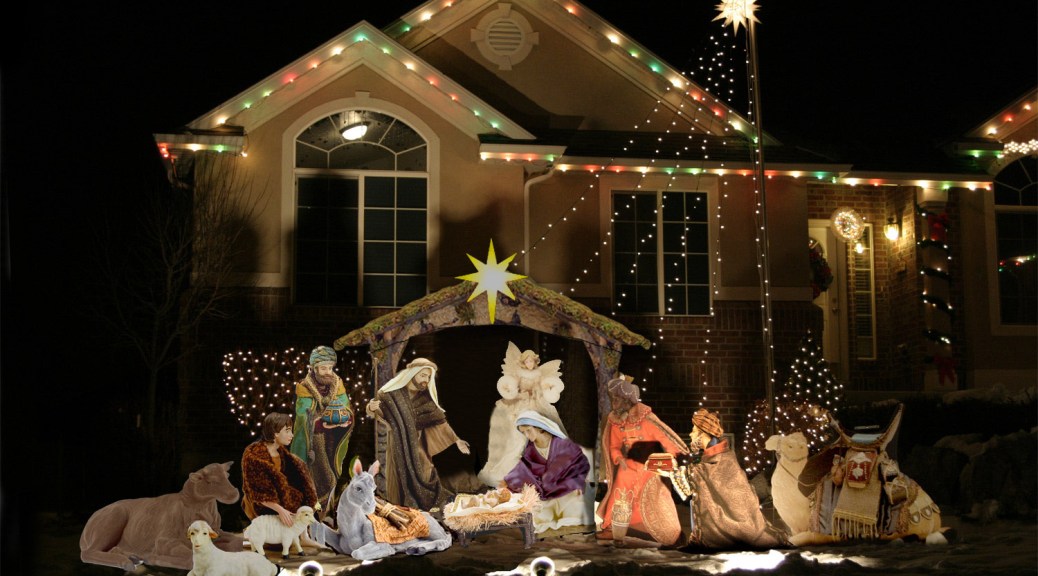
Restoring Faith in America; ‘Tis the Season to Bring Back Nativity Scenes

Can you believe it? Thanksgiving is already here. Christmas and Hannukah are right around the corner, which means you and many Americans are already putting up decorations for the holidays.

Many of us go all out when decorating at home. But across the country, these special holidays are also celebrated publicly, like when cities and communities put up Nativity scenes outside city hall or a lighted Menorah in a public park.

Of course, if you read the headlines, it seems that virtually every holiday season, we hear about these religious displays being forcefully taken down. There always seems to be someone group channeling their inner Grinch, complaining and arguing that public religious displays are “unconstitutional.”

Well, we’re here to tell you that simply isn’t the law. Public religious displays are a part of America’s history and traditions. And despite what some roaming complainers say, these expressions of faith in the public square don’t have to go anywhere. They’re perfectly constitutional.

As the song goes, this is “the most wonderful time of the year.” So, we want to bring you encouragement and hope. Don’t be afraid. Don’t worry about those radical groups that want to deflate the holiday spirit with unfounded complaints.

The law is strongly on the side of religious freedom. In fact, you now have more religious liberty than at any point in the last 50 years. Protections for public expression of religion are stronger than they’ve been in a half century!

For decades, attacks during Christmas and Hannukah were almost considered normal. Religious Americans got used to being harassed for expressing their beliefs in public.  But it doesn’t have to be that way anymore.

This holiday season presents a HUGE opportunity. And here’s why.

Thanks to the landmark victories for religious freedom that you helped First Liberty secure in the Coach Kennedy and the Bladensburg Peace Cross cases (Kennedy v. Bremerton School District and American Legion v. American Humanist Association), historic displays with religious references and imagery don’t have to be hidden. These wins completely changed the law in a way that favors religious freedom and safeguards religious displays.

For you, it means you can go into your community and begin restoring Nativity scenes, Menorahs and other religious memorials, images and displays. If anyone tries to take them down, you have the legal backing to confidently defend them.

If you want to help restore faith and religious freedom in America, we urge you: Take action now.

Maybe the Nativity scene you once saw outside city hall is now gone. Or, maybe you no longer see the Menorah when walking in the local park. Now’s the time to start working with your city council or local leaders to bring it back.

This is an incredible time for religious liberty in America. God has created incredible new opportunities and graciously opened new doors for religious freedom.

After removing major barriers and precedents against religious freedom, we now have incredible opportunities in the courtroom. And with God’s favor, together, we can keep bringing more and more victories that will guard religious liberty for you, your children and your grandchildren. But those hard-fought victories will only make a difference when we go forth and boldly live out our faith.

Whether it’s Nativity scenes, Menorahs, monuments with religious images, our national motto “In God We Trust,” students praying in schools, or our leaders saying a prayer to start our government meetings, these expressions of faith do not have to be banished to closets. It’s time to go on offense and restore religious freedom where it rightfully and legally belongs.

Source: Restoring Faith in America; ‘Tis the Season to Bring Back Nativity Scenes – News – First Liberty

The psychics will never see this coming

If you’re in the market for a new career, how about one that will bring home almost $300,000 a year and require you to work only three hours a day (with weekends and 2 weeks off for vacation)?

The job? Pet psychic.

Nikki Vasconez, a former lawyer, started working as a pet psychic four years ago and even though she charges over $500 for a 90-minute consultation, she has a waitlist of nearly 8,000 clients.

Starting out, she made a video about a dog named Albie who she claims told her he didn’t like his nickname. She says he didn’t specify what it was, only that it made people think he was large and overweight.

“Those were his exact words”, she said. The dog’s nickname was “Big Al”.

According to an article in the Wall Street Journal, “Pet psychics are making their way from the fringe to socially acceptable. Those who tell others about their experiences with animal communicators say they are more likely to be asked for referrals than be mocked…People book sessions with animal communicators to unravel behavioral issues, to learn about preferences for end-of-life care, and when the time comes, to make sure their pets are enjoying the afterlife.”

Oh boy.

If pets aren’t your thing, how about becoming just a regular psychic? According to an article in the New York Post, people have become frustrated with seeing therapists and are now turning to psychics for advice.

One example is Aria D’Amore, 35, an artist and model living in Jersey City, who became dissatisfied with therapy after nearly 30 years, so she decided to seek help from an “intuitive healer” practicing tarot and astrology. D’Amore now consults with her healer/astrologer in hour-and-a-half sessions that cost her $125.

With animals costing over 4X as much as people, I’m guessing pets must be harder to read than humans.

Discernment needed ahead

According to a Pew Research Center survey, 15.0% of Americans consult a psychic or fortune-teller, with women more likely to visit psychics or fortune-tellers than men. If that statistic is true, given the current American population of over 300 million, that means tens of millions of Americans have gone to psychics.

And you thought the occult was just a niche thing.

With psychics (or anything paranormal for that matter), you basically have three possibilities staring you in the face with respect to what and who they really are.

First, they’re fake and they know they’re fake. Scammers are everywhere and despondent, misguided people looking for help and answers make for perfect prey. Personally, I think a pet psychic is a brilliant scam as there’s almost no way to falsify the “reading”. The only thing better would be dealing with inanimate objects (e.g., a house psychic: “Your home is telling me it wants a new roof.”)

Second, they’re fake but they believe they’re real. The pet psychics cited in the WSJ article, for example, truly seem to believe that their “readings” are legit.

Lastly, they’re real and they believe they’re real. This category is rare but does exist. More on this in a moment.

So why are way too many people seeking out occult practitioners these days? A New York Times article cites James Alcock, a professor of psychology at York University in Canada, who has spent his career looking at belief systems and debunking scientific studies of the paranormal. “If you look throughout history,” Alcock says, “whenever there has been some sort of upheaval or some sort of collective anxiety in society, interest in psychics has shot up. People experience a lack of control and anxiety.”

Thomas Rabeyron, a professor of clinical psychology and psychopathology at the University of Lorraine in France, agrees saying, “Psychics are barometers of social anxiety”.

Sadly, this is nothing new. A perfect Old Testament example of anxiety seeing out the occult is Saul visiting the witch at En-Dor when he was facing the onslaught of the Philistine army: “Seek for me a woman who is a medium, that I may go to her and inquire of her” (1 Sam 28:7).

Unfortunately for those who encounter the real thing, they think they’re dealing with something that’s helpful when it’s an entity more malevolent than they can imagine.

Stating the obvious, the need for discernment is off the charts in such cases because the power behind the psychic will do its best to appear as a bearer of good much like the possessed woman cited in Acts who tried to act as a herald for the Gospel message: “It happened that as we were going to the place of prayer, a slave-girl having a spirit of divination met us, who was bringing her masters much profit by fortune-telling. Following after Paul and us, she kept crying out, saying, ‘These men are bond-servants of the Most High God, who are proclaiming to you the way of salvation’” (Acts 16:16-17).

The woman in question was a living, breathing example of what Paul would write later: “Satan disguises himself as an angel of light. Therefore, it is not surprising if his servants also disguise themselves as servants of righteousness” (2 Cor. 11:14–15).

With the uptick in psychic visitations (now over a $2 billion industry), it isn’t out of the question to think it is one of the many signs of the clock ticking down to the final end times as Scripture says: “But the Spirit explicitly says that in later times some will fall away from the faith, paying attention to deceitful spirits and doctrines of demons” (1 Tim. 4:1).

On that point, Dr. Merril Unger, in his book The Haunting of Bishop Pike (that chronicles a horrific example of the peril psychics pose), speaks about the train-wrecking nature of “deceitful spirits” when he warns: “The essential thing to understand concerning all the phenomena of spiritualism, whether telekinesis, psychic visions, automatic writing, trance speaking, materializations, apparitions, excursions of the psyche, or whatever is that fact is used as a springboard to fraud … Satan’s masquerading as an angel of light is far more destructive than his forays as a devouring lion” (emphasis in the original).

Amen. Let’s hope those pursuing psychics for their pets or themselves come to this realization. If they don’t, trust me, they and their psychics will never see their end coming.


Robin Schumacher is an accomplished software executive and Christian apologist who has written many articles, authored and contributed to several Christian books, appeared on nationally syndicated radio programs, and presented at apologetic events. He holds a BS in Business, Master’s in Christian apologetics and a Ph.D. in New Testament. His latest book is, A Confident Faith: Winning people to Christ with the apologetics of the Apostle Paul.


Source: The psychics will never see this coming | Voice

Why Can Everyone Celebrate Who They Are Except Christians? – PJ Media

Why Can Everyone Celebrate Who They Are Except Christians?

It seems like every time you turn around there’s a new “month” being celebrated. In case you can’t keep track of them, here’s a list:

February: Black History Month.

March: Women’s History Month

March: Irish-American Heritage Month

March: Greek-American Heritage Month

March: National Nutrition Month

April: Arab-American Heritage Month

May: Asian Pacific American Heritage Month

May: Jewish-American Heritage Month

June: LGBTQ+ Pride Month.

June: Caribbean-American Heritage Month

June: Immigrant Heritage Month

July: Disability Pride Month

July: French=American Heritage Month

August: Transgender History Month

September 15 – October 15: Hispanic Heritage Month

October: National Disability Employment Awareness Month

October: German-American Heritage Month

October: Filipino-American History Month

October: Italian-American Heritage Month

November: Native-American Heritage Month.

El Dorado County, California, wanted to celebrate Christian Heritage Month starting in July of 2024. In July of this year, the resolution passed by a vote of 4-1. However, in September it was rescinded because a group of liberals, atheists, and some in the Jewish community protested the proposed celebration. More on that later.

The month is celebrated by other communities across the nation in July, but it isn’t recognized as a national holiday.  Why not?

As you look at the list of nationally celebrated months, it’s clear that not everyone agrees with the values that are being celebrated, yet still they are recognized. So why is it that so many sub-groups, as far as population numbers are concerned, get the approval, but the actual religion that the nation was founded on is cast aside?

A great argument for a national celebration can be found in the “Declaration of American Christian Heritage Month,” which was adopted by the Constitution Party of Pennsylvania (CPPA) on October 16, 2021.

The problem, in my opinion, is twofold. First, the current politicians who are in office are gutless. There is no reasonable explanation for why an American Christian Heritage Month isn’t on the national calendar. The second reason ties directly into the first. Every time the subject is brought up, it’s always attacked. Instead of pointing out the obvious and sticking to their guns, the politicians fold like a cheap suit.

What took place in El Dorado County is a microcosm for what happens in too many cities and counties across the country. Even before the resolution was passed, the haters were crawling out of the woodwork. The critics were the usual suspects. The Freedom Fom Religion Foundation (FFRF) is a band of atheists who seemingly hate everything about American values and tradition. The FFRF is led by a particularly nasty piece of human flesh named Annie Laurie Gaylor. Gaylor is a narcissist. In her world, it’s her way or the highway. Lke all radical leftists, she claims to be open minded and accepting, but her actions prove to be the exact opposite. It should upset every American when any politician or political party caves to these singularly motivated morons. By the way, their argument never really changes. The names and places may change, but their argument never really does. All they do is continuously regurgitate the same tired stance, which proves their ignorance is based on nothing but an inane hatred toward any sense of personal spiritual belief and an acceptance that things exist beyond human understanding.

Here is Gaylor reveling in the fact that her own stupidity once again duped a group of weak-kneed politicians: “Hurrah for reason, inclusion and the principles of our secular Constitution triumphing against Christian nationalist propaganda.”

So, let’s look at how ridiculous this argument is. The Constitution is not secular, no matter how long Gaylor wishes upon her atheist star. The United States Constitution is based on Christian values. It’s those same values that allow the freedom for morons like Gaylor to pontificate against the very foundation that allows her rhetoric to be spoken publicly. Also, if having a month that recognizes Christian heritage is propaganda in Galor’s simple mind, then what is Black History Month or LGBTQ Pride Month? Are they not propaganda for those groups of Americans? Of course they are. The only difference is that the idea that some Americans believe in a higher power offends her delicate sensibilities. Her argument is not only weak, it’s also bigoted. Just because you can convince the weak minded to cast aside common sense does not mean you are right.

The American Civil Liberties Union (ACLU), another critic, is an oxymoron if there ever was one. Like the FFRF, they also love to get involved in these issues to espouse nonsense. They do so for the same reasons: to exploit the weakness of politicians, and to try and stay relevant (which they are not).

The ACLU believes the resolution “conveys that the County supports, promotes and endorses specific religious beliefs and, as such, violates the California Constitution.”

Really? Does celebrating Black History Month endorse black superiority? Does celebrating LGBTQ Month endorse the fact that everyone should be mentally deranged?

Celebrating an American Christian Heritage Month does not mean in any way, shape, or form that Christianity is being endorsed. It simply recognizing that there are Christian Americans who are allowed to be proud of who they are and celebrate it. The fact that it makes the leadership of the ACLU uncomfortable is not only hypocritical, it is disgusting in its very nature.

Last, and perhaps most surprisingly, is a group of Jews who were very vocal against the idea of Christians being able to be proud of who they are.

Marla Saunders, a Jewish massage therapist in South Lake Tahoe, said she was “verklempt” after the decision, using the Yiddish term meaning “overcome by emotion.” Saunders started an online petition calling on the board to rescind the proclamation. It garnered more than 1,000 self-righteous signatures in September. “I am definitely teary with joy,” she said.

“Teary with joy”? Over the celebration of a Christian Heritage Month Being rescinded? Perhaps she needs to change whatever oils and candles she is using during her massage sessions. They obviously have affected her ability to think clearly.

Rabbi Evon Yakar of Temple Bat Yam in South Lake Tahoe commended the board for taking action but criticized them for promoting the idea that America is a Christian nation.

“This was not about celebrating one group’s heritage,” said Yakar. “This is about the clear use of language in the proclamation that our country was founded as a Christian country, and that is what we are celebrating. I commend the board for reflecting on and revisiting the proclamation, and I applaud them for rescinding it. I believe they did a good thing in reflecting on the divisiveness this caused.”

No, Rabbi, the proclamation did not cause the divisiveness. In this case your short0sightedness did.

America Is a Christian nation, founded on Christian beliefs and values. I urge you all to understand that, and I urge all of the gutless politicians nationwide to acknowledge it as well.

These values were earned and defended through the toughest of circumstances. They will not be forgotten, dismissed, or cast aside for the appeasement of the delusional left.

Source: Why Can Everyone Celebrate Who They Are Except Christians? – PJ Media

Hamas and Radical Islam: What Christians need to know

Denison Forum – Hamas and Radical Islam: What Christians need to know

The war that Hamas began with Israel on the morning of October 7, 2023, has the potential to engulf the entire Middle East and beyond in conflict. America and the West have declared their unequivocal support for Israel; Iran is clearly resourcing its enemies, backed by Russia, who is backed by China.

This conflict comes at a time of unprecedented political turmoil in the US, where the public is less trusting of its leaders and elections than at any time in my lifetime. Political divisions are rife across most of the Western world as well, driven by escalating illegal immigration, economic pressures, the ongoing effects of the pandemic, and uncertainty over the economy, upcoming elections, and new technologies.

In such a chaotic time, it is essential that we understand the facts foundational to the war in Israel and their implications for the world.

I have studied, traveled to, and written on the Middle East for four decades. Out of this context, I have created this resource to help American Christians understand the factors at work in the current conflict and their larger geopolitical repercussions. Then we will outline a prayerful way believers can respond to a war that is military, political, cultural, and, most of all, spiritual.

A brief history of Islam

Let’s begin at the beginning. Islam was founded by Muhammad (AD 570–632) in the midst of religious pluralism, idolatry, and division among his Arab people in Mecca and the Arabian peninsula.

Muhammad was born in the city of Mecca. His father died before he was born; his mother died when he was six years of age. He was raised by his grandfather and then his uncle, Abu Bakr. At the age of forty, he had become a successful businessman when he began receiving a series of visions or “revelations” which became the Qur’an.

At the time, his people worshiped the seven planets, the moon, and the stars. Many venerated family household gods and various angels. Others were involved in fire worship contributed by the Magians from Persia. There was also a corrupt form of Judaism and heretical Christianity present.

Gabriel and Muhammad

According to Islam, Muhammad was visited by the angel Gabriel in the year 610 and told that God’s previous revelations to the Jews and to the Christians had been corrupted. As a result, God was revealing his word and will a third time through Muhammad.

Of the pantheon of gods worshiped in the day, Muhammad was “led” to choose the one known as “Allah” (Arabic for “the god”) as the only true God. He began preaching in Mecca, inviting the people to join him in his new faith, but most rejected his message.

In the year 622, Muhammad and his small band of followers migrated to a city called Yathrib, now renamed “Medina” (“city of the prophet”). There they established the first Islamic state. The Muslim calendar begins from the day of this migration (the hijira or “flight”).

Muhammad’s hatred of idols led him to place an immense emphasis on the unity and transcendence of God. At first, he believed that Jews and Christians would accept his message and had his followers kneel toward Jerusalem to pray. When they did not, he taught them to turn their backs on Jerusalem by bowing toward Mecca; this is their practice today.

Muhammad’s culture was characterized by tribal warfare, brutality, and promiscuity. He emphasized divine control and opposed religious liberty and separation of church and state. In his worldview, since Allah is Lord, he must be Lord of all. Thus Muhammad created a civilization, not merely a religion—a way of life for all people, governing personal autonomy and all morality. Islam attempts to provide the answers to every conceivable detail of belief and daily life.

Muhammad left no designated heirs. The “caliphs” (Arabic for “successors”) continued his movement, led first by Abu Bakr. Soon, however, divisions began to emerge. Most Muslims followed the caliphs and their successors; these are known as Sunnis today. But some believed that only the fourth caliph (Muhammad’s son-in-law) was the true successor of Muhammad and have supported his successors; they are the Shiites (“party of Ali”). Of Muslims, 85 percent are Sunnis; 15 percent are Shiites, living primarily in Iran but also in Iraq, Azerbaijan, Bahrain, and Lebanon.

The spread of Islam

Islam’s growth worldwide has been the fastest of any religion in history. Within a single decade, AD 622–632, Muhammad united the nomadic tribes of the Arabian peninsula into a single cohesive nation, gave them a monotheistic religion in place of their polytheistic, tribal faiths, organized a powerful society and state, and launched his worldwide movement.

Muhammad died in 632 and was succeeded by Abu Bakr. Under his reign and afterward, Islam continued to spread, promoted by extensive military campaigns. Within a century after the death of Muhammad, the Islamic empire stretched from Arabia west through North Africa, to Southern France and Spain, as well as north of Arabia through the Middle East and east throughout Central Asia, to the borders of China. In the process, Islamic expansion took in much of the oldest and strongest Christian territory.

The spread of Islam in western Europe was finally checked by Charles Martel at the Battle of Tours (in France) in AD 732, exactly a century after the death of Muhammad. Spain was later reclaimed for Christianity, but a wide belt of territory from Morocco to Pakistan and Indonesia remained Muslim and has so to this day.

In the meantime, a series of Crusades were conducted from AD 1095 to 1291, making the Christian mission to Muslims immeasurably more difficult. Islam has dominated the Middle East for the last twelve centuries, threatening Europe during much of that time. Today it extends from the Atlantic to the Philippines. In Africa it is currently making tremendous advances.

Islam in America

There are an estimated 3.4 million Muslims in America. This is a “denomination” larger than either the Assemblies of God or the Episcopal Church in the US. In the next thirty years, Muslims are predicted to outnumber Jews to become the second-largest religion in our country.

While there is no unified Islamic movement in America, there is an increasing effort to evangelize the Muslim faith in our country. Saudi Arabia is leading the way in funding projects to promote Islam around the world.

Note also the growth of Black Muslims in the US, a movement that rejects Christianity as racist. This crusade began in 1931 among the Blacks in Harlem. One of the early leaders, Elijah Muhammad, preached a gospel of black superiority; his heir, Malcolm X, attempted to move the Black Muslims toward orthodox Islam. This movement is known today as The Nation of Islam and comprises a significant percentage of the total Muslim population in America.

A brief theology

What beliefs do Muslims hold in common?

A good way to understand any world religion is to ask these five questions of it:

  • What is its view of ultimate authority, God or the gods?
  • How does it view humanity?
  • What is its central focus?
  • How does it understand salvation?
  • How does it view eternity?

View of God

Unlike many world religions, Islam’s view of God can be stated very succinctly: “Your God is One God: there is no God but He, Most Gracious, Most Merciful” (2:163).[1] The Qur’an makes clear its rejection of the Trinity: “Say not ‘Trinity’: desist: it will be better for you: for God is one God: glory be to Him” (4:171).

The Qur’an also explicitly rejects the divinity of Jesus: “They do blaspheme who say: ‘God is Christ the son of Mary’” (5:72); “They do blaspheme who say: God is one of three in a Trinity: for there is no god except One God” (5:73); “Christ the son of Mary, was no more than an apostle” (5:75).

Muslims believe that God has sent 313 prophets to humanity, and they are required to memorize the twenty-five most important. Of these, the most significant were Adam, Noah, Abraham, Moses, Jesus, and Muhammad. Muslims believe that Jesus was born of a virgin (3:47; 19:20) and that he lived a sinless life and ascended to heaven without passing through death. They reject the atonement and the doctrine of salvation through faith in Christ.

View of humanity

Human beings live completely under the sovereignty of God: “Those whom God willeth to guide, He openeth their breast to Islam; those whom He willeth to leave straying, He maketh their breast close and constricted” (6:125). “God wills it” is a common expression in Islam. In fact, “Islam” means “submission” or “surrender.”

Central focus

The Qur’an is the final revelation of God for Muslims and the central focus of their faith and lives. All of life must be submitted to its revelation and laws. According to Muslim teaching, the Qur’an was given by divine miracle through Muhammad when the prophet was illiterate: “It is He who sent down to thee (step by step) in truth, the Book, confirming what went before it” (3:3).

In addition to the Qur’an, the Hadith (a collection of the “sayings” of Muhammad) and the Sunna (the record of the personal customs of Muhammad and his community) give guidance for Muslim life. But the Qur’an is the only divine revelation.

Concept of salvation

Salvation is achieved by submission to Allah: “So believe in God and His Apostle; and if ye believe and do right, ye have a reward without measure” (3:179). The “five pillars” express the essentials of Muslim life and practice:

  • The “witness” (“shahadah”): La ilaha illal lah Muhammadur rasulul lah—”There is no god but Allah, Muhammad is Allah’s messenger.” Every Muslim must declare this aloud at least once in his life very slowly, with deep meaning and full commitment; most Muslims repeat it many times each day.
  • Prayer (“salah”) with directed motions, five times a day, facing toward Mecca, the holy city.
  • Almsgiving (“zakah”), approximately 2.5 percent of all one’s income and permanent annual worth, to the poor. This is an act of worship.
  • Fasting (“sawm”), especially during the month of Ramadan, which commemorates the giving of the Qur’an. From dawn to sunset every day of Ramadan, the ninth month of the Islamic calendar, a Muslim refrains from eating, drinking, smoking, and sexual relations.
  • Pilgrimage (“hajj“) to Mecca at least once from every believer who is physically and financially able to make the journey.
  • In addition, jihad (“holy war”) can be declared the unequivocal religious duty of the Muslim man, as the will of God. Many Muslims believe that dying as a martyr in a declared holy war is a guaranteed path to paradise.

Note that strict morality is a hallmark of Muslims. Most obey strong prohibitions against drinking wine, eating pork, gambling, and practicing usury. They invoke the name of Allah at the slaughter of all animals. They also require a specific dress code: men must be covered from navel to knees; women must cover their entire bodies except for their face and hands, with women above the age of puberty required to cover their faces while going out and meeting strangers. Pure silk and gold are not allowed for men; men cannot wear women’s clothes, and women cannot wear men’s garments; the symbolic dress of other religions is not allowed.

View of heaven

Muslims believe that there will be a final day of judgment, the consummation of history, and the assigning of heaven and hell to all persons on the basis of their acceptance or rejection of the message of God and their accompanying good works. Allah is depicted as weighing good and bad works on a delicate scale of balance which is accurate even to the weight of a grain of mustard seed (7:5–8; 21:47; 23:103–5).

Islam and Christianity

How do Muslims relate to the Christian faith?

Because Islam began in the Middle East subsequent to Christianity, it has always had some reference to Christianity. Islam’s holy book, the Qur’an, maintains this reference to Christianity, speaking specifically of Jesus and the Christian religion.

Relating the faiths

Islam is completely independent of Christianity in faith and philosophy. There is almost no direct quotation in the Qur’an from either Testament. All we know for certain is that Muhammad was aware of Jews and Christians and knew something of their history. Tragically, the “Christianity” Muhammad encountered was heretical and gave him an erroneous picture of Christ and his followers.

Muhammad claimed to be a biological heir of Abraham through Ishmael. Through this tie, Muhammad saw himself as the establisher of the true religion of the one God in Arabia. He maintained that the religion Abraham bequeathed to the Arabs became corrupt. He claimed to receive direct revelation from God identical in content with the original revelations to Abraham, Moses, and Jesus and thus claimed to be in direct succession with the Old and New Testament prophets.

Muslims have historically tolerated Christians and Jews as “people of the Book” in that they have a revelation related, though inferior, to that of Muslims. Nevertheless, various regulations are imposed on Christians in Muslim lands. One of the most difficult is the law against a Christian’s converting a Muslim, accompanied by an absolute prohibition against the Muslim’s accepting Christianity.

In addition, recent persecution of Christians has made tensions much greater between the two faiths.

Sharing the gospel with Muslims

How can Christians best share their faith with Muslims?

First, seek common ground.

Both faiths believe in one God and see Jesus as holy. Muslims believe that they worship the God of Abraham and Jesus. They deny the divinity of Christ and thus do not worship our Lord. But we share the belief that there is one God of the universe.

We both emphasize personal morality. The difference is that Christians have a relationship with God based on his grace, while Muslims believe they must earn Allah’s acceptance. No Muslim can be sure that he or she will go to heaven. In Christ we have the forgiveness of our sins and the promise of eternal life with God.

Second, understand Islam’s view of Jesus.

As we have seen, Islam denies the divinity of Christ. Muhammad proclaimed that there is no God but God; thus Jesus cannot be divine. He was God’s messenger, not his Son.

Islam denies the crucifixion. According to Muslim theology, when Jewish leaders approached Jesus with the intent of crucifying him, God took him up to heaven to deliver him out of their hands; then he cast the likeness of Jesus on someone else, who was crucified by mistake in his place. Islam ignores the sin nature which requires atonement and therefore the need for Jesus’ death for us.

Third, understand Islam’s view of the Qur’an.

The Muslim believes that the Qur’an has existed from all eternity with God in the Arabic language. In every particular it is the utterance of God himself with no human element at all. The Qur’an is seen in purely verbal, propositional terms. Additionally, the Qur’an does not reveal Allah to us but only his will. He remains hidden from all men.

By contrast, Christianity has always seen the Bible as God’s self-revelation of himself to us, mediated through the instrumentality of human personality. Christ is the central focus of our faith (cf. John 20:30–31).

Fourth, emphasize the difference between grace and works.

While the Muslim believes that Allah can be merciful, he also accepts that he is responsible for his own salvation by faith and works. He does not believe that he can know his final destiny before his judgment before Allah. Christianity offers grace, full pardon for sin, and salvation today.

Finally, demonstrate God’s love in yours.

Pray for Muslims, by name if possible. Build relationships based on unconditional friendship. Look for ways to affirm and include them. Seek opportunities to share what the living Lord Jesus has done in your life. Then invite the person to have the assurance of heaven through Christ.

(For more on sharing your faith with Muslims, see “AMORE: Loving Muslims” and “The seduction of a single story” by Shane Bennett.)

Radical Islam

“Radical Islam,” that movement which led to 9/11 and the global war on terror and has incited the current war in the Middle East, can be differentiated from the rest of the Muslim world in two respects:

  • Radical Muslims argue that America and the West are the aggressors in this conflict and that 9/11 and other attacks are merely their response in defense of Islam.
  • Radical Muslims believe that there are no innocents in this conflict, that all citizens of Israel and the West are perpetrators and participants in this supposed attack on Islam.

To be clear, these are decidedly minority views in the larger Muslim world. Gallup documents that only 7 percent of Muslims think the 9/11 attacks are “completely” justified and could be considered radicalized. This percentage is not uniform across the world—it would be much higher in Yemen and Somalia, for example, and much lower in the US.

These assertions are critical in that they explain how radical Muslims like ISIS and Hamas can defend their horrific actions. The Qur’an explicitly states that violence is permitted only in self-defense:

  • “Fight in the cause of God those who fight you, but do not transgress limits; for God loveth not transgressors” (2:190).
  • “If they fight you, slay them. Such is the reward of those who suppress faith” (2:191).
  • “Fight them on until there is no more tumult or oppression, and there prevail justice and Faith in God; but if they cease, let there be no hostility except to those who practice oppression” (2:193).

The Qur’an also defends innocent people from aggression: “Nor take life—which God has made sacred—except for just cause” (17:33).

But for reasons we will explore in this section, Hamas and its associates do not believe they apply to Jews and citizens of Western democracies.

From Wahhabi Islam to al Qaeda

Muhammad ibn Abd-al-Wahhab was an eighteenth-century reformer (born in 1703 in what is today Saudi Arabia) who formed the creed upon which Saudi Arabia was founded. Wahhabism is the dominant form of Islam in Saudi Arabia today. It is an extremely fundamentalistic version of Islam, demanding absolute allegiance to Sharia (holy law) in every dimension of life and resisting all Western and foreign influence.

Wahhabism has been instrumental in supporting the radical Islamic movement of this generation. The Saudi royal family has spent more than $75 billion exporting this form of Islam to the world.

Sayyid Qutb was an Egyptian who championed fundamentalist Islam to his country. Outraged by the sinful aspects of Western culture he observed in his travels and opposed to such influence in Egypt, he fought vehemently against Western forces in his country. He was executed by the Egyptian government in 1966. His writings were very influential in the evolution of Osama bin Laden and his beliefs.

The Muslim Brotherhood, founded in Egypt in 1928, has been crucial to the movements that contribute to radical Islam. Their credo: “Allah is our objective. The Prophet is our leader. Qur’an is our law. Jihad is our way. Dying in the way of Allah is our highest hope.”

These movements have for generations been concerned with the growing Western (infidel) influence they see in the Arab world. But the creation of Israel in 1948 and America’s continued support for that nation have been especially significant in the rise of radical Islam versus the West.

Muslims believe that Islam is the true religion of Abraham and Moses and that the Jewish people follow a corrupted religion. They are also convinced that the Palestinians are the rightful owners of the Holy Land. As a result, radical Muslims dream of the day when they can “push Israel into the sea.”

America’s involvement in Arab politics over the generations has been problematic. For instance, we helped to depose the Iranian leader Mossadeq in 1953 when it served our purposes, then supported the Shah until public opinion turned against him and allowed his fall in 1979. They see our first Gulf War as protecting our oil interests, and they resist our continued engagement with Saudi Arabia, Jordan, Egypt, and other moderate governments.

Al Qaeda (Arabic for “the camp”) was one response to the West. This was a loosely configured band of radical fighters, birthed in the battle against the Soviet Union for Afghanistan (1978–88). Osama bin Laden, the son of a very wealthy Saudi family, sought to mobilize assistance for the mujahedeen (“those engaged in the struggle”) fighting the Soviets. He raised financial resources and encouraged Muslims around the world to join the battle. When the Soviets were expelled, the victorious “freedom fighters” became the Taliban (roughly translated “students”), the governing authority in Afghanistan.

Bin Laden then offered his assistance to the Saudis when Saddam Hussein invaded Kuwait. They rejected his offer and eventually exiled him to Sudan; from there he emigrated to Pakistan, from where he and his associates launched the 9/11 attacks. He was killed by American forces on May 2, 2011. Al Qaeda forces are still active in Somalia and northwest Africa, northwest Syria, and Afghanistan today.

The Islamic State

The terrorist group known as ISIS or the Islamic State began operations in 1999 as a jihadist group in Iraq calling itself “The Organization of Monotheism and Jihad.” Composed of Sunni extremists, its founder was Abu Musab al-Zarqawi. He swore allegiance to Osama bin Laden and merged his group with al Qaeda in October 2004. Al-Zarqawi was killed in a US air strike in 2006 and succeeded by Abu Omar al-Baghdadi. Later that year, the group merged with other factions to form the Islamic State of Iraq (ISI).

After Abu Omar al-Baghdadi was killed in an air strike in 2010, Abu Bakr al-Baghdadi was elected by a Shura council (religious assembly) in Nineveh to succeed him. When civil war unfolded in Syria two years later, al-Baghdadi sent fighters there and added “al-Sham” (Syria) to his group, then known as ISIS. After refusing demands to withdraw from Syria by Ayman al-Zawahiri, the leader of al Qaeda, his group broke from al Qaeda in early 2014.

On June 9, 2014, ISIS fighters seized Mosul, the second-largest city in Iraq. Two days later it took control of Tikrit. It continued expanding its territory until it controlled land the size of Great Britain or the state of Indiana. On June 29, 2014, al-Baghdadi announced that the lands he controlled in Iraq and Syria were part of the “Islamic State” and that he was its “caliph,” or leader. In July, the group seized control of Syria’s largest oil field and captured others afterward.

By December 2017, it had lost 95 percent of its territory, including Mosul and Raqqa, its nominal capital in Syria. A US-backed coalition of Syrian Kurds and Arabs known as the Syrian Democratic Forces eventually captured key ISIS positions. Al-Baghdadi was killed in a US raid on October 26, 2019. However, ISIS loyalists and affiliated networks continue recruiting efforts and financial operations in Syria and other nations.

Hamas

Israel is surrounded by potential enemies—the Muslim Brotherhood to the south, Hamas to the west, and Hezbollah to the north. Of the three, Hamas has been most difficult in recent years even before launching the current war against Israel.

The primary areas of Palestinian occupation in Israel are called the “West Bank” and the “Gaza Strip.” The former covers 2,177 square miles, an area slightly smaller than the state of Delaware. Its name is derived from its location on the western bank of the Jordan River and the Dead Sea; its population exceeds three million people. The latter is an area 25 miles long and 4 to 7.5 miles wide, with a population of 2.1 million people.

The West Bank is governed by Fatah, an acronym for “Palestinian National Liberation Movement.” The political party was founded in 1959 by Yasser Arafat, who led the group until his death in 2004.

The Gaza Strip is governed by Hamas (“fervor”), which is an acronym (spelled backward) for “Islamic Resistance Movement.” The group’s origins go back to Sheikh Ahmed Yassin, who began his movement in the late 1960s as an offshoot of the Muslim Brotherhood. In 1973, he established the “Islamic Center” to coordinate the Brotherhood’s activities in Gaza and founded Hamas as their political arm in 1987. It published its official charter in 1988, calling for the destruction of Israel and raising “the banner of Allah over every inch of Palestine.”

For much of the group’s history, the military wing of Hamas called the Izz al-Din al-Qassam Brigade has sponsored terrorism against Israel. It has repeatedly launched rocket attacks at Israeli towns and sponsored a series of suicide bombers before Israel constructed a “security fence” around its borders. The Brigade claims more than a thousand members and is believed to have killed more than five hundred people. Hamas has also engaged in social and political work, funding healthcare clinics, orphanages, sports leagues, mosques, and schools.

The group operated as an opposition party in the Gaza until winning parliamentary elections in 2006. Since that time it has been at odds with Fatah, which still governs the West Bank, so that the Palestinian people have had no unified government or advocate.

Hamas shocked Israel and the world with the strength of its assault on October 7, 2023. However, it clearly seeks to expand this conflict to include other jihadist groups in the current war against Israel.

Hezbollah

“Hezbollah” (“Party of God”) was founded in Lebanon by Sheikh Mohammed Hussein Fadlallah in 1982, heir to the former coalition of militant groups known as Islamic Jihad. Since its beginnings it has been sponsored by Iran and Syria.

Hassan Nasrallah is the group’s senior political leader. Najib Miqati, the current prime minister who was previously elected to this post in 2005 and from 2011 to 2014, was chosen by Hezbollah for this role. His election represented the first time the organization had been involved formally in the government of Lebanon.

The organization is a major provider of social services, hospitals, schools, and agricultural services for Shias living in Lebanon. Its militant wing has been defined by the United States as a terrorist organization.

The year after its founding, the group launched a truck bombing on the US Marine barracks in Beirut, killing more than two hundred soldiers. In 1992, they bombed the Israeli embassy in Argentina, killing twenty-nine, and bombed a Jewish community center in 1994, killing ninety-five people. Periodic border skirmishes and shelling escalated into a full-scale war with Israel in the summer of 2006. A United Nations-brokered peace ended the conflict, but tensions in the region remain high.

When I was last in Israel, I met many officials who assumed that another war with Lebanon is inevitable.

The role of Iran

Iran is considered the world’s leading state sponsor of terrorism. The country was the seat of the Persian Empire, once the largest the world had ever seen, and its leaders seek to restore that empire through a “Shiite crescent” that extends westward through Syria to Lebanon. The revolution of 1979 brought an Islamic theocracy to power run by the country’s clergy and is led today by Supreme Leader Ali Khamenei.

Central to their worldview is the return of the divinely inspired Twelfth Imam, Muhammad al-Mahdi al-Hujjah (commonly called the “Mahdi,” meaning “the guided one”). (These Shiite Muslims are often called “Twelvers” as a result.) This figure is believed to have been hidden by Allah in AD 872 and transported to a transcendent realm in AD 934 (this event is called the “occultation”). They expect his return shortly before the Day of Judgment to lead the forces of righteousness against the forces of evil. This apocalyptic war will establish Islam and peace around the world, in their view.

Many Shias voice and write prayers to the Mahdi regularly. Many also believe that the current era represents the final period of history ahead of the Mahdi’s reappearance.

The world is currently divided between the “will of the essence of transcendence” led by “the people and the leadership of Iran” and the “arrogant powers.” In their view, the existence of Israel is the “greatest barrier” to the Mahdi’s reappearance. As a result, Iran’s clergy state that the “Jewish state will be destroyed before Mahdi’s arrival.” Some even believe that this conflict will take place after a world war. And some view Russia’s invasion of Ukraine as this necessary precursor.

These theological and geopolitical viewpoints help explain Iran’s role in the current war against Israel and its desire to see this conflict widened across the region. It should also inform our view of Iran’s quest for nuclear power (and perhaps nuclear weapons). And Americans should note that Iran also considers the US to be complicit in this conflict through our support for Israel; Ayatollah Khamenei has stated that Iran is in a permanent war with the “American mafia regime.”

A prayerful response

Let’s end with some good news: a very hopeful spiritual movement is sweeping the Muslim world. Multitudes of Muslims are meeting Jesus in dreams and visions, and many are turning to him as their Lord. Among them are Muslims previously committed to a radical ideology that wages war against Israel and Christians.

It is incumbent upon us to pray daily for this spiritual awakening to continue and escalate. Ask your pastor and church to join you. God’s word is clear: “We do not wrestle against flesh and blood, but against the rulers, against the authorities, against the cosmic powers over this present darkness, against the spiritual forces of evil in the heavenly places” (Ephesians 6:12).

My grandfather risked his life to defend America in World War I. My father nearly died on a South Pacific island defending our nation in World War II.

Now you and I are engaged in a spiritual battle of global significance.

Will history find us faithful?

[1] All references are from Abdullah Yusuf Ali, The Qur’an: Text, Translation and Commentary (Elmhurst, New York: Tahrike Tarsile Qur’an, Inc., 2005).


Denison Forum

Source: Hamas and Radical Islam: What Christians need to know

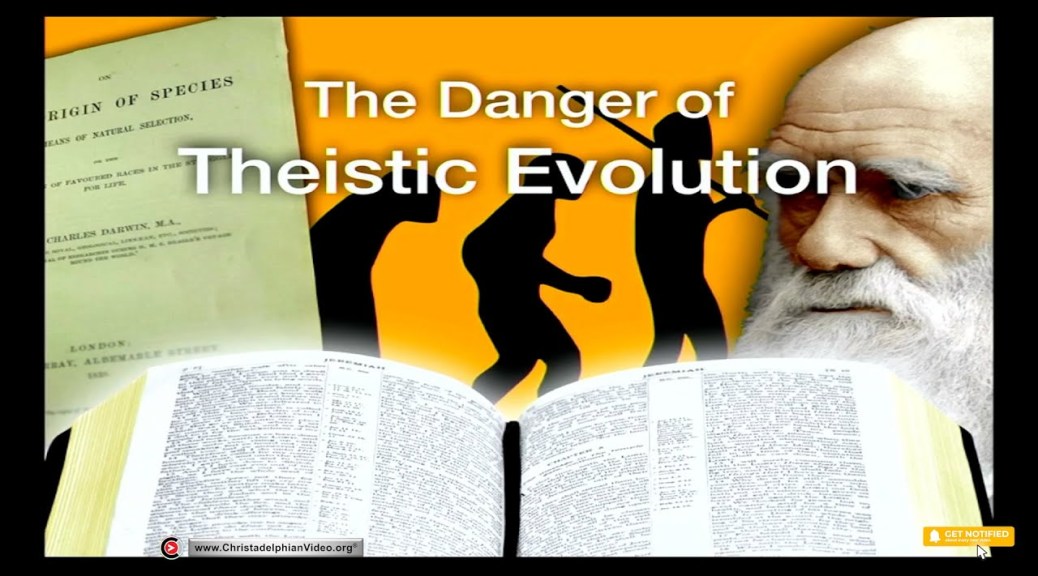
Dear pastors: It’s OK to defend the creation account 

There were two frustrating aspects of megachurch pastor Andy Stanley’s recent advocacy of theistic evolution.

The first, as already documented on these pages, was that Stanley’s position is at odds with the biblical story of creation, which he, as a pastor, is charged to defend. While the Northpoint Church Community head tried his hardest to synchronize Genesis with Darwin, the plain reading of Scripture doesn’t allow such a harmonization to take place.

The second frustrating aspect, which will be the focus of this article, is that those who preemptively disavow the creation account so as not to be seen in conflict with “the science,” are, ironically, not keeping up with the “the science” themselves as it pertains to evolutionary claims.

Far from discrediting theism, the latest scientific literature continues to drive a stake through the heart of Darwin’s original hypothesis.

This new evidence comes by way of an international journal called Progress in Biophysics and Molecular Biology, which is a peer-reviewed publication established in 1950. It seeks to offer “informative and critical reviews of recent advances in different aspects of biophysics and molecular biology.”

We’re not talking about Internet randos posting on Wikipedia.

The journal published a paper not too long ago with this title: “Neo-Darwinism Must Mutate to Survive.” It was penned by one scholar at the University of Missouri-Columbia and another at the University of Texas at Arlington.

The authors waste no time in getting to their main idea:

“Darwinian evolution is a 19th century descriptive concept that itself has evolved. Selection by survival of the fittest was a captivating idea. Microevolution was biologically and empirically verified by discovery of mutations.

“There has been limited progress to the modern synthesis. The central focus of this perspective is to provide evidence to document that selection based on survival of the fittest is insufficient for other than microevolution.”

As a reminder, “microevolution” concerns the variation that exists within a particular species. It could be the result of environmental factors, like impacts on a local climate, or it could be man-made, as is the case with animal breeding.

The point is that this variation takes place within a specific group. Microevolution does not account for an entirely new species. Fish classifications are numerous, for instance, but they remain fish; they don’t mutate into frogs, crocodiles, or birds.

With that background, why do Olen Brown, who holds a Ph.D. in microbiology, and David Hullender, who is a professor of mechanical and aerospace engineering, assert that “selection based on survival of the fittest is insufficient for other than microevolution?”

In short, it’s mathematically preposterous to infer macroevolutionary developments from microevolutionary observations.

They write that macroevolution has “shown to be probabilistically highly implausible (on the order of 10-50) when based on selection by survival of the fittest.”

Now, if you’re like me and still have no idea how you passed your high school precalculus class, you see a number like 10-50 and your brain shuts off in protest. Yet unlike my high school days, there are currently online tutorials that put the concept of negative exponents in layman’s terms.

You can see for yourself how many zeroes are to the right of the decimal point when calculating ten to the power of negative 50 as a possible outcome; basically, it’s a prospect that we non-mathematicians would call a … ridiculously absurd likelihood.

Brown and Hullender are distinguished university employees, so their conclusion is more academic sounding. But if you read the following paragraph carefully, you certainly get that ridiculously absurd likelihood vibe:

“Any overall mechanistic explanation of the origin and evolution of life ultimately must satisfy two challenges: the transition from non-life to life, and the blossoming of life forms that is so extreme as to appear outrageous.

“Evolution of a few flowers on a hillside is reasonably explained by mutation and selection; it stretches logic to explain the millions of extremely diverse species seen currently and in the fossil record.”

The duo note that such “probability assessment has largely been overlooked” for the simple fact that “evolution is generally accepted as scientifically established.”

The consensus attitude is, “It happened, we are here, so the probability is one.”

Expressed differently, today’s scientific community has assumed Darwinian evolution to be true because they are philosophically hostile to a theistic alternative.

Outspoken atheists like Richard Dawkins, for example, are so intent on making sense of “intelligent design” apart from God that they have been reduced to spit-balling guesses about space aliens or multiverse phenomena as potential answers to our fundamental questions about life’s origin.

This atheistic pre-commitment is less about science and more about absolving themselves (in their minds, at least) of accountability to a Holy God who requires our obedience.

Mathematical implausibility aside, proponents of Darwinian evolution are running up against another obstacle.

Charles Darwin’s theory, remember, is built on a model of transitionary phases, wherein lower lifeforms evolve into higher, more advanced ones through the method of natural selection and survival of the fittest. This process, we’re told, has taken place through incremental intervals spanning millions of years, eventually producing the most superior organism to date: humans.

This theory, it turns out, makes a big assumption: That these transitionary phases improve an organism’s chance of survival.

This assumption, however, is unwarranted, as Brown and Hullender maintain:

“[S]urvival of the fittest is illogical when proposed as adequate for selecting the origination of all complex, major, new body-types and metabolic functions because the multiple changes in multiple genomes that are required have intermediate stages without advantage; selection would not reasonably occur, and disadvantage or death would logically prevail.”

To paraphrase: What advantage does a half-evolved eye offer for survival? Or how about a three-quarters evolved lung? Or a two-thirds evolved genitalia? How do mammals even reproduce without fully functioning sex organs?

This is what Brown and Hullender are getting at when they assert that “survival of the fittest,” contrary to popular acceptance, is a death warrant to its recipient because the “evolved” organism is left physically vulnerable during these “intermediate stages.”

It’s as if creatures were first created in a mature, completed state.

Where have we read that before?

Any guesses, Andy Stanley?

The authors of “Neo-Darwinism Must Mutate to Survive” follow up with this bold statement:

“It is our perspective that the burden is too great for survival of the fittest to select evolutionary changes that accomplish all evolutionary novelty. Thus, evolution lacks a sufficient mechanism for multifactorial selections because a process that looks forward, is nonrandom, deterministic, or occurs by an unknown biological process, is required.”

Those words “nonrandom” and “deterministic” are important.

In context, they mean that our vastly fine-tuned universe cannot be explained rationally by a materialistic worldview that is premised on random, “non-purposeful” acts.

In Romans 1:20 the Apostle Paul states that God’s “invisible attributes, namely, His eternal power and divine nature, have been clearly perceived, ever since the creation of the world, in the things that have been made,” leaving us all “without excuse.”

Looks like modern-day science is reluctantly catching up.

Hopefully, American pastors will do the same.


Originally published at the Standing for Freedom Center. 

By Jason Mattera, Op-ed contributor

Jason Mattera is a New York Times bestselling author and Emmy-nominated journalist. Follow him on TwitterFacebook, or Instagram.


Source: Dear pastors: It’s OK to defend the creation account | Voice

Memorial Day – What Our Heroes Teach Us About How to Fight Our Battles 

For many Americans, Memorial Day represents the start of summer — the promise of warm, sunny days, evenings illuminated by fireflies, barbecues in the backyard, and trips to the beach.

But Memorial Day is not actually about any of that. It is a day to remember how the men and women of our Armed Forces have answered the call to give their lives to defend the people and the country they love. They have entered into the service willingly, knowing that the price of freedom is extraordinarily high.

The history of this national observance goes back to the Civil War. Following the war, people from both the North and South decorated graves with flags and flowers on what came to be known as “Decoration Day,” to honor the loved ones they had lost.

Now, we call the day “Memorial Day” to remember all of the men and women lost in all the wars this country has fought—more than one million people. Their sacrifices have guaranteed the freedoms that we enjoy today but often take for granted.

So let us reflect on two important lessons we can learn from these heroes:

1. There Are Things Worth Fighting For

Last year, I had the opportunity to visit the U.S. Marine Corps War Memorial in Washington. As I looked at the memorial, a sculpture of the iconic image of soldiers raising the American flag at Iwo Jima, I was awed, once again of the brave actions of these men. In the hell of war, they persevered.

Today, many of us are fighting our own kinds of battles. We are battling illnesses, the loss of loved ones, and addictions. We are battling financial hardship and mental health issues. We are battling brokenness within our families and within ourselves. Many of us feel alone, overwhelmed by our struggle. We are tempted to surrender.

But I want to encourage you to keep fighting.

The men and women we remember on Memorial Day braved the enemy’s fire because they were fighting for a cause greater than themselves. In fact, if you ask them, many of our service members today will tell you they were inspired to enlist after 9/11, much in the same way the World War II generation did after the attack on Pearl Harbor. They enlisted because they loved their families and their country, and they counted it worthy to sacrifice their lives to protect them. For many of them, their faith compelled them to oppose evil and injustice and stand up for what was right.

Whatever you are battling, remember this: there are things worth fighting for.

2. The Power of Self-Sacrifice 

Throughout history, men and women of our nation’s Armed Forces have laid down their lives for us, and they continue to do so every day. The selfless actions of these men and women remind me of Jesus’ words to his disciples during the Last Supper: “Greater love has no one than this, that someone lay down his life for his friends.” (John 15:13 ESV)

Now, more than ever is time for us to love and serve each other self-sacrificially. I am not saying that we should put our lives needlessly in danger for the sole purpose of a heroic deed. But if it’s within our means and ability, we should be ready to help those who are in need and bring comfort to those who are suffering.

John Bunyan, the author of the classic book Pilgrim’s Progress, once wrote, “You have not lived today until you have done something for someone who can never repay you.”

The truth is, we will never be able to repay the men and women who have given their lives to protect our freedom. Their valiant sacrifices, and the sacrifices of their family members, are priceless. Yet while we may never be able to repay them, we can honor them by remembering them.

The Bible says to “give honor to whom honor is owed” (Romans 13:7). However we choose to celebrate this Memorial Day, let’s remember to honor the brave men and women who have fought and died for our freedom. May their patriotism and their love for God and country inspire us to do something selfless for those around us.

Dr. Jack Graham is the pastor of Prestonwood Baptist Church, one of the largest and fastest-growing churches in America. He is also a noted author, and his PowerPoint Ministries broadcasts are available in 92 countries and are heard daily in more than 740 cities.

https://www2.cbn.com/news/us/memorial-day-what-our-heroes-teach-us-about-how-fight-our-battles

Source: Memorial Day – What Our Heroes Teach Us About How to Fight Our Battles  | CBN News

Plea for Help- Important – Please Read!

I am the Editor of the Daily Devotions, News and Information WEB site and I would like to please get your help saving our family home!

Vincent S. Bocchieri

First and Foremost Please Pray that the Court System and the Attorneys for the Mortgage company will listen to reason and dismiss the 15 year old Foreclosure case against our Home!

Our Front Porch during a previous Presidential Election 😉

Second we need funds to keep paying our attorneys Please Donate to save our home!

One-Time
Monthly
Yearly

Make a one-time donation

Make a monthly donation

Make a yearly donation

Choose an amount

¤5.00
¤15.00
¤100.00
¤5.00
¤15.00
¤100.00
¤5.00
¤15.00
¤100.00

Or enter a custom amount

¤

Your contribution is appreciated.

Your contribution is appreciated.

Your contribution is appreciated.

DonateDonate monthlyDonate yearly

We have lived in Hawaii at this house since 2007 and look forward to staying here for a very long time.

Our Fundraising Goal is $30,000

We are currently at $5000 (Total updated weekly)

We have until June of this year, our Trial is set for the second week in July

With your Prayers and Support this will be possible

THANK YOU VERY MUCH!

God Bless You!

With Gratitude;

Vince B.

The School Choice Juggernaut Marches On


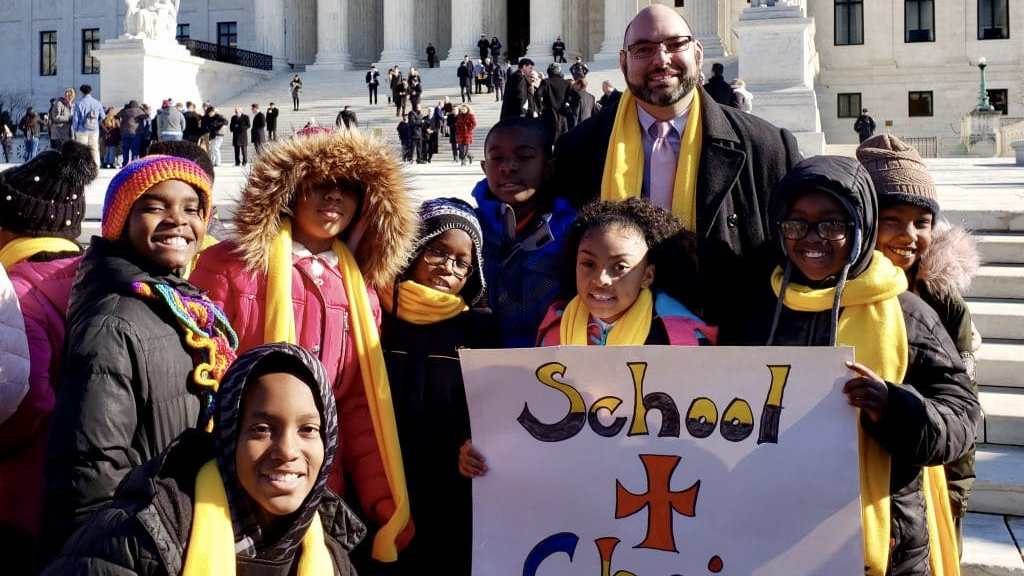
Incredible as it may seem, less than one year ago, not a single state offered universal school choice to its citizens. That was then, this is now. Today, four states (Arizona, Arkansas, Iowa, and Utah) have universal school choice laws on the books, with several more considering bills that would vastly expand education freedom.

Although there are many factors that have led to the school choice movement gaining more momentum than ever before, one should not discount the behavior of public school leaders and teacher union officials during the pandemic in moving public opinion decidedly in favor of school choice.

According to recent polling, school choice is more popular than ever before. And, more significantly, school choice is one of the rare issues that receives widespread support from Democrats, Republicans, and Independents as well as across racial, socioeconomic, and even generational lines.

This month marks the three-year anniversary of the widespread shutdown of public schools throughout the country, under the guise of the pandemic. Of course, as most Americans witnessed with bewilderment, while most public schools refused to offer in-person learning throughout the duration of the pandemic, the overwhelming majority of private and charter schools remained open for in-person learning over the same period.

On top of this, as government-run schools refused to offer in-person learning and opted for inferior remote learning, droves of parents were absolutely shocked at the radical curriculum that the public schools were pushing on their children. From critical race theory to explicit sexual content, parents finally got a first-hand account of what public schools are up to these days.

Moreover, as the months went by and the public schools kept moving the reopening goalposts, parents became infuriated that their children were falling behind academically as well as becoming increasingly isolated, depressed, and dysfunctional after months of being stuck at home in front of a screen for eight hours per day.

Needless to say, most parents were at their wits end with the education industrial complex, which exists to serve adults, specifically teacher unions and public education bureaucrats, not students.

So, as would be expected, a major exodus from public schools began. While parents were pulling their children from failing public schools, they chose to enroll their kids in private, parochial, and charter schools. This trend was exacerbated when public schools refused to drop mask mandates and required vaccinations, even though the evidence showed that both of these policies were misguided at best and downright harmful to most children.

Yet, even as the writing was on the wall, public school officials and their partners in crime ignored the pleas by parents to address, or at least consider, their valid concerns. In fact, for the most part, these unaccountable bureaucrats doubled down on their position, berating parents for having the audacity to question their omnipotence over the education system.

In one classic example, Virginia gubernatorial candidate Terry McAuliffe said during a debate, “I don’t think parents should be telling schools what they should teach.”

Glenn Youngkin, McAuliffe’s opponent, took the inverse position, saying, “What we’ve seen over the course of this last 20 months is our school systems refusing to engage with parents. In fact, in Fairfax County this past week, we watched parents so upset because there was such sexually explicit material in the library they had never seen, it was shocking. And in fact, you vetoed the bill that would have informed parents that they were there. You believe school systems should tell children what to do. I believe parents should be in charge of their kids’ education.”

In many ways, this was a tipping point. The eyes of the nation were cast on Virginia in 2021 because it became ground zero in the battle for parental rights and school choice, in general.

Fortunately, Youngkin defeated McAuliffe in a landslide. However, this race was a microcosm for the bitter battles that were to follow. After Youngkin’s unexpected victory, more and more Republican governors began to embrace school choice. On the other hand, more and more Democratic governors began to take the opposite stance and became full-fledged enemies of the increasingly popular school choice renaissance.

And so, this is where things stand today. Among the general population, school choice is a commonsense policy that places parents, not education bureaucrats, in charge of their children’s education. As we continue to see, education choice is being embraced in red states, which are offering parents education savings accounts so that they can choose whichever school their child should attend. Yet, most blue states remain obstinate, reluctant to heed the wishes of the parents who prodigiously advocate for more school choice.

Eventually, I expect that freedom will win the day. It will likely be a long, drawn-out fight, but if the current trend continues, the left’s monopoly on education could be on the verge of extinction sooner rather than later.


By The Heartland Institute

Source: The School Choice Juggernaut Marches On – RedState

Trump Is Leader of Republican Party… and America

Trump Is Leader of Republican Party… and America


As the next presidential election approaches, the leader of the Republican Party, and America, is Donald Trump.

In 2015, the Republican Party was dead.  There was no clear leader and little enthusiasm even as the end of Barack Obama’s presidency was on the horizon.  Republicans suffered convincing losses in the two previous presidential elections, and a Bush versus Clinton rematch reincarnate was plausible for a time.  The party’s 2014 midterm election gains were more of a referendum on Barack Obama than an endorsement of the Republican Party.  But the key reason those scenarios were short-lived was because of Donald Trump.

While the Democrats, media, and Republican establishment (now referred to as the Uniparty) were busy mocking Trump’s candidacy, he was energizing and awakening a previously dormant base of the electorate.  The base, which eventually became known as “the forgotten man,” was composed of right-leaning Americans who felt they did not have a champion who was truly fighting for them.  Trump was at first a breath of fresh air.  But when the shock of his candidacy transitioned into reality, it became clear he was the pro-America candidate Americans had been longing for since Ronald Reagan.

After all this time, the Uniparty is still hard at work.  It’s no secret that left-leaning networks such as CNN or MSNBC hold strong anti-Trump biases.  However, many exclude Fox News when they mention biased mainstream networks.  Fox has always wanted to keep hold of the Trump base while distancing themselves from Trump himself, so seeing them promote a potential Trump opponent is not surprising.  As Governor DeSantis cruised to reelection victory this past November, Fox quickly anointed him as the new king of the GOP and celebrated his victory with noticeable delight.  It felt coordinated, as though they could hardly wait to crown him in front of a national audience.  But there was a crucial element they did not mention: Ron DeSantis is in the position he is in because of Donald Trump.

In the 2018 Florida Governor Republican Primary, DeSantis was trailing mightily to Adam Putnam.  Trump’s endorsement saved DeSantis, which landed him the nomination and eventually proved to be the difference in his slim victory in the general election.  Trump delivered a victory for DeSantis in a way DeSantis himself couldn’t.  Only a legitimate leader could have such a powerful influence on the electorate.

Despite Trump sporting a 91% endorsement success rate, (which shenanigans prevented from being higher) somehow the Paul Ryan directedKarl Rove contributed Fox News continues to inform their viewership that Trump hurts the party and that he is to blame for its shortcomings.  Ryan has called Trump a “proven loser,” and stated he will not attend the 2024 Republican National Convention in his home state of Wisconsin unless the party nominates someone other than Trump.  Not exactly indicative of an unbiased media outlet.

The greatest disappointment regarding Fox’s analysis is that it ignores reality: Election fraudunconstitutional changes to election law, and other irregularities are what has cost Republicans the last two elections, not Trump.  In fact, if not for Trump’s ability to generate such significant enthusiasm across America, election integrity wouldn’t even be on the Republican agenda, since the obvious lengths gone to in order to defeat Trump and the candidates he endorses is what makes the issue so undeniable.  Fox’s refusal to take potential election fraud into account indicates they shouldn’t blame anybody but themselves for their overzealous midterm predictions.

In addition to the media, the Establishment continues to prove how out of touch they are with the American people.  Nikki Haley, the only non-Trump candidate to officially enter the race, believes it is time for “a new generation” to lead the Republican Party.  Both Mike Pence and Mike Pompeo are mulling runs.  They both shared a similar sentiment to Haley.  Pence claims “The times call for different leadership.  I’m confident we’ll have better choices than my old running mate.” Pompeo says we need “leaders who are looking forward … not claiming victimhood.” All three have spent many more years in government than Trump and never came close to rivaling the support he has and are primarily known for their time in the Trump Administration.  So, if they truly believe America needs to cut Trump ties, wouldn’t that disqualify themselves?

In regard to a potential DeSantis run, recent predictions and compliments from those rejected by the Republican base will solidify Trump as the only clear anti-establishment candidate, if there was any doubt.  And unlike previous eras in history, Republicans now prefer candidates with a shorter track record of government service because the distrust of elected officials and government agencies continues to rise.

Beyond the Republican Party, every day under the Biden Administration proves Trump is still America’s strongest leader even after leaving office.  One of the most important roles of the Presidency is to comfort those suffering.  As we witnessed calamity unfold in East Palestine, Ohio, it was fitting that Joe Biden delivered a speech in Ukraine to comfort its citizens on the one-year anniversary of Russia’s invasion.  America Last.

While Biden was in Ukraine, Trump not only brought comfort to the people of East Palestine, but also leadership and resources.  After Trump’s visit, FEMA reversed course from an earlier decision where they deemed the state “ineligible” to receive federal resources.  A federal agency acting only after Trump did is as vital a sign of strength, influence, and leadership as can be.

Despite Americans becoming less supportive of U.S. involvement in overseas conflict, a multinational conflict is brewing.  You may remember doomsday predictions about Trump starting World War 3 (how ironic looking back now).  Instead, he went on to broker numerous international peace deals, while Russia exhibited more restraint than during other recent periods.  Trump was also able to bring North Korea to the negotiating table after previous administrations failed to.  Is there a better leader for these contentious times than a president whose term did not involve the U.S. entering any new wars, especially as Ukraine begins to suggest American soldiers will soon die?

The greatest leaders are ahead of the curve.  They set the trend, not follow it.  Trump was the first to address border security in 2016, suggest the U.S. getting along with Putin would be a net-positive, that Covid came from a lab leak in Wuhan, and that mass mail-in voting would be disastrous.  He has been proven right time and again, and as his predictions unfold, he sturdily withstands the media backlash.

In 2016, the only candidate willing to take on the establishment was Trump.  He was able to raise up “the forgotten man” in a way no career politician ever could.  After getting a taste of life under non-establishment rule, Americans desire that again perhaps now more than ever.

America has become a shell of its former self. When the opportunity to take back America arrives, a proven commodity is essential, and there is only one person with the track record to prove they are up for the job.  President Trump is a trusted leader who has the hearts of the people at a level nobody else can match. Once again, it’s Trump versus the Establishment.


By Matt Kane

Source: Trump Is Leader of Republican Party… and America – American Thinker

And Just Like That, Natural Immunity is No Longer a Conspiracy Theory

And Just Like That, Natural Immunity is No Longer a Conspiracy Theory


Natural immunity to disease is, or at least was, a well-known concept in medicine.

By disease, I mean viral infections. One can’t develop natural immunity to diseases like diabetes or heart failure. Many of us remember “chicken pox parties” where when one kid was infectious, he or she was invited over to play with your kids, so they all got infected and then they did not have to worry about getting chicken pox again, due to natural immunity.

The CDC defines it as follows: “Natural immunity is acquired from exposure to the disease organism through infection with the actual disease.” Contrast this to: “Vaccine-induced immunity is acquired through the introduction of a killed or weakened form of the disease organism through vaccination.”

Both can be effective depending on the virus, assuming exposure doesn’t kill you, and the type of vaccine, assuming one exists for that virus. As the CDC describes, “If an immune person comes into contact with that disease in the future, their immune system will recognize it and immediately produce the antibodies needed to fight it. Active immunity is long-lasting, and sometimes life-long.”

Yet with the COVID pandemic, this basic and longstanding medical concept became a right-wing, Q-Anon conspiracy theory.

Far-left Mother Jones described it, “Anti-vaxxers have a dangerous theory called ‘natural immunity.’ Now it’s going mainstream.”

The CDC: “Getting a COVID-19 vaccination is a safer and more dependable way to build immunity to COVID-19 than getting sick with COVID-19.

The Mayo Clinic: “It’s recommended that people who have already had COVID-19 get a COVID-19 vaccine.”

USA Today was also quite certain: “Fact check: COVID-19 vaccines provide safer, more consistent immunity than infection.”

Anyone saying otherwise was accused of spreading mis- or disinformation. For physicians this could manifest as a threat of or loss of medical license or employment.

For example, Dr. Peter McCullough, prominent cardiologist, and outspoken challenger of government COVID policies had his Texas medical license threatened.

Denial of natural immunity was the basis of vaccine mandates which deprived millions of Americans of “the right to choose” or “my body my choice.” Countless individuals with proven natural immunity based on antibody testing lost their jobs since the government mantra was that vaccine immunity was the only path forward and natural immunity was a dangerous conspiracy theory.

Those serving in the military, playing professional sports, or attending college had to make a potentially life-changing choice between natural and vaccine immunity and losing their job or education. For those suffering a vaccine-adverse event, such as myocarditis, stroke, or even sudden death, this was a fatal choice.

Lo and behold, The Lancet changed their tune a few weeks ago with a paper, specifically a meta-analysis reviewing 65 studies from 19 countries showing that previous infection with COVID provided better and longer lasting protection than vaccination. This is not to say vaccines provide no protection, but that natural immunity is more effective.

From the paper: “Protection from past infection against re-infection from pre-omicron variants was very high and remained high even after 40 weeks.” Immunity may last far longer. A 2020 study published in Nature found that after the 2003 SARS epidemic, a virus similar to COVID, infected patients had immunity 17 years later.

This was the length of surveillance meaning that immunity could last far longer, even a lifetime. For this SARS coronavirus, previous infection provided long term protection against reinfection. Or as Nature headlined: “Had COVID? You’ll probably make antibodies for a lifetime.”

“Protection was substantially lower for the omicron BA.1 variant and declined more rapidly over time than protection against previous variants.” But their graphs still showed better protection from previous infection than vaccination.

Also, “Protection from severe disease was high for all variants.” This was the argument for vaccination that it would keep you out of the hospital and ICU, although natural immunity did just fine in this regard.

Although even that point about serious disease is in question. Steve Kirsch performed an analysis and found, “The government data from New Zealand shows that for each age group, the more you vax, the more likely you are to die from COVID.”

This is similar to the recent Cleveland Clinic study finding that the more vaccine doses one had the more one was likely to get COVID. If would be helpful of the CDC would carry out its own similar studies to either confirm or refute these reports. Rather than sticking to their guns and screaming “disinformation.”

Why is natural immunity more robust? One reason is that natural infection is through the respiratory tract via mucosal surfaces, as opposed to vaccination which bypasses mucous membranes and only provides immunity within the body. Natural infection provides mucosal immunity to future infection, at the point of viral entry into the body, whereas vaccine immunity does not.

Look at it another way. Natural infection locks the doors and windows to the house versus vaccine immunity which simply has a guard inside the house which can’t stop the bad guys from getting inside.

Another reason is that natural immunity protects against 29 viral proteins compared to vaccines which protect against only one protein, the spike protein. This would like guarding your home with 29 guards rather than only one.

As a necessary disclaimer, I am not antivaccine, having received two COVID vaccine doses in late 2020. But all vaccines and patients and their risk factors are not the same. With any medical treatment, a thoughtful approach is required, rather than a one size fits all management.

Is this a sudden revelation about natural immunity? Hardly. Dr. Anthony Fauci, in a 2004 C-Span interview, sang the praises of natural immunity for the flu virus, another respiratory virus similar to COVID. Here are his words.

“Well, no, if she got the flu for 14 days, she’s as protected as anybody can be, because the best vaccination is to get infected yourself.” When asked about getting the flu vaccine he replied, “She doesn’t need it, because the most potent vaccination is getting infected yourself.”

Flash forward 17 years and the self-proclaimed fact checkers, like Reuters, claim Dr Fauci’s previous statements were “missing context.” His words seemed very clear and straightforward that previous infection is the best form of immunity. Instead, the CDC recommended vaccination even after previous infection, ostensibly to prevent reinfection, which simple observation and the Cleveland Clinic study refutes. How many people do you know who have been fully vaccinated and multi-boosted are still getting COVID?

Common sense suggests that previous infection should count for something, such as full vaccination, with booster doses for those at higher risk. The EU COVID certificate acknowledged “recovered from COVID-19” as equivalent to vaccination. Yet in the U.S., citizens suffered ostracization or job loss if they chose to rely on previous infection as providing sufficient immunity. Similarly, foreigners still cannot enter the U.S. without proof of vaccination, regardless of how many times they have had and recovered from COVID.

It turns out that the COVID vaccines don’t stop transmission, and based on the above reviews, may increase susceptibility to infection and death. Those were the reasons for vaccine mandates. And natural immunity, a well-known concept, was ignored for COVID and called a conspiracy theory which like many previous bits of “misinformation” turned out to be true.

What about young individuals forced to take vaccines and boosters to attend school, despite having had previous COVID infection, and the few that suffered myocarditis or blood clots despite their risk of getting seriously ill from COVID was near zero? How do they get their lives back?

COVID will not go away but is mutating, as viruses generally do, into a more contagious and less virulent form, much like the common cold. Pushing a vaccine which at this point for most people, provides little if any benefit, and exposes recipients to small but potentially significant risks (another conspiracy theory) is pointless and goes against the medical admonition to “first do no harm”.

Since medical authorities and public health agencies followed the political rather than the medical science, their credibility may be permanently damaged. Why did the medical smart set purposefully ignore the role of natural immunity when formulating COVID policy? Did they all have sudden amnesia to well established immunology or were other agendas at play?

This will not be the last public health emergency we face and if those in charge choose to play God rather than be honest and transparent, the public will have little faith in any future public medical pronouncements.


By Brian C. Joondeph, M.D.

Brian C. Joondeph, M.D., is a physician and writer. Follow me on Twitter @retinaldoctor, on Truth Social @BrianJoondeph, and on LinkedIn @Brian Joondeph.


Source: And Just Like That, Natural Immunity is No Longer a Conspiracy Theory – American Thinker

 Surfer Bethany Hamilton to Boycott WSL Tour Due to New Transgender Rule

American surfing icon Bethany Hamilton has vowed to boycott the World Surf League’s (WSL) professional tour over a rule change that allows biological males who identify as women to compete against female surfers.

Hamilton, who lost her arm to a shark attack when she was 13, survived and has been surfing competitively for 15 years.

She took to Instagram over the weekend to express her views after the WSL announced it would comply with the policies of the International Surfing Association (ISA) when it comes to transgender surfers.

The ISA policy states that “Athletes born men can compete in female divisions if they maintain a testosterone level less than five nmol/L (nanomoles per litre) for 12 months.”

“Is a hormone level an honest and accurate depiction that someone indeed is a male or female? Is it as simple as this?” Hamilton asked in her Instagram video.

She also asked several other questions:

“How is this rule playing out in other sports like swimming, running and MMA? Have any of the current surfers in the World Surf League been asked what their thoughts and opinions are on this new rule before it was passed or announced? Should there be a conversation with the 17 women and all of the men on tour on tour prior to a rule change such as this?”

She continued: “Who is pushing for this huge change? Does this better the sport of surfing? Is this better for the women in surfing? If so, how?”

Hamilton gave her life to Jesus Christ at age 5, she told BGEA in a 2011 interview. As a young girl growing up in Hawaii, she was surrounded by a family who loved Jesus and loved surfing. She followed in their footsteps faithwise, and entered her first competition at age 8.

She has credited Christ for getting her through the shark attack.

“It was Jesus Christ who gave me peace when I was attacked,” she told BGEA. “I just kept remembering, ‘The peace of God, which transcends all understanding, will guard your hearts and your minds in Christ Jesus,” (Philippians 4:6-8).

In her Instagram video, she said she strives to love all of mankind, no matter what their differences. But as a professional athlete who has been competing in the WSL events for the last 15-plus years, she is concerned by this new rule change.

She decided to go public in order to “stand up and speak up” for those who feel threatened to express their views.

“I think many of the girls who are on tour are not in support of this new rule, and they fear being ostracized if they speak up,” she said.

“I personally won’t be competing in or supporting the World Surf League if this rule remains,” Hamilton said.

She argued instead that a new division should be created solely for transgender athletes in order to protect the female division.

Franklin Graham expressed his support for Hamilton on Facebook today.

“Who makes these rules anyway? It’s tragic. I don’t understand why all women don’t stand up in revolt! Pray for Bethany and other brave young women like her who are trying to defend what even common sense tells you is right. Thank you for taking a stand Bethany—I hope they will decide to change this new rule.”

Judge Phil Ginn, president of Southern Evangelical Seminary, based in Charlotte, North Carolina, told Fox News Digital via email on Monday morning, “Bethany Hamilton captured our hearts and minds many years ago as the nation watched her triumph over her serious injuries and subsequent inherent fears to get back on her surfboard and learn to excel again in the sport she obviously loves.

“Casting aside the moral issues for a moment, no one who is thinking right can come to the conclusion that creating an obvious advantage for one group over another in sports or any other venue is a good idea. Yet that is exactly what we are now being told by our own government that needs to be done.”

Trent Talbot, CEO of Brave Books in Texas, which recently published Hamilton’s children’s book, told Fox News Digital on Sunday, “What an act of bravery. I stand with Bethany Hamilton and her choice to not participate in the World Surf League if they allow men to compete in the women’s division.”

Talbot added, “God designed males and females differently with a purpose—and when we reject this, we reject God. Men do not belong in women’s sports.”

Source: Standing For Christ And Common Sense: Surfer Bethany Hamilton to Boycott WSL Tour Due to New Transgender Rule | Harbingers Daily

Christian scientists viewed as less intelligent, study shows 

Christian scientists viewed as less intelligent than their peers, study suggests

The research, published in the Public Understanding of Science journal, analyzed two separate studies to examine the perceptions of incompatibility between Christianity and science in the United States and how it influences nonreligious individuals’ stereotypes of Christians in the field.

The first study, with a sample size of 365, found that the 214 nonreligious participants were more likely than the 151 Christian participants to perceive Christianity and science as incompatible. The second study featured 799 respondents — 520 Christians and 279 nonreligious participants.

“[M]anipulating perceived Christianity-science compatibility reduced negative perceptions of Christians’ scientific ability and general intellect among nonreligious participants,” the abstract states.

While nonreligious respondents perceived Christians as less intelligent, Christian respondents were more likely to perceive Christians as more intelligent and scientific than nonreligious participants.

In comments to PsyPost, study author Cameron Mackey, a doctoral candidate at Ohio University, noted that there has been “countless debates over the teaching of evolution in schools and whether Intelligent Design has a place in the classroom.”

“Our research demonstrates that perceiving conflict between religion and science can have detrimental effects not only on Christians’ performance and interest in science (as prior research has shown), but also on nonreligious people’s stereotypes about Christians,” Mackey said. “That is, because nonreligious individuals are more likely to believe that Christianity and science can’t work together, they are more likely to stereotype Christians as uninterested in or incompetent at science.”

Mackey added that many prominent atheists like Sam Harris and Steven Prinker opposed Francis Collins, an Evangelical Christian who served as the head of the National Institutes of Health until his retirement last year.

“We were interested in the consequences of this belief in religion-science conflict for nonreligious people’s attitudes toward religious people (in this case, Christians),” Mackey stated. “That is, we wanted to know whether the belief that Christianity and science conflict with each other explains why nonreligious people stereotype Christians as incompetent in science.”

Perry Enever, the founder of Canterbury Christianity and Science Interactive, told Premier Christian News that stereotypes are set up to be disproven.

“I think if you can relate to someone and get to know them, they can get to know you,” he was quoted as saying. “There are all kinds of questions and stereotypes and wrong ideas that people have, and Christians can do the same things as well, sometimes.”

“The Christians in this were presuming that actually the atheists were less intelligent and less into science. So I think there’s a lesson for us as well, to avoid that stereotyping and getting to know the people that are asking the questions.”

Earlier this month, the Museum of the Bible in Washington, D.C., opened the new exhibit “Scripture and Science: Our Universe, Ourselves, Our Place.” The exhibition highlights the dynamic relationship between science and religion throughout history.

Attending the exhibit’s grand opening, retired NASA astronaut Jeff Williams told The Christian Post that science doesn’t “contradict” Christianity. The Christian astronaut said that because of the perception that science and the Bible conflict, he dedicated much time to studying the religious beliefs of early scientists.

“Many of the scientists in the age of science — who we all read about in our textbooks about the laws of physics and chemistry — were believers first,” Williams said. “They were theologians first. People like Kepler and Newton and Faraday and Maxwell, and many others. They were driven by their faith and their understanding of their calling before God to fulfill that calling.”

He contends that the “Bible supports and informs science with the elements of the mathematical order of God’s Creation” and “God has equipped us to explore and extract that order and utilize it for the glory of God and the good of mankind.”


By Anugrah Kumar, Christian Post Contributor

Source: Christian scientists viewed as less intelligent, study shows | U.S. News

Playing With Personhood — Denying Creation Dehumanizes People 

Deep Dive: Playing With Personhood — Denying Creation Dehumanizes People

Rudyard Kipling’s classic 1894 work, The Jungle Book, came to life onscreen in the very memorable 1967 Walt Disney animated film. It featured many popular characters like Baloo the bear, Bagheera the black panther, and of course Mowgli (an abandoned child raised by wolves), whose peaceful jungle existence is threatened by the return of the man-eating tiger Shere Khan.

But one of my favorites was always the kooky character King Louie, an ambitious orangutan with a bit of a chip on his shoulder, who wanted to move up in the world so to speak. And he had a specific way he thought he could do it.

You might remember some of the words to the song he sings to Mowgli after his minion monkeys capture and attempt to extract a special secret from him. Louie believes he’s at the top of the animal kingdom, but that’s not good enough—he wants to be a man and be recognized as one!

King Louie was depicted as a kind of scatter-brained, bebopping, jazz-singing character that Disney (according to their own disclaimers on the Disney+ streaming service) now considers an offensive caricature that utilized racist stereotypes of African Americans.

However, I want to use him to illustrate a variety of concepts that may also seem scatter-brained and disconnected initially (and I’ll be using a lot of rhetorical questions as well), but I will try to pull everything together toward the end of the article for a fuller understanding of our topic.

Evolutionary Personhood

You see, what King Louie (or rather the writer[s] of his song) was really getting at was the issue of personhood. He was tired of “monkeying around” and wanted his “cuz” (cousin) to give him the secret of how to become human. And what did he think was that secret? The ability to make and manipulate the use of fire.

Now, where did the writers get this idea? Was it just a whimsical notion thrown into the story’s amusing side-plot? Not at all, it was a very specific point made to promote the materialistic and atheistic story of evolution through a commonly taught idea.

This is the notion that the ability to master fire was one of the major transition points in the supposed evolution of our apelike ancestors as they turned into modern humans. As a 2016 Royal Society article stated, “It is plain that fire control has had a major impact in the course of human evolution.”

This notion has roots right back to the father of modern evolutionary thought, as the author makes the point that fire “was regarded by Darwin as the greatest discovery made by humanity, excepting only language” in his 1871 book, The Descent of Man. And so, the “fire drove evolution” notion persists, as this quote from a Smithsonian science article makes clear.

Harvard biologist Richard Wrangham . . . believes that fire is needed to fuel the organ that makes possible all the other products of culture, language included: the human brain.

And lest some skeptics want to downplay its inclusion in The Jungle Book as simply an innocent accident, this admission by a PMLA article published online by Cambridge University Press in 2020 makes the point that Kipling himself embraced Darwin’s ideas and expressed them in many of his works, including his controversial book White Man’s Burden, where his biological views of white superiority (as per Darwin’s conclusions) and Social Darwinism were front and center.

Scholars have long described Rudyard Kipling’s The Jungle Books as a Darwinian narrative. . . . This essay contextualizes Mowgli’s narrative within a fierce late-nineteenth-century debate about whether the Darwinian theory of natural selection or Lamarckian use inheritance was the main driver of evolutionary change.

The fact is, artists and authors often embed their own beliefs into their works, and Kipling was not immune to that tendency. And this can often influence others.

The Evolution of Disney

Now Walt Disney, although in the past it portrayed itself as a company promoting “traditional family values” (which used to include portraying biblical morality), has long promoted the story of evolution in many of its movies and in its theme park exhibits—sometimes with more subtlety like in King Louie’s lyrics, and sometimes more upfront, such as the entire pond-scum-to-people finale in the animated feature Fantasia.

Of course, the Disney of today is hardly family friendly in any traditional sense at all; rather, it has “evolved” far beyond such notions and seems willing to sacrifice billions of dollars of potential profit just to promote so-called progressive values by including themes and characters in their content that offend many conservative-minded people.

Disney’s 100th anniversary happens this year, and although many (especially older) folks may have a tug of nostalgia for the “old Disney” and what it supposedly used to stand for, they recognize it as extremely agenda-driven today in many ways that it never was before. Why such a big transformation in such a short time?

It seems like they are not just keeping up with society’s acceptance of naturalism and its inevitable consequences, but rather are at the forefront of endorsing all sorts of unbiblical nonsense, such as the idea that people can change their God-given identity by sheer force of will (i.e., a person born A can become Z simply by “deciding it is so”)!

Apparently, a majority of their decision makers are attempting to push their Marxist views of personhood through this entertainment giant now, whereas in the past, there were probably fewer with that bent, so it was less obvious.

What Is a Person?

Now what’s interesting is that up until the last few hundred years, everyone in the West seemed to know exactly what a person was. A human being was considered a special creation—different from and superior to the animals—made in the image of God. Why? Because that’s what the book of Genesis in the Bible plainly said about man’s origins, and the Bible was held in high esteem by most.

But that conceptualization of what a human being is and what personhood means began to change as the story of evolution began to take root among naturalistic influencers in the early 1800s. For example, as early as 1846, promotional material for a Barnum circus sideshow performer touted as a “man-monkey” (a man named Harvey Leech) asked,

Is it an animal? Is it human? . . . Or is it the long sought for link between man and the Ourang-Outang, which naturalists have for years decided does exist . . . ?

You see, this idea that humans are nothing more than hairless apes linked to our hominid forerunners began to be accepted, popularized, and taught as science in academia and eventually to the average child in public schools. Genesis became mythologized for many (even within the church), and this of course radically changed what people believed about what humans are and what personhood means.

No wonder King Louie eventually got the memo that all he needed to do to be like the “other humans” was to inch his way up on the evolutionary scale.

People Championing Personhood for Apes and Other Animals

And his message seems to have made an impact over the years, as at least one of his kind (an orangutan named Sandra) has attained what he was looking for (although not in the same way he’d been trying). An NBC News article reported,

Judge Elena Liberatori’s landmark ruling in 2015 declared that Sandra is legally not an animal, but a non-human person, thus entitled to some legal rights enjoyed by people, and better living conditions. “With that ruling I wanted to tell society something new, that animals are sentient beings and that the first right they have is our obligation to respect them. . . .”

Now (aside from the biblical notion that we should care for animals) this certainly is something new in Western society and puts us in a situation that raises the question, “What is a non-human person?” Is the qualifying factor for personhood being sentient (“able to perceive or feel things”)? Because lots of creatures could be considered sentient, and that’s likely why Sandra isn’t the only animal that people have tried elevating to human status.

For example, Happy the elephant (a resident of the Bronx Zoo) may have been denied personhood (in a recent New York court case testing the boundaries of applying human rights to animals) but the decision was arrived at by a 5-2 vote.

And that means 2 out of 7 of New York’s top court judges were in favor of assigning an elephant personhood and accompanying human rights. Let’s think about this from a modern societal view.

Evolutionists often argue that humans aren’t special in any true sense because we are just evolved animals. For example, a 2004 Australian Broadcasting Corporation TV production promoting the story of evolution had the following narration.

Once we believed we were unique, blessed with a soul and lovingly created by God in His image. Today, evolution says we are just a product of Natural Selection, the descendants of primitive bacteria, not the children of God.

However, if we’re ultimately just overgrown bacteria, why is it then that many want to give animals “human rights”? What makes our rights so special?

Back to Sandra the orangutan—she has now been declared not to be an animal; however, the reason is not because she’s a human, but because she’s a non-human person? But if she’s not an animal, and not a human, what is she then? And how can whatever she is be called a person with “human rights”?

Under this “new information” being doled out to society by this judge (and by the way, who gave her the authority to change the “old information”?), what then does the concept of humanity or personhood even mean? In the big picture of things, where did all of this word salad quackery we now have to deal with come from?

The Evolution of Personhood

Well, the adoption of the story of evolution (including how we supposedly became human) by many has changed the perception of personhood across the entire cultural landscape.

If everything we experience can be traced back to a cosmic explosion, then we are simply the result of random chance processes. And if everything is in a constant state of flux and change (despite us apparently not being able perceive it, because according to many, evolution supposedly takes place so slowly no one can see it), there can be no absolute and permanent definition of anything.

If there is no God who created male and female, cats and dogs, trees and flowers—each with a uniqueness about them—then everything is just a current form that flowed out of something else. So who knows what it may eventually become? And, without the concept of created norms, it seems that the concrete certainty of what personhood means may eventually slip away entirely.

An extreme example comes from my home country of Canada, with a 2022 National Geographic article titled “This Canadian river is now legally a person.”

“The Innu Council of Ekuanitshit and the Minganie Regional County Municipality declared the Mutuhekau Shipu a legal person in 2021. Now the river has nine rights, among them the right to flow, maintain biodiversity, be free from pollution, and to sue.”

Who Determines Personhood?

People need to understand this isn’t simply allusion or allegory—this is now part of Canadian law (as the article explains). But isn’t it astonishing that so-called modern culture has done away with the idea of legal personhood for actual persons (the unborn) and yet is willing to assign personhood to a body of flowing water?

You see, under Canadian law (in Section 223 of the Criminal Code), a child is only a person,

When it has completely proceeded, in a living state, from the body of its mother, whether or not it has breathed [or] . . . has an independent circulation, or the navel string is severed.

That’s right, in Canada, the person who cuts the umbilical cord somehow magically imbues personhood upon a human being. And yet preborn babies are self-aware, feel emotion, can hear Mom’s and Dad’s voices and respond to them, react to music, smile and cry, and do all of the things that babies outside of their moms do. So why is there this arbitrary assignment of personhood in this case?

Meanwhile, rivers aren’t even sentient beings like Sandra the orangutan—they don’t have a personality or emotions whatsoever. As a matter of fact, from minute to minute at any given location, they aren’t even the “same” thing, and the sand and dirt and wildlife and vegetation surrounding them can constantly change as well.

I guess one could suppose according to a naturalistic worldview that perhaps rivers (or portions of their constituent parts) could eventually change and become sentient beings over time—so why not give them “human rights” in advance?

However, again, if people (human beings) aren’t special, why should we be able to determine whether anything else is or if it should be assigned our own status—that of a person? And which people (based on what criteria) should be given the authority to do so? Because as new people with different ideas come and go, then the definition of what a person is could also constantly change.

Can you see how utterly absurd people’s thinking has become? It’s as Romans 1:21 describes: “For although they knew God, they did not honor him as God or give thanks to him, but they became futile in their thinking, and their foolish hearts were darkened” (emphasis mine).

Nature Ruling Man

It has now become a Western-world phenomenon to have animals and nature elevated to a status above humans. In many countries, it is illegal and punishable by huge fines or imprisonment to kill or destroy the eggs of endangered species, pollute a specific area, emit a specific greenhouse gas, etc.

We are supposed to obsess over whether driving our cars might make the climate change (literally its job description!) because of the possible harm to “mother earth”; however, it is perfectly legal and acceptable to murder a human child in the womb, and in some cases, after they are born!

Why is it that millions of people are comfortable with supporting organizations and individuals committed to destroying actual living people through abortion, many of whom will also attend gala fundraisers and donate millions of dollars to preserve all sorts of plants, animals, and eco-systems?

Why, instead of placing a high value on all human life, has our culture shifted its focus to make animals and the environment the highest priority? It’s quite simple—it’s because of their spiritual condition. People have knowingly rejected God as Creator and have embraced the idea that nature itself is god by accepting the story of evolution. As Scripture describes,

Romans 1:20, 22-23, 25, 28 KJV – “For the invisible things of him from the creation of the world are clearly seen, being understood by the things that are made, even his eternal power and Godhead; so that they are without excuse… Professing themselves to be wise, they became fools, And changed the glory of the uncorruptible God into an image made like to corruptible man, and to birds, and fourfooted beasts, and creeping things… Who changed the truth of God into a lie, and worshipped and served the creature more than the Creator, who is blessed for ever. Amen… And even as they did not like to retain God in their knowledge, God gave them over to a reprobate mind, to do those things which are not convenient.”

Church, It’s Not “Just Science”!

Brothers and sisters in Christ, it’s time to come to terms with what is happening in our culture. Often, when looking at the utter clown show of sheer confusion we see in society today regarding personhood, identity, and morality, many Christians don’t seem to be able to connect the dots between what is going on out there and the fact that the majority of the church has abandoned its Genesis foundation and accepted the story of evolution.

As a matter of fact, many of our church leaders, Christian authors, Bible colleges, and seminaries have bought into evolution as the supposed “scientific” explanation for how God created us as well, which not only encourages people’s belief in the false story of evolution, but also signals to the world that the Bible can’t be taken as plainly written.

Adopting theistic evolution weakens the Christian’s ability to imitate our Lord Jesus in quoting Scripture as the final authority (remember his habit of saying, “It is written” or “Have you not read?”). Because let’s face it, the Bible makes no mention of millions of years or evolution but explicitly teaches that God created in six literal days ex nihilo—from nothing.

People naturally end up thinking, “If I can’t trust what’s plainly written in the Bible at the beginning, then why should I trust it anywhere else?”

No, the story of evolution is not “simply a scientific theory” as I have heard so many of my brethren say; rather, it is a concept that claims nature made everything and there’s no need for a Creator.

The Universal Acid of Darwinism

Spiritually and morally, it is a cocktail for utter chaos—and one that has been poured out and served through our schools and media outlets for years now, weakening the fabric of society in unimaginable ways.

As the atheist Daniel Dennet (in reference to the concept of a metaphorical “universal acid” that could conceptually disintegrate anything) once said,

Little did I realize that in a few years I would encounter an idea – Darwin’s idea – bearing an unmistakable likeness to universal acid: it eats through just about every traditional concept, and leaves in its wake a revolutionized world-view, with most of the old landmarks still recognizable, but transformed in fundamental ways.

And he was correct. Today—even with the remnant of church influence in society—many people’s understanding of the world has been turned upside down, including even the basic concept of what it means to be a person.

Who Has the Authority to Assign Personhood?

Even the average child understood what made King Louie’s brief appearance and performance so amusing in The Jungle Book. It was ultimately his autonomous decision to try to assign himself personhood, but as every child knows—apes aren’t people!

Or are they? Now many aren’t sure. Are humans animals? If we are, are we the only animals entitled to fundamental rights such as liberty, autonomy, equality, and fairness? If so, who decides? Who has the ability to define what a person is and give them rights?

Do elected officials that change from year to year have the authority to decide what personhood means for the rest of us? Because if they do, we might not be very happy with how the next one that comes along defines us based on their personal (pun intended) point of view.

As a matter of fact, almost all genocides committed against groups of people began with campaigns to dehumanize the victims to some extent, so that their eradication could be justified by their oppressors. If our standard of personhood is not absolute, there’s no guarantee any of us won’t fail to meet the criteria some other person later decides upon.

Only God Can Decide What a Person Is

One can try and point out specific attributes that separate us from the animals as a reason that we’re special, such as the fact that only humans can think abstractly, are able to use complex language to communicate, and use tools to make tools. But those characteristics alone are not what determines that humans have personhood.

Only God can define who and what we are (and what the rest of reality is), based on his sovereign authority as Creator and Sustainer of everything. And his written revelation to us shows he has created us separate from the animals and has given humans certain rights that he has not given to animals. And he also declared that we are called to care for creation and steward it kindly and correctly.

What makes us unique is described in Genesis 1:27:

Genesis 1:27 KJV – “So God created man in his own image, in the image of God created he him; male and female created he them.”

We are image bearers of God, distinct from animals and given dominion over them.

Genesis 1:28 KJV – “And God blessed them, and God said unto them, Be fruitful, and multiply, and replenish the earth, and subdue it: and have dominion over the fish of the sea, and over the fowl of the air, and over every living thing that moveth upon the earth.”

The very idea that men would have the audacity to believe they should grant personhood to animals and even nonliving things like rivers while denying their own children that right is utter madness. But it’s the result of a degenerate culture that has turned its back on the Creator. As atheist Jeremy Rifkin once said,

We no longer feel ourselves to be guests in someone else’s home and therefore obliged to make our behavior conform with a set of pre-existing cosmic rules. It is our creation now. We make the rules. We establish the parameters of reality. We create the world, and because we do, we no longer have to justify our behavior, for we are now the architects of the universe. We are responsible to nothing outside ourselves, for we are the kingdom, the power, and the glory for ever and ever.

Biblical Creation: A Return to Reality

It is doubtful that most people watching The Jungle Book’s debut in 1967 would ever have imagined the implications King Louie’s idea of attempting to turn an ape into a man would have on society’s future. But the full weight of dismissing the idea of a created world with absolute meaning, structure, normality, and reality has finally hit home.

Christians, it is time to stop messing around with ideas like millions of years of supposed evolution and attempting to insert them into the Bible where they don’t belong and where they do great damage to biblical understanding.

People are watching reality unravel and will be looking for those who can provide a consistent worldview, which is what Bible believers have. Indeed, what we see in the world matches what we read in God’s Word when we view the world through the plain reading of Scripture.

However, we must stand on the authority of God’s Word from the very first verse and use it as the plumb line for all of our human experience lest the very meaning of personhood be washed away.


Source: Deep Dive: Playing With Personhood — Denying Creation Dehumanizes People | Harbingers Daily

For More Information into Origin of Life and Creation Science please check out some of our newest videos on the DDNI Video Library

The dangers of theological liberalism 

The dangers of theological liberalism


We live in an age of great compromise and confusion, especially regarding the Christian faith. In some ways, that means we live in the same sort of day and age that every Christian has lived in since Christ ascended to Heaven approximately 2,000 years ago.

The New Testament authors, writing under the inspiration of the Holy Spirit in the immediate decades following the life, death, resurrection, and ascension of Jesus Christ, were acutely aware of the need to defend the pure teaching of the faith against those who would undermine its doctrine and application.

In 1 Timothy 4:1, Paul writes that “The Spirit clearly says that in later times some will abandon the faith and follow deceiving spirits and things taught by demons.”

God knew what He was doing when He gave the Church such strong warnings.

But while there is no doubt that false teaching and heresies have always plagued the Christian Church, each era has its own battles to fight. In the early Church period, they had to deal with Gnosticism, Christological errors, and confusion about the Holy Spirit.

Thankfully, in our day and age, we have creeds and confessions, like the Apostles Creed and the Nicene Creed, which set forward the clear, uncompromised principles of historical, orthodox Christianity. Or, if you are a Baptist, we have the Baptist Faith & Message 2000.

Still, even though we have these statements, false teaching abounds. One particularly pernicious strain of corrupted Christianity is what’s known as “theological liberalism.” The late R.C. Sproul warned that “We are living in a day when liberal theology has made deep inroads in the church.”

Even if you don’t know its name, I’m confident you’ve encountered some of its teachings — like those who deny the reality of the resurrection of Christ. So, to better equip you to spot and counter theological liberalism, let me explain what it is and why it’s dangerous.

What is theological liberalism?

In his book The Making of American Liberal Theology: Imagining Progressive Religion, 1805 – 1900, Gary Dorrien explains,

“The idea of liberal theology is nearly three centuries old. In essence, it is the idea that Christian theology can be genuinely Christian without being based upon external authority. Since the 18th century, liberal Christian thinkers have argued that religion should be modern and progressive and that the meaning of Christianity should be interpreted from the standpoint of modern knowledge and experience.”

In other words, the starting point of theological liberalism is that it trades the external, objective, God-given standard of the Bible in matters of faith for an individual’s personal, subjective opinion and experience.

This is an exact inversion of the Christian faith. We know who God is and what He wants from mankind because God speaks — and speaks first. Theological liberalism trades “Thus saith the Lord” for “So saith man.”

Summarizing Dorrien’s book, pastor and theologian Kevin DeYoung provides six other characteristics of theological liberalism along with the rejection of external authority (in addition to the one above). He says it argues that:

  1. “Christianity is a movement of social reconstruction.”
  2. “Christianity must be credible and relevant.”
  3. “Truth can be known only through changing symbols and forms.”
  4. “Theological controversy is about language, not about truth.”
  5. “The historical accuracies of biblical facts and events are not crucial, so long as we meet Jesus in the pages of Scripture.”
  6. “The true religion is the way of Christ, not any particular doctrines about Christ.”

DeYoung concludes that “Liberals believe they are making Christianity relevant, credible, beneficial, and humane. Evangelicals in the line of J. Gresham Machen believe they are making something other than Christianity. That was the dividing line a century ago, and the division persists.”

What does this look like in practice? Theological liberalism denies key doctrines like the inerrancy and infallibility of Scripture. They deny that the Bible is, in the words of Chicago Statement on Inerrancy, “to be received as the authoritative Word of God” and that “Scripture in its entirety is inerrant, being free from all falsehood, fraud, or deceit” and serves as the final rule of faith and practice.

Because it denies the truthfulness and reliability of Scripture, it denies the historical creation account, events like the flood, the virgin birth, the miracles of Jesus, and often the resurrection of Jesus itself.

In other words, theological liberalism largely rejects the supernatural and miraculous events recorded in the Bible as fact, calling them fiction instead. Furthermore, it denies essential doctrines like original sin and the indwelling sin in all mankind, which makes the sacrifice of Christ on the cross unnecessary.

Finally, in our present moment, theological liberalism is often seen in the rejection of the creation order and biblical sexual morality.  Denominations that deny the truthfulness of God’s Word almost always end up rejecting what it teaches about sex and marriage when the world pressures it to compromise. This is why many of the major “mainline denominations,” like the Presbyterian Church of the United States (PCUSA), most United Methodist churches, the Evangelical Lutheran Church in America, American Baptists, and the Episcopal Church, are all LGBT-affirming.

Make no mistake about it: Once a denomination, church, pastor, or Christian leader adopts the core teachings of liberal theology, progressive (Bible-denying) political positions will be adopted as well.

Why theological liberalism is dangerous

The main reason theological liberalism is so dangerous is that it destroys the Gospel. What is the Gospel? It is “the power of God for salvation to everyone who believes” (Romans 1:16), the message that “all have sinned and fall short of the glory of God, and all are justified freely by his grace through the redemption that came by Christ Jesus” (Romans 3:23-24), and that this salvation is found only in Jesus Christ, the “lamb of God who takes away the sins of the world” (John 1:29).

Liberal theology denies that man is so sinful he needs a savior. It tells us that we can’t trust the Bible as God’s Word and that Jesus might not have been anything more than a good teacher who set an example for moral living. Theological liberalism is a “religious system” that has been constructed to help sinful man feel better about himself, not show him that he is a rebel on the way to Hell and then reveal a gracious, God-sent, God-incarnate savior.

Thus, the danger of theological liberalism is that it sends people to Hell. That’s not an exaggeration, that’s a biblical fact. This is why Paul warns that false teaching is, in fact, the teaching of demons — because it comes from Hell and damns man to Hell in the final judgment.

J. Gresham Machen was a faithful theologian in the 20th century. He wrote a best-selling theology book called Christianity and Liberalism that is still well-known and well-read today. In this book, Machen warned that liberal Christianity isn’t just a compromised form of Christianity, but really another religion altogether — and a false one at that. He argues that “despite the liberal use of traditional phraseology modern liberalism not only is a different religion from Christianity but belongs in a totally different class of religions.”

In other words, it’s not Christianity — and it’s not even close to being Christian.

Sproul agreed with Machen, warning that “Liberalism stands in every generation as a flat rejection of the faith. It must not be viewed as a simple subset or denominational impulse of Christianity; it must be seen for what it is — the antithesis of Christianity based on a complete rejection of the biblical Christ and His Gospel.”

Jesus warned His followers to “Enter by the narrow gate; for wide is the gate and broad is the way that leads to destruction, and there are many who go in by it. Because narrow is the gate and difficult is the way which leads to life, and there are few who find it” (Matthew 7:13).

Theological liberalism represents the “broad gate” that ultimately leads to destruction. Why? Because it follows in the footsteps of the serpent, who, in the garden planted the deathly seed of doubt in the form of “Did God really say?”

As faithful Christians, we reject this question and confidently claim, “Yes, God really did say” — He said we are fallen, Jesus Christ is the savior, the Bible is trustworthy, men are men and women are women, marriage is between a man and woman, Heaven and Hell are real, and the only way to eternal life is to repent of our sins and trust in the finished work of Christ on the cross.

That’s the narrow gate. It might sound fantastic — and it is. But it is the way that leads to life. So, reject theological liberalism, which is no Christianity at all, and, as the Apostle Paul admonishes us, “Watch your life and doctrine closely. Persevere in them, because if you do, you will save both yourself and your hearers” (1 Timothy 4:16).


https://www.christianpost.com/voices/the-dangers-of-theological-liberalism.html


Originally published at the Standing for Freedom Center. 


William Wolfe served as a senior official in the Trump administration, both as a deputy assistant secretary of defense at the Pentagon and a director of legislative affairs at the State Department. Prior to his service in the administration, Wolfe worked for Heritage Action for America, and as a congressional staffer for three different members of Congress, including the former Rep. Dave Brat. He has a B.A. in history from Covenant College, and is finishing his Masters of Divinity at The Southern Baptist Theological Seminary.
Follow William on Twitter at @William_E_Wolfe

Louie Giglio warns against TikTok, social media 

Passion 2023: Louie Giglio warns against TikTok, social media

Church & Ministries News


Louie Giglio warned those gathered at the Passion 2023 Christian conference this week about the dangers of society operating “an economy of attention” through social media platforms and sites that “absorb” Christians by distracting them and taking their money.

The 64-year-old pastor of Passion City Church in Atlanta told the mostly Gen Z audience at the three-day conference that social media is “absolutely pointless.” And he called out the $4.6 billion company TikTok as a platform that is profiting off viewers’ and users’ time.

“People are getting paid and they’re counting on you to pay them. … We wake up and start paying people because we are caught up in this economy of attention,” Giglio said at the annual event held Jan. 3-5.

Giglio explained that social media is designed to make it hard for people to stop watching and clicking while companies are benefiting financially.

“If you have an addiction and you end up on certain sites, you [are] literally paying people. It’s going out of your bank account into their bank account,” he said.

“And you’re thinking that you’re getting a desire, the flesh, gratified. And really, they’re just getting paid. They couldn’t care less about you, except that you’re paying them.”

Giglio proposed the idea that rather than dedicating long portions of time to social media platforms, Christians should begin to “guard their time” by devoting more time to God.

“The way the economy works is based on your attention. And multiple lifestyles now are emerging of people of all kinds with all different messages, all different lanes, all different purposes,” Giglio warned.

“But they’re banking on you giving them your attention. And if you will give them your attention for five seconds, they get paid,” he continued.

“If you click on that link for five seconds, they get paid. If you watch 100 TikToks in a row, 100 people get paid. If they’re monetizing — and a lot of people are — all they’re trying to do is get five seconds of your attention. If you give them 15, then that’s even better for them. But they’ll take five.”


“When I give [God] my attention, He gets paid. Not that He needs more money, but He gets the glory that He deserves. But when He gets my attention, I also get paid because I get Him, and so it works out great for God because He gets the glory He should be getting from my life because He created my life by and for Him,” Giglio preached.

“But I also get God. And when I get God, I get the very best thing that there is on the planet. And you and I need to heighten our desire to guard our attention.”

The Spirit of the Lord, Giglio said, is “trying to break into [the] mindset” that Christians have that leads them to devote more time to online sites and social media platforms than they spend with the Lord.

God wants Christians to “behold Him” by being in “awe” of Him, Giglio added.

“Join David, the Psalmist, when he said, ‘One thing I asked the Lord and that will I seek that I may dwell in the house of the Lord all the days of my life, to behold the beauty of the Lord and to meditate in His temple,’ to lock onto true glory, and true beauty and true fame and to stay there,” Giglio said, reciting part of Psalm 27.

Giglio pointed out that far too many Christians need to “recalibrate our willingness to give our attention away easily.”

“I’m not knocking any TikToker or YouTuber who has got their little phone and microphone out on a college campus. But apparently, a lot of them do. …  I’m just saying that you and I have the choice where we want to aim our attention,” he said.

Every human is a mirror, Giglio added, because each one reflects whatever their main focus is.

“You don’t have to believe in Jesus to be a mirror. You’re a human being. You’re going to be a mirror. You’re going to reflect something to the world. You’re going to say to the world: ‘this is what my attention is focused on. … This is what I want the world to hear from my life.’”

“I just pray that God will give us an awakening, a spirit of revelation of the glory of God, something that is bigger and something that is better, so that we cannot just opt into a slogan of ‘passion,’ but really believe it deep in our heart.”

The Passion movement was launched in 1995 by Giglio. This year’s conference featured a number of Christian leaders and pastors, including Jackie Hill Perry, Pastor David Platt, Tim Tebow and others.

Passion movement’s ministry statement declares: “For us, what matters most is the name and renown of Jesus. We believe in this generation and are watching God use them to change the climate of faith around the globe.”


by – Nicole Alcindor is a reporter for The Christian Post. She can be reached at: nicole.alcindor@christianpost.com.


Source: Passion 2023: Louie Giglio warns against TikTok, social media | Church & Ministries News

The Birthday of the Nation Is Linked with the Birthday of the Savior

'The Birthday of the Nation Is Linked with the Birthday of the Savior': Christmas and the Faith of America's Founders

It’s hard to imagine the Christmas season without evergreen trees, decorations, lights, stockings, Santa Claus, Christmas cards, and stacks of gifts for family and friends. Today, most Americans take these traditions for granted.

But when the United States was founded, Christmas was not celebrated the way it is today. While the birth of Christ was honored, and faith was central to the lives of many founders, History.com points out many popular Christmas traditions didn’t start until the 19th century. And Christmas was not even a federal holiday until June 26, 1870.

As Time Magazine noted, December 25 was so inconsequential in early America that after the Revolutionary War, Congress didn’t even bother taking the day off to celebrate the holiday, deciding instead to hold its first session on Christmas Day, 1789.

Even though the new nation did not celebrate Christmas as we do, the men who were the founders and early leaders of the United States celebrated Christmas with their families and also wrote extensively about their faith in God and Jesus Christ, his son.

What Our Founders and Early Leaders Thought of Christmas, Jesus, and the Bible

GEORGE WASHINGTON – 1st President of the United States, Commander of Continental Army during American Revolution

Washington celebrated Christmas with his family at Mount Vernon. According to the Mount Vernon website, instead of celebrating on a single day, the Washingtons celebrated a holiday season beginning on Christmas Eve and lasting 12 days till Epiphany or Twelfth Night on Jan. 6.

Washington and his wife Martha frequently attended Pohick Church, an Episcopalian congregation, in Lorton, Virginia, on Christmas Day and also hosted family and friends to celebrate Christmas.

In November of 1783, Washington found out the treaty with Great Britain had been signed and the long war for American Independence was over, according to the Mount Vernon website. He rode to Annapolis to meet with Congress and resign his military commission. While he was in the city, he bought several Christmas presents, including a locket, three small pocketbooks, three thimbles, three sashes, a dress cap, a hat, a whirligig, fiddle, gun, and quadrille boxes. Quadrille was a game of cards using an ordinary pack but with the 8s, 9s and 10s removed, and it became popular in the early 1700s. The quadrille box was probably a place to keep modified packs of cards, according to British History Online.

Washington also wrote about his faith. The following was written in his private prayer book.

“O most glorious God … Direct my thoughts, words, and work, wash away my sins in the immaculate blood of the Lamb, and purge my heart by thy Holy Spirit…. Daily frame me more and more into the likeness of thy Son Jesus Christ… Thou gavest thy Son to die for me, and hast given me assurance of salvation.”

BENJAMIN FRANKLIN – Writer, Scientist, Inventor, Statesman, Diplomat

Decades before he would become a founding father of a new nation, Benjamin Franklin noted in his Poor Richard’s Almanac in 1733, “A good conscience is a continual Christmas.”

Writing in his almanac in 1743, he would also leave the reader with this piece of advice:  “How many observe Christ’s birth-day! How few, his precepts! O! ’tis easier to keep Holidays than Commandments.”

Responding to Ezra Stiles shortly before his death in 1790, when he was asked about his religion, Franklin replied: “I believe in one God, the creator of the universe. That he governs it by his Providence. That he ought to be worshipped. That the most acceptable service we render to him is doing good to his other children. That the soul of man is immortal and will be treated with justice in another life respecting its conduct in this.”

“As to Jesus of Nazareth, my opinion of whom you particularly desire, I think his system of morals and his religion, as he left them to us, the best the world ever saw or is like to see,” he wrote.

JOHN ADAMS – 2nd President of the United States

According to White House History, the first White House Christmas party was held in December 1800. President John Adams and First Lady Abigail Adams held it for their four-year-old granddaughter Susanna Boylston Adams, who was living with them. They invited government officials and their children to the party.

Adams would also write about his faith, “The general principles on which the fathers achieved independence were the general principles of Christianity. I will avow that I then believed, and now believe, that those general principles of Christianity are as eternal and immutable as the existence and attributes of God. … The Christian religion is, above all the religions that ever prevailed or existed in ancient or modern times, the religion of wisdom, virtue, equity, and humanity.”

THOMAS JEFFERSON & JAMES MADISON – 3rd and 4th Presidents of the United States

Like many people today, Thomas Jefferson thought of Christmas as a time for family and friends. As the website of his home, Monticello, reports, Jefferson even used the word “merriment” when he wrote about Christmas. In 1762, he described Christmas as “the day of greatest mirth and jollity.”

Jefferson also wrote about celebrating Christmas with his grandchildren. On Christmas Day 1809, he said of eight-year-old grandson Francis Wayles Eppes, “He is at this moment running about with his cousins bawling out ‘a Merry Christmas’ ‘a Christmas gift’ Etc.”

Jefferson also wrote his friends about his faith.

“I am a Christian in the only sense in which He wished anyone to be: sincerely attached to His doctrines in preference to all others. … I am a real Christian — that is to say, a disciple of the doctrines of Jesus Christ.”

But during Jefferson’s time at the White House as the nation’s 3rd president, it was Secretary of State James Madison’s wife Dolley, who became the official hostess for Christmas, because President Jefferson was a widower, according to White House Christmas Cards.

According to the website, during the Christmas season in 1805, Dolley invited six of Jefferson’s grandchildren and 100 of their friends to what became a joyous holiday party where the President played the violin while the children danced.

When Madison succeeded Jefferson as president, the celebration of Christmas at the White House continued with parties hosted by First Lady Dolley. White House Christmas Cards also noted her holiday attire would usually include some purple peacock feathers atop a turban or cap covering her hair, along with her dress of lace and pink satin. Although there were neither White House Christmas cards exchanged nor a decorated Christmas tree in those years, the holiday tradition would include wonderful things to eat, including seafood, stuffed goose, Virginia ham, and pound cake.

The Madisons continued their Christmas holiday celebrations after retiring from public life to Montpelier, their home in Virginia. The yearly tradition of sending Christmas cards hadn’t yet caught on with the public at the time, but the Madisons and their relatives and friends wrote letters wishing each other the best sentiments for the holidays.

Here is a note that was written by Dolley Madison for her nieces early in 1836: “A thousand wishes for your happiness and prosperity on every and many Christmas days to come!” according to the website.

JOHN QUINCY ADAMS – 6th President of the United States

The 6th President of the United States, John Quincy Adams, used a large patriotic gathering on July 4, 1837, celebrating the 61st anniversary of the Declaration of Independence to talk about Jesus Christ and his birth.

Adams, the son of John Adams, the 2nd president of the United States, asked his Newburyport, Mass., audience a question and then responded, answering his own question.

“Why is it that next to the birthday of the Savior of the World, your most joyous and most venerated festival returns on this day on the Fourth of July?” Adams asked.

“Is it not that in the chain of human events, the birthday of a nation is indissolubly linked with the birthday of the Savior? That it forms a leading event in the progress of the Gospel dispensation? Is it not that the Declaration of Independence first organized the social compact on the foundation of the Redeemer’s mission upon earth? That it laid the cornerstone of human government upon the first precepts of Christianity?” he continued.

A PRAYER BY GEORGE WASHINGTON

This prayer is used regularly at “The President’s Chapel” of George Washington University and voices the aspirations of the University for the fulfillment of civic duties and the promotion of national welfare:

Almighty God: We make our earnest prayer that Thou wilt keep the United States in Thy holy protection; that thou wilt incline the hearts of the citizens to cultivate a spirit of subordination and obedience to government, and entertain a brotherly affection and love for one another and for their fellow-citizens of the United States at large. And finally that Thou wilt most graciously be pleased to dispose us all to do justice, to love mercy and to demean ourselves with that charity, humility and pacific temper of mind which were the characteristics of the Divine Author of our blessed religion without a humble imitation of whose example in these things we can never hope to be a happy nation. Grant our supplication, we beseech Thee, through Jesus Christ, our Lord. Amen.

12-23-2022

Source: ‘The Birthday of the Nation Is Linked with the Birthday of the Savior’: Christmas and the Faith of America’s Founders | CBN News

Christians Now A Minority In England, Declining in the USA, Too 

For the first time in 1,400 years, England and Wales are no longer majority Christian. The UK’s Telegraph reported Tuesday that “Christians now account for less than half of England and Wales’ population for the first time in census history, government figures reveal.” This is an indication of what happens when the Left attains cultural dominance in a society and is likely a harbinger of things to come for the U.S. as well unless there is some massive cultural shift in the next few years. And there could be.

Right now, however, the trends are unmistakable. “The Office for National Statistics (ONS),” says the Telegraph, “results show that 46.2 per cent of the population (27.5 million people) described themselves as ‘Christian’ in 2021. This marks a 13.1 percentage point decrease from 59.3 per cent (33.3 million people) in 2011.” The trend is the same in the United States, although the numbers are higher: in 2019, according to the Pew Research Center, 65% of Americans identified themselves as Christian, down 10% from 2009. The number of those who said they were “nothing in particular” grew by 4%, to 16% of the total population.

In England and Wales, this was not just a matter of religiosity declining across the board: “The census data also shows that every major religion increased over the ten-year period, except for Christianity.” The Archbishop of York, Stephen Cottrell, tried to put a good face on this fiasco, saying that the new figures were “not a great surprise,” but insisted that Christianity still remained “the largest movement on Earth.”

That’s great, but what happened in England and Wales? What is happening in the United States? The decline is the result of a number of factors. Journalist Daniel Greenfield observed that “What you’re seeing is the result of cultural programming that has all but eliminated Judeo-Christian religiosity as a source of values and identity among the young and replaced it with pop culture and politics.”

That’s certainly true. The elimination of Judeo-Christian religiosity, however, has not been solely a matter of cultural programming by exterior forces. The very people who were supposed to be the guardians of Judeo-Christian religiosity are in all too many cases the very ones responsible for the decline of its influence. This is a result of the fact that the Left’s Long March Through the Institutions didn’t just take over and destroy our colleges and universities, as well as the entertainment industry and the establishment media; the churches and other religious institutions were targeted as well.


This targeting was extraordinarily successful, to the extent that in the U.S., virtually all of the old mainline Protestant denominations have become what has been summed up in one indelible quip: “the Democrat Party at prayer.” Go into the average Episcopalian or United Methodist or Presbyterian church, and you’re liable to see an LGBT rainbow flag, and even if you don’t see one, the sermon will be about how we can save the planet from climate change or systemic racism or Trump or insurrectionists or transphobes or whatever the Left’s villain du jour may be.

The distinctive aspects of Christianity that make it what it is and has been for two thousand years may or may not be paid lip service, while the commitment to “diversity and inclusion” will be front and center. The situation is hardly any different in all too many Roman Catholic and Eastern Orthodox churches today as well, as well as in Reform Jewish congregations. All too many reflect the spirit of the age rather than the Spirit of God, and people don’t need to go to a synagogue or church to hear about the spirit of the age. We are inundated with it everywhere as it is.

It isn’t that congregants are turning away from the churches because they’re more conservative than the pastors and preachers, although that is certainly true in many cases. They’re turning away because the churches and other religious institutions aren’t offering them anything different from what they get everywhere else, so why bother? Leftism has conquered the religious establishment in the United Kingdom as well as the United States, but since it has conquered everything else as well, it’s all the same to stay home on Sunday morning and enjoy a waffle and the morning chat shows rather than sit in an uncomfortable pew and hear more of the same.

The churches, in short, have failed their people, and that’s why people are leaving. They will continue to leave as long as this keeps up.

Source: Christians Now A Minority In England, Declining Here, Too – PJ Media

Why Plymouth Prospered When Others Floundered

It’s the time of year when postmodernists revise our understanding of history to paint a world and nation so thoroughly corrupted from its inception that propriety demands its eradication. They paint a world so depraved that our treasured moments of gratitude and family gathering must be replaced with self-loathing and unending repentance to Godless woke ideologies.  The postmodernists intentionally impart modern context to historical events so that they might destroy the fabric of our nation.  A proper perspective paints a more hopeful picture. A picture where a people desperate for religious freedom sought refuge in a distant and inhospitable land and found allies amongst people unlike themselves.

A proper survey of the world in the fifteenth thru seventeenth centuries provides a glimpse of a world in transition.  At the time, the Catholic Church dominated much of the Western world, save for the Anglican territories.  Religious influence was tantamount to political power.  Monarchs were chosen by God, and material wealth was considered a reflection of the blessings of the Creator.  It was this mindset that spawned the practice of selling indulgences and drove men to traverse the globe in search of the favor of monarchs and God. It was this practice that ultimately ended in the repeated failures of explorers to put down settlements in North America.  It was the radically different approach employed by the pilgrims of Plymouth colony that we, in part, owe our existence to today.

The pilgrims of Plymouth colony were a group of English Puritan separatists who, having been persecuted in their homeland by the state Anglican Church, sought refuge in the Netherlands.  Though free to worship, the urban industrial setting of the Netherlands was a poor fit for this agrarian sect.  Having seen English persecution creeping into the Netherlands and having their children begin to acclimate to the Dutch culture and lifestyle, they pooled their resources to risk everything they had for a chance at life on their terms in the new world.  In 1619, they applied for and received financing and a land patent that would allow them to settle at the mouth of the Hudson River in what is now Connecticut/New York.

Through multiple failed launches, deceitful lenders, and an at-times hostile ship crew and shipmates, the pilgrims would finally set sail aboard the Mayflower ship on September 6, 1620.  After two arduous months at sea, they would be blown off course and arrive at Cape Cod on November 9, 1620.  With winter setting in, they abandoned their initial charter at the mouth of Hudson Bay and instead anchored at what is today Plymouth, Massachusetts.  Having abandoned their initial charter, they required a new governmental organization that would give them legal claims to their settlements.  They drafted and signed the Mayflower Compact.

Before the arrival of the pilgrims of the Plymouth colony, numerous attempts to establish English settlements along the Eastern seaboard of North America had ended in the settlers’ demise.  Settlements like the lost colony of Roanoke or Jamestown, Virginia, had seen most settlers perish due to disease, malnutrition, exposure to the elements, and war with native tribes. The primary difference between these past attempts and that of the Plymouth colony lay in motivation.  Whereas prior attempts to settle North America had been driven by material wealth and prestige, the pilgrims of Plymouth colony largely sought freedom to worship God in the manner they wished.  In this way, they were devoted to one another in pursuing communal success and not just material wealth to advance their cause.

With a devotion to God and each other, the pilgrims found divine favor where others did not. It was the kindness and unwavering faith of the pilgrims while crammed below the deck of a meager ship for two months that won over an at-times hostile ship crew.  It was divine providence that landed the pilgrims in a harbor that was abandoned by the native Patuxet, who had been largely decimated by leptospirosis. In this way, they encountered lands that were already cleared and prepared for settlement.  As an agrarian society, they were also better equipped to labor for their sustenance than prior English settlements that were largely manned by an unskilled and unwilling educated class.

It was divine providence that following a brutal first winter that saw half of their numbers perish, they were greeted by Samoset, an English-speaking native translator. Samoset introduced the pilgrims to Chief Massasoit of the Wampanoag tribe and Squanto, an English-speaking native and one of the remaining Patuxet tribe.  It was these early relationships that would be the basis of the success of the Plymouth colony.  Through these relationships, the pilgrims signed exclusive defense and trade treaties and established peace with the natives where prior colonies had failed. They were taught to subsist in a hostile and foreign land.  It is these relationships that form the basis of the Thanksgiving we celebrate today.

When postmodernists attempt to reorient our thinking of the year 1619 to align with the Dutch indentured slave trade, it is not by accident.  It is intended to pre-empt a pivotal moment in American history.  That moment is the arrival of devoutly religious English separatists who showed us how to coexist among those unlike ourselves.  It was their commitment to God and each other that saw them flourish when others floundered.  They laid the foundations that our melting pot society enjoys today.

By Brian Parsons

Source: Why Plymouth Prospered When Others Floundered – American Thinker

In defense of Thanksgiving, here and abroad 

Commentary: In defense of Thanksgiving, here and abroad

Dixie Johnson Nov 1, 2022

Thanksgiving. Ah, Thanksgiving. That most American of holidays begun by the Puritans and their friends so many years ago and officially sanctioned by President Lincoln. It’s my favorite family holiday, so it was an especially hard time when I was living in a foreign country.

A friend who spent some years on a boat in Mexico ridiculed Americans who wanted to indulge in the traditional foods for the holiday when they could be eating wonderful Mexican food instead. Heck, they could have Mexican food every day so why was it so hard to understand why some of us wanted to enjoy the traditional menu on this special day?

The years I lived in Czech Republic and in Slovenia I had to try very, very hard to make the holiday live up to my fond expectation. Back in the mid-1990s, I taught in a Czech Gymnasia, a high school for bright students headed for universities, and I lived with a young Czech family. When the big day was approaching, I asked where I might buy a turkey. No luck, none were to be found; but I did learn that I could find frozen chickens in the small chest freezer at the nearby “potravinie” (grocery store). So off I went to choose a bird. I found one that looked fairly good-sized and set it out to thaw the night before our big dinner.

Horrors! After it thawed I could see that it was peppered everywhere with tiny pinfeathers.

“No problem,” said Ivan, the young husband, who was eagerly awaiting the fabulous feast I had promised. “I will pull them out with pliers.”

So he set to work and before long it looked more edible.

Then more horrors — the innards were not empty of innards. Martina, the young wife burst into raucous laughter.

“You bought a hen, not a chicken,” she, who was a medical student, said. “But no problem.”

She went to work removing with great curiosity and interest one egg after another after another after … well, you get the idea. Each succeeding egg was slightly smaller than the one before. That prolific hen contained a wealth of eggs.

At last, the oven was heated and the bird was ready. It roasted and roasted and roasted, yet it was tough as ever. Finally, Martina’s mother came up from her apartment downstairs and told us she knew what to do. She chopped bacon into slivers then cut small slits in the chicken and inserted the bacon bits. Back into the oven it went to roast some more. Before long it smelled delightful. It finally ended up slightly more tender, but nothing like what I expected. That was the day I learned the difference between a chicken and a hen.

Fortunately, the apple pie I made was delicious — the cinnamon, nutmeg and cloves I had brought from America made it special. Everyone wanted the recipe and, because some spices weren’t readily available in Czech Republic, I left mine for the family when I returned to the U.S.

A couple of years later, when I was teaching in Slovenia, I decided to fix Thanksgiving dinner and invite three other Americans who lived in various parts of the tiny country.

A week before the celebration, I stopped at a small market that had a nice meat counter to order a turkey. With my limited Slovene, I managed to arrange with the butcher for a small turkey of about three or four kilos. I was to pick it up on Friday, the day before my friends were arriving. My husband had sent from Idaho two boxes of Stove Top stuffing mix as well as a couple of packages of Craisins. What could be better than turkey, stuffing and cranberries? Apple and cherry pies would have to substitute for the pumpkin and mincemeat varieties. On Monday, I stopped to confirm that all was well and my turkey would be there by Friday.

“No problem,” the butcher said with a big smile, proud of his English.

Friday arrived. I stopped at the market after school on my way home. It was closed! And the sign on the door said it would be closed for several days. What? Panic!

Time for Plan B, but what was Plan B? I knew I’d not be able to find a turkey but maybe a chicken? I stopped at another market a mile or so away where, thank goodness, they had a large chunk of turkey breast. And I bought the whole thing.

“Do you want it sliced?” asked the butcher.

“No thank you,” I replied.

This surprised him since Slovenes generally purchase turkey in thin slices and fry it up as schnitzels.

It all turned out fine. I braised extra onions and celery to add to the stuffing mix and of course potatoes and gravy work great in any culture.

For breakfast the next morning, I devised maple syrup for our French toast out of sugar and water cooked up with a spoonful of maple flavoring (again brought from Idaho). Ah, all’s well when the tummy is full of good old traditional fare.

By the way, why was that first market closed? I stopped the next time it was open and the butcher apologized profusely. The market had been sold to a new owner and was closed for inventory. I never knew if my original turkey was there or not, but my friends and I never missed it.

Dixie Johnson, 79, of Grangeville, worked in three different European countries — Hungary, Czech Republic and Slovenia — in the 1990s and early 2000s.

Source: Commentary: In defense of Thanksgiving, here and abroad | Golden Times | lmtribune.com