Charles Stanley – Choosing the Right Path


Matthew 16:24-27

The Father has opened a way for sinners to be forgiven and set on the path of righteousness—namely, through faith in His Son. Trusting in Jesus Christ as our personal Savior makes us members of God’s family and takes us immediately onto the narrow road, which is only for His followers.

As we journey on this heavenward highway, the Holy Spirit acts as our guide and teaches us what we need to know. Through Him, we develop the ability to look beyond the temporal to the eternal: With spiritual eyes, we will catch glimpses of the Lord’s majesty, comprehend the depth of our Savior’s love for us, and experience the invisible, powerful presence of the Spirit. We will witness the awe-inspiring transformation of ordinary, pride-filled human beings into humble, loving ambassadors for Christ. Our minds will grasp the truths of God’s Word, and we will hear Him speaking to us through it. On the broad road, none of these things are possible.

Despite such amazing blessings, we at times all wander from the Lord’s will. We might be drawn away by the glitter of material things, the temporary satisfaction of self-indulgence, or a desire to be part of the crowd. Whatever we hope to find outside of God’s plan proves illusive and temporary. Only by walking with Christ on the path of godliness will we find the security and contentment we crave.

If you are drifting in your Christian life, allowing the world’s priorities to direct your steps, then you need to turn back. Jesus calls you to deny yourself and commit to following Him alone

Our Daily Bread  – Catching Up With Us


When I kept silent, my bones grew old through my groaning. —Psalm 32:3


Read: Psalm 32:1-5
Bible in a Year: Numbers 20-22; Mark 7:1-13

A pastor told this story on himself in his local newspaper. He was chatting with an older man to whom he had just been introduced. “So, you used to work for a utility company,” the pastor said, naming the organization. “Sure did,” the man responded. The pastor remarked that when he was a kid the cables from that company ran across his parents’ property. “Where did you live?” the man asked. When the pastor told him, the man said, “I remember that property. I had a tough time keeping the cable warning signs up. Kids were always shooting them down.” When the pastor’s face flushed with embarrassment, the man said, “You were one of the shooters, weren’t you?” And indeed he was.

The pastor labeled his confessional story: “Be sure your signs will find you out,” a clever play on Moses’ words in Numbers 32:23: “Be sure your sin will find you out.”

Old wrongs have a way of catching up with us. And old sins that have not been dealt with can lead to serious consequences. As David laments in Psalm 32: “When I kept silent, my bones grew old.” But confessing our wrong restores our fellowship with the Lord: “I acknowledged my sin to You . . . and You forgave the iniquity of my sin” (v.5). Through confession, we can enjoy God’s forgiveness. —Dave Branon

Dear Lord, it’s time to come clean with You.
I’ve held on to _____________ for too long.
Thank You that this sin is under the blood of
Christ. Restore me to fellowship with You.

Christians can erase from their memory what God has erased from the record.

Alistair Begg – Where is Your Hope?


My hope is from him.   Psalm 62:5


It is the believer’s privilege to use this language. If he is looking for anything from the world, it is a poor hope indeed. But if he looks to God for the supply of his needs, whether temporal or spiritual blessings, his hope will not be in vain. He may constantly draw from the bank of faith and get his need supplied out of the riches of God’s loving-kindness. I know this: I would rather have God for my banker than all the Rothschilds.

My Lord never fails to honor His promises; and when we bring them to His throne, He never sends them back unanswered. Therefore I will wait only at His door, for He always opens it with the hand of abundant grace. At this hour I will turn to Him afresh.

But we have “hope” beyond this life. We will die soon; and still our “hope is from him.” May we not expect that when we face illness He will send angels to carry us to His bosom? We believe that when the pulse is faint and the heart is weak, some angelic messenger shall stand and look with loving eyes upon us and whisper, “Come away!” As we approach the heavenly gate, we expect to hear the welcome invitation, “Come, you who are blessed by my Father, inherit the kingdom prepared for you from the foundation of the world.”1 We are expecting harps of gold and crowns of glory; we are hoping soon to be among the company of shining ones before the throne; we are looking forward and longing for the time when we shall be like our glorious Lord–for “We shall see him as he is.”2

Then if these are your hopes, O my soul, live for God; live with the desire and resolve to glorify Him from whose grace in your election, redemption, and calling you safely “hope” for the coming glory.

1) Matthew 25:34 2) 1 John 3:2

Today’s Bible Reading

The family reading plan for February 28, 2015
* Exodus 11, 12:1-21
Luke 14

Devotional material is taken from “Morning and Evening,” written by C.H. Spurgeon, revised and updated by Alistair Begg.

My hope is from him.   Psalm 62:5


It is the believer’s privilege to use this language. If he is looking for anything from the world, it is a poor hope indeed. But if he looks to God for the supply of his needs, whether temporal or spiritual blessings, his hope will not be in vain. He may constantly draw from the bank of faith and get his need supplied out of the riches of God’s loving-kindness. I know this: I would rather have God for my banker than all the Rothschilds.

My Lord never fails to honor His promises; and when we bring them to His throne, He never sends them back unanswered. Therefore I will wait only at His door, for He always opens it with the hand of abundant grace. At this hour I will turn to Him afresh.

But we have “hope” beyond this life. We will die soon; and still our “hope is from him.” May we not expect that when we face illness He will send angels to carry us to His bosom? We believe that when the pulse is faint and the heart is weak, some angelic messenger shall stand and look with loving eyes upon us and whisper, “Come away!” As we approach the heavenly gate, we expect to hear the welcome invitation, “Come, you who are blessed by my Father, inherit the kingdom prepared for you from the foundation of the world.”1 We are expecting harps of gold and crowns of glory; we are hoping soon to be among the company of shining ones before the throne; we are looking forward and longing for the time when we shall be like our glorious Lord–for “We shall see him as he is.”2

Then if these are your hopes, O my soul, live for God; live with the desire and resolve to glorify Him from whose grace in your election, redemption, and calling you safely “hope” for the coming glory.

1) Matthew 25:34 2) 1 John 3:2

Today’s Bible Reading

The family reading plan for February 28, 2015
* Exodus 11, 12:1-21
Luke 14

Devotional material is taken from “Morning and Evening,” written by C.H. Spurgeon, revised and updated by Alistair Begg.

Charles Spurgeon – Particular redemption


“Even as the Son of man came not to be ministered unto, but to minister, and to give his life a ransom for many.” Matthew 20:28

Suggested Further Reading: Matthew 27:45-54

See the Saviour’s limbs, how they quiver! Every bone has been put out of joint by the dashing of the cross into that socket! How he weeps! How he sighs! How he sobs! Indeed, how at last he shrieks in agony, “My God, my God, why hast thou forsaken me?” O sun, no wonder thou didst shut thine eye, and look no longer upon a deed so cruel! O rocks! no wonder that ye did melt and rend your hearts with sympathy, when your Creator died! Never man suffered as this man suffered. Even death itself relented, and many of those who had been in their graves arose and came into the city. This however, is but the outward. Believe me, brethren, the inward was far worse. What our Saviour suffered in his body was nothing, compared with what he endured in his soul. You cannot guess, and I cannot help you to guess, what he endured within. Suppose for one moment—to repeat a sentence I have often used—suppose a man who has passed into hell—suppose his eternal torment could all be brought into one hour; and then suppose it could be multiplied by the number of the saved, which is a number past all human enumeration. Can you now think what a vast aggregate of misery there would have been in the sufferings of God’s people, if they had been punished through all eternity? And recollect that Christ had to suffer an equivalent for all the hells of all his redeemed. I can never express that thought better than by using those oft-repeated words: it seemed as if hell was put into his cup; he seized it, and, “At one tremendous draught of love, he drank damnation dry.” So that there was nothing left of all the pangs and miseries of hell for his people ever to endure.

For meditation: The secret things of the sufferings of Christ belong to the Lord our God (Deuteronomy 29:29)—we could never begin to take them in. But God has given us a glimpse behind the scenes—meditate on the alternate torment and trust recorded in Psalm 22:1-21.

Sermon no. 181
28 February (1858)

John MacArthur – Acknowledging the Ultimate Source of Everything


“Joyously giving thanks to the Father” (Col. 1:11-12).

Joyous thanksgiving acknowledges God as the giver of every good gift.

The inseparable link between joy and thanksgiving was a common theme for Paul. In Philippians 4:4-6 he says, “Rejoice in the Lord always; again I will say, rejoice! . . . Be anxious for nothing, but in everything by prayer and supplication with thanksgiving let your requests be made known to God.” He told the Thessalonians to “rejoice always; pray without ceasing; in everything give thanks; for this is God’s will for you in Christ Jesus” (1 Thess. 5:16- 18).

As often as Paul expressed thanks and encouraged others to express theirs, he was careful never to attribute to men the thanks due to God alone. For example in Romans 1:8 he says, “I thank my God through Jesus Christ for you all, because your faith is being proclaimed throughout the whole world.” He thanked God, not the Roman believers, because he knew that faith is a gift from God.

That doesn’t mean you can’t thank others for the kindnesses they show, but in doing so you must understand that they are instruments of God’s grace.

Thanking Him shows humility and acknowledges His rightful place as the Sovereign Lord and the giver of every good and perfect gift (James 1:17). Those who reject His lordship and refuse to give Him thanks incur His wrath (Rom. 1:21).

Only those who love Christ can truly give thanks because He is the channel through which thanks is expressed to the Father. As Paul says in Colossians 3:17, “Whatever you do in word or deed, do all in the name of the Lord Jesus, giving thanks through Him to God the Father.” Hebrews 13:15 adds, “Through [Christ] then, let us continually offer up a sacrifice of praise to God, that is, the fruit of lips that give thanks to His name.”

As one who is privileged to know the God of all grace, be generous in your praise and thanksgiving today. See everything as a gift from His hand for your joy and edification.

Suggestions for Prayer;  Recite Psalm 136 as a prayer of praise to God.

For Further Study; From Psalm 136 list the things that prompted the psalmist’s thanksgiving. How can that psalm serve as a model for your own praise?

Joyce Meyer – Keep Walking on the Water


And in the fourth watch [between 3:00-6:00 a.m.] of the night, Jesus came to them, walking on the sea. And when the disciples saw Him walking on the sea, they were terrified and said, It is a ghost! And they screamed out with fright But instantly He spoke to them, saying, Take courage! I AM! Stop being afraid! And Peter answered Him, Lord, if it is You, command me to come to You on the water.- Matthew 14:25-28

Let’s focus for a moment on this part of a well-known New Testament story. The disciples were in the middle of the Sea of Galilee at midnight when they looked up and saw Jesus walking on the water. That is amazing, but as the story continues, Matthew wrote of the boisterous winds, yet Jesus kept waiting on top of the waves. The disciples were afraid, and that makes sense. Who would expect to see anyone walking on top of the water, even under the best of conditions?

Then Jesus cried out and told them, “Take courage! I AM! Stop being afraid!” (v. 27). This is the powerful moment in the story. What will happen now? Do they move over and give Jesus a place to sit in their boat? Should they get out and join Him on the waves? Do they huddle in fear, reminding themselves that human beings can’t walk on top of water?

Peter was the only one who responded in true faith. And let’s make no mistake here. For Peter to say, “Lord, if it is You, command me to come to You on the water” (v. 28) was a tremendous act of faith. You’ll notice that he was the only one who spoke that way.

That was a powerful moment of faith. It was a defining moment that pointed out Peter’s great faith and belief in Jesus, the Anointed One of God. He was so convinced that Jesus truly was the Son of God that he was ready to get out of the boat and walk on top of the water with Him.

How many of you would get out of the boat? I emphasize this because it would be easy enough to say, “Lord, I see You walking on the water, and I believe I could walk on the water alongside You.” But would you? Do you have the kind of faith that would enable you to step out of the boat? Of the twelve disciples, Peter was the only one who took that step of faith.

I’m not citing this example of faith to discourage you or to make you feel that your faith is somehow lacking. I’m simply pointing out the great triumph of a man who dared to believe! Peter believed so strongly that he took a step of faith over the side of the boat and started walking toward Jesus.

Most of us know the rest of the story. Some might even smirk, saying, “Big deal! He got out of the boat, started walking on the water, got scared, and began to sink. And he also received a rebuke from Jesus: ‘0 you of little faith, why did you doubt?”‘ (v. 31). But think about it: Jesus didn’t say those words to the other disciples. He directed the words “you of little faith” to Peter. The implication is the others had no faith at that moment.

Think of these words not just as words of rebuke, but also as words of encouragement to Peter, the one who had enough faith to step out of the boat and begin walking on the water. But when he perceived and felt the strong wind, he was frightened, and as he began to sink, he cried out, Lord, save me [from death]! (v.30).

What if you saw this as Jesus’ great encouragement, not just to Peter, but also to you? What if you looked at this event as Jesus saying to you, “You started so well. You believed Me, and got out of the boat. You did it! You walked on water just as I did. But then you allowed doubt to enter, and when that happened, you began to sink.”

This powerful story is a wonderful reminder that Jesus is always with you, and He will suspend natural laws to reach out to you and care for you.

Lord Jesus, please forgive my lack of faith. Increase my faith in Your Word, and help me to trust You enough to follow Your leading. When the circumstances around me threaten to pull me into deep waters of doubt, help me to focus on You. I ask these things in Your holy name. Amen.


Campus Crusade for Christ; Bill Bright – I Am With You Always


“And then teach new disciples to obey all the commands I have given you; and be sure of this — that I am with you always, even to the end of the world” (Matthew 28:20).

When David Livingstone sailed for Africa the first time, a group of his friends accompanied him to the pier to wish him bon voyage.

Concerned for the safety of the missionary, some of his well-wishers reminded him of the dangers which would confront him in the dark land to which he was journeying. One of the men tried to convince him he should remain in England.

Opening his Bible, Livingstone read the six decisive words that had sealed the matter for him long before: “Lo, I am with you always.”

Then turning to the man who was especially concerned about his safety, Livingstone smiled before he gave a calm reply.

“That, my friend, is the word of a gentleman,” he said. “So let us be going.”

For many years, I have visited scores of countries on each continent, each year traveling tens of thousands of miles, as the director of the worldwide ministry of Campus Crusade for Christ. What a joy and comfort it is to know that I am never outside of His care! Whether at home or abroad, He is always with me, even to the end of the world. I can never travel so far away that He is not with me.

And so it is with you, if you have placed your trust and faith in Jesus Christ. You have His indwelling Holy Spirit as your constant companion – the one who makes possible the supernatural life that is the right and privilege of every believer. How important that we never lose sight of this truth: He is with us always.

Bible Reading: Matthew 28:16-20

TODAY’S ACTION POINT: Today I am reminded afresh that Jesus, to whom God has given all authority in heaven and earth, is with me; that He will never leave me nor forsake me; that His supernatural power is available to me moment by moment, enabling me to do all that God has called me to do — if only I will trust and obey Him.

Greg Laurie – Christ’s Call to Courage


Fear not, for I am with you; Be not dismayed, for I am your God. I will strengthen you, Yes, I will help you, I will uphold you with My righteous right hand.  —Isaiah 41:10


Courage seems to be in short supply these days. And what is courage? Courage has been defined as bravery. It also has been defined as fear that has said its prayers. Being courageous is overcoming something. It was Mark Twain who said, “Courage is resistance to fear, mastery of fear, not absence of fear.”

A courageous person is not one who is fearless. That is essentially a stupid person. A courageous person is someone who can control his or her fear and then do the right thing. It is overcoming the fear that you naturally have.

We certainly see courage on display among firefighters and those who are in law enforcement. Every day they put on their uniforms and put their lives at risk. And certainly our brave soldiers who are serving our country display courage every single day. We read periodically of acts of heroism. I wish we would read more about these things, because they happen all the time. But they are not in the headlines as often as they really ought to be.

I read an article awhile back about Pfc. Ross McGinnis, who served with the U.S. Army in Iraq. While perched on a gunner’s hatch of a Humvee that was carrying four of his fellow soldiers, a grenade whizzed past him. In a split second, McGinnis did the unthinkable. He shouted a warning to the others and threw himself on the grenade, absorbing its full impact. He was killed immediately, but he saved the lives of the four other soldiers. He was the fourth soldier in the Iraq war to be awarded the Medal of Honor. That is courage. McGinnis didn’t have time to think about what he was doing. He just did it.

There are other kinds of courage, too. There is moral courage. That is the ability to do right in the face of opposition or discouragement. Having moral courage means being an honest person. It means that you have integrity. It means that you don’t cheat on the test, you don’t cheat on your taxes, and you don’t cheat on your spouse. We need more moral courage today. Moral courage is honoring the vows you made to your wife or your husband. It takes courage to stand by your vows. It takes courage to stay sexually pure before marriage and to resist the temptations that come your way when you are married.

We all need courage in our lives. And none other than the apostle Paul needed a call to courage.

Paul was not afraid of death or even hardship. The only thing that Paul seemed to fear was the disapproval of God. How do you stop a man like that? Answer: You don’t. This is why God used him in such an amazing way. And that is why Paul and the others turned their first-century world upside down. But even Paul had moments of discouragement.

Paul had been determined to return to Jerusalem, even though he had been warned not to. And sure enough, he was arrested and thrown into prison. Then he was brought before the ruling religious party, and he gave a defense for himself. Next we read in Acts 23:11, “But the following night the Lord stood by him and said, ‘Be of good cheer, Paul; for as you have testified for Me in Jerusalem, so you must also bear witness at Rome'” (NLT).

Paul’s middle name could have been trouble. There was never a dull moment with this guy. It was always something. But on this particular night, he seemed to be deeply discouraged. Why? Because the Lord came to him and said, “Be encouraged.”

We have to understand what Christ was saying to Paul. How could he be of good cheer in a cold, damp, dark dungeon? This would be the equivalent of someone coming up to you when you are really in pain and saying, “Hey, man, cheer up! Gray skies are going to clear up. Put on a happy face!” That is not a good thing to say to someone who is down. In fact, by saying that, you could actually make a person more miserable.

But Jesus wasn’t simply telling Paul to cheer up. The word used in this text for “cheer” is really not the best translation of the word. The fact is that cheerfulness is the outcome of what Jesus actually commanded. He did not command Paul to simply be cheerful or to smile. A better translation of what Jesus was saying would be, “Be of good courage.”

This is an interesting phrase that we see used a number of times in the New Testament. The first time we see it is in Matthew 9:2. There was a man who was a paraplegic, and he was carried by his friends into the presence of Jesus. Jesus saw this man and said, “Son, be of good cheer; your sins are forgiven you.” Then Jesus told him, “Arise, take up your bed, and go to your house” (verse 6 NKJV), and the man did it.

This shows us that God does His part and then we must do ours. God gives His forgiveness to us, and we must accept that forgiveness.

It also shows us that God’s power gives courage. His power will be there to help you in your time of need. Sometimes we wonder: What if I am tested above my ability to endure? What if I am tempted above my capacity to resist? You never will be, because God knows your breaking point. And He never will give you more than you can handle.

When I talk to people who are going through very difficult suffering, I find myself asking: Would I have the attitude they have if I were going through that? And, I don’t think I can do what they are doing right now. But if God were to ask you to do something, then He would give you the strength to do it.

It comes down to this: I would rather be in a jail, or in a storm, or in a hardship, with Jesus, than anywhere else without him. A nice, happy place with Jesus is good, too. But the thing is that He is with us wherever we go. And that is what God was saying to Paul: You are not alone.

God is with us in the good times, and He is also with us in the bad times.

 

Streams in the Desert for Kids – We Could Make Beautiful Music


2 Corinthians 11:2

A young man carefully held his kora harp in his hands. “If I were marooned on a desert island, the one thing I’d want with me is this harp,” he said.

The kora harp is a West African instrument and has twenty-one strings. Each string is attached to a tuning peg on a long neck of the harp. The young man held the instrument between his knees and, with his hands on two handholds on either side of the neck, plucked the strings to make a beautiful sound. As he plucked the strings, he often stopped to tighten or loosen one of those twenty-one tuning pegs. He knew exactly which string was out of tune. Most who listened had no idea there was anything wrong with the string, but the young man who knows his instrument well, and who is a master at playing this instrument, knew the sound it made could be better than it was. He loved his harp. He understood it and he wanted its music to be perfect.

That’s the way God is with us. He loves us so much, just like the kora harpist loves his instrument. He knows all about us. He knows when we are living a true life and when we are faking it. He knows what our lives can be if we let him correct us and tune us so we make music that is harmonious with his will for our lives. And he will never leave us. He’ll be close by to help us, always.

Dear Lord, Help me to let you change me into who you want me to be. I want to make beautiful music with my life. Let my life be like a love song to you. Tune me up so no ugly or unkind words come from my mouth. Thank you, Father, for loving me so much. Amen.

Discovering God’s Design – Jesus Celebrates


Luke 7:24–35

This passage and others, such as the account of the wedding feast (see Jn 2:1–11), show that Jesus, though he lived a simple life, was the “Lord of Delight.” So says theologian John R. Schneider, who goes on to propose that this is one of the ways in which Jesus embodies his prophetic role, setting “true delight in opposition to the revelry and evil of the ruling rich.” In so doing, the Lord shows a side of his character that reflects “the deeper presence of joy and celebration.”

Several episodes in Jesus’ life reveal his role as the Lord of Delight. There is the wedding feast at Cana, where the wine runs out (Jn 2:1–11). Jesus rescues the situation (at his mother’s urging) by turning the six vats of purification water into about 180 gallons of the very best [wine]. His very first public miracle, then, the beginning of the things he did to [reveal his glory] (Jn 2:11), is simply to preserve a precious moment of celebration and delight for his friends.

Author Randy Alcorn sees this celebrative Jesus as a counter-indication to asceticism (the practice of strict self-denial, voluntarily undertaken, in order to achieve a higher level of physical and spiritual discipline)—though Jesus doesn’t condemn the practice out of hand. Alcorn says that this behavior indicates Jesus’ acceptance of all God’s gifts and of all kinds of people, both rich and poor.

Our Lord lived simply, but was not an ascetic … He not only drank wine, he made wine for a wedding celebration (Jn 2:1–11). He moved with equal ease among the poor, such as John the Baptist and Bartimaeus, and the wealthy, such as Mary, Martha, Lazarus, Nicodemus, Zacchaeus, and Joseph of Arimathea …

Christ’s birth attracted poor shepherds and rich kings. A poor thief (on an adjacent cross) and a rich man (who donated a tomb for his burial) attended his death. His life on earth drew many—both poor and rich. And regardless of their means, he was pleased to accept into his kingdom all who would bow their knee before the Messiah.

Inclusiveness is to be a characteristic of our celebratory meals as well. And celebration is intended to be the spirit of our giving—whether we’re sharing a meal or other material resources. Expository preacher Stephen F. Olford (1918–2004) quotes the apostle Paul in 2 Corinthians 9:7, and goes on to say, “Giving develops a capacity not only for fruitfulness but also for joyfulness. Misery is linked with miserliness, whereas merriment is associated with magnanimity.”

Think About It

  • What is a good balance between enjoying pleasurable things and living a life of prudence?
  • How can you as Christ’s steward imitate and reflect Jesus’ sense of joyful celebration of the Father’s gifts, his celebration of the coming of the kingdom of God and his welcome of everyone who accepts his gracious invitation to the great banquet (see Lk 14:15–24)?
  • What gifts of God could you share with others?

Pray About It

Lord, help me to imitate your joyfulness in my own life. Sometimes it is difficult to discern the difference between those things you want me to enjoy as your good gifts and those things I should set aside as self-indulgent or excessive. I ask for the wisdom to see that difference—to celebrate as you celebrated and to live simply in the spirit of the way you lived simply.


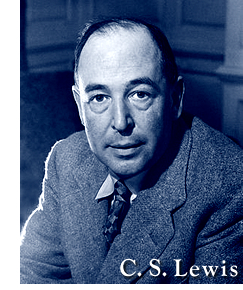
C.S. Lewis Daily – On depression


My own idea, for what it is worth, is that all sadness which is not either arising from the repentance of a concrete sin and hastening towards concrete amendment or restitution, or else arising from pity and hastening to active assistance, is simply bad; and I think that we all sin by needlessly disobeying the apostolic injunction to “rejoice” as by anything else. Humility, after the first shock, is a cheerful virtue: it is the high-minded unbeliever desperately trying in the teeth of repeated disillusions to retain his “faith in human nature” who is really sad.

From The Problem of Pain
Compiled in Words to Live By