Charles Stanley – The Way to Finish Well


2 Timothy 4:6-8

Many people think about the last years of life as an opportunity to relax. But this does not fit with God’s purpose for us; He wants us to serve Him all the days of our lives.

Let’s look at the apostle Paul’s journey and explore what it?means to finish well. He spent time pouring into others until the very end of his life. Consider the letters he wrote to Timothy from prison prior to being executed. In every season of life, God calls us to serve others.

And notice how, when writing about his life, Paul chose words descriptive of a battle. He understood the human struggle against sin as well as the challenges of pain and persecution in the trials we all face—even in doing kingdom work like preaching Christ to a fiercely resistant society.

This godly servant’s life was also marked by surrender. His mindset is obvious in these words: “Present your bodies a living and holy sacrifice, acceptable to God, which is your spiritual service of worship” (Rom. 12:1). He was not afraid of the Roman emperor Nero, nor was he struggling to stay alive. Paul trusted God to determine everything about his life, including where he would go, what he would do, and when he would die. Death did not scare him, because he knew he would dwell with Jesus forever.

God doesn’t require us to have perfect lives in order to finish strong. We can live abundantly and be ready to meet our Maker by surrendering, walking victoriously with Christ, and serving others. The question is, if Jesus called you home today, would you—like Paul—be confident that you lived well until the end?

Bible in One Year: Ezekiel 32-33


Our Daily Bread — To Be Continued . . .


Read: 1 Corinthians 15:50-58

Bible in a Year: Psalms 148-150; 1 Corinthians 15:29-58

Death has been swallowed up in victory. —1 Corinthians 15:54

Growing up in the 1950s, I often attended the Saturday matinee at a local movie theater. Along with cartoons and a feature film, there was an adventure serial that always ended with the hero or heroine facing an impossible situation. There seemed to be no way out, but each episode concluded with the words “To Be Continued . . . ”

The apostle Paul was no stranger to life-threatening situations. He was imprisoned, beaten, stoned, and shipwrecked as he sought to take the good news of Jesus Christ to people. He knew that someday he would die, but he never considered that to be the end of the story. Paul wrote to the followers of Jesus in Corinth, “When the perishable has been clothed with the imperishable, and the mortal with immortality, then the saying that is written will come true: ‘Death has been swallowed up in victory’ ” (1 Cor. 15:54). The passion of Paul’s life was telling others that Jesus our Savior gave His life on the cross so that through faith in Him we can receive forgiveness for all our sins and have eternal life.

We are not like the movie hero who always escapes certain death. The day will come when our earthly lives will end either by death or Christ’s return. But by God’s grace and mercy, the story of your life and mine is “to be continued.” —David McCasland

Father, we praise You for Your gift of eternal life and say with Paul, “Thanks be to God! He gives us the victory through our Lord Jesus Christ” (1 Cor. 15:57).

In life and death, Christ is our hope.

INSIGHT: Paul wrote chapter 15 of 1 Corinthians in response to those in the church at Corinth who denied that Jesus rose bodily from the dead. This chapter is divided into two sections. In verses 1-34, Paul discusses the reasons to believe that Jesus did in fact walk out of His tomb. In verses 35-57, Paul talks about the need for and the nature of our resurrected bodies. These verses lead to Paul’s concluding point in verse 58. While waiting for our resurrection, “give yourselves fully to the work of the Lord, because you know that your labor in the Lord is not in vain.” J.R. Hudberg

Alistair Begg – Living as Lights


…in the midst of a crooked and twisted generation, among whom you shine as lights in the world. Philippians 2:15

We use lights for display. A Christian should so shine in his life that a person could not live with him a week without knowing the Gospel. His conversation should be such that all who spend time with him would understand clearly to whom he belongs and who it is he serves and would see the image of Jesus displayed in his daily actions. Lights are intended for guidance. We are to help those around us who are in the dark. We are to declare to them the Word of life. We are to point sinners to the Savior and the weary to a divine resting-place. Sometimes men read their Bibles and fail to understand them; we should be ready, like Philip, to instruct the inquirer in the meaning of God’s Word, the way of salvation, and the life of godliness.

Lights are also used for warning. On our rocks and sandbanks a lighthouse is sure to be erected. Christians should know that there are many false lights everywhere in the world, and therefore the right light is needed. The wreckers of Satan are always abroad, tempting the ungodly to sin under the name of pleasure as they hoist the wrong light. It is our responsibility to set the true light upon every dangerous rock, to point out every sin and tell what it leads to, so that we may be clear of the blood of all men, shining as lights in the world. Lights also have a very cheering influence, and so have Christians. A Christian ought to be a comforter, with kind words on his lips and sympathy in his heart; he should carry sunshine wherever he goes and diffuse happiness around him.

Gracious Spirit dwell with me;

I myself would gracious be,

And with words that help and heal

Would Thy life in mine reveal,

And with actions bold and meek

Would for Christ my Savior speak.

The Family Bible Reading Plan

  • 1 Samuel 31
  • 1 Corinthians 11

Devotional material is taken from “Morning and Evening,” written by C.H. Spurgeon, revised and updated by Alistair Begg.

Charles Spurgeon – England’s ills and sorrows


“Oh that my head were waters, and mine eyes a fountain of tears, that I might weep day and night for the slain of the daughter of my people!” Jeremiah 9:1

Suggested Further Reading: Luke 19:37-44

As ye stand on any of the hills around, and behold this monstrous city lying in the valley, say, “O London, London! how great thy guilt. Oh! that the Master would gather thee under his wing, and make thee his city, the joy of the whole earth! O London, London! Full of privileges, and full of sin; exalted to heaven by the gospel, thou shalt be cast down to hell by thy rejection of it!” And then, when ye have wept over London, go and weep over the street in which you live, as you see the sabbath broken, and God’s laws trampled upon, and men’s bodies profaned—go and weep! Weep, for the court in which you live in your humble property; weep for the square in which you live in your magnificent wealth; weep for your neighbours and your friends, lest any of them, having lived godless, may die godless! Then go to your house, weep for your family, for your servants, for your husband, for your wife, for your children. Weep, weep; cease not weeping, till God has renewed them by his Spirit. And if you have any friends with whom you sinned in your past life, be earnest for their salvation. George Whitefield said there were many young men with whom he played at cards, and spent hours wasting his time when he should have been about other business. When he was converted, his first thought was, “I must by God’s grace have these converted too.” And he never rested, till he could say, that he did not know of one of them, a companion of his guilt, who was not now a companion with him in the tribulation of the gospel. Oh, let it be so with you!

For meditation: “Jesus wept” for others; “How he loved” (John 11:35,36). What message do your tears or lack of tears convey about you?

Sermon no. 150

6 September (1857)

John MacArthur – Standing Firm


“Stand firm against the schemes of the devil” (Eph. 6:11).

Keep your spiritual armor on at all times.

Every battle has an offensive and defensive strategy. Paul outlines the Christian’s offensive strategy in 2 Corinthians 10:3-5: “Though we walk in the flesh, we do not war according to the flesh, for the weapons of our warfare are not of the flesh, but divinely powerful for the destruction of fortresses. We are destroying speculations and every lofty thing raised up against the knowledge of God, and we are taking every thought captive to the obedience of Christ.”

Our defensive strategy is to rely on Christ’s strength and put on our spiritual armor (Eph. 6:10-11). Paul was probably chained to a Roman soldier when he wrote to the Ephesians, so he had a ready illustration of spiritual armament at hand. But unlike Roman soldiers, who removed their armor when off duty, Christians must remain fully protected at all times. That thought is captured in the Greek word translated “put on” in Ephesians 6:11, which carries the idea of permanence—putting it on once and for all.

“Stand firm” in verse 12 translates a military term that speaks of holding your ground while under attack. When properly employed, your spiritual armor serves as a lifelong companion that enables you to fight against the forces of evil and do so without retreat. Just as Jesus personally instructed the churches in Thyatira and Philadelphia to hold fast until He returns (Rev. 2:25; 3:11), so He also instructs us to stand our ground without wavering.

Similar New Testament exhortations call us to hold fast to biblical truth (1 Cor. 15:2), to that which is good (1 Thess. 5:21), to our confidence in Christ (Heb. 4:6), and to our confession of faith (Heb. 4:14). Those are marks of a strong and stable believer against whom the schemes of Satan have little effect.

Suggestions for Prayer

Is there an area of your Christian life in which you’re not standing as firm as you should—perhaps prayer, Bible study, or personal ministry? If so, confess it to the Lord and begin to strengthen that area today. Don’t give Satan a weakness to attack.

For Further Study

Memorize 1 John 4:4 as a reminder of God’s power in your life.

Joyce Meyer – Life-Energizing Thoughts


Strip yourselves of your former nature [put off and discard your old unrenewed self] which characterized your previous manner of life and becomes corrupt through lusts and desires that spring from delusion; and be constantly renewed in the spirit of your mind [having a fresh mental and spiritual attitude], and put on the new nature (the regenerate self) created in God’s image, [Godlike] in true righteousness and holiness. – Ephesians 4:22-24

The way to put off your old life and put on the new, enjoyable life that God offers us is by renewing your mind and attitude daily. “Daily” sounds daunting, doesn’t it? Don’t you wish scripture said, “Do this once and you will enjoy victory the rest of your life”? However, it doesn’t say that, and if we truly want to live life to the fullest and enjoy each moment of it, we will need to form a habit of thinking life-energizing thoughts instead of life-draining ones.

One of the simplest ways to practice this is by thinking about what you do have instead of what you don’t have. Be grateful for every blessing, no matter how tiny and insignificant it may seem.

God loves you so much and He has an amazing plan for your life! He does not play favorites, doing good things for one person and not another. No matter how bad life has been until now, it can change. Always remember you can overcome evil with good (see Romans 12:21). The darkness cannot overtake the light as long as we keep the light on.

Turn the light on in your mind by filling it with positive, hope-filled, thankful, thoughts based on God’s Word. As you do this, you will experience godly energy filling your soul. It will be in your words, your attitudes, and your actions. Everything in life is connected to the mind, and it is there that you win or lose the battle for having the life you always wanted

Campus Crusade for Christ; Bill Bright – Happy Are the Mourners


“Blessed are they that mourn for they shall be comforted” (Matthew 5:4).

During my days of agnosticism and early inquiry into the Christian faith, I was not aware of my sin. I had come to believe that Jesus Christ was the Son of God, that He died on the cross for the sins of man but somehow it had not dawned on me that I was that bad. My life-style was not much different from that of the average church member. And, though my life was far from exemplary, in my own estimation I was a pretty decent fellow. As a matter of fact, I had some problems with all the talk about the cross and the shedding of blood. It seemed offensive to my aesthetic nature.

I was willing to believe that Jesus was the greatest influence, the greatest teacher, the greatest leader, the greatest example that man had ever known. And if He had to die on the cross to make a point, I did not think it was important enough to be made an issue. In fact, the thing that was really important to me was the fact that according to the Bible and the historical evidence, Jesus lived a very wonderful life dedicated to helping others. Then one day – I shall never forget the time and place, though I have forgotten the exact passage – as I read the Bible I was suddenly gripped with the necessity of Christ dying on the cross for my sins. I finally realized that without the shedding of blood there is no forgiveness of sin, that I had fallen short of the glory of God and that I deserved death. I realized that there is nothing in me that merited His love, His grace, His forgiveness, His cleansing. I found myself on my knees in tears, deeply conscious of my unworthiness and, for the first time in my life, understood the true meaning of the cross and the reason He shed His blood for me.

Soon after I was elected to the board of deacons of my church and was called upon to serve communion. I shall never forget that experience. I found myself weeping as I served the wafers representing His broken body and the grape juice representing His blood that was shed for the sins of all men, for my sins, because now his death on the cross meant everything to me. A hymn, which had once been offensive to me, now became one of my favorites: “what can wash away my sin? Nothing but the blood of Jesus.” I believe that this is what Jesus had in mind when He said, “Blessed are they that mourn for they shall be comforted.”

Bible Reading: Jeremiah 31:10-14

TODAY’S ACTION POINT: I will not ignore my sins but will mourn over them by confessing, repenting, and, through the discipline of spiritual breathing, walking constantly in the light as a model of the supernatural life.

Presidential Prayer Team; G.C. – Tree Talk


Trees tell you a lovely story of how faith is passed from generation to generation through prayer. In the life cycle of a tree, a seed falls to the ground. When nourished with water and sunshine, it sprouts into a sapling that eventually matures and produces seeds of its own. In time, that same tree declines and dies, falling to the ground and creating a cushion of compost for new seeds. On and on the cycle goes – much like the one in today’s verse.

Faith that dwelt first in your grandmother Lois and your mother Eunice and now, I am sure, dwells in you.

II Timothy 1:5

Timothy was charged with taking the apostle Paul’s letters from place to place, establishing God’s church of believers on Earth. Training for this important service didn’t come from a degree in ministry. His character was formed in his family tree. His mother and grandmother lived lives of faith and their prayers flew to God’s heart, providing nourishment for their little man to root and grow.

Today, take your place in the life cycle of faith. Pray for tomorrow’s believers in your family and in America, and live a life worthy to be emulated. Then you will offer the branch of faith in God to the next generation.

Recommended Reading: Psalm 78:1-7

Night Light for Couples – Two Sides of Passion


The wife’s body does not belong to her alone but also to her husband. In the same way, her husband’s body does not belong to him alone but also to his wife. 1 Corinthians 7:4

T here’s a basic difference between women and men that marriage partners need to understand: Women tend to give sex to get intimacy, while men tend to give intimacy to get sex.

Many men, for example, can separate the act of intercourse from the relationship and feel some measure of physical satisfaction. Not so for most women. More relationally inclined, they often feel exploited when sexual relations are not accompanied by tenderness, caring, and romantic love.

Solutions? The man who wants an exciting sexual experience with his wife should focus on the other twenty‐three and a half hours in the day. He should compliment her, tell her that he cares, and make her feel special in a hundred different ways. Turning the coin over, the wife must understand that her husband is more visually oriented and easily stimulated than she is. She should make herself as attractive to him as she can.

With a little unselfish forethought, each can learn to satisfy the other. In our experience, responding to these basic differences opens the door for genuine passion in marriage.

Just between us…

  • Do you agree that men and women approach sex differently?
  • Do we understand each other’s feelings about sex and intimacy?
  • Why do you think God created these differences in men and women?
  • What can I do specifically to make sex more appealing to you?

Lord, help us to hold our differences about sexual attraction in high regard— never hindering where we could help, never ignoring or criticizing where we could cherish and honor. Thank You that we can give ourselves to each other so completely. Amen.

From Night Light For Couples, by Dr. James & Shirley Dobson

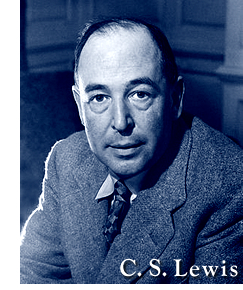
C.S. Lewis Daily – Today’s Reading


There are three ways of taking the command to turn the other cheek. One is the Pacifist interpretation; it means what it says and imposes a duty of nonresistance on all men in all circumstances. Another is the minimising interpretation; it does not mean what it says but is merely an orientally hyperbolical way of saying that you should put up with a lot and be placable. Both you and I agree in rejecting this view. The conflict is therefore between the Pacifist interpretation and a third one which I am now going to propound. I think the text means exactly what it says, but with an understood reservation in favour of those obviously exceptional cases which every hearer would naturally assume to be exceptions without being told. . . . . That is, insofar as the only relevant factors in the case are an injury to me by my neighbour and a desire on my part to retaliate, then I hold that Christianity commands the absolute mortification of that desire. No quarter whatever is given to the voice within us which says, “He’s done it to me, so I’ll do the same to him.”

From The Weight of Glory

Compiled in A Year with C.S. Lewis