Charles Stanley – An Imperishable Inheritance


1 Peter 1:3-5

Human beings have a fundamental need to feel safe and secure. But whenever we base our sense of security on the things of this world, we can expect disappointment. This is especially true when it comes to our finances. We are living in very uncertain times of high unemployment and diminishing retirement accounts. Our money and belongings can disappear no matter how carefully we plan and try to guard them. That’s why remembering our eternal future is so important.

Isn’t it wonderful to know that believers have an inheritance that never depreciates and cannot be stolen? It was given to us when we placed our hope in Jesus Christ and will never be taken away because it’s reserved and protected for us in heaven. Someday, when we see Jesus face to face, we’ll enjoy all the riches of God’s grace and receive the fullness of our inheritance.

But did you know that every day we live on this earth, we have an opportunity to build up that inheritance by investing in things the Lord values and credits to our account? That’s what Jesus was talking about when He said, “Store up for yourselves treasures in heaven” (Matt. 6:20). Whenever we live righteously in obedience to God, we’re laying up good works and adding to the treasure that awaits us.

Are you more concerned with investments in this life than with everlasting riches? It is very easy to let daily demands and responsibilities overshadow the importance of building eternal prosperity. Take time each day to refocus your mind and heart. Then start storing up wealth of lasting value.

Bible in One Year: Daniel 3-4

Our Daily Bread — God So Loved . . .


Read: John 3:13-19

Bible in a Year: Proverbs 16-18; 2 Corinthians 6

Jesus said, “Father, forgive them, for they do not know what they are doing.” —Luke 23:34

July 28, 2014, marked the 100th anniversary of the beginning of World War I. In the British media many discussions and documentaries recalled the start of that 4-year conflict. Even the TV program Mr. Selfridge, which is based on an actual department store in London, included an episode set in 1914 that showed young male employees lining up to volunteer for the army. As I observed these portrayals of self-sacrifice, I felt a lump in my throat. The soldiers they depicted had been so young, so eager, and so unlikely to return from the horror of the trenches.

Although Jesus didn’t go off to war to defeat an earthly foe, He did go to the cross to defeat the ultimate enemy—sin and death. Jesus came to earth to demonstrate God’s love in action and to die a horrendous death so that we could be forgiven of our sins. And He was even prepared to forgive the men who flogged and crucified Him (Luke 23:34). He conquered death by His resurrection and now we can become part of God’s forever family (John 3:13-16).

Anniversaries and memorials remind us of important historical events and heroic deeds. The cross reminds us of the pain of Jesus’ death and the beauty of His sacrifice for our salvation. —Marion Stroud

Dear Lord, thank You for loving me so much that You left Your home in heaven, came to earth, and willingly went to the cross for me. Thank You for paying the penalty for my sins and forgiving me.

The cross of Jesus is the supreme evidence of the love of God. Oswald Chambers

INSIGHT: Jesus spoke of Himself as “the Son of Man” (John 3:13), a title used exclusively to refer to Himself in the Gospels. In today’s passage, Jesus used it synonymously with “God’s one and only Son” (v. 18; see Matt. 26:63-64). Jews who were familiar with the book of Daniel would have recognized Jesus as the Messiah (see Dan. 7:13-14). Although “Son of Man” is a Messianic title, Jesus often used it in connection with His humiliation and suffering and His dying on the cross (Matt. 12:40; 17:9,12,22; Luke 9:22,44; 18:31-33; John 3:14-16). Making a typological reference to the bronze snake in Number 21:4-9, Jesus said that He too would be lifted up and anyone who looks to Him will not die but have eternal life (John 3:14-15). Sim Kay Tee

Alistair Begg – Grace from Above


As they go through the Valley of Baca they make it a place of springs; the early rain also covers it with pools. Psalm 84:6

This teaches us that the comfort obtained by one may often prove helpful to another, just as the springs would be enjoyed by the company who came after. When we read some book that is really helpful and encouraging, we recognize that the author has gone ahead of us and discovered these refreshing springs for us as well as for himself. Many books have been like wells drilled by a pilgrim for himself but have proved quite as useful to others. We notice this especially in the Psalms-for example, 42:11: “Why are you cast down, O my soul, and why are you in turmoil within me?” Travelers have been delighted to see the footprint of man on a barren shore, and we love to see the marks of pilgrims while passing through the vale of tears.

The pilgrims dig the well, but, strangely, it fills from the top instead of the bottom. We use the means, but the blessing does not spring from the means. We dig a well, but heaven fills it with rain. The horse is prepared for the day of battle, but safety is from the Lord. The means are connected with the end, but they do not produce it themselves. Consider here how the rain covers the ground with pools, so that they become useful as reservoirs. The endeavor is not wasted, but still it does not supersede divine help.

Grace may be compared to rain for its purity, for its refreshing and energizing influence, for its coming from above, and for the sovereignty with which it is given or withheld. May our readers have showers of blessing, and may the springs be filled with water! What are the means and ordinances without the smile of heaven! They are like clouds without rain and pools without water. God of love, open the windows of heaven and pour us out a blessing!

The Family Bible Reading Plan

  • 2 Samuel 8, 9
  • 2 Corinthians 2

Devotional material is taken from “Morning and Evening,” written by C.H. Spurgeon, revised and updated by Alistair Begg

Charles Spurgeon – The condescension of Christ


“For ye know the grace of our Lord Jesus Christ, that, though he was rich, yet for your sakes he became poor, that ye through his poverty might be rich.” 2 Corinthians 8:9

Suggested Further Reading: Mark 15:16-39

Our Lord Jesus might have said in all his sorrows, “I have known better days than these.” When he was tempted of the devil in the wilderness, it must have been hard for him to have restrained himself from dashing the devil into pieces. If I had been the Son of God, feeling as I do now, if that devil had tempted me I should have dashed him into the nethermost hell, in the twinkling of an eye! And then conceive the patience our Lord must have had, standing on the pinnacle of the temple, when the devil said, “Fall down and worship me.” He would not touch him, the vile deceiver, but let him do what he pleased.Oh! What might of misery and love there must have been in the Saviour’s heart when he was spat upon by the men he had created; when the eyes he himself had filled with vision, looked on him with scorn, and when the tongues, to which he himself had given utterance, hissed and blasphemed him! Oh, my friends, if the Saviour had felt as we do, and I doubt not he did feel in some measure as we do—only by great patience he curbed himself—he might have swept them all away; and, as they said, he might have come down from the cross, and delivered himself, and destroyed them utterly. It was mighty patience that could bear to tread this world beneath his feet, and not to crush it, when it so ill-treated its Redeemer.You marvel at the patience which restrained him; you marvel also at the poverty he must have felt, the poverty of spirit, when they rebuked him and he reviled them not again; when they scoffed at him, and yet he said, “Father, forgive them, for they know not what they do.” He had seen brighter days; that made his misery more bitter, and his poverty more poor.

For meditation: In the garden Jesus could have used his power to call twelve legions of angels to his rescue (Matthew 26:53), but instead he employed it to heal the ear of one of his enemies (Luke 22:51). On the cross he could have used his power to save himself, but instead he continued to employ it to save others—his enemies, including us (Romans 5:10).

Sermon no. 151

13 September (1857)

John MacArthur – Pursuing Truthfulness


“Stand firm therefore, having girded your loins with truth” (Eph. 6:14).

Truthfulness is the best defense against Satan’s lies.

The first piece of armor Paul mentions in Ephesians 6:14 is the belt of truth. Roman soldiers of his day wore a tunic, which was a large square piece of material with holes for the head and arms. A belt kept the tunic from flying loosely and getting in the way in the midst of battle.

The phrase “having girded your loins” was commonly used for gathering up the loose material of one’s tunic or robe when preparing for battle or travel. It speaks of preparedness, as in Exodus 12:11, where God tells the children of Israel to gird their loins for their exodus from Egypt. Jesus used it in a figurative sense in Luke 12:35, where He warns us to gird our loins or “be dressed in readiness” for His second coming. Peter said we’re to gird our minds for action (1 Pet. 1:13).

The Greek word translated “truth” in Ephesians 6:14 can refer either to the content of that which is true or to an attitude of truthfulness. Both are implied in the verse. In Ephesians 4 Paul combines both aspects in warning us not to be “tossed here and there by waves, and carried about by every wind of doctrine, by the trickery of men, by craftiness in deceitful scheming” (vv. 14-15). Instead, we are to embrace sound doctrine and always speak the truth in love.

The way to defend yourself against the cunning deceptions of Satan is to gird yourself with a thorough knowledge of God’s Word and a firm commitment to obedience. Yet many Christians remain vulnerable because they’re unwilling to do that.

Just as Paul exhorted the Philippians to excel in knowledge and discernment and to remain sincere and blameless until in Christ’s presence (Phil. 1:9-10), so you must also do the same. Never be content with your present level of spirituality. Keep learning and growing. Demonstrate an attitude of truthfulness that reveals your commitment to God’s Word and your readiness for battle.

Suggestions for Prayer

Is your life characterized by truthfulness? If not, you’re a ready target for Satan’s schemes. Confess it to the Lord and ask Him to cleanse your heart and give you a love for His truth. Begin today to apply His Word to your life.

For Further Study

Read verses 1-4 and 13-15 of 2 Corinthians 11, noting the tactics of Satan and his servants.

Joyce Meyer – Do Yourself a Favor and Forgive


And should you not have had pity and mercy on your fellow attendant, as I had pity and mercy on you? – Matthew 18:33

In Matthew 18:23–35, Jesus tells a story about one man who refused to forgive another. At the end, He makes the clear and strong point that those who do not forgive others get “turned over to the torturers” (v.34). If you have, or have ever had, a problem forgiving others, I’m sure you can attest to this truth. Harboring hateful thoughts and bitterness toward another person in your mind is indeed torturous.

You may have heard the saying, “Refusing to forgive is like drinking poison and hoping it kills the other person.” We are not hurting the one who hurt us by being angry at them. The truth is that most of the time people who offend us don’t even know how we feel. They go on with their lives while we drink the poison of bitterness. When you do forgive those who offend you, you are actually helping yourself more than you are helping them, so I say, “Do yourself a favor and forgive!”

We think, But, it is so unfair for me to forgive them and then they just have no punishment for what they did. Why should I have the pain while they get the freedom? The truth is that by forgiving, we are releasing them so God can do what only He can do. If I’m in the way—trying to get revenge or taking care of the situation myself instead of trusting and obeying God—He may sit back and allow me to try to handle things in my own strength. But, if I allow Him to deal with those who offend me by forgiving them, He can work good out of it for both parties concerned.

The book of Hebrews tells us that God settles the cases of His people. When we forgive, we put God on the case (see Hebrews 10:30).

Trust in Him Is there a situation in your life that you are trying to take care of instead of trusting God to work it out? If so, do yourself a favor and forgive so God can settle it.

Campus Crusade for Christ; Bill Bright – Happy are the Pure in Heart


“Blessed are the pure in heart for they shall see God” (Matthew 5:8, KJV).

Jesus had a flashpoint against the hypocrisy of the Pharisees. They professed to be something they were not. Externally they did everything right, adhering meticulously to all the details of the law, yet He referred to them as being “whitewashed tombs” internally, and being “full of dead men’s bones.” Thus, obviously, the “pure in heart” did not apply to the Pharisees, according to His view of them.

In John 14:21, Jesus says, “The one who obeys Me is the one who loves Me and because he loves Me My Father will love him and I will too and I will reveal Myself to him.” That is another way of saying what He said in the verse in Matthew above. The pure in heart shall see God because He will reveal Himself to those who obey, and only the pure in heart obey.

If God seems impersonal to you, far off and unreachable, you may want to look into the mirror of your heart to see if anything there would grieve or quench the Spirit, short- circuiting His communication with you.

You may be sure of this promise of God: The pure in heart will experience the reality of His presence within.

If for some reason this is not your experience, God has made provision whereby you can have vital fellowship with Him. Breathe spiritually. Exhale by confessing yours sins, and inhale by appropriating the fullness of God’s Spirit. Begin to delight yourself in the Lord and in His Word, asking God to give you a pure heart, and you may be assured that God will become a reality to you.

Bible Reading: Psalm 18:20-26

TODAY’S ACTION POINT: Because I desire to have a close personal relationship with God and to live a supernatural life, I will keep my heart pure before Him.


Presidential Prayer Team; G.C. – The List


According to Forbes Magazine, one of the biggest mistakes a person can make in business is to release control of their “to do” list because “you will never accomplish your goals by doing what others want done.” Think about it. Do you take that philosophy into your prayer life?

Elijah was a man with a nature like ours, and he prayed fervently that it might not rain.

James 5:17

It’s easy to assume God has a list of things He needs accomplished today – but He doesn’t! According to the Bible, God’s plan is already completed. Elijah asked God to do something audacious and allow a three-and-a-half year drought throughout the entire land…and it happened, not because Elijah reminded God what needed to be done, but because it was already the Lord’s desire to answer that prayer. Why? To bring glory to Himself and draw unbelievers to His presence.

Before you pray the mega “to do” list for God, spend time asking Him what your part is in fulfilling His already-completed plan. Pray for America’s role in that design as well. Then actively move in obedience, letting “the list” take care of itself.

Recommended Reading: Ephesians 1:3-10

Night Light for Couples – Safety Rules


“Can a man walk on hot coals without his feet being scorched?” Proverbs 6:28

The surest way to avoid an affair is to flee temptation as soon as it confronts you. Author Jerry Jenkins has referred to this determination to preserve moral purity as “building hedges” around marriage so that temptation is never given a foothold. You take steps to protect yourself and enhance the trust level in your marriage at the same time.

How? Talk with your partner about your interactions with the opposite sex, then establish sensible, sensitive guidelines. Some couples rule out lunch with a coworker, traveling together, talking alone behind closed doors, sharing rides, or working as a “couple” on a project. Agree on what you both consider reasonable, then stick to that agreement. If you’re faced with a situation that you haven’t discussed, ask your spouse about it beforehand, and if he or she isn’t comfortable with it, don’t do it. Listen to each other’s concerns. The Lord has made you “one flesh” for good reason.

At first it may seem strange to ask for permission to take part in what’s probably a completely innocent activity. But you’ll quickly discover how wonderfully reassuring it feels when the situation is reversed and your partner is the one asking you!

Just between us…

  • Are you comfortable with my behavior around members of the opposite sex?
  • Is there anything I should do differently?
  • Are we praying enough that God would protect us from temptation? What does Proverbs 6:28 mean to you?

Dear God, we want to protect our marriage from any threat. We want to live freely and securely as a result of having chosen to live wisely. By Your Spirit, show us how to honor each other and please You. Amen.

From Night Light For Couples, by Dr. James & Shirley Dobson

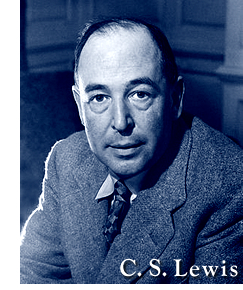
C.S. Lewis Daily – Today’s Reading


TO PETER BIDE, whose wife had died on 17 September: On grief.

20 September 1960

My dear Peter

I have just come in from saying my morning prayers in the wood, including as always one for ‘Peter and Margy and Joy and me’, and found your letter. I hope they are allowed to meet and help one another. You and I at any rate can. I shall be here on Wednesday next. If you could let me have a card mentioning the probable time of your arrival, all the better. If not, I shall just ‘stand by’.

Yes—at first one is sort of concussed and ‘life has no taste and no direction’. One soon discovers, however, that grief is not a state but a process—like a walk in a winding valley with a new prospect at every bend.

God bless all four of us.

From The Collected Letters of C.S. Lewis, Volume III

Compiled in Yours, Jack