Charles Stanley – Our Personal Accountability


Romans 14:12

If you are not involved in a personal accountability relationship, then you are missing out on one of life’s greatest gifts. Scripture often gives examples of this relationship: Jesus is accountable to the Father (John 8:28-29), the church is subject to Christ (Eph. 5:24), and Paul felt answerable to the church at Antioch (Acts 14:27). When we have someone with whom we can share our failures, weaknesses, successes, and deep longings, we benefit in several ways.

In our accountability to a Christian brother or sister, we develop a sense of responsibility, which leads to improved performance in all we do. Giving an account of ourselves promotes integrity and protects us from misusing our freedom as believers. What’s more, learning to examine ourselves and evaluate others guards us from unhealthy relationships and, in God’s hand, becomes a tool for our spiritual maturity.

Because an accountability partner can see our blind spots and weaknesses, he or she is in a good position to offer counsel, encouragement, or a loving rebuke. To choose the right person, we must look for a Spirit-filled believer who will offer godly wisdom based on Scripture. Also, we want to be accountable to a person who accepts and loves us just as we are, but who also possesses the courage to confront us when we are wrong. It is important to find someone who will truly be looking out for our best interest.

So where will you find such a person? In the pew at church or among your friends. Begin to pray today for an accountability partner, and ask God to clearly reveal the right one.

Bible in One Year: Acts 14-15


Our Daily Bread — Who We Are


Read: Psalm 100

Bible in a Year: Ezekiel 1-2; Hebrews 11:1-19

You are . . . God’s special possession, that you may declare the praises of him who called you out of darkness into his wonderful light. —1 Peter 2:9

In her autobiography, Corrie ten Boom described her and her sister Betsie’s horrific time in a Nazi concentration camp in the early 1940s. On one occasion they were forced to take off their clothes during an inspection. Corrie stood in line feeling defiled and forsaken. Suddenly, she remembered that Jesus had hung naked on the cross. Struck with wonder and worship, Corrie whispered to her sister, “Betsie, they took His clothes too.” Betsie gasped and said, “Oh, Corrie, . . . and I never thanked Him.”

It is easy for us to live thanklessly in a world that is full of trouble, struggles, and woes. On any given day we can find many reasons to complain. However, Psalm 100 exhorts God’s people to be glad, joyful, and thankful for “it is he who made us, and we are his; we are his people, the sheep of his pasture” (v. 3). As we remember who we are, we can respond in thanksgiving. For even in the worst of times, we can remember Christ’s love and sacrifice for us.

Don’t let the brutality of the world take away your thankful heart. Remember you are God’s child, and He has shown you His goodness and mercy through His work on the cross. —Albert Lee

I thank You, Lord, that though my heart can grow cold at times, when I remember that I am Yours and You are mine, I’m encouraged yet again. Thank You for Your love for me, for Your mercy, and Your sacrifice.

Praise comes naturally when you count your blessings.

INSIGHT: Psalm 100 is a doxology, a statement or word (logos) describing the glory (doxa) of God. This psalm forms the conclusion to a series of psalms that celebrate the Lord’s rule in power, glory, and grace. In spite of its brevity, it is considered preeminent among the psalms of praise and thanksgiving. Its superscription—“For giving grateful praise”—is unique to this song. Psalm 100 is used often in liturgical worship and is the basis for several hymns, including “All People that on Earth Do Dwell.” Bill Crowder


Alistair Begg – By His Sovereign Choice


But the Lord’s portion is his people.

Deuteronomy 32:9

How are they His? By His own sovereign choice. He chose them and set His love upon them. He did this completely apart from any goodness in them at the time or any goodness that He foresaw in them.

He had mercy on whom He would have mercy and ordained a chosen company to eternal life; in this way, therefore, they are His by His unconstrained election.

They are not only His by choice, but by purchase. He has bought and paid for them completely, and so there can be no dispute about His title.

Not with corruptible things like silver and gold, but with the precious blood of the Lord Jesus Christ, the Lord’s portion has been fully redeemed.

There is no mortgage on His estate; no lawsuits can be raised by opposing claimants. The price was paid in open court, and the Church is the Lord’s estate forever. See the blood-mark upon all the chosen, invisible to the human eye but known to Christ, for “the Lord knows those who are his.”1

He forgets none of those whom He has redeemed from among men; He counts the sheep for whom He laid down His life and remembers carefully the Church for which He gave Himself.

They are also His by conquest. What a battle He had in us before we would be won! How long He laid siege to our hearts! How often He sent us terms of surrender, but we barred our gates and built our walls against Him.

Do we not remember that glorious hour when He carried our hearts by storm, when He placed His cross against the wall and scaled our ramparts, planting on our strongholds the blood-red flag of His omnipotent mercy? Yes, we are indeed the conquered captives of His omnipotent love. As those chosen, who have been purchased and subdued, we know that the rights of our divine possessor are inalienable: We rejoice that we can never be our own; and we desire, day by day, to do His will and to declare His glory.

1) 2 Timothy 2:19

The Family Bible Reading Plan

  • 1 Chronicles 5, 6
  • Hebrews 10

Devotional material is taken from “Morning and Evening,” written by C.H. Spurgeon, revised and updated by Alistair Begg.

Charles Spurgeon – Awake! Awake!


“Therefore let us not sleep as do others; but let us watch and be sober.” 1 Thessalonians 5:6

Suggested Further Reading: Titus 1:7- 2:8

“Let us watch.” There are many that never watch. They never watch against sin; they never watch against the temptations of the enemy; they do not watch against themselves, nor against “the lusts of the flesh, the lusts of the eye, and the pride of life.” They do not watch for opportunities to do good, they do not watch for opportunities to instruct the ignorant, to confirm the weak, to comfort the afflicted, to succour them that are in need; they do not watch for opportunities of glorifying Jesus, or for times of communion; they do not watch for the promises; they do not watch for answers to their prayers; they do not watch for the second coming of our Lord Jesus. These are the refuse of the world: they watch not, because they are asleep. But let us watch: so shall we prove that we are not slumberers. Again: let us “be sober.” Albert Barnes says, this most of all refers to abstinence, or temperance in eating and drinking. Calvin says, not so: this refers more especially to the spirit of moderation in the things of the world. Both are right: it refers to both. There be many that are not sober; they sleep, because they are not so; for insobriety leadeth to sleep. They are not sober—they are drunkards, they are gluttons. They are not sober—they cannot be content to do a little business—they want to do a great deal. They are not sober—they cannot carry on a trade that is sure—they must speculate. They are not sober—if they lose their property, their spirit is cast down within them, and they are like men that are drunken with wormwood. If on the other hand, they get rich, they are not sober: they so set their affections upon things on earth that they become intoxicated with pride.

For meditation: The Christian in the pew should aim at the same standards as those which he expects to see in the Christian in the pulpit (1 Corinthians 11:1).

Sermon no. 163

15 November (1857)

John MacArthur – Rebuking the World


“By faith Noah . . . condemned the world, and became an heir of the righteousness which is according to faith” (Heb 11:7).

Your actions and words should rebuke our godless society.

Genesis 6:5 says, “The Lord saw that the wickedness of man was great on the earth, and that every intent of the thoughts of his heart was only evil continually.” Before moving in judgment against the most evil and corrupt society in history, God appointed Noah to build an ark, which became a symbol of life and salvation to all who believed God. For those who disbelieved, it represented impending death and judgment.

Concurrent with constructing the ark, Noah preached about coming judgment. Peter called him “a preacher of righteousness” (2 Pet. 2:5), and every board he cut and nail he drove in was a living illustration of the urgency of his message.

God’s warning was stern and His message horrifying, but His patience and mercy prevailed for 120 years. As Peter said, “The patience of God kept waiting in the days of Noah, during the construction of the ark” (1 Pet. 3:20). The people had ample warning of judgment, but they chose to disregard Noah’s message.

As sad as the account of Noah’s day is, perhaps the greatest tragedy is that man’s attitude toward God hasn’t changed since then. Jesus said, “The coming of the Son of Man will be just like the days of Noah. For as in those days which were before the flood they were eating and drinking, they were marrying and giving in marriage, until the day that Noah entered the ark, and they did not understand until the flood came and took them all away, so shall the coming of the Son of Man be” (Matt. 24:37-39).

Like Noah, you are to proclaim righteousness to an evil and perverse generation by your works and your life. Be faithful to do so even if people don’t want to listen. After 120 years of diligent work and faithful preaching by Noah, only eight people entered the ark. But God’s purposes were accomplished and the human race was preserved.

Suggestions for Prayer

Sometimes you’ll encounter people who scoff at God’s judgment and mock your testimony. Don’t be discouraged. Pray for them and be available to minister to them whenever possible.

For Further Study

Read 2 Peter 3. What effect should the prospect of future judgment have on your present behavior?

Joyce Meyer – The Waiting God


And therefore the Lord [earnestly] waits [expecting, looking, and longing] to be gracious to you; and therefore He lifts Himself up, that He may have mercy on you and show loving-kindness to you. For the Lord is a God of justice. Blessed (happy, fortunate, to be envied) are all those who [earnestly] wait for Him, who expect and look and long for Him [for his victory]. —Isaiah 30:18

This verse has become one of my favorites, and it has often been a source of encouragement to me when I’ve had hard times. The Living Bible paraphrases the verse like this: “Yet the Lord still waits for you to come to him, so he can show you his love; he will conquer you to bless you, just as he said. For the Lord is faithful to his promises. Blessed are all those who wait for him to help them.” Let’s think of the implication of the promise. God waits for us. As I think of that promise, it staggers my mind. The Creator of the universe and the Giver of all life has chosen to wait for us—waits for us to come to our senses, waits for us to respond to His love, waits for us to turn to Him for help.

That’s a staggering thought. God wants to show us love.

Perhaps as much as anywhere else, Satan attempts to build a mental stronghold right there. When we contemplate God’s love for us, many of us can’t take it in. We can only think of our failures, our shortcomings, and dozens of other reasons why God shouldn’t love us.

That reminds me of a kind man I’ve known for many years. One day he took care of a situation for me that he didn’t have to. I was surprised and deeply touched. “You are probably the kindest man I know,” I told him.

He stared at me in shock. “Me? Kind? Oh, I can be mean-spirited and cruel,” he said. For several minutes, he explained to me that he couldn’t possibly be a kind man. “I live with myself all the time, and I see all my defects.”

“Maybe that’s the trouble,” I told him. “You see your defects so clearly, you don’t see your caring, compassionate qualities. You discount all those things.”

He never could accept that he was kind. I also used the word gentle and that surprised him too.

Perhaps that’s how it is with many of God’s people. We are so absorbed by our failures and all the wrong things we see about ourselves, it’s hard to believe that God wants to bless us. If we read, “God wants to punish you,” we wouldn’t have trouble saying, “Yes, that’s what I deserve.”

But how would we answer if someone said, “God wants to bless you”? We probably would say, “I don’t deserve that.”

How many of us believe we are entitled to God’s blessings? We want the good things. We want God to love us, encourage us, bless us, and give us victory, but to say we deserve the blessings may be more than we are willing to accept.

Why do we struggle over the concept of deserving? Our tendency is to think that we have to do something to earn the blessings…that we have to be good enough or faithful enough. We miss the point of God’s powerful, gracious love. Our blessings from God are not a result of our goodness. They are the result of God’s goodness.

We are entitled to God’s blessings for only one reason: because we are His children. It’s just that simple. Those of us who are parents grasp that concept with regard to our children. We brought them into the world, and they deserve our love. We freely give them our love before they do anything good or bad. They deserve our protection and all the good things we choose to give them. They don’t deserve those things because they’ve done something to earn them, but simply because they are our children.

Satan loves to trip us up on this one. As soon as we think it is right for us to be blessed, he points to our weaknesses or our failures. God points to our relationship. That’s the difference.

Gracious and loving God, thank You for being willing to bless me. Even though the devil tries to make me feel undeserving, please remind me that I am Your child and You are my Father. My relationship to You makes me deserving, and I thank You for that in the name of Jesus Christ. Amen.

From the book Battlefield of the Mind Devotional by Joyce Meyer.

Campus Crusade for Christ; Bill Bright – Overwhelming Love


“But despite all this, overwhelming victory is ours through Christ who loved us enough to die for us” (Romans 8:37).

Today I prayed with a beloved friend who is dying of cancer. As he and his precious wife and I held hands, we lifted our voices in praise to God, knowing that He makes no mistakes, that “all things work together for good to those who love Him,” and that he is fully aware of my brother’s body riddled with pain as a result of cancerous cells that are on a warpath. Together we claimed that victory which comes from an unwavering confidence in Christ’s sufficiency.

The victory comes, of course, through Christ who loved us enough to die for us. Such love is beyond our ability to grasp with our minds, but it is not beyond our ability to experience with our hearts. God’s love is unconditional and it is constant. Because He is perfect, His love is perfect, too.

The Scriptures tell of a certain lawyer who asked Jesus, “Sir, which is the most important command in the Law of Moses?”

Jesus replied, “You shall love the Lord your God with all your heart, soul and mind. This is the first and greatest commandment. The second most important is similar: Love your neighbor as you love yourself.”

The question may come to your mind: “Why does God want our love?”

From a human standpoint, this could appear selfish and egotistical. But God, in His sovereignty and love, has so created man that he finds his greatest joy and fulfillment when he loves God with all his heart and soul and mind, and his neighbor as himself.

Early in my Christian life, I was troubled over the command to love God so completely. But now the Holy Spirit has filled my heart with God’s love. And as I meditate on the “overwhelming victory” that He gives us, I find my love for Him growing.

Bible Reading: Romans 8:35-39

TODAY’S ACTION POINT: His great love and “overwhelming victory” for me prompts me to respond with supernatural love for Him and for others


Presidential Prayer Team; H.L.M. – “Fore” God


Jordan Spieth recently earned professional golf’s number one ranking this year with five wins totaling $23 million – not bad for a 22-year-old. But while other players may dine at fancy restaurants or frolic with ladies off camera, Spieth celebrates at Chick-Fil-A and poses with his 15-year-old autistic sister. More important, he projects a clean image of good sportsmanship and Christian conduct. Speith also makes it a priority to attend Bible study while on the Professional Golfers’ Association Tour.

Daniel resolved that he would not defile himself with the king‘s food, or with the wine that he drank.

Daniel 1:8

In the Bible, Daniel’s greatness was the result of his communication with the Lord and his quiet refusal to give up his convictions. Both his physical and spiritual diets were an important part of his relationship with God. While Daniel limited his food intake, he indulged in prayer.


Thank your Heavenly Father today for America’s leaders who prayerfully live out their convictions and trust Him for the results. Intercede for those who serve as role models in this nation to uphold Godly standards, and pray that they, like Daniel and Jordan, resolve to obey God despite daily temptation.

Recommended Reading: James 1:5-18


Night Light for Couples –Split Vision


“A wise man’s heart guides his mouth.” Proverbs 16:23

Isn’t it curious how in the midst of a nasty family argument we can shake our bad mood the instant the telephone rings or a neighbor knocks on the door? Have you ever been brought up short by a small voice questioning such a sudden turn to peaches and cream after twenty minutes of fire and brimstone? Sometimes we treat those we love the worst, and kids are quick to recognize this hypocrisy.

Mark Hatfield, a longtime senator from Oregon and the father of four, said his wife once stung him by saying, “I just wish you were as patient with your children as you are with your constituents.” He isn’t alone. We’re all guilty at times of what might be called “split vision”— treating acquaintances with forbearance while losing patience or even heaping contempt on those under our own roof. We assume the worst. We pounce on every shortcoming. We never miss an opportunity to harangue. In the process, we wound the people we care about most.

It’s time we cut one another a little slack at home. If we say our spouses, children, and parents are the most significant people in our lives, we can prove it by showing them the same kindnesses we would bestow on our most honored guests.

Just between us…

  • Are we as patient with each other at home as we are with guests and strangers?
  • Why do you think we can be so hard on each other?
  • How can we encourage each other to avoid this kind of “split vision”?

Father, open our eyes to see one another the way You do. Forgive us for the laziness and selfishness that so easily sour our family relationships. Help us guard our words and actions so that we may be pleasing in Your sight. Amen.

From Night Light For Couples, by Dr. James & Shirley Dobson

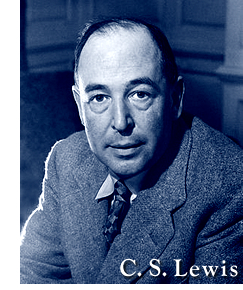
C.S. Lewis Daily – Today’s Reading


TO VERA GEBBERT, who had told Lewis of her pregnancy and of her having read Isaiah 66:9 from the Bible she kept open on her dining table: On not wishing to be pregnant.

23 March 1953

Your first story (about mistaking [your pregnancy] for seasickness) is one of the funniest I ever heard. In our country there are usually alterations of shape which would throw grave doubts on the sea-sick hypothesis!…but no doubt you manage things better in America. Any way, congratulations and encouragements. As to wishing it had not happened, one can’t help momentary wishes: guilt begins only when one embraces them. You can’t help their knocking at the door, but one mustn’t ask them in to lunch. And no doubt you have many feelings on the other side. I am sure you felt as I did when I heard my first bullet, ‘This is War: this is what Homer wrote about.’ For, all said and done, a woman who has never had a baby and a man who has never been either in a battle or a storm at sea, are, in a sense, rather outside—haven’t really ‘seen life’—haven’t served. We will indeed have you in our prayers.

Now as to your other story, about Isaiah 66? It doesn’t really matter whether the Bible was open at that page thru’ a miracle or through some (unobserved) natural cause. We think it matters because we tend to call the second alternative ‘chance.’ But when you come to think of it, there can be no such thing as chance from God’s point of view. Since He is omniscient His acts have no consequences which He has not foreseen and taken into account and intended. Suppose it was the draught from the window that blew your Bible open at Isaiah 66. Well, that current of air was linked up with the whole history of weather from the beginning of the world and you may be quite sure that the result it had for you at that moment (like all its other results) was intended and allowed for in the act of creation. ‘Not one sparrow,’ you know the rest [Matthew 10:29]. So of course the message was addressed to you. To suggest that your eye fell on it without this intention, is to suggest that you could take Him by surprise. Fiddle-de-dee! This is not Predestination: your will is perfectly free: but all physical events are adapted to fit in as God sees best with the free actions He knows we are going to do. There’s something about this in Screwtape.

Meanwhile, courage! Your moments of nervousness are not your real self, only medical phenomena. All blessings.

From The Collected Letters of C.S. Lewis, Volume III

Compiled in Yours, Jack