Max Lucado – Give God Your Whispering Thoughts


In the 19th century an anonymous Russian monk set out to live in unceasing communion with God. In a book entitled, “The Way of the Pilgrim,” he tells of having one prayer constantly in his mind: “Lord Jesus Christ, Son of God, have mercy on me, a sinner.” The prayer became so internalized he constantly prayed it.

Perhaps you and I should take note. By the time your life is over, you will have spent six months at stoplights, a year and a half looking for lost stuff (double that number in my case) and a whopping five years standing in lines. Why don’t we give these moments to God? Simple phrases like, “Thank you, Father.” “Be sovereign in this hour, O Lord.” “You are my resting place, Jesus.” Just pray where you are. Let the kitchen or the office became a cathedral or the classroom a chapel. Give God your whispering thoughts!

From Just Like Jesus

For more inspirational messages please visit Max Lucado.

Home

Denison Forum – Seven arrested in London terrorist attack

The world has witnessed what British Prime Minister Theresa May is calling “a sick and depraved terrorist attack.” CNN reports this morning that authorities have now arrested seven people in connection with the deadliest terror attack in central London in twelve years.

Just before 2:45 PM GMT yesterday, while the House of Commons was debating a proposal regarding Scottish independence, a silver Hyundai 4×4 veered from the roadway of Westminster Bridge. The narrow sidewalk where the Thames flows under the “Big Ben” clock tower was crowded with tourists and office workers. The terrorist drove into the crowd; witnesses reported that the impact threw two bodies into the Thames.

The driver then smashed into the iron railings near the base of the clock tower and got out of the vehicle carrying a large knife. He repeatedly stabbed police officer Keith Palmer, killing him. An armed policeman then shot and killed the attacker.

A woman from Spain and a man in his mid-fifties were killed. Twenty-nine people were hospitalized; seven are in critical condition. Among the injured was a group of French schoolchildren.

The attack came on the one-year anniversary of the Brussels bombings that killed thirty-two people. Police say they know the assailant but have not released information about him as of this morning. They believe, however, that he was “inspired by international terrorism.”

We can now add London to the recent list of vehicular attacks, along with Nice, France; Berlin, Germany; Ohio State University; and Jerusalem. ISIS and al Qaeda have called on their followers to use trucks and weapons to “mow down the enemies of Allah.”

Why do jihadists see tourists on a London sidewalk as their enemies?
Continue reading Denison Forum – Seven arrested in London terrorist attack

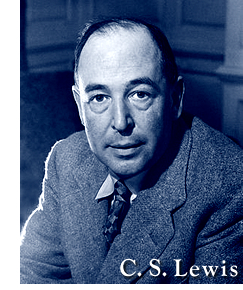
C.S. Lewis Daily – Today’s Reading

TO MARY WILLIS SHELBURNE: On disagreeable, nasty people; and on avoiding obsessing about their bullying.

10 March 1954

I am sorry things are not better. I am very puzzled by people like your Committee Secretary, people who are just nasty. I find it easier to understand the great crimes, for the raw material of them exists in us all; the mere disagreeableness which seems to spring from no recognisable passion is mysterious. (Like the total stranger in a train of whom I once asked ‘Do you know when we get to Liverpool’ and who replied ‘I’m not paid to answer your questions: ask the guard’). I have found it more among boys than anyone else. That makes me think it really comes from inner insecurity—a dim sense that one is Nobody, a strong determination to be Somebody, and a belief that this can be achieved by arrogance. Probably you, who can’t hit back, come in for a good deal of resentful arrogance aroused by others on whom she doesn’t vent it, because they can. (A bully in an Elizabethan play, having been sat on by a man he dare not fight, says ‘I’ll go home and beat all my servants’). But I mustn’t encourage you to go on thinking about her: that, after all, is almost the greatest evil nasty people can do us—to become an obsession, to haunt our minds. A brief prayer for them, and then away to other subjects, is the thing, if one can only stick to it. I hope the other job will materialise. . . .

Continue reading C.S. Lewis Daily – Today’s Reading

Charles Stanley –Inadequacy as a Blessing


2 Corinthians 3:1-6

Inadequacy can be a roadblock to doing the Lord’s will—it can deter us from stepping out in faith to accomplish what God calls us to do. It’s no sin to feel insufficient, but we can transgress by not attempting to overcome that attitude. In contrast, a right response to shortcomings can turn inadequacy to blessing.

Even the apostle Paul felt inadequate, but he didn’t allow his feelings to hold him prisoner and prevent his sharing the gospel. (See 1 Tim. 1:15-16.) Instead, he allowed recognition of his limitations to drive him closer to God. For believers, the correct reaction is more prayer and biblical meditation so that our reliance upon the Lord strengthens. As we shed the burden of relying on our own strength, we become motivated to work in the power of the Holy Spirit.

God’s Spirit enables us to achieve whatever it is we are called to do. The disciples followed Jesus for years, but His final instructions left no doubt concerning their limitations: Go and tell the world about Me after you have received the Spirit’s power (Acts 1:4-8). Jesus’ disciples were inadequate, too.

But our inadequacy enables God to demonstrate the great things He can do with so little. Remember that Moses and David were mere shepherds, and Gideon was least among Israel’s men (Judg. 6:15), yet the Lord accomplished amazing feats through them.

Our inadequacy can turn out to be a blessing by driving us into a stronger relationship with God. We can say with Paul, “I will rather boast about my weaknesses, so that the power of Christ may dwell in me” (2 Cor. 12:9).

Bible in One Year: Ruth 3-4


http://www.intouch.org/

Our Daily Bread — What Are You Known For?

Read: Hebrews 11:23–28

Bible in a Year: Joshua 10–12; Luke 1:39–56

[Moses] regarded disgrace for the sake of Christ as of greater value than the treasures of Egypt, because he was looking ahead to his reward.—Hebrews 11:26

A memorial stone stands in the grounds of a former Japanese prison camp in China where a man died in 1945. It reads, “Eric Liddell was born in Tianjin of Scottish parents in 1902. His career reached its peak with his gold medal victory in the 400 metres event at the 1924 Olympic Games. He returned to China to work in Tianjin as a teacher. . . . His whole life was spent encouraging young people to make their best contributions to the betterment of mankind.”

In the eyes of many, Eric’s greatest achievement was on the sports field. But he is also remembered for his contribution to the youth of Tianjin in China, the country where he was born and that he loved. He lived and served by faith.

What will we be remembered for? Our academic achievements, job position, or financial success may get us recognized by others. But it is the quiet work we do in the lives of people that will live long after we are gone.

Moses is remembered in the faith chapter of the Bible, Hebrews 11, as someone who chose to align himself with the people of God instead of enjoying the treasures of Egypt (v. 26). He led and served God’s people by faith. —C. P. Hia

Ask God to show you how you can make a difference in the lives of others. For what would you like to be remembered?

Faithfulness to God is true success.

INSIGHT: Hebrews 11 remembers a group of men and women who were a lot like us. They all had their flaws. Yet all of them are referred to as people of faith who eventually were made “perfect”—“together with us” (v. 40). Why would the author of Hebrews remember people like Moses, Rahab, and David as being people of faith who became perfect together with us? Part of the answer is that the letter to the Hebrews sees Jesus as the Savior who offers sinners like us perfect (complete, full, and restored) relationship and total forgiveness and reconciliation with God. In other words, Jesus offers His own perfect standing with the Father to all who put their faith in Him. A deeply flawed Moses is remembered for his faith in the God who gives us a heart for others by showing how much we are loved. Mart DeHaan


http://www.odb.org

Ravi Zacharias Ministry – Gaining Consciousness

The line between real and imagined is sometimes a little blurry. At least this is the conclusion of one report on the business of cyberspace, where thousands of people have imaginary lives and quite a few are actually making a living at it. The creators of several popular online role-playing games completed a year-long study of the very real transactions that are taking place in their imaginary worlds. The results portray a flourishing economy that is rapidly grabbing advertisers’ attention. The sellers are role players who have taken the time to find marketable goods in their virtual worlds—and they are clearly putting in the time. In one popular game, a gnome is sold with a basic skill set for $214; in another, a virtual cherry dining set for a virtual home runs about 250 actual dollars. Between June 2005 and June 2006, 9,042 role players spent $1.87 million dollars on virtual goods from swords to special powers. According to analyst estimates for 2015, U.S. virtual goods revenue alone will top $1 billion and could even rake in over $2 billion.

It is entertainment I don’t claim to fully understand. But it is fascinating (and maybe worrisome) to see how seamless the real and the virtual can become. Of course, this is a reality that runs through far more than worlds of online gaming. The imagination is always at work in the way we see the world itself; this is both instinctive and instructive. Moreover, to note that something is imaginary is not to dismiss it as void of truth or reality. Fans of Bill Watterson’s Calvin and Hobbes cartoon remember significant lines of truth coming from a stuffed tiger. Yet, there are also times that what is not real can become so intertwined with what is real that we scarcely notice a difference. That is, until something real reminds us otherwise—like a jolt of consciousness, an outsider’s perspective, or a credit card receipt.

The Hebrew prophet Jonah was a prophet by profession. He knew the liturgy and worship of the people of Israel by heart. So it is not unreasonable that as his life was ebbing away in the depths of the sea, Jonah would cry out with the words of a psalm he had heard countless times before. And yet, the words no doubt had a depth of meaning for him unlike anything he had known before. As he was losing consciousness—literally in Hebrew, “in the feebleness of his person,”—Jonah not only remembered God by name, but in some ways was seeing God for the first time. Like one awakened to enmeshed worlds both real and unreal, Jonah quickly clung to what was real.

Continue reading Ravi Zacharias Ministry – Gaining Consciousness

Joyce Meyer – Building Bridges, Not Walls

For He is [Himself] our peace (our bond of unity and harmony). He has made us both [Jew and Gentile] one [body], and has broken down (destroyed, abolished) the hostile dividing wall between us.- Ephesians 2:14

One day while I was praying, the Holy Spirit showed me that my life had become a bridge for others to pass over and find their place in God. For many years, I erected only walls in my life; but now where there were walls, there are bridges instead. All the difficult and unfair things that have happened to me have been turned into highways over which others can pass to find the same liberty that I have found. I have learned to build bridges instead of walls.

In Hebrews 5:9 Jesus is referred to as “the Author and Source of eternal salvation.” He pioneered a pathway to God for us. He became a highway for us to pass over. It is as though He faced a giant forest and went in ahead of us so that when we came along we could drive right through it without having to fight all the elements and the density of the forest. He sacrificed Himself for us; and now that we are benefiting from His sacrifice, He is giving us a chance to sacrifice for others so they can reap the same benefits we enjoy.

Hebrews 12:2 says that Jesus endured the cross for the joy of obtaining the prize that was set before Him. I like to remind myself of that fact when the way seems hard. I tell myself, Keep pressing on, Joyce. There is joy ahead.

Make a decision to tear down your walls and build bridges. There are many, many people who are lost in their messes and need someone to go before them and show them the way. Why not be that person for them? Walls or bridges? The choice is yours.

From the book New Day, New You by Joyce Meyer.


http://www.joycemeyer.org

Campus Crusade for Christ; Bill Bright – How to Gain Understanding

“For ever, O Lord, Thy Word is settled in heaven. Thy faithfulness is unto all generations” (Psalm 119:89,90, KJV).

A story is told of a young woman who had been informed about a famous novel. She was interested in reading it, but as she began to read the novel, she found it dry and uninteresting. She would put it down to read something else, and then she would come back and try to read it again because her friends said it was an excellent book.

Even with the high recommendations of her friends, the book just did not captivate her. Then one day she met the author. He was very handsome and personable. They became interested in each other, and she fell in love with him.

Now she could hardly wait to read the novel. It was the most exciting book she had ever read, for she had fallen in love with the author.

This is what happens with the Scriptures when we love the Author, the Lord Jesus Christ.

During my years of skepticism and agnosticism, I found the Bible very dry and difficult to read and I believed it was filled with “all kinds of errors and inconsistencies.” Then after becoming a Christian I began to read the Bible again. It was a completely different book, filled with exciting, life-changing truth. All the “errors and contradictions” were gone.

Why the difference? The non-believer or disobedient Christian does not understand spiritual truth (1 Corinthians 2:14). The Spirit-filled believer is taught by the Holy Spirit, who illumines the truth which He revealed to the original authors as recorded in the Bible.

Bible Reading: Psalm 119:129-136

TODAY’S ACTION POINT:  I will ask God to give me a love for His holy, inspired Word. Then things that happen in my life which I do not understand will be made clear as I go to the source of all true understanding, the Word of God.


http://www.cru.org

Max Lucado – Working With God

It’s a wonderful day indeed when we stop working for God and begin working with God! For years I viewed God as a compassionate CEO and my role as his loyal sales representative. He had his office and I had my territory. I could contact him whenever I wished. He encouraged me, rallied behind me, and supported me, but he didn’t go with me. At least I didn’t think he did.

Then I read 2 Corinthians 6:1 that says, “We are God’s fellow-workers.” Fellow workers? Co-laborers? God and I work together? Rather than report to God, we work with God. Rather than check in with him and then leave, we check in with him and then follow. We are always in the presence of God. There is never a nonsacred moment! His presence never diminishes. Our awareness of his presence may falter, but the reality of his presence never changes!

From Just Like Jesus

For more inspirational messages please visit Max Lucado.


Home

Denison Forum – One-legged wrestler seeks state title

Today’s headlines are dominated by Judge Neil Gorsuch’s nomination hearings and the ongoing debate over health care. Meanwhile, an unusual high school wrestler interests me so much that I’d like to focus on his story this morning.

“He’s been very vocal about his goals: wrestling in a national championship, becoming an NCAA champ, not just a state champ.” That’s how Kobey Pritchard’s wrestling coach describes his protégé’s motivation in the Iowa state wrestling tournament. What makes Pritchard different from his competitors? He wrestles without a left leg.

Kobey was five years old when he was diagnosed with Ewing’s sarcoma in his left femur. Doctors removed the leg when he was six. Now he’s ranked number four in the state in his weight class. His drive and determination are inspiring his teammates and his fellow competitors.

In other news, Norway has taken over the top spot in the World Happiness Report. This despite the fact that oil, a key part of its economy, has plummeted. What accounts for Norway’s happiness? The report’s lead author explains: “It’s the human things that matter. If the riches make it harder to have frequent and trustworthy relationship between people, is it worth it? The material can stand in the way of the human.”

Martin E. P. Seligman is a psychology professor at the University of Pennsylvania and author of the bestseller, Authentic Happiness. Dr. Seligman describes three kinds of “work orientation”: a job, a career, and a calling.

A job earns you a paycheck and nothing more. A career entails a deeper personal investment in your work. But a calling is a passionate commitment to work for its own sake. According to Dr. Seligman, finding your “calling” is the key to authentic happiness.

Continue reading Denison Forum – One-legged wrestler seeks state title

Charles Stanley –Inadequacy as a Barrier


Ephesians 3:14-21

Do you ever feel unequal to the task God has set in front of you? At times, all of us struggle with such feelings because certain responsibilities appear to be bigger than one human being is able to accomplish. Problems can develop when we wear inadequacy like a cloak in order to protect ourselves from doing the Lord’s work. We sometimes try to convince ourselves that a task is too great or that God expects too much.

When this is the case, we might be tempted to turn away from some tremendous God-given opportunities. For example, sometimes the Lord provides a situation that is just right for sharing the good news of Christ with a coworker, family member, or acquaintance. But how often do we back off and end up squandering such opportune moments because we’re afraid we won’t know what to say?

Inadequacy grows out of fear—specifically, fear of failure and of not meeting people’s expectations. No matter how unqualified we feel, apprehension is not an acceptable excuse for avoiding responsibility. The truth is, even if a Christian feels incapable of accomplishing some of the awesome tasks God calls him to do, the Holy Spirit is more than adequate! As believers, we do not have to possess perfect qualifications or skills; we need only to be willing.

What have you refused to do for the Lord because you feel inadequate? 2 Timothy 1:7 tells us that God has given us a spirit of power, not one of timidity. All the believer has to do is step out in faith; the Holy Spirit’s strength and courage will be there to meet us.

Bible in One Year: Ruth 1-2


http://www.intouch.org/

Our Daily Bread — Refreshing Spring Rains

Read: Hosea 6:1–4

Bible in a Year: Joshua 7–9; Luke 1:21–38

He will come to us like the . . . spring rains that water the earth.—Hosea 6:3

Needing a break, I went for a walk in the nearby park. As I headed down the path, a burst of green caught my attention. Out of the mud appeared shoots of life that in a few weeks would be cheerful daffodils, heralding spring and the warmth to come. We had made it through another winter!

As we read through the book of Hosea, it can feel in parts like an unrelenting winter. For the Lord gave this prophet the unenviable task of marrying an unfaithful woman as a picture of the Creator’s love for His people Israel (1:2-3). Hosea’s wife, Gomer, broke their wedding vows, but Hosea welcomed her back, yearning that she would love him devotedly (3:1-3). So too the Lord desires that we love Him with a strength and commitment that won’t evaporate like the morning mist.

How do we relate to God? Do we seek Him mainly in times of trouble, searching for answers in our distress but ignoring Him during our seasons of celebration? Are we like the Israelites, easily swayed by the idols of our age, including such things as busyness, success, and influence?

Today, may we recommit ourselves to the Lord, who loves us as surely as the flowers bud in the spring. —Amy Boucher Pye

Lord Jesus, You gave Yourself that we might be free. Help us to love You wholeheartedly.

Though we may be unfaithful to God, He will never turn from us.

INSIGHT: The message of the prophet Hosea is as powerful as it is persistent. His book is situated first among the Minor Prophets and is one of the oldest books in this section of the Scriptures. Hosea lived and ministered in the northern kingdom about a generation before the Assyrian captivity in 722 bc. The message of Hosea mirrors the message of the entire Bible. By commanding Hosea to marry a prostitute, endure her unfaithfulness, and buy her back out of her life of prostitution, God illustrates for Israel His message of love, mercy, and forgiveness. God’s offer of redemption despite our waywardness permeates all of Scripture. How does knowing that God offers redemption despite our sin encourage you? Discover how Hosea’s life mirrored God’s message to His people. Listen to discovertheword.org/2012/05/23/discover-how-hoseas-life-mirrored-gods-message-to-his-people. Dennis Moles


http://www.odb.org

Ravi Zacharias Ministry – Silent Places

Living in cities, as more and more people do all over the world, means that noise is a constant audio backdrop. The din of human, auto, and airplane traffic all make for a constant, loud cacophony. Add to this the stereo, television, and computer noise and it is a miracle we can attune our ears to hear anything that isn’t artificially created. From time to time, I turn off all the extraneous sounds in my world and listen. Intentional listening opens up a whole new world of sounds around me. I hear the wind chimes by my front door, the tapping of my fingers across the keyboard of my computer, the soft patter of my dogs’ feet as they walk across the hardwood floor above me, the screaming and laughter of children at play across the street, and the distinctive sounds of a variety of birds as they go about foraging for food or calling for a mate.

According to audio-ecologist, Gordon Hempton, it’s not easy to find silence in the modern world. “If a quiet place is one where you can listen for 15 minutes in daylight hours without hearing a human-created sound, there are no quiet places left in Europe. There are none east of the Mississippi River. And in the American West? Maybe 12.”(1) We live in a noisy world.

Most people assume that silence is the absence of noise, but it is not. Hempton continues, “For true silence is not noiselessness… silence is the complete absence of all audible mechanical vibrations, leaving only the sounds of nature at her most natural. Silence is the presence of everything, undisturbed.”(2) I remember one of these silent places Hempton describes. High in the North Cascade Mountains, my brother and I heard no other human noise, and few bird or animal noises. Our constant soundscape came from the trickling of a nearby brook and the gentle wind as it danced around us.

Being able to hear the sounds of nature is an unexpected and often rare gift in a world bombarded by artificial noise. Of course, it is often the case that I use noise as a distraction from truly listening. I drown out the silence by my own busyness, filling my day with constant movement and activity, so that I rarely take the time to pay attention, and to tune my ears not only to the sound around me, but also to the stirrings of my own heart and mind. In all honesty, sometimes I am afraid of what I might hear if I do truly listen.

Of course, paying attention in silence is not always as benevolent or delightful as hearing the natural sounds around us. Keeping silence intentionally reminds us of our smallness in a vast universe, and brings to light many of our deepest and darkest thoughts and feelings. When we clear our ears of external noise, we hear our own thoughts. Many thoughts that arise in silent spaces are ugly, distorted, and grave. Listening in silence exposes our pretense and self-righteousness, our falsehoods, hypocrisy and self-importance. There is little room to hide. We are left with ourselves in all our brokenness.

Continue reading Ravi Zacharias Ministry – Silent Places

Joyce Meyer – Grateful and Aware of God’s Love


Praise the Lord! (Hallelujah!) O give thanks to the Lord, for He is good; for His mercy and loving-kindness endure forever! – Psalm 106:1

God is always good to us, always faithful to us, always working so diligently in our lives. He is always doing something for us and acting in our best interest, so we need to respond by letting Him know we appreciate His abundant goodness.

For example, “Lord, thank You for a good night’s sleep,” or “God, I thank You that my visit to the dentist didn’t hurt as much as I thought it might,” or “Father, thank You for helping me make good decisions today,” or “Lord, thank You for keeping me encouraged.”

We can thank God silently in our hearts, and we can also voice our thankfulness aloud because that helps us stay conscious and aware of God’s love, which He demonstrates through His goodness to us.

Prayer of Thanks I thank You, Father, that You are always faithful to me. Even when I can’t see it, You are working on my behalf because You love me and You have a great plan for my life. Thank You for all the ways You demonstrate that love on a daily basis.

From the book The Power of Being Thankful by Joyce Meyer.


http://www.joycemeyer.org

Campus Crusade for Christ; Bill Bright – God Answers While We Are Praying

“So don’t worry at all about having enough food and clothing. Why be like the heathen? For they take pride in all these things and are deeply concerned about them. But your heavenly Father already knows perfectly well that you need them, and He will give them to you if you give Him first place in your life and live as He wants you to” (Matthew 6:31-33).

Whenever God impresses you with a need, you can always be assured that He will supply that need, often through others.

I remember the first time I asked God for a specific amount of money. We needed $485 for a particular ministry. While I was still on my knees in prayer, there came a knock at the door and the mailman handed me a registered letter containing a check for $500. Earlier, a young man from Zurich, Switzerland, had written his parents that he had received Christ through our ministry at UCLA, and he mentioned my name as one who had helped him. His parents and their daughter had then flown all the way from Zurich to California to learn how they also could become Christians. God honored their desire and after prayer and counsel they had gone home rejoicing in the assurance of their salvation. Now they were writing and sending this generous check to express their gratitude.

Later, we needed $10,000 and God impressed us to pray for that amount. An hour after we prayed, a man whom I did not know well called to say, “I am a new Christian, and I don’t know how God speaks to man, but you have been on my mind all day, so I thought it might be that God was trying to tell me something. I thought I would just call to see if you have a need.”

I told him we had just prayed for $10,000. He said, “That’s a lot of money, but I’ll call you back in an hour.”

An hour later he called to say he would send a check the next day for $10,000 as a loan without interest. He added, “If God continues to bless me and my business, I will give you the money.”

God greatly blessed his faith and obedience, and a year later the loan became a gift. God has graciously demonstrated His faithfulness on thousands of occasions and often in even greater ways.

For those who seek first God’s kingdom, He promises, “I will answer them before they even call Me. While they are still talking to Me about their needs, I will go ahead and answer their prayers” (Isaiah 65:24). If our hearts and motives are pure and we seek always to please Him in what we do, we can never ask Him for too much. We can always be assured that our faithful God will answer us as we pray in accordance with His Word and Will.

Bible Reading: Matthew 6:24-33

TODAY’S ACTION POINT:  I will remember the faithfulness of God, that so long as my heart and my motives are pure and I pray according His Word and will, He will hear me and answer me even before I pray.


http://www.cru.org

Max Lucado – Let God Love You

When my daughters were crib-size and diaper laden, I would come home, shout their names and they’d run to me with extended arms and squealing voices. We’d roll on the floor, tickle tummies and laugh and play. Their only request of me was, “Let’s play, Daddy.” And I made no demands of them, except, “Don’t hit Daddy with the hammer.” My kids let me love them.

But suppose they had approached me as we often approach God. “Hey, Dad, glad you’re home. Here’s what I want!” And I would have wanted to say, “Why don’t you just climb up on Daddy’s lap and let me tell you how much I love you?”

Ever thought God might want to do the same with you? Oh, he wouldn’t say that to me. He wouldn’t? How long has it been since you let him try? Just let God love you.

From Just Like Jesus

For more inspirational messages please visit Max Lucado.

Home

Denison Forum – John Adams on Neil Gorsuch hearings

Judge Neil Gorsuch began his confirmation hearings yesterday as he and the Senate Judiciary Committee members made their opening statements. The committee will begin questioning the nominee today.

Whether Judge Gorsuch deserves to be confirmed is not the question for Republicans and many Democrats. As I noted when President Trump nominated him, he seems imminently qualified to sit on the Supreme Court. The larger question has little to do with the judge and everything to do with the state of our culture.

Many Democrats are still furious that Republicans refused to act on President Obama’s earlier nominee; in their view, this was a seat their party should have filled. Others are mindful that Judge Gorsuch would replace Antonin Scalia, preserving the present ideological balance of the Court. Since three of the current justices are in their eighties, Democrats may wait to contest future Trump nominations. And several Democratic senators serve states that voted for Mr. Trump in the election; their political futures may be in jeopardy if they oppose Judge Gorsuch.

Meanwhile, Senate Republicans need eight Democrats to side with their fifty-two-seat majority to reach the sixty-vote threshold required to confirm the nominee. If not enough Democrats support Judge Gorsuch, or if the Democrats threaten to filibuster the proceedings, the Republicans can waive the sixty-vote minimum and confirm the nominee by a simple majority. But this so-called “nuclear option” could damage any hopes of bipartisan cooperation on other issues.

In thinking about the partisan divisiveness on display this week, I was drawn to the prescient observations of John Adams, our second president. He wrote in 1789, “There is nothing which I dread so much as a division of the republic into two great parties, each arranged under its leader, and concerting measures in opposition to each other. This, in my humble apprehension, is to be dreaded as the greatest political evil under our Constitution.”

The fact that we have a “democracy” (“power of the people”) does not exempt us from political dysfunction. Mr. Adams: “It is vain to say that democracy is less vain, less proud, less selfish, less ambitious, or less avaricious than aristocracy or monarchy. . . . Those passions are the same in all men, under all forms of simple government, and when unchecked, produce the same effects of fraud, violence, and cruelty.”

What is the solution?

Continue reading Denison Forum – John Adams on Neil Gorsuch hearings

Charles Stanley –Blessed to Bless Others


2 Corinthians 9:6-15

God’s blessings to us are not meant to end with us. His desire is that they filter down to others. This principle applies in all areas of our life, including our finances. Did you know that our heavenly Father has plans for our money? God’s children generally want to discover what His will is for their life, but so often they fail to consult Him about His desires for their paycheck.

The Lord graciously supplies us with income so we can provide for our needs and even some of our desires. But He also wants us to use our money to achieve His purposes. And one of His goals is that we share our resources with others. If we decide in our heart to participate in His plans, He commits to provide all we need to live and to share.

Just look at His extravagant promise in 2 Corinthians 9:8: “And God is able to make all grace abound to you, so that always having all sufficiency in everything, you may have an abundance for every good deed” (emphasis added). This encouraging scripture is a good reminder that sharing blessings with others will never lead to deprivation. In fact, the Lord promises to increase the harvest of our righteousness and enrich us in everything in response to our generosity. We can never outgive God.

A hoarded blessing is never enjoyed as richly as a shared one. Using your gift to meet someone else’s need glorifies the Lord by demonstrating His grace at work in your life. Don’t allow His generous provisions to end with you. Pass them on to others and discover the joy of a never-ending cycle of blessings.

Bible in One Year: Judges 20-21


http://www.intouch.org/

Our Daily Bread — Running and Rest


Read: Mark 6:30–46

Bible in a Year: Joshua 4–6; Luke 1:1–20

[Jesus] said to them, “Come with me by yourselves to a quiet place and get some rest.”—Mark 6:31

The headline caught my eye: “Rest Days Important for Runners.” In Tommy Manning’s article, the former member of the U.S. Mountain Running Team emphasized a principle that dedicated athletes sometimes ignore—the body needs time to rest and rebuild after exercise. “Physiologically, the adaptations that occur as a result of training only happen during rest,” Manning wrote. “This means rest is as important as workouts.”

The same is true in our walk of faith and service. Regular times of rest are essential to avoid burnout and discouragement. Jesus sought spiritual balance during His life on Earth, even in the face of great demands. When His disciples returned from a strenuous time of teaching and healing others, “He said to them, ‘Come with me by yourselves to a quiet place and get some rest’” (Mark 6:31). But a large crowd followed them, so Jesus taught them and fed them with only five loaves and two fish (vv. 32-44). When everyone was gone, Jesus “went up on a mountainside to pray” (v. 46).

If our lives are defined by work, then what we do becomes less and less effective. Jesus invites us to regularly join Him in a quiet place to pray and get some rest. —David McCasland

Lord Jesus, thank You for Your example of prayer alone with Your Father. Give us wisdom and determination to make rest a priority as we follow You.

In our life of faith and service, rest is as important as work.


http://www.odb.org

Ravi Zacharias Ministry – Word and Image

The first time I remember hearing the metaphor “rain on your parade,” I was at a parade and it was raining. As a nine year old, the disappointment was memorable. To this day, when I hear the metaphor used, it conveys with heightened success all that the phrase is meant to convey—and arguably more. I remember standing in the rain, watching the once-solid crowd dwindling to nothing, the marching bands abandoning their neat rows, the bright floats bleeding in color. The optimistic few remained in their chairs, somehow assured that the show would go on despite all evidence to the contrary. But we were not among the faithful few. “I’m sorry that it rained on your parade,” my grandpa said smiling at the perfect metaphor as we piled in the car, soggy and dispirited. With half a parade to remember, we went home, our enthusiasm thoroughly overshadowed by the rain.

We are mistaken when we think of metaphor as an optional device used by poets and writers for fluff and decoration. Much of life is communicated in metaphor. There is so much more to time’s landscape than often can be described plainly. Metaphorical imagery is unavoidable for even the plainest of speakers. When I say to my colleague, “Your words hit home” or “I am moved by your message” I don’t mean that her words are reaching out of her book and patting me on the head. And yet, in a way, I do. What she had to say made an impression, opened my mind, and struck a chord; communicating so without metaphor is nearly impossible. It is the case for much of what we have to say: there is no other way to say it.

Language seems to recognize that there is something about life that makes metaphor necessary. Words in and of themselves fall short of conveying certain truths and intended meanings, so instead we draw pictures with language.

Continue reading Ravi Zacharias Ministry – Word and Image