Charles Stanley – Maintaining a Quiet Spirit


Proverbs 26:4

When conflict arises, we oftentimes want to rush in and defend our position. Perhaps we even feel justified in blaming others. However, James 1:19 gives different advice for dealing with tension and disputes: “Be quick to hear, slow to speak and slow to anger.” In other words, more can be accomplished through a calm approach to the situation. Scripture also suggests that we …

Pray. First, we should ask the Lord to guard our mouth and give us the right words to say (Luke 12:12). Also, we ought to request discernment with regard to the root issue and insight as to whether we might be at fault.

See with divine perspective. Our sovereign Lord works every situation for the believer’s benefit (Rom. 8:28). Not only does God use difficulties to teach us, but He also allows us to demonstrate the life of Christ by the way we respond.

Forgive. Even if someone has hurt us by causing the conflict, we should forgive. Jesus died to pardon all of our sin, and we, in turn, should forgive others. In fact, if we don’t, our lives will become burdened by resentment and broken relationships.

Respond. If we have done something wrong, we must apologize and ask forgiveness. We should express appreciation that the other person took time to share his concern. Then we ought to acknowledge his feelings and carefully consider his comments.

How do you respond to conflict? Pray for the strength to stay calm and do what is right­—even during difficult, emotional situations.

Bible in One Year: Judges 4-6


http://www.intouch.org/

Our Daily Bread — Giving the Gift of Prayer


Read: Romans 8:28–34 | Bible in a Year: Deuteronomy 23–25; Mark 14:1–26

You help us by your prayers. 2 Corinthians 1:11

“I didn’t realize what a gift prayer was until my brother was sick and you all prayed for him. I cannot tell you what a comfort your prayers were!”

Laura had tears in her eyes as she thanked me for the prayers of the people in our church for her brother, who was facing a cancer diagnosis. She continued, “Your prayers have strengthened him in this difficult time and have been an encouragement to our entire family.”

Prayer is a gift to be shared.

One of the best ways to love others is to pray for them. Jesus is our ultimate example in this. The New Testament tells us about Jesus praying for others on many occasions, and even shows us that He continues to come to the Father on our behalf. Romans 8:34 says that He “is at the right hand of God and is also interceding for us.” Even after showing such selfless love at the cross, the risen and ascended Lord Jesus Christ continues to express His care for us by praying for us at this very moment.

All around us are people who need us to follow Jesus’s example and love them with our prayers, inviting God’s help and intervention in their lives. We can ask God to help us pray for them, and He will! May our loving Lord strengthen us to generously give the gift of our prayers for others today.

Thank You, Lord Jesus, for praying for me. Help me to serve You and others through faithfully praying today.

Prayer is a gift to be shared.

By James Banks

INSIGHT

Both the Spirit and the Son are interceding (praying) for us. The Spirit helps us when we don’t know how to pray, praying for us according to the will of God (Romans 8:26–27). Likewise the Son is interceding for us from “the right hand of God” (v. 34). How wonderful to know that two of the three members of the Trinity are praying for us!

But what about the Father? It is the Father who calls us to be part of His family (vv. 29–30). It is out of His love for us that He sent His Son to die for our sins and then raised Him to life so that we would one day be glorified and given all things (vv. 32–33). It is in the love of God that the Spirit and the Son pray for us.

Since God’s love motivates prayers on our behalf, to whom can you show love by praying for them?

J.R. Hudberg


http://www.odb.org

Ravi Zacharias Ministry – Ex Cruciatus

There is a striking verse in the New Testament, in which the apostle Paul refers to the cross of Jesus Christ as foolishness to the Greek and a stumbling block to the Jew. One can readily understand why he would say that. After all, to the Greek mind, sophistication, philosophy, and learning were exalted pursuits. How could one crucified possibly spell knowledge?

To the Jewish mind, on the other hand, there was a cry and a longing to be free. In their history, they had been attacked by numerous powers and often humiliated by occupying forces. Whether it was the Assyrians or the Babylonians or the Romans, Jerusalem had been repeatedly plundered and its people left homeless. What would the Hebrew have wanted more than someone who could take up their cause and altogether repel the enemy? How could a Messiah who was crucified possibly be of any help?

To the Greek, the cross was foolishness. To the Jew, it was a stumbling block. What is it about the cross of Christ that so roundly defies everything that power relishes? Crucifixion was humiliating. It was so humiliating that the Romans who specialized in the art of torture assured their own citizenry that a Roman could never be crucified. But not only was it humiliating, it was excruciating. In fact, the very word “excruciating” comes from two Latin words: ex cruciatus, or out of the cross. Crucifixion was the defining word for pain.

Continue reading Ravi Zacharias Ministry – Ex Cruciatus

Joyce Meyer – Prudence


The wise in heart are called prudent, understanding, and knowing, and winsome speech increases learning [in both speaker and listener]. — Proverbs 16:21

A word we don’t hear much about today is prudence. It means “careful management: economy.”

In the Bible, prudence, or prudent, means “being good stewards or managers of the gifts God has given us to use.” Those gifts include time, energy, strength and health—even material possessions. They include our bodies, as well as our minds and spirits.

Just as each one of us has been given a different set of gifts, each of us has been given different levels of ability to manage those gifts.

Too many people burn themselves out, constantly using their gifts and abilities in ways that God did not intend them to. Instead of pushing ourselves too hard to please others or reach our own personal goals, we need to listen to God and do what He’s telling us is wise.

Trying to impress people and live up to their standards isn’t prudence. Prudence means asking God how He wants you to use your gifts and then obeying. Learn God’s prudence today and put it into practice so you can enjoy your life the way He intended.


http://www.joycemeyer.org

Campus Crusade for Christ; Bill Bright – Supernatural Wisdom – by Faith


“If you want to know what God wants you to do, ask Him, and He will gladly tell you, for He is always ready to give a bountiful supply of wisdom to all who ask Him; He will not resent it” (James 1:5).

Often – many times a day – I need divine wisdom, not only in the multitudes of decisions that I must make daily, but also in the witnessing situations the Lord brings across my path. No doubt you recognize a similar need in your life.

All I have to do to have His presence guide me, if my heart is right with Him, is to ask in faith, and He promises the wisdom I need for each day and for each moment of the day.

If we are going to live supernatural lives, and if we are going to demonstrate to others that they, too, can live such a life, then we must begin to think and act differently. And that is possible only as we go to the source of all divine wisdom.

This verse from Scripture assures us that God’s ear is always open to this kind of prayer. And of course the wisdom to which James refers is more than factual knowledge. It is the light of life, in which we can walk without stumbling.

Why does one need to pray to gain this wisdom? Perhaps because prayer is humbling and involves an acknowledgment of our inadequacy. Prayer opens our hearts and lives to the transforming influence of the Spirit of God.

Bible Reading:James 1:6-12

TODAY’S ACTION POINT:  Knowing that I need God’s wisdom if I am to serve Him effectively and please Him today, I will obey Him – and claim His supernatural work in my life – by asking for His wisdom when I face a decision.


http://www.cru.org

Max Lucado – The Winner’s Crown

Listen to Today’s Devotion

A crown awaits you in heaven.  We understand that in the economy of earth, there are a limited number of crowns. The economy of heaven, however, is refreshingly different.

The apostle Paul tells us heavenly rewards aren’t limited to a chosen few; but he writes in 2 Timothy 4:8, “all those who have waited with love for him to come again will receive a crown.” The three-letter word ALL is a gem! The winner’s circle isn’t reserved for a handful of the elite, but for a heaven full of God’s children.  James 1:12 describes them as children “who will receive the crown of life that God has promised to those who love him!”

From When Christ Comes

For more inspirational messages please visit Max Lucado.

Home

Denison Forum – Why Billy Graham’s greatest fear should be ours

Thousands of students, teachers, and supporters plan to walk out of schools today. Their action is intended as a memorial to those killed in the Parkland shooting and a call for stricter gun control laws.

In other news, world-famous physicist Stephen Hawking has passed away. President Trump fired Secretary of State Rex Tillerson. And absentee ballots are still being counted in a much-watched special election in Pennsylvania, though NBC News has declared Democrat Conor Lamb the apparent winner.

Any of these events are worthy of a Daily Article. But my attention has been drawn to a story few reporters are still following today. I’ll explain why.

“What was most surprising to us”

It’s been three weeks since Billy Graham died. In this time, there have been hundreds if not thousands of retrospectives published on “America’s Pastor.”

The most interesting one I have seen is an interview with Nancy Gibbs, one of America’s most perceptive journalists and former editor-in-chief of Time magazine. After reading her comments on the famous evangelist, I knew I needed to discuss them with you.

Continue reading Denison Forum – Why Billy Graham’s greatest fear should be ours

Should We Chill Out about Global Warming? – Scientific American


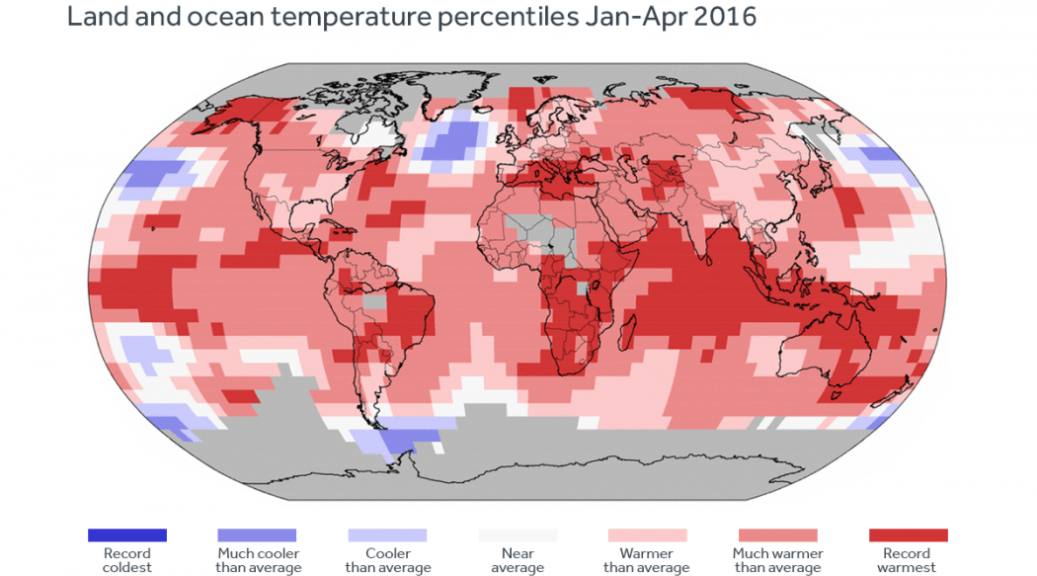
Two “ecomodernists” argue that continued progress in science and other realms will help us overcome environmental problems


I work hard to maintain my optimistic outlook. Wishful thinking works. The first step toward building a more healthy, peaceful, just world is to believe we can do it. So how do I deal with all the bad news about climate change? U.S. officials are rolling back regulations designed to curb global warming even as reports flood in about its scale and potential consequences.

I have thus found solace in two new essays that offer upbeat takes on our environmental future. Both reflect the outlook of ecomodernism, a movement I have written about here and here. One essay, published in the ecomodernist Breakthrough Journal, is by mega-pundit Steven Pinker. I have knocked Pinker for his views on the roots of war and other matters, but in general I appreciate his empirically-based optimism.

His Breakthrough essay, “Enlightenment Environmentalism,” is adapted from his new bestseller Enlightenment Now. The book, which been praised and attacked, argues that we’ve achieved lots of progress, material and moral, and we should achieve lots more as long as we don’t succumb to fatalism.

In his Breakthrough essay, Pinker spells out a key assumption of ecomodernism. Industrialization “has been good for humanity. It has fed billions, doubled lifespans, slashed extreme poverty, and, by replacing muscle with machinery, made it easier to end slavery, emancipate women, and educate children. It has allowed people to read at night, live where they want, stay warm in winter, see the world, and multiply human contact. Any costs in pollution and habitat loss have to be weighed against these gifts.”

Pinker contrasts the can-do ecomodernist spirit with “the lugubrious conventional wisdom offered by the mainstream environmental movement, and the radicalism and fatalism it encourages.” We can solve problems related to climate change, Pinker argues, “if we sustain the benevolent forces of modernity that have allowed us to solve problems so far, including societal prosperity, wisely regulated markets, international governance, and investments in science and technology.”

The bulk of Pinker’s essay consists of documentation of how we’ve handled environmental threats. We have reduced our rate of population growth; made agriculture, transportation and other key industries more energy-efficient; and increased the acreage of marine and terrestrial preserves. Here is a typical passage:

“Since 1970, when the Environmental Protection Agency was established, the United States has slashed its emissions of five air pollutants by almost two-thirds. Over the same period, the population grew by more than 40 percent, and those people drove twice as many miles and became two and a half times richer. Energy use has leveled off, and even carbon dioxide emissions have turned a corner. These diverging curves refute both the left-wing claim that only de-growth can curb pollution and the right-wing claim that environmental protection must sabotage economic growth and standard of living.”

My mood got an even bigger boost from “The Conquest of Climate” by Will Boisvert, a journalist I met at an ecomodernist powwow a few years ago. My first exposure to Boivert’s dry, iconoclastic sensibility was a 2013 Breakthrough Journal article, “A Locavore’s Dilemma,” which asserts that “the linkage of local farming to efficiency and sustainability is dubious.” Boisvert’s new essay, which he posted on his blog “Progress and Peril,” deserves to be widely read. It is even broader in scope than Pinker’s essay, and I found its analysis strikingly original. Boisvert begins:

“How bad will climate change be? Not very. No, this isn’t a denialist screed. Human greenhouse emissions will warm the planet, raise the seas and derange the weather, and the resulting heat, flood and drought will be cataclysmic. Cataclysmic—but not apocalyptic. While the climate upheaval will be large, the consequences for human well-being will be small. Looked at in the broader context of economic development, climate change will barely slow our progress in the effort to raise living standards.”

Boisvert examines four consequences of climate change: water shortages, food shortages, rising air temperatures and rising seas. He contends that the negative effects of climate change will be offset by continued progress in technology and other realms. As an example, he examines a 2016 Lancet study that predicted that by 2050 climate change will cause food shortages that result in 529,000 deaths each year.

The food shortages, Boisvert points out, “are relative to a 2050 baseline when food will be more abundant than now thanks to advances in agricultural productivity that will dwarf the effects of climate change.” Even factoring in climate change, the Lancet study calculates that per capita food consumption will be higher in 2050 than in 2010. Newsweek’s story on the Lancet study was nonetheless headlined, “Climate change could cause half a million deaths in 2050 due to reduced food availability.”

Boisvert comments: “A headline like ‘Despite climate change, rising food production will save millions of lives’ isn’t great click-bait, but it would give a truer picture of a future under global warming.” He adds: “Global warming won’t wipe us out or even stall our progress, it will just marginally slow ordinary economic development that will still outpace the negative effects of warming and make life steadily better in the future, under every climate scenario.”

I also like Boisvert’s discussion of water shortages. Claiming that a drought sparked Syria’s terrible civil war, greens warn that global warming could provoke “water wars.” Boisvert points out that the drought that struck Syria also affected Israel. He continues:

“Shortages forced Israel to tighten its already stringent water conservation and recycling standards. More importantly, they prompted breakthroughs in reverse-osmosis desalination technology, cutting by half the energy needed to extract fresh water from the sea and dramatically lowering the cost to just 58 cents per cubic meter (1,000 liters) of drinkable water… The implications of cheap desalination are profound. By tapping limitless sea-water resources it could drought-proof agriculture and thus eliminate the greatest threat posed by climate change.”

Boisvert notes that “when we think harder about the specific problems global warming poses—problems of water management, agricultural productivity, cooling and construction—the threat becomes less daunting. Our logistic and technical capacities are burgeoning, and they give us ample means of addressing these problems.”

Greens fear that optimism will foster complacency and hence undermine activism. But I find the essays of Pinker and Boisvert inspiring, not enervating. I plan to assign the essays to my students, who have become quite gloomy lately. These days, despair is a bigger problem than optimism.

Further Reading:

Climate Change: Facts Versus Opinions

Merchants of Doubt Author Slams “Corrosive” Climate Change Skepticism

Meta-Post: Horgan Posts on Climate Change, Nuclear Energy and Other Green Topics

By the Time Science Can Pin Hurricanes on Global Warming, Will It Be Too Late?

Are We Doomed to Wage Wars over Water?


Source: Should We Chill Out about Global Warming? – Scientific American Blog Network