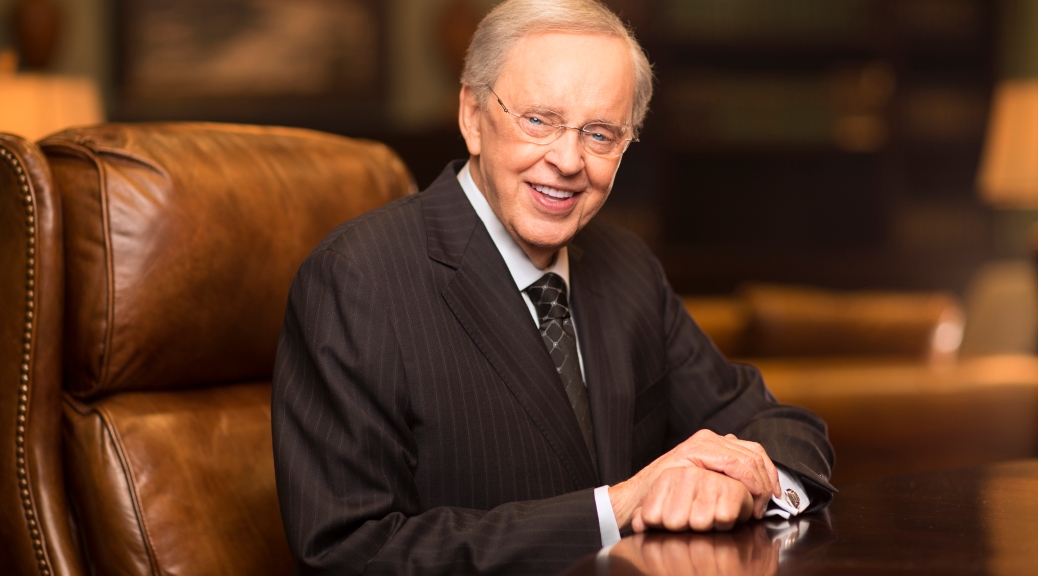
Charles Stanley – Our Merciful and Faithful High Priest


Hebrews 2:14-18

Sometimes when people are estranged, they need a mediator who comes between them to bring reconciliation. This is one way to think of the Old Testament priests. They stood between God and sinful man, offering sacrifices that would reconcile the two.

These earthly priests were a mere shadow of Christ, who came as both the Lamb of sacrifice and the final high priest. God’s Son left heaven to become flesh and blood so He could offer His life on the cross (Phil. 2:6-8). In that way, Jesus set free from sin and death all who believe in Him.

Our Savior was the perfect mediator. Because Jesus was fully God, He was the spotless Lamb the law required (Deut. 17:1). And because He was fully man, it was possible for Him to die. Unlike the earthly priests who repeatedly brought animal sacrifices for themselves and the people, Jesus offered Himself once for all to the Father in payment for the sins of mankind (Heb. 7:27). Then, having satisfied God’s justice with His blood, He was raised to life.

Death did not end the Savior’s role as our High Priest. After the resurrection, Christ ascended to heaven, where He sits at the Father’s right hand and intercedes for us. Having lived on the earth as a man, He understands our weaknesses and gives mercy and grace to help us in times of need (Heb. 4:16).

There’s great comfort in knowing we have a merciful advocate in heaven. His prayers are according to God’s will, so we also have the assurance that the Father will answer every intercession Jesus makes on our behalf.

Bible in One Year: 1 Samuel 19-21

 

http://www.intouch.org/

Our Daily Bread — The Via Dolorosa


Read: Hebrews 10:1–10 | Bible in a Year: Judges 9–10; Luke 5:17–39

We have been made holy through the sacrifice of the body of Jesus Christ once for all. Hebrews 10:10

During Holy Week, we remember the final days before Jesus’s crucifixion. The road Jesus traveled to the cross through the streets of Jerusalem is known today as the Via Dolorosa, the way of sorrows.

But the writer of Hebrews viewed the path Jesus took as more than just a path of sorrows. The way of suffering that Jesus willingly walked to Golgotha made a “new and living way” into the presence of God for us (Hebrews 10:20).

Jesus, thank You for walking the way of sorrow and making a way for us to be reconciled to God.

For centuries the Jewish people had sought to come into God’s presence through animal sacrifices and by seeking to keep the law. But the law was “only a shadow of the good things that are coming,” for “it is impossible for the blood of bulls and goats to take away sins” (vv. 1, 4).

Jesus’s journey down the Via Dolorosa led to His death and resurrection. Because of His sacrifice, we can be made holy when we trust in Him for the forgiveness of our sins. Even though we aren’t able to keep the law perfectly, we can draw near to God without fear, fully confident that we are welcomed and loved (vv. 10, 22).

Christ’s way of sorrow opened for us a new and living way to God.

Jesus, thank You for walking the way of sorrow and making a way for us to be reconciled to God.

Christ’s sacrifice was what God desired and what our sin required.

By Amy Peterson

INSIGHT

In Romans 3:9–23 Paul describes how we are all sinners. Because of our sins we deserve God’s wrath (1:18). But God showed us how much He loved us by giving His Son to be the “sacrifice of atonement, through the shedding of his blood” (3:25). We are all “justified freely by his grace through the redemption that came by Christ Jesus” (v. 24). Even though we still sin, we are justified, reconciled, and sanctified. Through the power of the Holy Spirit, who dwells within us, we can live holy lives.


http://www.odb.org

Ravi Zacharias Ministry – Beauty’s Absence

I stood in front of the painting long enough that my neck hurt from craning upward, long enough to make the connection that onlookers that day likely held a similar stance as they watched Jesus of Nazareth on the cross. Francisco de Zurbarán’s massive 1627 painting The Crucifixion hangs in gallery 211 of the Chicago Art Institute. Viewers must stand back from the piece and gaze upward in order to take it all in. Zurbarán depicts the point just before Christ takes his last breath. His body leans forward from exhaustion; his head hangs downward. All details of any background activity are absent, the black backdrop a jarring juxtaposition beside his pale, bruised skin. The artist’s use of light intensifies the stark pull of sympathy towards a body that is both clearly suffering and yet somehow beautiful. At the time, I wasn’t sure what I believed about Christianity. But there was something about the painting I couldn’t stop trying to grasp.

There is indeed something about beauty that for many of us is intensely spiritual. Whether peering into the natural beauty of a majestic waterfall or the exquisite lights of the Eiffel Tower, many describe a connection between beauty and the transcendent in religious terms—at times, even contradictingly so, our own theories of the world either undercutting or cutting off the very possibilities we want to espouse. For many of the minds I admire today, beauty is both a compelling part of their faith and compelling evidence for God’s existence. A blind and mechanistic universe cannot answer for the longings stirred by earthly beauty. Stated more personally, I could not account for the longings stirred by the beauty of a suffering God in person. Staring at Jesus in The Crucifixion, I could not explain the quality of beauty that seemed distinctive of his very soul—choosing even in pain and death to forgive tirelessly, though surrounded by people who do not. As a hen uses her wings to gather her chicks, there are indeed times I suspect the Spirit uses beauty to bring us quietly before the Son.

Continue reading Ravi Zacharias Ministry – Beauty’s Absence

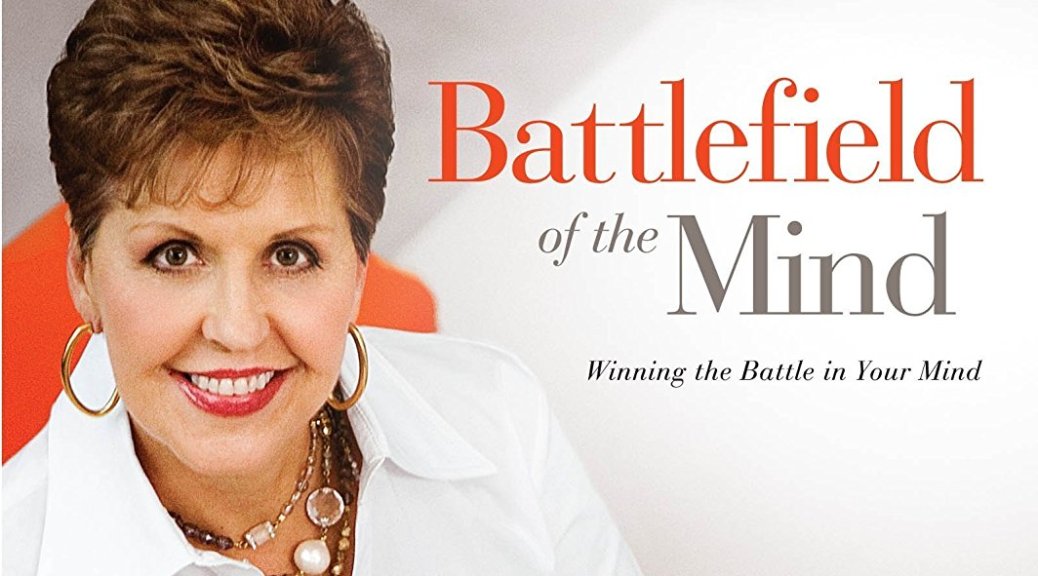
Joyce Meyer – The Humble Get the Help


Therefore humble yourselves under the mighty hand of God [set aside self-righteous pride], so that He may exalt you [to a place of honor in His service] at the appropriate time, — 1 Peter 5:6

Since Jesus invites us to cast all of our care and worry on Him, why do so many of us refuse to let go of it? Maybe we don’t realize how miserable we are when we carry the burden of worry.

The only way to have victory in our lives is to follow God’s wisdom, and He says we must quit worrying if we want to have peace. So when things come our way that cause us to be concerned, we need God’s help. How do we get it? First Peter 5:6 says that we need to humble ourselves.

That seems pretty clear and simple, yet some continue struggling because they’re too stubborn to ask for help. But the humble get the help. So if your way isn’t working, why not try God’s way?

When we humble ourselves and ask for God’s help, then He’s able to release His power in our situations. It’s only then that we can really enjoy life. So humble yourself today and let Him take care of your worries.

Prayer Starter: God, I know I can’t peacefully handle my life on my own, so I humble myself today and ask You for help. I trust You and give You control in my life.


http://www.joycemeyer.org

Campus Crusade for Christ; Bill Bright – Rivers of Living Water


“For the Scriptures declare that rivers of living water shall flow from the inmost being of anyone who believes in me” (John 7:38).

I was explaining to a group of Christians the meaning of Proverbs 15:13-15, “A happy face means a glad heart, a sad face means a breaking heart. When a man is gloomy, everything seems to go wrong and when he is cheerful everything seems to go right.”

God’s Word reminds us that the source of joy is the Holy Spirit (1 Thessalonians 1:6). So if a man is filled with the Spirit, he will have a joyful heart. When we are filled with the Spirit, we will express love by singing and making melody in our hearts to the Lord. A happy heart will inevitably produce a joyful countenance (Ephesians 5:18-21).

If we do not have a joyful, peaceful countenance, there is reason to question whether we have a loving, joyful heart. And if we do not have a loving, joyful heart, it is not likely that we are filled with the Spirit.

One Christian leader, who had heard me speak, approached me later. He just happened to have a very somber, stern countenance. He explained to me that this was a new concept to him, and since he was reared in another culture, he felt that his somber countenance was a cultural thing.

“In our part of the world [the Middle East],” he said, “we don’t smile and express ourselves like American Christians.”

Together we analyzed the Scripture and concluded that culture has nothing to do with this truth, since Jesus, Paul and other writers of the New Testament were also born in the Middle East. If we truly understand the Spirit-filled life, whatever our cultural background, the joy of the Lord will flow from us – from our “innermost being shall flow rivers of living water” (John 7:38, NAS).

Bible Reading:John 7:33-37

TODAY’S ACTION POINT:  Recognizing love, joy and peace as trademarks of the Spirit-filled life, I will consciously seek to be Spirit-controlled so that these expressions will be a natural overflow of my life. I will teach this spiritual truth to others today.


http://www.cru.org

Max Lucado – Calvary


Listen to Today’s Devotion

Come with me to the hill of Calvary. Watch as the soldiers shove the carpenter to the ground and stretch his arms against the beams. Jesus turns his face toward the nail just as the soldier lifts the hammer to strike it! Couldn’t Jesus have stopped him? With a flex of bicep, a clench of the fist, he could have resisted. But the moment isn’t aborted. Why? Why didn’t Jesus resist?

As the soldier pressed his arm, Jesus saw a nail—yes. He saw the soldier’s hand—yes. But he saw something else. A long list of our lusts and lies and greedy moments and prodigal years. A list of our sins. He knew the price of those sins was death. He knew the source of those sins was you. And he couldn’t bear the thought of eternity without you. He chose the nails!

From On Calvary’s Hill

For more inspirational messages please visit Max Lucado.


Home

Denison Forum – How Martin Luther King Jr.’s last Sunday sermon speaks to us today

Tomorrow marks the fiftieth anniversary of Dr. Martin Luther King Jr.’s last Sunday sermon.

On March 31, 1968, Dr. King preached at the Washington National Cathedral. An overflow crowd heard him deliver “Remaining Awake Through a Great Revolution,” calling his listeners to join God in a movement that would bring righteousness to a culture divided by racial bigotry and endemic poverty.

In his message, he noted: “On some positions, cowardice asks the question: Is it expedient? And then expedience comes along and asks the question: Is it politic? Vanity asks the question: Is it popular? Conscience asks the question: Is it right?”

Then Dr. King stated, “There comes a time when one must take the position that is neither safe nor politic nor popular, but he must do it because conscience tells him it is right.”

Four days later, he paid for his conscience with his life.

Continue reading Denison Forum – How Martin Luther King Jr.’s last Sunday sermon speaks to us today