Charles Stanley – Jesus: A Servant


Matthew 20:20-28

Believers like to talk about Jesus as Lord, Master, and especially Savior, but rarely is He mentioned as Servant. Yet describing His own mission, Christ said, “The Son of Man did not come to be served, but to serve, and to give His life a ransom for many” (Matt. 20:28). He entered the world to offer Himself for the Father’s purpose and mankind’s need.

Because every human being is born enslaved to sin, Jesus came to set us free. He voluntarily exchanged His glory for flesh because only as a human could He die in our place to pay the penalty for our sin. The greatest service He offered was His sacrifice on the cross. He allowed His purity to be violated by our transgressions. In fact, God made Jesus “who knew no sin to be sin on our behalf” so that we could gain His righteousness (2 Corinthians 5:21).

Our sinless Savior suddenly and painfully felt the burden of guilt, the vileness of sin, the weight of a tarnished soul, and a wretched separation from His Father. He suffered the injustice of dying for our sins in order that God’s holiness and our imperfection could be reconciled, and we could be shown mercy.

Jesus was the Father’s servant, agreeing to an atonement plan that made Him a sacrifice. And He is your servant as well—He humbly endured the punishment you deserved. To receive the benefit of His sacrifice, you need only believe and call on Him for the forgiveness of your sins. When you receive Him into your life, then you too will know the Servant, Jesus Christ, as Savior and Lord.

Bible in One Year: Ecclesiastes 9-12


http://www.intouch.org/

Our Daily Bread — Through the Cross


Read: 2 Corinthians 4:8–18 | Bible in a Year: Psalms 23–25; Acts 21:18–40

[Nothing] will be able to separate us from the love of God that is in Christ Jesus our Lord. Romans 8:39

My coworker Tom keeps an 8″ by 12″ glass cross on his desk. His friend Phil, who like Tom is a cancer survivor, gave it to him to help him look at everything “through the cross.” The glass cross is a constant reminder of God’s love and good purposes for him.

That’s a challenging idea for all believers in Jesus, especially during difficult times. It’s much easier to focus on our problems than on God’s love.

The apostle Paul’s life was certainly an example of having a cross-shaped perspective. He described himself in times of suffering as being “persecuted, but not abandoned; struck down, but not destroyed” (2 Corinthians 4:9). He believed that in the hard times, God is at work, “achieving for us an eternal glory that far outweighs them all. So we fix our eyes not on what is seen, but on what is unseen” (vv. 17–18).

To “fix our eyes . . . on what is unseen” doesn’t mean we minimize the problems. Paul Barnett, in his commentary on this passage, explains, “There is to be confidence, based on the certainty of God’s purposes for [us] . . . . On the other hand, there is the sober recognition that we groan with hope mingled with pain.”

Jesus gave His life for us. His love is deep and sacrificial. As we look at life “through the cross,” we see His love and faithfulness. And our trust in Him grows.

Father, teach us who You are. Increase our trust in You. Fill our minds with Your perspective.

Look at everything through the cross.

By Anne Cetas

INSIGHT

Through the cross we see God’s loving payment for our sin. But it teaches us more. Jesus’s suffering also exposed the nature and cruelty of our sin against Him and against humanity. He endured the worst we could do to Him to expose Satan’s lie that our Creator isn’t as good as He says He is. He even suffered unimaginable wrongs to show us how to love those who hurt us.

What else does God want to teach us about cross-shaped love and what it can do in us and for others?

Mart DeHaan


http://www.odb.org

Ravi Zacharias Ministry – God in the Pews

Why isn’t God more obvious? This question is often asked in many ways and in many contexts, by people of all levels of faith. When prayers go unanswered, why is God silent? When suffering or tragedy strikes, why would God allow this to happen? Why wouldn’t God want more people to know God’s good news? When all the “evidence” seems to counter the biblical narrative, why doesn’t God just give the world a sign? If God was revealed through many wondrous signs and miracles throughout the Bible, why doesn’t God act that way today? All of these examples get at the same issue: the seeming “hiddenness” of God.

Atheist Bertrand Russell was once asked what he would say if after death he met God. Russell replied that he would say: “God, you gave us insufficient evidence.”(1) While many who have found God quite evident would balk at Russell’s audacity, a similar struggle ensued between the psalmist and his hidden God. “Why do you stand afar off, O Lord? Why do you hide yourself in times of trouble?” Indeed, the psalmist accuses God of being asleep in these plaintive cries: “Arouse, yourself, why do you sleep, O Lord? Awake, and do not reject us forever. Why do you hide your face, and forget our affliction and our oppression?”(2)

In fact, belief in a God who can be easily found, a God who has acted in time and space, makes the hiddenness of God all the more poignant and perplexing. Theologians have offered many explanations for God’s hiddenness: because God seeks to grow our faith, because our sins and disobedience hide us from God and keep us from seeing God properly, or because God loves us and knows how much and how often we need to “find” God. If we are honest, we are just as likely to hide ourselves from God just as the first humans did in the Garden when God sought after them. Even so we cry out just like Job did and wonder why God stays hidden away in unanswered prayers and difficult circumstances: “Why do you hide your face, and consider me the enemy?”

Continue reading Ravi Zacharias Ministry – God in the Pews

Joyce Meyer – What Is Grace?


. . . The [Holy] Spirit [Who imparts] grace (the unmerited favor and blessing of God). — Hebrews 10:29 (AMPC)

Adapted from the resource Closer to God Each Day Devotional

Grace is the power of the Holy Spirit available to you to do with ease what you cannot do by striving in your own strength. Grace is God’s power coming into our lives, freely enabling us to do whatever we need to do. God’s grace is always available, but we do need to receive it by faith and refuse to try to do things in our own strength without God.

The Holy Spirit ministers grace to us from God the Father. Grace is actually the Holy Spirit’s power flowing out from the throne of God toward people to save them and enable them to live holy lives and accomplish the will of God.

We can rejoice and be full of peace, joy, and contentment each day because of God’s grace in our lives. It is His grace that allows us to live in close fellowship with Him. With the grace of God, life can be enjoyed with an ease that produces rest and contentment.

Prayer Starter: Lord, help me to rely on Your grace to do everything. In my own strength, I can only do so much, but with You, all things are possible. In Jesus’ Name, Amen


http://www.joycemeyer.org

Campus Crusade for Christ; Bill Bright – All Things for Our Good

“And we know that all that happens to us is working for our good if we love God and are fitting into His plans” (Romans 8:28).

I waited and prayed in the chapel at the Loma Linda Hospital. My beloved wife, Vonette, had been in major surgery for four hours. Three weeks before, while I was in Brazil, she had gone to our doctor for a physical examination and he had informed her that she had a large growth that could be malignant.

Though he wanted to operate at once, the doctor agreed at Vonette’s insistence to wait until I returned from a tour of several Latin American countries. Vonette called to give me the doctor’s report while I was in Rio de Janerio. Naturally I wanted to return home at once. However, she assured me that she would be all right and encouraged me not to interrupt the meetings since they had the potential of ultimately helping to train hundreds of thousands of Christians to help reach millions for our Lord throughout all of Latin America (which they have subsequently done through a great Here’s Life movement in each of these countries).

We prayed together over the telephone, praising God for His faithfulness to us in the past. As an expression of our faith and an act of obedience to His holy, inspired Word, we thanked Him for this opportunity to trust Him, even though at the moment it seemed very difficult. Then as we praised and gave thanks to the Lord, His supernatural peace flooded our hearts. God always honors faith and obedience.

During the following weeks we continued to praise and thank God as we both continued to speak and witness for Him personally and at many meetings, recognizing that we are His servants, and that the Master is responsible for the welfare of His servants.

After the surgery the doctors assured us that the operation was a success and that there was no malignancy. We continue to thank and praise the Lord for His goodness to us. We know that, if we love God, all things really do work out together for our good regardless of the circumstances and regardless of the outcome. Why did God allow us to go through this experience? In order that we would be reminded of His faithfulness and learn to love, trust and obey Him.

Bible Reading:Romans 8:29-34

TODAY’S ACTION POINT: Since I love God and am fitting into His plans, I will, by faith, count all things as working together for my good today and will thank God and praise Him in obedience to His command. I will encourage others to do the same, to trust and obey God as an expression of the supernatural life


http://www.cru.org

Max Lucado – A Purposeful Pause


Listen to Today’s Devotion

It took a purposeful pause to pull me out of a spiritual desert! Standing in our new church building before a beaming congregation, I was thinking, I should be thrilled.  Instead I was hollow and mechanical.  A friend noticed and convinced me to do what I’m urging you to do—that is, clarify my sweet spot. Renewal began when I paused on purpose.

Do you sense a disconnect between your design and daily duties?  God may want you to leave but you’re staying.  How can you know unless you mute the crowd and meet with Jesus in a deserted place?  He says, “Come to me, all you who labor and are heavy laden, and I will give you rest” (Matthew 11:28). Jesus “often withdrew into the wilderness and prayed” (Luke 5:16). Why don’t you press the ‘pause button’ so you can contemplate the work of God.

Read more Cure for the Common Life

For more inspirational messages please visit Max Lucado.

Home

Denison Forum – UK ethics council decides altering human embryos is “morally permissible”

An ethics council in the United Kingdom has concluded that changing the DNA of a human embryo could be “morally permissible” if such changes are in the child’s best interests and do not create further inequalities in society.

This is a monumental and troubling announcement.

Embryonic genetic editing: the positives

Let’s begin with some background. In addition to my work at Denison Forum, I serve as the resident scholar for ethics with Baylor Scott & White Health. In this capacity, I am especially interested in the ethics of genetic medicine.

I have been following advances in genome-editing techniques that have made it possible to correct genetic defects in human embryos. Since inherited disorders affect millions of people around the world, such advances offer great potential.

According to the New York Times, one recently developed technique could conceivably apply to more than ten thousand conditions caused by specific inherited genetic mutations. This technique is relevant to certain breast and ovarian cancers and to diseases such as Huntington’s, Tay-Sachs, sickle cell anemia, cystic fibrosis, and some cases of early-onset Alzheimer’s.

Continue reading Denison Forum – UK ethics council decides altering human embryos is “morally permissible”

Charles Stanley – An Unforgiving Spirit


Matthew 18:21-35

Because of man’s propensity to sin, we’re surrounded by opportunities to forgive others. Perhaps we’ve been unfairly criticized, disappointed by a broken promise, or harmed financially or physically. In this broken world, the list of wrongdoings is endless. The question is: How are we to deal with the offenses of others?

Peter was wondering the same thing, so He asked Jesus how often he should forgive a brother who sins against him. He probably thought he was being very generous by suggesting, “Up to seven times?” But Jesus replied, “Up to seventy times seven” (Matt. 18:21-22). In other words, forgive every single time you’re wronged. Forgiveness doesn’t mean finding reasons to justify or excuse someone’s behavior, nor is it about forgetting what happened or pretending it never occurred.

Genuine forgiveness requires deliberate action on our part. While acknowledging that a wrong has been committed, we choose to release the offender from any obligation toward us and surrender our perceived right to hurt him or her back. In essence, we’re no longer holding the unfair, hurtful behavior against the person but are extending mercy, just as God has done toward us.

The only alternative is to hold onto anger and bitterness. Though we may think we are punishing the wrongdoer, we’re actually hurting ourselves. Resentment is like sludge that contaminates the mind, clogs the heart, and poisons the soul. Untreated anger turns into bitterness, which hinders our relationship with God and others and leaves us vulnerable to Satan’s attacks (Eph. 4:26-27). The only remedy is forgiveness.

Bible in One Year: Ecclesiastes 5-8

http://www.intouch.org/

Our Daily Bread — What’s Your Passion?


Read: Psalm 20:6–9 | Bible in a Year: Psalms 20–22; Acts 21:1–17

Some trust in chariots and some in horses, but we trust in the name of the Lord our God. Psalm 20:7

One of the tellers at my bank has a photograph of a Shelby Cobra roadster on his window. (The Cobra is a high-performance automobile built by the Ford Motor Company.)

One day, while transacting business at the bank, I asked him if that was his car. “No,” he replied, “that’s my passion, my reason to get up every morning and go to work. I’m going to own one someday.”

I understand this young man’s passion. A friend of mine owned a Cobra, and I drove it on one occasion! It’s a mean machine! But a Cobra, like everything else in this world, isn’t worth living for. Those who trust in things apart from God “are brought to their knees and fall,” according to the psalmist (Psalm 20:8).

That’s because we were made for God and nothing else will do—a truth we validate in our experience every day: We buy this or that because we think these things will make us happy, but like a child receiving a dozen Christmas presents or more, we ask ourselves, “Is this all?” Something is always missing.

Nothing this world has to offer us—even very good things—fully satisfies us. There is a measure of enjoyment in them, but our happiness soon fades away (1 John 2:17). Indeed, “God cannot give us happiness and peace apart from Himself,” C. S. Lewis concluded. “There is no such thing.”

I have found Him whom my soul so long has craved! Jesus satisfies my longings—through His blood I now am saved. Clara Williams

There is a longing in every heart that only Jesus can satisfy.

By David H. Roper

INSIGHT

Psalm 20 warns against idolatry—worshiping and trusting in human objects instead of the Lord Himself. King David saw how easy it could be to shift his trust in the Lord to trust in military might: “Some trust in chariots and some in horses,   but we trust in the name of the Lord our God” (v. 7). In our culture, idolatry can take many different forms. But for the believer there’s only One who should be the object of our adoration and the One in whom we place our trust. It’s Christ who is the supreme example of courage, character, and compassion.

How is God teaching you that He’s the only true source of satisfaction?

Dennis Fisher


http://www.odb.org

Ravi Zacharias Ministry – Wakeful Awareness

Few of us would be able to recollect from our childhoods the moment when consciousness first came into being and the process of waking to self began. For most of us, awareness broke through in pieces. We found ourselves then as we continue to find ourselves now: at times stirringly wakeful to what it means to be human, aware of self and lifetime, and startled by the abruptness of its end. Essayist Annie Dillard articulates the progression of consciousness with stirring lucidity:

“I woke in bits, like all children, piecemeal over the years. I discovered myself and the world, and forgot them, and discovered them again. I woke at intervals until, by that September when Father went down the river, the intervals of waking tipped the scales, and I was more often awake than not. I noticed this process of waking, and predicted with terrifying logic that one of these years not far away I would be awake continuously and never slip back, and never be free of myself again.”(1)

Dillard describes the rousing of self as strangely recognizable—”like people brought back from cardiac arrest or drowning.” There is a familiarity in the midst of the foreignness. We wake to mystery, but so somehow we wake to something known—and knowing.

Continue reading Ravi Zacharias Ministry – Wakeful Awareness

Joyce Meyer – Positive Minds


And to the centurion Jesus said, “Go; let it be done for you as you have believed.”… — Matthew 8:13

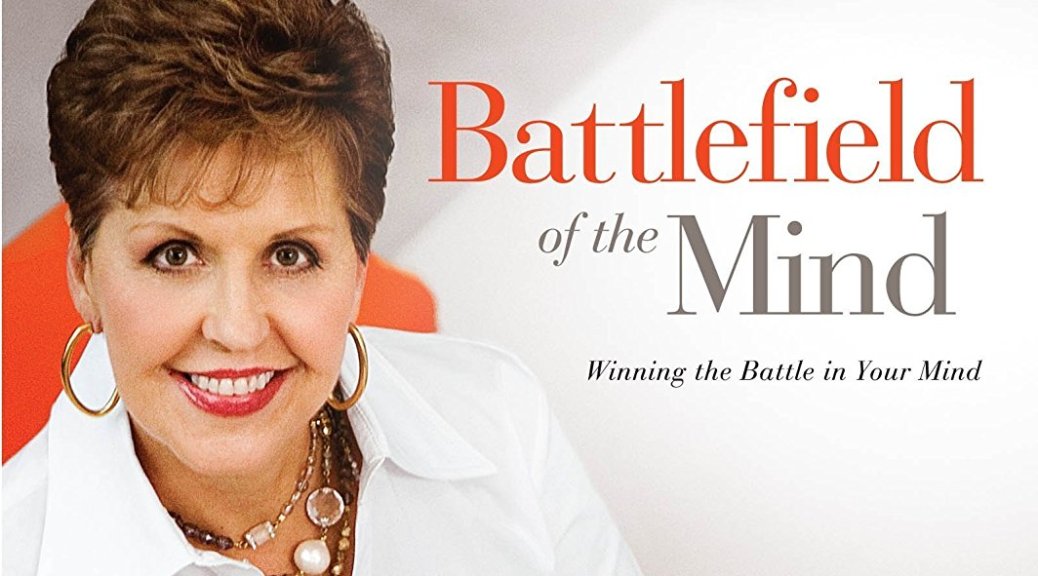
Adapted from the resource Battlefield of the Mind Devotional – by Joyce Meyer

Sometimes when I stand behind the pulpit, and before I speak, I pause and my gaze sweeps across the audience. I look at the faces of the people. I love to see the bright smiles and expressions of anticipation, but there are always a few who look downtrodden and discouraged. I don’t know anything about them and I don’t want to judge them, but their faces look sad. They look as if they have lost hope and expect nothing positive to happen—and too often, they get exactly what they expect.

I understand those discouraged people; I was once one of them.

Here’s a simple fact I’ve learned: Positive minds produce positive lives, but negative minds produce negative lives. The New Testament tells the story of a Roman soldier whose servant was sick, and the soldier wanted Jesus to heal him. That wasn’t uncommon—many wanted Jesus to heal them or their loved ones in those days.

But this soldier, instead of asking Jesus to come to his servant, expressed his belief that if Jesus would just speak the word, his servant would be healed (see Matthew 8:8). Jesus marveled at his faith and sent out His word to heal the servant. The soldier’s positive mindset—his faith—brought positive results. He expected healing, and that’s exactly what happened.

Too often, we cry to Jesus to heal us, to take care of our finances, or to deliver us from problems, but we don’t fully expect the good things to happen. We allow our minds to focus on the negative aspects. Doubt and unbelief war against our minds and steal our faith if we allow it.

As I wrote in my book Battlefield of the Mind, many years ago I was extremely negative. I used to say that if I had two positive thoughts in a row, my mind would get in a cramp. That’s an exaggeration, of course, but that’s how I saw myself. I lived with the same philosophy that other people have: If we don’t expect anything good to happen, we won’t be disappointed when it doesn’t.

I could have excused my negative attitude by telling everyone about my disappointments in life—and I had many. It wasn’t just my lack of expectation. It was more than that. Because I thought negatively, I spoke negatively. When people told me of their spiritual victories, I’d think, That won’t last. When people spoke of their faith, I’d smile, but inwardly I would think that they were gullible. I could always figure out ways that plans would go wrong or people would disappoint me.

Was I happy? Of course not. Negative thinkers are never happy. It’s too long of a story to explain how I came to face that reality, but once I realized what a negative person I was, I cried out to the Lord to help me.

I learned that if I kept studying the Word of God, I could push away negative thoughts. God’s Word is positive and uplifting. My responsibility was to become the kind of believer who honors God with her thoughts, as well as with her actions and her deeds.

I understood the remorse David must have felt when he wrote Psalm 51 (AMPC): Have mercy upon me, O God, according to Your steadfast love… is the way he starts. I especially meditated on verse 9: Hide Your face from my sins and blot out all my guilt and iniquities. I hadn’t sinned the same way David did, of course, but my negative thinking and bad attitude was sin. It wasn’t just weakness or a bad habit. When I focused on negative thinking, I was rebelling against God.

The Lord had mercy on me. As I continued in His Word and in prayer, He freed me from Satan’s stronghold. Freedom is available for all of us.

Prayer Starter: Gracious God, thank You for every deliverance in my life. Thank You for setting me free from negative and wrong thinking and for defeating Satan in this area of my life. In Jesus’ Name, Amen


http://www.joycemeyer.org

Campus Crusade for Christ; Bill Bright – Worthy of Trust


“What is faith? It is the confident assurance that something we want is going to happen. It is the certainty that what we hope for is waiting for us, even though we cannot see it up ahead” (Hebrews 11:1).

Frequently, individuals make gifts of property or stocks and bonds to the ministry of Campus Crusade for Christ. I am notified by our legal department that the papers have been received, confirming our ownership. Then, on the basis of their word, I consider the value and the potential sale of these properties in light of our budget for this worldwide ministry.

Can you imagine? I make decisions involving literally millions of dollars based upon a word or a memo. I do not see the stocks and bonds. I do not visit the property. I do not even see the papers. But I can take the word of my associates, whom I have learned to trust, and, predicated on their recommendations, I can determine how many missionaries we can send to the field.

That is what faith is all about. I have faith in my beloved colleagues because they have demonstrated themselves to be trustworthy. How much more should I have faith in our loving, holy, gracious, God and Father who has demonstrated His faithfulness and trustworthiness innumerable times? How much more should I believe His holy, inspired Word – His many promises?

However, God’s promises do not become reality unless we act upon them, claiming them in faith, any more than the word of my associates would be of any value unless I acted upon that information.

Vast resources of heaven are available to us. We appropriate them by faith. Consider the following illustration: Suppose I have $1,000 in the bank. I go to the bank with a check for $100 in my hand. I hand it to the teller, get on my knees and begin to beseech the teller to cash my check for $100. This would seem unusual to the teller and to all who might observe me for that is not the way to cash a check. Rather, I place it before the teller with the assurance that I have ten times the amount of the check on deposit and therefore without any hesitancy can expect my check to be cashed.

So it is with the bank of heaven. I know that the promises of God are faithful and true. God does not lie. God is worthy of my trust and, therefore, whatever He promises, He will perform if only I will trust and obey him.

Bible Reading:Psalm 11:89-96

TODAY’S ACTION POINT: Today I will claim the promises of God by faith with the joyful assurance that whatever God promises, He is faithful to perform. I will claim His supernatural resources for supernatural living.


http://www.cru.org

Max Lucado – Exercise Crowd Control


Listen to Today’s Devotion

Look over your shoulder.  The crowd is one step back. They don’t consult your strengths or know your story. Still, they seem to know more about your life than you do.  They’ll lead your life if you allow them.

Jesus didn’t. “When Jesus saw the crowd around him, he told his followers to go to the other side of the lake” (Matthew 8:18). After a day of teaching, “Jesus left the crowd and went into the house” (Matthew 13:36). Christ repeatedly escaped the noise of the crowd in order to hear the voice of God.  He resisted the undertow of people by anchoring to the rock of his purpose—employing his uniqueness to make a big deal out of God.  Jesus said no to good things so he could say yes to the right thing—his unique call!  And He calls on you and me to do likewise.

Read more Cure for the Common Life

For more inspirational messages please visit Max Lucado.

Home

Denison Forum – Pro football player rescues man trapped in car that plunged off parking garage

New Orleans Saints defensive end Mitchell Loewen was eating brunch with his wife and son last Sunday afternoon in downtown New Orleans. Suddenly he heard what sounded like “a bomb or an earthquake.”

He and others ran outside to find a silver Mercedes SUV lying upside down in the middle of the street. It had just plummeted from the fourth floor of an adjacent garage building.

Loewen later told reporters, “There were a bunch of people standing around, but not approaching the car and I was like, ‘What’s up, let’s help this guy.’ I mean, obviously there was someone in there. I wasn’t going to just stand by and watch. It was a life or death situation.”

The football player called people to help, and together they flipped the car onto its side and then upright. Loewen wrenched the door open, ripping it off its hinges, and leaned into the car to speak with the driver.

“He didn’t say much, he was just thanking us all. I hugged him and told him he was going to be OK, and then I prayed with him,” Loewen said. Paramedics arrived and took the man to the hospital; a police spokesman said he is expected to survive.

“A world of wealth for an inch of time”

We live in a dangerous world in need of more heroes.

Continue reading Denison Forum – Pro football player rescues man trapped in car that plunged off parking garage

Charles Stanley – Choosing to Forgive


Ephesians 4:31-32

Isn’t it interesting that young children generally don’t hold grudges? They may cry and throw tantrums, but once their anger has been vented, they let it go. Adults, however, have a tendency to hang on to offenses. When people wrong us or our loved ones, we want them to pay for what they’ve done, to suffer as we have. It only seems fair to expect restitution of some kind, and unless that occurs, we withhold forgiveness.

As Christians, however, we are called to a different standard and way of thinking—one that’s consistent with God’s character. He is a merciful Father who wants His children to show mercy to others (Luke 6:36). His Son’s life on earth demonstrated this. As Jesus hung on the cross, He prayed for those who crucified Him, “Father, forgive them; for they do not know what they are doing” (Luke 23:34). God expects us to forgive as Jesus did, regardless of circumstances.

This command seems impossible to carry out until we start to grasp the enormity of what took place on the cross. Christ’s death made us recipients of a mercy so great it defies comprehension. The Savior took all our sin upon Himself and died in our place. He experienced the outpouring of God’s wrath so we might be forgiven and reconciled to the Father. Although we deserve condemnation, through Jesus Christ we have instead received God’s mercy.

Now as new creations in Christ who are indwelt by the Holy Spirit, we have His power to truly let go of the wrongs done to us and extend mercy to others, just as God has given mercy to us.

Bible in One Year: Ecclesiastes 1-4


http://www.intouch.org/

Our Daily Bread — I Just Can’t Do It


Read: 1 Corinthians 1:26–31 | Bible in a Year: Psalms 18–19; Acts 20:17–38

The law was our tutor to bring us to Christ, that we might be justified by faith. Galatians 3:24 nkjv

“I just can’t do it!” lamented the dejected student. On the page he could see only small print, difficult ideas, and an unforgiving deadline. He needed the help of his teacher.

We might experience similar despair when we read Jesus’s Sermon on the Mount. “Love your enemies” (Matthew 5:44). Anger is as bad as murder (v. 22). Lust equals adultery (v. 28). And if we dare think we can live up to these standards, we bump into this: “Be perfect, therefore, as your heavenly Father is perfect” (v. 48).

“The Sermon on the Mount produces despair,” says Oswald Chambers. But he saw this as good, because at “the point of despair we are willing to come to [Jesus] as paupers to receive from Him.”

In the counterintuitive way God so often works, those who know they can’t do it on their own are the ones who receive God’s grace. As the apostle Paul put it, “Not many of you were wise by human standards. . . . But God chose the foolish things of the world to shame the wise” (1 Corinthians 1:26–27).

In God’s wisdom, the Teacher is also our Savior. When we come to Him in faith, through His Spirit we enjoy His “righteousness, holiness and redemption” (v. 30), and the grace and power to live for Him. That’s why He could say, “Blessed are the poor in spirit, for theirs is the kingdom of heaven” (Matthew 5:3).

Thank You, Lord, for blessing those who are poor in spirit, who mourn, and who hunger and thirst for Your righteousness. You are our righteousness!

Read more from Oswald Chambers at utmost.org.

Through the Son we can enjoy life in God’s kingdom. 

By Tim Gustafson

INSIGHT

The Bible is filled with stories of how God used weak, unlikely, or flawed characters to bring about His purposes. Included in that lineup are Abraham, Isaac, Jacob, Moses, Rahab, Gideon, and Peter—just to name a few. God chose elderly Abraham and his barren wife to be “the father [and mother] of many nations” (Genesis 17:5). He used Isaac, who played favorites (25:27–28), and Jacob, a deceiver, to continue that line (25:29–34; 27:1–29). God called the reluctant Moses, a murderer on the run, to lead His people out of slavery in Egypt (Exodus 2:11–15; 14:1–31). God chose the prostitute Rahab to hide the spies in Jericho (Joshua 2) and to be included in the genealogy of Jesus (Matthew 1:5); He called Gideon, who cowered in fear, to serve as judge and rescue the Israelites from the Midianites (Judges 6–8); and He appointed Peter, an outspoken fisherman, to be His disciple (Matthew 16:22). God still uses flawed characters—you and me—to fulfill His purposes.

For more on how God can use you, check out christianuniversity.org/SF212.

Alyson Kieda


http://www.odb.org

Ravi Zacharias Ministry – In the Silence

“Silence is golden” flashes across the theater screen just before a film begins. In other words, stop talking, listen to the film, and allow others to listen as well! Yet, for many used to the relentless noise in our lives, silence is far from golden. Silence is disruptive, even threatening to us. When I lost my husband several years ago, I was struck by how loud the silence had become in my own life. Days would go by without my having spoken audibly to anyone, save my two dogs.

Yet, I was not without sound during this period of my life. I began to pay attention to all the sounds that made up my day to day existence. The din of traffic noise, airplanes, and nautical sounds from the harbor all made for a symphony of sound. Because I wasn’t speaking out loud to anyone, I was able to intentionally listen to a whole new world of natural sounds. I heard the wind in the trees, or the soft patter of my dogs’ feet as they walked across the hardwood floors. I listened for the distinctive sounds of a variety of birds as they went about foraging for food or calling for a mate. At the time, I didn’t realize how unique it was to be able to truly listen because I was by myself, nor would I have viewed it, as I now do, as a gift.

According to audio-ecologist, Gordon Hempton, it’s not easy to find silence in the modern world. “If a quiet place is one where you can listen for 15 minutes in daylight hours without hearing a human-created sound, there are no quiet places left in Europe. There are none east of the Mississippi River. And in the American West? Maybe 12.”(1) We live in a noisy world.

Continue reading Ravi Zacharias Ministry – In the Silence

Joyce Meyer – Equal


Here there is not Greek and Jew, circumcised and uncircumcised, barbarian, Scythian, slave, free; but Christ is all, and in all. — Colossians 3:11

Adapted from the resource Wake Up to the Word Devotional – by Joyce Meyer

Equal means “just; equitable; giving the same or similar rights or advantages.”

The world places labels and assigns varying values to almost everything, but in God’s eyes, we are all equal. He loves and values each of us equally. We are all one in Christ!

Don’t spend your time thinking over and over about your faults. And don’t compare yourself with other people, thinking that you should strive to be like them. Oscar Wilde said, “Be yourself; everyone else is already taken.”

I strongly suggest that you make peace with yourself, if you haven’t already done so, and learn to think about yourself the way God does. Remember, God loves you just as much as He does everyone else. We are all equal in His sight.

Prayer Starter: Father, thank You for loving me…and for making me a unique and special individual. Help me to receive Your love more and more each day. Help me to truly love myself and break free from comparing myself to others. In Jesus’ Name, Amen


http://www.joycemeyer.org

Campus Crusade for Christ; Bill Bright – Glory Will Be Ours


“Yet what we suffer now is nothing compared to the glory he will give us later” (Romans 8:18).

In Sydney, Australia, a taxi driver to whom I witnessed became very angry.

“I was in World War II,” he exploded, “and I saw thousands of people die. I don’t want to have anything to do with a God who allows war.”

“Don’t blame God for war and the slaughter of millions of people,” I explained. “War is the result of man’s sin. Man does what he does because of his selfishness and pride. God does not desire that man should destroy men. God is not in favor of war. But sickness, death, earthquakes, tornadoes, floods are all a part of God’s judgement because of man’s sin, because of man’s disobedience to His commands.

The problem of suffering is a mysterious one, but for the Christian there is a good, logical answer. All creation waits patiently and hopefully for that future day when God will resurrect His children. On that day, thorns and thistles, sin and death and decay – the things that overcome the world will disappear at God’s command.

The world around us then will share in the glorious freedom from sin which God’s children enjoy. Even the things of nature, animals and plants which now suffer deterioration and death, await the coming of the time of this great glory.

We Christians – though we have the Holy Spirit within us as a foretaste of future glory – also groan to be released from pain, heartache, sorrow and suffering. We too wait anxiously for that day when God will give us full rights as His children, including the new bodies He has promised us – bodies that will never suffer again, and that will never die.

Bible Reading:Romans 8:24-27

TODAY’S ACTION POINT: I will rejoice in the certainty that glory is ahead for me as a believer, and as a result I am willing to joyfully endure whatever suffering comes my way. I will also encourage others in their times of sorrow to consider God’s love and plan for them, and will help them to understand the scriptural reason for man’s suffering

http://www.cru.org

Max Lucado – Our Work Can Be Worship


Listen to Today’s Devotion

Many people dread their work.  If you’re one of them, try changing your attitude toward your work! God’s eyes fall on the work of our hands. One stay-at-home-mom keeps this sign over her sink:  “Divine tasks performed here, daily.”  Indeed, work can be worship.

Peter wrote, “You are a chosen people.  You are a kingdom of priests, a holy nation, God’s very own possession.  This is so you can show others the goodness of God.” (1 Peter 2:9). So, let every detail in your life—your words, actions, whatever—be done in the name of the Master, Jesus. (Colossians 3:17). You don’t drive to an office, you drive to a sanctuary. You don’t attend a school, you attend a temple.  You may not wear a clerical collar, but you could, because your work is God’s pulpit!

Read more Cure for the Common Life

For more inspirational messages please visit Max Lucado.

Home