Charles Stanley –Our Father’s Unconditional Love


Romans 5:8

Many of us have heard since childhood that the Lord loves us. Yet it isn’t until we begin to understand the true nature of His never-ending love that our lives start to change dramatically—anxiety is exchanged for peace, depression for joy, and fear for confidence.

Today’s Bible verse tells us that while we were still living in rebellion against God, His love sent Jesus to the cross to pay the ultimate price for our redemption. In other words, He didn’t wait for our apologies or even our recognition of Him. No, the Almighty loved us so completely that He sent His Son to die for us while we were steeped in sin.

This doesn’t mesh with our human understanding of love. Much of our concern for others is conditional, hopefully with the exception of care for our children and families. We oftentimes project this imperfect image onto the Lord. It is hard for us to imagine that there actually exists a greater love than what we ourselves can give.

Thankfully, God is not restricted by our view of Him. So great is His care, in fact, that when we trust in Him, He calls us His children and adopts us! And our Father promises that nothing can separate us from Him (Rom. 8:38-39).

As you read Scripture, focus on verses about the heavenly Father’s love. Ask Him to help you start to grasp how great His love is. Document what you learn so that it is available to review when guilt or doubt creeps into your mind. What peace there is for Christians in the Almighty’s unfailing, unconditional care!

Bible in One Year: Jeremiah 49-50


http://www.intouch.org/

Our Daily Bread — An Enduring Happiness


Read: Psalm 34:1–14 | Bible in a Year: Psalms 113–115; 1 Corinthians 6

Whoever of you loves life and desires to see many good days . . . . Turn from evil and do good. Psalm 34:12,14

Often we hear that happiness comes from doing things our own way. That, however, is not true. That philosophy leads only to emptiness, anxiety, and heartache.

Poet W. H. Auden observed people as they attempted to find an escape in pleasures. He wrote of such people: “Lost in a haunted wood, / Children afraid of the night / Who have never been happy or good.”

The psalmist David sings of the remedy for our fears and unhappiness. “I sought the Lord, and he answered me; he delivered me from all my fears” (Psalm 34:4). Happiness is doing things God’s way, a fact that can be verified every day. “Those who look to him are radiant,” writes David (v. 5). Just try it and you’ll see. That’s what he means when he says, “Taste and see that the Lord is good” (v. 8).

We say, “Seeing is believing.” That’s how we know things in this world. Show me proof and I’ll believe it. God puts it the other way around. Believing is seeing. “Taste and then you will see.”

Take the Lord at His word. Do the very next thing He is asking you to do and you will see. He will give you grace to do the right thing and more: He will give you Himself—the only source of goodness—and with it, enduring happiness.

Lord, sometimes we must simply pray: “I believe. Help my unbelief.” Help us trust You by doing what You have given us to do today.

Happiness is doing the right thing.

By David H. Roper

INSIGHT

In Psalm 34:14, David calls us to “turn from evil and do good.” What is good? Micah 6:8 says God has shown us what is good: “To act justly and to love mercy and to walk humbly with your God.” Yet in another psalm, David says, “There is no one who does good” (14:1–3)! So how is good possible? David provides a clue in still another psalm, “Trust in the Lord and do good” (37:3). Doing good is tied to trust in God. In the New Testament we see over and over again that doing good is dependent on a relationship with God through Jesus. Jesus equips us to do good and then produces good in us through the Spirit (Hebrews 13:20–21; Galatians 5:16–25).

What good is God calling you to do in His strength?

Alyson Kieda


http://www.odb.org

Ravi Zacharias Ministry – Poverty of Words

I remember the time when my son had to go through a very simple surgery when he was just five years old. He was not able to breathe properly, so the doctors had to remove some extra tissue surrounding his nostril and nasal passages. During the hours and days after his surgery, my once-a-chatterbox son had become completely quiet. Because of the fear of being hurt if he spoke, he quit using words for his way of communication. It was overwhelming to see my boy struggling to express himself in that condition.

As I assisted my son get back to talking, I could not help but think of how unexpectedly Zechariah lost his speech after he questioned the angel who brought him such good news about a long-waited child in his old age.(1) In Zechariah’s case, the temporary loss of words was something of an acknowledgement of the promised child he doubted, a child who would prepare the way for the Messiah. Though he knew why he was made silent, I am sure he felt restless until he held his son in his arms and was finally able to describe his emotions properly.

There are spiritual retreat centers in various locations around the world, which offer “Silent Weeks” to those who are over-exhausted from excessive communication. During these weeks, individuals are banned from verbal communication in order to quiet themselves internally. The goal is simply to bring back the core purpose of real interaction: tending to what is being said in reality.

When the words are taken from us either because of the inability to speak or the lack of verbal direction, we become strangely poor, almost incomplete. There are two sides of this poverty: one is internal, losing the comfort of one’s capability to express oneself fully. The other is external, as one finds no real guidance to turn to for wisdom. In my opinion, the latter has eternal ramifications if not satisfied in a timely manner.

Continue reading Ravi Zacharias Ministry – Poverty of Words

Joyce Meyer – A Wondering Mind


In the morning, when they were passing along, they noticed that the fig tree was withered [completely] away to its roots. And Peter remembered and said to Him, Master, look! The fig tree which You doomed has withered away! And Jesus, replying, said to them, Have faith in God [constantly]. Truly I tell you, whoever says to this mountain, Be lifted up and thrown into the sea! and does not doubt at all in his heart but believes that what he says will take place, it will be done for him. For this reason I am telling you, whatever you ask for in prayer, believe (trust and be confident) that it is granted to you, and you will [get it]. — Mark 11:20-24 (AMPC)

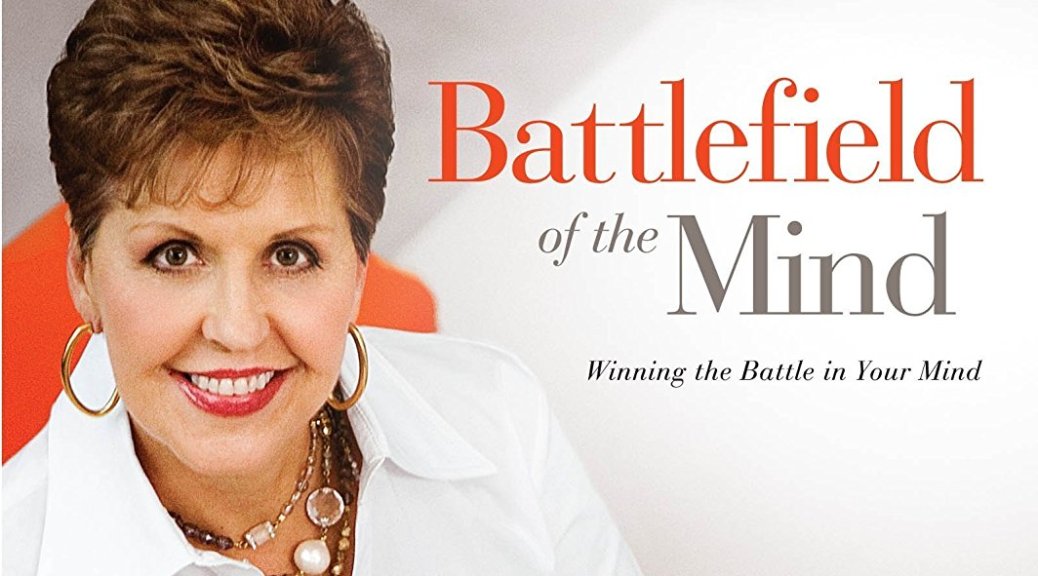
Adapted from the resource Battlefield of the Mind Devotional – by Joyce Meyer

When you say the words, “I wonder,” they sound innocent and honest. They also represent the way we avoid certainty in making decisions.

Suppose you’re the CEO of a business. Every day twenty people come to your office and ask you to make decisions. Yours is the final answer on everything that goes on in the corporation. Instead of giving decisive answers, you rub your chin, stare out the window, and say, “I wonder. I wonder what we should do about that?”

An indecisive CEO wouldn’t stay in that position very long. The position is much too important to the overall success and well-being of the organization and all who are associated with it. You are not in that position to wonder—you’re there to act.

Too many of us forget that this is the way it is with the Christian life, as well. Too often, instead of choosing what we need to do, we avoid facing the situation and say, “I wonder.”

I know because I’ve done it. In times past, when I’ve been invited to a party or to be the featured speaker at a banquet, I’ve said, “I wonder what I should wear.” It’s easy for me to waste a lot of time looking through my closet, considering the color and style, as I try to choose just the right outfit for a particular occasion.

This may seem like such a small thing—and it really is. The problem, however, is that if we allow enough of these “wonderings” in our lives, we not only fail to accomplish the things we need to do, but wondering becomes the normal way our minds function. Being indecisive keeps us from moving forward and can eventually defeat us.

In the verses quoted earlier, the incident started with a fig tree that wasn’t bearing fruit. The disciples could have wasted time wondering about the particulars of why the tree didn’t bear fruit. They could have wondered if it hadn’t received enough sunlight or water. They might have wondered why the owner hadn’t cut it down since it wasn’t productive. But wasting time wondering really wasn’t necessary.

When Jesus spoke and doomed the tree, He put a stop to any mental speculation. He used the incident as an object lesson for the disciples, encouraging them to believe. He wanted them to understand that if they truly believed, they could have whatever they asked of Him.

Sometimes God’s people are reluctant to ask boldly for big things. But Jesus has given us permission to step out in faith and ask boldly. And yet some still waste time just wondering. They wonder what it would be like if God would give them a better job. They wonder what it would be like if God would give them a larger house.

I can tell you that wondering is a waste of time. So, stop wondering and start acting! That’s one of the most important things I’ve learned about the wondering mind. Rather than wondering what I should wear to a banquet, I look at my clothes and I decide. God gave me the ability to make wise choices, so I can just do it instead of wasting my time wondering.

Wondering and indecision can become strongholds in our minds that can leave us feeling confused, insecure, and ineffective. But that’s not God’s plan. He wants us to overcome the wondering thoughts by believing and then receiving the answer to our prayers from God, by faith.

Notice that Jesus did not say, “Whatever things you wonder when you pray, you will have.” Instead, He said, Whatever you ask for in prayer, believe (trust and be confident) that it is granted to you, and you will [get it].

Prayer Starter: Lord Jesus, help me to overcome any wondering tendencies that keep me from moving forward in Your good plan. In Your name, I ask You to help me reach out in faith, boldly asking for what I need. Then help me to believe it and receive it. Amen.


http://www.joycemeyer.org

Campus Crusade for Christ; Bill Bright – He Does Glorious Things 


“Thank the Lord for all the glorious things He does; proclaim them to the nations. Sing His praises and tell everyone about His miracles” (Psalm 105:1,2).

How long has it been since you have taken time to meditate upon and list all the glorious things the Lord has done for you and how long has it been since you have shared them with your family, your neighbors or even strangers? Of course, your list may differ from that of your neighbors or of fellow believers in your local church or from mine. But among those glorious things that He has done are: He has, by His Holy Spirit, drawn us all to Himself; He has created within our hearts a hunger for His love; and through faith in Christ we have become His children; our sins have been forgiven and we now have the joy of living every moment of every day in vital union and fellowship with Him – all this with the certainty that we shall spend eternity with Him. Mere human words could never express the gratitude that wells up within one’s heart at the thought of God’s great gifts. The word “alleluia” is universal and is spoken in all languages as an expression of praise to God and no word is more appropriate.

My personal list of blessings also includes a godly, praying mother who lived her Christianity and dedicated me to Christ before I was born, and followed me – as she did all her other children – with her daily prayers; a wonderful father who, I had the privilege of introducing to Christ after I became a Christian and seeing him begin to experience that peace which comes from knowing Christ; a godly wife who loves the Lord Jesus Christ and shares my commitment to serve Him as our Lord and Master whatever the cost, wherever He leads us.

I thank Him for sons who love Him, and who have committed their lives to serving Him wherever He leads; a daughter-in-law who shares the love and conviction of her husband; a marvelous staff of thousands of godly men and women who seek first the kingdom of God and his righteousness; and hundreds of thousands of co-laborers who undergird me and this ministry.

The glorious things that He has done are without number. Yes, we must sing His praises and tell everyone about His miracles. We must proclaim the glorious things he has done to all the nations!

Bible Reading:Psalm 113

TODAY’S ACTION POINT: Today I will meditate upon the glorious things God has done for me and I will sing His praises and tell everyone about His miracles. I will give my prayer and financial support to helping proclaim His greatness to all the nations of the earth.


http://www.cru.org

Max Lucado – Your Prayers Matter to God


Listen to Today’s Devotion

Do you know that God delights in hearing your prayers!  We can’t even get the plumber to call us back, so why would God listen to our prayers?  Your prayers matter to God because you matter to God.  You aren’t just anybody, you are his child.

When God saved you, he enlisted you.  He gave not only forgiveness for your past but also authority in the present and a role in the future.  This life is on-the-job training for eternity. “If we endure, we will also reign with him” (2 Timothy 2:12).

When you, as God’s child, seek to honor the family business, God hears your requests.  Will God do what you ask?  Perhaps. Or perhaps he will do more than you imagined. Stand firmly on this promise:  “When a believing person prays, great things happen” (James 5:16). And because God’s promises are unbreakable, our hope is unshakable!

Read more Unshakable Hope

For more inspirational messages please visit Max Lucado.


Home

Denison Forum – Is the “Big One” coming?

6.2-magnitude earthquake struck off the coast of Oregon yesterday.

The earthquake followed an intense week of seismic activity in which the “Ring of Fire” was rocked by sixty-nine quakes in just forty-eight hours. (The “Ring of Fire” stretches 25,000 miles clockwise around the Pacific Ocean from New Zealand to the southern part of South America.)

Whenever such seismic activity occurs in the region, journalists speculate that the “Big One” may be coming. This is a reference to an earthquake of 8-magnitude or higher that is expected to occur along the San Andreas Fault. Such a quake could strike San Francisco, Los Angeles, or other populated areas on the West Coast.

Seismologists say we’re overdue for such a disaster. One states, “There is a 99.9% chance that there will be a damaging quake (magnitude greater than or equal to 6.7) somewhere in California in the next 30 years.”

“The whole world lies in the power of the evil one”

If you don’t live along the California coast and think such warnings are irrelevant to you, consider these facts:

I live in Dallas, Texas, where we are at risk from everything on the list. Are you exempt from natural disasters where you live?

When such tragedies strike, people always want to know why the God who made our planet allows such calamities to afflict his creation. We can respond with the fact that our world is broken as a result of sin (Romans 8:22), remembering that there were no natural disasters in the Garden of Eden. We can also point out that “the whole world lies in the power of the evil one” (1 John 5:19), an enemy who “comes only to steal and kill and destroy” (John 10:10).

But the skeptic is likely to counter: Why didn’t the God who calmed the stormy Sea of Galilee prevent the disaster that affected me? If he’s more powerful than Satan, why does he let Satan harm us? If “Jesus Christ is the same yesterday and today and forever” (Hebrews 13:8), why does he allow tragedies that his omnipotence could prevent?

The bottom line is that God’s ways are higher than my ways, and his thoughts are higher than my thoughts (Isaiah 55:8-9). If my mind could understand the Lord’s mind, either I would be God or he would not be.

But I do know one way he redeems natural disasters. It’s a life principle we can begin using today, whether the “Big One” is coming tomorrow or not.

“O God, you are my God”

Psalm 63 finds David “in the wilderness of Judah,” according to its inscription. We know of two times he was in this barren area: when he was hiding from King Saul and when he was fleeing from his son Absalom. The fact that David refers to himself as “the king” in verse 11 makes the latter calamity the more likely setting.

Imagine that you are an elderly man, running for your life from your own son. You’re in the desert with no circumstantial reason to believe you will ever return to your throne or even survive the night.

How do you respond to the God who allowed this calamity?

David prays: “O God, you are my God; earnestly I seek you; my soul thirsts for you; my flesh faints for you, as in a dry and weary land where there is no water” (v. 1). He can seek God in the present because he has experienced his omnipotence in the past: “So I have looked upon you in the sanctuary, beholding your power and glory” (v. 2).

His past experiences with God’s greatness empower him to trust the Lord with his future fears: “Because your steadfast love is better than life, my lips will praise you. So I will bless you as long as I live; in your name I will lift up my hands” (vv. 3-4).

Note the pattern: Seek God in the present by remembering his goodness in the past and trusting him for the future. When we make disaster an invitation to faith and worship, others see our trust in our Father and are drawn to him. Such confidence may be our most powerful witness to a skeptical culture.

Consider an example.

#StandWithTheBible

Evangelist Greg Laurie recently concluded the twenty-ninth annual Southern California Harvest Crusade. This year’s event became controversial when a real estate company removed the campaign’s billboards from two malls, claiming that it received complaints and a “serious threat” about the billboards’ depiction of Laurie holding a Bible.

In response, Laurie staged the #StandWithTheBible campaign, encouraging Christians to take photos or videos of themselves holding a Bible and post them on social media. He also urged attendees to bring Bibles and hold them up each night.

The weekend crusade saw 100,000 people in attendance, 74,300 webcast views, and 267,800 Facebook Live views. More than nine thousand people made professions of faith in Christ.

What the enemy means for evil, God uses for good (Genesis 50:20). This fact doesn’t explain disasters, but it redeems them in ways that far outlive the temporal calamities of this broken planet.

I don’t know if the “Big One” will hit tomorrow or ten generations from tomorrow. But I do know that we have only this day to be ready. And I know that the best way to be ready is to say with David, “O God, you are my God; earnestly I seek you.”

Are you “earnestly” seeking God today?


NOTE:  In a world growing more openly hostile toward Christian values and beliefs, we must know how to “make a defense to anyone who asks.”

My prayer is that the new and just released volume 2 of Biblical Insight to Tough Questions can help with that. I’d like to send it to you to thank you for your gift and to help you “speak the truth in love” to tough questions.

I hope volume 2 will help you grow your faith and encourage you to engage culture with truth. To receive your copy, please click here.


Denison Forum