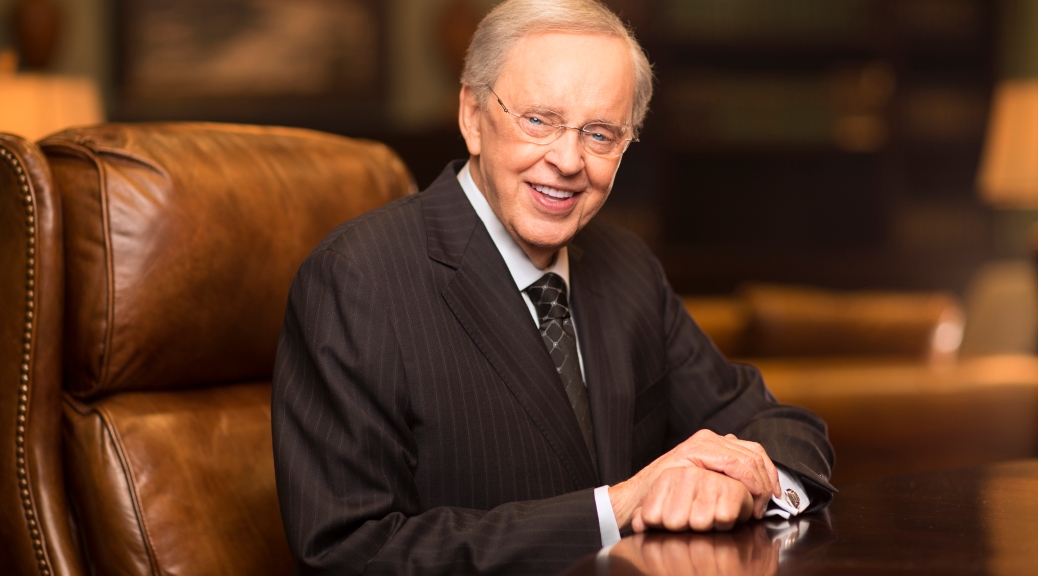
Charles Stanley – Wisdom for Good Health


1 Corinthians 6:19-20

Early in my college days, I studied and worked excessively, as I wanted to offer the Lord my all. Eventually, I realized that neglecting my health could hinder my serving Him, so I therefore had a responsibility to take care of my physical body. Since then, I have tried to use wisdom with regard to health. I believe that includes having the proper motivation and a commitment to practice discipline.

When we understand our worth in the Father’s sight, we will be motivated to pursue good health. Our bodies are the temple of the living God (1 Corinthians 6:19). The Holy Spirit lives in us and carries out the Lord’s work through us. When we are taking care of our health, we position ourselves to be able to serve when God calls. Our heavenly Father knows many of us have infirmities, but He wants us to take care of ourselves so we do not make our condition worse.

Discipline is the other component of a health-conscious attitude. Many of us approach exercise and weight loss in a “fits and starts” manner. While that may offer some value at the time, a more lasting method is of greater benefit. We need to develop new routines, within the structure of our family and work, for our bodies to thrive. Consistency over the long term is necessary if we are to stay in good condition.

A desire to eat right and exercise regularly does not guarantee we’ll avoid disease or live a long life. But it does mean we will have done our part to keep God’s temple in good shape for Him. Our calling as God’s children is best fulfilled when we seek physical as well as spiritual vitality.

Bible in One Year: Ezekiel 1-3

 

http://www.intouch.org/

Our Daily Bread — Serve Continually


Read: Daniel 6:10–22 | Bible in a Year: Psalms 120–122; 1 Corinthians 9

Has your God, whom you serve continually, been able to rescue you? Daniel 6:20

When educational psychologist Benjamin Bloom, researching how to develop talent in young people, examined the childhoods of 120 elite performers—athletes, artists, scholars—he found that all of them had one thing in common: they had practiced intensively for long periods of time.

Bloom’s research suggests that growing in any area of our lives requires discipline. In our walk with God, too, cultivating the spiritual discipline of regularly spending time with Him is one way we can grow in our trust in Him.

Daniel is a good example of someone who prioritized a disciplined walk with God. As a young person, Daniel started making careful and wise decisions (1:8). He also was committed to praying regularly, “giving thanks to God” (6:10). His frequent seeking of God resulted in a life in which his faith was easily recognized by those around him. In fact, King Darius described Daniel as a “servant of the living God” (v. 20) and twice described him as a person who served God “continually” (vv. 16, 20).

Like Daniel, we desperately need God. How good to know that God works in us so that we long to spend time with Him! (Philippians 2:13). So let us come every day before God, trusting that our time with Him will result in a love that will overflow more and more and in a growing knowledge and understanding of our Savior (1:9–11).

Father, I thank You for the privilege of serving You. Help me to spend regular time with You in order to grow in my knowledge of You.

Time with God transforms us.

By Keila Ochoa


http://www.odb.org

Ravi Zacharias Ministry – Rebellion or Resignation

I have always loved that theologian David Wells refers to prayer as “rebelling against the status quo.”(1) No doubt the feisty among us have eyes that light up at the thought. To rebel against the status quo in this light is to challenge life where it has resigned itself to something less, to bring about rebirth and reformation where life or faith have grown stale.

Others may wonder what Christianity, and specifically Christian prayer, has to do with rebellion at all. The candid lyrics of a haunting song speak of Jesus Christ as a man of love and strength, but a man very much separated from everything we see and experience today. The lyrics sing of his living only inside our prayers, and come to the conclusion that while what Christ was may have indeed been beautiful, a man of the past can offer nothing at all for the here and now of real and wearying pain. The sentiment reflects a sorely honest philosophy that many have of the world today: It is what it is. And it won’t change anything to worry about it. Prayer, within such an imagination, is useless. The here and now of suffering is untouchable.

From headline to headline we find the weariness of life and the problem of a dark world screaming at us. Many have grown to see it as an unchangeable reality. But if we have come to terms with the world as it is, it is only because we have come to refuse thinking about how it could be, or how it was supposed to be, or how we could even have an idea that something is wrong in the first place. It is not that we are unconscious of the injustice, suffering, and even evil around us, but that we feel utterly powerless to do anything about it. Still others among us optimistically call for the abolishing of poverty or the end of trafficking or the stopping of whatever cause they are presently championing. While their efforts are needed, the end they call for doesn’t seem to ever occur.

Continue reading Ravi Zacharias Ministry – Rebellion or Resignation

Joyce Meyer – Sit Down


But God, who is rich in mercy, because of His great love with which He loved us, even when we were dead in trespasses, made us alive together with Christ (by grace you have been saved), and raised us up together, and made us sit together in the heavenly places in Christ Jesus. — Ephesians 2:4-6 (NKJV)

Adapted from the resource Love Out Loud Devotional – by Joyce Meyer

Today’s Scripture says that we are seated in heavenly places with Christ Jesus. I read past that passage one day, and the Holy Spirit stopped me. I noticed that after His resurrection and ascension, Jesus is often depicted as being seated at the right hand of the Father.

Do you know what people do when they sit? They rest. To be seated in heavenly places with Jesus is to enter an “inner rest.”

Sometimes when you start to get nervous and upset, anxious or worried, tell yourself, “Sit down.” That does not mean just your physical body; it also means your soul—your mind, will, and emotions. It is important to let your entire being rest and just wait on God. Wait expectantly for God to do what you cannot do.

Don’t worry, get frustrated, or become fearful while you rest. We often feel that we should always be “doing” something. The promise of God’s peace is not made to those who work, struggle, and strive in their own strength, but to those who enter God’s rest.

Prayer Starter: Lord, teach me how to sit down in Your holy rest. In Jesus’ Name, Amen.


http://www.joycemeyer.org

Campus Crusade for Christ; Bill Bright – He Fulfills God’s Promises 


“Jesus Christ, the Son of God–isn’t one to say ‘yes’ when he means ‘no’. He always does exactly what He says. He carries out and fulfills all of God’s promises, no matter how many of them there are and we have told everyone how faithful He is giving glory to His name” (2 Corinthians 1:19,20).

From Genesis to Revelation the Word of God contains thousands of promises which we as believers in Christ can claim. We are reminded in Matthew 28:18 that all authority in heaven and earth has been given to Him, and in Colossians 2:2,3 that God’s great secret plan now at last made known is Christ Himself; that in Him lie hidden all the mighty untapped treasures of wisdom and knowledge, “For in Christ there is all of God in a human body; so you have everything when you have Christ, and you are filled with God through your union with Christ” (Colossians 2:9,10).

So make a list of all the promises of God that apply to you, and claim those promises in the name of the Lord Jesus Christ. For “He always does exactly what He says. He carries out and fulfills all of God’s promises.” Begin to live supernaturally by drawing upon the supernatural resources of God, claiming His promises by faith.

Bible Reading:II Corinthians 1:15-19

TODAY’S ACTION POINT: I refuse to live the typical Christian existence. I want my life to be characterized by the supernatural, so by faith in the name of the Lord Jesus Christ, I will claim those promises which will enable me to live supernaturally as a testimony that I serve the Lord Jesus Christ.


http://www.cru.org

Max Lucado – God Hates Pride


Listen to Today’s Devotion

“Do you see a person wise in their own eyes?  There is more hope for a fool than for them” (Proverbs 26:12). God hates pride. How do we explain God’s abhorrence of the haughty heart?  Simple. God resists the proud because the proud resist God. Arrogance will not admit to sin.  The heart of pride never confesses, never repents, never asks for forgiveness.  Pride is the hidden reef that shipwrecks the soul.

Pride comes at a high price. Don’t pay it. Choose instead to stand on the offer of grace. “God resists the proud, but gives grace to the humble” (1 Peter 5:5). Isn’t it easy to see why?  Humility is happy to do what pride will not. The humble heart is quick to acknowledge the need for God, eager to confess sin, willing to kneel before heaven’s mighty hand. And because God’s promises are unbreakable, our hope is unshakable!

Read more Unshakable Hope

For more inspirational messages please visit Max Lucado.

Home

Denison Forum – John McCain’s most singular trait

“Some lives are so vivid, it is difficult to imagine them ended. Some voices are so vibrant, it is hard to think of them stilled. John McCain was a man of deep conviction and a patriot of the highest order.”

This is how President George W. Bush remembered John McCain on Saturday after the senator died at the age of eighty-one. True to form, the senator asked Mr. Bush and President Obama—each of whom ran against him in presidential campaigns—to deliver eulogies at his funeral.

Today America is remembering one of our nation’s greatest heroes. This morning’s Wall Street Journal calls him a “principled leader.” CNN describes him as a “War Hero. Statesman. Maverick,” calling him “one of the leading voices in American politics.”

Others have fought for our nation and even been prisoners of war. Others have served in the United States Senate and even been nominated for president of the United States.

John McCain is being remembered today especially because of this singular trait: his sacrificial courage.

Why McCain couldn’t raise his arms

In 1973, McCain wrote about his experience as a prisoner during the Vietnam War. Reading his account over the weekend was a moving experience for me.

On October 26, 1967, McCain’s Skyhawk dive bomber was shot down over Hanoi. His right leg was broken, his left arm was fractured, and his right arm was broken in three places.

Vietnamese doctors eventually tried to put a cast on his right arm (without Novocain) but could not set the bones and put him in a chest cast. He spent two years in solitary confinement, communicating with fellow prisoners by tapping codes through the prison walls. He suffered from dysentery for a year and a half.

Since his father was commander in chief of US forces in the Pacific, camp officials offered at one point to release him. McCain refused, insisting that those who had been imprisoned before him be set free first.

Continue reading Denison Forum – John McCain’s most singular trait