Streams in the Desert for Kids – Night Songs


Psalm 77:6

Animals that are active at night rather than during the day are called nocturnal. For example, nightingales are birds that sing at night. That’s how they got their name. People aren’t like that: we’re awake and working while the sun shines, and we go to bed and sleep during the night.

Do you ever have trouble sleeping at night because you are worried about something? David, the man who wrote the psalm above, sometimes couldn’t sleep. While he was awake at night, he used the time to pray, sing, and think about God. In another place David says, “My eyes stay open through the watches of the night, that I may meditate on your promises” (Psalm 119:148). Instead of worrying about his problems, David took the time to think about God’s promises.

The next time you are lying awake, try singing a song from church. Or ask Mom or Dad to pray with you. Perhaps it would help just to remember that God said he would never leave you alone.

Dear Lord, Your promises are just as good in the night as they are in the daytime. Thank you for your love. Amen

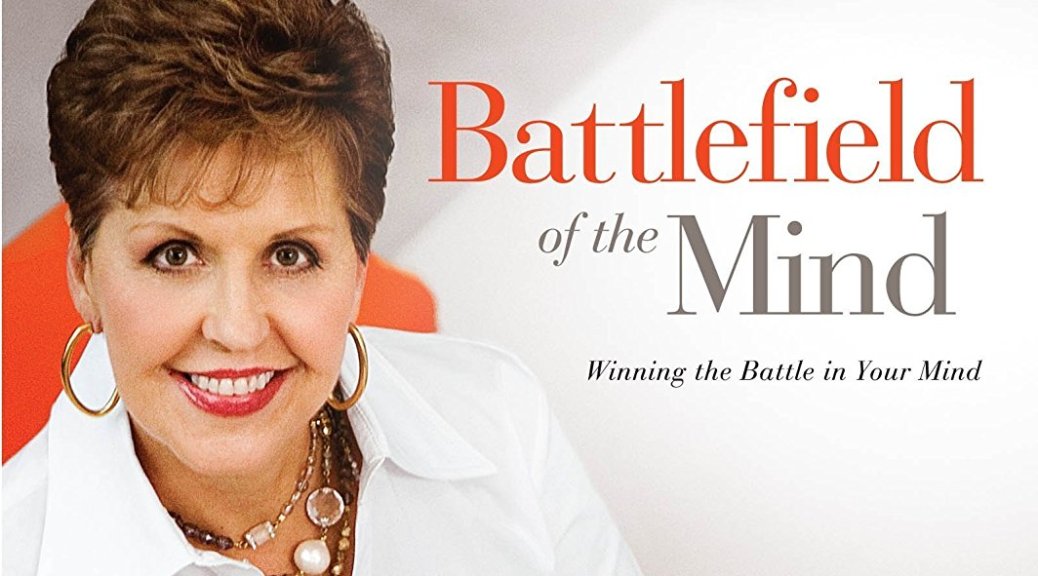
Joyce Meyer – God Knows You Intimately


Even before there is a word on my tongue [still unspoken], behold, O Lord, You know it all. — Psalm 139:4 (AMP)

Adapted from the resource Hearing From God Each Morning Devotional – by Joyce Meyer

Because we relate to God as individuals—and that’s the way He wants it—we also pray as individuals. Even when we pray corporately with others, we are still individuals; we simply join our hearts with others as one voice.

During these corporate prayer times, I believe God wants our hearts to be in unity much more than He wants our methods to be the same.

When we say, “Lord, teach me to pray,” we are asking Him to teach us to pray in a distinctly personal way and to enable our prayers to be easy, natural expressions of who we are. We are not supposed to check our individuality at the door of the prayer closet. We need to go to God just the way we are and give Him the pleasure of enjoying the company of the “original” He has made each of us to be.

We need to approach God with our strengths, weaknesses, uniqueness, and everything else that so wonderfully distinguishes us from all the other people in the world.

God enjoys meeting us where we are, developing a personal relationship with us, and helping us grow to become everything He wants us to be. It is refreshing to realize that we can come to God just as we are and be relaxed in His presence.

Prayer Starter: Father, thank You that I can approach You just as I am and have a unique, personal relationship with You. Help me to continually be more comfortable as I come to You to talk, worship, or simply relax in Your presence. In Jesus’ Name, Amen.


http://www.joycemeyer.org

Campus Crusade for Christ; Bill Bright – Everything Belongs to Us


“Now we are no longer slaves, but God’s own sons. And since we are His sons, everything He has belongs to us, for that is the way God planned” (Galatians 4:7).

In the sense of being under the servitude of sin, you and I are no longer servants or slaves. We are sons, children of God, adopted into His family, and are to be treated as sons.

What a glorious privilege is ours in Christ!

In our exalted position as sons, of course we are to be treated as sons. We are to share God’s favors, His blessings. And as sons, it follows that we have responsibilities – not only to our heavenly Father, but also to other sons (and daughters) in Christ.

All that God has, Paul is saying, belongs to us as well for we are His sons. But there is another side to our exalted position – obedience to the Lord. And His calling is sure: “Follow Me and I will make you fishers of men.”

If we are following our Lord, we are becoming fishers of men – soul-winners. We are regularly and naturally, as a part of our daily routine, sharing the good news of the gospel with those whose lives we touch.

That does not necessarily mean buttonholing people and making a nuisance of ourselves; it does mean being available for God’s Holy Spirit to speak through us in every conversation as He chooses. It also means being “prayed up,” with no unconfessed sin in our lives.

Bible Reading:Revelation 8

TODAY’S ACTION POINT: With the Power of the Holy Spirit available to me by faith, I will behave like a child of the King – a son of the Most High. I will live a supernatural life for the Glory of God


http://www.cru.org

Charles Stanley – It Is Good to Give Thanks


Psalm 92:1-4

Have you ever wondered why God says it’s good to give Him thanks? There are obviously some benefits associated with gratitude, but for whom?

Thanksgiving magnifies the Lord because we are acknowledging Him as the source of all our blessings. It can also have an effect on those who hear us praising and thanking God, as they may be prompted to do likewise. But there are benefits for those expressing gratitude, as well.

Thankfulness readjusts our focus. When we begin to praise and thank the Lord, the pressures and demands of daily life feel lighter. Instead of having our minds distracted by the cares of this world, God and His goodness become the center of our focus. What’s more, we gain awareness of our dependence upon Him and become more appreciative of His care and provision.

Gratitude releases our anxiety. We rarely feel grateful when we’re burdened with troubles and worries, but that’s when we most need to offer God our gratitude. There’s an amazing physical, mental, emotional, and spiritual change that occurs when we begin voicing praise. Burdens are lifted, the internal churning stops, and we come away rejoicing in the Lord.

Thanksgiving reinforces our faith. Recalling our blessings and the many ways God has expressed His goodness toward us reminds us of His faithfulness. Knowing how He has worked in the past strengthens us to trust Him for the future.

The next time you’re feeling down or burdened, remember all the good that comes from thanking the Lord, and lift your voice in gratefulness. God is right—it is good to give thanks.

Bible in One Year: Romans 1-3


http://www.intouch.org/

Our Daily Bread — What We Have


Read: 2 Corinthians 8:1–12 | Bible in a Year: Ezekiel 18–19; James 4

For if the willingness is there, the gift is acceptable according to what one has, not according to what one does not have. 2 Corinthians 8:12

My friend was eager to gather her family and friends for a festive holiday celebration at her home. Each of the guests looked forward to gathering around the table together and wanted to help defray the expense of feeding so many by contributing to the meal. Some would bring bread, others salad or a side dish. For one guest, however, money was exceptionally tight. Although she looked forward to spending the evening with those whom she loved, she couldn’t afford to purchase any food. So, instead, she offered to clean the host’s home as her gift.

She would have been welcome at the table had she come empty-handed. Yet she looked at what she did have to offer—her time and skills—and brought them to the gathering with her whole heart. I think that’s precisely the spirit of Paul’s words in 2 Corinthians 8. They had been eager to give to help some fellow Christians, and he urged them to follow through on that effort. He commended them for their desire and their willingness, saying their motivation to give is what makes a gift of any size or amount acceptable (v. 12).

We’re often quick to compare our giving to that of others, especially when our resources don’t afford us the luxury of giving as much as we’d like to. But God views our giving differently: it’s our willingness to give what we have that He loves.

Lord, help me see what You’ve given me, even if it doesn’t seem like much by the world’s standards. Help me to give generously.

God loves wholehearted giving of any measure.

By Kirsten Holmberg


http://www.odb.org

Ravi Zacharias Ministry – Faith and the Whole Picture

I’ve been trying to avoid using the word “faith” recently. It just doesn’t get the message across. “Faith” is a word that’s now misused and twisted. “Faith” today is what you try to use when the reasons are stacking up against what you think you ought to believe. Greg Koukl sums up the popular view of faith, “It’s religious wishful thinking, in which one squeezes out spiritual hope by intense acts of sheer will. People of ‘faith’ believe the impossible. People of “faith” believe that which is contrary to fact. People of ‘faith’ believe that which is contrary to evidence. People of “faith’ ignore reality.” It shouldn’t therefore come as a great surprise to us, that people raise their eyebrows when ‘faith’ in Christ is mentioned. Is it strange that they seem to prefer what seems like reason over insanity?

It’s interesting that the Bible doesn’t overemphasize the individual elements of the whole picture of faith, like we so often do. But what does the Bible say about faith? Is it what Simon Peter demonstrates when he climbs out of the boat and walks over the water towards Jesus? Or is it what Thomas has after he has put his hand in Jesus’s side? Interestingly, biblical faith isn’t believing against the evidence. Instead, faith is a kind of knowing that results in action. The clearest definition comes from Hebrews 11:1. This verse says, “Faith is the assurance of things hoped for, the conviction of things not seen.” In fact, when the New Testament talks about faith positively it only uses words derived from the Greek root [pistis], which means ‘to be persuaded.’ In those verses from Hebrews, we find the words, “hope,” “assurance,” “conviction” that is, confidence. Now, what gives us this confidence?

Christian faith is not belief in the absence of evidence. It is the proper response to the evidence. Koukl explains that, “Christian faith cares about the evidence…the facts matter. You can’t have assurance for something you don’t know you’re going to get. You can only hope for it. This is why the resurrection of Jesus is so important. It gives assurance to the hope. Because of a Christian view of faith, Paul is able to say in 1 Corinthians 15 that when it comes to the resurrection, if we have only hope, but no assurance—if Jesus didn’t indeed rise from the dead in time/space history—then we are of most men to be pitied. This confidence Paul is talking about is not a confidence in a mere ‘faith’ resurrection, a mythical resurrection, a story-telling resurrection. Instead, it’s a belief in a real resurrection. If the real resurrection didn’t happen, then we’re in trouble. The Bible knows nothing of a bold leap-in-the-dark faith, a hope-against-hope faith, a faith with no evidence. Rather, if the evidence doesn’t correspond to the hope, then the faith is in vain, as even Paul has said.”

Continue reading Ravi Zacharias Ministry – Faith and the Whole Picture

Thanksgiving: The First and Essential American Holiday


Many Americans — Christian, Jewish and secular — find Thanksgiving to be their favorite holiday of the year.  And for good reason beyond the joy of a feast.  Thanksgiving was the first holiday of the Pilgrim forefathers, who spoke of their voyage to the New World in terms of a flight from persecution to freedom, much like the Israelites’ exodus from Egypt to reach the Promised Land.

Thanksgiving is the holiday that made the other American holidays possible.  Without the Pilgrims having courage, a quest for adventure, and a willingness to sacrifice and risk everything, and absolute faith in their cause and calling, they never would have embarked on the unseaworthy 94-foot Mayflower. Were it not for their dream and determination to find freedom of conscience and religion in the New World there may have never been a July 4th Independence Day or many of the other American holidays we take for granted and celebrate every year.

After a harrowing passage across the Atlantic — one that included wild pitching and broadside batterings by gale force winds and ferocious seas that caused the splitting of one of the ship’s main beams — the Mayflower was blown off course from the intended destination of the established Virginia Colony to wilds of Cape Cod. The Pilgrims knew not where they were nor how to proceed, so they beseeched the Almighty for favor in a safe arrival and in establishing a new and independent settlement.

Now in sight of land after a frightening voyage and facing hunger from depleted provisions, some of the secular Mayflower passengers were clamoring for rebellion.  And so, under the direction of Pilgrim leaders William Brewster and William Bradford, the drafting of a governing agreement was undertaken to quell unrest and ensure the establishment of a unified settlement that would be acceptable to both their Christian brethren and the secular crewman and merchant adventurers who made up about half the 102 people aboard the Mayflower. That governing document, known as the Mayflower Compact was introduced “solemnly and mutually in the presence of God and one another,” and it was specifically referred to as a covenant. A covenant is an unbreakable agreement — with precedents being made between God and towering figures of Jewish history — such as Abraham, Noah, and Moses.

After Moses led the Israelites out of Egypt, crossed the Red Sea and journeyed on to Mt. Sinai, God made a covenant with Moses providing the Israelites the Ten Commandments and other laws — a necessary requirement before they could proceed and cross into the Promised Land.  Similarly, every able man aboard the Mayflower, had to sign the Mayflower Compact before each could “cross over” and finally set foot in the New World after their ship arrived at Provincetown at the tip of Cape Cod at sunrise on Saturday, November 11, 1620.  As a covenant adapted to the civil need of forming a government with laws — established “for the general good of the colony” — the Mayflower Compact embodied fundamental principles of self-government and common consent. Thus, the Mayflower Compact was the beginning of democratic government in America, and it is often cited as the cornerstone of the U.S. Constitution.

The fact that all the Pilgrims survived the squalid and cramped ship quarters during the dangerous crossing of a vast ocean, is no doubt partially attributable to the good fortune that the Mayflower had previously been enlisted as a wine transport cargo ship. Unlike most ships, she had a “sweet smell,” from all her decks and bilges being “disinfected” with wine sloshing and soaking from broken barrels of Bordeaux in the many prior crossings of the sometimes stormy English Channel.

That all changed once the Mayflower’s passengers settled in Plymouth, Massachusetts in December of 1620.  The first winter was devastating, with over half the Pilgrims dying, including nearly half the women. Four whole families perished.  But it could have been worse.

Had those colonists not settled in Plymouth, adjacent to friendly Native Americans, and had they not befriended two who could speak broken English — Samoset and Squanto — perhaps none would have survived.  In fact, just four months after the Pilgrims disembarked in Plymouth, Samoset facilitated the signing of a Peace Treaty between the Pilgrim colonists and Massassoit, the chief of the Wampanoag tribe.  At the same time native tribesman were teaching the Pilgrims survival skills, showing them how to hunt, fish, and plant various crops, such as corn — which was unknown to Europeans.

The Pilgrims were extraordinarily grateful for the first season’s harvest — modest though it was — and decided to invite Massassoit and some of his people to a three-day-long feast, at which they would thank God not only for the harvest, but also for their survival and initial success of a diverse colony that included both Christians and non-believers.

No one knows for sure the exact date of this three-day event patterned after the “harvest fest” in England and also the Feast of Tabernacles in the Jewish calendar. Massassoit arrived with some 100 followers, more than two times the number of the Pilgrims, and for three days they entertained each other and feasted.

This feast later became known as the first Thanksgiving, which we now celebrate on the fourth Thursday of November. Some eighteen months after this feast, it came to be known that Massassoit was on the brink of death from an unknown sickness.  Governor William Bradford immediately sent elder Edward Winslow to administer natural herbs, medicines, and prayers to Massassoit. Astonishingly, he made full recovery within days, and remarked, “Now I see the English are my friends and love me; and whilst I live, I will never forget this kindness they have showed me.”

Times are very different than they were nearly 400 years ago at the time of theMayflower’s voyage to the New World.  But the qualities of character that made the Pilgrims exemplary are as relevant today as they were back then.  A contemporary Thanksgiving makeover might include: rekindling a quest for adventure; growing the faith to hold on to a vision of a promised land no matter what; mustering the courage to go against the crowd and defend the truth; gaining determination to endure hardship; rejuvenating a joyful willingness to sacrifice for others; revitalizing respect and tolerance of people of different beliefs and renewing the predisposition to extend love and gratitude at every appropriate opportunity.


Source: Thanksgiving: The First and Essential American Holiday



Joyce Meyer – Gifts of Grace


For by the grace given to me I say to everyone among you not to think of himself more highly than he ought to think, but to think with sober judgment, each according to the measure of faith that God has assigned. — Romans 12:3

Adapted from the resource Ending Your Day Right Devotional – by Joyce Meyer

Proud people compare themselves to others and feel superior if they are able to do something others cannot do.

In 1 Corinthians 15:10, the apostle Paul wrote, But by grace (the unmerited favor and blessing) o God I am what I am (AMPC). If you do not realize you are what you are by the grace of God, you will think more highly of yourself than you should.

You should judge yourself soberly, knowing that without God you can do nothing of value. Success only comes by His grace. Your accomplishments and abilities are not yours to take credit for—they are gifts from a loving Father.

Prayer Starter: Lord, thank You for Your grace that enables me to do everything. Help me to always treat others with an attitude of humility. Help me to constantly lean on You and humbly receive Your help. In Jesus’ Name, Amen


http://www.joycemeyer.org

Campus Crusade for Christ; Bill Bright – Mighty Weapons


“I use God’s mighty weapons, not those made by men, to knock down the devil’s strongholds. These weapons can break down every proud argument against God and every wall that can be built to keep men from finding Him. With these weapons I can capture rebels and bring them back to God, and change them into men whose hearts’ desire is obedience to Christ” (2 Corinthians 10:4,5).

Joe came to share with me how his leader in a particular Christian organization had been most unfair to him. He was being relieved of his responsibilities and replaced by another who, in his opinion, was not nearly as well qualified. As we talked it became apparent that Satan easily could sabotage the ministry.

After listening to Joe’s grievances for some time, seeking to know the truth of the matter, I inquired as to his walk with God. “Is there any sin in your life? Do you know for sure that you’re filled with the Holy Spirit?” Then I brought the other party into private conference and inquired as to his relationship with God. “Is there any sin in your life? Do you know for sure that you’re filled with the Holy Spirit?” Both assured me that they were filled with the Spirit and that they genuinely desired to know and do the will of God. I was convinced that they were both sincere.

How then could two men without sin in their lives and who claimed to be filled with the Holy Spirit be at such odds? I sought further truth. In the meantime, we brought to bear the weapons of prayer and the Word of God. God says that when brothers are at odds we should claim in prayer the release of His supernatural wisdom to resolve the matter, and, finally, claim by faith that Satan will be routed, that all of his influence will be overcome.

The counseling required several hours. I talked to one individual, then the other, then both of them together. Finally, we were on our knees praising God and then embracing each other, and the men genuinely felt that their relationship with each other and with the Lord had been fully restored. Satan had lost another battle. Another miracle had happened. Another tragedy had been averted and the Body of Christ had been spared another scandal.

What are those weapons? A holy life, the Holy Spirit, prayer, the Word of God, faith, truth – these are the weapons of God for supernatural warfare. Learn how to use them for His glory.

Bible Reading:Ephesians 6:10-17

TODAY’S ACTION POINT: Whenever Satan attacks me, or I observe conflicts in the Body of Christ due to his influence, I will seek to defeat him by using God’s mighty weapons and will teach other Christians how to apply them in times of spiritual batt


http://www.cru.org

Max Lucado – Why Did God Do What He Did?


Listen to Today’s Devotion

Holiday travel.  It isn’t easy.  Then why do we do it?  Why cram the trunks and endure the airports?  You know the answer.  We love to be with the ones we love.  The four-year-old running up the sidewalk into the arms of Grandpa.  The cup of coffee with Mom before the rest of the house awakes.  That moment when, for a moment, everyone is quiet as we hold hands around the table and thank God for family and friends and pumpkin pie.  We love to be with the ones we love.

May I remind you?  So does God. How else do you explain what he did? Between him and us there was a distance—a great span.  And he couldn’t bear it.  He couldn’t stand it.  So he did something about it.  Philippians 2:7 reminds us, “He [Jesus] gave up his place with God and made himself nothing!”

Read more Grace for the Moment II

For more inspirational messages please visit Max Lucado.

Home

Denison Forum – Six ways to instantly become a more positive person

Thanksgiving is the quintessential American holiday. Or so we think.

We tend to believe that the Pilgrims invented the holiday when they held a feast to celebrate their successful fall harvest. However, they borrowed the tradition from the English.

And the English celebration is nowhere as ancient as the Japanese national holiday known as Kinro Kansha no Hi (“Labor Thanksgiving Day”), which goes back more than two thousand years. The Chinese have been celebrating their version of thanksgiving even longer, with a Mid-Autumn Festival that goes back 2,500 years.

Why is giving thanks such a universal phenomenon? Because it’s so good for us.

The relationship between optimism and health

One problem some of us face on this Thanksgiving Day is that we don’t feel like giving thanks. If we’re facing hardships, Thanksgiving can be more obligatory than celebratory.

However, it’s when we don’t feel like being thankful that we most need to be thankful.

Time recently published a fascinating article titled “6 Ways to Instantly Be a More Positive Person.” The author notes that optimism is essential to our overall health.

For instance, when Harvard researchers studied seventy thousand women over an eight-year period, they discovered that the most optimistic quartile had an almost 30 percent lower risk of dying from several major causes of death compared with women in the least optimistic quartile.

How can we be more positive, whatever our circumstances or challenges?

Continue reading Denison Forum – Six ways to instantly become a more positive person

Charles Stanley –Our Heavenly Father


Matthew 6:9-13

When Christ taught His disciples to pray, He told them to call God “Our Father” when communicating with Him. Jesus often addressed God as “My Father,” but now they, too, shared in that privileged family relationship. All of us who’ve been born again are part of the household of God and have this same right.

Consider some of the ways our heavenly Father cares for His children. He …

Loves. God’s love is unconditional, since it’s based on His nature rather than our performance (1 John 4:16).

Listens. When we pray, He gives us His full attention (Psalm 55:16-17).

Provides. The Father assumes responsibility for meeting all our needs (Phil. 4:19).

Guides. He is the one who directs our path when we trust in Him (Prov. 3:5-6).

Protects. The Lord shields us spiritually, emotionally, and physically, sifting every experience through His sovereign fingers (Psalm 121).

Stays. He’s not an absentee parent, since He will never leave or forsake us (Deut. 31:8).

Disciplines. The Lord disciplines us for our good, so that we may share in His holiness (Heb. 12:5-11).

Though experiences with our earthly dads may have distorted our perspective of the heavenly Father, we can learn to see Him as He truly is. By viewing Him through the truth of Scripture instead of our preconceptions, we will see evidence of His loving care and discover a security we’ve never known before.

Bible in One Year: Acts 27-28


http://www.intouch.org/

Our Daily Bread — A Hidden Ministry


Read: 2 Corinthians 1:8–11 | Bible in a Year: Ezekiel 16–17; James 3

On him we have set our hope that he will continue to deliver us, as you help us by your prayers. 2 Corinthians 1:10–11

A big academic project was weighing on me, and I was fretting over whether I could complete it by the deadline. In the midst of my anxious thoughts, I received three notes of encouragement from friends who were cheering me on. Each one said, “God brought you to mind today when I was praying.” I felt humbled and encouraged that these friends would contact me without knowing what I was going through, and I believed God had used them as His messengers of love.

The apostle Paul knew the power of prayer when he wrote to the people in the church of Corinth. He said he trusted that God would continue to deliver them from peril “as you help us by your prayers” (2 Corinthians 1:10–11). And when God answered their prayers, He would be glorified as the people gave Him thanks for the “answer to the prayers of many” (v. 11).

My friends and Paul’s supporters were engaging in the ministry of intercession, which Oswald Chambers calls “a hidden ministry that brings forth fruit through which the Father is glorified.” As we focus our minds and hearts on Jesus, we find Him shaping us, including how we pray. He enables us to give the gift of true intercession to friends, family members, and even strangers.

Has God put someone on your heart and mind for whom you can pray?

Read more from Oswald Chambers at utmost.org.

God hears the prayers of His people.

By Amy Boucher Pye

INSIGHT

Paul endured far more than his share of trials. As he begins this deeply personal letter (see 2 Corinthians 1:3–7), he comforts the church in Corinth by using his own difficulties to identify with them. Then, with piercing candor, he reveals the depths of those trials—“far beyond our ability to endure, so that we despaired of life itself” (v. 8). Why would God permit His faithful servants to go through so much? Paul points to the reason: “This happened that we might not rely on ourselves but on God, who raises the dead” (v. 9, emphasis added).

When facing despair, we can do far more than merely endure. We can use our travails to identify with and understand our brothers and sisters who suffer and to pray for them. And we can acknowledge the absolute necessity of God, who raises the dead.

Tim Gustafson


http://www.odb.org

Ravi Zacharias Ministry – What Is Wrong With the World?

In a world of finger-pointing, Tetsuya Ishikawa paused instead to confess guilt. After seven years at the forefront of the credit markets, he took the idea of a friend to write a book called How I Caused the Credit Crunch because, in the friend’s analysis, “it sounds like you did.”(1) In the form of a novel that discredits the notion of the financial sector as a collaboration of remote, unthinking forces, he admits in flesh and blood that he believes he is guilty, too. Though reviewers note Ishikawa does not remain long with his admission of responsibility, he succeeds in showing the financial markets as a reflection of human choices with real, moral dimensions—and, ultimately, the futility of our ongoing attempts at finding a better scapegoat.

Whenever the subject of blame or fault comes about in any sector of life, whether economic, societal, or individual, scapegoating is a far more common reaction than confession. Most of us are most comfortable when blame is placed as far away from us as possible. Even the word ‘confession,’ the definition of which is concerned with personally owning a fault or belief, is now often associated with the sins of others, which an outspoken soul just happens to be willing to share with the world happily willing to listen: Confessions of a Shopaholic, Confessions of a Dangerous Mind, Confessions of a Columnist. We are interested in those confessions of a former investment banker/warlord/baseball wife because the “owning up” has nothing to do with owning anything.

Perhaps like many of us in our own confessing, Charles Templeton’s 1996 book, Farewell to God, which offered the confessions of a former Christian leader, is filled with moments of confession in both senses of the word: honest commentary and easy scapegoating. In his thoughts that deal with the Christian church, it is particularly apparent. Pointing near and far and wide, Templeton observes that the church indeed has a speckled past: “Across the centuries and on every continent, Christians—the followers of the Prince of Peace—have been the cause of and involved in strife. The church during the Middle Ages was like a terrorist organization.”(2) He admits that some good has come from Christian belief, but that there is altogether too much bad that has come from it. He then cites the church’s declining numbers as evidence that the world is in agreement; people are losing interest because the church is failing to be relevant. Pews are empty; denominations oppose one another; the church is floundering and its influence waning—except perhaps its negative influence, which he insists is on the rise. Of course, Templeton is by no means alone in these accusations.

Undeniably, many of these confessions regarding the church are riddled with difficult truths that someone somewhere must indeed own. Other assertions are not only difficult to posit as relevant, but are simply dishonest attempts to point blame and escape the more personal, consistent answer. As Templeton determinedly points out the steady decline of attendance in the church as reason to disbelieve, it is unclear how this supports his personal confession that Christian beliefs are untrue. Does the claim of the church’s decline (the veracity of which is debated) say anything about whether Christianity is based on lies, lunacy, or fact? Jesus spoke of those who would turn away, churches that would grow cold, faith that would be abandoned. Moreover, if one is truly convinced that Christianity is an outlandish hoax, isn’t it odd that so much energy is taken in criticizing the church in the first place—as if one had a vision of what the people of God should look like?

Continue reading Ravi Zacharias Ministry – What Is Wrong With the World?

Joyce Meyer – Prayer Produces Peace


In this passage, the apostle Paul does not say, “Pray and worry.” Instead, he is saying “Pray and don’t worry.” Why are we to pray and not worry? Because prayer is an important way we cast our care upon the Lord. Prayer is what opens the door for God to work in our lives and the lives of other people.

When Satan tries to give us something to worry about, we can turn and give that care to God. If we pray about something and then keep on worrying about it, we are mixing a positive and a negative. The two cancel each other out so that we end up right back where we started—at zero.

Prayer is a positive force; worry is a negative force. The Lord has shown me the reason many people operate at zero power spiritually is that they cancel out their positive prayer power by giving in to the negative power of worry.

As long as we are worrying, we are not trusting God. It is only by trusting, by having faith and confidence in the Lord, that we are able to enter into His rest and enjoy the peace that transcends all understanding.

Prayer Starter: Father, I take a moment right now to lift up my needs to You. Help me with this day to trust You completely and receive Your peace, knowing You have everything under control. In Jesus’ Name, Amen.


http://www.joycemeyer.org

Campus Crusade for Christ; Bill Bright – Able to Keep Promises


“He was completely sure that God was well able to do anything He promised” (Romans 4:21).

Occasionally, I hear people say, “Bill Bright is a man of great faith.” The statement is made because our ministry is involved with millions of Christians from many thousands of churches of all denominations and other Christian organizations in gargantuan undertakings – massive worldwide programs of evangelism and discipleship in which we have, by faith, trusted God for the salvation of at least one billion additional souls for Christ and His kingdom.

As a new Christian, I trusted God for one soul, then six, then ten souls; then hundreds, thousands, millions. And now, after more than 35 years of witnessing His mighty, miraculous power and blessing in response to faith, I am praying and believing God for a billion souls for Christ by the year 2000.

These goals are not built on careless presumptions or figures plucked out of the air in some kind of mystical, emotional, spiritual experience, but they are based upon my confidence in the sovereignty, holiness, love, wisdom, power and grace of the omnipotent God whom I serve and upon His gracious blessings on past efforts that have been undertaken for His glory and praise. No credit should be given to me or to the ministry of which I am a part, but only to the one in whom I place my faith.

Faith must have an object, and the object of my faith is God and His inspired Word. The right view of God generates faith. Faith is like a muscle; it grows with exercise. The more we see God accomplish in and through our lives, the more we can be assured that He will accomplish as we trust and obey Him more.

Bible Reading:Romans 4:13-20

TODAY’S ACTION POINT: I will place my faith in God alone – not in myself or in other men’s efforts or abilities – and I will encourage others to trust God, too


http://www.cru.org

Max Lucado – The Prison of Want


Listen to Today’s Devotion

Are you in prison?  You are if you feel better when you have more and worse when you have less.  If your happiness comes from something you deposit, drive, drink, or digest, then face it—you are in prison, the prison of want.

That’s the bad news.  The good news is that you have a visitor.  And your visitor has a message that can get you released.  Make your way into the receiving room.  Take your seat in the chair, and look across the table at the psalmist David.  He motions for you to lean forward.  “I have a secret to tell you,” he whispers, “the secret of satisfaction. The Lord is my shepherd; I shall not want.”  It’s as if he is saying, What I have in God is greater than what I don’t have in life.  You think you and I could learn to say the same?

Read more Grace for the Moment II

For more inspirational messages please visit Max Lucado.


Home

Denison Forum – Why did Abraham Lincoln pardon a turkey?

President Trump pardoned the Thanksgiving turkey yesterday, continuing a long and surprising tradition.

Such clemency apparently began with President Lincoln in 1863. Two years later, a White House reporter noted that “a live turkey had been brought home for the Christmas dinner.” However, Lincoln’s son Tad “interceded in behalf of its life . . . [his] plea was admitted and the turkey’s life spared.”

A century later, President Kennedy was presented with a Thanksgiving turkey and responded, “Let’s keep him going,” sparing his life. Presidents since have offered mercy to Thanksgiving turkeys in various ways, leading to the formalizing of the process by President George H. W. Bush in 1989.

This year’s presidential turkeys are named “Peas” and “Carrots.” (President Trump officially pardoned Peas, but Carrots will join him in retirement.) They’re not just any turkeys.

The National Turkey Federation tells us that turkeys selected for the so-called Presidential Flock are “acclimated from an early age to the unique experiences of the ceremony: television lights and crowded noises.” Peas and Carrots spent Monday evening at the Willard InterContinental Hotel in downtown Washington, DC, before their big day on the national stage.

When President Obama issued his Thanksgiving turkey pardon in 2013, he stated: “The office of the presidency is the most powerful position in the world [and] brings with it many awesome and solemn responsibilities.” Then he added humorously, “This is not one of them.”

Unless you’re the turkey.

All of God there is, is in this moment Continue reading Denison Forum – Why did Abraham Lincoln pardon a turkey?

Charles Stanley – The Ultimate Father Son Relationship


John 5:19-20

God is called by a variety of names in the Bible, and each one sheds light on an aspect of His nature. Jesus’ favorite title for Him was Father. Surprisingly, this name for God is rarely used in the Old Testament, but in the New Testament, it’s used often—by both Jesus and early Christians.

Many of God’s names speak of His majestic and lofty attributes that distinguish Him from mankind, but Father conveys intimacy. Jesus used this name not only because He was God’s Son but also to help people realize that Jehovah isn’t some unapproachable deity gazing down on them from a distance. Rather, He is their loving heavenly Father, who cares about them and wants to be involved in their everyday lives.

Throughout His time on earth, Christ revealed by example what this kind of loving relationship is like. He fully depended on His Father for daily direction, power, and provision and obediently carried out His every instruction. Jesus often took a break from the demands of ministry to find a secluded place to be alone with Jehovah. We know the Lord successfully conveyed to His disciples the riches of this relationship, because Philip said, “Lord, show us the Father” (John 14:8)—he wanted to know Him the way Christ did.

Do you long for that kind of intimacy with God? He wants to relate to you as a father does to His child—and He’s given you the privilege of drawing near to Him. In fact, He chose you before the foundation of the world and waits with open arms for you to enter His loving embrace.

Bible in One Year: Acts 25-26


http://www.intouch.org/

Our Daily Bread — On the Wrong Side?


Read: Philippians 1:12–18 | Bible in a Year: Ezekiel 14–15; James 2

What has happened to me has actually served to advance the gospel. Philippians 1:12

When the bridge to Techiman, Ghana, washed out, residents of New Krobo on the other side of the Tano River were stranded. Attendance at Pastor Samuel Appiah’s church in Techiman suffered too because many of the members lived in New Krobo—on the “wrong” side of the river.

Amid the crisis, Pastor Sam was trying to expand the church’s children’s home to care for more orphans. So he prayed. Then his church sponsored outdoor meetings across the river in New Krobo. Soon they were baptizing new believers in Jesus. A new church took root. Not only that, New Krobo had space to care for the orphans awaiting housing. God was weaving His restorative work into the crisis.

When the apostle Paul found himself on the “wrong” side of freedom, he didn’t lament his situation. In a powerful letter to the church in Philippi, he wrote, “I want you to know, brothers and sisters, that what has happened to me has actually served to advance the gospel” (Philippians 1:12). Paul noted how his chains had led to “the whole palace guard” learning about Christ (v. 13). And others had gained confidence to share the good news of Jesus (v. 14).

Despite obstacles, Pastor Sam and the apostle Paul found God showing them new ways to work in their crises. What might God be doing in our challenging circumstances today?

Lord, sometimes we feel as though we’re on the wrong side of a particular situation. We know You are everywhere. Help us see You.

God is at work in the mess. That’s the message of the Bible. Matt Chandler

By Tim Gustafson

INSIGHT

Scholars believe Paul was reminiscing about his ministry in Rome when he wrote Philippians 1:12–14. According to Acts 28:16–31, Paul was under house arrest but “was permitted to have his own private lodging, though he was guarded by a soldier” (v. 16 nlt). In those two years, Paul had the rare opportunity to proclaim “the kingdom of God” and to teach “about the Lord Jesus Christ—with all boldness and without hindrance!” (vv. 30–31). In particular, he proclaimed God’s truth to the palace guards, Caesar’s elite troops (Philippians 1:13). Paul hinted of an unspecified number in “Caesar’s household”—court officials and dignitaries—who had come to faith (4:22). Writing from Rome, Paul’s primary concern was not his freedom, but being faithful to preach Christ (1:18–19), to be fruitful (v. 22), and to glorify Christ, whether he lived or died (v. 20). In a later Roman imprisonment (2 Timothy 1:17), Paul wrote that though he was “chained like a criminal . . . . God’s word [was] not chained” (2:9).

  1. T. Sim


http://www.odb.org