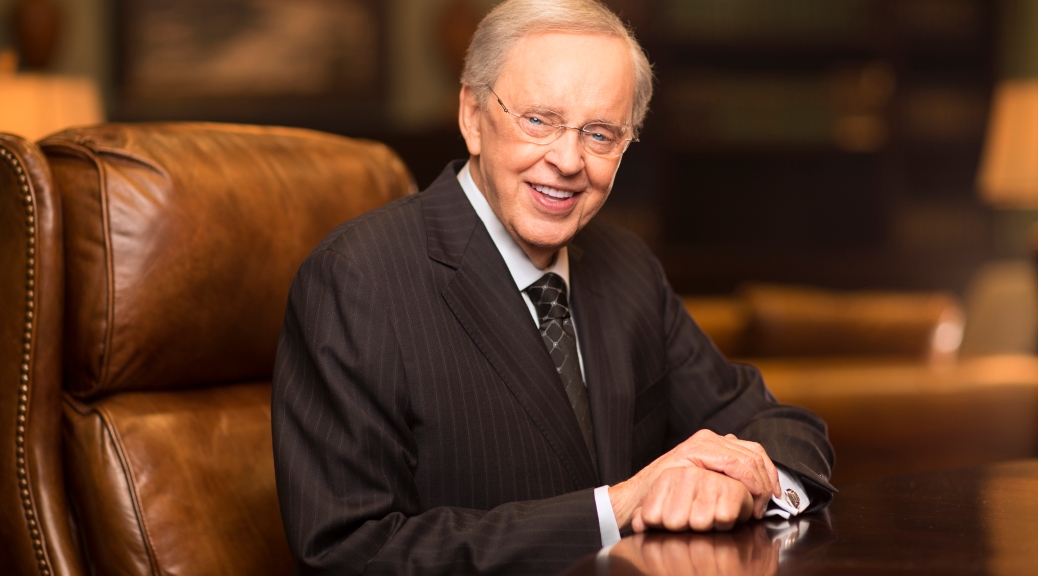
Joyce Meyer – God Will Fight for You


And he said, “Listen, all Judah and inhabitants of Jerusalem and King Jehoshaphat: Thus says the Lord to you, ‘Do not be afraid and do not be dismayed at this great horde, for the battle is not yours but Gods’.” — 2 Chronicles 20:15

There are times in our lives when we feel like we are up against what seems to be an insurmountable enemy. Things appear to be hopeless, and we are in a fight we think we can’t possibly win. During times like these, we need to remember one very important thing: The battle belongs to the Lord.

You and I are involved in a spiritual war in the unseen realm. God’s Word makes it clear that we will have times of trouble (see John 16:33). But the Bible also makes it clear that no matter what we may be facing, God has a plan. His plan for us is to be victorious—even when our problems feel overwhelming.

You may be struggling with fear, a bad habit, relationship issues, or even a life-threatening disease. Whatever it is, when you give your battle to the Lord, you are in a position to win. Second Chronicles chapter 20 is one of my favorite passages of Scripture. It’s the perfect blueprint for how to respond when trouble strikes.

At the beginning of this chapter, we find King Jehoshaphat of Judah and his entire army surrounded by their enemies, trapped and outnumbered. Suddenly, without hardly any warning, Judah’s army was faced with an impossible situation and seemingly no solution. Sound familiar?

There are three very important things Jehoshaphat did. First, he admitted that he had no might to stand against his enemies. Second, he admitted that he did not know what to do. And third, he said that their eyes were on God. These three things put Jehoshaphat and the people of Judah in a position for a miracle.

In a similar way, we need to realize that we are totally dependent on God to solve our problem and fight our battles—we can’t do it on our own!

Prayer Starter: Lord, I understand there will be times when I face troubles and difficulties. Help me to let You fight my battles, trusting You to show up in my situation. In Jesus’ name, Amen.


http://www.joycemeyer.org

Campus Crusade for Christ; Bill Bright – Our Hearts’ Desires


“Therefore I say unto you, What things soever ye desire, when ye pray, believe that ye receive them, and ye shall have them” (Mark 11:24, KJV).

Jesus, assuming that our lives are pure and we are Spirit-filled, declares that our heartfelt desires will be God-given. When God gives us those desires, He then gives us the power to fulfill them (Philippians 2:13). Sometimes when God gives you a desire that is based upon Scripture, one that springs from pure motives and a desire to glorify Him, that desire may continue over a period of time as you continue in the spirit of prayer and seek counsel of other godly people who also walk in the Spirit, but you can be assured that whatever God has placed in your heart, He will do.

For example, one of the great desires of my heart as a new Christian was to produce a film on the life of Jesus. I contacted and sought the counsel of the late Cecil B. De Mille who produced the magnificent “King of Kings,” which, after more than fifty years is still being viewed by millions of people each year throughout the world. I continued to pray and many years later discussed with members of our Board of Directors whether or not we should produce such a film. They encouraged me to do whatever God led me to do, but made it clear that funds would have to be available before we could produce the film. The years passed – more than thirty years, in fact. Then miracle of miracles, in a marvelous way at Arrowhead Springs God brought together John Hyeman, a well-known film producer and director, and Bunker and Caroline Hunt to provide the finances, and the film, Jesus, became a dramatic reality.

Already, this film has been translated into more languages than any film in history and it is our goal to complete the translation into at least 271 languages which will represent every group in the world with a million or more population. We expect to have at least 2,000 teams showing the film each night to as many as four million people or even more when this massive project is in full swing. It is our prayerful objective that at least one billion people will be introduced to a personal relationship with Jesus Christ through the ministry of this film.

My point is, the desire was placed in my heart and, though that desire did not continue on a daily basis, from time to time God would remind me and I would pray for and claim again by faith the fulfillment of that dream. And now, years later, this desire is becoming a joyful reality.

Bible Reading: Psalm 21:1-7

TODAY’S ACTION POINT:  Whenever a desire to do something special for God is impressed upon my mind and heart, I will check to see if it is scriptural, and if it will bring glory to God. When it meets all biblical standards and the counsel of godly people, I will believe God for its supernatural fulfillment.


http://www.cru.org

Max Lucado – Seeing the Unseen


Listen to Today’s Devotion

We can’t see the future.  It’s one limitation we all share.  In Mark Chapter 5 we read about Jairus, the leader of the synagogue.  The Jairus we see in this story was a desperate father begging for Jesus to heal his daughter.  His meeting with Jesus was interrupted by a message from home– “Your daughter is dead.”  But Jesus said, “Don’t be afraid; just believe.”

Faith sometimes begins by ignoring what people say.  We have a choice to live by the facts or see by faith.  Jairus opted for faith and Jesus.  Mark it down!  God knows you and I are blind.  He knows living by faith and not by sight doesn’t come naturally.  And I think that’s one reason he raised Jairus’ daughter from the dead.  Not for her sake—she was better off in heaven.  But for our sake—to teach us that heaven sees when we trust.

Read more He Still Moves Stones

For more inspirational messages please visit Max Lucado.

Home

Denison Forum – Attorney General releases summary of the Mueller report: 3 biblical responses


While I was flying home from Israel yesterday, US Attorney General William Barr released his summary of Special Counsel Robert S. Mueller’s two-year-long investigation into President Trump and his aides.

The summary addressed the question America has been asking for the last 676 days: Did the president, or anyone working for him, conspire with Russia to influence the 2016 election in his favor? Further, did he or those working on his behalf attempt to obstruct federal investigations into this matter?

The significance of the Mueller report is enormous. If the special counsel determined that such collusion or obstruction took place, the ramifications for our democracy would be foundational and tragic.

What the report tells us

Mr. Mueller’s report was presented to the US attorney general, who in turn issued his summary. He noted that the special counsel employed nineteen lawyers who were assisted by approximately forty FBI agents, intelligence analysts, forensic accountants, and other professional staff. The special counsel issued more than 2,800 subpoenas, executed nearly five hundred search warrants, and interviewed approximately five hundred witnesses.

The special counsel’s investigation determined that a Russian organization known as the Internet Research Agency attempted to conduct disinformation and social media operations in the US “with the aim of interfering with the election.”

It also found that “Russian government actors successfully hacked into computers and obtained emails from persons affiliated with the Clinton campaign and Democratic Party organizations, and publicly disseminated those materials through various intermediaries.”

However, Mr. Mueller “did not find that the Trump campaign, or anyone associated with it, conspired or coordinated with the Russian government in these efforts, despite multiple offers from Russian-affiliated individuals to assist the Trump campaign.”

With regard to obstructing the investigation, the special counsel “did not draw a conclusion—one way or the other—as to whether the examined conduct constituted obstruction.” Instead, Mr. Mueller sets out evidence on both sides of the question and states that “while this report does not conclude that the President committed a crime, it also does not exonerate him.”

This decision “leaves it to the Attorney General to determine whether the conduct described in the report constitutes a crime.” Attorney General Barr, in consultation with other officials, determined that “the evidence developed during the Special Counsel’s investigation is not sufficient to establish that the President committed an obstruction-of-justice offense.”

A threat that should concern every American

The essence of fallen human nature is the enthronement of self. It is seeking what is best for me at the expense of what is best for you.

Russian actors obviously felt it was in their personal and/or national best interests to interfere in our democratic process. Last year, the Mueller investigation charged twenty-five Russian intelligence operatives and social media manipulation experts. The final report makes clear their intent to influence the 2016 election.

This is a threat that should concern every American. Our right and ability to elect our leaders is foundational to our democracy. If foreign countries and actors can influence our votes and elections, our democracy is imperiled.

Closer to home, the responses we are seeing to Mr. Barr’s report are predictably partisan.

Republican leaders are claiming total vindication for the president. Congressional Democrats are calling for the attorney general to turn over all files related to the investigation; a co-founder of a Democratic support organization wrote on Twitter that Mr. Barr’s summary “is pure propaganda.”

It is unlikely that the Mueller report will change many minds. As the New York Times notes, “Opinions have hardened over time, with many Americans already convinced they knew the answers before Mr. Mueller submitted his conclusions.”

Three biblical responses

As Christians respond to this controversial issue, it is vital that we resist the temptation to put our political beliefs ahead of our public witness.

The special counsel’s report could help or hinder the spread of God’s kingdom in a variety of ways, but few of them relate directly to the president, Congress, or Russia. God’s plans for our country already took into account the findings of the report. He knew the truth long before Mr. Mueller did, and he knows what will continue to come from the proceedings.

Our Father is now calling on his children to reflect his character. Whether you are a supporter or a critic of the president and his administration, it is vital that you respond in ways that glorify our Lord and draw people to him.

Scripture prescribes three priorities in this regard.

One: We should respect the authority of the offices our leaders hold.

Paul’s injunction was clear: “Let every person be subject to the governing authorities. For there is no authority except from God, and those that exist have been instituted by God” (Romans 13:1). Do your words regarding the president and other elected leaders respect their offices and authority?

Two: We should pray for our leaders.

Paul instructed us: “I urge that supplications, prayers, intercessions, and thanksgivings be made for all people, for kings and all who are in high positions” (1 Timothy 2:1–2).

When last did you pray for our president and other leaders?

Three: We should hold our leaders accountable to biblical character.

Jesus told his apostles, “If anyone would be first, he must be last of all and servant of all” (Mark 9:35). After washing his disciples’ feet, our Lord taught them, “If I then, your Lord and Teacher, have washed your feet, you also ought to wash one another’s feet” (John 13:14).

Are you praying for our leaders to be biblical servants?

Are you modeling such behavior for our culture?

As I often note, winning arguments is less important than winning souls. Frederick Faber was right: “Kindness has converted more sinners than zeal, eloquence, or learning.” As a result, in a culture so riven with partisan vitriol, the words of seventeenth-century English churchman Thomas Fuller are remarkably relevant: “Kindness is the noblest weapon to conquer with.”

How will you use it today?


Denison Forum

Charles Stanley – Who Is Jesus?


Matthew 16:13-20

When Jesus asked His disciples, “Who do you say that I am?” Peter replied, “You are the Christ, the Son of the living God” (Matt. 16:15-16). The Lord asks us the same question, though not with audible words. There are many answers, but let’s check Scripture for three overarching truths:

  1. Jesus is God the Son—a member of the Trinity. After His baptism, the heavens opened, the Holy Spirit descended like a dove, and the Father Himself announced, “This is My beloved Son, in whom I am well-pleased” (Matt. 3:17).
  2. Christ is the Savior of mankind. When Adam and Eve chose to sin against Jehovah, there was a separation between God and man. In Old Testament times, an animal sacrifice was necessary to atone for the wrong in one’s life. But that was a temporary solution, until Jesus—the perfect sacrifice—atoned once for all sin. He was the only One who could satisfy God’s requirement for a Savior, because He had no sin (2 Corinthians 5:21).
  3. He is our High Priest. In Old Testament times, a mediator—often a temple priest—interceded between God and man, offering an animal’s blood as atonement for sin. Jesus’ death and resurrection took away the need for such sacrifices. Christ now stands as our intercessor, the bridge between Holy God and sinful man (Heb. 7:25-26).

Who do you believe Jesus is? These characteristics of Christ are taken directly from the Bible. Do they align with your understanding? Check your view of Him against the standard of Scripture. Then ask the Lord to reveal Himself so that you can know Him accurately and personally.

Bible in One Year: 1 Samuel 4-6


http://www.intouch.org/

Our Daily Bread — Singing in the Spirit


Bible in a Year:Joshua 16–18; Luke 2:1–24

Be filled with the Spirit, speaking to one another with psalms, hymns, and songs from the Spirit.

Ephesians 5:18–19

Today’s Scripture & Insight:2 Chronicles 5:7–14

During the Welsh Revivals of the early twentieth century, Bible teacher and author G. Campbell Morgan described what he observed. He believed the presence of God’s Holy Spirit was moving on “billowing waves of sacred song.” Morgan wrote that he had seen the unifying influence of music in meetings that encouraged voluntary prayers, confession, and spontaneous singing. If someone got carried away by their feelings and prayed too long, or spoke in a way that didn’t resonate with others, someone would begin to softly sing. Others would gently join in, the chorus swelling in volume until drowning out all other sound.

The renewal in song that Morgan describes has its story in the Scriptures, where music plays a prominent role. Music was used to celebrate victories (Exodus 15:1–21); in worshipful dedication of the temple (2 Chronicles 5:12–14); and as a part of military strategy (20:21–23). At the center of the Bible we find a songbook (Psalms 1–150). And in Paul’s New Testament letter to the Ephesians we read this description of life in the Spirit: “[Speak] to one another with psalms, hymns, and songs from the Spirit” (Ephesians 5:19).

In conflict, in worship, in all of life, the music of our faith can help us find one voice. In harmonies old and new we’re renewed again and again, not by might, nor by power, but the Spirit and songs of our God.

By Mart DeHaan

Today’s Reflection

What song has spoken to your heart recently? How can music encourage you in your relationship with God?


http://www.odb.org

Streams in the Desert for Kids – They Didn’t Even Get Their Feet Wet!


Psalm 66:1-2, 6

The Bible is full of stories about how God helped his people when they faced impossible obstacles. When God parted both the Jordan River and the Red Sea so his people could cross over, the pathway through was completely dry. They didn’t even get their sandals wet. When Jonah was thrown overboard, God sent the big fish to save him from drowning and get him to dry land. When Naaman faced a debilitating disease, God told his prophet Elisha how Naaman could be miraculously healed in the Jordan River.

Our God is one of miracles and grand gestures of love. Because he loved us first, we are privileged to love him back, even when facing big problems—especially when facing big problems. In the Bible, Job faced exceptional pain and tragedy when he lost his home, his possessions, his health, and, worst of all, his family. And yet in his grief, he demonstrated love for the Lord who loved him first. “At this, Job got up and tore his robe and shaved his head. Then he fell to the ground in worship and said … ‘The Lord gave and the Lord has taken away; may the name of the Lord be praised’” (Job 1:20–21). The same God who chose to save his people with miracles didn’t spare Job from his pain. But God still delighted in Job. And Job still rejoiced in God. Their relationship was deep and it helped Job face his tragedy.

Dear Lord, I don’t know when I’ll have to face something really hard. What I do know is that you go ahead of me and make it possible for me to pass through hardship. Thank you for loving me that much, Father. Amen

Joyce Meyer – He Will Tell You What’s Ahead


…He will announce and declare to you the things that are to come [that will happen in the future]. — John 16:13 (AMPC)

Adapted from the resource Hearing from God Each Morning Devotional – by Joyce Meyer

One of the many benefits of hearing from God is that listening to His voice helps us prepare for the future. The Holy Spirit gives to us the messages the Father gives to Him, and He often tells us things that will happen in the future.

We find many instances in the Bible in which God spoke to people and gave them information about the future. He told Noah to prepare for a flood that would come to destroy the people of the earth (see Genesis 6:13–17). He told Moses to go to Pharaoh and ask for the release of the Israelites and that Pharaoh would not grant this request (see Exodus 7).

Obviously, God does not tell us everything that will happen in the future, but His Word promises He will tell us some things.

There are times when I sense that something good, or perhaps something challenging, is going to happen. When a challenge awaits me and I have some prior knowledge of it, that knowledge helps to cushion the blow when the difficult situation comes.

If an automobile with good shock absorbers hits a pothole, those absorbers protect passengers in the car from the jarring impact that would result and no one gets hurt. God’s giving us information ahead of time works the same way.

Part of the Holy Spirit’s ministry is to tell us things to come. He knows the mind of God and He knows God’s individual plans for our lives. He will reveal what we need to know when we need to know it in order to fulfill the good plans God has for us.

Prayer Starter: Father, thank You for the ministry of Your Holy Spirit, Who speaks to our hearts and shows us what we need to know. Help me to be sensitive to Your Spirit at all times. Open my eyes to the things I need to see today and in the future. In Jesus’ name, Amen.


http://www.joycemeyer.org

Campus Crusade for Christ; Bill Bright – According to Your Faith


“Then touched He their eyes, saying, According to your faith be it unto you” (Matthew 9:29, KJV).

A poor heathen woman, after receiving Christ as her Savior, was remarkable for her simple faith. She decided to take Him literally at His word.

A few months after her conversion her little child became ill, and recovery was doubtful. Ice was needed for the little one, but in that tropical country, away from the world’s large cities, such a thing was not to be had.

“I’m going to ask God to send ice,” the mother said to a missionary.

“Oh,” came the quick reply, “but you can’t expect that He will do that.”

“Why not?” asked the simple-hearted believer. “He has all the power, and He loves us. You told us so. I’ll ask Him, and I believe He’ll send it.”

She did ask Him, and strange things began to happen. Soon there came up a heavy thunderstorm, accompanied by hail. The woman was able to gather a large quantity of hailstones. The cold application was just what the child needed. Recovery of the sick child soon followed. In our sophistication and intellectualism we, like the missionary and most other Christians, would tend to question the audacity of such a prayer.

Faith as a little child always brings the desired answer. “According to your faith be it unto you.” And where does such faith originate? “Faith comes by hearing, and hearing by the Word of God.”

Bible Reading: Matthew 9:27-31

TODAY’S ACTION POINT:  If my storehouse of faith proves insufficient to enable me to live supernaturally or to believe God for a specific need, I will spend time in His Word to build up that storehouse of faith.


http://www.cru.org

Charles Stanley –How the Bible Is Structured


Psalm 119:89-96

One of the reasons we sometimes fail to understand the Bible is because we skip around as we read it. The Bible has an organized structure, and all the parts fit together as a whole. By reading through it systematically, we’ll see God’s plan of redemption clearly revealed in an orderly fashion.

The Plan. In Genesis 1 and 2, the Lord created the heavens and earth and all that fills them, but His plan of redemption through the death of His Son was already in place before creation (1 Peter 1:18-21).

The Need. In Genesis 3, sin entered the world, but God sacrificed an animal to cover the sinners’ shame and promised to send a Redeemer.

Preparation. God eventually chose the nation Israel, through whom He proclaimed Himself as the one true God and brought the Messiah into the world.

Redemption. The Gospels document how Jesus came as the Messiah, died as God’s sacrifice for man’s sin, was resurrected, and ascended to heaven.

Proclamation. The book of Acts tells of the growth of the church through the spread of the gospel.

Explanation. God inspired the apostles to write letters to the churches regarding the faith and instructions for spiritual growth.

Completion. The book of Revelation reveals Christ’s future kingdom, in which His followers join Him eternally in a new heaven and a new earth.

Even though God’s Word is organized in sections, do not forget that it functions as a whole. Once you understand the Bible’s outline, you can see how all the diverse elements connect to make one story of redemption.

Bible in One Year: 1 Samuel 1-3


http://www.intouch.org/

Our Daily Bread — Obscured by Clouds


Bible in a Year:Joshua 13–15; Luke 1:57–80

We fix our eyes not on what is seen, but on what is unseen.

2 Corinthians 4:18

Today’s Scripture & Insight:2 Corinthians 4:16–18

A rare supermoon appeared in November 2016—the moon in its orbit reached its closest point to the earth in over sixty years and so appeared bigger and brighter than at other times. But for me that day the skies were shrouded in gray. Although I saw photos of this wonder from friends in other places, as I gazed upward I had to trust that the supermoon was lurking behind the clouds.

The apostle Paul faced many hardships but believed that what is unseen will last forever. He said how his “momentary troubles” achieve “an eternal glory” (2 Corinthians 4:17). Thus he could fix his eyes “not on what is seen, but on what is unseen,” because what is unseen is eternal (v. 18). Paul yearned that the Corinthians and our faith would grow, and although we suffer, that we too would trust in God. We might not be able to see Him, but we can believe He is renewing us day by day (v. 16).

I thought about how God is unseen but eternal when I gazed at the clouds that day, knowing that the supermoon was hidden but there. And I hoped the next time I was tempted to believe that God was far from me, I would fix my eyes on what is unseen.

By Amy Boucher Pye

Today’s Reflection

What does it mean for you to fix your eyes on what is unseen? How does your hope in Jesus help you face the difficulties of life?


http://www.odb.org

Joyce Meyer – Get Moving


When they had crossed, Elijah said to Elisha, “Ask what I shall do for you, before I am taken from you.” And Elisha said, “Please let there be a double portion of your spirit on me.” And he said, “You have asked a hard thing; yet, if you see me as I am being taken from you, it shall be so for you, but if you do not see me, it shall not be so.” — 2 Kings 2:9-10

Adapted from the resource The Confident Woman Devotional – by Joyce Meyer

Just as under-confidence comes with its list of symptoms, the same is true of confidence. A confident person believes they are loved, valuable, cared for, and safe in God’s will. When we feel secure, it’s easy to step out and take a chance on failing in order to try to succeed.

When we know we are loved for ourselves and not just for our accomplishments or performance, we no longer need to fear failure. We realize that failing at something does not make us a failure at everything. We are free to explore and find out what we are best suited to do. We are free to find our own niche in life, which is not possible without stepping out.

Trial and error is the road to success, and you can’t drive that road as long as your car is parked. So, get moving, and God will direct you. When people are confident, they try things, and they keep trying until they find a way to be successful in what God has called them to do.

Prayer Starter: Lord, I want to explore all that You have for me, and I accept there may be failures. Show me the way to be successful for You. In Jesus’ name, Amen.


http://www.joycemeyer.org

Campus Crusade for Christ; Bill Bright – Loving and Kind


“But His joy is in those who reverence Him, those who expect Him to be loving and kind” (Psalm 147:11).

Can you imagine an intelligent person saying no to Christ if he fully understood how much God loves him and if he realized that when he receives Christ his sins are all forgiven and he is given eternal life together with new meaning and purpose for his present life?

The non-believer who does not know all these things continues to live in disobedience, rejecting God’s love and forgiveness. Why? Simply because he does not understand; he lacks information.

It is difficult to imagine a person saying no to such a wonderful life of challenge and adventure with the risen Christ if that person knows all the facts about who Christ is and why He came to this world. It is the same with the Christian who is living in spiritual poverty. He often continues to live a frustrated, fruitless life, simply because he just does not understand who the Holy Spirit is and what the supernatural life is all about. But lack of knowledge is not the only obstacle to enjoying the supernatural life.

Pride: Pride, which is an exaltation of self instead of God, is the root cause of all sin. This defeating aspect of our human nature has kept many Christians from living supernaturally. Pride is not the same as a God-given healthy love and acceptance of oneself.

Fear of man: Peer pressure keeps many Christians from living the supernatural life. “The fear of man brings a snare” (Proverbs 29:25, NAS).

Many are afraid to be different, or are ashamed to witness for Jesus Christ who loved us and gave Himself for us. “But His joy is in those who reverence Him, those who expect Him to be loving and kind.”

Bible Reading: Psalm 147:5-10

TODAY’S ACTION POINT:  I will claim the enabling power of the Holy Spirit to overcome pride and fear of man, I will reverence the Lord and expect Him to be loving and kind as He promised.


http://www.cru.org

Charles Stanley – Reasons to Believe the Bible


2 Timothy 3:14-17

Have you ever wondered if you can trust what the Bible says? Although Scripture testifies to its own inspiration, there are also other evidences that affirm that the book we hold in our hands is the true and accurate Word of God.

Jesus believed Scripture.Our Savior affirmed the validity of the Old Testament by quoting passages as He taught. He used Isaiah’s prophecies and the Pentateuch to poke holes in the Pharisees’ false piety (Mark 7:6-13). And after His resurrection, He explained the things concerning Himself that had been written by Moses and the prophets (Luke 24:25-27). Finally, because Jesus had promised the Holy Spirit would teach the disciples and remind them of His words, He insured the accuracy of the New Testament as well (John 14:26).

Scripture is inexhaustible. Like a well that never runs dry, the Bible offers a fresh taste of living water each time we open it. People who have dedicated their lives to studying this amazing book admit they have only skimmed its surface. Personally, I can’t count the times that a passage I knew by heart suddenly yielded new insights.

Scripture is indestructible. Over the years, various governments and leaders have tried in vain to destroy the Bible, or at least restrict access to it. And yet this polarizing—and well-loved—book keeps circulating and winning hearts for Christ.

The Bible truly is the most amazing book ever written because it comes directly from God. Not only does it accurately predict the future; it also has the power to save sinners and transform them into saints.

Bible in One Year: Ruth 3-4


http://www.intouch.org/

Our Daily Bread — Bearing the Burden of Wrongs


Bible in a Year:Joshua 10–12; Luke 1:39–56

Do not repay evil with evil.

1 Peter 3:9

Today’s Scripture & Insight:1 Peter 3:8-14

On January 30, 2018, almost thirty-eight years after his conviction, Malcolm Alexander walked out of prison a free man. DNA evidence cleared Alexander, who had steadfastly maintained his innocence amid a myriad of court proceedings that were tragically unjust. An incompetent defense attorney (later disbarred), shoddy evidence, and dubious investigative tactics all put an innocent man in prison for nearly four decades. When he was finally released, however, Alexander showed immense grace. “You cannot be angry,” he said. “There’s not enough time to be angry.”

Alexander’s words evidence a deep grace. If injustice robbed us of thirty-eight years of our lives and destroyed our reputations, we would likely be angry, furious. Though Alexander spent many long, heartbreaking years bearing the burden of wrongs inflicted upon him, he wasn’t undone by the evil. Rather than exerting his energy trying to get revenge, he exhibited the posture Peter instructs: “Do not repay evil with evil or insult with insult” (1 Peter 3:9).

The Scriptures go a step further: rather than seeking vengeance, the apostle Peter tells us we are to bless (v. 9). We extend forgiveness, the hope of well-being, for those who have unjustly wronged us. Without excusing their evil actions, we can meet them with God’s scandalous mercy. On the cross, Jesus bore the burden of our wrongs, that we might receive grace and extend it to others—even those who have wronged us.

By Winn Collier

Today’s Reflection

Without excusing their actions, how can you extend mercy to others who have wronged you? What will it mean for you to “bless” them?


http://www.odb.org

Ravi Zacharias Ministry – Through Deeper Darkness

Professor and theologian James Loder was on vacation with his family when they noticed a motorist off to the side of the road waving for help. In his book The Transforming Moment, he describes kneeling at the front fender of this broken-down car, his head bent to examine the flat tire, when he was startled by the abrupt sound of screeching brakes. A motorist who had fallen asleep at the wheel was jarred awake seconds before his vehicle crashed into the disabled car alongside the road—and the man who knelt beside it. Loder was immediately pinned between two vehicles. The car he knelt to repair was now on his chest, his own vehicle underneath him.

Years after both the incident and the rehabilitation it required, Loder was compelled to describe the impact of that moment so marked by pain and tragedy, which was unexpectedly, something much more. Loder describes the incident: “At the hospital, it was not the medical staff, grateful as I was for them, but the crucifixes—in the lobby and in the patients’ rooms—that provided a total account of my condition. In that cruciform image of Christ, the combination of physical pain and the assurance of a life greater than death gave objective expression and meaning to the sense of promise and transcendence that lived within the midst of my suffering.”(1)

For the Christian, the crucifixion is the center of the whole, the event that gives voice to a broken, dark, and dying world, and the paradoxical suggestion of life somehow within it. This is why the church calendar sets apart forty days to prepare or the cross. This is why the church marks steeples and graves in memory of the crucifixion. The death of Christ is the occasion that makes way for the last to be first, the guilty to be pardoned, the creature united again to its creator. The cross of Christ is the mysterious sign that stands in the center of the history of the world and changes everything. “I have been crucified with Christ,” said one of his transformed followers. “It is no longer I who live, but Christ who lives in me.”

The suffering and death of Christ is indeed an image that gives expression to inexplicable tragedy, unnecessary suffering, and perplexing darkness. But the cross is also the event that jarringly marks that suffering, death, tragedy, and sorrow as qualities to which the vicariously human Son of God willingly submitted himself. It is thus that the broken and bleeding Loder could sense his condition understood in the image of a broken and bleeding Christ. “For surely he has borne our infirmities and carried our diseases.” In the cruciform image of Christ on the cross, our own encounters of tragedy are not only affirmed, but held at God’s own volition. From the glory of heaven, Christ has come into the dark world where we stand.

Continue reading Ravi Zacharias Ministry – Through Deeper Darkness

Joyce Meyer – Thoughts of the Heart


Either make the tree good and its fruit good, or make the tree bad and its fruit bad, for the tree is known by its fruit. — Matthew 12:33

Adapted from the resource Ending Your Day Right Devotional – by Joyce Meyer

The Bible says a tree is known by its fruit, and the same is true of you. You can look at a person’s attitude and know what kind of thinking is prevalent in their life. A sweet, kind person does not have mean, vindictive thoughts. By the same token, a truly evil person does not have good, loving thoughts.

Your thoughts bear fruit. Think good thoughts and the fruit in your life will be good. Think bad thoughts and the fruit in your life will be bad. Remember Proverbs 23:7(AMPC) and allow it to have an impact on your life: For as you think in your heart, so are you.

Prayer Starter: Thank You, Father, for the power of Your Word to renew my thoughts and transform every single area of my life. Help me to be aware of what is going on in my mind and to constantly choose positive, uplifting, faith-filled thoughts from Your Word. In Jesus’ Name, Amen


http://www.joycemeyer.org

Campus Crusade for Christ; Bill Bright – How to Gain Understanding


“For ever, O Lord, Thy Word is settled in heaven. Thy faithfulness is unto all generations” (Psalm 119:89,90, KJV).

A story is told of a young woman who had been informed about a famous novel. She was interested in reading it, but as she began to read the novel, she found it dry and uninteresting. She would put it down to read something else, and then she would come back and try to read it again because her friends said it was an excellent book.

Even with the high recommendations of her friends, the book just did not captivate her. Then one day she met the author. He was very handsome and personable. They became interested in each other, and she fell in love with him.

Now she could hardly wait to read the novel. It was the most exciting book she had ever read, for she had fallen in love with the author.

This is what happens with the Scriptures when we love the Author, the Lord Jesus Christ.

During my years of skepticism and agnosticism, I found the Bible very dry and difficult to read and I believed it was filled with “all kinds of errors and inconsistencies.” Then after becoming a Christian I began to read the Bible again. It was a completely different book, filled with exciting, life-changing truth. All the “errors and contradictions” were gone.

Why the difference? The non-believer or disobedient Christian does not understand spiritual truth (1 Corinthians 2:14). The Spirit-filled believer is taught by the Holy Spirit, who illumines the truth which He revealed to the original authors as recorded in the Bible.

Bible Reading: Psalm 119:129-136

TODAY’S ACTION POINT:  I will ask God to give me a love for His holy, inspired Word. Then things that happen in my life which I do not understand will be made clear as I go to the source of all true understanding, the Word of God.


http://www.cru.org

Max Lucado – When You Encounter Evil


Listen to Today’s Devotion

Jesus found him in a cemetery, and his story is in the fifth chapter of Mark.  As Jesus stepped out of a boat, a demon-possessed man stormed out of a cave.  The demons begged to be sent into a herd of pigs.  Jesus consented, and 2000 demon-possessed pigs threw themselves into the sea.

The people begged Jesus to leave their area.  Why?  Fear of change.  But before Jesus left, he told the man freed from demons to “Go home to your family and tell them how much the Lord has done for you and how he has had mercy on you.” That was the commissioning of the first missionary sent to people who dismissed Jesus.  Christ still sends messages to the unworthy.  And he still uses the unworthy as messengers.

Read more He Still Moves Stones

For more inspirational messages please visit Max Lucado.

Home

Denison Forum – President Trump endorses Israel’s sovereignty over the Golan Heights

President Trump endorsed Israeli sovereignty over the Golan Heights yesterday, marking what the Wall Street Journal calls a “sharp U.S. policy shift.” The move came during US Secretary of State Mike Pompeo’s visit to Israel and before Israeli Prime Minister Benjamin Netanyahu visits the White House next week.

Why does the region known as the “Golan Heights” matter to Israel and to the world?

An area twice the size of Dallas

The Golan Heights is an elongated, elevated area approximately forty miles long and twelve miles wide. It comprises 690 square miles (about twice the size of Dallas, Texas). The Golan (as it is known) borders Israel and the Sea of Galilee to the west, Syria to the east, Jordan to the south, and Lebanon to the north.

I have visited the area many times over the last twenty-five years. It is a spectacularly beautiful region dominated by hills and valleys. It is also one of the most strategic military areas in the world.

The Golan was part of Syria until the Six-Day War (June 5–10, 1967) between Israel and Egypt, Syria, Jordan, and Iraq. During the war, Israel gained control of the Golan and soon began settlements there. In the 1973 Yom Kippur War, Syrian forces overran the southern Golan in a surprise offensive before they were expelled by an Israeli counteroffensive.

Israel and Syria signed a ceasefire in 1974 that left most of the Golan in Israel’s control. In 1981, Israel passed the Golan Heights Law that effectively annexed the territory. The international community rejects Israel’s claim to the region, recognizing it as Syrian territory.

Prime Minister Netanyahu, who has long claimed that Israel must control the Golan to protect its national security, hailed Mr. Trump’s move. Critics say the president’s announcement will jeopardize peace efforts in the region and violates a UN resolution that rules out acquiring territory by war.

Three millennia of conflicted history

I have been leading a study tour to the Holy Land this week. Each time I come to Israel, I am impressed again by the courage of her people amid this chaotic region.

Continue reading Denison Forum – President Trump endorses Israel’s sovereignty over the Golan Heights