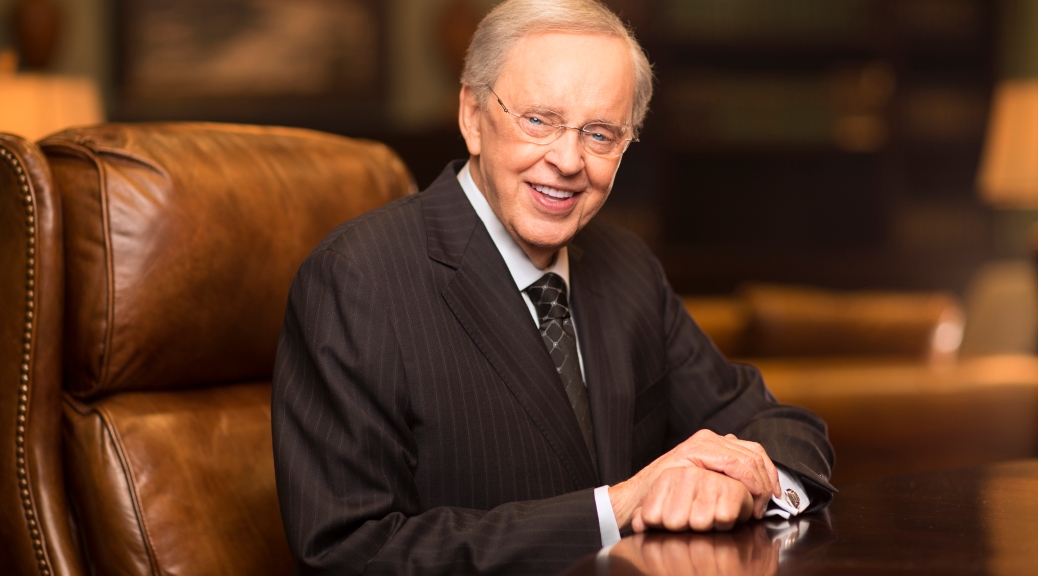
Charles Stanley – The Lord Comforts Sinners


John 8:1-11

We expect a loving heavenly Father to care for His children when they are hurt, persecuted, or misunderstood. But you might be surprised to realize that God comforts believers even when they have sinned.

Jesus did not come to condemn the world but to save anyone who believes in Him (John 3:17). Consider His response to the woman whom the Pharisees caught committing adultery. They brought her behavior to Jesus’ attention and wanted to stone her. But instead of taking up a rock, Jesus offered forgiveness. The Lord did not defend her actions or completely erase all consequences of her choices. However, He did offer compassion as well as an opportunity to turn her life around and live in the forgiveness He granted: “Go. From now on sin no more” (John 8:11).

The Lord understands our human frailty. And even before we do wrong, He knows the poisonous harvest that we will reap from sin. We certainly want a lot of comfort when we are suffering from our own foolishness. A loving heavenly Father does not abandon His children at their hour of great need—His Spirit wades into the mess we have made. He offers to guide us out of the pit, soothes our broken heart, and provides reassurance that He is always close by.

Sinning against the Lord makes us feel unworthy of His care and solace. Yet God’s forgiveness is based on His great mercy rather than our conduct. If Jesus Christ sacrificed His life to save you from your sins, then He will love and comfort you, no matter what.

Bible in One Year: Ruth 1-2


http://www.intouch.org/

Our Daily Bread — Hand Made for You


Bible in a Year:Joshua 7–9; Luke 1:21–38

We are God’s handiwork, created in Christ Jesus to do good works, which God prepared in advance for us to do.

Ephesians 2:10

Today’s Scripture & Insight:Ephesians 2:4-10

My grandmother was a talented seamstress who won contests in her native Texas. Throughout my life, she celebrated hallmark occasions with a hand-sewn gift. A burgundy mohair sweater for my high school graduation. A turquoise quilt for my marriage. I’d fold over a corner of each custom-crafted item to discover her signature tag reading, “Hand made for you by Munna.” With every embroidered word, I sensed my grandmother’s love for me and received a powerful statement of her faith in my future.

Paul wrote to the Ephesians of their purpose in this world, describing them as “God’s handiwork, created in Christ Jesus to do good works” (2:10). Here “handiwork” denotes a work of art or a masterpiece. Paul goes on to describe that God’s handiwork in creating us would result in our handiwork of creating good works—or expressions of our restored relationship with Jesus—for His glory in our world. We can never be saved by our own good works, but when God hand makes us for His purposes, He can use us to bring others toward His great love.

With her head bowed over her needle, my Munna hand made items to communicate her love for me and her passion that I discover my purpose on this planet. And with His fingers shaping the details of our days, God stitches His love and purposes in our hearts that we might experience Him for ourselves and demonstrate His handiwork to others.

By Elisa Morgan

Today’s Reflection

What has God created you to do? Who can you show His love to today?


http://www.odb.org

Ravi Zacharias Ministry – Behold, the Crucified

Even modern English Bible versions often end up retaining the rather un-modern term “behold” in their translations of the Hebrew word hinneh and the Greek word idou. This is because there is no other equivalent English word that quite does the job that behold does. All the three terms—Hebrew, Greek, and English—have a certain gravitas, and, whenever used, command us to pay careful attention to what follows.

In John’s narrative of the trial and the crucifixion of Jesus, there are five occurrences of the term—three coming from the mouth of the unwitting prophet, Pilate, and twice from the mouth of our Lord Jesus. Each occurrence summons us to a facet of the person and work of Christ.

In John 19:4, “Pilate came out again and said to them, ‘Behold, I am bringing Him out to you so that you may know that I find no guilt in Him.’” We may render Pilate’s words as: “Behold, the Guiltless One!” Christians have always claimed, and will always claim, that Jesus, the Innocent, bore the sins of a guilty world. When his executioners twisted together a crown of thorns and thrust it upon his head, little did they know that they were enacting a prophetic truth! For in that single image—the crown of thorns on his head—is encapsulated the central Christian claim: that this guiltless-but-crucified one bore upon himself the guilt and curse of the whole of creation. Remember: “Cursed is the ground because of you…. Both thorns and thistles it shall grow for you.”(1)

The following verse is the second time the word occurs: “Jesus then came out, wearing the crown of thorns and the purple robe. Pilate said to them, ‘Behold, the Man!’” (v.5). Jesus is the window to God; He is also the mirror to man. In him, we see what is wrong with us, and what we are meant to be. The poetic poignancy of the occurrence is also found in the allusion that, just as the first human being, Adam, takes stage on the sixth day of creation, Christ, the New Human Being, takes center stage on the sixth day—Good Friday—of new creation.(2) And we are summoned to pay close attention to him, the man.

We are no longer helplessly and hopelessly fated to take the course of Adam. There is another pattern for being fully and truly human: Behold, the human!

The third time “behold” appears is in verse 14, where “[Pilate] said to the Jews, ‘Behold, your King.’” In his book, Jesus Rediscovered, Malcolm Muggeridge, in his inimitable way, says, “The crown of thorns, the purple robe, the ironical title ‘King of the Jews,’ were intended to mock or parody Christ’s pretensions to be the Messiah; in fact, they rather hold up to ridicule and contempt all crowns, all robes, all kings that ever were. It was a sick joke that back-fired.”(3) Muggeridge is perhaps being a touch cynical here, and may be guilty of rendering serious political reflection and engagement impossible and pointless. All the same, the Christian claim that Jesus is the Christ (i.e., the King) is a claim that effectively loosens all other claims, renegotiates all other allegiances, recasts all other power, downsizes all other authorities, domesticates all other principalities, and tempers the Christian resolve to not give beings and things, apart from God and his Christ, an ultimacy that they demand but do not deserve. Christ, in short, dismantles idols and unravels idolatries.

The final two occurrences are found in John 19:26-27: “When Jesus then saw his mother, and the disciple whom he loved standing nearby, he said to his mother, ‘Woman, behold, your son!’ Then he said to the disciple, ‘Behold, your mother!’ From that hour the disciple took her into his own household.” We may club the two occurrences to mean, “Behold, your new family!” Theologians have also often noted John’s allusion to the Church in his record of Jesus side being speared: as Eve, the bride of Adam, issued forth from Adam’s side, the Church, the bride of Christ, issues forth from the crucified’s side, with the blood and water symbolizing the two foundational sacraments of the Church, Lord’s Supper and Baptism. At the foot of the Cross, there is the creating and forging of a new family, a new community, a new humanity—the Church: a believing that leads to a belonging.

Kethoser (Aniu) Kevichusa is a member of the speaking team at Ravi Zacharias International Ministries in Nagaland, India.

(1) Genesis 3:17-18.
(2) This basic thought is borrowed from the various writings of N.T. Wright on the passage.
(3) Malcolm Muggeridge, Jesus Rediscovered (London: Fontana, 1969), 47

http://www.rzim.org/

Joyce Meyer – How to Pray Effectively


[Yes] I will grant [I Myself will do for you] whatever you shall ask in My Name [as presenting all that I AM]. — John 14:14 (AMPC)

Adapted from the resource Closer to God Each Day Devotional – by Joyce Meyer

I reached a point in my prayer life where I felt frustrated, so I began to seek God about it. I wanted the assurance that my prayers were being effective. I wanted to have confidence that when I prayed, power was released to work in the situation I had prayed about. I wanted those things, but to be honest, I didn’t have that assurance or confidence.

Satan definitely wants to steal our confidence concerning prayer. Many people express the same frustrations that I felt. They pray, but all the while they’re wondering if they are being effective. What is wrong? I believe that we mistakenly think that we need to be perfect in order to have power in prayer, but we don’t. That is why we have been given the name of Jesus in which to pray!

When we pray in Jesus’ name, we are presenting to God the Father all that Jesus is, not what we are. Thankfully, I don’t pray in Joyce’s name; if I did I would never accomplish anything! The Holy Spirit helps us pray as we ought to, and the name of Jesus guarantees the answer!

Be bold in prayer because you have the name above every other name, and at the mention of that name, every knee must bow (see Philippians 2:10). Pray boldly, expecting results!

Prayer Starter: Thank You, Father, that I can come to You boldly in prayer, knowing that You love to hear from me. Increase my level of expectation and help me to make prayer an easy, simple, natural part of my life. In Jesus’ Name, Amen.


http://www.joycemeyer.org

Campus Crusade for Christ; Bill Bright – God Answers While We Are Praying


“So don’t worry at all about having enough food and clothing. Why be like the heathen? For they take pride in all these things and are deeply concerned about them. But your heavenly Father already knows perfectly well that you need them, and He will give them to you if you give Him first place in your life and live as He wants you to” (Matthew 6:31-33).

Whenever God impresses you with a need, you can always be assured that He will supply that need, often through others.

I remember the first time I asked God for a specific amount of money. We needed $485 for a particular ministry. While I was still on my knees in prayer, there came a knock at the door and the mailman handed me a registered letter containing a check for $500. Earlier, a young man from Zurich, Switzerland, had written his parents that he had received Christ through our ministry at UCLA, and he mentioned my name as one who had helped him. His parents and their daughter had then flown all the way from Zurich to California to learn how they also could become Christians. God honored their desire and after prayer and counsel they had gone home rejoicing in the assurance of their salvation. Now they were writing and sending this generous check to express their gratitude.

Later, we needed $10,000 and God impressed us to pray for that amount. An hour after we prayed, a man whom I did not know well called to say, “I am a new Christian, and I don’t know how God speaks to man, but you have been on my mind all day, so I thought it might be that God was trying to tell me something. I thought I would just call to see if you have a need.”

I told him we had just prayed for $10,000. He said, “That’s a lot of money, but I’ll call you back in an hour.”

An hour later he called to say he would send a check the next day for $10,000 as a loan without interest. He added, “If God continues to bless me and my business, I will give you the money.”

God greatly blessed his faith and obedience, and a year later the loan became a gift. God has graciously demonstrated His faithfulness on thousands of occasions and often in even greater ways.

For those who seek first God’s kingdom, He promises, “I will answer them before they even call Me. While they are still talking to Me about their needs, I will go ahead and answer their prayers” (Isaiah 65:24). If our hearts and motives are pure and we seek always to please Him in what we do, we can never ask Him for too much. We can always be assured that our faithful God will answer us as we pray in accordance with His Word and Will.

Bible Reading: Matthew 6:24-33

TODAY’S ACTION POINT:  I will remember the faithfulness of God, that so long as my heart and my motives are pure and I pray according His Word and will, He will hear me and answer me even before I pray.


http://www.cru.org

Max Lucado – What Matters to You Matters to God


Listen to Today’s Devotion

The first miracle of Jesus was at a wedding—no small event.  For several days, there was gift-giving, speechmaking, food-eating, and wine-drinking.   Hospitality was a sacred duty  The absence of wine was a social embarrassment.  Mary asks her son to help, and he tells her that his “time has not yet come.” But he changed his plan to meet the needs of his friends.

This miracle tells us that what matters to you matters to God. You are his child.  So go ahead. Tell God what hurts.  He won’t turn you away or think it’s silly.  Hebrews 4:15-16 says, “For our high priest is able to understand our weaknesses…Let us, then, feel very sure that we can come before God’s throne where there is grace.”  Does God care about the little things in our lives?  You better believe it.

Read more He Still Moves Stones

For more inspirational messages please visit Max Lucado.

Home

Denison Forum – A giant meteor explosion and the dangers of sugary drinks and cannabis: We are mortal and immortal


A gigantic meteor exploded over our planet last December. The blast generated energy equivalent to 173 kilotons of TNT, ten times the energy produced by the atomic bomb used in Hiroshima in 1945.

Why are we only now hearing about this? The explosion was over the Bering Sea, a remote location in the middle of the ocean.

Closer to home, a Harvard-led study has found that people who drink two or more sugar-sweetened beverages a day have a 31 percent higher risk of early death from cardiovascular disease. Each additional soda or sports drink increases the risk by 10 percent.

In other health news, daily marijuana use has been linked to an increased risk of developing psychosis. People who used any type of cannabis on a daily basis were three times more likely to have a diagnosis of a new episode of psychosis. The risk increased to five times for daily use of high potency cannabis.

From the cyclone in Mozambique that killed hundreds, to the dangerous storms threatening the Northeast today, to reports that the New Zealand terror suspect planned a third attack before he was apprehended, each day’s news reminds us that we are mortal.

But we are immortal as well.

I have often quoted C. S. Lewis’s profound observation: “You have never talked to a mere mortal. Nations, cultures, arts, civilization—these are mortal, and their life is to ours as the life of a gnat. But it is immortals whom we joke with, work with, marry, snub, and exploit—immortal horrors or everlasting splendors.”

An altar seven hundred years older than Abraham

The intersection of our finitude and our immortality powerfully impressed me yesterday as our Israel study group visited the ancient fortress of Megiddo. A Canaanite altar here dates to 2700 BC—seven hundred years older than Abraham.

Continue reading Denison Forum – A giant meteor explosion and the dangers of sugary drinks and cannabis: We are mortal and immortal

Charles Stanley – The God Who Comforts


2 Corinthians 1:3-7

Look up comfort in a dictionary and you’ll find a definition like “something that promotes a state of ease or provides freedom from pain and anxiety.” But according to God’s Word, when consolation is needed, the only true solution is the indwelling Holy Spirit. In Greek, He is called paraklētos, which means “he who stands at one’s side; he who comes to one’s aid.” Believers don’t have to rely on outward remedies or distractions to ease their mind, because help is available from the ultimate Comforter.

Even before the Holy Spirit was sent to indwell believers (John 14:26; Eph. 3:16), Scripture identified God as the one who comforts His people (Isa. 40:1; Isa. 49:13). The Lord personally provides consolation and reassurance because no one knows our hurts the way He does.

I like this anonymous quotation: “When we have gone into the furnace of affliction, His hand is on the thermostat and His eye is on the clock.” God allows hardship, and as a result, we become stronger believers, wiser servants, and more humble people. But He stays by our side through the entire experience, sustaining us and limiting the intensity and duration of our distress. The Spirit’s reassuring whisper to our heart gives more comfort than the solace of family or the encouragement of friends.

People who fail to understand the true source of comfort try to escape their pain. They seek out pleasures, material wealth, or drugs and alcohol to soothe them. Only God can offer lasting relief from the crushing pressure of heartache. He even brings joy into periods of mourning.

Bible in One Year: Judges 20-21


http://www.intouch.org/

Our Daily Bread — From Wailing to Worship


Bible in a Year:Joshua 4–6; Luke 1:1–20

You turned my wailing into dancing; you . . . clothed me with joy.

Psalm 30:11

Today’s Scripture & Insight:Psalm 30:1-12

Kim began battling breast cancer in 2013. Four days after her treatment ended, doctors diagnosed her with a progressive lung disease and gave her three to five years to live. She grieved, sobbing prayers as she processed her emotions before God for the first year. By the time I met Kim in 2015, she had surrendered her situation to Him and radiated contagious joy and peace. Though some days are still hard, God continues to transform her heart-wrenching suffering into a beautiful testimony of hope-filled praise as she encourages others.

Even when we’re in dire circumstances, God can turn our wailing into dancing. Though His healing won’t always look or feel like we’d hoped or expected, we can be confident in God’s ways (Psalm 30:1–3). No matter how tear-stained our path may be, we have countless reasons to praise Him (v. 4). We can rejoice in God, as He secures our confident faith (vv. 5–7). We can cry out for His mercy (vv. 8–10), celebrating the hope He’s brought to many weeping worshipers. Only God can transform wails of despair into vibrant joy that doesn’t depend on circumstances (vv. 11–12).

As our merciful God comforts us in our sorrow, He envelops us in peace and empowers us to extend compassion toward others and ourselves. Our loving and faithful Lord canand does turn our wailing into worship that can lead to heart-deep trust, praise, and maybe even joyful dancing.

By Xochitl Dixon

Today’s Reflection

What’s the source of true peace and joy? What does it mean for you to truly surrender your all to God?


http://www.odb.org

Ravi Zacharias Ministry – Reigning From a Cross

His final hours were spent in prayer. Yet, the Gospel of Luke tells us that there was nothing unusual about this practice. “And he came out and proceeded as was his custom to the Mount of Olives…and when he arrived at the place…he withdrew from them…and knelt down and began to pray.”(1) As was his custom, Jesus would go to pray. We do not often hear the content of these prayers, but in this case, in these final hours, we see him gripped with passion. Luke tells us that he was in such agony that his sweat “became like drops of blood.” Under conditions of extreme duress, it is possible to rupture capillaries in the head. Blood pours out of the skin like perspiration. Whatever the case, Jesus had never been in this much distress before—even in his wilderness testing—we have no other portrait of him in anguish during prayer.

“And being in agony he was praying very fervently,” writes Luke. What was the source of his agony? Was Jesus in agony over the physical torture and death he was about to endure? Was he in agony over the spiritual condition of his disciples, one who would betray him and the others who would all abandon him in his time of need? Certainly, the latter is a real possibility as he exhorts his disciples at least two times to “watch and pray that you might not enter into temptation.”(2)

Whatever the reason for his agony, Jesus’s humanity was on full display in his prayer. He did not want to walk the path that was unfolding before him, and he pleads with God to provide an alternative path. Matthew’s gospel reveals more of his struggle. He tells his disciples “I am deeply grieved, to the point of death.” Then he prays to his Father, “If it is possible, let this cup pass from me; yet not as I will, but your will be done.”(3) The via dolorosa, the way of suffering, unfolded before him and he would go to his death, despite his anguished prayers for another way.

As Christians move through the season Lent and meditate on the passionate prayer of Jesus in the Garden of Gethsemane, his human agony and suffering on full display, all are brought face to face with the contrast between his triumphal entry into Jerusalem, and the agony that now awaited. How easy it is to follow Jesus as the victorious, but not as a fellow sufferer. How often the pursuit is after the glory and the grandeur of Palm Sunday as the entryway to the kingdom. But as author Kim Reisman has noted, “That is not the Jesus way. God doesn’t dispense with death. God resurrects us from it. The truth is that the Jesus way isn’t about God taking pain away from God’s people; it’s about God providing us with strength, courage, and meaning, with abundant life, often in the midst of pain.”(4)

Continue reading Ravi Zacharias Ministry – Reigning From a Cross

Joyce Meyer – Meditation Produces Success


My son, give attention to my words; Incline your ear to my sayings. Do not let them depart from your eyes; Keep them in the midst of your heart; For they are life to those who find them, and health to all their flesh. — Proverbs 4:20-22 (NKJV)

Adapted from the resource Battlefield of the Mind Devotional – by Joyce Meyer

When we refer to “meditating,” we mean we ponder something and give it our full attention. A French couple helped me see that meditation is like eating. They will take a bite of food after they have enjoyed the way it looks on the plate. They comment on the pleasant aroma and often mention one or two special ingredients. They chew slowly and deliberately, and they sometimes even comment on how it makes the inside of their mouth feel.

That seems a bit too much for most Americans, but that’s a good picture of meditating on God’s Word. We don’t just wolf down a few words or a verse and hurry on to the next. We pause to reflect on a word, a phrase, or a concept. We compare that scripture with others that come to mind. We feel in no hurry to dash to the end of the chapter.

The words are there for us to savor and enjoy. We should learn to be more concerned about quality than quantity. It is more important to get a deep understanding of one verse of Scripture than it is to read five chapters and understand nothing.

Meditating on God’s Word demands discipline. We live in such a fast-paced world that few of us make time to meditate. We should form a habit of setting aside time just to sit and think about God’s Word and the wonderful promises He has made to those who believe in Him.

The blessed person mentioned in Psalm 1 is the person who meditates on God’s Word “by day and by night.” The expression “by day and by night” means that it is a major part of a person’s life. It’s a way of saying that thinking about the Word of God should be a regular part of daily activity. This will require casting down wrong thoughts when they come and choosing to think on things that will benefit us. If we keep ourselves focused, it pays off spiritually.

I spend time with God in prayer and in study of His Word each morning, but I also apply the Word to situations that I deal with all throughout the day. During the writing of this devotion, I got some bad news by phone, and my response was to quote and think about various promises in God’s Word. His Word strengthens us and helps us keep our peace and joy.

I titled this “Meditation Produces Success” because it’s important for us to understand that contemplating the meaning of Scripture isn’t simply a good thing to do or an activity reserved for scholars. It’s God’s command to all of us. It is a requirement for true success.

I thought of the instructions to Joshua as he prepared to lead the people into the Promised Land. The first few verses of the book of Joshua provide God’s direction for him. There were at least two million people going into the land, and the responsibility of leading them was immense.

God promised to be with Joshua as He was with Moses, and He urged the new leader to be very courageous. Then He said, This Book of the Law shall not depart out of your mouth, but you shall meditate on it day and night, that you may observe and do according to all that is written in it. For then you shall make your way prosperous, and then you shall deal wisely and have good success (Joshua 1:8 AMPC).

The instructions seem clear. Joshua had the commands of God, and his primary responsibility was to contemplate those words. By immersing himself in the law, he was learning to understand the mind of God more fully. God went on to say that if Joshua kept his mind and heart on the law, he would be prosperous and successful.

Too often people focus on their problems instead of meditating on God’s promises. As they do, their problems seem to get bigger, and God’s power diminishes.

God doesn’t want Satan to fill your mind. He doesn’t want you to give him the opportunity to inject wrong and negative thoughts into your head. For the enemy to control your life, all he needs to do is to control your thoughts. Make a decision right now that you will not allow him to do that. Don’t let him defeat you.

Prayer Starter: Father God, You have told me to meditate on Your Word, and I ask You to help me do that. I want Your Word to be the focus of my life. When problems come, help me turn to Your Word immediately. When Satan attacks my mind, remind me to counterattack with Your Word. As I meditate on Your Word regularly, I believe I will see good progress in my life. I ask this in Jesus’ name. Amen.


http://www.joycemeyer.org

Campus Crusade for Christ; Bill Bright – Praise Brings Blessings


“Go through His open gates with great thanksgiving; enter His courts with praise. Give thanks to Him and bless His name. For the Lord is always good. He is always loving and kind, and His faithfulness goes on and on to each succeeding generation” (Psalm 100:4.5).

I would like to suggest several reasons why I believe praising God is so important in the life of the believer.

First, God is truly worthy of praise. He is worthy of praise because of who He is and because of all He has done for us. The psalmist reminds us, “Praise the Lord! Yes, really praise Him! I will praise Him as long as I live, yes, even with my dying breath” (Psalm 146:1,2).

We praise God for who He is and for His attributes – His love, His sovereignty, His wisdom, His power, His greatness, goodness and compassion, His faithfulness, His holiness and His eternal, unchanging nature.

These and other characteristics of God are described in many passages. Three of my favorites are Isaiah 40, Psalm 139 and Psalms 145-150.

Second, we praise God for His benefits to us. Though too numerous to mention, some of them are expressed in Psalm 103.

No wonder the psalmist concluded this list of great benefits by calling upon all who read this passage, “Let everything everywhere bless [praise] Him too!”

Yes, we are to praise God first of all because of who He is, and then we are to praise Him for His blessings to us. We should never take for granted the benefits we enjoy as a result of belonging to Him.

Bible Reading: Psalm 103:1-8

TODAY’S ACTION POINT:  Praise toward God throughout the day will be on my lips as I recall His many attributes and all His benefits to me.


http://www.cru.org

Max Lucado – When You Let God Down


Listen to Today’s Devotion

Peter did what he swore he wouldn’t do.  Three times the salt of Peter’s betrayal stung the wounds of the Messiah.  And he would never forget the look on Jesus’ face.  So Peter returned to Galilee.  Once again he had fished all night with no success.  And a voice from shores yells, “Try the other side!”  When John recognized Jesus, Peter swam to shore and stood in front of the friend he betrayed. For once, Peter was silent.  The moment was too holy for words.

What do you say at a moment such as this?  It’s just you and God.  You both know what you did.  And neither of you is proud of it.  What do you do? Consider doing what Peter did.  Stand still and wait—too repentant to speak, but too hopeful to leave.  He has come back.  Jesus invites you to try again.  This time, with him.

Read more He Still Moves Stones

For more inspirational messages please visit Max Lucado.


Home

Denison Forum – What is an anonymous $1.5 billion lottery winner doing with her money?

There’s a reason you can’t name the person who recently won the largest Mega Millions jackpot in US history: she doesn’t want you to.

A South Carolina woman won $1.5 billion last October. However, she did not claim her winnings until March 4. She spent that time researching professionals to help her preserve her anonymity and manage her new fortune. She has decided to keep her identity private for her personal safety.

While she is not revealing her name, we do know what she is doing with her winnings. She donated to the Alabama Red Cross to aid tornado relief; the Ronald McDonald House of Charities of Columbia, South Carolina; In The Middle, a charity that helps women with breast cancer; the City of Simpsonville Art Center; and the One SC Fund for Hurricane Florence relief.

She has not released the amount of her gifts. The only reason she made public the charities she is supporting is to raise awareness for their work. She said recently through her lawyer, “I do realize that such good fortune carries a tremendous social responsibility, and it gives me a unique opportunity to assist, support and contribute to charities and causes that are close to my heart.”

“All of us are here just to be alongside you”

After a gunman killed eleven worshippers at Pittsburgh’s Tree of Life Synagogue last October, Muslim communities around the world held vigils to show their support and raised more than $1.4 million for the survivors.

Now, Jewish communities are reciprocating as Muslims grieve following the deadliest shooting in New Zealand’s history. Fifty Muslims were left dead at two mosques in Christchurch last Friday. In response, Jewish leaders are raising donations for the New Zealand Attack Emergency Relief Fund.

Continue reading Denison Forum – What is an anonymous $1.5 billion lottery winner doing with her money?

Charles Stanley – Keep Praying


Matthew 7:7-11

The most powerful thing a Christian can do is pray. Yet how often are we guilty of making prayer our last resort or giving up on it if the answer isn’t immediately forthcoming? Perhaps it’s this human tendency that prompted Jesus to remind us to persevere in speaking with our Father.

The verb tenses of today’s passage in the original Greek could be translated as “keep asking, keep seeking, and keep knocking.” To persevere means to continue firmly on a particular course despite the obstacles or difficulties. It’s not a passive approach of asking once and sitting back to wait for the Lord’s intervention. The words seek and knock imply action and effort in discerning God’s will and moving in that direction.

In fact, discovering God’s will is the very purpose of perseverance—not to override it or get Him to change His mind and do things our way. Through steadfastness in prayer, we learn to focus on the Lord’s faithfulness instead of our circumstances, which may show no signs of changing. Praying tenaciously builds our trust and at the same time teaches us to depend on God instead of rushing ahead to get what we want.

God promises that in time we will be given an answer, find what we seek, and walk through an open door. That’s when we discover our heavenly Father always gives us what is good, even if it doesn’t look exactly the way we expect or fit our timetable. Through His answers, we gain greater faith in Him and insight into what He deems good. Then we’ll know how to pray more wisely according to His will the next time we have a need.

Bible in One Year: Judges 18-19


http://www.intouch.org/

Our Daily Bread — Marked by Momma


Bible in a Year:Joshua 1–3; Mark 16

Continue in what you have learned and have become convinced of, because you know those from whom you learned it.

2 Timothy 3:14

Today’s Scripture & Insight:2 Timothy 1:3-7

Her name was long but her years were even longer. Madeline Harriet Orr Jackson Williams lived to be 101 years old, outliving two husbands. Both were preachers. Madeline was my grandmother, and we knew her as Momma. My siblings and I got to know her well; we lived in her home until her second husband whisked her away. Even then she was less than fifty miles away from us. Our grandmother was a hymn-singing, catechism-reciting, piano-playing, God-fearing woman, and my siblings and I have been marked by her faith.

According to 2 Timothy 1:3–7, Timothy’s grandmother Lois and his mother Eunice had a huge impact on his life. Their living and teaching were rooted in the soil of Scripture (v. 5; 2 Timothy 3:14–16) and eventually their faith blossomed in Timothy’s heart. His biblically based upbringing was not only foundational for his relationship with God, but it was also vital to his usefulness in the Lord’s service (1:6–7).

Today, as well as in Timothy’s time, God uses faithful women and men to mark future generations. Our prayers, words, actions, and service can be powerfully used by the Lord while we live and after we’re gone. That’s why my siblings and I still rehearse things that were passed on to us from Momma. My prayer is that Momma’s legacy will not stop with us.

By Arthur Jackson

Today’s Reflection

How are you using your prayer, words, actions, and service to grow others in Jesus? What would you like your legacy to be?


http://www.odb.org

Ravi Zacharias Ministry – Comfortable Assumptions

Cognitive dissonance, the study of psychology tells us, is the internal tension that results when our experience doesn’t match our beliefs and values. It is that sense of unease when we encounter something that contradicts what we have held to be true. We often experience this tension in as we learn new ideas. Cognitive dissonance can also be felt acutely within the realm of faith commitments. Can one be free if God is sovereign? How can suffering and evil coexist with a loving and good God? How can scientific knowledge be reconciled with supernatural events?

Now, those who have never experienced (or noticed) cognitive dissonance might be quick to offer all kinds of explanations for those who don’t find it quite as easy to reconcile the gaps between beliefs and experience: We have drifted away from our moral center. We have not studied enough or prayed enough. We have not understood right teaching. And surely there are times when all of these explanations may contribute to dissonance.

But the Bible itself often challenges an easy dismissal of one’s cognitive dissonance. The gospels depiction of John the Baptist offers a compelling example. The gospel writers placed John in the tradition of the Hebrew prophets. Here was a man filled with all the intensity and moral outrage of Jeremiah, Ezekiel, or Malachi—zealous prophets from the days of ancient Israel prone to weeping and crying out with zeal and tenacity. John, who was the cousin of Jesus of Nazareth, preached a hell-fire and brimstone message of repentance. Those who truly repented of their sins would come to him to be baptized, washed in the river Jordan as a sign of their cleansing from sin. He stood against the immorality and hypocrisy of those who were religious and political leaders. John was resolute in his ministry as the forerunner to the Messiah. Even as his own disciples came undone and complained that the crowds who once clamored to see him were now flocking to his cousin Jesus, John stood clear in his calling: “You yourselves bear me witness, that I have said, ‘I am not the Messiah,’ but ‘I have been sent before him.’”(1)

Continue reading Ravi Zacharias Ministry – Comfortable Assumptions

Joyce Meyer – Energize


And there are [distinctive] ways of working [to accomplish things], but it is the same God who produces all things in all believers [inspiring, energizing, and empowering them]. — 1 Corinthians 12:6 (AMP)

Adapted from the resource Wake Up to the Word Devotional – by Joyce Meyer

To energize means, “to give strength or force to; to give active vigor to.”

All of our thoughts, good or bad, have an effect on our physical being. The mind and body are definitely connected. Positive, hopeful thoughts energize our soul and physical bodies, whereas negative, hopeless thoughts drain our energy.

Physical tiredness is not always a result of wrong thinking. We can certainly have a sickness or disease that leads to a loss of energy, or we may even wake up tired for no known reason. But we do know that science and medical technology verify that the mind and body have a close connection, and that our thinking does have a direct effect on our body.

Our bodies are like automobiles that God provides for us to drive around on earth. If we want them to perform to their maximum ability and be energized, then we need to choose to think in ways that will help fuel them.

Prayer Starter: Lord, please help me to choose positive, hopeful, faith-filled thoughts today—thoughts that agree with Your Word and will energize my life. In Jesus’ Name, Amen.


http://www.joycemeyer.org

Campus Crusade for Christ; Bill Bright – Not Hard at All


“Loving God means doing what He tells us to do, and really that isn’t hard at all; for every child of God can obey Him, defeating sin and evil pleasure by trusting Christ to help him” (1 John 5:3,4).

I believe that we are on the threshold of witnessing the greatest spiritual revival in the history of the church. I believe that the Great Commission will indeed be fulfilled before the return of our Lord Jesus Christ (Matthew 28:19,20).

Today, however, because of the subtle ways of the world system, there are more carnal Christians than at any other time in history. But the Bible tells us that the tide will turn and that the church will soon enter its finest hour.

We are beginning to see that turning of the tide. More and more Christians are discovering how to live supernaturally in the power and control of the Holy Spirit. The gospel is being spread throughout the world by many committed Christians who are determined, by faith, to help fulfill the Great Commission in this generation, whatever the cost.

I do not know anyone, however, who loves this world system who has ever been used of God in any significant way. There is nothing wrong with money and other material success. However, we are to wear the cloak of materialism loosely. We are to set our affection on Christ and His kingdom, not on the material things of this world.

The Lord left us with this wonderful promise…”every child of God can obey Him, defeating sin and evil pleasure by trusting Christ to help him”. Inviting Christ to help us is our decision to make. It is simply a matter of the will.

Bible Reading: I John 5:1-8

TODAY’S ACTION POINT:  I will obey God and trust Christ to defeat sin and evil pleasure in my life, so that I can live a supernatural life and help take His gospel to all men throughout the world.


http://www.cru.org

Max Lucado – Legalism Versus Grace


Listen to Today’s Devotion

Nicodemus was a Pharisee.  Pharisees measured spirituality by outer appearance, rules and standards. Legalism versus grace. The legalist looks at salvation as a wage earned on deeds done.  Grace sees salvation as a gift based on Christ’s death.

Jesus told Nicodemus, “God loved the world so much that he gave his one and only Son so that whoever believes in him may not be lost, but have eternal life.” Nicodemus had never heard such words, but they bore fruit.  We see him again in John 19:39-42, and this time he appears in the light of day.  He and Joseph of Arimathea claimed the body of Jesus and placed it in the tomb.  The one who had received the seed of grace now plants the greatest seed of all—Jesus, the seed of eternal life.

Read more He Still Moves Stones

For more inspirational messages please visit Max Lucado.


Home