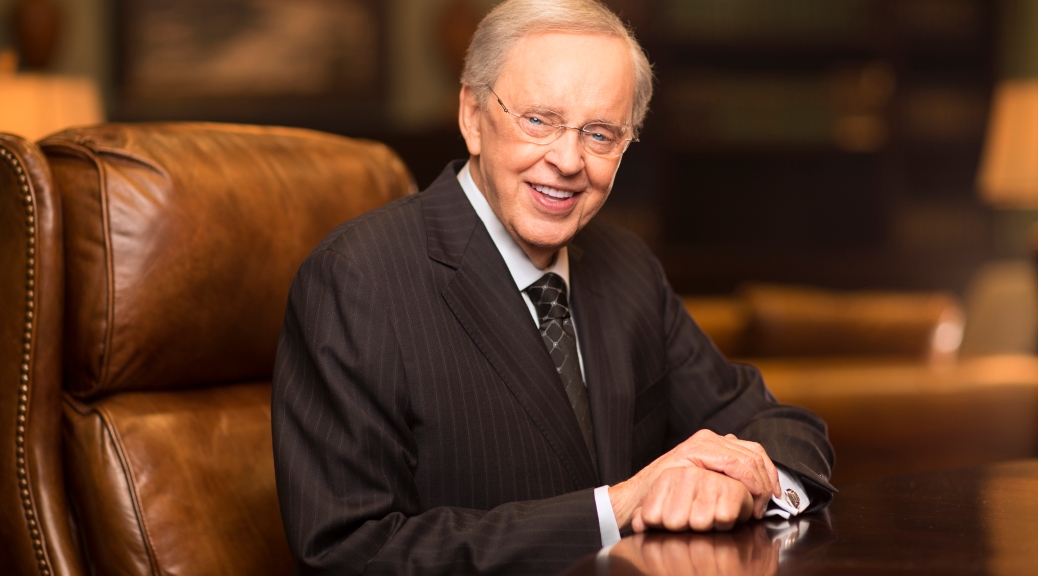
Charles Stanley – Courage to Speak the Truth


Daniel 4:1-27

Why is it so easy to lie? Telling a falsehood is something we all did as children, but lying can trip up even longtime Christians. The underlying motive for giving in to deception is usually a desire to protect ourselves in some way. We lie to get out of trouble, to avoid an unwanted situation, to profit financially, to receive acceptance, to bolster our image, to hide our flaws, or for other self-serving reasons.

When Nebuchadnezzar had an alarming dream, the Lord gave Daniel the interpretation: The king was going to become insane and live like a wild animal for “seven periods of time.” At that moment, Daniel had to decide whether he would tell the king the truth or conceal it. In those days, giving a king a bad report could cost the messenger his life. Yet despite the danger, Daniel held to his convictions and delivered the Lord’s message to Nebuchadnezzar.

Here’s why Daniel could speak the truth in the face of danger: He trusted God. Since he was doing exactly what the Lord wanted, he wasn’t frightened into compromise. Obedience to God is worth far more than anything we could gain from speaking lies or doctoring the truth in an effort to stay safe.

Are you willing to commit to speaking truth even when it’s costly? Altering income tax information, falsely enhancing your image on social media, or ignoring a miscalculation in your favor on a receipt isn’t worth the loss of character that comes with deception. Seeking to please the Lord and letting Him handle the consequences will always be the best course of action.

Bible in One Year: 2 Samuel 15-17


http://www.intouch.org/

Our Daily Bread — Good News to Tell


Bible in a Year:1 Samuel 13–14; Luke 10:1–24

Philip began with that very passage of Scripture and told him the good news about Jesus.

Acts 8:35

Today’s Scripture & Insight:Acts 8:26–35

“What’s your name?” asked Arman, an Iranian student. After I told him my name is Estera, his face lit up as he exclaimed, “We have a similar name in Farsi, it’s Setare!” That small connection opened up an amazing conversation. I told him I was named after a Bible character, “Esther,” a Jewish queen in Persia (present-day Iran). Starting with her story, I shared the good news of Jesus. As a result of our conversation, Arman started attending a weekly Bible study to learn more about Christ.

One of Jesus’s followers, Philip, guided by the Holy Spirit, asked a question that ignited a conversation with an Ethiopian official traveling in his chariot: “Do you understand what you are reading?” (Acts 8:30). The Ethiopian man was reading a passage from the book of Isaiah and seeking spiritual insight. So Philip’s question came at the right time. He invited Philip to sit next to him and in humility listened. Philip, realizing what an amazing opportunity this was, “began with that very passage of Scripture and told him the good news about Jesus” (v. 35).

Like Philip, we too have good news to tell. Let’s seize the daily occasions we encounter in our workplace, at the grocery store, or in our neighborhood. May we allow the Holy Spirit to guide our steps and give us the words to share our hope and joy in Jesus.

By Estera Pirosca Escobar

Today’s Reflection

How will you prepare yourself to be more open to speaking to others about Jesus? What encouragement do you gain from Philip’s example?


http://www.odb.org

Ravi Zacharias Ministry – A Difficult Invitation

Perhaps in reaching middle age, one might expect one’s thoughts to turn toward thinking more about the end of life than the beginning. It certainly seems that each year passes by faster and faster, one season racing into another and before you can blink another year is gone. The 1998 film Meet Joe Black offers a poignant glimpse into this phenomenon. On his 65th birthday, William Parrish’s last night on earth, he gives a speech to those gathered to celebrate his life. With hesitation, he shares what will be some of his last words:

“Every face I see is a memory. It may not be a perfect memory. Sometimes we’ve had our ups and downs, but we’re all together, and you’re mine for a night. And I’m going to break precedence and tell you my one wish: that you would have a life as lucky as mine, where you can wake up one morning and say, ‘I don’t want anything more.’ Sixty-five years…don’t they go by in a blink?”

The years do go by in a blink. Ancient writers and poets often wrote about the transience of our lives, even invoking the Divine to help them remember the brevity of their days: My days are swifter than a weaver’s… Our days on earth are like a shadow… You are just a vapor that appears for a little while and then vanishes away.(1) I was reminded of this during years of service with an aging congregation. There were more funerals than births, baptisms, or weddings. And having to bury those I had just recently befriended would take a great toll.

Despite the many emotional, physical, and spiritual challenges I faced during this time of ministry, I now see that I received incredible gifts. Journeying with someone you love through the dying process reminds you of your own mortality and finitude. The opportunity to deepen emotional reservoirs and to gain an appreciation for the preciousness of life is an invaluable gift.

In his earthly ministry, Jesus said a good deal about this dying journey. Often, he called his followers to self-sacrifice and to single-hearted allegiance by using the language of death. In Luke’s Gospel, he told the great multitudes following him that “if anyone comes to me and does not hate his own father and mother and wife and children and brothers and sisters, yes and even his own life, he cannot be my disciple. Whoever does not carry his own cross and come after me cannot be my disciple.”(2) What is often forgotten in a casual reading of the gospels is that the cross was the instrument of death and disgrace. It was an instrument reserved for the vilest offenders, and as such was an instrument of finality for the lowest of the low. Yet whoever does not carry his own cross and come after me cannot be my disciple. There is no “if” in Jesus’s statement, only whether or not we will accept the invitation to death.

The fact that Jesus issued this kind of invitation to the “multitudes going along with him” should not be lost either. To hear that death is a part of life’s purpose, and that those who would want to follow Jesus should expect nothing less, is a very difficult invitation. Given the choice, most humans wouldn’t sign up for death. We cling to life as tenaciously as a wolf to her prey. I suspect the crowds dissipated after they heard Jesus speak these very difficult statements. Perhaps they were the very ones who later clamored for his death by crucifixion. It was easy to follow Jesus when he focused on the positives.

And yet, as sure as babies are born into this world and new life begins, death is inevitable. Not just physical death, but the “little deaths” we experience every day; the death of dreams, of life’s highest expectations, and the death of wanting more from life than it will offer. Is there any kind of gift given even in these moments of death? Can abundant life be found even as life marches quickly towards decline and decay? Can grace come even as we move towards Calvary with our cross?

In speaking of his own death and the gifts it would yield, Jesus said that “unless a grain of wheat falls into the earth and dies, it remains by itself alone; but if it dies, it bears much fruit. He who loves his life loses it; and he who hates his life in this world shall keep it to life eternal.”(3) In the face of a world that shouts to us to grab all we can now, to find self-fulfillment and be happy, Jesus extends to us the ironic invitation to embrace death in order to truly find our lives. This is both a promising and challenging invitation. Can we really find life out of death? And how is it to be experienced as abundant even in the everyday, ordinary living most of us experience? The challenge Jesus sets before those who would follow is the challenge to “die” to what we think makes for life; it is to choose—in this life that goes by as quickly as a vapor—what would make for life indeed.


Margaret Manning Shull is a member of the speaking and writing team at Ravi Zacharias International Ministries in Bellingham, Washington.


(1) See Psalm 39:4, 1 Chronicles 29:15; James 4:14.
(2) Luke 14:26-27.
(3) John 12:24-25.


http://www.rzim.org/

Joyce Meyer – Godly Sorrow


Be miserable and grieve and weep [over your sin]. Let your [foolish] laughter be turned to mourning and your [reckless] joy to gloom. — James 4:9 (AMP)

Adapted from the resource My Time with God Devotional – by Joyce Meyer

Yesterday I encountered a person who was quite demanding that I do something she wanted me to do and would not take no for an answer. I ended up being rude to her, and I feel a godly sorrow over my behavior. I always want to represent God well, and that means I often need to be long-suffering with someone who is irritating to me.

I don’t feel guilty and condemned, because I have repented and know that I am forgiven, but I do feel a godly sorrow, and I think that feeling is healthy and right. We should take our sin seriously and be deeply penitent when we do something that we know is wrong.

Although this feeling is uncomfortable, I welcome it because it impresses on me the importance of my witness for Christ and reminds me of how easy it is to behave in a fleshly and carnal way. The Bible urges us repeatedly to be on our guard against the temptations we encounter in the world and to live carefully. Being rude to someone may seem a small thing, but it is the little foxes that spoil the vine (see Song of Solomon 2:15).

I believe we should appreciate any feeling of chastisement that we receive from the Holy Spirit, because it is God helping us be the kind of people who represent Jesus well.

Prayer Starter: Lord, I appreciate Your conviction and chastisement, and I am deeply sorry for my sins and grateful for Your forgiveness. In Jesus’ Name, Amen.


http://www.joycemeyer.org

Campus Crusade for Christ; Bill Bright – One More Reason to Praise 


“His presence within us is God’s guarantee that He really will give us all that He promised; and the Spirit’s seal upon us means that God has already purchased us and that He guarantees to bring us to Himself. This is just one more reason for us to praise our glorious God” (Ephesians 1:14).

To me, this wonderful verse means that, as children of God, we have the ability to obey God’s laws if we are filled continually with the Holy Spirit and refuse to obey the old evil nature within us.

In order to live the supernatural life which is available to us through the indwelling Holy Spirit, we must know our rights as children of God. We need to know our spiritual heritage. We must know how to draw upon the inexhaustible, supernatural resources of God’s love, power, forgiveness and abundant grace.

The first step is to learn everything we can about God. We also need to know about the nature of man and why he behaves as he does. The best way to learn who God is, who man is and about our rights as children of God is to spend much time – even at the sacrifice of other needs and demands on our schedules – in reading, studying, memorizing and meditating on the Word of God, and in prayer and witnessing.

Paul wrote to the Christians at Rome, “For His Holy Spirit speaks to us deep in our hearts, and tells us that we really are God’s children. And since we are His children, we will share His treasures – for all God gives to His Son Jesus is now ours too. But if we are to share His glory, we must also share His suffering” (Romans 8:16,17).

Bible Reading: Ephesians 1:15-23

TODAY’S ACTION POINT:  I will acknowledge God’s presence, believe His promises and surrender to His special will for me, and thus will I praise Him throughout the day.


http://www.cru.org

Max Lucado – Gratitude for the Greatest Gift


Listen to Today’s Devotion

Gratitude.  It’s being more aware of what you have than what you don’t.  It’s recognizing the treasure in the simple—a child’s hug, a golden sunset.  Most of all, it’s a sense of the greatest gift: The Son of God, Jesus Christ, who took your place.

In the World War II death camp at Auschwitz, Franciszek [FRAN-sih-zeck] Gajowniczek [Guh-JOE-na-zeck] was one of ten prisoners chosen to die.  An angel in the form of Franciscan priest Maximilian Kolbe volunteered to take his place.  You know, you and I have something in common with Franciszek.  We both had a substitute die in our place.  And we both have discovered what it means to be grateful.  For what we have is far greater than anything we might want.  Wouldn’t you agree?

Read more Six Hours One Friday

For more inspirational messages please visit Max Lucado.

Home

Denison Forum – The elections in Israel: Why don’t the Jews accept Jesus as their Messiah?

In America, many of us are sleep deprived after watching Virginia defeat Texas Tech in overtime last night. Meanwhile, much of the world is focused on Israel, where one of the most significant elections in years is taking place.

I have led approximately thirty study tours to Israel over the years. Each time, the two most common questions I’m asked are: “Why don’t the Jews accept Jesus as their Messiah?” and “How does the Israeli government work?”

The two questions are more related than one might think.

Since Israelis are voting today in parliamentary elections, we’ll address the second question first. Here’s the process:

Fourteen parties are vying for votes. Citizens vote for parties, not people. At stake is control of the Knesset (the Israeli Parliament) and its 120 seats. The more votes a party receives, the more seats it wins.

No party has ever won a sixty-one-seat majority. After today’s vote, the president of Israel (a largely ceremonial position) will invite one party’s leader to form a governing coalition with other parties. That person will have twenty-eight days to form a government, with a possible fourteen-day extension.

The president selects the leader who, in his opinion, has the best chance of forming a multi-party coalition to reach sixty-one Knesset seats. This is usually the leader of the party that received the most votes in the election, but not always.

Continue reading Denison Forum – The elections in Israel: Why don’t the Jews accept Jesus as their Messiah?

Charles Stanley – Courage Behind Your Convictions


Daniel 1:1-21

Today we live in a society that is convinced there are no absolute moral truths. It not only considers the Bible outdated and irrelevant to contemporary problems but also sees each person as free to decide what is right. As a result, our culture is ungodly, immoral, violent, and self-centered. How are we as Christians supposed to live in such an environment?

We need look no further than the example of a teenage boy named Daniel, who had the courage to stand for his convictions in the midst of the depraved atmosphere of Babylon. Despite his immersion in Babylonian culture, he committed to following the Lord faithfully, even if doing so would cost him his life. The issue of diet may seem trivial to us, but Jewish people of his day believed eating meat that had been offered to idols was an abomination to God.

In the modern Western world, we may find it hard to relate to Daniel’s example. Few of us are willing to take such a bold stand even though we have no fear of losing our life. It’s the threat of rejection, ridicule, or being seen as narrow-minded or judgmental that keeps us silent. Or worse, it may be that we don’t have any strong convictions because we haven’t let God’s Word develop them within us. Ignorance of Scripture may let us live comfortably in a sinful culture, but it will never please the Lord.

God is looking for people like Daniel—followers of Christ who will stand by their convictions, regardless of threats or the temptation to compromise for the sake of profit or acceptance. Are you such a person?

Bible in One Year: 2 Samuel 13-14


http://www.intouch.org/

Our Daily Bread — Unexpected Winners


Bible in a Year:1 Samuel 10–12; Luke 9:37–62

Many who are first will be last.

Matthew 19:30

Today’s Scripture & Insight:Matthew 19:17–30

Perhaps the most preposterous, spellbinding moment in the 2018 Winter Olympics was when the Czech Republic’s world champion snowboarder Ester Ledecka won an event in a completely different sport: skiing! And she took the first-place gold medal even though she had the unenviable position of skiing 26th—a feat believed to be basically impossible.

Amazingly, Ledecka qualified to race the women’s super-G—an event that combines downhill skiing with a slalom course. After she won by .01 of a second on borrowedskis, she was just as shocked as the media and other contestants who had assumed the winner would be one of the top skiers.

This is how the world works. We assume the winners will keep winning while all the others will lose. It was a jolt, then, when the disciples heard Jesus say how “hard [it is] for someone who is rich to enter the kingdom of heaven” (Matthew 19:23). Jesus turned everything upside down. How could being rich (a winner) offer a roadblock? Apparently, if we trust in what we have (what we can do, who we are), then it’s not only hard but actually impossible to trust God.

The kingdom of God doesn’t play by our rules. “Many who are first,” Jesus says, “will be last, and many who are last will be first” (v. 30). And, whether you’re first or last, everything we receive is purely by grace—by God’s unmerited favor.

By Winn Collier

Today’s Reflection

Consider how you view people, or how you view your own life. How does Jesus’s way of seeing so-called losers and winners change your perspective?


http://www.odb.org

Ravi Zacharias Ministry – Where Forgiveness Is Suffering


In four horrific months in 1994, at the urging of the Rwandan government, the poorer Hutu majority took up bayonets and machetes and committed genocide against the wealthier Tutsi minority. In the wake of this unspeakable tragedy, nearly a million people had been murdered.

In August of 2003, driven by overcrowded prisons and backlogged court systems, 50,000 genocide criminals, people who had already confessed to killing their neighbors, were released again into society. Murderers were sent back to their homes, back to neighborhoods literally destroyed at their own hands, to live beside the few surviving relatives of the very men, women, and children they killed.

Now more than twenty years later, with eyes still bloodshot at visions of a genocide it failed to see, the world continues to watch Rwanda with a sense of foreboding, wondering what happens when a killer comes home; what happens when victims, widows, orphans, and murderers look each other in the eyes again; what happens when the neighbor who killed your family asks to be forgiven. For the people of Rwanda, the description of the Hebrew prophet is a reality with which they live: “And if anyone asks them, ‘What are these wounds on your chest?’ the answer will be, ‘The wounds I received in the house of my friends.’”(1)

How does a culture bear the wounds of genocide and the agony of forgiveness?

Continue reading Ravi Zacharias Ministry – Where Forgiveness Is Suffering

Joyce Meyer – Just Do It!


Because of laziness the building decays, and through idleness of hands the house leaks.

— Ecclesiastes 10:18 (NKJV)

Adapted from the resource Love Out Loud Devotional – by Joyce Meyer

Do you truly believe that love can change the world? I do. But I also know the events and accomplishments that have brought lasting change to the world have not been accidental; they have been things people thought through and acted on deliberately. The Bible is filled with instructions for us to be active.

Wishing for something does not produce the results we desire, but we must aggressively do what needs to be done to achieve them. We will never find a successful man who spent his life wishing for success and attained it. The same principle applies to loving God, loving our­selves, and loving others. If we want to love people as Jesus instructed, we will have to do so on purpose. It will not happen by accident.

If we seek opportunities to love people, we are sure to find them, and that will protect us from being idle and passive. We must ask our­selves if we are alert and active or passive and inactive? God is alert and active! I am glad He is; otherwise, things in our lives would deteriorate rapidly.

So much good can happen in your life and in the lives of those around you if you’ll simply decide not to be passive, but to follow the Holy Spirit as He leads you. God-inspired, balanced activity will keep you from being idle and bless many people in the process.

Prayer Starter: Lord, help me today to be active and intentional, not passive or idle. Each day, help me to take steps and make progress as it pertains to my dreams, responsibilities, and loving others in my life. In Jesus’ Name, Amen.


http://www.joycemeyer.org

Campus Crusade for Christ; Bill Bright – Reap What You Sow 


“Don’t be misled; remember that you can’t ignore God and get away with it: a man will always reap just the kind of crop he sows!” (Galatians 6:7).

Steve had just been introduced to this great and exciting law of sowing and reaping. “Is it really true,” he asked, “that I will always reap what I sow – and more than I sow – good or bad?”

I was able to assure him, from the authority of Scripture, from experience of 36 years of walking with Christ and by observing closely the lives of many thousands of Christians with whom I have counseled and worked, that the law of sowing and reaping is just as true and inviolate as the law of gravity.

If you want to judge a man, an American humorist once said, you should not look at him in the face but get behind him and see what he is looking at, what he is sowing.

For example, is he looking at God with reverence – or with no deference at all? Does he really believe God means what He says?

A student once asked, “If I give my life to Christ, do I become a puppet?”

The answer is a resounding no! We never become puppets. We have the right of choice; we are free moral agents. God’s Word assures us that He guides and encourages us, but we must act as a result of our own self-will. God does not force us to make decisions.

The more we understand the love, the wisdom, the sovereignty, the grace and power of God, the more we will want to trust Him with every detail of our lives. The secret of the supernatural life is to keep Christ on the throne of our lives and delight ourselves in Him as Lord.

We fail in the Christian life when we, as a deliberate act of our will, choose to disobey the leading of the Holy Spirit.

It is a tragedy of the human will that we often think we have a better way than God has for living the Christian life. But do not deceive yourself or allow Satan to mislead you: God’s way is best!

Bible Reading: Galatians 6:6-10

TODAY’S ACTION POINT:  I will seek to sow seeds of love and kindness and faith knowing that as a result I will reap God’s best for my life.


http://www.cru.org

Max Lucado – God Will Never Give Up!


Listen to Today’s Devotion

God never gives up.  When on trial before the cross, people spat in his face, but he didn’t spit back.  When a whip ripped his sides, he didn’t command the awaiting angels to stuff that whip down the soldier’s throat. When human hands fastened the divine hands to a cross with spikes, it wasn’t the soldiers who held the hands of Jesus  steady.  It was God who held them steady.

God never gives up. Not then, not now, not ever. So the next time doubt walks in. Escort him out. Out to the hill. Out to Calvary. Out to the cross where, with holy blood, holy hands wrote the promise: God would give up His only Son before He’d give up on you.

Read more Six Hours One Friday

For more inspirational messages please visit Max Lucado.

Home

Denison Forum – How Brad Paisley and his wife are changing lives: The secret of significance

Keith Urban won Entertainer of the Year at last night’s Academy of Country Music Awards. Thomas Rhett and Kacey Musgraves won Male and Female Artist of the Year.

But, in my opinion, the most significant achievement in country music came earlier in the week.

Brad Paisley and his wife, Kimberly, broke ground on a Nashville grocery store that is unlike any I know. Customers will walk through the aisles selecting fruit, vegetables, cereal, and other groceries. Then they will check out at the register.

However, no money will change hands.

The Paisleys partnered with Belmont University, a Christian university and Brad’s alma mater, building the store next to the school’s ministry center. They hope to serve three thousand impoverished people a year.

Their Christian faith is on clear display in a way that will impact lives far beyond Nashville.

“All healthy things grow”

Many years ago, I attended a church growth conference led by Rick Warren at Saddleback Church in California. His approach was not at all what I expected.

I assumed Rick would talk about his church’s leadership structure, ministry organization, and marketing strategy. Instead, he spent most of the conference discussing the importance of spiritual health—for himself, his leadership team, and their members.

Continue reading Denison Forum – How Brad Paisley and his wife are changing lives: The secret of significance

Charles Stanley – Knowing God as Our Father


Galatians 4:4-7

God has many names—such as Creator, King, and Shepherd—and they reveal various facets of His character. But there’s a name for Him that meets one of our human needs in an intimate way: Father. Every person is born with a deep desire to be loved unconditionally, but when this yearning isn’t fully met, many hurts and scars can result. What security and wholeness there is in knowing that we can call God “my Father” and receive that unconditional love! Scripture tells us He is “a father of the fatherless” (Psalm 68:5) and that He will never leave us, even if our earthly parents abandon us (Psalm 27:10).

Jesus sometimes addressed God as Abba, which is Aramaic for “father” (Mark 14:36). That was a brand-new concept at the time; we do find God spoken of as a father to Israel (Jer. 31:9), but the word was used sparingly in the Old Testament. Even God’s personal name, Yahweh, was considered too holy to be pronounced out loud, so few people thought of having a personal connection to almighty God.

From the very beginning, God has shown Himself to be a loving parent, but it is only through Christ that we’ve inherited the privilege to call the Him “our Father” (Gal. 4:4-7). The New Testament gives witness to Christ’s revelation of the wonderful relationship we can have with our heavenly Father: The name appears 245 times—over 100 times in John’s gospel alone. Paul opens each of his letters acknowledging God as our Father. The fact that man could know God as the perfect parent was a radical new idea in Jesus’ time, and it continues to be a life-impacting truth today.

Bible in One Year: 2 Samuel 4-6

http://www.intouch.org/

Our Daily Bread — Need a New Heart?


Bible in a Year: 1 Samuel 1–3; Luke 8:26–56

I will give you a new heart and put a new spirit in you.

Ezekiel 36:26

Today’s Scripture & Insight: Ezekiel 36:24–27

The news was grim. My father had been having chest pains, so his doctor ordered a test to peer into his heart. The result? Blockage found in three arteries.

Triple-bypass surgery was scheduled for February 14. My dad, though anxious, saw that date as a hopeful sign: “I’m getting a new heart for Valentine’s Day!” And he did! The surgery went perfectly, restoring life-giving blood flow to his struggling heart—his “new” heart.

My father’s surgery reminded me that God offers us a new life as well. Because sin clogs our spiritual “arteries”—our capacity to connect with God—we need spiritual “surgery” to clear them.

That’s what God promised His people in Ezekiel 36:26. He assured the Israelites, “I will give you a new heart. . . . I will remove from you your heart of stone and give you a heart of flesh.” He also promised, “I will cleanse you from all your impurities” (v. 25) and “put my Spirit in you” (v. 27). To a people who’d lost hope, God promised a fresh start as the One who could renew their lives.

That promise was ultimately fulfilled through Jesus’s death and resurrection. When we trust in Him, we receive a new spiritual heart, one that’s cleansed of our sin and despair. Filled with Christ’s Spirit, our new heart beats with the spiritual lifeblood of God, that “we too may live a new life” (Romans 6:4).

By Adam Holz

Today’s Reflection

How does God’s promise of a new life bring hope when you’re struggling with guilt or shame? How will you rely on the Spirit’s power today instead of your own?


http://www.odb.org

Ravi Zacharias Ministry – Where Forgiveness Is Suffering


Where Forgiveness Is Suffering

In four horrific months in 1994, at the urging of the Rwandan government, the poorer Hutu majority took up bayonets and machetes and committed genocide against the wealthier Tutsi minority. In the wake of this unspeakable tragedy, nearly a million people had been murdered.

In August of 2003, driven by overcrowded prisons and backlogged court systems, 50,000 genocide criminals, people who had already confessed to killing their neighbors, were released again into society. Murderers were sent back to their homes, back to neighborhoods literally destroyed at their own hands, to live beside the few surviving relatives of the very men, women, and children they killed.

Now more than twenty years later, with eyes still bloodshot at visions of a genocide it failed to see, the world continues to watch Rwanda with a sense of foreboding, wondering what happens when a killer comes home; what happens when victims, widows, orphans, and murderers look each other in the eyes again; what happens when the neighbor who killed your family asks to be forgiven. For the people of Rwanda, the description of the Hebrew prophet is a reality with which they live: “And if anyone asks them, ‘What are these wounds on your chest?’ the answer will be, ‘The wounds I received in the house of my friends.'”(1)

How does a culture bear the wounds of genocide and the agony of forgiveness?

For Steven Gahigi, that question is answered in a valley of dry bones which cannot be forgotten. An Anglican clergyman who lost 142 members of his family in the Rwandan genocide, he thought he had lost the ability to forgive. Though his inability plagued him, he had no idea how to navigate through a forgiveness so costly. “I prayed until one night I saw an image of Jesus Christ on the cross…I thought of how he forgave, and I knew that I and others could also do it.”(2) Inspired by this vision, Gahigi somehow found the words to begin preaching forgiveness. He first did this in the prisons where Hutu perpetrators sat awaiting trial, and today he continues in neighborhoods where the victims of genocide live beside its perpetrators. For Gahigi, wounds received in the house of friends can only be soothed with truth-telling, restitution, interdependence, and reconciliation, all of which he finds accessible only because of Christ.


Miroslav Volf, himself familiar with horrendous violence in Croatia and Serbia, describes forgiveness as the exchange of one form of suffering for another, modeled to the world by the crucified Christ. He writes, “[I]n a world of irreversible deeds and partisan judgments redemption from the passive suffering of victimization cannot happen without the active suffering of forgiveness.”(3) For Rwandans, this is a reality well understood.

And for Christ, who extends to the world the possibility of reconciliation by embodying it, this suffering, this willingness to be broken by the very people with whom he is trying to reconcile, is the very road to healing and wholeness and humanity. “More than just the passive suffering of an innocent person,” writes Volf, “the passion of Christ is the agony of a tortured soul and a wrecked body offered as a prayer for the forgiveness of the torturers.”(3) There is no clearer picture of Zechariah’s depiction of wounds received at the house of friends than in a crucifixion ordered by an angry crowd that lauded Christ as king only hours before. And yet, it is this house of both murderous and weeping friends for which Jesus prays on the cross: Father, forgive them, for they know not what they do.

Far from the suggestion of a moralistic god watching a world of suffering and brokenness from a distance, the costly, unsentimental ministry of reconciliation comes to a world of violence and victims through arms that first bore the weight of the cross. For Steven Gahigi, who facilitates the difficult dialogues now taking place in Rwanda, who helps perpetrators of genocide to build homes for their victims’ families, forgiveness is indeed a active form of suffering, but one through which Christ has paved the hopeful, surprising way of redemption. Today, wherever forgiveness is a form of suffering, Christ accompanies the broken, leading both the guilty and the victimized through valleys of dry bones and signs of a coming resurrection.

Jill Carattini is managing editor of A Slice of Infinity at Ravi Zacharias International Ministries in Atlanta, Georgia.

(1) Zechariah 13:6.

(2) Johann Christoph Arnold, Why Forgive? (Maryknoll, New York: Orbis books, 2010), 202.

(3) Miroslav Volf, Exclusion and Embrace (Nashville: Abingdon, 1996), 125.


http://www.rzim.org/

Joyce Meyer – The Power of a Renewed Heart


But the LORD said unto Samuel, Look not on his countenance, or on the height of his stature; because I have refused him: for the LORD seeth not as man seeth; for man looketh on the outward appearance, but the LORD looketh on the heart. — 1 Samuel 16:7

Adapted from the resource Closer to God Each Day Devotional – by Joyce Meyer

God is the God of hearts. He does not look only at the exterior of a person, or even the things a person does, and judge the individual by that criterion. Man judges the flesh, but God judges the heart.

It is possible to do good works and still have a wrong heart attitude. It is also possible to do some things wrong but still have a right heart on the inside. God is much more inclined to use a person with a good heart and a few problems than He is to use a person who seems to have it all together but who has a wicked heart.

It is very important that we get in touch with our inner life and our heart attitude, the way we feel and think about things (what the Bible calls the hidden man of the heart), if we want to hear from God and live in close relationship with Him.

When God seeks to promote someone, He chooses a person after His own heart.

Prayer Starter: Father, help me to be a person after Your heart—to want what You want and view others with love and compassion. I can’t change myself, but with Your help, I can change from the inside out. In Jesus’ Name, Amen.


http://www.joycemeyer.org

Campus Crusade for Christ; Bill Bright – Fair in Everything


“The Lord is fair in everything He does, and full of kindness. He is close to all who call on Him sincerely” (Psalm 145:17,18).

Are you afraid to trust the Lord? I find that many people who have had unfortunate experiences in their youth with their parents, especially their fathers, have a reluctance to trust God.

In my talks with thousands of students, I have found a number of young people who have such an attitude problem.

Even the best of earthly parents, at times, are unfair and fail to demonstrate kindness. Yet how wonderful it is to know that our Lord is fair in everything He does and is full of kindness, and He is always close to all who call upon Him sincerely.

Notice that the Scripture promise quoted above is a categorical statement. The psalmist permits no exceptions, even when we are sure we deserved better than we received. Thus we need to claim the promise in God’s Word by faith and live by it. Some day we will see events from God’s side and recognize the fairness we could not see here.

We often see “as in a glass darkly,” but God has perfect 20/20 vision. That’s why the attitude of trust alone will help us overcome our feelings that God or the world, is unfair. Only then can we live a supernatural life of daily acceptance of what God sends our way.

Bible Reading: Psalm 145:8-12

TODAY’S ACTION POINT:  Today I will put my trust in God and His goodness, no matter how I feel. I will move beyond preoccupation with my disappointments and carry out God’s appointments in the certainty that our Lord is fair in everything He does and will enable me to live supernaturally as I continue to trust and obey Him.


http://www.cru.org

Max Lucado – The Darkness of Doubt


Listen to Today’s Devotion

God promised Abraham that his descendants would be as numerous as the stars and would inherit all the land.  But Abraham had no son.  He was facing the dreadful darkness of doubt.

The same darkness you feel when you sit in a funeral chapel and listen to the obituary of the one you love.  The same darkness you feel when you realize the divorce you never wanted is final.  The same darkness into which Jesus screamed, “My God, my God, why have you forsaken me?”

Appropriate words.  For when we doubt, God seems very, very far away.  Which is exactly when he chooses to draw near.  He instructed Abraham to perform a ceremony to seal the covenant.  And God participated!  God lifted the darkness of doubt from Abraham’s world.  If you are experiencing doubt, lean into God and listen.  He’s nearer, than you might imagine.

Read more Six Hours One Friday

For more inspirational messages please visit Max Lucado.

Home