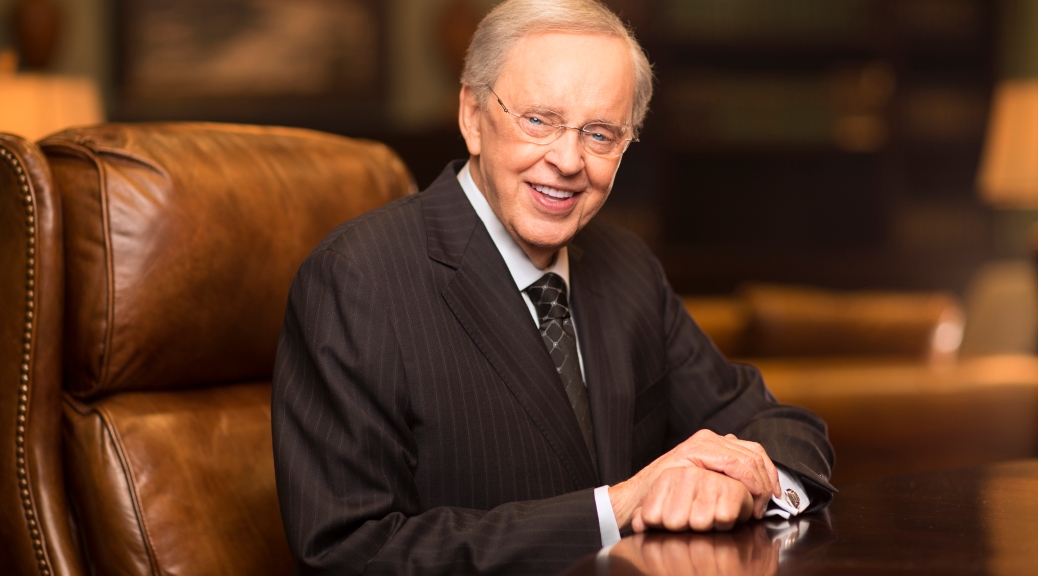
Max Lucado – Approach God As a Beloved Child


Listen to Today’s Devotion

Jesus invites us to approach God the way a child approaches his or her daddy!  And how do children approach their daddies?

When a five-year-old spots his father in the parking lot, how does he react?  “Yippee!” was screamed by a redheaded boy wearing a Batman backpack.  “Pop!”  Over here!  Push me!”—yelled a boy wearing a Boston Red Sox cap who scooted straight to the swings.

Here’s what I didn’t hear:  “Father, it is most gracious of thee to drive thy car to my place of education. Please know of my deep gratitude for your benevolence.  For thou art splendid in thy attentive care and diligent in thy dedication.”

I heard kids who were happy to see their dad and eager to speak to him!  God invites us to approach Him in the same manner. What a relief!

For more inspirational messages please visit Max Lucado.


Home

Denison Forum – New York State prevents churches from making employment decisions based on pro-life commitments: Answering God’s call to courage

Imagine a day when your church cannot refuse to hire a person to lead your congregation’s ministry for expectant mothers on the basis of that person’s pro-choice agenda.

Or a day when a staff member at your church cannot be disciplined for encouraging others to have an abortion.

If your church is in New York State, that day has come.

Why Senate Bill 660 is so important

New York Governor Andrew Cuomo signed Senate Bill 660 recently. It specifies that an employer shall not “discriminate nor take any retaliatory personnel action” against employees with respect to their beliefs and choices regarding abortion. The bill makes no exceptions for religious organizations.

The Alliance Defending Freedom (ADF) states that the bill “requires all employers—including churches, religious schools, faith-based pregnancy care centers, and religious nonprofits—to disavow their beliefs about abortion, contraception, and sexual morality by forcing them to hire and employ those who refuse to abide by the organizations’ statements of faith.”

As a result, faith-based hospitals in New York State cannot require future or existing employees to abide by their pro-life commitments. Nor can faith-based schools or businesses. Nor can churches.

Two versions of “discrimination”

What do we do when two versions of “discrimination” collide?

Pro-choice advocates believe that pro-life employers discriminate against them by refusing to hire pro-choice employees. They ask you to imagine being told by a pro-life CEO that you cannot work at his engineering firm because you believe abortion should be the decision of the mother rather than the government.

By contrast, pro-life advocates believe that the State of New York discriminates against pro-life employers by forcing them to consider candidates who reject the employer’s commitment to life. They ask you to imagine being the CEO of a Baptist hospital who must hire a pro-choice advocate to lead your pregnancy center.

The logic of the pro-choice position

Each side in this culture war is convinced that its logic should prevail.

In Roe v. Wade, the Supreme Court declared that it “need not resolve the difficult question of when life begins,” claiming that “the judiciary, at this point in the development of man’s knowledge, is not in a position to speculate as to the answer.” The Court therefore chose to give the mother whose body supports the fetus the right to decide whether or not to abort that fetus.

Such logic extends to the claim that pro-choice advocates are not forcing anyone to choose an abortion. Rather, they say they are working to preserve the mother’s “reproductive rights.” They believe that she, not the government, is in the best position to make such a determination.

Over the years, I’ve heard from people who say they are personally opposed to abortion but do not believe it is the government’s right to make this decision for others. They would say they are “pro-choice” but not “pro-abortion.”

The logic of the pro-life position

By contrast, pro-life advocates are convinced that life begins at conception. We cite clear biblical teachings as well as strong scientific evidence for the humanity of the so-called fetus in his or her mother’s womb.

We agree with the American Declaration of Independence that every person possesses “unalienable rights” to “Life, Liberty and the pursuit of Happiness.” We therefore believe that the mother’s right to choose should not take precedence over her child’s right to live.

While pro-choice advocates claim that such a position discriminates against the mother, we counter that their position discriminates against the child. The mother may be required to bring a child to term, enduring several months of significant challenges in the process, but her child will then have an entire life to live. If she aborts her child, ending the challenges posed by her temporary pregnancy, her decision is obviously permanent for her child.

And we note that when a child is born, it simply moves from inside his or her mother’s body to outside of it. In New York State, that child can be aborted just moments before his or her birth. By what logic is the intrinsic nature of a baby different when it shifts location?

“Be strong and courageous”

I have taken us down this road today to make a point: Despite the logic of the pro-life position, which I consider to be far superior to that of pro-choice advocates, our society is reaching a tipping point with regard to religious freedom on this issue. If current trends continue, Christians will pay an escalatingly high price for affirming biblical morality on abortion. We are facing similar pressure on LGBTQ issues and euthanasia.

I plan to focus tomorrow on practical ways we can respond biblically to such pressure. For today, let’s decide that we want to.

As Joshua prepared to lead God’s people into an uncharted land and future, the Lord said to him: “Be strong and courageous. Do not be frightened, and do not be dismayed, for the Lord your God is with you wherever you go” (Joshua 1:9).

Note that this word came to Joshua before he began facing Canaanite enemies. The Lord called him to choose courage before he needed courage.

This is because courage does not earn the provision of God—it positions us to receive it. If we will not go into battle, we cannot experience the presence and power of God in the battle.

Is there any price you won’t pay to follow Jesus?

NOTE: Due to requests for print-friendly, text-only versions of The Daily Article, we will now include a link to a downloadable PDF of every Daily Article. Please feel free to save and print these, then share them with your friends, family, church, or community. Today’s Daily Article may be downloaded here, but note the “Download PDF” link below, which is where you may download future Daily Articles.


Denison Forum

Charles Stanley –Having a Rich Prayer Life


Ephesians 3:17-21

Prayer is an amazing privilege because it involves conversation with our heavenly Father. Yet, if we are honest, there are times when it seems more like a duty than a joy.  This is especially true if we reduce our prayers to a formula or routine, which can deaden our desire to talk to God.

In today’s passage, Paul’s prayer is just the opposite—it is full of life, spiritual truths, and love for his Lord. He asked God to do a great spiritual work in the Ephesians’ lives and, by extension, in ours as well:

To gain a greater comprehension of Christ’s love for us. Although it’s beyond our ability to fully grasp the vastness of our Savior’s love, Paul prays that we will be so firmly rooted and grounded in this truth that we will become controlled by it and “filled up to all the fullness of God” (v. 19). Experiencing Jesus’ love motivates us to obediently live for Christ and enables us to care deeply for others.

To be strengthened with the Lord’s supernatural power. Paul both praises God’s matchless power and invites it into our hearts. The most important battles take place inside us—in our minds, wills, and emotions—and Paul wants to ensure that the power of the Holy Spirit will be at work in our lives. When we welcome His authority, God can use us in meaningful ways, and what’s more, we will exhibit the life of Jesus in fuller measure.

Although physical and material needs are important, the apostle’s prayers more often focused on the spiritual welfare of others. That is a good example for us to follow as well.

Bible in One Year: Acts 27-28


http://www.intouch.org/

Our Daily Bread — Fruitful to the End


Bible in a Year:

They will still bear fruit in old age, they will stay fresh and green.

Psalm 92:14

Today’s Scripture & Insight:Psalm 92:12–15

Although Lenore Dunlop was ninety-four years young, her mind was sharp, her smile was bright, and her contagious love for Jesus was felt by many. It wasn’t uncommon to find her in the company of the youth of our church; her presence and participation were sources of joy and encouragement. Lenore’s life was so vibrant that her death caught us off guard. Like a powerful runner, she sprinted across life’s finish line. Her energy and zeal were such that, just days before her death, she completed a sixteen-week course that focused on taking the message of Jesus to the peoples of the world.

The fruitful, God-honoring life of Lenore illustrates what’s seen in Psalm 92:12–15. This psalm describes the budding, blossoming, and fruit-bearing of those whose lives are rooted in a right relationship with God (vv. 12–13). The two trees pictured were valued for their fruit and wood, respectively; with these the psalmist captures a sense of vitality, prosperity, and usefulness. When we see in our lives the budding and blossoming fruit of loving, sharing, helping, and leading others to Christ, we should rejoice.

Even for those who may be labeled “senior” or “seasoned,” it’s never too late to take root and bear fruit. Lenore’s life was deeply rooted in God through Jesus and testifies to this and to God’s goodness (v. 15). Ours can too.

By: Arthur Jackson

Reflect & Pray

How does your life reflect the fruit found in a growing relationship with Jesus? What can you add or eliminate to help you grow?

Father, give me the strength to bear fruit that clearly demonstrates that my life is rooted in the life of Jesus, Your Son.


http://www.odb.org

Campus Crusade for Christ; Bill Bright – God Uses Sorrow for Good


“For God sometimes uses sorrow in our lives to help us turn away from sin and seek eternal life. We should never regret his sending it. But the sorrow of the man who is not a Christian is not the sorrow of true repentance and does not prevent eternal death.” (II Corinthians 7:10).

Frank often referred to himself proudly as a self-made man. He bragged that in his youth he had been so poor he didn’t have two nickels to rub together. Now his real estate holdings and various business enterprises were worth tens of millions of dollars. He was a pillar in the community, able to give generously to civic and philanthropic causes.  His philosophy was that there was no God, and every man had to make it on his own. He laughed at the weaklings who needed the crutch of church.

Then his world began to fall apart. His only son was sent to prison for pushing drugs. His daughter had an automobile accident that left her partially paralyzed for life; and his wife, whom he had largely ignored for years, announced she was in love with someone else and demanded a divorce. Meanwhile, because he had become lax in his business dealings, one of his partners embezzled several million dollars from him.

By this time, he was devastated, and, therefore, was open to spiritual counsel. After the Holy Spirit showed him his spirit of pride and selfishness, he opened his heart to Christ and the miracle took place. Now, he frequently quotes this passage: “God sometimes uses sorrow in our lives to help us turn away from sin and seek eternal life.”

Though his son is still in prison, and his daughter still paralyzed, he and his wife are reconciling, and his heart is filled with joy and thanksgiving to God. He is no longer a proud, “successful” businessman, but a humble child of God, a servant who discovered the hard way that everyone needs God.

For every Frank there are hundreds of others experiencing heartache and tragedy who have not repented. Yet, God offers to all men and women the priceless gift of abundant and supernatural life.

Bible Reading: Proverbs 28:12-14

TODAY’S ACTION POINT: I shall seek to live the full, abundant, supernatural life, walking in faith and obedience, so that God will not find it necessary to discipline me in order to bless me.


http://www.cru.org

Max Lucado – Our Prayers Are Not Graded


Listen to Today’s Devotion

Jesus downplayed the importance of words in prayers.  We tend to do the opposite.  The more words the better!  We emphasize the appropriate prayer language, the latest prayer trend, the holiest prayer terminology.  Against all this emphasis on syllables and rituals, Jesus says in Matthew 6:7, “Don’t ramble like heathens who talk a lot.”

There’s no panel of angelic judges with numbered cards.  “Wow, Lucado, that prayer was a ten.  God will certainly hear you!”  or… “Oh, Lucado, you scored a two this morning.  Go home and practice.”

Prayers aren’t graded according to style.  If prayer depends on how I pray, I’m sunk.  But if the power of prayer depends on the One who hears the prayer, then I have hope.

Read more Before Amen: The Power of a Simple Prayer

For more inspirational messages please visit Max Lucado.


Home

Denison Forum – Pete Buttigieg now leads in New Hampshire: Biblical responses to the popularity of the first openly gay presidential candidate

Pete Buttigieg has “surged to a 10-point lead in New Hampshire’s first-in-the-nation presidential primary,” according to a poll released yesterday. The New York Times reports that he also holds a “commanding lead” in Iowa’s presidential caucuses.

Buttigieg is a graduate of Harvard and studied at Oxford as a Rhodes scholar. He served in the military in Afghanistan, reportedly speaks eight languages, plays the guitar and piano, and is active in the Episcopal Church. His debate performances have displayed his obvious intelligence and grasp of policy detail. In many ways, he seems an ideal fit for many Democratic voters.

Buttigieg is also gay and is married to his husband, Chasten. An LGBTQ advocacy magazine named him one of fifty “trailblazing individuals who actively ensure society remains moving toward equality, acceptance and dignity for all queer people.” In their view, he is “reshaping politics and driving the religious right crazy in the process.”

How our society has changed on same-sex marriage

As the leader of a nonpartisan ministry, my purpose today is not to endorse or criticize Mr. Buttigieg as a politician. Rather, it is to note the degree to which his popularity highlights our society’s acceptance of homosexuality.

In 2004, 60 percent of Americans opposed same-sex marriage, while only 31 percent were in favor. Today, the numbers are reversed: 61 percent support same-sex marriage, while 31 percent oppose it.

By contrast, only 32 percent of non-evangelical Americans have “warm feelings” toward white evangelical Christians, the group most identified for its opposition to same-sex marriage.

A recent essay in the Wall Street Journal notes that 44 percent of Americans aged eighteen to twenty-nine say they identify with no religion; one of the reasons most cited by “nones” for their antipathy is that they “don’t like the positions churches take on political/social issues.” The author, a college professor, adds that some of the “issues” his students object to most often have to do with “women’s reproductive rights and non-heteronormative sexuality, especially same-sex marriage and transgender rights.”

A group of clergy prayed for a Planned Parenthood clinic

My purpose today is not to debate biblical teachings on same-sex relationships (for more here, please see my article, “How does same-sex marriage affect you?” (PDF) and chapters three and four in my book, The State of Our Nation: 7 Critical Issues).

Rather, I’d like to focus today on the confusion wrought in the culture by the conflicting signals Christians are sending on this issue.

Pete Buttigieg and his husband were married in the Episcopal Church. The Evangelical Lutheran Church of America, the Presbyterian Church USA, and the United Church of Christ are among other American denominations that either endorse or permit same-sex weddings. By contrast, most Baptist, Catholic, Anglican, and Pentecostal churches in America forbid same-sex weddings, as do the Presbyterian Church of America and many Methodist congregations.

Continue reading Denison Forum – Pete Buttigieg now leads in New Hampshire: Biblical responses to the popularity of the first openly gay presidential candidate

Charles Stanley – Improving Our Prayers


Ephesians 3:14-16

Are you satisfied with your prayer life? I don’t know too many people who would answer yes to that question, because most of us know that we fall short in this discipline. Even the most mature believers recognize their need for improvement, and one of the best methods for doing that is examining scriptural prayers and using them as a model.

Several of Paul’s prayers are recorded in his epistles, and they supply wonderful insights about different ways to pray. In today’s passage, we see two foundations for prayer.

A Humble Attitude. Paul’s physical posture of bending his knees served as a reminder of his submissive position before the heavenly Father. He knew there was nothing in himself that would cause the Lord to hear and respond. He had access to the throne of God only through his relationship with Jesus Christ. Paul did not make himself the center of the conversation but focused on the Lord and the church for whom he was interceding.

A Focus on God. The foundation of Paul’s prayer life was the Trinity. The apostle understood that God the Father adopts all believers worldwide into His family for eternity; that there are glorious riches found in God the Son; and that God the Holy Spirit has limitless power. The requests Paul made for the Ephesians were based on almighty God’s matchless abilities, resources, and power.

Although we can confidently approach the Lord’s throne of grace, we must always remember that we are but humble servants, and He is our exalted God.

Bible in One Year: Acts 23-24


http://www.intouch.org/

Our Daily Bread — True, Deep Desire


Bible in a Year:

“What do you want me to do for you?” Jesus asked him.

Mark 10:51

Today’s Scripture & Insight:Mark 10:46–52

A mouse with a shrill voice, Reepicheep is perhaps The Chronicles of Narnia’s most valiant character. He charged into battle swinging his tiny sword. He rejected fear as he prodded on the Dawn Treader toward the Island of Darkness. The secret to Reepicheep’s courage? He was deeply connected to his longing to get to Aslan’s country. “That is my heart’s desire,” he said. Reepicheep knew what he truly wanted, and this led him toward his king.

Bartimaeus, a blind man from Jericho, sat in his normal spot jingling his cup for coins when he heard Jesus and the crowd approaching. He yelled out, “Jesus, Son of David, have mercy on me!” (Mark 10:47). The crowd tried to silence him, but Bartimaeus couldn’t be stopped.

“Jesus stopped,” Mark says (v. 49). In the midst of the throng, Jesus wanted to hear Bartimaeus. “What do you want?” Jesus asked (v. 51).

The answer seemed obvious; surely Jesus knew. But He seemed to believe there was power in allowing Bartimaeus to express his deep desire. “I want to see,” Bartimaeus said (v. 51). And Jesus sent Bartimaeus home seeing colors, beauty, and the faces of friends for the first time.

Not all desires are met immediately (and desires must be transformed), but what’s essential here is how Bartimaeus knew his desire and took it to Jesus. If we’ll pay attention, we’ll notice that our true desires and longings always lead us to Him.

By: Winn Collier

Reflect & Pray

What do you truly desire? How might this desire lead you to Jesus?

Jesus, help me to bring my desires to You. What I’m ultimately seeking can only be satisfied by what You alone can provide.


http://www.odb.org

Ravi Zacharias Ministry – Upending Fair


I do not know of many races or sporting competitions in which the last person across the finish line comes in first place. Certainly, getting the lowest time often means the winning performance. But to come in last place means to come in last. For all of us who were picked last for various athletic events in school, how whimsical it would have been if being chosen last was a position of honor! Of course, I could very easily see how unfair it would seem if those with the best athletic ability, those who had trained the longest, worked the hardest, and had come in first place did not receive the honor due that effort. The last being first can be very bad or very good depending upon where one stands.

Jesus once told a story that upends expectations for those who perennially find themselves as last or first. A landowner hires laborers to work in his vineyard. They are hired throughout the work day and all the workers agree to the wage of a denarius for a day’s work. The enigmatic and exceptional punch line to this story occurs when those who are hired at the very end of the day—in the last hour—are paid the same wage as those who worked all day long. The long-suffering laborers cry out, “These last men have worked only one hour, and you have made them equal to us who have borne the burden and the scorching heat of the day.” Those workers that were hired first are not paid any additional wage. The first are not first, in this story. Instead, the landowner replies with a radical reversal: The last shall be first, and the first last.

Not only is the conclusion to this story exceptional and enigmatic, it also seems wholly unfair. For how could those who worked so little be paid the full day’s wage? Yet, this upending of any sense of fairness is a recurring theme in other stories of Jesus as well. Indeed, the familiar parable of the prodigal son functions in a similar manner and upsets our sense of what is fair and right, just as in the parable of the laborers. A careful reading presents an extravagant display of grace towards all wayward sons and daughters, even as it illuminates a human frugality with grace.

Jesus presented this story as a crowd of tax-collectors, sinners, and religious leaders gathered around him. All who listened had a vested interest in what Jesus might say. Some hoped for grace, while others clamored for judgment. “A certain man had two sons,” Jesus begins. The younger of the man’s two sons insists on having his share of the inheritance, which the father grants though the request violated the Jewish custom that allotted a third of the inheritance to the youngest son upon the death of the father.(1) With wasteful extravagance, the son squanders this inheritance and finds himself desperately poor, living among pigs, ravenous for the pods on which they feed. “But when he came to his senses” the text tells us, he reasons that even his father’s hired men have plenty to eat. Hoping to be accepted as a mere slave, he makes his way home. And while he was still a long way off, his father saw him, and felt compassion for him, and ran and embraced him.

The religiously faithful (i.e., first in faithfulness) in the crowd might have gasped at this statement. How could the father extend such grace towards a son so wasteful and wanton? Yet, this father is the true prodigal, extending grace in an extravagant way. His prodigal heart compels him to keep looking for his son—he saw him while he was still a long way off. And despite being disowned by his son, the father feels compassion for him. With wasteful abandon, he runs to his son to embrace him and welcome him home. The father orders a grand party for this son who has been found, “who was dead and has begun to live.”

The older brother in Jesus’s story provocatively gives voice to a deep sense of outrage.(1) In many ways, his complaint intones the same complaint of the laborers in the vineyard. “For so many years, I have been serving you and I have never neglected a command of your… But when this son of yours came, who has devoured your wealth with harlots; you killed the fattened calf for him.” We can hear the implicit cry, “It’s not fair!” The text then tells us that the older son was not willing to join the celebration. He will not hear the entreaty of his gracious father both to come into the celebration and to recognize that “all that is mine is yours.” Here again, the last shall be first, and the first last and all expectations of fairness or of getting one’s rightful due are upended.

While not vague in their detail or content, these two parables of Jesus are both exceptional and enigmatic. If we are honest, they disrupt our sense of righteousness and our sense of fairness. Both portraits of the prodigal father and of the landowner present a radical reversal. God lavishes grace freely on those many deem the last or the least deserving. But perhaps the exceptional and enigmatic aspects of these parables are felt most keenly by those who fail to recognize their need of grace. For all who see themselves least, last, or lost from the grace extended by the gracious God depicted in these stories, we may yet find ourselves in that honored place of the presence of God.


Margaret Manning Shull is a member of the speaking and writing team at Ravi Zacharias International Ministries in Bellingham, Washington.


(1) Fred Craddock, Interpretation: A Bible Commentary for Teaching and Preaching (Louisville: John Knox Press, 1990), 187.

Read in browser »

http://www.rzim.org/

Joyce Meyer – Emotions Are Here to Stay


Be sober-minded; be watchful…firm in your faith. — 1 Peter 5:8-9

Adapted from the resource Power Thoughts Devotional – by Joyce Meyer

We all have emotions, and we always will; they are part of being human. Since that is true, I believe emotional stability should be one of the main goals of every believer. We should seek God to learn how to manage our emotions and stop them from managing us.

I urge you to make emotional maturity a priority in your life. If you do not believe you are doing a good job of managing your emotions, begin to pray and seek God for emotional maturity. I also encourage you to learn what upsets you the most or prompts you to behave emotionally, and be watchful during those situations.

Prayer Starter: Father, I ask for Your help to manage my emotions. Help me to mature in You and have a greater understanding of why I do the things I do. In Jesus’ Name, Amen.


http://www.joycemeyer.org

Campus Crusade for Christ; Bill Bright – Like a Sweet Perfume


“But thanks be to God! For through what Christ has done, He has triumphed over us so that now wherever we go He uses us to tell others about the Lord and to spread the Gospel like a sweet perfume” (2 Corinthians 2:14).

We can certainly learn a lesson from the apostle Paul. He frequently begins a chapter or a verse with a note of praise. To say that he had a thankful spirit would be understating the case. That perhaps is the key to victory in every area of our lives, to begin with thanksgiving.

It is God who leads us to triumph over principalities and powers. And in leading us to triumph, He is then able to use us to tell others of His love and forgiveness through the Lord Jesus. As we rest in His victory and in His command, with its promise of “Lo, I am with you always,” we spread the gospel like a sweet perfume.

In your own home and in your own neighborhood, perhaps, are those who need the sweet perfume of the gospel, that heavenly aroma that comes first from God, then through us as His servants, and finally in the message itself: the good news of sins forgiven and a heavenly home assured.

Around the world, literally, I personally have seen multitudes of men and women, old and young, become new creatures in Christ. The aroma indeed is one of sweet perfume, for tangled lives have become untangled to the glory of God, and joy abounds in hearts and lives where only sadness and despair had been known.

Bible Reading: 2 Corinthians 2:14-17

TODAY’S ACTION POINT: “Dear Lord, help me to bear a heavenly aroma as I share the sweet perfume of the gospel with others.”


http://www.cru.org

Max Lucado – A Closet Chat with God


Listen to Today’s Devotion

Religious leaders loved to make theater out of their prayers.  The show nauseated Jesus.  In Matthew 6:6 He said, “When you pray, go into your room, close the door and pray to your Father who cannot be seen.  Your Father can see what is done in secret, and He will reward you.”

The words surely stunned Jesus’ audience.  The people were simple farmers and stonemasons.  They couldn’t enter the temple.  But they could enter their closets.  The point?  He’s low on fancy, high on accessibility.  You need not woo him with location or wow him with eloquence.  It’s the power of a simple prayer.

Every day for four weeks, pray four minutes…a simple prayer.  Then, get ready to connect with God like never before.

Read more Before Amen: The Power of a Simple Prayer

For more inspirational messages please visit Max Lucado.


Home

Denison Forum – Chick-fil-A Foundation will no longer donate to Salvation Army and FCA: A question and two important facts


The Chick-fil-A Foundation announced yesterday that it is “introducing a more focused giving approach to provide additional clarity and impact with the causes it supports.” As a result, it will “deepen its giving to a small number of organizations working exclusively in the areas of education, homelessness and hunger.”

As a result, the Foundation has committed $9 million in 2020 to three initiatives: it will support education through Junior Achievement, address youth homelessness through Covenant House International, and fight hunger by dedicating $25,000 to a local food bank at each new Chick-fil-A opening. The company’s total benevolent gifts will approximate $32 million next year.

What the Foundation will not do is continue its financial support of The Salvation Army or the Fellowship of Christian Athletes (FCA), each of which has been accused of anti-LGBTQ bias.

The question is why.

An overview of the issue

Chick-fil-A first made LGBT-related headlines in 2011 after the WinShape Foundation, supported by restaurant founder S. Truett Cathy and his family, made contributions to the Family Research Council and Exodus International. LGBTQ activists protested, considering these groups to be discriminatory.

The next year, CEO Dan Cathy publicly stated his support for traditional marriage. Following a public backlash, the Civil Rights Agenda announced that Chick-fil-A had “ceased donating to organizations that promote discrimination, specifically against LGBT civil rights.”

The company also formed a new charitable arm, the Chick-fil-A Foundation, which continued to support groups like the Fellowship of Christian Athletes and The Salvation Army, which are not focused on political action.

However, protests against the company’s alleged anti-LGBTQ bias have continued to escalate. Airports in San Antonio, Buffalo, and San Jose have prevented the restaurant from opening or stated they would not renew its lease. Boston’s late mayor pledged to ban the company from opening within city limits.

Continue reading Denison Forum – Chick-fil-A Foundation will no longer donate to Salvation Army and FCA: A question and two important facts

Charles Stanley – Developing a Servant Spirit


Matthew 20:17-28

Personal ambition and servanthood aren’t always compatible. In fact, they are often at odds with each other. A servant’s goal is to please his or her master in whatever way is required, but personal ambition strives for self-advancement. Jesus’ words from today’s passage must have sounded foreign to the disciples’ ears since, according to the thinking of their culture, greatness was acquired by striving for it, not by serving.

Like them, we live in a world where many people are seeking to make a name for themselves. They set goals, make plans, and do whatever is necessary to achieve what they’ve set out to do. But as Christians, we’re to live by a different standard: exalt Christ, obey His commands, and serve Him faithfully by doing His will, not our own.

We’re not called to gain fame and fortune by leaving our footprints in concrete for all to admire.  Our task is to humbly follow in Jesus’ footsteps. Whether our lives have a large or small impact is up to God, not us. The greatest acts of service are not usually flashy displays; more often they’re commonplace gestures like being kind to strangers, ministering to fellow believers, and praying for others.

Jesus humbled Himself, surrendered His rights, and obeyed God even to the point of death on the cross (Phil. 2:5-8). Being His servant begins with the same attitude. It requires helping others when it’s not convenient, doing tasks that are not glamorous, and obeying the Lord even if it’s costly. We aren’t on earth to build our own kingdom but to faithfully serve God as He builds His.

Bible in One Year: Acts 21-22


http://www.intouch.org/

Our Daily Bread — Loving the Stranger


Bible in a Year:

Do not mistreat or oppress a foreigner, for you were foreigners in Egypt.

Exodus 22:21

Today’s Scripture & Insight:Exodus 23:1–9

After a member of my family converted to a different religion, Christian friends urged me to “convince” her to return to Jesus. I found myself first seeking to love my family member as Christ would—including in public places where some people frowned at her “foreign-looking” clothes. Others even made rude comments. “Go home!” one man yelled at her from his truck, not knowing or apparently caring that she already is “home.”

Moses taught a much kinder way to act toward people whose dress or beliefs feel different. Teaching laws of justice and mercy, Moses instructed the children of Israel, “Do not oppress a foreigner; you yourselves know how it feels to be foreigners, because you were foreigners in Egypt” (Exodus 23:9). The edict expresses God’s concern for all strangers, people vulnerable to bias and abuse, and it is repeated in Exodus 22:21 and Leviticus 19:33.

Therefore, when I spend time with my family member—at a restaurant, in a park, taking a walk together or sitting and talking with her on my front porch—I seek first to show her the same kindness and respect that I would want to experience. It’s one of the best ways to remind her of the sweet love of Jesus, not by shaming her for rejecting Him, but by loving her as He loves all of us—with amazing grace.

By: Patricia Raybon

Reflect & Pray

What attitudes do you hold about people who appear “different” or “foreign”? In what ways can you practice God’s edict to not mistreat a “stranger” or “sojourner” in your land?

Gracious Father, open my heart today to a stranger or foreigner in my land, helping them to encounter You.


http://www.odb.org

Ravi Zacharias Ministry – Imagination Reborn


Nicodemus was confused. He had come to Jesus under the secrecy of the night professing what he thought he knew: “Rabbi, we know you are a teacher who has come from God. For no one could perform the miraculous signs you are doing if God were not with him.”(1) Nicodemus was a Pharisee in the time of Jesus, a member of the Jewish ruling council. He was highly regarded, which most likely explains the veil of night by which he sought to meet the controversial rabbi. He did not want to draw unnecessary attention to his consideration of Jesus. Even so, it was perhaps an act of faith to seek out the divisive young man from Galilee, an act of humility to grapple with a message that thoroughly confused him, a message that seemed to call the very basis of his faith into question.

In reply to Nicodemus’s admission that night, Jesus offered one of his own: “I tell you the truth, no one can see the kingdom of God unless he is born again.” The ensuing conversation is one of mystery and semantics.

“How can a man be born when he is old?” Nicodemus asked. “Surely he cannot enter a second time into his mother’s womb.”

Again Jesus answered curiously, “I tell you the truth, no one can enter the kingdom of God unless he is born of water and the Spirit. Flesh gives birth to flesh, but the Spirit gives birth to spirit. You should not be surprised at my saying, ‘You must be born again.’ The wind blows wherever it pleases. You hear its sound, but you cannot tell where it comes from or where it is going. So it is with everyone born of the Spirit.”(2)

Nicodemus replied as many of us reply on a journey of faith, belief, doubt, and confusion: as one reaching for light to see dim outlines of a picture before him. “How can this be?” he asked, and the conversation that followed showed a man not asking hypothetically but actually, as one really longing to understand the logistics of rebirth. Nicodemus came to Jesus in the obscurity of darkness and found himself confronted by a conversation about flesh and spirit and light: “[W]hoever lives by the truth comes into the light, so that it may be seen plainly that what he has done has been done through God.”

G.K. Chesterton once said that it is important for the landlady who is considering a lodger to know his income, but it is more important to know his philosophy. Likewise, for the general about to fight an enemy, it is important to know the enemy’s numbers, but still more important to know the enemy’s worldview. “[T]he question” writes Chesterton, “is not whether the theory of the cosmos affects matters, but whether in the long run, anything else affects them.”(3) The big picture is always the most important picture. And when the picture is God, God outgrows every frame through which our eyes begin to see the divine. In a manner reminiscent of the exchange between Aslan and Lucy, God as noun, verb, and all always moves beyond the God we imagine.

“Aslan,” said Lucy, “You’re bigger.”

“I am not,” said the great lion. “But every year you grow; you will find me bigger.”

For Nicodemus, the entire picture was turned on its head. Everything he knew was cast into shadows by the light who stood before him. “How can this be?” are the last words we hear from Nicodemus this night. The darkened exchange of Christ and the Pharisee is one that ends without clarity. Yet true to our own lives, his confusion does not seem to disperse in the expanse of one chapter. There are two more references to Nicodemus in John’s Gospel, and they suggest that that this initial meeting with Jesus was the beginning of something of a journey. In the darkness of faith, Nicodemus seemed to discover the God who is there, the light who draws us further up and further in, until standing before the divine, we ourselves are reborn.


Jill Carattini is managing editor of A Slice of Infinity at Ravi Zacharias International Ministries in Atlanta, Georgia.

(1) John 3:2.
(2) John 3:3-21.
(3) G.K. Chesterton, Heretics (Whitefish, MT: Kessinger Publishing, 2003), 15.

Read in browser »

http://www.rzim.org/

Joyce Meyer – Are You Not Worth Much More Than They?


Look at the birds of the air: they neither sow nor reap nor gather into barns, and yet your heavenly Father feeds them. Are you not of more value than they? — Matthew 6:26

Adapted from the resource New Day, New You Devotional – by Joyce Meyer

It might do all of us good to spend some time watching birds. That’s what our Lord told us to do. If not every day, then at least every now and then we need to take the time to observe and remind ourselves how well our feathered friends are cared for. They literally do not know where their next meal is coming from, yet I have personally never seen a bird sitting on a tree branch having a nervous breakdown due to worry.

The Master’s point here is really very simple: “Are you not worth more than a bird?” Even though you may be wrestling with a poor self-image, surely you can believe that you are more valuable than a bird, and look how well your heavenly Father takes care of them.

Prayer Starter: Father, thank You for reminding me that when life is overwhelming or I’m tempted to worry, I have tremendous value in Your eyes, and You’ll never let me down. Help me to be mindful that You will always love me, provide for me, and take care of every need. In Jesus’ Name, Amen.


http://www.joycemeyer.org

Campus Crusade for Christ; Bill Bright – He Wonderfully Comforts


“What a wonderful God we have – He is the Father of our Lord Jesus Christ, the source of every mercy, and the one who so wonderfully comforts and strengthens us in our hardships and trials. And why does He do this? So that when others are troubled, needing our sympathy and encouragement, we can pass on to them this same help and comfort God has given us” (2 Corinthians 1:3,4).

Whatever God does for you and me is without merit on our part and by pure grace on His part, and it is done for a purpose. Here the apostle Paul tells the Corinthian believers why God so wonderfully comforts and strengthens them, and us, in our hardships and trials.

This scriptural principle is a good one to remember: God never gives to or benefits His children solely for their own selfish ends. We are not comforted and strengthened in our hardships and trials just so that we will feel better.

Eleven out of the 13 Pauline epistles begin with the exclamations of joy, praise and thanksgiving. Second Corinthians, obviously, is one of those. Though Paul had been afflicted and persecuted, he had also been favored with God’s comfort and consolation.

Paul delighted in tracing all his comforts back to God. He found no other real source of happiness. The apostle does not say that God’s comfort and strength is given solely for the benefit of others, but he does say that this is an important purpose. We are not to hoard God’s blessings.

Bible Reading: Hebrews 13:15-19

TODAY’S ACTION POINT: As I live in the supernatural strength of the Lord God, I will make an effort, with His help, to share that strength (and other blessings) with others


http://www.cru.org

Max Lucado – Whispered Reminders


Listen to Today’s Devotion

In Matthew 6 Jesus prayed, “Our Father in heaven, hallowed be Your name.  Your kingdom come.  Your will be done on earth as it is in heaven.”

A prayer that begins…May I not view you as a distant father, but as one who has come to earth and understands the challenges and temptations of my life.  Be near me today, whisper reminders that you’re close.  My friends need you today as they make difficult decisions in their workplace and in their families.  Show them you are closer than even their earthly fathers. Thank you for hearing me and listening to my pleas.  It’s in Jesus’ name I pray this, amen.

Here’s my challenge for you!  Every day for four weeks, pray four minutes.  Then get ready to connect with God like never before!

Read more Before Amen: The Power of a Simple Prayer

For more inspirational messages please visit Max Lucado.

Home