Grace to You; John MacArthur – Liberty or License?

“What then? Shall we sin because we are not under law but under grace? May it never be! Do you not know that when you present yourselves to someone as slaves for obedience, you are slaves of the one whom you obey, either of sin resulting in death, or of obedience resulting in righteousness?” (Romans 6:15-16).

Freedom from sin does not mean freedom to sin.

From Paul’s day until now, the gospel of grace has been accused of providing license to sin. If salvation is the gift of God’s grace, legalists argue, wholly apart from human works, what will motivate people to lead holy lives? In the face of such opposition, Paul never gave an inch on the vital issue of salvation by grace—and neither can we. The Bible teaches a salvation that is entirely by God’s free grace through faith and in which human works play no part.

But there is a second way in which the doctrine of salvation by grace may be perverted. Fulfilling the legalists’ fears, some believe that since God’s grace covers all their sins, they can live as they choose. In today’s passage Paul addresses that error.

The very thought of a Christian living in persistent, habitual sin horrified Paul. To the hypothetical question “Shall we sin because we are not under law but under grace?” Paul responded emphatically, “May it never be!” As in verse 2, the apostle used the strongest form of negation in the Greek language. In our English vernacular, Paul was saying “Ridiculous! Impossible! No way!” He went on to point out the self-evident truth that no one can serve two masters. Everyone is either a servant of sin or a servant of God; there is no third option. And the one to whom people habitually yield their obedience is their real master, no matter what they may claim.

Don’t be deceived by those who claim that since Christians are forgiven, they can therefore sin at will. Such people know nothing of God’s grace, which, far from giving us license to sin, “instruct[s] us to deny ungodliness and worldly desires and to live sensibly, righteously and godly in the present age” (Titus 2:12).

Suggestions for Prayer

Praise God for His grace, which is always greater than your sin (Rom. 5:20).

For Further Study

Read Joshua 24:14-27Matthew 4:8-11; and 1 Thessalonians 1:8-9. Spend some time in prayer, asking God to help you renew your commitment to serve Him.

http://www.gty.org/

Joyce Meyer – Go Ahead and Do It

If you follow my decrees and are careful to obey my commands, I will send you rain in its season, and the ground will yield its crops and the trees their fruit.

— Leviticus 26:3–4 (NIV)

Do you put off doing things you do not enjoy? Perhaps it’s a maintenance appointment for the car, an unpleasant conversation, a mound of paperwork, paying bills, or a housekeeping chore you find especially laborious. When these things must be done, I encourage you to go ahead and do them. Get them over with. Do them early in the day when your energy level is highest, so you can focus on them and finish them.

Life comes with certain responsibilities. I think the best approach to life is to endeavor to enjoy absolutely everything we do, but when we need to do something we don’t enjoy, procrastinating accomplishes nothing. The longer you put off doing what needs to be done, the longer you will be tempted to dread doing it, and dread will drain your strength and your enjoyment of the present moment.

What have you delayed doing recently? Do your best to accomplish it today so that next time you think about it, you will not have to say, “I dread that.” Instead, you can say, “I did that!”

Prayer Starter: Father, help me to do today just one or two things I have been putting off. In Jesus’ name, amen.

http://www.joycemeyer.org

Truth for Life; Alistair Begg –Overflowing with Abundance

Your wagon tracks overflow with abundance.

Psalm 65:11

Many of the Lord’s tracks overflow with abundance, but a special one is the track of prayer. A believer, who is often in private prayer, will not need to cry, “My leanness has risen up against me.”1 Starving souls live at a distance from the mercy-seat and become like the parched fields in times of drought. Consistent wrestling in prayer with God is sure to make the believer strong—if not happy. The nearest place to the gate of heaven is the throne of heavenly grace. Often alone, you will have plenty of assurance; seldom alone with Jesus, your faith will be shallow, polluted with many doubts and fears and not sparkling with the joy of the Lord. Since the soul-enriching path of prayer is open to the very weakest saint, since no high achievements are required, since you are not invited to come because you are an advanced saint but freely invited if you are a saint at all, see to it, dear reader, that you are often in the place of private devotion. Be regularly on your knees, for in this way Elijah drew the rain upon Israel’s famished fields.

There is another special track overflowing with abundance to those who walk in it. It is the secret walk of communion that affords the delights of fellowship with Jesus! Earth has no words that can convey the holy calm of a soul leaning on Jesus. Few Christians understand it; they live in the lowlands and seldom climb to the top of the mountain; they live in the outer court and fail to enter the holy place; they do not take up the privilege of priesthood. They see the sacrifice from a distance, but they do not sit down with the priest to eat the meal and enjoy the overflowing abundance.

But, reader, learn to sit under the shadow of Jesus; come up to that palm tree, and take hold of its branches. Let your Beloved be to you as the apple tree among the timber, and you shall be satisfied with goodness and abundance. Come, Lord Jesus, and visit us with Your salvation!

1) Job 16:8

Devotional material is taken from Morning and Evening, written by C. H. Spurgeon, revised and updated by Alistair Begg.

http://www.truthforlife.org

Kids4Truth Clubs Daily Devotional – Even the Demons Recognized Christ

“He laid his hands on every one of them, and healed them. And devils also came out of many, crying out, and saying, ‘Thou art Christ the Son of God.’ And he rebuking them suffered them not to speak: For they knew that he was Christ.” (Luke 4:40b-41)

Some people think Jesus behaved very mysteriously when He lived on Earth. They think He could have been more clear about Who He was and why exactly He came to Earth. But often, people see only what they want to see. This was true in Bible times, and it is still true today.

Before Jesus died on the cross, He did many supernatural miracles and preached many amazing sermons. People were surprised by Him all the time! The Bible says over and over that the people “marveled” or that they were “astonished” or that they were even speechless! These are all ways of saying that Jesus amazed and surprised crowds of people with His words and His actions.

The Bible also says that many people understood Who Jesus was and believed in Him. But many people did not. They could not seem to understand, or else they did not want to understand. They wanted a glorious king to rescue them from the Roman empire. They wanted a wonderful leader to rule over them and restore them as a nation. They wanted someone around to heal all their diseases and fix all their earthly problems.

Jesus was not here to fix all their earthly problems. If He had come for that reason, He would have fixed all of the sick people and broken situations. Jesus did what He came to do. That is why He told demons not to possess (take hold of) people. If a demon (devil) was bothering someone, and that someone was brought to Jesus, Jesus would tell the demon to get out and go away. Demons are angels who have rebelled against God. So Who created angels? Jesus did. Jesus knew every one of these demons, and they knew exactly Who He was. They were afraid of Him. They wanted Him to leave them alone. And they knew right away that He was GOD.

Even the demons believe Jesus is Who He says He is. They are not going to heaven; they are rebelling against God. Jesus did not come to Earth just to get rid of all the demons and diseases and hunger and political problems. He did help people, especially in ways they needed to be helped. But those miracles were supposed to help people understand Who He was and what His bigger purpose in coming was: “To seek and to save that which was lost.”

During His time here on Earth, Jesus gave many clues and open messages about Who He was and why He came. He came to die on the cross for sinners, to take away their sins and to give them His righteousness instead. Do you believe Jesus is Who He says He is? “The devils also believe, and tremble.” It is important to take what you know in your head about Jesus and make it count for something in your heart. Do you really believe He is both the Son of God and the only Savior of sinners? Are you trusting in Jesus Christ as your God and Savior?

For those who were listening, Jesus made it clear Who He was and Why He came to Earth.

My Response:
» Am I trusting in Jesus as both my God and my Savior?
» Am I too busy looking for Jesus to help me that I am missing what He wants to teach me?
» How can I explain to my friends and family Who Jesus is and why He came?

Denison Forum – What I learned from Colin Powell

I was shocked to learn of Colin Powell’s passing this morning. Television news is preempting regular programming to discuss his remarkable life and historic legacy, as they should. 

He served as America’s first African American national security adviser, chairman of the Joint Chiefs of Staff, and secretary of state. Born in Harlem of Jamaican parents, he grew up in the South Bronx and graduated from City College of New York, where he joined the Army through ROTC. He served two decorated combat tours in Vietnam and rose to the rank of four-star general. 

In 1987, President Ronald Reagan selected him to be national security advisor. Two years later, President George H. W. Bush promoted him to be chairman of the Joint Chiefs of Staff, making him America’s top soldier. He later served as secretary of state under President George W. Bush, a position for which he was unanimously confirmed by the US Senate. 

I will always remember a speech I heard him give years ago as part of a leadership conference. He focused on the importance of humility for a leader, a priority he modeled in ways I’d like to reflect upon today. 

Treat well those you don’t have to treat well 

One of Gen. Powell’s observations was that great leaders treat people well whom they don’t have to treat well. This is an old but true maxim, one that is especially urgent in a materialistic secular culture. 

I watched him model this attribute in ways he may not even have fully recognized. When he took the stage, he thanked by name the staff member who introduced him. He was the only speaker on the program who did this. He also thanked by name other staff members who had helped him with transportation and logistics. He took questions from the audience, asking each person their name and then responding to them by name. Again, he was the only speaker in the daylong session to do these things. 

A CEO once disclosed his unusual hiring practice: whenever a prospective employee came for an interview, he arranged for this person to wait in his outer office for ten to fifteen minutes past their appointment time. Then, after their interview, he asked his administrative assistant how the person treated her. He felt he could learn far more about the applicant this way than from what he or she said during the interview. 

The philosopher Martin Buber distinguished between “I-Thou” and “I-It” relationships. The former should characterize the way we relate to people; the latter should describe our relationship with inanimate things. Unfortunately, we often confuse the two, using people as objects in our quest to accumulate things. 

The night Jesus was betrayed by one of his disciples and abandoned by the others, he first washed their feet (John 13). This was an act of such abject servitude that no Jew could be made to perform it. Imagine Jesus kneeling before Judas, Peter, and the rest, washing their dirty feet and drying them with his servant’s towel. 

Now hear his command: “You also should do just as I have done to you” (John 13:15). If the Son of God could wash their feet, whose feet can we not wash? 

How will you treat the people who serve you at a restaurant or other business today? How will you treat employees or strangers? Will you say about people what you would not say to them (cf. Matthew 18:15)? Will you say anonymously through social media what you would not say in person? 

How we treat those in need is how we are actually treating Jesus (Matthew 25:40). 

Learn from those with whom you disagree 

In his speech, Gen. Powell repeatedly emphasized the urgency of being a lifelong learner, of constantly acquiring wisdom and applying it in life. Our ability to learn from circumstances, challenges, and other people would set us apart as leaders, he stated. 

He was an example of his message, adapting the military principles he learned in his first career to the diplomacy and political service essential to his second. Not everyone can adapt knowledge and wisdom to new circumstances and challenges, but those who can are typically more successful in every season of their lives. 

The philosopher John Locke believed that we are born as a “blank slate,” a tabula rasa on which life writes its lessons. We are therefore the product of what we learn and what we do with what we learn. The key is to be intentional with what we write on our “slate” and what we then do to use this information wisely. 

We find this strategy modeled in the life of the young Jesus, who “increased in wisdom and in stature, and in favor with God and man” (Luke 2:52). We find it modeled in the life of the elderly Paul, who even near the end of his life asked Timothy to bring him “the books, and above all the parchments” (2 Timothy 4:13). 

I learned this principle from Gen. Powell not only in the positive sense but also in the negative.  

For example, I disagree vehemently with his “pro-choice” position on abortion. We should note that he was not “pro-abortion,” claiming that “a child is a valuable creation,” but he also asserted that “the law of the land says a woman has the right to make that choice.” 

In his political endorsements he frustrated nearly everyone at one time or another, supporting both Bushes and the Republican Party before endorsing the presidential candidacy of Barack Obama and strongly opposing the candidacy of Donald Trump. He made a speech in the 2020 Democratic National Convention supporting Joe Biden’s candidacy and declared himself an independent after the January 6 storming of the US Capitol. 

My point is not that I agreed with all he said and did. It is actually the opposite: we can and must learn from those with whom we agree and those with whom we disagree. 

If we can learn only from sinless people, we can learn only from the Lord Jesus (cf. Hebrews 4:15). But if we will ask the Lord to show us what we are to learn from every person and circumstance we encounter, life will become a constant classroom in which we “grow in the grace and knowledge of our Lord and Savior Jesus Christ” (2 Peter 3:18). 

Be ready every day for the last day 

The news is reporting that Gen. Powell died of complications from COVID-19, even though he was fully vaccinated. He was battling multiple myeloma, a cancer of the plasma cells that suppresses the body’s immune response. This condition put him at greater risk from the virus. 

His death from coronavirus while fully vaccinated does not indicate that the vaccines are not effective or that we should not be vaccinated. Rather, his death shows us the danger of the disease and the urgency of preparing for it as best we can. If someone dies in a car crash while wearing a seat belt, we don’t stop wearing seat belts. The opposite is true: we are reminded of how dangerous car crashes can be and of how much we need to wear seat belts and take other safety measures. 

Even with all his power and status, Gen. Powell was mortal. So are you. So am I. Death humbles us all and thus prepares us for the life to come. 

In our secularized and yet prosperous culture, we need this reminder. We need to remember that all we have is not enough to guarantee another day of life and that this world is but a means to the next. This is the dot before the line, the classroom from which we graduate into the “real world.” 

Our motto every day should be, “Whatever you do, do all to the glory of God” (1 Corinthians 10:31). 

“A good soldier of Jesus Christ” 

In a 2007 interview, Gen. Powell said, “Let others judge me. All I want to do is judge myself as a successful soldier who served his best.” 

In his final letter, Paul exhorted his disciple Timothy, “Share in suffering as a good soldier of Christ Jesus. No soldier gets entangled in civilian pursuits, since his aim is to please the one who enlisted him” (2 Timothy 2:3–4). 

If we humble ourselves before the One who enlisted us in his service and make it our aim to please him each day, one day we will hear him say, “Well done, good and faithful servant” (Matthew 25:23). 

There is no higher calling. 

Denison Forum

In Touch Ministries; Charles Stanley – Relying on Our All-Sufficient God

2 Corinthians 3:1-6

Have you ever felt the shame of inadequacy? It’s humiliating when others see that you’re ill-equipped for a task or lacking in knowledge on an issue. That hardly sounds like a positive thing, but it can be a blessing if you respond the right way.

Let your inadequacy drive you to God. Spend time in prayer and pour out your heart to Him. Draw comfort from His Word as you’re reminded of His care for you. He hasn’t abandoned you. On the contrary, God is using this humbling process to teach you two important lessons: to trust Him to work through your weakness and to depend on the power of His Holy Spirit.

Insufficiency reminds us to stop trying to do God’s will in our own strength. If we proceed down the path of self-sufficiency, we’ll become overwhelmed and burdened. But when we admit our inadequacies to God, the burden is lifted and we discover the contentment that comes with a dependent, trusting heart.

The Lord is sufficient for every need, and His strength is demonstrated in our weakness. If there’s an area in our life that we’re trying to manage on our own, let’s remember to relinquish control and depend humbly on the Lord. We can depend on Him to make us adequate.  

Bible in One Year: Mark 8-9


http://www.intouch.org/

Our Daily Bread — Living Well

Bible in a Year:

Death is the destiny of everyone; the living should take this to heart.

Ecclesiastes 7:2

Today’s Scripture & Insight:

Ecclesiastes 7:1–4

Free funerals for the living. That’s the service offered by an establishment in South Korea. Since it opened in 2012, more than 25,000 people—from teenagers to retirees—have participated in mass “living funeral” services, hoping to improve their lives by considering their deaths. Officials say “the simulated death ceremonies are meant to give the participant a truthful sense of their lives, inspire gratitude, and aid in forgiveness and reconnection among family and friends.”

These words echo the wisdom given by the teacher who wrote Ecclesiastes. “Death is the destiny of everyone; the living should take this to heart” (Ecclesiastes 7:2). Death reminds us of the brevity of life and that we only have a certain amount of time to live and love well. It loosens our grip on some of God’s good gifts—such as money, relationships, and pleasure—and frees us to enjoy them in the here and now as we store up “treasures in heaven, where moths and vermin do not destroy, and where thieves do not break in and steal” (Matthew 6:20).

As we remember that death may come knocking anytime, perhaps it’ll compel us to not postpone that visit with our parents, delay our decision to serve God in a particular way, or compromise our time with our children for our work. With God’s help, we can learn to live wisely.

By:  Poh Fang Chia

Reflect & Pray

What changes will you make in your life today as you think about death? How can you be more conscious about death amid the hustle and bustle of life?

Loving God, help me to remember the brevity of life and to live well today.

To learn more about what happens after death.

http://www.odb.org

Grace to You; John MacArthur – A Psalm of Sufficiency

The law of the Lord is perfect, restoring the soul; the testimony of the Lord is sure, making wise the simple. The precepts of the Lord are right, rejoicing the heart; the commandment of the Lord is pure, enlightening the eyes. The fear of the Lord is clean, enduring forever; the judgments of the Lord are true; they are righteous altogether.

“They are more desirable than gold, yes, than much fine gold; sweeter also than honey and the drippings of the honeycomb. Moreover, by them Thy servant is warned; in keeping them there is great reward.

“Who can discern his errors? Acquit me of hidden faults. Also keep back Thy servant from presumptuous sins; let them not rule over me; then I shall be blameless, and I shall be acquitted of great transgression.

“Let the words of my mouth and the meditation of my heart be acceptable in Thy sight, O Lord, my rock and my Redeemer” (Ps. 19:7-14).

God’s Word addresses the soul’s every need.

King David was a man of stark contrasts. He knew the humility of shepherding a flock and the prestige of reigning over a nation. He experienced glorious triumphs and bitter defeats. He sought after God, yet also suffered immense guilt and pain from immorality and murder. That led to even his own son’s seeking to take his life. Some of his psalms reflect great hope and others, despair. But through it all he continued to look to God, being assured of God’s sovereignty and the sufficiency of His divine resources.

In Psalm 19 David penned the most monumental statement ever made on the sufficiency of Scripture. As we study it in the days ahead, keep in mind that every need of your soul or inmost being is ultimately spiritual, and God has supplied sufficient resources to meet those needs completely. That was David’s confidence. May it be yours as well.

Suggestions for Prayer

Throughout our study of Psalm 19, ask God to give you fresh insights that will enable you appreciate and rest more fully in His gracious provisions.

For Further Study

Reread Psalm 19:1-14.

  • What terms did David use for God’s Word?
  • What benefits does the Word bring to believers?
  • Are you enjoying those benefits?

http://www.gty.org/

Joyce Meyer – God Looks Inside

Let not yours be the [merely] external adorning with [elaborate] interweaving and knotting of the hair, the wearing of jewelry, or changes of clothes; but let it be the inward adorning and beauty of the hidden person of the heart, with the incorruptible and unfading charm of a gentle and peaceful spirit, which [is not anxious or wrought up, but] is very precious in the sight of God.

— 1 Peter 3:3-4 (AMPC)

Sometimes we are more concerned with outward things than we should be and are not nearly concerned enough about our inner life. If we paraphrase today’s Scripture, we could say, “God may like your outfit, but He is not nearly as concerned about your outer appearance as He is with the inner condition of your heart.”

It is very important that we live our lives with godly character and the inner qualities that matter to God. Most people spend a lot of time getting dressed each morning and making sure they look just right, and that is a good trait. But we should first and foremost spend time making sure we are right in our thoughts and attitudes, because we cannot have good behavior unless we begin with a right heart attitude.

Take some time each morning to “set your mind” in the right direction. Confess any sin you have committed, forgive anyone you have anything against, and cast all your care on God concerning situations that are bothering you. With your mind set in the right direction, you will be able to be a good example to others throughout the day.

Prayer Starter: Lord Jesus, help me develop such inner strength and peace that I can handle every situation in a way that represents You well to others. In Jesus’ name, amen.

http://www.joycemeyer.org

Truth for Life; Alistair Begg –Argue from the Past

Then David said in his heart, ‘Now I shall perish one day by the hand of Saul.’

1 Samuel 27:1

The thought in David’s heart at this time was a false thought, because he certainly had no ground for thinking that God’s anointing him by Samuel was intended to be left as an empty, unmeaning act. On no occasion had the Lord deserted His servant; he had often been placed in perilous positions, but not one instance had occurred in which divine intervention had not delivered him. The trials to which he had been exposed had been varied; they had not assumed one form only, but many—yet in every case He who sent the trial had also graciously ordained a way of escape. David could not put his finger on any entry in his diary and say of it, “Here is evidence that the Lord will forsake me,” for the entire course of his past life proved the very reverse. He should have argued from what God had done for him that God would be his defender still.

But is it not in the same way that we doubt God’s help? Is it not mistrust without a cause? Have we ever had the shadow of a reason to doubt our Father’s goodness? Hasn’t His loving-kindness been marvelous? Has He ever once failed to justify our trust? Our God has never left us at any time. We have had dark nights, but the star of love has shone out amid the blackness; we have been in tough battles, but over our head He has held high the shield of our defense. We have gone through many trials but never to our detriment, always to our advantage; and the conclusion from our past experience is that He who has been with us in six troubles will not forsake us in the seventh.

What we have known of our faithful God proves that He will keep us to the end. Let us not, then, reason contrary to the evidence. How can we ever be so ungenerous as to doubt our God? Lord, throw down the Jezebel of our unbelief, and let the dogs devour it.

Devotional material is taken from Morning and Evening, written by C. H. Spurgeon, revised and updated by Alistair Begg.

http://www.truthforlife.org

Kids4Truth Clubs Daily Devotional – God Is Our Source for Life

“Blessed is the man that trusteth in the Lord, and whose hope the Lord is. For he shall be as a tree planted by the waters.” (Jeremiah 17:7-8a)

Maria turned on the faucet for her mom. Then she slowly followed the hose to where her mom was watering the flowers. “How was your day, Maria?” her mom asked.

“Not very good,” Maria said. “Jessica ruined it.”

“Jessica ruined your whole day. Hmm. How did Jessica do that?”

“She didn’t want to sit by me or play with me today. She played with Sarah instead. Jessica’s supposed to be my best friend!” Maria glanced at the flowers. “That flower needs some water, Mom. It looks brown.”

“My hose doesn’t reach that plant,” she said. “I need to replant that flower before it dies.”

“Oh,” Maria said. “Anyway, it’s going to be a bad year. I am the only third-grader without a best friend.”

“I know how important Jessica’s friendship is to you, sweetie. I’m sure she will still be your friend if you talk to her about it.” Mom started rolling up the hose, and they walked back to the house. “But Maria, don’t let this ruin your year – or even your day. You can still be happy even if Jessica is being unkind.”

“But it’s so hard! How can I be happy when Jessica is being mean to me?”

“Maria, do you see that plant down there next to your knee?”

“That really big one?” Maria asked.

“Yes. That’s the same kind of flower as that brown one back there.”

Really?” Maria asked, looking from one to the other. “What makes it so different?”

“The difference is its water source. I can’t reach the brown one with my hose, so it has to wait for the rain to water it. But this big, green one is right underneath the leaky faucet. The drips from the faucet are a constant supply of water that help it grow. Even if there is no rain for weeks, that plant will still have water every day – because it is right next to the source of water.”

“Ok,” Maria said slowly. “I don’t get it.” Her mom smiled, and then turned off the hose.

“In the Bible, Jeremiah talks about people who trust in other people instead of trusting in God. Jeremiah compares those people to a plant in a desert. A desert plant does not have a constant source of water, so it will not live long or well. But someone who trusts in the Lord is like a plant living by a river. A plant next to a river will always be green and healthy because its roots get water from a constant supply. When you put your hope in a person – even a good friend like Jessica – you will be disappointed sometimes. No person could ever be a reliable source of abundant life.”

“Abundant?”

“Well, abundant means profitable or plentiful. An abundant life is full of all the good things God wants us to have.”

“Oh, now I get it,” Maria said. “If I want to have an abundant life, I have to get it from God, not Jessica – right?”

“Exactly,” Mom said. “Only God can be a constant Source of life for you. If you trust God to be your best friend, He will not let you down.”

“Wow! I hadn’t thought about it that way before.” Maria was quiet for a moment. “Um…Mom?”

“Yes?”

“Can we move that brown plant closer to the source of water, now?”

And together they went to get the shovel.

Is God your best Friend? Or are you relying on other people and other things to give you happiness? God is the only One Who can be a reliable Source for full joy in life. Jeremiah 17 teaches that those who trust in the LORD are blessed.

Only God can be our Source of abundant life.

My Response:
» Am I depending on people to be my source of abundant life at church, home, or school?
» How can I show that I believe God is the only reliable Source of abundant life?

‘Family Research Organization’: Married Households Are Racist

A leftist group is pushing the theory that the two-parent home represents ‘family privilege’ and creates barriers to equal opportunity, when in reality such families are proven to be better for kids.

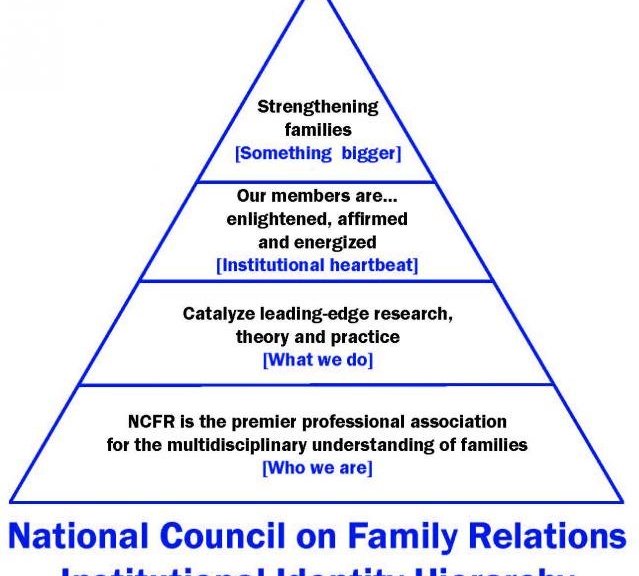
Despite its name, the National Council on Family Relations is looking to destroy American families. It claims that the nuclear family – consisting of father, mother, and children – is merely an extension of white supremacy. NCFR has joined with critical race theorists and Black Lives Matter in this outright attack on the foundational values and norms of American culture.

NCFR has a wide reach. Founded in 1938, the organization publishes three journals, including the Journal of Marriage and Family, which the organization touts as “the leading research journal in the family field.” The group’s lamentable views on marriage will influence hundreds of marriage and family therapists and researchers across the nation.

NCFR’s members come from more than 35 countries and all 50 states, and work as teachers, program developers, and counselors, according to the organization’s website. It has thousands of active members, who participate in focus groups, discussion, and networking. NCFR has 10 state and regional-level affiliates and 26 student chapters at universities.

NCFR also produces research for lawmakers. In its most recent 2020 annual report, NCFR lists as its first “program highlight” its “racial justice resources.”

The Nuclear Family As ‘Family Privilege’

In an announcement for a webinar that premiered in May, titled “Toward Dismantling Family Privilege and White Supremacy in Family Science,” the organization offers continuing education credits for its members to learn that the field of “Family Science” is “struggling” with “how it privileges certain types of families over others.” NCFR introduces its webinar as follows:

Like White privilege, family privilege is an unacknowledged and unearned benefit instantiated in U.S. laws, policies, and practices and bestowed upon traditional or ‘standard’ nuclear families to the disadvantage of non-traditional configured family systems (e.g., sole-parent families, unmarried committed partners rearing children together, grandparents raising grandchildren). Family privilege is defined as the benefits, often invisible and unacknowledged, that one receives by belonging to family systems long upheld in society as superior to all others. It serves to advantage certain family forms over others and is typically bestowed upon White, traditional nuclear families.

According to NCFR, the nuclear family is now a vehicle of “family privilege” – yet another new term – and white supremacy, a “structure” that no longer is viewed as one that nurtures young children, provides them with stability and security, and prepares them for successful and emotionally sound adulthood.

Instead, NCFR now says the family of mom, dad, and kids has mistakenly been upheld as “superior to all others” and “creates systemic barriers to equal opportunity and justice for all families.”

Teaching the Dismantling of ‘Family Privilege’

In NCFR’s webinar, attendees “will examine, recognize, and learn how to dismantle the manifestations of family privilege in our social systems by using an intersectional framework developed by critical feminist and race scholars.” Webinar attendees are expected to learn how to “define family privilege, White supremacy, and apply a critical intersectional framework that can be used in one’s work.”

NCFR is essentially stating everything they have taught about family science in the past was a lie, because the organization failed to recognize “family privilege” throughout all these decades, and now must acknowledge its guilt. After only a 90-minute webinar, attendees are expected to have the ability to:

Dismantle family privilege in Family Science scholarship, teaching, practice, and policymaking;

Recognize family privilege and White supremacy in research, practitioner, and policy settings;

Reduce the ways in which family privilege manifests in Family Science and in society.

Data Shows This Is All a Dangerous Lie

Ironically, critical race theory (CRT) is a tool of the same left that has created a populace within the black community that is dependent upon the government for survival. Even though published data confirms that two-parent families – including black two-parent families – dramatically reduces poverty, childhood abuse, and many other social ills, NCFR is now asserting our two-parent American families, white and black, represent systemic racism and “family privilege.”

According to the U.S. Census Bureau, 18.3 million children – 1 in 4 – live without a biological, step, or adoptive father in the home. Research that has not been tainted by CRT has shown children raised in fatherless homes have a four times greater risk of poverty, seven times greater risk of becoming pregnant as a teen, and are two times as likely to be obese and to drop out of high school.

Additionally, traditional research has shown children raised without a father are more likely to exhibit behavioral problems, to face abuse and neglect, to abuse drugs and alcohol, to commit crimes, and to go to prison.

The black community is missing out on the opportunities our country has to offer, and it is not because of systemic racism or white privilege. It’s because, since the 1960s, the culture has declined from approximately 80 percent two-parent families to 80 percent fatherless homes without one national initiative to reverse the trend.

It is time to address the real issues that drive racial disparities, while helping to move the country toward a post-racial America.

By 

Kendall Qualls is the president of TakeCharge, which strives to unite Americans regardless of background and to inspire black and other minority communities to take charge of their own lives and not to rely on government and politicians for prosperity. He has been married for 35 years and has five children.

Source: ‘Family Research Organization’: Married Households Are Racist

In Touch Ministries; Charles Stanley – The Blessings of Inadequacy

2 Corinthians 4:7-15

Most of us assume that feelings of inadequacy are enemies to be subdued, but God uses our weaknesses to display His glory. Even though we love feeling confident and bold, this kind of self-reliance is the opposite of humility. Despite all his great knowledge and varied gifts, Paul knew he was not sufficient for the tasks the Lord had called him to accomplish. When he spoke of his ministry, the apostle said, “I also labor, striving according to [Christ’s] power which works mightily within me” (Col. 1:29).

Inadequacy reveals where we lack ability and drives us to dependence upon the Lord. He works in our weakness to accomplish His purposes in and through us. Therefore, we shouldn’t surrender to our failings by letting them hinder us from even trying to serve the Lord. Nor should we try to pump up our self-confidence with pep talks and self-affirmation. Instead, our inadequacies are designed to humble us so we’ll turn to the Lord for strength.

When we depend on Him in humility, “the extraordinary greatness of the power will be of God and not from ourselves” (2 Cor. 4:7). Then all the praise and glory go to Him.

Bible in One Year: Mark 6-7

http://www.intouch.org/

Our Daily Bread — God’s Plans for You

Bible in a Year:

Take delight in the Lord, and he will give you the desires of your heart.

Psalm 37:4

Today’s Scripture & Insight:

Psalm 37:3–7

For six years, Agnes tried to make herself the “perfect minister’s wife,” modeling herself after her adored mother-in-law (also a pastor’s wife). She thought that in this role she couldn’t also be a writer and painter, but in burying her creativity she became depressed and contemplated suicide. Only the help of a neighboring pastor moved her out of the darkness as he prayed with her and assigned her two hours of writing each morning. This awakened her to what she called her “sealed orders”—the calling God had given her. She wrote, “For me to be really myself—my complete self—every . . . flow of creativity that God had given me had to find its channel.”

Later, she pointed to one of David’s songs that expressed how she found her calling: “Take delight in the Lord, and he will give you the desires of your heart” (Psalm 37:4). As she committed her way to God, trusting Him to lead and guide her (v. 5), He made a way for her not only to write and paint but to help others to better communicate with Him.

God has a set of “sealed orders” for each of us, not only that we’ll know we’re His beloved children but understand the unique ways we can serve Him through our gifts and passions. He’ll lead us as we trust and delight in Him.

By:  Amy Boucher Pye

Reflect & Pray

How does Agnes’ story of living someone else’s life resonate with you? What has God put in your “sealed orders”?

Creator God, You’ve made me in Your image. Help me to know and embrace my calling that I might better love and serve You.

Explore how your identity is rooted in Christ.

http://www.odb.org

Grace to You; John MacArthur – Trusting God’s Word

“The law of the Lord is perfect. . . . The commandment of the Lord is pure. . . . The judgments of the Lord are true; they are righteous altogether” (Ps. 19:7-9).

God’s Word is infallible.

Infallibility refers to the truth of Scripture as a whole, whereas inerrancy focuses on the accuracy of every single word. Like inerrancy, infallibility is grounded in the character of God. God cannot lie and does not change (1 Sam. 15:29). He is thoroughly consistent in everything He does, and His Word reflects those characteristics. The psalmist wrote, “The sum of Thy word is truth, and every one of Thy righteous ordinances is everlasting” (Ps. 119:160). Paul said, “The Law is holy, and the commandment is holy and righteous and good” (Rom. 7:12).

Jesus said He didn’t come to abolish the law or the prophets (sections of the Old Testament) but to fulfill them. He promised that everything in Scripture will be fulfilled (Matt. 5:17-18). John 10:35 declares that the authority of Scripture “cannot be broken.” It is binding and cannot be destroyed, abolished, or done away with. God’s Word is indestructible, authoritative, and infallible.

On a practical level, infallibility means that you can trust the Bible. It will never deceive you or give you counsel that will later prove to be erroneous. That was the confidence of the psalmist when he wrote, “Establish Thy word to Thy servant, as that which produces reverence for Thee. Turn away my reproach which I dread, for Thine ordinances are good. Behold, I long for Thy precepts; revive me through Thy righteousness. May Thy lovingkindnesses also come to me, O Lord, Thy salvation according to Thy word; so I shall have an answer for him who reproaches me, for I trust in Thy word. And do not take the word of truth utterly out of my mouth, for I wait for Thine ordinances. So I will keep Thy law continually, forever and ever. And I will walk at liberty, for I seek Thy precepts. I will also speak of Thy testimonies before kings, and shall not be ashamed. And I shall delight in Thy commandments, which I love” (Ps. 119:38-47).

Suggestions for Prayer

Praise God that His Word is utterly trustworthy.

For Further Study

Memorize Psalm 119:165 as a reminder of the infallibility of God’s Word.

http://www.gty.org/

Joyce Meyer – A Home for God’s Spirit

May Christ through your faith [actually] dwell (settle down, abide, make His permanent home) in your hearts!

— Ephesians 3:17 (AMPC)

If you are born again, you hopefully know that Jesus lives on the inside of you through the power of the Holy Spirit. The question is, is God comfortable in you? Does He feel at home within you? Even though the Spirit of God lives within you, other things live in you too—such as fear, anger, jealousy, or murmuring and complaining. God once gave me an illustration of what it is like for Him to live in a heart where murmuring, complaining, and discord reside. Suppose you go to a friend’s house and your friend says, “Oh, come on in. I’ll get you a cup of coffee. Get comfortable and make yourself at home.” Then, your friend begins yelling at her husband and the two of them rant and rave and carry on right in front of you. How comfortable would you be in the presence of such strife?

If we want to be a comfortable “home” for the Spirit of the Lord, we must give up things that cause us to forget about His presence or are offensive to Him. We must stop grumbling, allowing strife and unrest inside us, or harboring unforgiveness. Instead, we need to make sure our inner lives are engaged in things that please and honor God’s presence. Our mouths should be full of praise and thanksgiving. We should wake up every day and say in our hearts, “Good morning, Lord. I want you to feel at home and be comfortable in me today.” We all need to take inventory of what goes in our hearts because they are the dwelling place of God. When we examine our inner lives, we are looking at holy ground where God has chosen to make His home. Let’s commit to making Him comfortable in us.

Prayer Starter: Father, please show me what needs to go so that You feel as comfortable as possible living inside my heart. In Jesus’ name, amen.

http://www.joycemeyer.org

Truth for Life; Alistair Begg –Who Can Endure?

But who can endure the day of his coming . . . ?

Malachi 3:2

Christ’s first coming was without external pomp or display of power, and yet in truth there were few who could endure its test. Herod and all Jerusalem with him were stirred at the news of the wondrous birth. Those who supposed themselves to be waiting for Him showed the fallacy of their professions by rejecting Him when He came. His life on earth was like a winnowing fan that sifted the great heap of religious profession, and only a few could survive the process.

But what will His second coming be? What sinner can endure to think of it? “He shall strike the earth with the rod of his mouth, and with the breath of his lips he shall kill the wicked.”1 In Gethsemane when He said to the soldiers, “I am he,” they fell backward. What will happen to His enemies when He will reveal Himself more fully as the “I Am”?

His death shook earth and darkened heaven. What will be the dreadful splendor of that day when as the living Savior He will summon the living and the dead before Him? O that the terrors of the Lord would persuade men to forsake their sins and kiss the Son in case He is angry!

Though a lamb, He is still the lion of the tribe of Judah, tearing the prey in pieces; and though He does not break the bruised reed, yet He will break His enemies with a rod of iron and dash them to pieces like a potter’s vessel. None of His foes shall stand before the tempest of His wrath or hide themselves from the sweeping hail of His indignation.

But His beloved blood-washed people look for His appearing with joy; in this living hope they live without fear. To them He sits as a refiner even now, and when He has tested them they shall come forth as gold. Let us examine ourselves this morning and make our calling and election sure, so that the coming of the Lord may not be the cause of fearful expectations. O for grace to discard all hypocrisy, and to be found of Him sincere and without rebuke on the day of His appearing.

1) Isaiah 11:4

Devotional material is taken from Morning and Evening, written by C. H. Spurgeon, revised and updated by Alistair Begg.

http://www.truthforlife.org

Kids4Truth Clubs Daily Devotional – God Is Light

“This then is the message which we have heard of him, and declare unto you, that God is light, and in him is no darkness at all.” (1 John 1:5)

When John says, “God is light,” what does he mean? Is he saying that God is like a giant flashlight? Or maybe God is like the sun?

In the Bible, darkness is often used to describe sin. Hell is said to be a very dark place because God’s glory is not present there. If sin is like darkness, then God is like light – because God is pure and holy.

Have you ever noticed how darkness and light cannot be in a room at the same time? Here is an example:

Matt was with his dad at an Atlanta Braves baseball game. As the fifth inning was coming to a close, the sun was going down and the sky began to grow darker. Suddenly, all the huge stadium lights flashed on and flooded everything with brilliant light. The stadium that once had become dimmer and darker was now just as bright as it would have been in the middle of a sunny day! What happened? The light drove away the darkness. Whenever light fills someplace, there is no more room for darkness.

Light and darkness are like God and sin. God will not stay in the same place as sin. That means when you choose to keep sin in your life, God will not fellowship with you. You may be close in one sense to God (He is present everywhere), but in a spiritual sense, you remove yourself far away from God when you sin against Him willfully. That is why John writes to Christians, “If we say that we have fellowship with him, and walk in darkness, we lie, and do not the truth.” (See 1 John 1:6.) You can say that you are walking with God all you want. But your actions will tell the real story.

Praise the Lord – the opposite is also true! When you are walking with God and choosing to please Him, there will be no room for sin in your life. Remember that God is light, and in Him is no darkness at all! You should walk with God closely so that sin does not have a chance to creep into your life.

One night, Matt’s family was driving in Australia with a missionary pastor. The pastor turned off the highway and began driving very slowly, turning off his headlights. Then he said, “Watch this!” Suddenly, he turned the headlights back on. They were on a golf course. There, blinking in the bright light, were dozens of kangaroos that had been grazing on the course. The kangaroos stared at Matt, and Matt stared back in wonder. Then they slowly hopped away. Unless the headlights had been turned on, Matt would not have even known that the kangaroos were around!

Many times, the “light” of God’s Word will show us things that we need to change. When that happens, we need to draw near to God in humble repentance. 1 John 1:9 says, “If we confess our sins, he is faithful and just to forgive us our sins, and to cleanse us from all unrighteousness.”

God is light!

My Response:
» Is there any “darkness” (sin) in my life that I need to get out?
» Why should I be thankful that God is light?

Denison Forum – “Woman awakes to a hole in her roof and a space rock on her pillow”

Ruth Hamilton was asleep in her bed when she was awakened by the sound of a crash through her ceiling and the sensation of debris on her face. “I just jumped up and turned on the light, I couldn’t figure out what the heck had happened,” she said.

The British Columbia resident called 911. A police officer arrived; after exploring their options and examining the hole in her ceiling and a black rock on her pillow, the two decided that a meteorite had come through her roof.

Others in the area had seen a bright light in the sky that exploded and caused some booms. Ruth, however, experienced personally what others only observed. She says her experience has given her a new perspective: “Life is precious and it could be gone at any moment, even when you think you are safe and secure in your bed.

“I hope I never take it for granted again.”

Why is Squid Game so popular?

There are many “meteors” in today’s news, from a bow-and-arrow rampage in Norway now being treated as an apparent terrorist attack, to a high-rise fire in Taiwan that left at least forty-six dead and dozens injured, to reports that US drug overdose deaths reached a new high in the twelve-month period concluding in March 2021.

It is therefore unsurprising that a survival drama called Squid Game is now Netflix’s biggest hit ever. Associated Press explains that the show is “about desperate adults competing in deadly children’s games for a chance to escape severe debt.” The drama’s enormous popularity is clearly a sign of the times.

On a planet where Satan is “the god of this world” (2 Corinthians 4:4), the “ruler of this world” (John 12:31), and “the deceiver of the whole world” (Revelation 12:9), we can expect to face tribulation (John 16:33), trials (1 Peter 4:12), and temptations (1 Corinthians 10:13). This week we’ve discussed Satan’s nefarious strategies and the urgency of turning our temptations and challenges immediately into prayers for God’s strength and victory.

Today, let’s focus on the paradoxical fact that the more initiative we take in attacking the gates of hell (Matthew 16:18), the more empowered against the enemy we become.

What St. Francis never said

You are undoubtedly familiar with the “spiritual armor” Paul describes in Ephesians 6:10–18: the “belt of truth,” the “breastplate of righteousness,” “shoes for your feet” composed of the “gospel of peace,” the “shield of faith,” the “helmet of salvation,” and the “sword of the Spirit, which is the word of God.”

Notice that this “armor” covers the front of warriors as they go into battle. If they flee from the conflict, there is no protection for the back.

You and I will experience the power of God to the degree that we fulfill the purpose of God (cf. Acts 1:8). When Jesus’ seventy-two disciples went on an evangelistic mission, they “returned with joy, saying, ‘Lord, even the demons are subject to us in your name!’” (Luke 10:17). He replied, “I saw Satan fall like lightning from heaven” (v. 18).

Here we discover a clear reason why more Christians are not more empowered to stand boldly for Christ in an anti-Christian culture. If we step into the river, our faith positions us to experience God’s miraculous provision (Joshua 3:14–17). If we march around Jericho, God will bring down its walls (Joshua 6). If we stand boldly for our Lord, we will be filled with his Spirit (Acts 4:8).

Ours is a day of declining commitment to evangelism, fueled in part by a growing belief that sharing the gospel is wrong in a culture that elevates tolerance above all other values. But the “passive congeniality” that is unwilling to speak of Jesus in everyday conversation is not enough.

We often hear the advice, “Preach the gospel at all times—when necessary, use words” attributed to St. Francis of Assisi. In fact, he never spoke these words and usually did the opposite. His first biographer, writing just three years after his death, reported that Francis “sometimes preached in up to five villages a day, often outdoors. In the country, Francis often spoke from a bale of straw or a granary doorway. In town, he would climb on a box or up steps in a public building. He preached to . . . any who gathered to hear the strange but fiery little preacher from Assisi.”

Why a teenager is running for the school board

A teenager in Florida is running for his local school board “to give a voice to the voiceless.” An eighteen-year-old cookbook author is donating all of her author proceeds to a non-profit fighting childhood hunger; if her first print run sells out, she hopes to provide kids with about seven hundred thousand meals.

When last did you take a risk to serve your Lord? Here’s how:

  1. Agree to do anything your Father calls you to do (Luke 6:46).
  2. Ask him for your kingdom assignment today: the people you are to influence and the work you are to do for his glory and our good (Romans 12:2).
  3. Submit to the power of his Spirit (Ephesians 5:18).
  4. Step out in obedient faith (Hebrews 11:1).
  5. Trust the results to God’s sovereignty and eternal purpose (Psalm 37:5Philippians 1:6).

My mentor when I pastored in Atlanta taught me this life motto: “Attempt something so great for God, it’s doomed to failure unless God be in it.”

What will you attempt for God today?

Denison Forum

In Touch Ministries; Charles Stanley – What Is the Church?

Colossians 1:15-20

Most people think of the church as a building, but that’s not the biblical definition. It isn’t merely a meeting place for social interaction, scriptural instruction, and service projects. Rather, the church is composed of all those who have been redeemed by Christ. He is the head of church, and believers are called His body.

In Matthew 16:18, Jesus said, “I will build My church; and the gates of Hades will not overpower it.” He was referring to the entire body of Christ, which is composed of all believers worldwide from every generation. The church began on the day of Pentecost when the Holy Spirit came and filled Jesus’ followers, and it will continue until the rapture of the church, when believers in Christ will be caught up to meet Him in the sky (1 Thess. 4:16-17).

Until then, our job as Christ’s body is to follow our Head. We’re not the ones in charge; He is. The Lord builds His church, but He uses us to make disciples, baptizing and teaching them to obey all His commands (Matt. 28:19-20). We don’t come up with our own plans; we simply follow His.

Bible in One Year: Mark 3-5


http://www.intouch.org/