
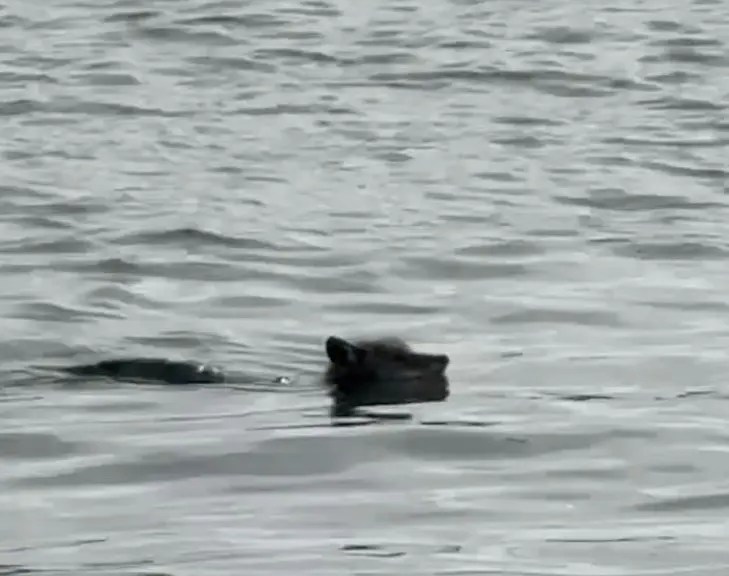
Explore the incredible journey of a coyote thriving on Alcatraz Island after a daring swim.
Coyotes (Canis latrans) are great survivors. Cousins to the gray wolf of the north, coyotes are smaller, more nimble, able to eat almost anything, and quick, curious beasts. Any given coyote is always looking for the main chance, and one California song-dog seems to have found something of a coyote paradise, after braving a long, cold, dangerous swim to Alcatraz Island.
The adventurous coyote that has been living on Alcatraz since paddling more than a mile across the San Francisco Bay is growing “much fatter” thanks to the former prison island’s all-you-can-eat bird buffet.
The yet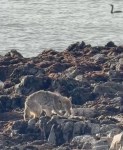 -to-be-named canine is “well and thriving” on the 22-acre island — and has been feasting on fowl, whose carcasses he is apparently littering across the state-run grounds.
“He not only survived, but he is well and thriving,” Janet Kessler, a “self-taught naturalist,” reported on her Instagram account that documents San Francisco’s urban coyote population.
Here’s the problem: He’s all alone. But he does seem to be doing rather well and is growing somewhat plump.
A picture showed the beast basking in the sun on a corner of the island, appearing noticeably thicker than the bony, shivering coyote that dragged itself onto the former prison’s rocky shores in a video that went viral earlier this month.
The new snapshot of the lonesome animal was apparently taken by a friend of Kessler on Jan. 24 and shows a massive turnaround within just two weeks of the animal’s daring 1.25-mile swim from the mainland.
The coyote’s health can mostly be attributed to a feast of fowl found in the many bird nests near the historic island’s parade grounds, where officials say the animal has mostly been living and leaving harvested carcasses in his wake.
You have to admire that kind of get-up-and-go.
I like coyotes. I tried trapping and hunting them when they first spread into my old stomping grounds of Allamakee County, Iowa, with no success; they were just too canny for me, although my trapline and .22 rifle brought in enough raccoon, beaver, muskrat, and fox pelts to keep me in ammo and pizzas. But later, while living in Colorado, I spent many a night under canvas in the mountains listening to coyotes singing their late-night serenades. Some folks find it discordant, but I rather like it.
And, sure, I respect coyotes. They are, as our Alcatraz friend proves, smart and adaptable. That’s why they have spread all over the continent, and that’s also why they do pretty well around humans.
If there is anything that might, in time, entice this critter back to the mainland, it may be the search for a mate. There is one instinct, after all, that runs deeper even than food. And staying alone on an island surrounded by cold water and swift currents isn’t a good way to pass on one’s genes. So, I’ll be a tad surprised if, at some point, our Wile E. friend doesn’t attempt the return swim – and I hope he makes it.
Even so, this is a neat example of just how adaptable and enterprising coyotes can be. This one hit on something that was a stroke of genius; all-you-can-eat seafowl, no enemies, no people.
But then, genius seems to run in the coyote family.
Source: The Curious Case of the Alcatraz Coyote – RedState
From Instagram Link listed above in text…
This Alcatraz Coyote update comes not from my own observations, but from what friends have sent me. This photo was taken by a tourist on January 24th, just about two weeks after the coyote made its swim, so he not only survived, but he is well and thriving.
Rangers apparently have come across a bird carcass which they are certain was harvested by the coyote.
I’ve heard that authorities are thinking of removing the coyote because of all the visitors. In my experience, the coyote should be left alone. He expended a huge amount of effort to reach the island. If he can survive there, we should allow him to, allowed to live the life he has chosen. We all know that relocation is detrimental to coyotes and many don’t survive. This coyote poses absolute no danger to people — he will stay away from them.
In addition, since he was born and raised in the dense urban area of San Francisco, you can be sure that he already is very used to people. Coyotes pass folks constantly in our parks, and often at close range: but they have no interest in interacting with us. They are wary of people and keep their distance, even if they don’t flee lickety split as some people might want them to.
So on Alcatraz, folks just need to be asked to keep their distance and NOT feed the animal, which would cause him to hang around closely to where the tourists are. The only thing we humans might consider doing is making sure there is fresh water when and if the rain puddles dry up.
Alcatraz is only about 22 acres in size, and basically a rock, only about .3 miles long from end to end. Territories in the wild wild tend to be 4 to 8 square miles each; in the city, territories are about 2.5 square miles each. Several tenths of a square mile is not big enough for the coyote to stay indefinitely. He’ll probably want to return to where he came from and then continue he dispersal journey from there.
Lets stand back, watch, learn, and be awed by our wildlife and their amazing survival skills. We don’t need to always control and interfere.
PS: if we can get a good facial shot, I might be able to tell what family he came from!

