
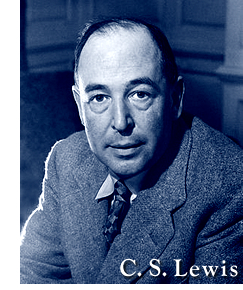
Category Archives: C.S. Lewis

C.S. Lewis Daily – Today’s Reading


Screwtape advises Wormwood on using time to wear down a soul:

The Enemy has guarded him from you through the first great wave of temptations. But, if only he can be kept alive, you have time itself for your ally. The long, dull, monotonous years of middle-aged prosperity or middle-aged adversity are excellent campaigning weather. You see, it is so hard for these creatures to persevere. The routine of adversity, the gradual decay of youthful loves and youthful hopes, the quiet despair (hardly felt as pain) of ever overcoming the chronic temptations with which we have again and again defeated them, the drabness which we create in their lives and the inarticulate resentment with which we teach them to respond to it—all this provides admirable opportunities of wearing out a soul by attrition. If, on the other hand, the middle years prove prosperous, our position is even stronger. Prosperity knits a man to the World. He feels that he is ‘finding his place in it’, while really it is finding its place in him. His increasing reputation, his widening circle of acquaintances, his sense of importance, the growing pressure of absorbing and agreeable work, build up in him a sense of being really at home in earth, which is just what we want. You will notice that the young are generally less unwilling to die than the middle- aged and the old.

From The Screwtape Letters

Compiled in A Year with C.S. Lewis

C.S. Lewis Daily – Today’s Reading


TO RHONA BODLE, who had written Lewis of her upcoming confirmation: On not expecting remarkable sensations connected to holy activities.

9 November 1949

Congratulations. You are daily in my prayers.

Caveat [let her beware!]—don’t count on any remarkable sensations, either at this or your first (or fifty first) Communion. God gives these or not as He pleases. Their presence does not prove that things are especially well, nor their absence that things are wrong. The intention, the obedience, is what matters.

From The Collected Letters of C.S. Lewis, Volume II

Compiled in Yours, Jack

C.S. Lewis Daily – Today’s Reading


Lewis, grieving the death of his wife, Joy:

‘It was too perfect to last,’ so I am tempted to say of our marriage. But it can be meant in two ways. It may be grimly pessimistic — as if God no sooner saw two of His creatures happy than He stopped it (‘None of that here!’). As if He were like the Hostess at the sherry-party who separates two guests the moment they show signs of having got into a real conversation. But it could also mean ‘This had reached its proper perfection. This had become what it had in it to be. Therefore of course it would not be prolonged.’ As if God said, ‘Good; you have mastered that exercise. I am very pleased with it. And now you are ready to go on to the next.’ When you have learned to do quadratics and enjoy doing them you will not be set them much longer. The teacher moves you on.

For we did learn and achieve something. There is, hidden or flaunted, a sword between the sexes till an entire marriage reconciles them. It is arrogance in us to call frankness, fairness, and chivalry ‘masculine’ when we see them in a woman; it is arrogance in them to describe a man’s sensitiveness or tact or tenderness as ‘feminine.’ But also what poor, warped fragments of humanity most mere men and mere women must be to make the implications of that arrogance plausible. Marriage heals this. Jointly the two become fully human. ‘In the image of God created He them.’ Thus, by a paradox, this carnival of sexuality leads us out beyond our sexes.

From A Grief Observed

Compiled in A Year with C.S. Lewis

C.S. Lewis Daily – Today’s Reading


TO DON GIOVANNI CALABRIA, who had sent Lewis the Litany of Humility composed by Cardinal Merry del Val: On the danger of being too aware of global worries and of forgetting to help Christ in the people close at hand; on the dignity to which God raises human beings when they receive Holy Communion; and on Lewis’s besetting temptations against humility.

27 March 1948

I was glad to receive your letter—so full (as is your wont) of Charity.

Everywhere things are troubling and uneasy—wars and rumours of war: perhaps not the final hour but certainly times most evil.

Nevertheless, the Apostle again and again bids us ‘Rejoice’[Philippians 4:4].

Nature herself bids us do so, the very face of the earth being now renewed, after its own manner, at the start of Spring.

I believe that the men of this age (and among them you Father, and myself) think too much about the state of nations and the situation of the world. Does not the author of The Imitation warn us against involving ourselves too much with such things?

We are not kings, we are not senators. Let us beware lest, while we torture ourselves in vain about the state of Europe, we neglect either Verona or Oxford.

In the poor man who knocks at my door, in my ailing mother, in the young man who seeks my advice, the Lord Himself is present: therefore let us wash His feet.

I have always believed that Voltaire, infidel though he was, thought aright in that admonition of his to cultivate your own garden: likewise William Dunbar (the Scottish poet who flourished in the 15th century) when he said

Man, please thy Maker and be merry;

This whole world rate we at a penny!

Tomorrow we shall celebrate the glorious Resurrection of Christ. I shall be remembering you in the Holy Communion. Away with tears and fears and troubles! United in wedlock with the eternal Godhead Itself, our nature ascends into the Heaven of Heavens. So it would be impious to call ourselves ‘miserable’. On the contrary, Man is a creature whom the Angels—were they capable of envy—would envy. Let us lift up our hearts! ‘At some future time perhaps even these things it will be a joy to recall.’ [Virgil, Aeneid, I, 203]

For the Litany composed by Cardinal Merry many thanks. You did not know, did you, that all the temptations against which he pours forth these prayers I have long been exceeding conscious of ? [From the longing to be thought well of, deliver me, Jesus, . . . from the fear of being rejected, deliver me, Jesus, . . . ] Touché, you pink me!

Let us pray for each other always. Farewell.

From The Collected Letters of C.S. Lewis, Volume II

Compiled in Yours, Jack

C.S. Lewis Daily – Today’s Reading


On doubt

As far as you (and I) are concerned I have no doubt that the fear you mention is simply a temptation of the devil, an effort to keep us away from God by despair. It is often the devil working through some defect in our health, and in extreme cases it needs a medical as well as a spiritual cure. So don’t listen to these fears and doubts any more than you would to any obviously impure or uncharitable thoughts. . . . Of course, like other evil temptations, they will not be silenced at once. You will think you have got rid of them and then they will come back again—and again. But, with all our temptations of all sorts, we must just endure this. Keep on, do your duty, say your prayers, make your communions, and take no notice of the tempter. He goes away in the end. Remember I John iii, 20 “If (=though) our heart condemn us, God is greater than our heart.”

From The Collected Letters of C.S. Lewis, Volume III

Compiled in Words to Live By

C.S. Lewis Daily – Today’s Reading


Remember that, as I said, the right direction leads not only to peace but to knowledge. When a man is getting better he understands more and more clearly the evil that is still left in him. When a man is getting worse he understands his own badness less and less. A moderately bad man knows he is not very good: a thoroughly bad man thinks he is all right. This is common sense, really. You understand sleep when you are awake, not while you are sleeping. You can see mistakes in arithmetic when your mind is working properly: while you are making them you cannot see them. You can understand the nature of drunkenness when you are sober, not when you are drunk. Good people know about both good and evil: bad people do not know about either.

From Mere Christianity

Compiled in A Year with C.S. Lewis

C.S. Lewis Daily – Today’s Reading


TO MR. N. FRIDAMA, who seems to have asked Lewis about the steps in his conversion to Christianity: On the Calvinist doctrine of double predestination.

15 February 1946

I was baptised in the Church of Ireland (same as Anglican). My parents were not notably pious but went regularly to church and took me. My mother died when I was a child.

My Christian faith was first undermined by the attitude taken towards Pagan religion in the notes of modern editors of Latin and Greek poets at school. They always assumed that the ancient religion was pure error: hence, in my mind, the obvious question ‘Why shouldn’t ours be equally false?’ A theosophical Matron at one school helped to break up my early beliefs, and after that a ‘Rationalist’ tutor to whom I went finished the job. I abandoned all belief in Christianity at about the age of 14, though I pretended to believe for fear of my elders. I thus went thro’ the ceremony of Confirmation in total hypocrisy. My beliefs continued to be agnostic, with fluctuation towards pantheism and various other sub-Christian beliefs, till I was about 29.

I was brought back (a.) By Philosophy. I still think [Bishop George] Berkeley’s proof for the existence of God is unanswerable. (b.) By increasing knowledge of medieval literature. It became harder and harder to think that all those great poets and philosophers were wrong. (c.) By the strong influence of 2 writers, the Presbyterian George MacDonald and the Roman Catholic, G.K. Chesterton. (d.) By argument with an Anthroposophist [Owen Barfield]. He failed to convert me to his own views (a kind of Gnosticism) but his attack on my own presuppositions smashed the ordinary pseudo-‘scientific’ world-picture forever.

On Calvinism. Both the statement that our final destination is already settled and the view that it still may be either Heaven or Hell, seem to me to imply the ultimate reality of Time, which I don’t believe in. The controversy is one I can’t join on either side for I think that in the real (Timeless) world it is meaningless. In great haste.

From The Collected Letters of C.S. Lewis, Volume II

Compiled in Yours, Jack

C.S. Lewis Daily – Today’s Reading


We have a strange illusion that mere time cancels sin. I have heard others, and I have heard myself, recounting cruelties and falsehoods committed in boyhood as if they were no concern of the present speaker’s, and even with laughter. But mere time does nothing either to the fact or to the guilt of a sin. The guilt is washed out not by time but by repentance and the blood of Christ: if we have repented these early sins we should remember the price of our forgiveness and be humble. As for the fact of a sin, is it probable that anything cancels it? All times are eternally present to God. Is it not at least possible that along some one line of His multi-dimensional eternity He sees you forever in the nursery pulling the wings off a fly, forever toadying, lying, and lusting as a schoolboy, forever in that moment of cowardice or insolence as a subaltern? It may be that salvation consists not in the cancelling of these eternal moments but in the perfected humanity that bears the shame forever, rejoicing in the occasion which it furnished to God’s compassion and glad that it should be common knowledge to the universe. Perhaps in that eternal moment St Peter—he will forgive me if I am wrong—forever denies his Master. If so, it would indeed be true that the joys of Heaven are for most of us, in our present condition, ‘an acquired taste’—and certain ways of life may render the taste impossible of acquisition. Perhaps the lost are those who dare not go to such a public place. Of course I do not know that this is true; but I think the possibility is worth keeping in mind.

From The Problem of Pain

Compiled in A Year with C.S. Lewis

C.S. Lewis Daily – Today’s Reading

On God

God is Goodness. He can give good, but cannot need or get it. In that sense all His love is, as it were, bottomlessly selfless by very definition; it has everything to give and nothing to receive. Hence, if God sometimes speaks as though the Impassible could suffer passion and eternal fullness could be in want, and in want of those beings on whom it bestows all from their bare existence upwards, this can mean only, if it means anything intelligible by us, that God of mere miracle has made Himself able so to hunger and created in Himself that which we can satisfy. If He requires us, the requirement is of His own choosing.

It is a poor thing to strike our colours to God when the ship is going down under us; a poor thing to come to Him as a last resort, to offer up “our own” when it is no longer worth keeping. If God were proud He would hardly have us on such terms: but He is not proud, He stoops to conquer, He will have us even though we have shown that we prefer everything else to Him.

From The Problem of Pain

Compiled in Words to Live By

C.S. Lewis Daily – Today’s Reading


On God

As a great Christian writer (George MacDonald) pointed out, every father is pleased at the baby’s first attempt to walk: no father would be satisfied with anything less than a firm, free, manly walk in a grown-up son. In the same way, he said, “God is easy to please, but hard to satisfy.”

I think every one who has some vague belief in God, until he becomes a Christian, has the idea of an exam or of a bargain in his mind. The first result of real Christianity is to blow that idea into bits. When they find it blown into bits, some people think this means that Christianity is a failure and give up. They seem to imagine that God is very simple-minded! In fact, of course, He knows all about this. One of the very things Christianity was designed to do was to blow this idea to bits. God has been waiting for the moment at which you discover that there is no question of earning a pass mark in this exam or putting Him in your debt.

Then comes another discovery. Every faculty you have, your power of thinking or of moving your limbs from moment to moment, is given you by God. If you devoted every moment of your whole life exclusively to His service you could not give Him anything that was not in a sense His own already. So that when we talk of a man doing anything for God or giving anything to God, I will tell you what it is really like. It is like a small child going to his father and saying, “Daddy, give me sixpence to buy you a birthday present.” Of course, the father does, and he is pleased with the child’s present. It is all very nice and proper, but only an idiot would think that the father is sixpence to the good on the transaction. When a man has made these two discoveries God can really get to work. It is after this that real life begins.

From Mere Christianity

Compiled in Words to Live By

C.S. Lewis Daily – Today’s Reading


When I attempted . . . . to describe our spiritual longings, I was omitting one of their most curious characteristics. We usually notice it just as the moment of vision dies away, as the music ends, or as the land- scape loses the celestial light. . . . . For a few minutes we have had the illusion of belonging to that world. Now we wake to find that it is no such thing. We have been mere spectators. Beauty has smiled, but not to welcome us; her face was turned in our direction, but not to see us. We have not been accepted, welcomed, or taken into the dance. We may go when we please, we may stay if we can: “Nobody marks us.” A scientist may reply that since most of the things we call beautiful are inanimate, it is not very surprising that they take no notice of us. That, of course, is true. It is not the physical objects that I am speaking of, but that indescribable something of which they become for a moment the messengers. And part of the bitterness which mixes with the sweetness of that message is due to the fact that it so seldom seems to be a message intended for us, but rather something we have overheard. By bitterness I mean pain, not resentment. We should hardly dare to ask that any notice be taken of ourselves. But we pine. The sense that in this universe we are treated as strangers, the longing to be acknowledged, to meet with some response, to bridge some chasm that yawns between us and reality, is part of our inconsolable secret. And surely, from this point of view, the promise of glory, in the sense described, becomes highly relevant to our deep desire. For glory means good report with God, acceptance by God, response, acknowledgement, and welcome into the heart of things. The door on which we have been knocking all our lives will open at last.

From The Weight of Glory

Compiled in a Year with C.S. Lewis

C.S. Lewis Daily – Today’s Reading


On feeling

And of course the presence of God is not the same as the sense of the presence of God. The latter may be due to imagination; the former may be attended with no “sensible consolation.” The Father was not really absent from the Son when He said “Why hast thou forsaken me?” You see God Himself, as man, submitted to man’s sense of being abandoned. The real parallel on the natural level is one which seems odd for a bachelor to write to a lady, but too illuminating not to be used. The act which engenders a child ought to be, and usually is attended by pleasure. But it is not the pleasure that produces the child. Where there is pleasure there may be sterility: where there is no pleasure the act may be fertile. And in the spiritual marriage of God and the soul it is the same. It is the actual presence, not the sensation of the presence, of the Holy Ghost which begets Christ in us. The sense of the presence is a super-added gift for which we give thanks when it comes, and that’s all about it.

From The Collected Letters of C.S. Lewis, Volume III

Compiled in Words to Live By

C.S. Lewis Daily – Today’s Reading


This signature on each soul may be a product of heredity and environment, but that only means that heredity and environment are among the instruments whereby God creates a soul. I am considering not how, but why, He makes each soul unique. If He had no use for all these differences, I do not see why He should have created more souls than one. Be sure that the ins and outs of your individuality are no mystery to Him; and one day they will no longer be a mystery to you. The mould in which a key is made would be a strange thing, if you had never seen a key: and the key itself a strange thing if you had never seen a lock. Your soul has a curious shape because it is a hollow made to fit a particular swelling in the infinite contours of the Divine substance, or a key to unlock one of the doors in the house with many mansions. For it is not humanity in the abstract that is to be saved, but you—you, the individual reader, John Stubbs or Janet Smith. Blessed and fortunate creature, your eyes shall behold Him and not another’s. All that you are, sins apart, is destined, if you will let God have His good way, to utter satisfaction. The Brocken spectre ‘looked to every man like his first love’, because she was a cheat. But God will look to every soul like its first love because He is its first love. Your place in heaven will seem to be made for you and you alone, because you were made for it—made for it stitch by stitch as a glove is made for a hand.

From The Problem of Pain

Compiled in A Year with C.S. Lewis

C.S. Lewis Daily – Today’s Reading


TO PETER BIDE, whose wife had died on 17 September: On grief.

20 September 1960

My dear Peter

I have just come in from saying my morning prayers in the wood, including as always one for ‘Peter and Margy and Joy and me’, and found your letter. I hope they are allowed to meet and help one another. You and I at any rate can. I shall be here on Wednesday next. If you could let me have a card mentioning the probable time of your arrival, all the better. If not, I shall just ‘stand by’.

Yes—at first one is sort of concussed and ‘life has no taste and no direction’. One soon discovers, however, that grief is not a state but a process—like a walk in a winding valley with a new prospect at every bend.

God bless all four of us.

From The Collected Letters of C.S. Lewis, Volume III

Compiled in Yours, Jack

C.S. Lewis Daily – Today’s Reading


Good things as well as bad, you know, are caught by a kind of infection. If you want to get warm you must stand near the fire: if you want to be wet you must get into the water. If you want joy, power, peace, eternal life, you must get close to, or even into, the thing that has them. They are not a sort of prize which God could, if He chose, just hand out to anyone. They are a great fountain of energy and beauty spurting up at the very centre of reality. If you are close to it, the spray will wet you: if you are not, you will remain dry. Once a man is united to God, how could he not live forever?

From Mere Christianity

Compiled in Words to Live By

C.S. Lewis Daily – Today’s Reading


There are three ways of taking the command to turn the other cheek. One is the Pacifist interpretation; it means what it says and imposes a duty of nonresistance on all men in all circumstances. Another is the minimising interpretation; it does not mean what it says but is merely an orientally hyperbolical way of saying that you should put up with a lot and be placable. Both you and I agree in rejecting this view. The conflict is therefore between the Pacifist interpretation and a third one which I am now going to propound. I think the text means exactly what it says, but with an understood reservation in favour of those obviously exceptional cases which every hearer would naturally assume to be exceptions without being told. . . . . That is, insofar as the only relevant factors in the case are an injury to me by my neighbour and a desire on my part to retaliate, then I hold that Christianity commands the absolute mortification of that desire. No quarter whatever is given to the voice within us which says, “He’s done it to me, so I’ll do the same to him.”

From The Weight of Glory

Compiled in A Year with C.S. Lewis

C.S. Lewis Daily – Today’s Reading


TO MARY NEYLAN, whose husband has received job security: More on the graces accompanying the death of Charles Williams. Lewis asks if he can dedicate George MacDonald: An Anthology to her.

20 May 1945

I think what you say about ‘grief being better than estrangement’ is very true. I am sorry you should have had this grief. . . .

I also have become much acquainted with grief now through the death of my great friend Charles Williams, my friend of friends, the comforter of all our little set, the most angelic. The odd thing is that his death has made my faith ten times stronger than it was a week ago. And I find all that talk about ‘feeling he is closer to us than before’ isn’t just talk. It’s just what it does feel like—I can’t put it into words. One seems at moments to be living in a new world. Lots, lots of pain but not a particle of depression or resentment.

By the bye I’ve finished a selection from Geo. MacDonald (365 extracts) which will come out about Xmas: would you (or not) care to have it dedicated to you? I feel it is rather yours by right as you got more out of him than anyone else to whom I introduced his books. Just let me know.

And why should you assume I’m too occupied to see you? Friday mornings in term are bad, but alright in Vac: and Friday afternoons in both. I should like a visit (with a week’s notice) whenever you find one convenient.

Excuse this paper. It may be less blotched than yours but yours did at least begin life as a real piece of note paper! I’m so glad Dan has got his job made permanent. Blessings!

From The Collected Letters of C.S. Lewis, Volume II

Compiled in Yours, Jack

C.S. Lewis Daily – Today’s Reading


On death

On the one hand Death is the triumph of Satan, the punishment of the Fall, and the last enemy. Christ shed tears at the grave of Lazarus and sweated blood in Gethsemane: the Life of Lives that was in Him detested this penal obscenity not less than we do, but more. On the other hand, only he who loses his life will save it. We are baptised into the death of Christ, and it is the remedy for the Fall. Death is, in fact, what some modern people call “ambivalent.” It is Satan’s great weapon and also God’s great weapon: it is holy and unholy; our supreme disgrace and our only hope; the thing Christ came to conquer and the means by which He conquered.

Satan produced human Death. But when God created Man He gave him such a constitution that, if the highest part of it rebelled against Himself, it would be bound to lose control over the lower parts: i.e., in the long run to suffer Death. This provision may be regarded equally as a punitive sentence (“In the day ye eat of that fruit ye shall die”), as a mercy, and as a safety device. It is punishment because Death—that Death of which Martha says to Christ, “But . . . Sir . . . it’ll smell”—is horror and ignominy. (“I am not so much afraid of death as ashamed of it,” said Sir Thomas Browne.) It is mercy because by willing and humble surrender to it Man undoes his act of rebellion and makes even this depraved and monstrous mode of Death an instance of that higher and mystical Death which is eternally good and a necessary ingredient in the highest life. “The readiness is all”—not, of course, the merely heroic readiness but that of humility and self-renunciation. Our enemy, so welcomed, becomes our servant: bodily Death, the monster, becomes blessed spiritual Death to self, if the spirit so wills—or rather if it allows the Spirit of the willingly dying God so to will in it. It is a safety device because, once Man has fallen, natural immortality would be the one utterly hopeless destiny for him. Aided to the surrender that he must make by no external necessity of Death, free (if you call it freedom) to rivet faster and faster about himself through unending centuries the chains of his own pride and lust and of the nightmare civilisations which these build up in ever-increasing power and complication, he would progress from being merely a fallen man to being a fiend, possibly beyond all modes of redemption. This danger was averted. The sentence that those who ate of the forbidden fruit would be driven away from the Tree of Life was implicit in the composite nature with which Man was created. But to convert this penal death into the means of eternal life—to add to its negative and preventive function a positive and saving function—it was further necessary that death should be accepted. Humanity must embrace death freely, submit to it with total humility, drink it to the dregs, and so convert it into that mystical death which is the secret of life. But only a Man who did not need to have been a Man at all unless He had chosen, only one who served in our sad regiment as a volunteer, yet also one who was perfectly a Man, could perform this perfect dying; and thus (which way you put it is unimportant) either defeat Death or redeem it. He tasted death on behalf of all others. He is the representative “Die-er” of the universe: and for that very reason the Resurrection and the Life. Or conversely, because He truly lives, He truly dies, for that is the very pattern of reality. Because the higher can descend into the lower He who from all eternity has been incessantly plunging Himself in the blessed death of self-surrender to the Father can also most fully descend into the horrible and (for us) involuntary death of the body. Because Vicariousness is the very idiom of the reality He has created, His death can become ours. The whole Miracle, far from denying what we already know of reality, writes the comment which makes that crabbed text plain: or rather, proves itself to be the text on which Nature was only the commentary. In science we have been reading only the notes to a poem; in Christianity we find the poem itself.

From Miracles

Compiled in Words to Live By

C.S. Lewis Daily – Today’s Reading


The Christian doctrine of suffering explains, I believe, a very curious fact about the world we live in. The settled happiness and security which we all desire, God withholds from us by the very nature of the world: but joy, pleasure, and merriment, He has scattered broadcast. We are never safe, but we have plenty of fun, and some ecstasy. It is not hard to see why. The security we crave would teach us to rest our hearts in this world and oppose an obstacle to our return to God: a few moments of happy love, a landscape, a symphony, a merry meeting with our friends, a bathe or a football match, have no such tendency. Our Father refreshes us on the journey with some pleasant inns, but will not encourage us to mistake them for home.

From The Problem of Pain

Compiled in A Year with C.S. Lewis

C.S. Lewis Daily – Today’s Reading


TO MARGARET DENEKE: On the death of her husband, Paul Benecke, Lewis’s old history tutor and a Fellow at Magdalen College.

3 October 1944

It will give me great pleasure to come to lunch at one o’clock on Oct. 30th. I will not try to express my sympathy to Miss Benecke when we meet—such things are often merely embarrassing. You, I am sure, will not doubt that she has it.

The gap in College is terrible. Already (and yet it is only a few days) I have twice found myself setting aside a problem ‘to ask Benecke about it’ and then realised with a pang that there is no more of that. His image haunts every room in Magdalen. I hear his imagined voice again and again: so vividly, when crossing Magdalen bridge this morning, that I almost wondered if there were not some objective reality in the experience. I can hardly explain how his funeral affected me. I have heard that service read in that chapel so often for those who have not believed a word of it and who (had they been alive) would have mocked, that my feeling was almost one of relief. Here at last was a dead man not unworthy of the service. In some queer way it enormously strengthened my faith, and before we filed out of chapel I really felt (do not misunderstand me) a kind of joy—a feeling that all was well, just as well as it could be.

I count it among my great good fortunes to have known him. As far as human eyes can judge he was—is—a saint: but oh!, we still needed him here so very badly.

From The Collected Letters of C.S. Lewis, Volume II

Compiled in Yours, Jack