Tag Archives: Bible

Our Daily Bread — Behind the Scenes


Read: John 3:22-31

Bible in a Year: Jeremiah 6-8; 1 Timothy 5

He must become greater; I must become less. —John 3:30

The outreach activities of our church culminated with a city-wide service. As the team that had organized and led the events—comprised of our youth music group, counselors, and church leaders—walked onto the stage, we all excitedly applauded and poured out our appreciation for their hard work.

One man, however, was hardly noticeable, yet he was the leader of the team. When I saw him a few days later, I thanked and congratulated him for his work and said, “We hardly noticed you during the program.”

“I like to work in the background,” he said. He was not concerned with getting recognition for himself. It was time for those who did the work to receive appreciation.

His quiet demeanor was an entire sermon to me. It was a reminder that when serving the Lord, I need not seek to be recognized. I can give honor to God whether or not I’m openly appreciated by others. A Christ-first attitude can subdue any petty jealousies or unhealthy competition.

Jesus, who is “above all” (John 3:31), “must become greater; I must become less” (v.30). When we have this attitude, we will seek the progress of God’s work. It is Christ, not us, who should be the focus of all we do. —Lawrence Darmani

Jesus, be the center of my thoughts, desires, and actions. Control me and use me.

The spotlight is the place for Christ.

INSIGHT: John 3 focuses on three important personalities. The early portion of the chapter describes Nicodemus, one of the leading teachers of Israel, coming to Jesus by night to dialogue with Him about things Nicodemus admittedly did not understand (vv. 1-21). The second part of the chapter focuses on John the Baptist and his statements exalting Jesus as the great Bridegroom (vv. 22-36). Central to both of these accounts is the third and most significant person in the chapter, Christ Himself—the mystery Nicodemus couldn’t unravel and the wonder John praised. Bill Crowder

Alistair Begg – The Truth of God


Because of the truth that abides in us and will be with us forever. 2 John 2

Once the truth of God has obtained an entrance into the human heart and subdued the whole man to itself, no power, human or infernal, can dislodge it. We entertain it not as a guest but as the master of the house. This is a Christian necessity, and whoever does not believe this is not a Christian.

Those who feel the vital power of the Gospel and know the strength of the Holy Spirit as He opens, applies, and seals the Lord’s Word would rather be torn to pieces than be torn away from the Gospel of their salvation. A thousand mercies are wrapped up in the assurance that the truth will be with us forever, will be our living support, our dying comfort, our rising song, our eternal glory. This is Christian privilege, and without it our faith is worth little. Some truths we outgrow and leave behind, for they are but rudiments and lessons for beginners, but this is not so with divine truth, for though it is sweet food for babies, it is in the highest sense strong meat for men. The painful truth that we are sinners is with us to humble us and make us watchful; the more blessed truth that whoever believes on the Lord Jesus will be saved remains with us as our hope and joy. Experience, far from loosening our hold on the doctrines of grace, has tied us to them more and more firmly; our grounds and motives for believing are now stronger and more numerous than ever, and we have reason to expect that it will remain this way until in death we clasp the Savior in our arms.

Wherever this abiding love of truth can be discovered, we are bound to share in fellowship and to exercise our love. No narrow circle can contain our gracious sympathies; our communion of heart must be as wide as the ocean of grace. Error may be found mingled with truth received; let us go to war with the error but still love the brother for the measure of truth that we see in him. Above all let us love and spread the truth ourselves.

The Family Bible Reading Plan

  • 2 Kings 6
  • 1 Timothy 3

Devotional material is taken from “Morning and Evening,” written by C.H. Spurgeon, revised and updated by Alistair Begg.

Charles Spurgeon – Light at evening time


“It shall come to pass, that at evening time it shall be light.” Zechariah 14:7

Suggested Further Reading: Luke 24:13-21, 28-35

God very frequently acts in grace in such a manner that we can find a parallel in nature. For instance, God says, “… as the rain cometh down and the snow from heaven, and returneth not thither, … so shall my word be, …it shall not return unto me void, but it shall accomplish that which I please, and it shall prosper in the thing whereto I sent it.” We find him speaking concerning the coming of Christ, “He shall come down like rain upon the mown grass: as showers that water the earth.” We find him likening the covenant of grace to the covenant which he made with Noah concerning the seasons, and with man concerning the different revolutions of the year—“Seed-time and harvest, and cold and heat, and summer and winter, and day and night shall not cease.” We find that the works of creation are very frequently the mirror of the works of grace, and that we can draw figures from the world of nature to illustrate the great acts of God in the world of his grace towards his people. But sometimes God oversteps nature. In nature after evening comes night. The sun has had its hours of journeying; the fiery steeds are weary; they must rest. Lo, they descend the azure steeps and plunge their burning fetlocks in the western sea, while night in her dark chariot follows at their heels. God, however, oversteps the rule of nature. He is pleased to send to his people times when the eye of reason expects to see no more day, but fears that the glorious landscape of God’s mercies will be shrouded in the darkness of his forgetfulness. But instead, God overleaps nature, and declares that at evening time, instead of darkness there shall be light.

For meditation: The text has only ever been true on one occasion in a physical sense (Joshua 10:12-14), but God, to whom even the darkness is light (Psalm 139:12), is always repeating the event spiritually in the lives of his people.

Sermon no. 160

25 October (1857)

John MacArthur – Heeding God’s Warnings


“By [Thy judgments] Thy servant is warned; in keeping them there is great reward” (Ps. 19:11).

Heeding God’s warnings brings spiritual protection and great joy.

Psalm 19:11 concludes David’s hymn on the sufficiency of Scripture. How appropriate that it ends noting the value of God’s warning, because guarding His people against temptation, sin, error, foolishness, false teachers, and every other threat to their spiritual well-being is a major concern to God.

For example, God said to the prophet Ezekiel, “Now as for you, son of man, I have appointed you a watchman for the house of Israel; so you will hear a message from My mouth, and give them warning from Me” (Ezek. 33:7). The great tragedy of the Old Testament is that Israel rejected God’s “statutes and His covenants which He made with their fathers, and His warnings with which He warned them” (2 Kings 17:15).

The apostle Paul defined his ministry as that of proclaiming Christ and warning “every man and teaching every man with all wisdom” (Col. 1:28). After exhorting the Thessalonian church to maintain sexual purity, Paul added, “The Lord is the avenger in all these things, just as we also told you before and solemnly warned you” (1 Thess. 4:6).

He also warned the Ephesian church, saying, “I know that after my departure savage wolves will come in among you, not sparing the flock; and from among your own selves men will arise, speaking perverse things, to draw away the disciples after them. Therefore be on the alert, remembering that night and day for a period of three years I did not cease to admonish [warn] each one with tears” (Acts 20:29-32). He did that by declaring to them the whole counsel of God (v. 27).

The warnings of Scripture aren’t intended to frustrate or stifle you. On the contrary, when you heed them they shelter you from spiritual harm and bring the joy of knowing you’re in God’s will. That’s the “great reward” David speaks of in Psalm 19:11. May you earn it as he eventually did through heeding God’s Word in every aspect of life.

Suggestions for Prayer

Overwhelmed with the sufficiency of God’s Word, David prayed, “Let the words of my mouth and the meditation of my heart be acceptable in Thy sight, O Lord, my rock and my Redeemer” (Ps. 19:14). Make that your prayer as well.

For Further Study

Reread Psalm 19:7-11, reviewing each characteristic and benefit of Scripture. Think carefully about how they apply to your life.

Joyce Meyer – In His Time


Nevertheless, do not let this one fact escape you, beloved, that with the Lord one day is as a thousand years and a thousand years as one day.- 2 Peter 3:8

God moves in His timing, not yours. He is never late, but He is usually not early either. He is often the God of the midnight hour. He sometimes waits until the last second before He gives you what you need. Before He intervenes on your behalf, He has to be sure you are not going to take matters into your own hands and do something out of His perfect timing.

You must learn to trust God’s timing. But first your self-will and your spirit of independence must be broken so that God is free to work His will in your life and circumstances. If you are waiting for something, set aside your own timetable tonight. Trust God and believe that while you are waiting for your breakthrough, He is doing a good work in you for His purpose.

From the book Ending Your Day Right by Joyce Meyer

Campus Crusade for Christ; Bill Bright – Our Great Privilege


“And don’t you realize that you also will perish unless you leave your evil ways and turn to God?” (Luke 13:3).

Today I sought to share the love and forgiveness of God through Jesus Christ with a taxi driver who reacted impatiently when I handed him a book which I had written, entitled “Jesus and the Intellectual.” He flung it aside in contempt. I have seldom met anyone who appeared to be more angry and resentful of God than he was. I felt impressed to say to him what Jesus said to the Galileans, “It is a matter of life and death what you do with Jesus Christ. There is a heaven and there is a hell. God loves you and cares for you. He wants you to come to Him and receive the gift of His only begotten Son through whom you can have forgiveness, life abundant, and life eternal.” From all appearances he could not have cared less.

That warning to the Galileans many years ago applies equally to the nations and individuals today. If one truth in the Word of God is made abundantly clear, it is this: Repent or perish.

“It is because of this solemn fear of the Lord, which is ever present in our minds, that we work so hard to win others. God knows our hearts, that they are pure in this matter, and I hope that, deep within, you really know it too” (2 Corinthians 5:11).

As Christians we have the same awesome responsibility and great privilege to tell everyone who will listen about Christ. Most of us would take great risk to save the life of a drowning child or to snatch up a toddler from the path of an automobile. Yet, most everyone who is living today will be dead in 100 years or less, but all men will live in heaven or hell for eternity. How much more important it is to tell men and women who are perishing without Christ of the loving Savior who cares and who is waiting to forgive if only they will surrender their lives to Him!

We must warn them and if we do not know how, it behooves us to learn how to share our faith. One method of witnessing is the use of the Four Spiritual Laws booklet. Anyone is capable of sharing this booklet with others – if not vocally, at least by handing it to someone.

If you are hesitant to witness vocally why not begin distributing literature like the Four Spiritual Laws booklet?

Bible Reading: Luke 13:1-5

TODAY’S ACTION POINT: I resolve with God’s help, to begin to distribute Christian literature, especially the Word of God and materials that will help individuals to make definite commitments of their lives to Jesus Christ as Savior and Lord.

Presidential Prayer Team; C.P. – Fruitful Prayers


How often do you pray for others? What do you pray for? Notice that Paul didn’t intercede for health and prosperity. He prayed for the believers’ character. He prayed that their work and acts inspired by faith for His glory would be fruitful. It is good to pray for each other’s well-being; however, do not neglect more important matters.

To this end we always pray for you, that our God may make you worthy of his calling.

II Thessalonians 1:11

In order for Christians to be more like God and serve Him with good works, believers need to pray for one another. What people do you know who are standing for their faith? What are you doing for the Lord’s glory that has been initiated by your faith? What more can you do to make a difference for Him in the lives of others?

Pray for all of the workers in the harvest field of America. Intercede that they will be worthy of their calling. Then pray that your work will be fruitful for His kingdom, and for the citizens and leaders of this country to turn to the Lord. Finally, pray that religious freedom will not be quenched in America.

Recommended Reading: Ephesians 4:1-13

Night Light for Couples – The Cost of Bitterness


“I tell you, [forgive] not seven times, but seventy-seven times.” Matthew 18:22

Just as we must act on Scripture’s instruction to forgive, we should also consider the great cost of failing to do so. Withholding forgiveness brings on bitterness, which Neal T. Anderson says is like “battery acid in the soul.” It leads to anger, resentment, depression, health problems, isolation, struggles with addictions, and more. It continues to haunt the person until he or she comes to terms with it. People who hang on to bitterness cause more pain to themselves than to the targets of their wrath.

A second cost is equally distressing. Jesus told a parable of an unmerciful servant who, after his master forgave him a large debt, demanded payment of a small debt from another servant. The master had the first servant thrown into jail and tortured. “This is how my heavenly Father will treat each of you,” Jesus said, “unless you forgive your brother from your heart” (Matthew 18:35).

For couples who want to follow God’s way for marriage and who hope for His best in their relationship, forgiveness is not just a suggestion. It is a spiritual commandment!

Just between us…

  • Why is failing to forgive more damaging to us than to the one who wronged us?
  • Are either of us bitter about something today? Why?
  • What steps of forgiveness can we take together?
  • How can we avoid bitterness in the future?

Dear Lord, You have spoken plainly about the consequences of withholding forgiveness. Help us to hear You and obey. May we please You and bless each other with our quickness to forgive at all times. Amen.

From Night Light For Couples, by Dr. James & Shirley Dobson

Streams in the Desert for Kids – God’s Friend


Genesis 18:22

Can you imagine what it would be like to be so close to God you were called “God’s friend”? That’s what Abraham was called. When God said to Abraham, “Take your family and leave the land of Ur,” Abraham gathered everybody up and started off to … well, he didn’t really know where. When he got to the land we now call Israel, he stopped and built an altar (which was often just a pile of rocks) to his Friend, God. God spoke to him and said, “I’m going to give you this land.” Then Abraham went on to other places and built more altars to his Friend.

Sometimes Abraham had a hard time trusting God, such as when God told him he’d become a dad at 100 years old. But Abraham’s faith grew until he trusted God completely. By the time God asked Abraham to sacrifice his son, Isaac—the one God had promised him for such a long time—Abraham did not doubt God. He prepared to sacrifice his only son. Of course, God was only testing Abraham. The angel of God stopped Abraham from hurting his son.

Abraham was God’s friend. Would you like to be God’s friend? Friends of God can do mighty things for him. Friends of God can pray for others and see their lives changed. Friends of God trust him completely. Are you a friend of God?

Dear Lord, I’d like to be your friend. I know I will never be perfect, but I’d like to know you a lot better and I want my faith to grow. Teach me how. Amen.

Charles Stanley – God’s Promises Build Our Faith


2 Peter 1:3-4

God’s promises are very precious. Not only do they remind us of His personal interest in our lives, but they also provide hope and encouragement during difficult times.

Before claiming a promise, we must check ourselves in three areas: faith, obedience, and patience. First, we must trust Jesus as our personal Savior and live on the basis of our belief in Him. Obeying God is also necessary. If we willfully continue to disobey the Lord, then He is not obligated to fulfill His promise (1 Peter 3:12). Finally, patience is required. God operates on His timetable to accomplish His purposes according to His perfect plan. Waiting on Him is necessary.

At times it will seem as if a divine promise is not being fulfilled. When that is the case, take a second look at the biblical passage to be sure it applies to you. Then verify that you have met the necessary conditions, and examine whether there is a genuine need. If you are still convinced the promise applies, then you can look a little deeper at your request. Will the Lord be honored when this promise is fulfilled? Can He answer this prayer without harming others or hindering His will in their lives? Will this help you grow spiritually? These additional questions will assist you in claiming a promise of God.

The Holy Spirit is our instructor, who will teach us about the Lord’s promises. He wants to build our faith through Scripture, provide the strength necessary to obey, and develop in us the fruit of patience. These qualities are necessary and will help us as we look to God to fulfill His promises.

Bible in One Year: Luke 8-9

Our Daily Bread — Becoming Invisible


Read: Exodus 2:11-22

Bible in a Year: Jeremiah 3-5; 1 Timothy 4

There is a time for everything, and a season for every activity under the heavens. —Ecclesiastes 3:1

Where I live, this is the time of year when plants defy death by remaining underground until it is safe to come out again. Before the snow comes and the ground freezes, they let go of their beautiful blooms and retreat to a place where they can rest and save energy for the next growing season. Contrary to the way it looks, they are not dead; they are dormant. When the snow melts and the ground thaws, they will again lift their heads toward heaven, greeting their Creator with brilliant colors and sweet fragrances.

The seasons of life require that we sometimes enter a period of dormancy. We are not dead, but we may feel we’ve become invisible. During such times we may feel useless, and we may wonder whether God will ever use us again. But periods like this are for our protection and preparation. When the time is right and the conditions are safe, God will call us once again to service and worship.

Moses experienced a period of time like this. After killing an Egyptian who harmed a fellow Hebrew, Moses had to flee for his life to the distant land of the Midianites (Ex. 2:11-22). There, God protected him and prepared him for the biggest assignment of his life (3:10).

So be encouraged. We are never invisible to God. —Julie Ackerman Link

Savior, like a shepherd lead us, much we need Thy tender care; in Thy pleasant pastures feed us, for our use Thy folds prepare. Dorothy A. Thrupp

No one is invisible to God.

INSIGHT: Although Moses was “educated in all the wisdom of the Egyptians” (Acts 7:22), he did not forget that he was a Hebrew (Ex. 2:11; Heb. 11:24-26). In those crucial formative years as a child, Moses was raised as a Jew by Jochebed, his own mother (Ex. 2:7-10; Num. 26:59). Sim Kay Tee

Alistair Begg – Water Reflections


The trees of the Lord are watered abundantly. Psalm 104:16

Without water the tree cannot flourish or even exist. Vitality is essential to a Christian. There must be life-a vital principle infused in us by God the Holy Spirit-or we cannot be trees of the Lord. Being a Christian merely in name is a dead thing; we must be filled with the spirit of divine life.

This life is mysterious. We do not understand the circulation of the water, by what force it rises, and by what power it descends again. So the life within us is a sacred mystery. Regeneration is performed by the Holy Spirit entering into man and becoming man’s life; and this divine life in a believer afterwards feeds upon Christ and is in this way sustained by divine food, but how it comes and where it goes who will explain to us?

What a secret thing the water is! The roots go searching through the soil, but we cannot see them suck out the various gases or transmute the mineral into the vegetable; this work is done down in the dark. Our root is Christ Jesus, and our life is hidden in Him; this is the secret of the Lord. The source of the Christian life is as secret as the life itself.

How permanently active is the water in the cedar! In the Christian the divine life is always full of energy-not always in fruit-bearing, but in inward operations. The believer’s graces are not always constant motion, but his life never ceases to palpitate within. He is not always working for God, but his heart is always living in Him. As the water reveals itself in producing the foliage and fruit of the tree, so with a truly healthy Christian, his grace is externally displayed in his walk and conversation. If you talk with him, he cannot help speaking about Jesus. If you notice his actions, you will see that he has been with Jesus. He is so full of Christ that He must fill his conduct and conversation.

The Family Bible Reading Plan

  • 2 Kings 5
  • 1 Timothy 2

Devotional material is taken from “Morning and Evening,” written by C.H. Spurgeon, revised and updated by Alistair Begg.

Charles Spurgeon – Grace reviving Israel


“I will be as the dew unto Israel: he shall grow as the lily, and cast forth his roots as Lebanon. His branches shall spread, and his beauty shall be as the olive tree, and his smell as Lebanon. They that dwell under his shadow shall return; they shall revive as the corn, and grow as the vine: the scent thereof shall be as the wine of Lebanon.” Hosea 14:5-7

Suggested Further Reading: Colossians 3:16-4: 1

The most beautiful tree in a garden is the one that bears the most fruit: and there is a promise given to a Christian that after his branches have spread, his beauty shall be as the olive tree; that is, he shall grow and be laden with fruit. The olive tree is evergreen; and so is the beauty of the Christian. Alas for the beautiful Christians we have in some of our places of worship on Sunday! Glorious Christians! If they could be packed up and sent to heaven just as they are, provided their appearances were true indications of their state, what a blessed thing it would be! But alas! On the Monday they have not the same sort of dress they had on Sunday, and therefore they have not the same kind of actions. Dear friends, there is so much Sunday religion in these days! Now, I like a Monday religion, and a Tuesday religion, and a Wednesday religion, and a Thursday religion, and a Friday religion, and a Saturday religion. I do not think the religion of the pulpit, or the religion of the pen, is to be relied upon. I think it is the religion of a draper’s shop, the religion of a corn exchange, religion in a house, religion in the street, and the religion of a fireside, that proves us to be God’s children. But how would some of you come off if you were weighed in these balances? Fine fellows, on Sunday; but poor creatures on Monday! You are not well arrayed then; but ah! If you were Christians, you would always be well arrayed: yes, you would always be as beautiful as the olive tree.

For meditation: God wants us to live the Christian life, not to live the Christian meeting! True worship involves practice as well as praise (Romans 12:1; James 1:26-27).

Sermon no. 342

24 October (Undated Sermon)

John MacArthur – Desiring God’s Word


“The judgments of the Lord are more desirable than gold, yes, than much fine gold; sweeter also than honey and the drippings of the honeycomb” (Ps. 19:10).

You should value Scripture more than all earthly treasures.

I have a friend who has a beautiful collection of rare Bibles. My favorite is one of the earliest printed copies, dating back to sixteenth-century England. The first time I held it in my hands I noticed that the top third of every page was covered with a dark stain. Tears filled my eyes when I realized it was from the blood of its original owner.

My friend explained that when Bloody Mary ruled England, she delighted in terrorizing Protestants and murdering as many as she could. Her soldiers would execute their victims through some bloody means, then take his or her Bible and dip it into the blood. Some of those Bibles have been preserved and are known as Martyrs’ Bibles. Scientists have confirmed that the dark stains on every page of my friend’s Bible are, indeed, human blood.

That same Bible is well worn from being studied. And many of its pages have water stains on them—perhaps from tears. Obviously it was someone’s most precious possession, and his or her blood is there to prove it.

Psalm 19:10 captures the heart of such people, extolling the preciousness of God’s Word. To David, Scripture was more valuable than the best gold and purest honey. Meditating on it meant more to him than the richest and sweetest things in life. He knew its ability to satisfy every spiritual appetite.

As precious as God’s Word is, many Christians take it for granted and become complacent in their studies. Some go for long periods without gaining fresh insights from its pages.

Perhaps you know someone who is in that situation. If so, ask the Lord for wisdom as you gently encourage him or her toward greater faithfulness in the Word. At the same time be careful not to become negligent yourself.

Suggestions for Prayer

  • Thank God for the example of those who have loved His Word to the cost of their lives.
  • Ask Him to give you the desire to feed on His truth daily and the drive to satisfy that desire.

For Further Study

Read 1 Peter 2:1-2 as a reminder to keep your heart sensitive to the precious gift of God’s Word.

Joyce Meyer – Taking the Pressure Off Other People


First of all, then, I admonish and urge that petitions, prayers, intercessions, and thanksgivings be offered on behalf of all men. – 1 Timothy 2:1

Love and acceptance are universal needs people have. This includes the people in our lives. If we demand that people change to be more like us or to suit our liking, we are putting a tremendous strain on those relationships.

I remember the years I furiously tried to change my husband, Dave, and each of our children in different ways. Those were frustrating years, because no matter what I tried, it didn’t work. My efforts to change the people I loved weren’t helping matters. In fact, I often just made things worse.

As humans, all of us require space, or freedom, to be who we were created to be. We want to be accepted as we are. We don’t want people giving us the message, even subtly, that we must change in order to be approved or loved.

This doesn’t just mean we accept sin in other people and merely put up with it. It just means that the way to change is prayer, not pressure. If we love people and pray for them, God will work. For change to last, it must come from the inside out. Only God can cause that type of heart change.

Nagging is not an effective tool for change. Only prayer and God’s love will do the job.

From the book Closer to God Each Day by Joyce Meyer.

Campus Crusade for Christ; Bill Bright – Reasons for Trials


“He…comforts and strengthens us in our hardships and trials. And why does He do this? So that when others are troubled, needing our sympathy and encouragement, we can pass on to them this same help and comfort God has given us” (2 Corinthians 1:3,4).

For two years, Annette had suffered through the agony of her beloved husband’s terminal cancer. Meanwhile, their only son had been drawn into drug addiction through the influence of an undesirable group of students in the local high school. She was devastated. Her whole life was filled with heartache and sorrow. She had nothing to live for. Then a neighbor told her of Jesus – how He could give her peace of heart and peace of mind and could provide the purpose she needed in her life. He could even change her son.

So Annette received the wonderful gift of God’s love, the Lord Jesus Christ, and began to pray for her son. At first he was antagonistic, but gradually he became aware of the dramatic transformation in his mother, and in answer to her prayers, along with those of her new-found friends in the local church, he too came to worship the Savior and make Him Lord of his life.

In the meantime, Annette was suffering great financial difficulty because of the huge doctor and hospital bills and her lack of ability to work during her husband’s illness. But God wonderfully comforted and strengthened her so that now she can witness joyfully of His gracious mercy and faithfulness in her behalf. She and her son are ministering effectively to others who are experiencing heartache and tragedy similar to those which once plagued them.

Are you experiencing difficulties, sorrows, heartaches, disappointments? Ask the Lord to show you how to translate them into victories so that He can use you to be a blessing to those around you who are experiencing similar difficulties.

Bible Reading: II Corinthians 1:3-7

TODAY’S ACTION POINT: Knowing that God is faithful in His love and wisdom, I will trust the indwelling Holy Spirit for the power to accept the trial or adversity I face today, and will expect God to use it to comfort and help someone else through me.


Presidential Prayer Team; J.K. – Do Wrong, Refuse Right


Satan can lead you where you do not want to go. “For I do not do the good I want, but the evil I do not want is what I keep on doing.” (Romans 7:19) However, if your goal is to do what the Lord commands, even if you’re not sure what that is, Benjamin Franklin’s advice, “When in doubt, don’t,” is good to follow.

The aim of our charge is love that issues from a pure heart and a good conscience and a sincere faith.

I Timothy 1:5

Paul charged Timothy to keep his heart pure and his conscience aware of what was good – and to be ready to do it – in order to have his service acceptable to God. The heart can harden if you know what you are doing is wrong or if you refuse to do what is right. If you are guided by the words of Scripture and seek the Lord’s will in prayer, your faith can be sincere…one that never doubts God’s mercy nor waivers in times of distress.

Hold firm to your faith. Intercede for those in this nation who have strayed…doubting God’s goodness and grace. Then with a pure heart and a good conscience, seek to do what is right and acceptable to the Lord.

Recommended Reading: II Timothy 1:3-14

Night Light for Couples – Finding the Strength to Forgive


“If you hold anything against anyone, forgive him, so that your Father in heaven may forgive you your sins.” Mark 11:25

Forgiveness is never easy, but it’s the vital first step toward healing. A woman once wrote to tell “Dear Abby” that her husband of two years had had an affair with a young widow, who then carried his child. The wife wanted to die; she also wanted to kill her husband and the widow. But she knew those weren’t the answers she needed. Instead she prayed to God, and the Lord gave her the strength to forgive both the husband and the widow.

The baby was born in the home of the husband and wife and raised as their own. He turned out to be their only child. In fifty years, wife and husband never discussed the incident again. “But,” the wife wrote, “I’ve read the love and gratitude in his eyes a thousand times.”

By praying for God’s help, this woman received peace, a loving marriage, and a child she otherwise wouldn’t have had. The next time anger and resentment rise up in your throat, get on your knees and ask the Lord for the healing work He wants to do in your heart. We believe He will hear and answer that prayer.

Just between us…

  • Who in your life has been most difficult to forgive? Why?
  • Is there someone you have never forgiven?
  • How has God honored the times you’ve forgiven someone?
  • Do we have anything that calls for forgiveness between us? What?
  • How will forgiving now make our marriage stronger in the future?

Dear Lord Jesus, forgiveness sometimes costs so much and hurts even more! But You forgave us—and now You ask us to forgive others. Teach us the heal- ing power of forgiveness. Help us to bring this gift of love to our marriage again and again. Amen.

From Night Light For Couples, by Dr. James & Shirley Dobson

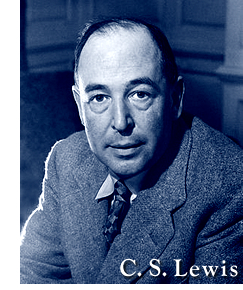
C.S. Lewis Daily – Today’s Reading


On evil

I think one may be quite rid of the old haunting suspicion—which raises its head in every temptation—that there is something else than God—some other country . . . into which He forbids us to trespass—some kind of delight wh. He “doesn’t appreciate” or just chooses to forbid, but which wd. be real delight if only we were allowed to get it. The thing just isn’t there. Whatever we desire is either what God is trying to give us as quickly as He can, or else a false picture of what He is trying to give us—a false picture wh. would not attract us for a moment if we saw the real thing. Therefore God does really in a sense contain evil—i.e., contains what is the real motive power behind all our evil desires. He knows what we want, even in our vilest acts: He is longing to give it to us. He is not looking on from the outside at some new “taste” or “separate desire of our own.” Only because He has laid up real goods for us to desire are we able to go wrong by snatching at them in greedy, misdirected ways. The truth is that evil is not a real thing at all, like God. It is simply good spoiled. That is why I say there can be good without evil, but no evil without good. You know what the biologists mean by a parasite—an animal that lives on another animal. Evil is a parasite. It is there only because good is there for it to spoil and confuse.

Thus you may well feel that God understands our temptations—understands them a great deal more than we do. But don’t forget Macdonald again—“Only God understands evil and hates it.” Only the dog’s master knows how useless it is to try to get on with the lead knotted round the lamp-post. This is why we must be prepared to find God implacably and immovably forbidding what may seem to us very small and trivial things. But He knows whether they are really small and trivial. How small some of the things that doctors forbid would seem to an ignoramus.

From The Collected Letters of C.S. Lewis, Volume II

Compiled in Words to Live By

Charles Stanley – The Promises of God


Hebrews 10:22-23

Our heavenly Father has made many promises in the Bible. But there is confusion about which verses we can claim as a definite commitment from God. Three questions are useful in evaluating whether divine promises apply to our own situation:

  1. Is this promise limited to a specific person or circumstance, or does it apply to all believers? For example, the pledge made to Abraham and Sarah about giving birth to a child (Gen. 18:10) is restricted to them, whereas Hebrews 13:5 contains a guarantee to all Christians that Jesus will be with them forever.
  2. Are we asking the Lord to meet a need or a desire? A need is something that we must have in order for God to complete His work in our lives. A desire is something we want for satisfaction or enjoyment. If we lose our job, then an essential—an incoming wage—is missing. But if we want a new position for personal reasons, it’s a desire.
  3. Before fulfilling a promise, does the Lord require some action on our part? Proverbs 3:5-6 is a conditional promise, which pledges God’s direction on the basis of our trust in Him. On the other hand, Jesus’ assurance of His presence with believers is unconditional (Matt. 28:20).

By evaluating Scripture on the basis of these questions, we will know which promises apply to our situation. Think of how much more confidence we’ll have in asking our Lord to fulfill them. For, as 2 Corinthians 1:20 (NIV) says, “No matter how many promises God has made, they are ‘Yes’ in Christ.”

Bible in One Year: Luke 6-7