Tag Archives: Cancer

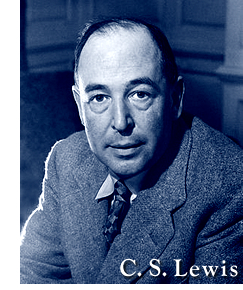
C.S. Lewis Daily – Today’s Reading


TO MARY VAN DEUSEN, who had written him of her diagnosis of cancer: On his empathy for her and even more for those in her situation who do not have faith; on the right to happiness; and on how fear of cancer may be worse than the reality of cancer.

9 October 1955

I have just got your letter of the 3rd. The news which it contained came like a thunderbolt—especially as the letter began (and it was rather wonderful that it did begin) on such a trivial subject as my book. And if that first sentence flattered my egoism, imagine how I was rebuked when I came to the next, and was suddenly brought up against the real great issues.

It is difficult to write because you must know by now what I do not yet know. I can’t tell whether I am writing to one who is giving thanks for an escape (oh how I hope you are in that position) or to one who is right up against the Cross. Thank heaven it is His Cross and not merely ours. I was most struck by your saying ‘It doesn’t seem too bad: for me, that is.’ So I am sure you are being supported. (What must such a situation be to those who are the majority, who have no faith, who have never thought of death, and to whom all affliction is a mere meaningless, monstrous interruption of a worldly happiness to which they feel they have a right?)

God bless and keep you: and your husband too. You will indeed, indeed, be in my prayers. I once had a bad scare about cancer myself, so that part I can, I think, imagine. But of course it is now, for you, either better or worse than a scare. If the reality is worse. At any rate it must be different. (The Litany [in the Book of Common Prayer] distinguishes ‘thine agony and blood sweat’ from ‘Thy cross and passion’, the fear from the reality). You know how I shall await your next letter.

From The Collected Letters of C.S. Lewis, Volume III

Compiled in Yours, Jack

The Collected Letters of C. S. Lewis

Ravi Zacharias Ministry –  Remedy for Control


In the January 2, 2015 issue of Science magazine, I read a troubling article. Two researchers—one a cancer geneticist and the other a biostatistician—found that approximately two-thirds of all cancers are the result of “biological bad luck.”(1) The ‘bad luck’ they describe is simply the random genetic mutations that happen as a result of healthy cells dividing. Utilizing a statistical model to analyze historical literature on cancer, they examined the rates of cell division in 31 types of bodily tissue. Focusing specifically on stem cells—the specialized population of cells within each organ tissue that provide replacements when cells wear out—they found that the higher the rate of stem-cell division the more increased the risk of cancer. The reason why? Dividing cells must make copies of their DNA. The more they divide (over time), the higher the risk that errors in the copying process could set off the uncontrolled growth that leads to cancer.(2)

These findings are troubling because they create doubt as to whether preventative controls matter at all in the fight against cancer. They are troubling especially as I thought of all those who have come face to face with the ‘randomness’ of cancer. They are more than just statistics; they are family members, friends, and colleagues who struggle with this often deadly disease. Even more troubling is the way in which studies like this one erode confidence in any sense of control over life or destiny.

As I read studies like this, or simply look out on the world around me, it is sometimes difficult not to collapse under the weight of what appears to be random catastrophic events. Mistaken identity, for example, was the ‘reason’ a recent college graduate was murdered. He was a classmate, a dear friend of my brother, and not two-weeks into his new marriage when he was murdered at the front door of a home in which he was coming to share his Christian faith. Those inside mistook him for someone who had done harm to them in the past. In another seemingly random event, two wilderness experts/enthusiasts river-rafting in the Arctic National Wildlife Refuge awoke in their campsite to find a grizzly bear. They were mauled and killed by the bear. Apparently, being in the wrong place at the wrong time can get one killed. But the ‘wrong’ place often seems to be as arbitrary as a roll of the die.

Part of the human strategy in the face of apparent random events such as these involves assigning meaning. Humans seek to find a purpose, a cause, someone or something to blame. Sometimes this strategy is a feeble grasping after control of all that seems chaotic and random in the human experience. Perhaps this strategy is what motivated those who inquired of Jesus about the collapse of the Tower of Siloam. The collapse of this tower killed eighteen people and stirred up all the same attempts to find meaning or assign blame. Jesus’s response likely left more questions than answers. “Do you suppose that these Galileans were greater sinners than all other Galileans because they suffered this fate? I tell you no, but unless you repent you will all likewise perish” (Luke 13:2).

In Jesus’s day, people were quick to assign a moral failure or sin as the cause of the tragedy, suffering or physical ailment. But Jesus does not affirm this assessment. Furthermore, Jesus does not conjecture as to the meaning of the event—in the sense they were asking—and he leaves its apparent randomness unexplained.

Of course, Jesus does affirm a God who is not far off even from apparently random events. “Consider the ravens, for they neither sow nor reap, and they have no storeroom nor barn; and yet God feeds them; how much more valuable you are than the birds!” (Luke 12:24) Indeed, in Jesus’s own suffering and death the love of God is on full display. As author and theologian J. Todd Billings notes, the gospel on display in the cross of Jesus Christ “is big enough to incorporate and envelop our dying and deaths, even when death seems senseless.”(3) In the cross, God envelops all that seems random and senseless and seeks to overwhelm.

At the same time, the existential realities Jesus acknowledged as he lived his life should give pause to hurrying towards quick and easy comfort. In the Garden of Gethsemane, Jesus wrestled in prayer over God’s will for his life. He did not face his suffering with a stoic, nerveless compliance in the face of God’s control. He begged God to take this cup from him. Jesus—the human Son of God wrestling with the Father in prayer and later crying out from the cross—shows that sometimes the only response to the seeming random suffering of life is to wonder if we have been forsaken, crying out in lament at a world that is not as it should be. Jesus also shows a God willing to be subjected to these chaotic forces of this world. This God is not aloof, but a God who was “willingly stripped…of all defenses to show us how humanity is ‘done.’”(4)

Jesus, while not answering the ‘why’ questions regarding the seemingly random fate of the eighteen Galileans, asks for a different response. He calls for change of heart for all who pondered the event at Siloam. He calls for a reorientation of the will towards repentance—perhaps even a repentance of longing to control life and meaning so tightly. Indeed, as Jesus himself wrestled with God over his own fate, he demonstrates a “willed acceptance….’Abba, Father, everything is possible for you. Take this cup from me. Yet, not what I will, but what you will.’”(5)

In an age marked by fear of terror, chaos, and the seeming randomness of events, Jesus offers a heart at rest. It is a rest not found in stoic submission to a determined destiny, but a rest forged from listening for the whisperer in the whirlwind. Not a static surety, but a dynamic trust in the God who declares, “I AM WHAT I AM” and “I WILL BE WHAT I WILL BE.”

Margaret Manning Shull is a member of the speaking and writing team at Ravi Zacharias International Ministries in Bellingham, Washington.

(1) Jennifer Couzin-Frankle, “The Bad Luck of Cancer,” Science, January 2, 2015, 12.

(2) Denise Grady, “Cancer’s Random Assault,” New York Times, January 5, 2015.

(3) J. Todd Billings, Rejoicing In Lament: Wrestling with Incurable Cancer and Life in Christ (Grand Rapids, MI: Brazos Books, 2015), 109.

(4) William J. O’Malley, Help My Unbelief (Maryknoll, NY: Orbis Books,2008), 141.

(5) Ibid., 143. See Mark 14:36.

Ravi Zacharias Ministry – Sharing Death, Sharing Life


Faith is the substance of things hoped for and the evidence of things not seen.

They were words that controlled us, like an electric fence to wandering minds and quaking bodies. The pastor repeated them to us frequently—at each hospital visit and in every triumphant prayer for healing within an oncology ward that seemed only to delve out the certainty of loss and the overthrow of control. His confident battle cry was so certain, so instructive: We will not fathom defeat; we will not even think about death. In the name of Jesus, we will see the evidence of healing though it is yet unseen. Despite a theology that under normal circumstances would have been bold enough to voice some very serious objections, I so badly wanted my dad to be well… So badly that we never spoke of his wishes for the funeral we would plan only weeks later.

Now faith is the assurance of things hoped for and the conviction of things not seen. They are the words of the ancient writer of Hebrews, though the way we used them during those short weeks with an aggressive cancer never actually considered this. It was a verse we treated as if it pertained only to us, jarred loose from its story and author and community. Once loose, we used it as a tool to jar my dad from his own flesh, from his pained and embodied life as a creature in his final days. We were after a miracle that would erase life as it had become, a healing that would restore us back to life before cancer. We used the verse, distorted into an individualized half truth, to keep ourselves from considering anything more.

Sadly, the God these prayers envisioned was more like a slot machine than a sovereign, each prayer a spin that tried to muster hope against all odds, fearfully, as if dad’s life depended on the very quality of our mustering. While I don’t doubt the charitable intentions of those prayers—or the belief in a God who heals—I am saddened by the selfishness I didn’t want to see as I uttered them. The words we clung to were far more about the survivors than the dying one we loved or the abundant life we professed together in the crucified Christ—even in our own deaths. We clung to this creature-denying posture at the expense of one embodied by the vicariously human Christ himself, a posture that could have been both a sharing of my dad’s pain and a sharing of life and death with the one who holds both.

What might this shared experience in the body of Christ have actually looked like? Tragically and beautifully, it is coming into focus in the life of a friend. In October of 2012, at the age of 39, Christian theologian Todd Billings was diagnosed with multiple myeloma, a rare and incurable blood cancer.(1) The sense of loss in his story is enough to send some us desperately after those confidently spoken, individualized half truths, like those we held in our own cancer story. Billings has not been a stranger to such prayers uttered on his behalf. But he wrenchingly embodies another way.

In the fog of days following his initial diagnosis, through a bone marrow transplant and quarantine to a drastically new ‘normal’ and a chemo regimen he will be on for the rest of his life, he realized he needed a language that didn’t dodge the hard theological and existential questions, a language that could bring all he is experiencing before God and to help him share it with others. He found himself sharing the language of lament with the writers of Scripture, who are honest and angry, grief-stricken and laid low by their own losses—and are yet able as creatures to bring these encounters before God in a way that does not “diminish the material, embodied nature of my life as a creature, my life as one who has been united to the resurrected Christ but is still groaning for the new creation.”(2)

For the Christian, this is the difficult, beautiful way of the cross: We die and live in and through the crucified Lord. We pray for Christ’s cross-shaped kingdom to come. We live in fellowship with a Triune God whose story of restoration incorporates brokenness, even and ultimately, his own. Alternative ways might be easier but they are not Christ’s. Writes Billings, “[C]onfidently spoken half truths can never reach beyond half truth because they are unwilling to face the biblical paradoxes inherent in orthodox Christianity. Such half truths have always been a temptation because they present a path that is less formidable than fully belonging ‘body and soul, in life and in death—to Jesus Christ.’”(3)

In dire contrast, this proclamation that “I am not my own, but I belong—body and soul, in life and death—to Jesus Christ,” is a shared confession and language that changes dramatically the space in which friends and family, students and colleagues, fellow Christians and even strangers are invited to stand as fellow creatures. Billings is honest about the loss, which gradually sets in and alters expectations of the future: the sudden sense of decades stolen, the new reality of life with an incurable illness. He is honest that the loss is not only his own: it is agonizingly a loss for his wife and their two young children. It is a loss for his friends and his community of faith. Admission of the loss itself may seem simple, but anyone who has ever experienced loss will recognize it as an invitation to break through the temptation for easy answers, to wrestle honestly with a fellow mortal in pain and the mystery of Christ crucified, who offers a truth big enough to hold us all.

Todd Billings sees his cancer story in a story bigger than his own, and in this bigger story, he has been able to invite his own communities to share more deeply the paradox of an adopted life in Christ and the reign of death around us as we wait for the fullness of that adoption. “God’s story does not annihilate my cancer story,” he writes, “but it does envelop and redefine it. Indeed, it asks for my story to be folded into the dying and rising of Christ as one who belongs to him.”(4) This is no pat-answer; it is neither a denial of the dark reality of cancer nor the God who heals. It is the hopeful way of life and death with the only one able to hold them both, the true sharing of which is perhaps more miraculous than even our most desperate prayers can imagine.

Jill Carattini is managing editor of A Slice of Infinity at Ravi Zacharias International Ministries in Atlanta, Georgia.

(1) J. Todd Billings shares his story in Rejoicing in Lament: Wrestling with Incurable Cancer and Life in Christ (Grand Rapids: Brazos Press, 2015).

(2) Ibid., 118.

(3) Ibid., 171, quoting Heidelberg Catechism, Question and Answer 1.

(4) Ibid.

Max Lucado – God is Good

Max Lucado

When the cancer is in remission, we say, God is good. When the pay raise comes, we announce, God is good. But is God only good when the outcome is?

Most, if not all of us, have a contractual agreement with God. I pledge to be a good, decent person and God, in return, will do what I expect.  Save my child.  Heal my wife.  Protect my job. Yet when God fails to meet our expectations we’re left spinning in a tornado of questions.

In such times, remember that God is sovereign.  James 1:17 tells us He does not change like shifting shadows. God does permit evil.  But He doesn’t allow Satan, the father of evil, to triumph. Isn’t this the promise of Romans 8:28?  “In all things God works for the good of those who love Him, who have been called according to His purpose.” The ultimate culmination of God’s purpose is good even when the specific details are difficult.

From  You’ll Get Through This