Tag Archives: Charles Stanley

Alistair Begg – A Day For Remembering


No weapon that is fashioned against you shall succeed. Isaiah 54:17

The 5th of November is notable in English history for two great deliverances granted by God for us. On this day the plot of the Papists to destroy the Houses of Parliament was discovered, 1605.

While for our princes they prepare

In caverns deep a burning snare,

He shot from heaven a piercing ray,

And the dark treachery brought to day.

And secondly, today is the anniversary of the landing of King William III, at Torbay in 1688, which was crucial for the establishment of religious liberty.

This day should be celebrated not by the revelry of youth, but by the songs of saints. Our Puritan forefathers most devoutly made it a special time of thanksgiving. There is public record of the annual sermons preached by Matthew Henry on this day. Our convictions and our love of liberty should make us regard its anniversary with holy gratitude. Let our hearts and lips exclaim, “We have heard with our ears, our fathers have told us, what deeds you performed in their days, in the days of old.”1

You have made this nation the home of the Gospel; and when the enemy has risen against her, You have shielded her. Help us to offer repeated songs for repeated deliverances.

Grant us more and more a hatred of sin, and hasten the day of your coming. Till then and ever, we believe the promise, “No weapon that is fashioned against you shall succeed.” Should it not be laid upon the heart of every lover of the Gospel of Jesus on this day to plead for the overturning of false doctrines and the extension of divine truth? Would it not be well to search our own hearts and turn out any of the lumber of self-righteousness that may lie concealed within?

1) Psalm 44:1

The Family Bible Reading Plan

  • 2 Kings 18
  • Philemon 1

Devotional material is taken from “Morning and Evening,” written by C.H. Spurgeon, revised and updated by Alistair Begg.

Charles Stanley – The Courage to Obey


Joshua 1:1-9

Most people would be pleased to accept the honor of leading a nation. Perhaps Joshua felt that way, too. But there’s no doubt that he was very aware that leading the Israelites out of the wilderness would be a daunting task and responsibility. Yet he was determined to obey God no matter what.

The Hebrew people were a difficult bunch. Not only did they grumble about food, water, safety, and rules; they also questioned Moses’ leadership and, almost as soon as his back was turned, rebelled against God. Now Joshua—a man they once threatened to stone (Num. 14:10)—was poised to lead these wayward desert nomads safely home. His was a God-sized task indeed.

Ultimately, however, Joshua took up the mantle of leadership with courage. Any uncertainty was replaced by boldness and resolve. He placed his faith in God, the One who had never let the people down. Joshua fully expected the Lord to be true to His word again and deliver them to the Promised Land.

I don’t know what challenge you are facing, but I do know that God will enable you to tackle it bravely, calmly, and victoriously. Whether you are a woman in a painful marriage, a family man contemplating a return to school, or a person in the clutches of a dreaded disease, God says to you, “Be strong and courageous” (Josh. 1:9).

Joshua’s courage was based upon years of seeing God’s faithfulness. Whether you’ve been a Christian for five minutes or 50 years, you can have the same confidence. The Bible promises that the Lord is sufficient to meet your needs and see you safely through your journey until you reach heaven (Phil. 4:19).

Bible in One Year: John 10-11


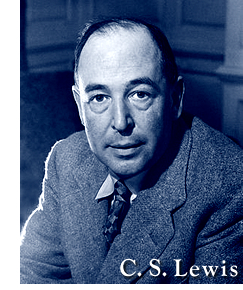
C.S. Lewis Daily – Today’s Reading


In the passage where the New Testament says that every one must work, it gives as a reason ‘in order that he may have something to give to those in need’. Charity—giving to the poor—is an essential part of Christian morality: in the frightening parable of the sheep and the goats it seems to be the point on which everything turns. Some people nowadays say that charity ought to be unnecessary and that instead of giving to the poor we ought to be producing a society in which there were no poor to give to. They may be quite right in saying that we ought to produce this kind of society. But if anyone thinks that, as a consequence, you can stop giving in the meantime, then he has parted company with all Christian morality. I do not believe one can settle how much we ought to give. I am afraid the only safe rule is to give more than we can spare. In other words, if our expenditure on comforts, luxuries, amusements, etc., is up to the standard common among those with the same income as our own, we are probably giving away too little. If our charities do not at all pinch or hamper us, I should say they are too small. There ought to be things we should like to do and cannot do because our charities expenditure excludes them. I am speaking now of ‘charities’ in the common way. Particular cases of distress among your own relatives, friends, neighbours or employees, which God, as it were, forces upon your notice, may demand much more: even to the crippling and endangering of your own position. For many of us the great obstacle to charity lies not in our luxurious living or desire for more money, but in our fear — fear of insecurity. This must often be recognised as a temptation. Sometimes our pride also hinders our charity; we are tempted to spend more than we ought on the showy forms of generosity (tipping, hospitality) and less than we ought on those who really need our help.

From Mere Christianity

Compiled in A Year with C.S. Lewis

Charles Stanley – Steps of Obedience


John 14:1, 15-17

Yesterday as we studied the necessity of increasing our trust in God, we were challenged to make waiting on Him a part of our daily lives. Today, we will look at three additional steps that are essential for the obedient life.

Meditate. If we want to know the mind of God, we must meditate upon His Word. We do not need to pick the “right” verses in order to know God’s will. He has the power to direct us from any portion of the Bible. Our part is to pursue wisdom through Scripture over a sustained period of time.

Listen. Learn to listen to the quiet prompting of the Holy Spirit, who is our Helper. The Word of God is the primary resource through which the Spirit works. If we are studying a passage of Scripture, He will illuminate our minds so that we can understand how God is directing us. Or He will bring to remembrance a passage we have learned and reveal how it applies to our situation.

Walk. Our final lesson to learn regarding obedience is that sometimes we must walk, even when the way is unclear. Abraham is a good example. God told Him to move out of his homeland but did not specify the destination. Abraham complied by faith (Heb. 11:8). We, too, can obey without a total understanding because God makes Himself responsible for the consequences. We are accountable only for obeying. This is good news!

As our class ends, consider the importance of obedience in the life of faith. Then ask God what He wants you to work on first—trusting, waiting, meditating, listening, or walking with Him?

Bible in One Year: John 8-9

Charles Stanley – The School of Obedience


Proverbs 3:5-6

Welcome to God’s School of Obedience. Today and tomorrow we will be sitting in on a class called “Obedience 101.” For some of us, the lesson will be new material; for others, a good review. In this course, we are trying to master the essential elements of an obedient, God-honoring lifestyle. Here are a couple of things we must learn to do in order to achieve our goal:

Trust. A key requirement for obedience is trusting in God—this is something the Lord expects of us (Prov. 3:5). He knows obedient responses result from a foundation of faith, while most rebellion derives from a lack of it. Therefore, to live obedient lives, we must believe God is who He has revealed Himself to be. We must also accept His plans, methods, and timing. We can deepen our trust level by obeying and watching for the Lord’s response. Remember, God delights in blessing those who do what He says.

Wait. We seem to find the element of patience particularly challenging. When we don’t know what to do, we often rely on our own understanding, make a move, and then hope God will approve and bless it. That’s not scriptural. God is more than willing to show us what to do. He’s given us His Spirit as our teacher because He wants us to know how to proceed. We must wait in an attitude of trust until we are certain.

God assumes full responsibility for giving us direction in our lives. He desires to let us know each step along the way. But we must come to Him with a trusting heart and a willingness to wait before He reveals what to do next.

Bible in One Year: John 6-7

Charles Spurgeon – The exaltation of Christ


“Wherefore God also hath highly exalted him, and given him a name which is above every name: That at the name of Jesus every knee should bow, of things in heaven, and things in earth, and things under the earth; And that every tongue should confess that Jesus Christ is Lord, to the glory of God the Father.” Philippians 2:9-11

Suggested Further Reading: John 17:1-5

Look at him! Can your imagination picture him? Behold his transcendent glory! The majesty of kings is swallowed up; the pomp of empires dissolves like the white mist of the morning before the sun; the brightness of assembled armies is eclipsed. He in himself is brighter than the sun, more terrible than armies with banners. See him! See him! Oh! Hide your heads, you monarchs; put away your gaudy pageantry, you lords of this poor narrow earth! His kingdom knows no bounds; without a limit his vast empire stretches out itself. Above him all is his; beneath him many a step are angels, and they are his; and they cast their crowns before his feet. With them stand his elect and ransomed, and their crowns too are his. And here upon this lower earth stand his saints, and they are his, and they adore him; and under the earth, among the infernals, where devils growl their malice, even there is trembling and adoration; and where lost spirits, with wailing and gnashing of teeth for ever lament their being, even there, there is the acknowledgement of his Godhead, even though the confession helps to make the fire of their torments. In heaven, in earth, in hell, all knees bend before him, and every tongue confesses that he is God. If not now, yet in the time that is to come this shall be carried out, that every creature of God’s making shall acknowledge his Son to be “God over all, blessed for ever. Amen.” Oh! My soul anticipates that blessed day, when this whole earth shall bend its knee before its God willingly! I do believe there is a happy era coming, when there shall not be one knee unbent before my Lord and Master.

For meditation: For meditation: Those who refuse to acknowledge the Lord Jesus Christ in this life (2 John 7) will be forced to acknowledge him in the next—but it will be too late to do them any good. Those who trust in him now will enjoy praising him for ever.

Sermon no. 101

2 November (1856)

Charles Stanley – Responding to God’s Love


John 3:16-21

God is love. Most likely, we have heard these wonderful words from 1 John 4:8. But do we really understand what they mean? John 3:16 sums up the truth they convey—namely, that because God deeply loved vile, sinful, rebellious humanity, He came to earth in human flesh and died a gruesome death to save us. This is no shallow love.

Some people question Jesus’ sacrifice, though. They think, Certainly the Lord could have come up with a different way to offer salvation. He is God, after all, so shouldn’t He be able to do all things? They fail to consider two of His unchangeable attributes.

First, the Lord is holy by nature. This means that He cannot look upon sin with approval, so He must condemn transgression. Second, God is just. As a result, all wrongdoing—without exception—must be punished (Rom. 6:23). The Lord’s every action must be consistent with His nature.

We all fall short of God’s perfect holiness, and He is unable to fellowship with us in our fallen state (3:23). But our heavenly Father desires an ever- lasting relationship with us. So He provided the solution by sending His Son Jesus to earth—to live as a man and die on the cross. This is the ultimate expression of love. As 1 John 4:10 states, “In this is love, not that we loved God, but that He loved us and sent His Son to be the propitiation for our sins.”

The wise will accept the free gift of salvation. That is, they will receive Jesus as their personal Lord and Savior and commit to follow Him. How do you choose to respond to His amazing love?

Bible in One Year: John 4-5

Our Daily Bread — Water and Life


Read: John 4:1-15

Bible in a Year: Jeremiah 24-26; Titus 2

Jesus answered, “Everyone who drinks this water will be thirsty again, but whoever drinks the water I give them will never thirst.” —John 4:13-14

As Dave Mueller reached down and turned the handle, water rushed from the spigot into a blue bucket. Around him people applauded. They celebrated as they saw fresh, clean water flowing in their community for the first time. Having a clean source of water was about to change the lives of this group of people in Kenya.

Dave and his wife, Joy, work hard to meet people’s needs by bringing them water. But they don’t stop with H2O. As they help bring people clean water, they also tell them about Jesus Christ.

Two thousand years ago, a man named Jesus stood at a Samaritan well and talked with a woman who was there to get clean drinking water for her physical health. But Jesus told her that what she needed even more than that was living water for her spiritual health.

As history has marched on and humanity has become more sophisticated, life still filters down to two truths: Without clean water, we will die. More important, without Jesus Christ, the source of living water, we are already dead in our sins.

Water is essential to our existence—both physically with H2O and spiritually with Jesus. Have you tasted of the water of life that Jesus, the Savior, provides? —Dave Branon

Thank You, Jesus, for being our living water. Thank You for Your willingness to die on the cross and for Your power to rise from the dead in order to provide us that water.

Only Jesus has the living water to quench our spiritual thirst.

INSIGHT: First-century Jews avoided traveling through Samaria. Making the journey from Galilee to Judea meant crossing the Jordan River and following the east side before re-crossing toward Jerusalem to circumvent Samaria. Why? Because Samaritans were seen as ceremonially unclean. Jesus, however, had no such qualms and broke tradition to meet a Samaritan woman in need. Bill Crowder

Charles Stanley – God Works Within Us


Ephesians 3:20-21

Let the words from today’s reading slowly sink into your understanding: “able to do far more abundantly beyond all that we ask or think” (v. 20). What an amazing description of the Lord’s ability to work within us. Yet so often our focus is mainly on what we want Him to do around us: If He would change this situation or fix that problem, then my life would be better. But He invites us to think and ask bigger—He wants to change us!

The Holy Spirit has more than enough power to transform lives from the inside out, but working change within is usually a slow process. Spiritual fruit takes time to grow and mature. That’s why we need patience and faith to believe He is working even when we don’t see the results right away. God is never in a hurry and will never give up on us.

The Lord has a purpose for your life, and He is constantly working to achieve it. Although He has an individualized plan for each one of His children, He also has an overarching goal—to conform every believer to the image of His Son Jesus Christ. In order to accomplish this, He may have to bring us through some struggles and heartaches. It might not make sense to us, but God knows exactly what He’s doing.

What would you like to see the Lord do within you? As you read the Scriptures, look for qualities that God considers precious, and ask Him to work them out in your life. Then rely on His wonderful promise to do even more than you have asked or imagined.

Bible in One Year: John 1-3

Ravi Zacharias Ministry – Wasteful Love


In 1969 Simon Wiesenthal penned his thought-provoking book, The Sunflower, which captured the agony he personally experienced in one of history’s darkest moments. Relating one encounter with the Holocaust, Wiesenthal described how he had been taken from a Nazi death-camp to a makeshift army hospital. He was ushered by a nurse to the side of a Nazi soldier who had asked to have a few private moments with a Jew. Wiesenthal warily entered the room and was brought face to face with a fatally wounded man, bandaged from head to toe. The man struggled to face him and spoke in broken words. Wiesenthal nervously endured the anxious monologue, finding himself numbed by the encounter. At the hands of Nazi soldiers like the one now dying before him, Wiesenthal had lost 89 of his own relatives. Here, the soldier confessed to the heinous act of setting ablaze an entire village of Jews; at his whim, men, women, and children were burned to death. With great anxiety, he described his inability to silence from his mind the screams of those people. Now on a deathbed himself, the man was making a last desperate attempt to seek the forgiveness of a Jew. The man begged him to stay, repeating his cry for forgiveness, but Wiesenthal could only walk away.

Yet even years later he wondered if he had done the right thing. Should he have accepted the man’s repentance and offered the forgiveness so earnestly sought? Had he neglected a weighted invitation to speak or was silence the only appropriate reply? Seeking an answer, Wiesenthal wrote to thirty-two men and women of high regard—scholars, noble laureates, psychologists, and others. Twenty-six of the thirty-two affirmed his choice to not offer the forgiveness that was sought. Six speculated on the costly, but superior, road of pardon and mercy.

I don’t know what it would take to absolve anyone of so monumental a crime. I don’t know if it is possible to offer forgiveness for something so far beyond our imaginable moral categories. But I know that even in the most unfathomable places, the God of Scripture somehow carries the burden of prodigal grace. Who can fathom the Son of God on the cross pleading with the Father to forgive the guilty for killing him? Who can conceive of a God who comes among his people, trusting himself to the hands of a fallen world, even knowing the troubling outcome? Who can grasp the heart of a God who chooses to love an undeserving people? To live as one marked by this disruptive grace is not easy. It is easier to forget that the command to forgive is thoroughly unsettling—in fact, sometimes haunting. To persist in love when we are tired or overwhelmed, or even rightfully angered by injustice, is a massive and costly request.

I have often found it easier to fit into shoes of the prodigal son than the shoes of the remaining older brother. Yet in this well-known parable of Jesus, both sons are invited to celebrate and rejoice. To the prodigal child who has squandered and defamed, God’s grace is lavish. It is extravagant and poured out on those who neither expect it nor deserve it. The celebration is thrown in the honor of the run-away, in honor of the return of just one lost sheep. When these shoes are ours, we are both humbled by the Father’s attention and compelled by God’s mercy.

Yet to the child on the other side of justice, the Father’s grace is jarring and disruptive. It is lavish, but wastefully so. His invitation to the feast is both awkward and demanding, a seeming call to overlook the potential of our reckless brother to strike again at our expense. These shoes are much harder to walk in. The Father’s call to forgive the one whose sincerity is questionable is often agonizing; his command to love the habitual prodigals in our midst is both costly and exhausting.

But it is Christ’s request. “Lord, how many times shall I forgive my brother when he sins against me? Up to seven times?” asked Peter. But Jesus answered, “I tell you, not seven times, but seventy times seven” (Matthew 18:21-22). God’s grace disrupts our sense of righteousness and summons us to respond in similar kind. Whether we find ourselves in the shoes of the prodigal or treading the difficult ground of the older brother there is good reason to rejoice and celebrate the unveiling love of the Father. God’s unfathomable grace and mercy shatters our sense of who is worthy to enjoy the benefits of God’s kingdom, inviting us to the celebration regardless of where, and in whose shoes, we stand.

Jill Carattini is managing editor of A Slice of Infinity at Ravi Zacharias International Ministries in Atlanta, Georgia.

Presidential Prayer Team; A.W. – Simple Solution


Doubt and anxiety go hand in hand and there is no shortage of it in America. Nearly 40 million people suffer from an anxiety disorder. People in biblical times suffered from doubt and anxiety, too. Elijah doubted God’s protection and fled from Jezebel (I Kings 19:3), Zechariah doubted the angel’s news of a son (Luke 1:18), John the Baptist doubted who Christ was (Matthew 11:3), Peter doubted on the water and almost sank (Matthew 14:30), and Thomas doubted Christ was risen (John 20:25). But in all these situations, God overcame their doubt.

Do not be anxious about anything, but in everything…let your requests be made known to God.

Philippians 4:6

Today’s verse gives instructions for facing doubt. Paul says not to be anxious but with thanksgiving, pray to the Lord. The outcome will always be that “the peace of God, which surpasses all understanding, will guard your hearts and your minds in Christ Jesus.” (Philippians 4:7)

Are you struggling with doubt and fear? You can experience unexplainable peace if you take it to Christ in prayer. Thank Him for His blessings, ask for what you need, and then trust Him to take care of it. Pray, too, for the leaders of this country to come to this simple solution to experiencing peace.

Recommended Reading: Matthew 6:25-34

Charles Stanley – The Struggle With Guilt


1 John 1:5-9

During a vacation several years ago, I found myself struggling to relax. Instead, condemnation afflicted me: Why aren’t you studying more? Shouldn’t you be witnessing and not just sitting there? Guilt kept me from enjoying life.

There are two types of guilt: biblical and false. The first originates with the violation of a scriptural law. This is not a feeling but a reality: We have sinned and should repent. The second, which includes feeling guilty after confessing a sin, is not based in truth or supported by the Bible. God has forgiven us, so there is no need to linger in shame.

People struggle with false guilt for many reasons. Legalistic teaching, for example, presents life as a series of rules that can never be followed to the letter; its adherents often feel bad about themselves. Next, self-reproach can derive from abuse or verbal putdowns during childhood. Another cause is perfectionism; it can flood a person with self-condemnation. And finally, low self-esteem has the same result.

Satan uses this false sense of shame to paralyze us. Inevitably, guilt leads us to doubt God’s love and salvation, which paves the way for fear and insecurity, and leaves us unable to enjoy life. It can also open the door to physical symptoms like depression. The Lord wants us to live free from guilt. If you experience shame, ask Him to help you trace its cause. Then affirm these truths: You are special (made in God’s image and redeemed by Him), loved by the Creator of the universe, and forgiven. In the name of Jesus, reject any false shame you have.

Bible in One Year: Luke 23-24


Charles Stanley -Free From Guilt


1 Peter 2:22-25

Guilt can be defined as anxiety in one’s spirit over a deliberate, willful sin. We can trace this emotion all the way back to the Garden of Eden. After Adam and Eve tasted the forbidden fruit, they felt ashamed of their nakedness and hid themselves. During Old Testament times, people would bring a special offering to the temple in order to “pay” for their wrong. Today, we no longer have such a tangible way to release our guilt.

Actually, we have something better. The heavenly Father sent His Son Jesus—who was fully God as well as fully man—to live a sinless life. He took upon Himself the penalty for all of our wrongs by dying a criminal’s death through crucifixion. Praise God, Jesus rose to life again, conquering death and sin. Ephesians 1:7 states, “In Him we have redemption through His blood, the forgiveness of our trespasses, according to the riches of His grace.”

The truth is, every one of us has sinned and therefore deserves to be separated from God (Rom. 3:23). However, we can be liberated from death and guilt by accepting Jesus’ free gift and committing our lives to Him. Of course, in our imperfect human state, we will continue to sin. But our loving heavenly Father will continue to forgive His children (Luke 11:3-4).

Jesus’ sacrifice gives us freedom from shame and death—plus the promise of eternity with God. But that in no way means we have license to sin knowingly. Though we are promised forgiveness, our gratitude and love for our Savior should spur us on to obey and serve the Lord. And, surely, to live a life free from guilt.

Bible in One Year: Luke 20-22

Charles Spurgeon – A basket of summer fruit


“Thus hath the Lord God shewed unto me: and behold a basket of summer fruit. And he said, Amos, what seest thou? And I said, A basket of summer fruit. Then said the Lord unto me, The end is come upon my people of Israel; I will not again pass by them any more.” Amos 8:1,2

Suggested Further Reading: 2 Peter 3:1-10

For thousands of years the Lord came not, although sin was rampant and the darkness dense, nothing could excite the Lord to an unwise haste. Nor on the other hand did he stay beyond the proper hour; for when the fulness of time was come, God sent forth his Son, born of a woman, made under the law. In heaven we shall probably discover that Christ came to die for our sins precisely at the only fitting moment, that in fact redemption’s work could not have been so wisely accomplished at the gates of the garden of Eden as on Calvary; and that the reign of Herod and the Roman Caesar afforded the most fitting era for the sacrifice of the Cross. And so shall it be with regard to the second advent of our blessed Lord and Master. We are apt to say, “Why are his chariots so long in coming? Do not the virgins sleep because the bridegroom tarries, the wise as well as the foolish, have they not all slumbered and slept?” And many are the servants who say in their heart, “My Lord delayeth his coming,” and are ready therefore to beat their fellow-servants, to drink and to be drunken; but cheer your hearts, you who look for his appearing. He will not come too hastily, for why should the sun arise until darkness has had its hour? Nor will he delay his appearing one moment beyond the proper time, for should not the sun beam forth in the morning? We know and are persuaded that when he shall stand a second time upon the earth, it shall be as much the fulness of time for him to come, as it was the fulness of time when he came at first.

For meditation: We know that Christ was born at the right time (Galatians 4:4) and that he died for us at the right time (Romans 5:6). We cannot tell when he will come again, but it will be at the right time (Acts 17:31). The right time to trust in him is now (2 Corinthians 6:2).

Sermon no. 343

29 October (Preached 28 October 1860)

Charles Stanley – Giving Jesus First Place


Philippians 2:9-11

When Christ has first place in our lives, we will experience many blessings. These include . . .

A quiet spirit. As we turn our attention to the Lord and meditate on His Word, He “leads [us] beside quiet waters,” where we find rest for our souls (Ps. 23:2). The Holy Spirit will help us shut out the noise of worldly distractions so He can provide assurance of our Father’s love and support. With a quieted heart and mind, we will be able to discern what God is saying to us.

A stronger faith.Studying Scripture will enlarge our view of God and give us insight and direction. Reading how the Lord has helped others, we will gain confidence that He is at our side, enabling us to meet life’s demands. Our faith will grow as we follow His direction and watch how He works on our behalf.

A purified heart. Like a mirror, the Bible reflects back to us who we truly are and reveals where we need to change. When we confess our sin, God promises to cleanse us from all unrighteousness (1 John 1:9).

A prepared mind. We don’t know what’s in our tomorrows, but God does. He wants to prepare us for the future—both the joyous times and the hard ones. Through the Holy Spirit’s ministry, we will be equipped for whatever life brings (2 Peter 1:3).

Paul’s life demonstrates what it means to give Jesus first place. Because the apostle made Christ the Lord of his life (Gal. 2:20), he knew joy amid trials and received the strength to face turmoil and difficulty. These blessings will also be ours when we give highest priority to our relationship with Jesus.

Bible in One Year: Luke 17-19

Charles Spurgeon – Chastisement


“And ye have forgotten the exhortation which speaketh unto you as unto children, My son, despise not thou the chastening of the Lord, nor faint when thou art rebuked of him.” Hebrews 12:5

Suggested Further Reading: Deuteronomy 8:1-6

What son is there whom the Father chasteneth not? You ministers of God who preach the gospel, is there amongst your ranks one son whom his Father chastens not? Unanimously they reply, “We all have been chastened.” You holy prophets who testified God’s word with the Holy Ghost from heaven, is there one amongst your number whom God chastened not? Abraham, Daniel, Jeremiah, Isaiah, Malachi, answer; and unanimously cry, “There is not one among us whom the Father chasteneth not.” You kings, you chosen ones, you Davids and you Solomons, is there one in your high and lofty ranks who has escaped chastisement? Answer David! Were you not obliged to cross the brook Kedron in the darkness? Answer Hezekiah! Did you not spread the letter before the Lord? Answer Jehoshaphat! Did you not have the cross when the ships were broken that were sent to Tarshish for gold? Oh starry host above, translated out of the reach of the trials of this world, is there one amongst you whom the Father chastened not? Not one; there is not one in heaven whose back was unscarred by the chastening rod, if he attained to the age when he needed it. The infant alone escapes, flying at once from his mother’s breast to heaven. There is one whom I will ask, the Son of God, the Son par excellence, the chief of all the family. Son of God Incarnate, did you escape the rod? Son without sin, were you a Son without punishment? Were you chastised? Hark! The hosts of earth and heaven reply—the church militant and triumphant answer: “The chastisement of our peace was even upon him; he suffered; he bore the cross; he endured the curse as well as any of us; yea, more, he endured ten thousand-fold more chastisement than any of us can by any possibility endure.”

For meditation: Christians have different gifts and different callings, but this is something shared by all. How do you react when God disciplines you? Does the experience leave you dismissive, discouraged or (as God intends) disciplined?

Sermon no. 48

28 October (1855)

John MacArthur – Avoiding Spiritual Deception


“All Scripture is . . . profitable for . . . reproof” (2 Tim. 3:16).

Scripture is the standard by which you must measure all teaching.

In November of 1978, United States Representative Leo Ryan of California visited the People’s Temple (a California- based cult) in Guyana. He went to investigate reports that some of the people were being held there against their will. The world was shocked to learn that the congressman and his party had been ambushed and killed.

Even more shocking was the grim discovery that followed a few days later. Authorities who entered the compound at Jonestown, Guyana were horrified to find the bodies of 780 cult members who had been shot or had committed suicide by drinking cyanide-laced punch. Their leader, the Reverend Jim Jones, was found lying near the altar—dead from a single bullet wound to the head.

For many, it was the first time they had witnessed the deadly effect of satanic teaching. Editorials and articles for months attempted to explain how such appalling deception and genocide could occur in this day and age. But as tragic as the Jonestown deaths were, most observers missed the greatest tragedy of all: the spiritual damnation that Jim Jones and all other false teachers lead their followers into.

Spiritual deception is a very serious issue to God. That’s why in Scripture He lays down the truth and reproves anything contrary to it. The Greek word translated “reproof” in 2 Timothy 3:16 means to rebuke or confront someone regarding misconduct or false teaching.

If you have a thorough grasp of Scripture, you have a standard by which to measure all teaching. Then you can easily recognize false doctrine and avoid spiritual deception. That’s what John had in mind when he said, “I have written to you, [spiritual] young men, because you are strong, and the word of God abides in you, and you have overcome the evil one” (1 John 2:14).

False religions will always attempt to distort Scripture because they must eliminate God’s truth before they can justify their own lies. Beware of their subtleties, and be strong in God’s Word.

Suggestions for Prayer

  • Thank the Lord for protecting you from spiritual deception.
  • Pray for anyone you may know who has fallen victim to false teaching. Take every opportunity to impart God’s truth to them.

For Further Study

Read 2 Corinthians 11:1-4, 13-15. How did Paul describe false teachers?

Charles Stanley – Our Top Priority


Luke 10:38-42

Jesus had great affection for Martha, her sister Mary, and her brother Lazarus (John 11:5). One day He sent word to them that He and His disciples were coming to visit. The women started preparing their home, as there was a lot to accomplish before the men arrived. Martha, however, in all her busyness, lost sight of the importance of spending time with the Lord.

But let us not be quick to judge her. We know that in our relationship with Jesus, He is to have first place above all else in life. Thoughts, attitudes, and actions are to flow out of our intimate connection with Him. But, as we have all no doubt discovered, this is not easy to do. Our own selfish nature clamors for supremacy, and the world with all its temptations encourages us to indulge ourselves. Even while carrying out the Lord’s work, we can lose sight of our first priority—deepening our intimacy with Christ.

When Jesus arrived, Mary stopped what she was doing so she could listen to His words and learn from Him. Martha, distracted by all that was still to be done, kept working. The Lord affirmed Mary’s choice to be with Him and urged Martha to follow her sister’s example. Both women expressed their love and care for Jesus through their actions, but Mary chose the better way.

Nothing should supersede the believer’s relationship with Christ; both character and conduct should reflect His likeness (Eph. 4:24). During Jesus’ visit, Martha—with the best of intentions—let her service for Him become more important than time with Him. If friends observed your life, what would they say matters most to you?

Bible in One Year: Luke 14-16

John MacArthur – Learning Truth


“All Scripture is inspired by God and profitable for teaching, for reproof, for correction, for training in righteousness” (2 Tim. 3:16).

Scripture is a manual of divine truth.

This month we’ve considered many benefits of Scripture. Second Timothy 3:16 lists four more that will be the focus of our studies as we draw this month to a close: teaching truth, reproving sin and error, correcting behavior, and training in righteousness. We’ve touched on each of those to some extent in our past studies, but they warrant additional discussion from this verse, which is Scriptures most concise statement on its own power and purpose.

First, the Bible is profitable for teaching. The Greek word translated “teaching” refers more to content than to the process of teaching. Scripture is God’s manual of divine truth for patterning your thoughts and actions.

As a believer, you have the capacity to understand and respond to Scripture. That’s because the Holy Spirit indwells you and imparts spiritual discernment, wisdom, and understanding (1 John 2:27). You have “the mind of Christ” (1 Cor. 2:16).

But having the ability to understand spiritual truth doesn’t guarantee you’ll exercise that ability. God said to the Israelites through the prophet Hosea, “My people are destroyed for lack of knowledge” (4:6). His truth was available to them, but they ignored it and lived in disobedience.

I’ve heard many people lament that they could have avoided much grief if only they had known the Bible more thoroughly—if only they had taken the time to learn what God expected of them in a particular situation. Perhaps you’ve felt that way. The best way to avoid making that mistake in the future is to faithfully, prayerfully, patiently, and thoroughly saturate your mind with biblical truth, then discipline yourself to live according to its principles. Now that’s the challenge of a lifetime, but it’s the only way to profit from biblical teaching and avoid unnecessary heartaches.

I pray you will be encouraged today as you study God’s Word and diligently apply it to your life.

Suggestions for Prayer

Ask God to use the circumstances you face today to draw you closer to Him and motivate you to dig deeper into His Word.

For Further Study

Read Exodus 24:1-8. What was the Israelites’ response to God’s Word? What is yours?

Charles Stanley – When Others Fail Us


Matthew 18:21-35

You’re in a difficult situation, and one by one, friends have fallen away and lost contact. Now the pain is worse because you’re suffering alone.

Why did these people desert you? There are many possible reasons. For example, they might have left because they felt inadequate. Or maybe they couldn’t stand to watch you suffer. Perhaps, though, some had their own best interests in mind and feared falling into similar trouble or being associated with a socially unacceptable situation.

You might wonder how to respond to them. Whatever the reason was for desertion, there is only one appropriate biblical response—forgiveness. The reason is that as forgiven people, it makes no difference what someone has done to us; we never have the right to withhold forgiveness.

After being left alone during his Roman imprisonment, Paul wrote this about those who had abandoned him: “May it not be counted against them” (2 Tim. 4:16). In other words, he forgave them. The apostle probably remembered what happened when Stephen was stoned. Paul had been present as one of the persecutors, after all, and he heard the dying man cry out, “Lord, do not hold this sin against them!” (Acts 7:60).

But it is probable that Paul had an even greater act of forgiveness in mind: Christ’s atoning death and His attitude toward the crucifiers (Luke 23:34). Because God forgives us (and all who turn to Him) of all sins, we don’t have the right to withhold forgiveness from anyone, and that certainly includes our friends. Is there someone you need to forgive? If so, do it today.

Bible in One Year: Luke 12-13