Tag Archives: Charles Stanley

Max Lucado – The Spite House


In 1882 in New York City, Joseph Richardson owned a narrow strip of land 5 feet wide and 104 feet long. Next door was a normal-sized lot owned by a man who wanted to erect an apartment building. He offered Richardson $1,000 for his plot. Deeply offended, Richardson demanded $5,000 which the builder refused to pay. The builder built the apartment building, assuming the slender lot would remain vacant and the view exposed. But Richardson built a house instead—blocking the view! Dubbed the “Spite House”, Richardson spent the last fourteen years of his life in the narrow residence that seemed to fit his narrow state of mind.

Revenge builds a lonely, narrow house. Space enough for one person. No wonder God insists we “keep a sharp eye out for the weeds of bitter discontent!” (Heb. 12:14-17).

From You’ll Get Through This

Charles Stanley – Recognizing the Voice of God


John 10:3-5, 14-16

Have you ever been in a car with someone who is looking for a specific broadcast on the radio? While constantly adjusting the frequency, he cocks his ears and listens carefully. Station after station is rejected until he hears the familiar voice he’s been seeking.

In our Christian life, we know the importance of recognizing God’s voice and tuning others out. When making decisions, we want to be sure we hear the right Person. The Bible assures us that as believers, we can distinguish God’s voice from all others (John 10:27).

What are some of the conditions for recognizing His voice?

  1. Be in range. The Lord’s voice is heard through Scripture. Take time to reconnect with God through His Word. Let the Holy Spirit bring to mind the truths related to your situation.
  2. Be tuned to the right station. God always speaks words that are consistent with Scripture—He will never contradict it. Compare what you are hearing with His Word, and seek godly advice to be sure you have the whole counsel of God.
  3. Be willing to make the necessary adjustments. Sometimes what God says conflicts with what seems logical to human reasoning. Or, it might clash with our fleshly desires. It can be tempting to dismiss a voice that disagrees with our preconceived ideas, but God’s children need to align themselves with His directions regardless.

Our Savior is calling; how easily do you recognize His voice? To know His voice better, spend more time in His Word. Today is a good time to start.

Bible in a Year: Psalms 112-118

Charles Stanley – When God Speaks


1 Samuel 3:1-21

The story of Samuel and how he learned to recognize God’s voice provides an important lesson for all believers. The Bible tells us that in Samuel’s day, communication from the Lord—by word or vision—was rare (l Sam. 3:l). At the same time, we are informed in verse 12 that God had been saying a lot to the priest Eli about his family and their evil conduct. It appears, however, that there had been very little listening.

Fortunately, young Samuel put an end to all that. At first he, too, was unable to recognize God’s voice. Even though he was immersed in religious activity, the Bible tells us that the word of the Lord had not yet been revealed to him (v. 7). When God first spoke to Samuel, the boy had to appeal to his religious superiors before he could understand what was going on.

What this suggests is that when we think we hear God’s voice, we shouldn’t hesitate to discuss it with our spiritual leaders or other mature Christians. Prayer and wise consultation of this sort can help recognize who really is speaking. The devil seeks to imitate the voice of God, so we must carefully discern the source of the message.

Once we hear from God and get our bearings spiritually, we must not shrink from testifying to what we heard. At first Samuel was fearful about sharing the message with Eli, but he finally did so. And remember, we should never ask God to speak if we are not prepared to act on the message we hear.

Bible in a Year: Psalms 107-111

Charles Stanley – The Decisions That Lead to Contentment


Romans 8:28-39

Think about a circumstance in your life you’d change if you could. Are you frustrated? Worried? Angry? To experience the freedom of contentment in the midst of it—whether a hardship or unfulfilled desire—you must accept the situation as having been allowed by God, even if He didn’t cause it.

In these situations, I often pray, “Lord, I choose to accept this as though it’s coming from You. No matter what I see, I’m choosing to look to You.” Then I can rest in His omnipotence and the knowledge that I’m a child of the living God. Instead of feeling like a helpless, hopeless victim of my circumstance, I know I’m cared for and guided by my sovereign Father through whatever may come.

The second crucial decision is total submission. This doesn’t mean approaching God insincerely and saying, “Well, Lord, I just want to thank You for this! It’s all just so sweet, Jesus.” No, it’s not. Be honest and admit, “This is painful and I don’t like it. But I choose to submit to You because You are trustworthy and loving. I’m willing to persevere until You accomplish in me whatever You want. I choose to draw from Your strength for everything I need.” My friend, if you make this decision and follow through, your fears will lose their power.

Either you believe Romans 8:28 or you don’t. And if you do, you can entrust yourself to the Lord, knowing that He ?has your best interest at heart, will take care of you, and won’t ever leave your side. When you embrace these truths, you’ll have no reason to be anxious.

Bible in One Year: Psalms 103-106

Our Daily Bread — Our Daily Bread — Christ the Redeemer


Read: Job 19:23-29

Bible in a Year: Job 17-19; Acts 10:1-23

I know that my Redeemer lives. —Job 19:25

The famous statue Christ the Redeemer overlooks the city of Rio de Janeiro. The statue is a model of Christ with His arms extended so that His body forms the shape of a cross. Brazilian architect Heitor da Silva Costa designed the figure. He imagined that the city’s residents would see it as the first image to emerge from the darkness at dawn. At dusk, he hoped the city dwellers would view the setting sun as a halo behind the statue’s head.

There is value in keeping our eyes on our Redeemer each day, during the good times and the difficult times. As he suffered, Job said, “I know that my Redeemer lives, and He shall stand at last on the earth” (Job 19:25).

The cry of Job’s heart points us to Jesus—our living Savior who will visit the earth again one day (1 Thess. 4:16-18). Keeping our eyes on Jesus means remembering that we have been rescued from our sin. Jesus “gave Himself for us, that He might redeem us from every lawless deed and purify for Himself His own special people” (Titus 2:14).

Anyone who has accepted Jesus as Savior has a reason to be glad today. No matter what we endure on earth, we can have hope today and look forward to enjoying eternity with Him. —Jennifer Benson Schuldt

Dear Jesus, You are my rescuer. Because You died and rose again, I am free from the consequences of my sin forever. Thank You for redeeming my life.

Through His cross and resurrection, Jesus rescues and redeems.

INSIGHT: Accused of secret sin that had caused his suffering, Job maintained his innocence. In verse 25 he speaks of a Redeemer who will one day vindicate him. The word used here for “Redeemer” frequently refers in the Old Testament to the kinsman-redeemer, the person who defended or avenged the cause of another, or who provided protection or legal aid for close relatives who could not do so for themselves (Deut. 19:6-12; Num. 35:19-27; Prov. 23:10-11; Jer. 50:34). Some see a correlation between the Old Testament kinsman-redeemer and the redemptive ministry of Jesus Christ.


Charles Stanley – Drawing from the Source


Jeremiah 2:13

For us who believe in Jesus, contentment should be governed by inner attitude and the decisions we make rather than by external circumstances. Because Paul had learned this secret, he was able to experience joy and peace in any kind of situation—whether he was surrounded by friends or isolated in a Roman prison; whether he had plenty or was in great need.

The apostle understood what it meant to live in Christ and to have Christ living in him (John 15:1-9; Gal. 5:22-23). He had made a simple but profound faith decision to draw his life from the Lord and, as a result, had the calm assurance that what he possessed inside could never be stolen. He was confident in his identity as a child of the Almighty, with full access to the abundant life Jesus offers.

I want to challenge you—this week, when something threatens to steal your contentment, choose to draw from God; decide to stop drawing from other sources and trying to be in control. When you find yourself becoming flustered, anxious, or angry, stop and say, “Lord, You are my source, and I draw from You the capacity to be kind. I draw from You the forgiveness I need to extend right now. I draw from You the love I need to express.” This decision is a matter of simple trust.

Watch and see how God will quiet your spirit and provide confidence when you draw only from Him as your source. You’ll be surprised at your own attitude: When you respond from within—rather than from the flesh—Jesus will give you the ability to respond as He would.

Bible in One Year: Psalms 95-102

Charles Stanley – The Secret of Contentment


Philippians 4:4-13

In today’s reading, the apostle Paul says he has learned the secret of experiencing contentment in all circumstances, good or bad. Does it surprise you that he wrote this when he was in prison, unsure of his future? We’re often discontent even when all is going well. Consequently, we wonder how it’s possible to be truly content during our most difficult trials, especially when there’s no end in sight. So what is genuine contentment? Paul is speaking of a freedom from worry and frustration in all aspects of life—even unfulfilled desires.

It’s usually when we cannot control or change our situation that we feel discontentment. As long as our satisfaction depends on whether certain things actually work out, we’ll allow circumstances to cheat us out of peace. I’m not saying there’s some spiritual stage where you will never again experience anxiety or frustration. But what matters is how we respond when those feelings grip us.

This is something that the apostle had to learn. Paul endured amazing suffering, from shipwrecks and hunger to unjust imprisonment and beatings (2 Corinthians 11:24-30). He had gone through countless situations that were uncertain, extraordinarily painful, and seemingly hopeless. But he finally discovered that contentment could not? be dependent upon his circumstances.

How do you respond when circumstances are out of your control? Do you get angry? Do you try to escape? Does despair make you want to give up? Paul chose to give his anxieties to Jesus in exchange for peace that “surpasses all comprehension” (Philippians 4:7). That same peace is available to you!

Bible in One Year: Psalms 90-94

Charles Stanley – Obedience: A Decision of the Heart


John 15:1-17

The Christian life is, to put it simply, walking obediently with God. Obedience is so important to the Lord that Jesus made a point to model it His entire life on earth: “I do nothing on My own initiative, but I speak these things as the Father taught Me. And He who sent Me is with Me; He has not left Me alone, for I always do the things that are pleasing to Him” (John 8:28-29). Can you say the same?

The Lord’s desire isn’t simply to save us; He wants to live inside us to show the world who He is. God sent His Spirit to invigorate and inspire our lives—and also to empower us for His assignments. We can’t succeed alone, but the Holy Spirit living within us enables our consistent obedience through the same power that raised Jesus from the dead (Rom. 8:11).

We may stumble at times, but the important issue is which way our heart is bent. Is it inclined toward gratifying self or toward obeying God? Scripture shows us many heroes of our faith who were not always obedient, such as Moses, Sarah, Peter, and David. But God knew that David was a man after His own heart, and we also hear his heart-cry in the words he wrote: “As the deer pants for the water brooks, so my soul pants for You, O God. My soul thirsts for God, for the living God” (Ps. 42:1). Do you have a yearning to obey God above all else, in every decision you make, no matter what? If so, you can be sure He will show you the way—the Lord always honors such hunger and thirst for Him.

Bible in One Year: Psalms 85-89

Charles Stanley – Serving God With a Soft Heart


Jonah 4

What most people know about Jonah is that he was swallowed by a big fish while trying to run from God. In the creature’s belly, he committed to following the Lord’s will. So when Jonah was called a second time to preach repentance in Nineveh, he obeyed.

After the prophet obeyed, there was an unexpected turn of events. He crossed the city, warning the people of divine wrath—and they responded by turning away from wickedness. The Ninevites’ response should have made Jonah ecstatic. Instead, he grieved over their repentance and God’s mercy on them, as Nineveh and Israel were longtime enemies. In fact, he angrily told the Lord he had fled to Tarshish to avoid this very scenario of penitence and forgiveness.

Jonah was displeased because his heart was as hard as when he had run to Tarshish. Trapped inside the fish, he changed his mind about following the Lord’s command. He expressed willingness to do whatever God wanted him to do, but in his heart, he still desired the Ninevites’ destruction. Jonah’s bitterness and reluctance showed through in spite of his righteous actions.

God is not fooled by good behavior that springs from a hard heart. Obeying Him with an unwilling spirit may achieve His purpose, but we lose the joy of our reward. Perhaps the Lord has called you to serve Him in a way that is personally challenging. As you commit to following His will, pray also for a soft heart. You will find peace and blessing in doing the work if you follow Him without hesitation.

Bible in One Year: Psalms 79-84

Charles Stanley – Lessons from the Prophet Jonah


Jonah 1

The Lord’s commands are clear—He tells believers when to act, where to go, and what to do. He also provides the means for following His directions. The prophet Jonah was told to leave immediately for a certain city and cry out this warning: “Yet forty days and Nineveh will be overthrown” (Jonah 3:4). Instead, Jonah did something foolish (and altogether human). He ran.

Because he was a prophet, we can assume Jonah had studied the Scriptures and knew God intimately. Even so, displeasure over his assignment clouded his judgment, and he became convinced he could flee the Lord’s presence. Jonah was wrong. God sent a great storm and isolated him for three days inside a smelly fish. In other words, the Lord didn’t relent until the prophet agreed to comply.

Jonah learned that running away from the Lord doesn’t release us from His commands. Whether we refuse outright or quietly choose to pursue our own agenda, we simply cannot silence His call. Our Father will neither forget a directive nor change His mind about it, and so the Holy Spirit continues prompting us until we do as instructed.

People who run from divine direction may attempt to silence the Spirit’s reminders by filling their life with distractions. They know what God wants from them but are too proud, stubborn, or scared to comply. What we must understand is that God will pursue us—stripping away diversions and crutches to get our attention. Wise believers obey Him promptly rather than waste time and talent by running.

Bible in One Year: Psalms 76-78

Charles Stanley – Molded by the Master


Jeremiah 18:1-6

In today’s Scripture passage, God is teaching us about His relationship with His children. He says that He will deal with us just as a potter works with clay and that we, like the clay, are in His hands.

God deals with believers in two ways. First, He is molding every one of us into the image of His Son Jesus. Second, He is shaping us for a specific purpose, one that is individually designed so we will help build His kingdom. Our part as the clay is to submit ourselves to His purpose. As the Potter, He may subtract something from our life—similar to removing lumps from clay. Another possibility is that He may speed up the pace until we feel as if we’re spinning. Or, desiring a new shape for His “vessels,” He might dramatically rework our pattern of living in order to start us in a new direction. Our responsibility is to accept any changes from the Master Potter.

We can do this confidently because we are in God’s hands. Scripture describes them as:

  • Creative hands whose skillful work is displayed in nature.
  • Hands filled with righteousness.
  • Hands that give life and take it away.
  • Mighty and powerful hands that rescued Israel from Egypt and us from slavery to sin.
  • Hands that protect us.
  • Hands that were pierced so we might be made new.

When we think about being clay in the Potter’s hands and the ways that God deals with us, we can relax knowing “in His hands” is exactly the place we want to be.

Bible in One Year: Psalms 67-70


Charles Stanley – Courage in the Lonely Hour


2 Timothy 4:6-18

Today’s passage captures a painful time in the life of Paul the apostle. As he sat in a prison cell, he knew that death was imminent. He had devoted the last years to teaching, training, and winning souls for Christ, but he now stood alone, unsupported during his trial and time in jail. Loneliness must have seemed overwhelming.

Paul felt abandoned, yet he didn’t blame anyone or pity himself. Instead, he met the suffering with courage. What motivated him to stand with strength during this trying time?

For the apostle, an awareness of Christ’s presence gave comfort and motivated him to persevere. Having a copy of Scripture in his cell no doubt encouraged him in this way (2 Tim. 4:13). And he not only knew God was right there with him in the current moment; he also recalled earlier times when the Lord had intervened. For instance, years before, Paul had had a vision telling him not to fear during a storm on the sea. And though the ship ran aground, all of the men survived (Acts 27:22-24).

For those of us who know Jesus Christ as our personal Savior, strength is readily available in His intimate presence. Our heavenly Father promises that He will never abandon His children—even when everyone else has left.

Have your circumstances left you feeling lonely? Remember times when God was evident to you—when He clearly revealed His hand in your life. And read His Word so that the truth of His presence can comfort and encourage you. As a believer, you are truly never alone.

Bible in One Year: Psalms 60-66

Charles Stanley – Following the Father’s Example


Ephesians 6:1-4

Do you have a strong relationship with your children? The way we initially think about God has much to do with how we were parented—especially by our father. What image of the Lord are you portraying?

Many men struggle in their role as dads because their own fathers were either absent—physically or emotionally—or poor examples. But regardless of what a person experienced in the past, the best thing any parent can do is imitate God the Father. Yet how do we know who He really is?

We get our best glimpse of what the heavenly Father is like by looking at His Son. Speaking with the disciples, Jesus said, “I am the way, and the truth, and the life; no one comes to the Father but through Me . . . He who has seen Me has seen the Father” (John 14:6, 9). Not only is Christ our path to relationship with God; He is also the way we come to know the Father’s true character.

When we look at Jesus’ life, what do we see? He was merciful, patient, gentle, compassionate, kind, and full of goodness toward all people (Matthew 9:10-13). The Savior healed the sick, provided for needs, and offered forgiveness—regardless of the offense (Matthew 14:14-21; Luke 23:34). But in love, He didn’t hesitate to discipline others when correction was required.

More than a solid education or material possessions, your child’s greatest need is a role model of devotion to God through prayer, Bible reading, and holy living. If you make knowing and following the heavenly Father your first priority, you won’t have to worry about what kind of parent you will be.

Bible in One Year: Psalms 55-59

Charles Stanley – Influence by Example


Titus 2:1-8

The fathers in the Old Testament serve as a warning to modern dads about the impact of a parent’s example. Many godly men were fatherhood failures, and their children paid a hefty price. Jacob’s sons imitated his conniving and manipulative behavior. King David neglected discipline, and as a result, several of his sons were involved in despicable activities. His heir, Solomon, was an equally poor father, whose son was instrumental in splitting the kingdom.

In spite of their faith, Jacob, David, and Solomon provided a negative role model for their children. Unfortunately, biblical examples of poor fathers outnumber the good. But the gospels mention a man whose sons reflect well on their dad’s parenting skills. No specific details are given to describe how Zebedee brought up the disciples James and John, but he is significant because he did what many Christians try to do today: raise children who follow God. Zebedee’s training prepared his sons for a life of intimate fellowship with the Messiah. It’s a reasonable assumption that he modeled discipline, respect for authority, and persistence, because his sons demonstrated those traits while following Jesus Christ.

Your children will reflect the traits they observe in you. Living in your presence every day, your kids see past any façade that might fool the rest of the world. They monitor your attitude about vocational work and household chores. Little ears pick up on how you talk about others, and little eyes watch your response to difficult circumstances. What kind of example do your children see?

Bible in One Year: Psalms 50-54

Charles Stanley – Our Caring and Able Father


2 Chronicles 20:1-4

Everyone faces challenges in life. Whether our struggles are financial, vocational, relational, or physical, we can be certain that nobody is exempt. Fortunately, we serve a God who is both interested in our problems and able to take care of them.

When trouble looms, prayer is always a good first step to take. But having a foundation upon which to build our prayers also makes a difference. Jehoshaphat, the king of Judah, faced an enormous challenge. Three different tribes—the Moabites, Ammonites, and Meunites—simultaneously waged war against him. Most leaders would have crumbled under such pressure, or at the very least taken drastic measures, but Jehoshaphat was a wise leader. Though afraid, he did not strike out against his enemies. Instead, knowing that God was interested in his dilemma, he “turned his attention to seek the LORD” and proclaimed a fast throughout the land (2 Chron. 20:1-3).

Jehoshaphat also knew that God, who was more powerful than any earthly problem, had done miraculous things for Abraham, Isaac, Jacob, Moses, and David. That same God would help him, too, in his hour of need. We should never underestimate the Lord’s interest in our affairs. He helped our biblical ancestors, and He can and will help His children today.

It’s easy to think our problems are unimportant in God’s eyes, but He doesn’t feel that way at all. Whatever concerns us concerns Him. If we, like Jehoshaphat, turn to the Lord and proclaim His power, He will intervene. And no matter how great our challenges are, God is greater.

Bible in One Year: Psalms 44-49

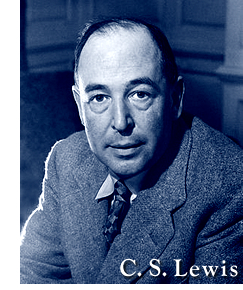
C.S. Lewis Daily – Today’s Reading


The problem of reconciling human suffering with the existence of a God who loves, is only insoluble so long as we attach a trivial meaning to the word ‘love’, and look on things as if man were the centre of them. Man is not the centre. God does not exist for the sake of man. Man does not exist for his own sake. ‘Thou hast created all things, and for thy pleasure they are and were created’ [Revelation 4:11]. We were made not primarily that we may love God (though we were made for that too) but that God may love us, that we may become objects in which the Divine love may rest ‘well pleased’. To ask that God’s love should be content with us as we are is to ask that God should cease to be God: because He is what He is, His love must, in the nature of things, be impeded and repelled, by certain stains in our present character, and because He already loves us He must labour to make us lovable. We cannot even wish, in our better moments, that He could reconcile Himself to our present impurities—no more than the beggar maid could wish that King Cophetua should be content with her rags and dirt, or a dog, once having learned to love man, could wish that man were such as to tolerate in his house the snapping, verminous, polluting creature of the wild pack. What we would here and now call our ‘happiness’ is not the end God chiefly has in view: but when we are such as He can love without impediment, we shall in fact be happy.

From The Problem of Pain

Compiled in A Year with C.S. Lewis

Charles Stanley – Know What You Believe


1 Peter 3:13-16

Yesterday, we learned about Jesus’ divinity and those who recognized it while He walked the earth. Though sharing our faith with others is important, doing so isn’t always easy. Some people claim that it doesn’t make a bit of difference what they believe. In fact, some go so far as to deny the existence of truth. Yet our belief system actually matters tremendously, because it is the foundation for our character, conduct, and decisions.

For instance, a person who concludes that there is no God and no eternity will live for the moment. On the other hand, someone who trusts in the Lord and His promise of heaven will have a completely different lifestyle and purpose. Obedience, faith, and responsibility will characterize him as he lives to please his heavenly Father.

Knowing what we believe is critical—first of all, because our salvation depends on it. In John 8:24, Jesus made a powerful and unequivocal statement about this subject: “Unless you believe that I am He, you will die in your sins.” The Bible is very clear that all people have sinned and in their natural state are separated from God (Rom. 3:23). The punishment for sin is death, which is eternal separation from the Lord. But the Father, in His love and mercy, sent His own Son to die in our place. As a result, everyone who believes in Jesus is forgiven and receives His free gift of salvation.

Believers are to share the good news of salvation, but the world’s hostility can make us afraid. Today’s passage encourages us not to fear. Telling others about Jesus doesn’t require lofty words or long quotations of memorized Scripture. Simply be ready with an answer if you’re asked about “the hope that is in you” (1 Peter 3:15).

Bible in One Year: Psalms 39-43

Charles Stanley – Jesus, the Son of God


Luke 22:66-71

Jesus called Himself both the Son of Man and the Son of God. The first title emphasized His humanity; the second, His deity. He is the only person in history who was both God and man. Leaving heaven, He laid aside His divine glory and took upon Himself the robe of humanness (Phil. 2:6-7).

Who recognized His divine nature?

  • Angels. At Christ’s birth, the angel Gabriel told Mary that she would bear a child and His name would be the Son of God (Luke 1:26-35).
  • God the Father. When Jesus was baptized in the river Jordan, the heavenly Father declared, “This is My beloved Son, in whom I am well-pleased” (Matt. 3:17). Later, God affirmed this same truth and instructed those present listen to Jesus (17:5).
  • Satan and the demons. Knowing that Jesus was God’s Son, Satan challenged Him to use His supernatural powers to bypass God’s plan. Later in the same chapter, the demons saw Jesus and shrieked that He was the Son of God (Luke 4:1-41).
  • Disciples. When these men saw Jesus walk on water in the midst of the storm, they worshiped Him and concluded He was the Son of God (Matt. 14:25-33). Peter later declared, “You are the Christ, the Son of the living God” (16:16).
  • Martha. When Jesus brought Lazarus back to life, his sister Martha said, “I believe that you are the Christ, the Son of God, who was to come into the world” (John 11:27 NIV).

The world needs to understand who Jesus is. Whom can you tell about His deity?

Bible in One Year: Psalms 35-38

Charles Stanley – Reasons for Taking Risks


Joshua 1:6-9

In the first chapter of Joshua, God delivers the greatest pep talk in all of Scripture. Moses had just died, and now his successor was called upon to lead the nation of Israel into the Promised Land—a military action that would surely involve significant risk. Joshua was no doubt unsettled by the prospects of facing a strong hostile army. Therefore, the Lord spoke words of encouragement to him that still ring true for us today.

What would have happened if Joshua had refused this daunting assignment? Most likely, the nation of Israel would have languished in the desert indefinitely. Fortunately, this leader was a man of great faith and courage, and he boldly took up the cause of God.

Like Joshua, we face daily obstacles that seem to push our faith to the breaking point. And yet, it is in the throes of adversity that God hones our faith (James 1:2-4). When we refuse to follow Him into risky situations, the results can be devastating to our spiritual growth. Consider the consequences of disobedience on your life:

  1. You will never become the person that God wants you to be.
  2. You limit your usefulness to the Lord.
  3. You are willing to live a life of rationalized disobedience.
  4. You’ll be governed by fear rather than faith.
  5. You risk losing not only rewards in heaven but also blessings on earth.

Are you in some way refusing God’s call? The Lord is trustworthy. Whatever His plan of action for you, be assured He will see you safely through the ordeal.

Bible in One Year: Psalms 29-34

Charles Stanley – Trusting the God of Love


Hebrews 8:6-13

Trusting God is a foundational principle in the Christian life. We are expected to accept that God is perfect in love, infinite in wisdom, and sovereign in control. We don’t automatically grasp these truths at the moment of salvation; rather, we learn them over time. Of these three facts, however, the one we most seem to doubt is the Lord’s love for us. However, Scripture gives us three proofs to rely upon when our certainty starts to waver.

Character love—God’s very nature is love (l John 4:8). The Bible also tells us that God is light and there is no darkness in Him (l:5). In other words, there’s nothing sinful or imperfect in His character. If the Father is perfect and loving, He will never mistreat one of His children.

Calvary love—Jesus’ sacrificial death on the cross for our sins provides irrefutable evidence of divine love. The Father’s heart for humanity was revealed when He gave His Son to die in our place. Through Christ, salvation is available to all, but He would have made the same choice if you had been the only person on earth.

Covenant love—God is committed to making us heirs (Heb. 8:10). We know that when we receive Jesus Christ as our Savior, we become children of God. Our immaturity is the reason He is patient and kind to us. God sees us as we are—little ones learning to navigate in our short-term earthly home.

As growing believers, we can’t trust God if we doubt His devotion. Thankfully, we possess these amazing proofs. It is the heavenly Father’s very nature to love, which He demonstrated at the cross and continues to prove by adopting us as His sons and daughters.

Bible in One Year: Psalms 23-28