Tag Archives: holy spirit

Joyce Meyer – No Darkness in Him


“This is the message God has given us to pass on to you: That God is light and in Him is no darkness at all. So if we say we are His friends, but go on living in spiritual darkness and sin, we are lying. But if we are living in the light of God’s presence, just as Christ does, then we have wonderful fellowship and joy with each other, and the blood of Jesus His Son cleanses us from every sin” (1 John 1:5-7).

One of the first passages of Scripture that I memorized as a new Christian was the first chapter of 1 John. This passage has been a beacon to me through the years as a simple reminder that in God is light and the only reason that I do not live perpetually in that light is because at times I deliberately sin.

Steve had lost his joy and enthusiasm for Christ, and as a new Christian was perplexed. He could not understand what had happened to him. As we counseled together, it became apparent that he had allowed some of his old natural habit patterns to creep back into his life.

I suggested that he make a list of all the things that were wrong in his life and confess them to the Lord in accordance with 1 John 1:9. A few days later, with joyful enthusiasm he came to share with me how his heart had been kindled afresh with the love of God as he was now walking in the light as God is in the light, having wonderful fellowship with the Lord Jesus Christ.

How does one walk in the light? Do not tolerate unconfessed sin. Meditate upon the Word of God. Spend time in prayer talking to God and letting Him talk to you. Share your faith in Christ with others. Obey the commandments of God.

Are you walking in the light as God is in the light? Are you experiencing the joy of the Lord? Are you constrained by the love of Christ to share Him with others?

Bible Reading: I John 1:6-10

TODAY’S ACTION POINT:  I shall always seek to walk in the light as God is in the light in order that I may experience wonderful fellowship with my Lord. When I find myself walking in darkness, I shall pause to confess my sins and by faith claim God’s forgiveness and cleansing so that I may be restored to once again walk in the light with God.

Campus Crusade for Christ; Bill Bright – No Darkness in Him


“This is the message God has given us to pass on to you: That God is light and in Him is no darkness at all. So if we say we are His friends, but go on living in spiritual darkness and sin, we are lying. But if we are living in the light of God’s presence, just as Christ does, then we have wonderful fellowship and joy with each other, and the blood of Jesus His Son cleanses us from every sin” (1 John 1:5-7).

One of the first passages of Scripture that I memorized as a new Christian was the first chapter of 1 John. This passage has been a beacon to me through the years as a simple reminder that in God is light and the only reason that I do not live perpetually in that light is because at times I deliberately sin.

Steve had lost his joy and enthusiasm for Christ, and as a new Christian was perplexed. He could not understand what had happened to him. As we counseled together, it became apparent that he had allowed some of his old natural habit patterns to creep back into his life.

I suggested that he make a list of all the things that were wrong in his life and confess them to the Lord in accordance with 1 John 1:9. A few days later, with joyful enthusiasm he came to share with me how his heart had been kindled afresh with the love of God as he was now walking in the light as God is in the light, having wonderful fellowship with the Lord Jesus Christ.

How does one walk in the light? Do not tolerate unconfessed sin. Meditate upon the Word of God. Spend time in prayer talking to God and letting Him talk to you. Share your faith in Christ with others. Obey the commandments of God.

Are you walking in the light as God is in the light? Are you experiencing the joy of the Lord? Are you constrained by the love of Christ to share Him with others?

Bible Reading: I John 1:6-10

TODAY’S ACTION POINT:  I shall always seek to walk in the light as God is in the light in order that I may experience wonderful fellowship with my Lord. When I find myself walking in darkness, I shall pause to confess my sins and by faith claim God’s forgiveness and cleansing so that I may be restored to once again walk in the light with God.

Presidential Prayer Team; P.G. – Facing Tomorrow


Her village was seized by Islamic State and she’s now living a rough life in an unfinished mall in Kurdish-protected Northern Iraq. This displaced nine-year-old Christian refugee child asked God to forgive the ISIS militants. Little Myriam said, “God provides for us. He loves us. Jesus will be with us no matter where we go.” Though a child, Myriam understands faith in Christ and the power of His resurrection in her life. Unfortunately, she may yet be forced to face untimely death at the hands of Islamic State.

That I may know him and the power of his resurrection.

Philippians 3:10

In America, some Christians are being harassed for their values or facing legal bullying for standing for biblical principles. But the persecution that faces Myriam and others like her in the Middle East has not yet arrived in this nation. Pray, indeed, that it does not!

Your charge as you face whatever tomorrow brings is to press on – to strain forward – toward the eternal citizenship in Heaven awaiting all who believe, and it takes resurrection power to do that. Avail yourself of that as you pray for America and those in authority…that they, too, might find the strength to endure through God who loves them.

Recommended Reading: Philippians 3:8-16

Night Light for Couples – The Cost of Bitterness


“I tell you, [forgive] not seven times, but seventy-seven times.” Matthew 18:22

Just as we must act on Scripture’s instruction to forgive, we should also consider the great cost of failing to do so. Withholding forgiveness brings on bitterness, which Neal T. Anderson says is like “battery acid in the soul.” It leads to anger, resentment, depression, health problems, isolation, struggles with addictions, and more. It continues to haunt the person until he or she comes to terms with it. People who hang on to bitterness cause more pain to themselves than to the targets of their wrath.

A second cost is equally distressing. Jesus told a parable of an unmerciful servant who, after his master forgave him a large debt, demanded payment of a small debt from another servant. The master had the first servant thrown into jail and tortured. “This is how my heavenly Father will treat each of you,” Jesus said, “unless you forgive your brother from your heart” (Matthew 18:35).

For couples who want to follow God’s way for marriage and who hope for His best in their relationship, forgiveness is not just a suggestion. It is a spiritual commandment!

Just between us…

  • Why is failing to forgive more damaging to us than to the one who wronged us?
  • Are either of us bitter about something today? Why?
  • What steps of forgiveness can we take together?
  • How can we avoid bitterness in the future?

Dear Lord, You have spoken plainly about the consequences of withholding forgiveness. Help us to hear You and obey. May we please You and bless each other with our quickness to forgive at all times. Amen.

From Night Light For Couples, by Dr. James & Shirley Dobson

Charles Stanley – Staying Young and Fruitful


Psalm 92:12-15

Our culture is obsessed with youth. Stores are flooded with products promising better health, fewer wrinkles, and a trim physique. However, these will only touch the surface of our aging problem. Unless death intervenes, growing old is inevitable. Living old, on the other hand, is a choice.

We each have to decide if we are going to flourish or dry up, grow strong or become weak. Physically, we may have no choice in the matter, but we can be young in soul and spirit, regardless of our chronological age.

When a righteous man is firmly planted in the Lord, he’ll become fruitful in things that will last into eternity. We are never to retire from bearing fruit. Rather, God wants us to abide continually in an intimate connection with Him. In that way, we can do the work He has given us to accomplish (John 15:4).

A righteous man will grow strong in the Lord like a cedar of Lebanon (Ps. 92:12). These trees can grow to a height of 120 feet with a girth of 40 feet. That is one strong tree! As we walk with Christ into our latter years, we can have the confidence and stability that come only from growing strong in faith. Each year is an opportunity to trust God more and rely wholly on His Word.

Staying young while growing old begins with your mind. Never stop listening to the Father or learning from His Word. Allow godly thinking to shape your attitudes. Be thankful, keep laughing, and rejoice in your Lord. Above all, keep believing and loving Him with all your heart.

Our Daily Bread — Giving All


Read: Romans 12:1-8
Bible in a Year: 2 Samuel 21-22; Luke 18:24-43

Present your bodies a living sacrifice, holy, acceptable to God, which is your reasonable service. —Romans 12:1

During his only inaugural address as the US President, John F. Kennedy issued this challenge to Americans: “Ask not what your country can do for you; ask what you can do for your country.” It was a renewed call for citizens to surrender their lives in sacrifice and service to others. His words especially inspired the sons and daughters of men and women who had served their country in war.

His meaning was clear: What their parents purchased, often with their very lives, must now be protected by peaceful means. An army of volunteers arose to answer that call, and through the decades they have accomplished an immeasurable amount of humanitarian work around the globe.

Centuries earlier, the apostle Paul issued a similar call to Christians in the opening verses of Romans 12. Here he urges us to give our bodies as “living sacrifices” in service to the One who paid with His life for our sins. This spiritual sacrifice must be more than mere words; it must be an investment of our lives in the physical, emotional, and spiritual well-being of others.

Best of all, our serving can be done right where we are. —Randy Kilgore

Father, show me this day the many ways my life can be surrendered to You, and then give me the strength to begin to act.

Don’t always ask Jesus what He can do for you; ask Jesus what you can do for Him.

INSIGHT: In Romans 12:1 Paul encourages us to offer our bodies as a living sacrifice to God by exhibiting behavior that is pleasing to Him. However, verse 2 encourages us to have our minds renewed as well. God wants us to be totally His in both actions and thoughts.

Alistair Begg – Come Away


Arise, my love, my beautiful one, and come away.

Song of Solomon 2:10

I hear the voice of my Beloved! He speaks to me! Fair weather is smiling upon the face of the earth, and He does not want me to be spiritually asleep while nature is all around me awaking from her winter’s rest. He bids me “Arise,” as well He might, for I have been lying long enough among the weeds of worldliness. He is risen, and I am risen in Him; so why should I still cleave to the dust? From lower loves, desires, pursuits, and aspirations, I want to rise to Him.

He calls me by the sweet title “my love” and counts me “beautiful”; this is a good argument for my rising. If He has exalted me and thinks me fair, how can I linger in the tents of wickedness and make my friends in the wrong company? He bids me “Come away”; further and further from everything selfish, groveling, worldly, sinful, He calls me; yes, from the outwardly religious world that doesn’t know Him and has no sympathy with the mystery of godliness. “Come away” has no harsh sound to my ear, and what is there to hold me in this wilderness of vanity and sin?

My Lord, I want desperately to come away, but I am held among the thorns and cannot escape from them as I wish. I would, if it were possible, close my eyes and ears and heart to sin. You call me to Yourself by saying, “Come away,” and this is indeed a melodious call. To come to You is to come home from exile, to reach the shore out of the raging storm, to finally rest after hard labor, to reach the goal of my desires and the summit of my wishes.

But, Lord, how can a stone rise; how can a lump of clay come away from the horrible pit? Please raise me; draw me by Your grace. Send Your Holy Spirit to kindle sacred flames of love in my heart, and I will continue to rise until one day I will leave life and time behind me and come away indeed.

Devotional material is taken from “Morning and Evening,” written by C.H. Spurgeon, revised and updated by Alistair Begg.

Charles Spurgeon – The cry of the heathen


“And a vision appeared to Paul in the night; There stood a man of Macedonia, and prayed him, saying, Come over unto Macedonia, and help us.” Acts 16:9

Suggested Further Reading: 2 Corinthians 8:1-15

There is no fear of any one becoming improvidently liberal. You need not be frightened that anyone here will give a thousand pounds this morning. We provide ample accommodation for those who feel inclined to do so. If anyone should be overtaken with such an enormous fit of generosity, we will register and remember it. But I fear there are no people like Barnabas now. Barnabas brought all he had, and put it into the treasury. “My dear friend, do not do that; do not be so rash.” Ah! he will not do that; there is no necessity for you to advise him. But I do say again, if Christianity were truly in our hearts; if we were what we professed to be; the men of generosity whom we meet with now and hold up as very paragons and patterns would cease to be wonders, for they would be as plentiful as leaves upon the trees. We demand of no man that he should beggar himself; but we do demand of every man who makes a profession that he is a Christian, that he should give his fair proportion, and not be content with giving as much to the cause of God as his own servant. We must have it that the man who is rich must give richly. We know the widow’s mite is precious, but the widow’s mite has been an enormously great loss to us. That widow’s mite has lost Jesus Christ many a thousand pounds. It is a very good thing in itself; but people with thousands a year talk of giving a widow’s mite. What a wicked application of what never can apply to them. No; in our proportion we must serve our God.

For meditation: We are instructed to give in proportion (2 Corinthians 8:12), in pleasure (2 Corinthians 9:7) and in privacy (Matthew 6:2-4). How do you calculate how much you should be giving to God’s work each week? In prayer?

Sermon no. 189
25 April (1858)

Joyce Meyer – The Rest We Have in God


Come to Me, all you who labor and are heavy-laden and overburdened, and I will cause you to rest. [I will ease and relieve and refresh your souls.] Matthew 11:28

It’s easy to have peace when there’s nothing to be upset about. Even unbelievers have peace during easy times. But rest found in God is the gift that keeps believers peaceful during times of trouble. It is a gift from Him to His children.

Jesus said, Peace I leave with you; My [own] peace I now give and bequeath to you. Not as the world gives do I give to you (John 14:27). His peace is a spiritual peace, and His rest is one that operates in the midst of a storm—not in the absence of a storm. Jesus did not come to remove all opposition from our lives, but rather to empower us to go through times of opposition peacefully.

Power Thought: I can rest in God and keep my peace no matter what is going on in my life.


Campus Crusade for Christ; Bill Bright – When He’s in Control


“But when the Holy Spirit controls our lives, He will produce this kind of fruit in us:…self-control” (Galatians 5:22,23).

Sue insisted that she was Spirit-filled, and she frequently challenged others to be filled with the Spirit. But there was no evidence that the Holy Spirit was in control of her life, because she was completely undisciplined in everything she did. She knew nothing about self-control. She knew all about the Holy Spirit, in her mind, but there was no evidence that He was in her life – and in control of her life.

Dr. Henrietta Mears, as director of Christian education at the First Presbyterian Church in Hollywood, had one of the greatest spiritual ministries of her time. Hundreds of young men and women became church members and missionaries under her influence. She lived in a palatial home, owned priceless antiques and dressed beautifully. Most people assumed that she was a woman of great wealth. Actually, she was a person of relatively modest means. She simply knew how to take her regular salary, a modest inheritance, plus savings, and maximize them for God’s glory.

For example, she would advise young people, “Do not eat in expensive restaurants where you spend excessively except on rare occasions. Instead, prepare your own lunch, and over a period of a year you can save enough money by not eating out to take a trip around the world and enrich your spirit, your soul and your cultural sensitivities. Or you can use the money you save to buy something which will enhance the beauty of your home or person.”

We see disciplined people all around us in the world. Athletes discipline themselves to strict training, soldiers are drilled in military discipline, artists and writers are disciplined to sharpen their talents through dedicated practice. On the other hand, we also see examples of a lack of discipline in the lives of many people around us.

Whether a person is a Christian or a non-believer, the development of self-control as a quality of character seems to be difficult for most people. Yet we are told in the Bible that the Spirit-filled Christian will exhibit self- control as a part of the fruit of the Spirit.

Bible Reading: I Chronicles 28:9-13

TODAY’S ACTION POINT:  I acknowledge that to walk in the fullness and control of the Holy Spirit will enable me to demonstrate a life of discipline and self-control. Therefore, by faith, and with the help of the Holy Spirit, I shall live a life of discipline and self-control for the glory of God. Self- control is essential for supernatural living.

Presidential Prayer Team; J.K. – Blinded


In his commentary, Matthew Henry observed: “A good man is ashamed to speak that which many wicked people are not ashamed to act.” Coincidentally, a great many of those acts take place in darkness.

Walk as children of light.

Ephesians 5:8

Darkness is a powerful scriptural image. Believers are to put aside “the works of darkness and put on the armor of light.” (Romans 13:12) But more than a lifestyle, darkness is an evil power which can hold you in its claws. No fate is as grim as that which awaits those who march behind “the prince of the power of the air.” (Ephesians 2:2) It is Satan who would lead you to destruction under the divine wrath of God. The only hope for the one in the grip of darkness is the light provided by Jesus (John 1:5). Those who believe in Him are rescued from the realm of darkness to become children of light. As that child, let your lifestyle and conversation of what is good and right and true testify to the joy you have in Christ (Ephesians 5:9).

Satan blinds the lost so they cannot see the light of the truth. Intercede, then, for this nation and its leaders that God will open their eyes to see and trust in Jesus as Lord.

Recommended Reading: Ephesians 5:3-11, 18-21


Greg Laurie – The Surprises of Life


“Do you not know that those who run in a race all run, but one receives the prize? Run in such a way that you may obtain it.”—1 Corinthians 9:24

One thing I have found in life is that it is full of surprises. Many of them are unexpected pleasures and blessings that come our way. Others are tragic and sad. I have been greatly surprised by the way some people’s lives have turned out.

I can think of individuals I have met that seemed to have no potential whatsoever. They were never expected to amount to much of anything. In school, people made fun of them, calling them “geeks” and “nerds.” Now those same people are calling them “boss.”

Then there are those that had so much promise—so much raw potential. You just knew they would make their mark in life because they just had that special something: talent, giftedness, great natural ability.

It might have been someone who was unusually gifted spiritually. And sure enough, their star began to rise and you could say “you knew them when.” But then suddenly, seemingly without warning, their life came tumbling down.

Or they were slowly but surely sidetracked by foolish decisions and living. I have seen many talented, super-gifted people crash and burn.

This is sad, because God has a unique, custom-designed plan for each of our lives. As time passes, I find myself more impressed with character than charisma—with personal integrity than talent.

I am more impressed with someone who has, for instance, stayed with their spouse than someone who may have some huge ministry (not that you can’t have both). But the key is to finish what we have started, and to finish it well, because if you run first place in a race for every lap except the last, it doesn’t matter.

You have to cross that finish line and play by the rules. So run your race with all of your strength. Guard your life so that you don’t get sidetracked or disqualified. And keep your eyes on the finish line.


Streams in the Desert for Kids – Be Patient!


Psalm 37:7

When we read the Bible, it seems like miracles happened every day, but it wasn’t really that way. In the Old Testament, for example, God performed amazing miracles when he freed his people from slavery in Egypt. First there were ten plagues to convince Pharaoh to let God’s people go. Then, when Pharaoh sent his army after the slaves, God parted the Red Sea so his people could escape from the Egyptian soldiers. And if that weren’t miracle enough, God closed the sea at just the right time so the entire army drowned!

That’s a lot of miracles one right after the other, but God’s people had waited four hundred years for these miracles to begin. For four hundred years they were slaves and held onto God’s promise that they would one day be free to go to their Promised Land. Four hundred years is nearly twice as long as the United States has existed as a country. It’s a long, long time.

Not many people like to wait; and they especially don’t like to wait a long time for something they really want. How about you? Do you get impatient when the Internet connection isn’t fast enough or when the microwave seems to take too long? It can be even harder when God is the one we’re waiting for, hoping he will do something.

What do you wish God would do for you? Are you praying about it? Are you waiting for an answer? God knows what you need better than you do. He cares about you. Patience helps us wait quietly knowing God is going to give us exactly what we need.

Dear Lord, I have a hard time waiting. I know you have plans that are much bigger than anything I can think of. Help me to wait patiently for you to answer my prayer. Amen.

Discovering God’s Design – I Shall Not Want


Psalm 23:1–6

The ordering of the Psalter is no accident. As English pastor and theologian Charles Haddon Spurgeon (1834–1892) observed, it is only after we have read “My God, my God, why have you forsaken me?” (Ps 22:1) that we come to “The LORD is my shepherd” (Ps 23:1).

Experience teaches us that “I lack nothing” cannot mean that we will always receive what we desire—even if our wants are in keeping with God’s general principles. A man may long to become a missionary, only to be paralyzed in an automobile accident. A woman with wonderful potential as a Christian mother may remain infertile. And what about those desires to improve our lot in life? Many of God’s “sheep,” both at home and abroad, are hungry, naked—even dying—at this very moment. The meaning of “I lack nothing” is that I will never lack anything necessary to my ultimate good—which God has wrapped up with his own (cf. Ro 8:28,38–39).

The fact is that if this psalm had no valley in it (v. 4), it wouldn’t have any comfort either. When we pass through life’s valleys, we have the assurance that we will never lack anything required for our eternal well-being. The only reason a shepherd would guide his sheep into a dangerous valley would be to lead them through it to a better place (see Heb 11:16,40).

In his personal role as a real-life shepherd, Phillip W. Keller has reflected extensively on Psalm 23. Following are extracts from his observations on Psalm 23:5:

In thinking about [the] statement [“You prepare a table before me …”] it is well to bear in mind that the sheep are approaching this high mountain country of the summer ranges. These are known as alplands or tablelands so much sought after by the sheepmen.

In some of the finest sheep country of the world, especially in the Western United States and Southern Europe, the high plateau of the sheep ranges are always referred to as “mesas”—the Spanish word for “tables.”

So it may be seen that what David referred to as a table was actually the entire high summer range. Though these “mesas” may have been remote and hard to reach, the energetic and aggressive sheep owner takes the time and trouble to ready them for the arrival of his flocks.

It is not always apparent to us what tremendous personal cost it has been for Christ to prepare the table for His own. Just as the lonely, personal privation of the sheepman who prepares the summer range for his stock entails a sacrifice, so the lonely agony of Gethsemane, of Pilate’s hall, of Calvary, have cost my Master much.

Think About It

  • What does this beloved psalm mean to you personally?
  • What do you feel you lack that you need to turn over to God’s keeping?
  • What does the sacrifice of Jesus teach you about God’s care for you?

Pray About It

Lord, you are my shepherd. I have everything I need. You give me peace and guide me to do right. Even when bad things happen, I will not be afraid because you are there beside me. Thank you for all you give me.

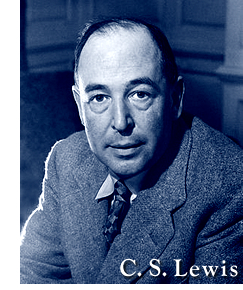
C.S. Lewis Daily – Today’s Reading


The real problem of the Christian life comes where people do not usually look for it. It comes the very moment you wake up each morning. All your wishes and hopes for the day rush at you like wild animals. And the first job each morning consists simply in shoving them all back; in listening to that other voice, taking that other point of view, letting that other larger, stronger, quieter life come flowing in. And so on, all day. Standing back from all your natural fussings and frettings; coming in out of the wind.

We can only do it for moments at first. But from those moments the new sort of life will be spreading through our system: because now we are letting Him work at the right part of us. It is the difference between paint, which is merely laid on the surface, and a dye or stain which soaks right through. He never talked vague, idealistic gas. When He said, ‘Be perfect,’ He meant it. He meant that we must go in for the full treatment. It is hard; but the sort of compromise we are all hankering after is harder—in fact, it is impossible. It may be hard for an egg to turn into a bird: it would be a jolly sight harder for it to learn to fly while remaining an egg. We are like eggs at present. And you cannot go on indefinitely being just an ordinary, decent egg. We must be hatched or go bad.

From Mere Christianity

Compiled in A Year with C.S. Lewis

Charles Stanley – When We Feel Burned Out


Matthew 11:25-30

We have all experienced physical burnout—those times when we are tired from our many activities or difficulties that assail us. Even more painful is spiritual burnout—the weariness believers can feel from the pressure of trying to obey God, attend church faithfully, and spend time in daily prayer and Scripture reading. Just contemplating everything we think we must do for success in the Christian life can be overwhelming! The trouble is that we become spiritually burned out if we rely on our own strength.

When we experience spiritual fatigue, it’s often because of a wrong view of our faith. We find ourselves keeping a mental checklist of dos and don’ts, striving to please God with religious activities. That’s not freedom. The Christian life isn’t some formula whereby we modify our behavior to gain the Lord’s approval. God reached down and reconciled us to Himself the moment we asked Him into our hearts, so we already have His approval. True spiritual maturity involves a growing awareness that nothing we can do—no change in conduct or attempt to live up to regulations—will make us acceptable. Rather, we give up our inability and weakness, and instead live by faith. Then God’s omnipotence can carry us through life.

Think of God’s power as a river coursing through hilly terrain. We can hike, puffing and sweating, along the footpath, or we can simply ease into the water. We won’t have to expend energy because the power of the current will carry us all the way to our destination.

Our Daily Bread — Hope Lives


Read: 1 Peter 1:3-9
Bible in a Year: 2 Samuel 19-20; Luke 18:1-23

Your faith, being much more precious than gold . . . may be found to praise, honor, and glory at the revelation of Jesus Christ. —1 Peter 1:7

When unspeakable tragedy shatters people’s lives, they search for answers. Recently, a mother who had lost a teenager said to me, “I can’t figure it out. I don’t know if I can believe anymore. I try, but God doesn’t make sense to me. What does it all mean?” There are no easy answers to such big concerns. But for those who have trusted Christ, there is hope—whether we are basking in blessings or grinding through grief.

Peter spells this out in his first letter. In glowing terms, he praises God for our “new birth into a living hope” (1 Peter 1:3 niv) through our salvation. That hope can bring joy even in the middle of tragedy. He also assures us of the permanence of this hope (v.4). He then tells us of the heart-breaking reality that we may “suffer grief in all kinds of trials” (v.6 niv). Those who have suffered loss turn hopeful hearts toward Peter’s next words: These come so that “your faith . . . may be found to praise, honor, and glory at the revelation of Jesus Christ” (v.7).

Trials—seemingly random and inexplicable—can be seen differently in the light of these words. In the midst of tragedy, the power and beauty of our salvation can shine through because of our great Savior. And that may be just enough light to get a troubled person through another day. —Dave Branon

The light of salvation shines clearly even in the darkest night.

Lord, You assure us that the grand salvation You provided is proved genuine in our pain and that it leads to glory for You. Help us to begin each new day with renewed hope in You.

INSIGHT: The hope that Peter describes in today’s reading is also a major theme of Paul’s letter to the Romans. In Romans 5:5 he describes this hope as a reality that flows from our growth in Christ. In Romans 8 he discusses our hope as something we anticipate from our salvation. Romans 12:12 reminds us that hope is grounds for great joy. Romans 15 describes hope as something we learn through trials, yet something that is characteristic of our God (v. 13). Clearly, to Paul and to Peter, hope is very important in the life of faith.

Ravi Zacharias Ministry – House and Ladder


I am not sure what it is as children that makes us readily picture God as seated high above us. But from childhood, we seem to nurture pictures of heaven and all its wonderment as that which spatially exists “above,” while we and all of our worries exist on earth “below.” While this may simply illustrate our need for metaphors as we learn to relate to the world around us, there is also biblical imagery that seems to authenticate the portrayal. Depicting the God who exists beyond all we know, the Scripture writers describe the divine throne as “high and lofty,” the name of the LORD as existing above all names. Yet even metaphors can be misleading when they cease to point beyond themselves. Though the Scriptures use the language and imagery of loftiness, they also pronounce that God’s existence is far more than something “above” us. The startling image of the Incarnation radically erases the likeness of a distant God. The message that comes again and again from the mouth of God on earth is equally startling: The kingdom of God is among us!

Of the many objections to Christianity, there is one in particular that stands out in my mind as troubling. That is, the argument that to be Christian is to withdraw from the world, to follow fairy tales with wishful hearts and myths that insist you stop thinking and believe that all will be right in the end because God says so. It was in such a vein that Karl Marx depicted Christianity as a kind of drug that anesthetizes its consumers to the suffering in the world and the wretchedness of life. Sigmund Freud argued similarly that belief in God functions as an infantile dream that helps us evade the pain and helplessness we both feel and see around us. I don’t find these critiques and others like them troubling because I find them an accurate picture of the kingdom Jesus described. Rather, I find them troubling because so many of us seem to live as if Freud and Marx are quite right in their analyses.

In impervious boxes and minimalist depictions of the Christian story, we live comfortably as if in our own worlds, intent to tell our feel-good stories while withdrawing from the harder scenes of life, content to view the kingdom of God as a world far away from the present, and the rooms of heaven as mere futuristic promises. The kingdom is seen as the place we are journeying toward, the better country the writer of Hebrews describes. In contrast, our place on earth is viewed as temporary, and therefore somehow less vital; like Abraham, we are merely passing through. And as a result, we build chasms that stand between kingdom and earth, today and tomorrow, the physical and the spiritual, the believing world and its world of neighbors. Whether articulated or subconscious, the earth itself even becomes something fleeting and irrelevant—one more commodity here for our use, like shampoo bottles in hotel bathrooms—while Christ is away preparing our permanent rooms.

Yet these chasms we might allow not only belie a posture irresponsible for those called to abundant life and love of neighbors, they betray the identity and decree of the good creator Christianity professes. The stories Jesus left the world with are so much more than wishful thinking; his proclamations of a kingdom here and now are far from permissions of escapism. Further, to view the world around us as a temporary place negates the words of the Christian’s most sacred prayer. Jesus taught his followers to pray: God’s kingdom come, God’s will be done—on earth as it is in heaven. What does it mean that Christ repeatedly declared the kingdom of God as here and now among us? What does it mean that for lack of human praise the very rocks will cry out at the glory of their creator while the trees will clap their hands? Far from being a non-spiritual, kingdom-irrelevant commodity, the earth is filled with rooms of faith, staircases and ladders that assure a constant traffic between heaven and earth, rooms of a good kingdom now seen in part and one day to be seen in full.

Surely the Lord is in this place; how often are we just not aware of it? For if Christ’s proclamations of the kingdom are taken seriously, then we live our lives in none other than the house of God.

The Christian worldview is one that believes at the deepest level in eternal dwellings, in the day when tears will be no more, and in the one who is preparing a house of many rooms. And yet, we very much live with the distinct experience of these promises here and now. Neither Christ nor the kingdom he came to make known is a static entity, something that mattered long ago and might matter once again but not today amidst the world as we know it. On the contrary, all of history, the story of a redemptive creator, the Incarnation and resurrection, declare that the Christian God is far more hands-on than this. Christ is not merely the one who will be near in all eternity. He is among the world today, reigning in a kingdom that is both present and approaching, going out into the depths of cities and neighborhoods that his house may be filled (cf. Luke 14:23). Precisely because the faith Christians proclaim is not a drug that anesthetizes or a dream that deludes, we must live as those aware of the house we live in, ready for the ladders that extend between heaven and earth, and anxious to invite the world inside.

Jill Carattini is managing editor of A Slice of Infinity at Ravi Zacharias International Ministries in Atlanta, Georgia.

Alistair Begg – Renew Your Covenant


Because of all this we make a firm covenant.

Nehemiah 9:38

There are many occasions in our experience when we may very rightly, and with benefit, renew our covenant with God. After recovery from sickness when, like Hezekiah, we have had a new lease of years added to our life, we may do so appropriately. After any deliverance from trouble, when our joys spring forth anew, let us again visit the foot of the cross and renew our consecration. Especially let us do this after any sin that has grieved the Holy Spirit or brought dishonor upon the cause of God; let us then look to that blood that can make us whiter than snow and again offer ourselves to the Lord.

We should not only let our troubles confirm our dedication to God, but our prosperity should do the same. If we ever meet with occasions that deserve to be called “crowning mercies,” then surely, if He has crowned us, we ought also to crown our God; let us bring out again all the jewels of the divine regalia that have been stored in the jewel-closet of our heart, and let our God sit upon the throne of our love, arrayed in royal apparel. If we could learn to profit by our prosperity, we would not need to face so much adversity. If we would gather from a kiss all the good it might confer upon us, we would not have to bear the imprint of punishment so often.

Have we recently received some blessing that we hadn’t expected? Has the Lord opened our way? Can we sing of mercies multiplied? Then this is the day to put our hand upon the horns of the altar and say, “Bind me here, my God; bind me here with cords, even forever.” Just as we need the fulfillment of new promises from God, let us offer renewed prayers that our old vows may not be dishonored. This morning let us make with Him a firm covenant because of the sacrifice of Jesus that we have been considering with gratitude for the last month.

Devotional material is taken from “Morning and Evening,” written by C.H. Spurgeon, revised and updated by Alistair Begg.

Charles Spurgeon – A vision of the latter day glories


 “And it shall come to pass in the last days, that the mountain of the Lord’s house shall be established in the top of the mountains, and shall be exalted above the hills; and all nations shall flow unto it.” Isaiah 2:2 & Micah 4:1

Suggested Further Reading: 2 Thessalonians 2:1-15

I am looking for the advent of Christ; it is this that cheers me in the battle of life—the battle and cause of Christ. I look for Christ to come, somewhat as John Bunyan described the battle of Captain Credence with Diabolus. The inhabitants of the town of Mansoul fought hard to protect their city from the prince of darkness, and at last a pitched battle was fought outside the walls. The captains and the brave men of arms fought all day till their swords were knitted to their hands with blood; many and many a weary hour did they seek to drive back the Diabolonians. The battle seemed to waver in the balance; sometimes victory was on the side of faith, and then, triumph seemed to hover over the crest of the prince of hell; but just as the sun was setting, trumpets were heard in the distance; Prince Emmanuel was coming, with trumpets sounding, and with banners flying; and while the men of Mansoul pressed onward sword in hand, Emmanuel attacked their foes in the rear, and getting the enemy between them both, they went on, driving their enemies at the sword’s point, till at last, trampling over their dead bodies, they met, and hand to hand the victorious church saluted its victorious Lord. Even so must it be. We must fight on day by day and hour by hour; and when we think the battle is almost decided against us, we shall hear the trump of the archangel, and the voice of God, and he shall come, the Prince of the kings of the earth; at his name, with terror shall they melt, and like snow driven before the wind from the bare side of a mountain shall they fly away; and we, the church militant, trampling over them, shall salute our Lord, shouting, “Hallelujah, hallelujah, hallelujah, the Lord God omnipotent reigneth.”

For meditation: The Lord’s second coming is an encouragement for us to hold fast to what we have (Revelation 2:25; 3:11). “Hold the fort, for I am coming!”

Sermon no. 249
24 April (1859)