Tag Archives: holy spirit

Denison Forum – ISIS attacks Christians: Where was Christ?

Suicide bombers attacked two Coptic churches in Egypt yesterday, killing forty-four people. It was the deadliest day of violence in the country in decades. ISIS has claimed responsibility for both bombings.

The first attack was in the northern city of Tanta at St. George’s Church. The explosion killed twenty-seven and injured seventy-eight others. The explosive device was planted under a seat in the main prayer hall close to the altar. Shortly afterward, at St. Mark’s Coptic Orthodox Cathedral in Alexandria, sixteen people were killed and forty-one were wounded in a suicide bomb attack.

Where is God when such atrocity strikes?

An all-knowing, all-loving, all-powerful God would know the attacks would happen before they did. He would have both the compassion and the power to prevent them. Yet he did not.

We need to remember that God did not cause these attacks—terrorists did. God gave them the same free will he gives to us all. He intends us to use our freedom to love him and each other (Matthew 22:37–39). When we use our freedom for evil instead, he could remove the consequences of our sin. But this would, in effect, remove our freedom. Our purpose as humans made in God’s image (Genesis 1:26–27) would be defeated.

Instead of removing our freedom and its consequences, our Lord chose to redeem them.

On Palm Sunday, Jesus rode a donkey into Jerusalem in direct fulfillment of messianic prophecy (Zechariah 9:9), knowing the authorities would respond by seeking his arrest and execution. On Monday, he overturned the moneychangers’ tables, further provoking the wrath of his enemies. On Tuesday, he defeated them again and again in public debate. On Maundy Thursday, he waited in the Garden of Gethsemane as they came to arrest him. On Good Friday, the One whose power calmed raging seas and raised the dead allowed Roman soldiers to nail him to a cross.

Here’s the point: our Lord entered our fallen condition and took the consequences of our freedom on himself. He did not remove our freedom—he redeemed it. As a result, by the sanctifying, indwelling power of his Spirit, human free will can be used to advance his Kingdom for his eternal glory and our eternal good.

For example: As Jesus grieves with the victims in Egypt and their families, he calls us to grieve. As he ministers to their broken hearts by his Spirit, he calls us to minister to them by our intercession. As he brings spiritual awakening to the Muslim world, he calls us to advance spiritual awakening in their culture and ours through prayer, worship, and witness.

It is human nature to ask why sinful, broken people act in sinful, broken ways. Such questions are completely understandable and even biblical (Isaiah 1:18). But our Father then calls us to move from speculation to action, from asking why tragedy strikes to asking how we can help its victims.

When the second ISIS bomber neared St. Mark’s Cathedral, a security officer saw him and tried to hug him to shield the crowd moments before the explosion. This brave man gave his life so others could live. He served the victims and emulated Jesus.

How will we do the same today?

NOTE: I invite you to download my latest website article, The Syrian Conflict: Causes and Biblical Responses. Also, I will be posting devotional articles on our website each day of Holy Week. For today’s devotional, click here.


Denison Forum

Charles Stanley –Palm Sunday


Luke 19:28-44

Hindsight is always 20/20. Yet while we are in a particular situation, we often make things out to be what they aren’t and infer wrong meanings. Later, we kick ourselves, thinking, If only I had known then what I know now!

Jesus’ triumphal entry into Jerusalem must have been one of those moments for the disciples. It probably appeared to be a wonderful day for them—and it was, but for different reasons than they realized. They thought the Messiah had come to reestablish Israel’s power in the world. But God had something else in mind.

The disciples weren’t the only ones who had misconceptions about the Messiah. Many Jews expected Him to be an earthly king. When the crowds heard Jesus was coming, they shouted, “Hosanna,” which means “save now” (John 12:13). They saw Him as their new king, come to bring salvation from political and societal oppression. He raised the dead, so they assumed He could also restore the kingdom of David and free them from Roman rule.

Seated upon a donkey, Jesus resembled a ruler returning to his city in peacetime, whose loyal subjects lined the path with coats and palm fronds. Even the Pharisees were there watching in indignation, saying, “Look, the world has gone after Him” (John 12:19).

This week, think back to those times when circumstances looked one way but turned out to be something else. Recall what it was like to realize God was different than you imagined and to see His will unfold in surprising ways. Look for an opportunity to share your insight with a friend or loved one.

Bible in One Year: 2 Samuel 15-17


http://www.intouch.org/

Our Daily Bread — A Journey of Belief

Read: John 20:24–31

Bible in a Year: 1 Samuel 13–14; Luke 10:1–24

These are written that you may believe that Jesus is the Messiah, the Son of God, and that by believing you may have life in his name.—John 20:31

Since its first publication in 1880, Lew Wallace’s novel Ben-Hur: A Tale of the Christ has never been out of print. It has been called the most influential Christian book of the nineteenth century, and it continues to draw readers today as it weaves the true story of Jesus with that of a fictional young Jewish nobleman named Judah Ben-Hur.

Amy Lifson, writing in Humanities magazine, said that the writing of the book transformed the life of the author. “As Ben-Hur guided readers through the scenes of the Passion, so did he lead the way for Lew Wallace to believe in Jesus Christ.” Wallace said, “I have seen the Nazarene . . . . I saw him perform works which no mere man could perform.”

The Gospels’ record of the life of Jesus allows us to walk alongside Him, witness His miracles, hear His words, and see His triumphal entry into Jerusalem on what we call Palm Sunday. At the conclusion of John’s gospel, he wrote, “Jesus performed many other signs in the presence of his disciples, which are not recorded in this book. But these are written that you may believe that Jesus is the Messiah, the Son of God, and that by believing you may have life in his name” (John 20:30-31).

Just as Lew Wallace’s research, reading of the Bible, and writing led him to believe in Jesus, so God’s Word draws us to a transformation of mind and heart by which we have eternal life in and through Him. —David McCasland

Lord, may the record of Your life be written on our minds and hearts so that we may have ever-increasing faith in You.

Many books can inform, but only the Bible can transform.

INSIGHT: The Christian accepts the Bible’s claims that Jesus Christ came to our world, performed miracles, preached about the kingdom of God, was crucified, and rose from the dead. Although Thomas knew Christ personally, he initially doubted that Christ had risen from the dead. After Thomas saw the nail prints in Jesus’s hands and the wound in His side he worshiped Christ and said, “My Lord and my God!” (John 20:28).What events have been part of your journey of belief? What has God used to transform your heart and mind?


http://www.odb.org

Joyce Meyer – Pray Anywhere


Blessed (happy, fortunate, to be envied) are those who dwell in Your house and Your presence; they will be singing Your praises all the day long. Selah [pause, and calmly think of that]!—Psalm 84:4

Once in the habit of spending time with God, you will miss these encounters if you start your day without talking and listening to Him. You can spend time with God anywhere, while doing anything—in the grocery store, or while cleaning house, for example. I have had great encounters with God while driving my car.

God is always listening for the sound of your voice calling out to Him. Develop a ready ear for His voice too. Whatever you have to do today, do it with the Lord. Acknowledge Him and talk to Him about everything. You will greatly enjoy His company.

From the book Starting Your Day Right by Joyce Meyer.


http://www.joycemeyer.org

Campus Crusade for Christ; Bill Bright – Examples of His Love 

“Little children, let us stop just saying we love people; let us really love them, and show it by our actions” (1 John 3:18).

The story is told about two farmers. Every day, one of them would haul pails of water up the steep slope to his terraced field and irrigate his meager crop.

The second farmer tilled the terrace just below, and he would poke a hole in the dyke and let the other farmer’s water run down into his field.

The first farmer was upset. Being a Christian, he went to his pastor and asked for advice. The pastor told him to keep on watering as before and to say nothing. So, the farmer returned to his fields and the watering of his crop, but the farmer below him continued to drain off his water. Nothing had changed.

After a few days, the first farmer went to his pastor again. The pastor told him to go a step further – to water his neighbor’s crop! So the next day, the farmer brought water to his neighbor’s field and watered the crops. After that, he watered his own field.

This went on for three days, and not a word was exchanged between the two farmers. But after the third day, the second farmer came to the first farmer.

“How do I become a Christian?” he asked.

There is a saying, ‘Love your friends and hate your enemies.’ But I say: Love your enemies!…If you are friendly only to your friends, how are you different from anyone else? Even the heathens do that. But you are to be perfect, even as your father in heaven is perfect” (Matthew 5:43-48).

Bible Reading: I John 3:14-17

TODAY’S ACTION POINT:  I will make every effort to demonstrate the love of Christ by the way I act toward others.


http://www.cru.org

Moody Global Ministries – Today in the Word – OUR SPIRITUAL WEAPON FOR SPIRITUAL VICTORY

Read Ephesians 6:10-20

On the first Palm Sunday in Jerusalem, crowds of people gathered shouting Hosannas for Jesus the Messiah. But not everyone was jubilant. As our key verse today notes, the chief priests and teachers of the law reacted to the cries of even little children with resentment and anger. They knew public praise had great power, and they quickly tried to stop it.

Today’s passage places prayer among the spiritual weapons that God gives to His people for their spiritual battles. While our visible and immediate troubles—unemployment, family discord, illness—sometimes seem like our most pressing concerns, Paul reminds us that our most dangerous enemies are ones we cannot see. Whether or not we always realize it, “the powers of this dark world” and the “spiritual forces of evil” (v. 12) constantly attack the godly. To wage war against them, we need a special set of weapons. Earthly blades and bullets would be useless against the demonic arrows of Satan, so our Godgiven equipment is uniquely spiritual. To battle evil, Christians have an arsenal stocked with faith, truth, righteousness, and peace. And we have the powerful weapon of prayer, not only for ourselves but also through intercession for “all the Lord’s people” (v. 18) who are fighting the same battle. As theologian John Calvin commented, “We ought to fight by our prayers and supplications.”

Our spiritual war is often frighteningly intense, but these verses give us great confidence. The Savior who crushed Satan by His death on the cross has given us the most effective tools for the battle. By His Spirit, we are able to be strong and stand our ground. By His mighty power, even the praises of little children can shut the mouth of the Evil One (see Ps. 8:2).

APPLY THE WORD

We may not always feel like soldiers, but God’s people are engaged in battle against the spiritual enemies of sin, Satan, and our own evil desires. Praying with and for one another is one of the pieces of our God-given spiritual armor. Take up the weapon of prayer with confidence, knowing that God will use your intercession to accomplish great things.


http://www.todayintheword.org

Kids 4 Truth International – God Wants Us To Pray

“Pray without ceasing. In everything give thanks: for this is the will of God for Christ Jesus concerning you.” (1 Thessalonians 5:17-18)

One of the hardest commandments in the Bible is that we ought to pray. Prayer takes serious thought and time. Have you ever started to pray but then got interrupted or distracted?

What is prayer? Prayer is talking to God. When we talk to God, we develop our relationship with Him. God is the only perfect Source of power, strength and wisdom. The disciples wanted to know how to communicate with God and to have a relationship with God, so they asked Jesus to teach them to pray.

Early in life, it is wise to learn how to pray, when to pray, and what to pray. Each person is different, and each person prays differently, but each prayer is precious in the sight of God. He hears, knows what is on your heart, and wants you to “talk” to Him. Prayer gives honor and glory to God.

A man named Fenelon (who lived from 1651-1715) wrote this: Let us not be content to pray morning and evening, but let us live in prayer all day long. All should become prayer, that is, a loving consciousness of God’s presence.

Read Matthew 6:5-13, if you have a few minutes to do that right now. Prayer is not difficult to do, but it does take determination. Will you decide to pray? Will you intend to pray? Will you make yourself pray? Will you ask God to help you pray? Will you pray?

God wants us to pray, and He teaches and enables us to pray if we will ask Him.

My Response:

» Do I spend thought and time in prayer?

» What distractions and interruptions keep me away from talking to God?

» How can I change around my priorities so that my relationship with God comes first?


http://kids4truth.com/home.aspx

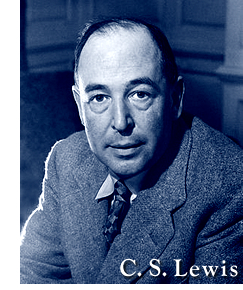
C.S. Lewis Daily – Today’s Reading


On happiness

What Satan put into the heads of our remote ancestors was the idea that they could “be like gods”—could set up on their own as if they had created themselves—be their own masters—invent some sort of happiness for themselves outside God, apart from God. And out of that hopeless attempt has come nearly all that we call human history—money, poverty, ambition, war, prostitution, classes, empires, slavery—the long terrible story of man trying to find something other than God which will make him happy.

God cannot give us a happiness and peace apart from Himself, because it is not there. There is no such thing.

From Mere Christianity
Compiled in Words to Live By

Charles Stanley –The Goodness of God


Psalm 116

God’s goodness is another attribute of His that’s infinite and unchanging. As a result, everything He does is good. We may look at some difficult aspect of our life and feel that the Lord has not manifested this characteristic to us. However, confusing situations and our limited understanding in no way alter who He is. A circumstance may not be good, but God’s goodness is not dependent upon that.

Scripture tells us that God is good to all (Psalm 145:9) and He does not show favoritism to anyone (Rom. 2:11). Either the Bible is telling the truth that God shows His beneficence to everyone, or else the Bible is false and God is good only when and to whom He chooses. Sometimes we would like Him to be more partial with His generosity when people whom we consider bad are doing well in life. Jesus said that the Lord “causes His sun to rise on the evil and the good, and sends rain on the righteous and the unrighteous” (Matt. 5:45). We may try to argue that wicked people don’t deserve good treatment in this life. But we must remember that we as believers don’t deserve the heavenly Father’s favor, either. He gives it freely because His nature is to be good to those He loves, and He loves the whole world—both believers and unbelievers.

Here’s the difference: If we desire the fullness of God’s goodness, we must believe in Him, receive His love, and live obediently. To those who love Him and walk in His righteousness, He pours out the completeness of His favor eternally—nothing is withheld (Psalm 84:11-12).

Bible in One Year: 2 Samuel 13-14


http://www.intouch.org/

Our Daily Bread — A Shepherd for Life

Read: Genesis 48:8–16

Bible in a Year: 1 Samuel 10–12; Luke 9:37–62

God . . . has been my shepherd all my life to this day.—Genesis 48:15

When my son changed grades in school he cried, “I want my teacher for life!” We had to help him realize that changing teachers is a part of life. We may wonder: Is there any relationship that can last a lifetime?

Jacob, the patriarch, found out there is one. After living through many dramatic changes and losing loved ones along the way, he realized there had been a constant presence in his life. He prayed, “May the God . . . who has been my shepherd all my life to this day . . . bless these boys” (Gen. 48:15-16).

Jacob had been a shepherd, so he compared his relationship to God as that of a shepherd and his sheep. From the time a sheep is born through its growth to old age the shepherd cares for it day and night. He guides it during the day and protects it during the night. David, also a shepherd, had the same conviction, but he highlighted the eternal dimension to it when he said, “I will dwell in the house of the Lord forever” (Ps. 23:6).

Changing teachers is a part of life. But how good it is to know that we can have a relationship for life. The Shepherd has promised to be with us every day of our earthly existence (Matt. 28:20). And when life here ends, we will be closer to Him than ever. —Keila Ochoa

Father, I thank You for being the Shepherd of my life. I praise Your faithfulness.

God never abandons us.

INSIGHT: Jacob was the first person in the Bible to affectionately call Yahweh “my shepherd” (Gen. 48:15). The psalmists as well as the prophets celebrate God as a shepherd who leads, cares for, and protects His people. Hundreds of years later, Jesus said that He is the Good Shepherd who knows and loves us (John 10:11-14). And the apostle John envisioned the Lamb of God as the shepherd leading the sheep to springs of living water (Rev. 7:17).Are you weary from life’s struggles? Refresh yourself with knowing that Jesus is your Good Shepherd who leads, loves, and cares for you. Sim Kay Tee


http://www.odb.org

Joyce Meyer – Be Decisive


…A man of two minds (hesitating, dubious, irresolute), [he is] unstable and unreliable and uncertain about everything [he thinks, feels, decides]. —James 1:8

Whatever the problem or situation, decision is always better than doubt and indecision. For example, if you have had a quarrel with someone, it is much easier to decide to apologize than it is to stay angry and be filled with unforgiveness, bitterness, and resentment while you are waiting for the other person to apologize to you. Be a peacemaker, and you will have a lot of joy. I spent many years making war; and believe me, the price I paid was high. It cost me my peace and my joy and sometimes my health. Jesus has a way, and we can do it His way and enjoy life. Indecision wastes a lot of time, and time is too precious to waste.

Become a decisive person, and you will accomplish a lot more with less effort. No one learns to hear from God without making mistakes. Don’t be overly concerned about errors. Don’t take yourself too seriously. You are a fallible human being, not an infallible god. Learn from your mistakes, correct the ones you can, and continue being decisive. Don’t fall back into a pattern of indecision and double-mindedness just because you are wrong a few times. If you feel that God is prompting you to give something away, do it! Get it off your mind. Take some action and sow the seed. If you believe it is right, then do it. That is how you will find out for sure.

Devote a reasonable amount of time to waiting on God. Don’t follow fleshly zeal, but do follow your heart. Don’t be afraid of yourself! You will not be the first person to make a mistake, nor will you be the last. The fear of failure keeps thousands trapped in indecision which definitely steals joy and complicates life. Don’t be afraid to make a decision and then follow through on it. Just do it!

From the book New Day, New You by Joyce Meyer.


http://www.joycemeyer.org

Campus Crusade for Christ; Bill Bright – God’s Home Is Holy

“Don’t you realize that all of you together are the house of God, and that the Spirit of God lives among you in His house? If anyone defiles and spoils God’s home, God will destroy him. For God’s home is holy and clean, and you are that home” (1 Corinthians 3:16,17).

At this writing, I am with the staff at our annual training on the campus of Colorado State University. In addition to the 3,000 United States and Canadian field staff of Campus Crusade for Christ who are here, thousands more are attending music workshops, summer school, numerous conferences and meetings on this campus. Also, the entire Denver Broncos professional football team is here for training.

Throughout the day, from early morning till late at night, the campus is alive with people jogging, roller-skating, playing tennis, walking and other physical activities. These people are disciplining their bodies, keeping them in good physical tone.

Sadly, however, I also witness many people who lack interest in physical well-being by smoking and drinking alcoholic beverages. A stroll down the sidewalks of this beautiful campus will reveal numerous smokers. And, in the early hours, before the clean-up crews go to work, one can see in the gutters the empty beer cans from the previous night’s revelry and carousing.

The body of the Christian is the temple of God – Father, Son and Holy Spirit (1 Corinthians 6:19 and 1 Corinthians 3:16,17). For this reason, God asks us to present our bodies as “living sacrifices,” holy and righteous, for God could dwell in no less a temple.

Bible Reading: I Corinthians 3:11-15

TODAY’S ACTION POINT:  I will take especially good care of my body – physically, mentally, spiritually – realizing it is the temple of God’s Holy Spirit.


http://www.cru.org

Wisdom Hunters – Leadership and Friendship 

Faithful are the wounds of a friend; but the kisses of an enemy are deceitful. Proverbs 27:6 (KJV)

Lead first and be a friend second, for an effective and efficient enterprise understands that leadership trumps friendship. As the old saying goes, “Lead, follow, or get out of the way.” Wise and intentional leadership is necessary for the health of the organization; leadership is watered down when friendships dictate strategic direction. Friendships should forge the team but not unduly dilute excellent outcomes based on courageous leadership decisions. If a leader is preoccupied with what a friend may think or do, then he risks diminishing his decision for the sake of sparing someone’s feelings. Politics are not the plumb line. The values and principles of the organization are the standards by which leadership decisions are made.

Friendship can become a fruit of wise leadership but it is not meant to drive wise leadership. Indeed, loyalty to friends is an important and valued attribute of an effective leader. But do not allow loyalty to cloud your rationale of what’s best for the team. Sometimes, the best thing you can do for the team and your friend is to either fire him or reassign him. Be sure your leadership is grounded in principle so your friendships will not get in the way of doing what’s right. Let a friend know up front how much you value him, but not to the detriment of what’s best for the business or ministry.

“My son, do not make light of the Lord’s discipline, and do not lose heart when he rebukes you, because the Lord disciplines the one he loves, and he chastens everyone he accepts as his son” (Hebrews 12:5-6).

Friends can be the hardest or the easiest to lead. It all depends on expectations, yours and theirs. Does your friend perceive you as a partner or a boss? Is your perception of your friend one of high value or just one of expedience that gets results? Lead first in humility, courage, and clarity. Let your friends know up front what you value as a leader and how they fit into the big picture of organizational success. Constantly ask, “What’s best for the team?” instead of “What does my friend want?” You lead first by defining the role of friendship on the team, and you keep leadership a priority by not playing favorites. This promotes teamwork and defuses jealousy.

Continue reading Wisdom Hunters – Leadership and Friendship 

Moody Global Ministries – Today in the Word – JESUS TEACHES HIS DISCIPLES TO PRAY

Read Matthew 6:1-15

On November 19, 1863, President Abraham Lincoln delivered one of the most famous presidential speeches in the history of the United States. His “Gettysburg Address” was only 272 words long—just ten sentences, but it defined the country’s purpose and set its priorities for generations.

Our study now brings us to the New Testament, and in today’s familiar passage Jesus establishes a focus and framework for His disciples’ prayers. First, He cautions them against pride. Prayer is an acknowledgment of dependence on God, and pride—in public displays of piety (v. 5) or in fancy, fluent language (v. 7)—has no place in true supplication. Instead, the one who comes to God can bring only what the English Puritan Thomas Manton called “the empty hand of faith.”

Jesus’ exemplary prayer, surprisingly brief, shows His disciples what to ask. He sets the primary concerns of God’s glory and the fulfillment of His saving purposes at the forefront. Then, He reminds the disciples what they need: material provision, forgiveness, and deliverance from sin. And Jesus shows them how to ask, demonstrating by His words a sincere and humble dependence on God for both kingdom concerns and daily needs.

He also tells them with whom they should ask. Jesus’ disciples were familiar with praying together; several times during His earthly ministry, Jesus took His disciples with Him to the place of prayer and asked them to pray alongside Him. So it is not surprising that the language of the Lord’s Prayer is consistently corporate. From “Our Father” to “deliver us from the evil one,” Jesus taught His disciples not just to pray in private (v. 6) but also to pray with other believers, asking their common Father for their common needs.

APPLY THE WORD

We are not left to figure out prayer on our own. God has graciously given us an example of the kind of prayer that He is pleased to hear. What’s more, He encourages us to join in prayer with other people who share the same needs and concerns. Ask the Lord to show you someone with whom you could come to Him in prayer.


http://www.todayintheword.org

Streams in the Desert for Kids – You Are Worth More than Flowers

Matthew 6:30–33, The Message

Have you ever wandered deep into the woods and found a beautiful flower blooming there? Ever wondered who, besides you, will ever see that beautiful flower? Jesus talked about that. He said that God gives a flower so much beauty and detail and then he may put it in a place where no one ever sees it. Why? It is because God makes everything perfect whether or not anyone notices. Everything he makes has a purpose. You have a purpose. And he didn’t make any mistakes when he made you. Even if you sometimes feel like you are hidden in the woods where no one notices you, God has a purpose for your life.

Because you are his child, God will take care of all your needs. Jesus told the people of his time to stop worrying about everything. He told them that God knew they needed certain things to live. He said that if God dressed the flowers that are here today and gone tomorrow, God will certainly take care of his children—that includes you—who are much more important to him than flowers.

If you can understand that God loves you and wants to take care of you, life will be a lot easier. God knows what you need. God knows what your family needs. Count on the fact that God knows, and trust him.

Dear Lord, I know you love me and that you care about my needs. Help me to trust you to take care of me and my family. Amen.

Charles Stanley –How to Handle Pride


1 Samuel 24

Pride causes us to think that we can manage life’s situations ourselves and make our own plans. The first two kings of Israel—Saul and David—illustrate different approaches to handling pride.

Saul’s high opinion of himself resulted in decisions that were contrary to the Lord’s commands. For example, having defeated the Philistines, the king reasoned that he should take some spoils of war, even though God had said otherwise. When confronted by Samuel, he replied that his plan was “to sacrifice [the animals] to the Lord” (1 Samuel 15:15). God saw through his words to a heart of pride. If self-centeredness controls our thinking, we’ll seek ways around divine commands in order to serve ourselves. When caught, we may try to justify our disobedience, as Saul did.

David—Israel’s second king, chosen while Saul was still on the throne—didn’t try to initiate his own reign. Instead, he waited for God’s timing. That meant enduring Saul’s jealous rages and murder attempts, but still he wouldn’t retaliate. In fact, even when he had the opportunity, David refused to seize the throne; he didn’t allow pride to dominate his thinking. Later on, he coveted another man’s wife and committed adultery, but when he was challenged, his humble heart prompted repentance (2 Samuel 12:13).

To prevent prideful behavior, we must refuse to act independently of the Lord. Like David, we should handle self-centeredness by turning to God in confession. David’s sins were forgiven. Saul, on the other hand, never admitted he’d made any mistakes, and that led to his downfall.

Bible in One Year: 2 Samuel 7-9


http://www.intouch.org/

Our Daily Bread — Godliman Street

Read: 1 Samuel 9:1–10

Bible in a Year: 1 Samuel 7–9; Luke 9:18–36

“Look, in this town there is a man of God.”—1 Samuel 9:6

My wife, Carolyn, and I were walking in London and came across a road named Godliman Street. We were told that a man once lived there whose life was so saintly that his street became known as “that godly man’s street.” This reminded me of an Old Testament story.

Saul’s father sent his son and a servant to look for some donkeys that had wandered away. The young men searched for many days but couldn’t find the animals.

Saul was ready to give up and go home, but his servant pointed toward Ramah, the prophet Samuel’s village, and replied, “Look, in this town there is a man of God; he is highly respected, and everything he says comes true. Let’s go there now. Perhaps he will tell us what way to take” (1 Sam. 9:6).

Throughout his years and into old age, Samuel had sought friendship and fellowship with God, and his words were weighty with truth. People knew him to be a prophet of the Lord. So Saul and his servant “set out for the town where the man of God was” (v. 10).

Oh, that our lives would so reflect Jesus that we would leave a mark on our neighborhoods, and that the memory of our godliness would linger on! —David Roper

I’m not sure, Lord, how my neighbors would describe me. But I want to be close to You and to be a light in my corner of the world.

The most powerful testimony is a godly life.


http://www.odb.org

Ravi Zacharias Ministry – Stories of Triumph and Defeat

In churches all over the world this coming Sunday, children will march among the aisles with palm branches, a commemoration of the first jubilant Palm Sunday. The palm branch is a symbol of triumph, waved in ancient times to welcome and extol royalty or the victorious. Palms were used to cover the paths of those worthy of honor and distinction. All four of the gospel writers report that Jesus of Nazareth was given such a tribute. Jesus came into Jerusalem riding on a colt, and he was greeted as king. The crowds laid branches and garments on the streets in front of him. An audience of applauders led him into the city and followed after him with chants of blessing and shouts of kingship:

Hosanna!

Blessed is he who comes in the name of the LORD!

The King of Israel!

Hosanna in the highest!

The triumph of Palm Sunday is not lost on the young. Long before I could see its strange place in the passion narrative, I loved celebrating this story as a child. It was a day in church set apart from others. In a place where we were commonly asked to sit still, inconspicuous, on this day we suddenly had permission to cheer and march and draw attention.

But like many stories in childhood that grow complicated as the chapters continue, Palm Sunday is far more than a triumphant recollection of Jesus’s entry into Jerusalem. The convicting irony of the holiday Christians celebrate strikes with each cheer of victory, for these cheering people reenact a scene that dramatically changed in a matter of days. In less time than it takes to plan a king’s coronation, cheers of “Hosanna!” became shouts of crucifixion. The honor that was extended with palms and praises was taken back shortly after it was placed before him. The troubling reality to the triumph of Palm Sunday is that we now know the defeat of the cross is yet to come.

Continue reading Ravi Zacharias Ministry – Stories of Triumph and Defeat

Joyce Meyer – Imperfect, but Perfectly Loved

There is no fear in love [dread does not exist], but full-grown (complete, perfect) love turns fear out of doors and expels every trace of terror!—1 John 4:18

We cannot love ourselves unless we realize how much God loves us, and if we don’t love ourselves, we cannot love other people. We cannot maintain good, healthy relationships without this foundation of love in our lives.

By the time I met the man I have been married to since 1967, I was desperate for love but did not know how to receive it, even when it was available. My husband, Dave, really did love me, but I found myself constantly deflecting his love due to the way I felt about myself down deep inside. As I entered into a serious and committed relationship with God, through Jesus Christ, I began to learn about God’s love. But it took a long time to fully accept it.

When you feel unlovable, it is hard to get it through your head and down into your heart that God loves you perfectly—even though you are not perfect and never will be as long as you are on the earth.

There is only one thing you can do with a free gift: receive it and be grateful. I urge you to take a step of faith right now and say out loud, “God loves me unconditionally, and I receive His love!” You may have to say it a hundred times a day, like I did for months, before it finally sinks in, but when it does it will be the happiest day of your life.

To know that you are loved by someone you can trust is the best and most comforting feeling in the world. God will not only love you that way, but He will also provide other people who will truly love you. When He does provide, be sure to remain thankful for those people. Having people who genuinely love you is one of the most precious gifts in the world.

Trust in Him: You won’t be able to receive God’s love until you trust Him. Take a step of faith right now and say out loud, “God loves me unconditionally, and I receive His love!” Say it as many times as you need to until you believe it.

From the book Trusting God Day by Day by Joyce Meyer.


http://www.joycemeyer.org

Campus Crusade for Christ; Bill Bright – One More Reason to Praise 

“His presence within us is God’s guarantee that He really will give us all that He promised; and the Spirit’s seal upon us means that God has already purchased us and that He guarantees to bring us to Himself. This is just one more reason for us to praise our glorious God” (Ephesians 1:14).

To me, this wonderful verse means that, as children of God, we have the ability to obey God’s laws if we are filled continually with the Holy Spirit and refuse to obey the old evil nature within us.

In order to live the supernatural life which is available to us through the indwelling Holy Spirit, we must know our rights as children of God. We need to know our spiritual heritage. We must know how to draw upon the inexhaustible, supernatural resources of God’s love, power, forgiveness and abundant grace.

The first step is to learn everything we can about God. We also need to know about the nature of man and why he behaves as he does. The best way to learn who God is, who man is and about our rights as children of God is to spend much time – even at the sacrifice of other needs and demands on our schedules – in reading, studying, memorizing and meditating on the Word of God, and in prayer and witnessing.

Paul wrote to the Christians at Rome, “For His Holy Spirit speaks to us deep in our hearts, and tells us that we really are God’s children. And since we are His children, we will share His treasures – for all God gives to His Son Jesus is now ours too. But if we are to share His glory, we must also share His suffering” (Romans 8:16,17).

Bible Reading: Ephesians 1:15-23

TODAY’S ACTION POINT:  I will acknowledge God’s presence, believe His promises and surrender to His special will for me, and thus will I praise Him throughout the day.


http://www.cru.org