Tag Archives: theology

Alistair Begg – Bad News?

Alistair Begg

He is not afraid of bad news.

Psalms 112:7

Christian, you ought not to be afraid of the arrival of bad news; because if you are distressed by such, you are no different from other men. They do not have your God to run to; they have never proved His faithfulness as you have done, and it is no wonder if they are bowed down with alarm and cowed with fear. But you profess to be of another spirit; you have been born again to a living hope, and your heart lives in heaven and not on earthly things. If you are seen to be distracted as other men, what is the value of that grace that you profess to have received? Where is the dignity of that new nature that you claim to possess?

Again, if you should be filled with alarm like others, you would no doubt be led into the sins so common to them under trying circumstances. The ungodly, when they are overtaken by bad news, rebel against God; they murmur and maintain that God has dealt harshly with them. Will you fall into that same sin? Will you provoke the Lord as they do?

Moreover, unconverted men often run to wrong means in order to escape from difficulties, and you will be sure to do the same if your mind yields to the present pressure. Trust in the Lord, and wait patiently for Him. Your wisest course is to do what Moses did at the Red Sea: “Stand firm, and see the salvation of the LORD.”1 For if you give way to fear when you hear bad news, you will be unable to meet the trouble with that calm composure that prepares for duty and sustains in adversity.

How can you glorify God if you play the coward? Saints have often sung God’s high praises in the fires, but when you act as if there were no one to help, will your doubting and despondency magnify the Most High? Then take courage and, relying in sure confidence upon the faithfulness of your covenant God, “Let not your hearts be troubled, neither let them be afraid.”2

1Exodus 14:13

2John 14:27

John MacArthur – Developing Practical Righteousness

John MacArthur

“Stand firm therefore . . . having put on the breastplate of righteousness” (Eph. 6:14).

We’ve seen the importance of putting on the breastplate of righteousness as protection against Satan’s attempts to pervert your thinking and emotions. But Scripture speaks of three kinds of righteousness: self-righteousness, imputed righteousness, and practical righteousness. Which did Paul have in mind in Ephesians 6:14?

Paul wasn’t speaking of self-righteousness because that is what the breastplate of righteousness is designed to protect you from. Self-righteousness deceives a person into thinking, I can please God and reach heaven on my own merit. But Isaiah said, “All our righteous deeds are like a filthy garment” (Isa. 64:6). Far from getting you to heaven, self- righteousness will condemn you to eternal hell because it rejects the merits of Christ’s atonement.

Similarly, Paul wasn’t speaking of imputed righteousness–the righteousness of Christ granted to every believer at the moment of salvation. It’s also called “positional righteousness” because it results from your position or standing in Christ. Second Corinthians 5:21 says that God made Christ, “who knew no sin to be sin on our behalf, that we might become the righteousness of God in Him.” Every believer is clothed in the garment of Christ’s righteousness. You don’t put that on. It’s already yours in Christ.

Only practical righteousness remains–that which flows from obedience to God’s Word. Although in God’s eyes you are righteous in Christ, you must also pursue righteous behavior. In other words, your practice should match your position. That’s what Paul meant when he said, “Work out your salvation with fear and trembling” (Phil. 2:13). John added that “the one who says he abides in [Christ] ought himself to walk in the same manner as He walked” (1 John 2:6).

As you learn to live in obedience to God’s Word, you’ll be protected by the breastplate of righteousness.

Suggestions for Prayer:

Ask the Spirit to help you search your heart and reveal any self-righteous attitudes that might be making you vulnerable to Satan’s attacks. Confess them, then praise Christ for the true righteousness that is yours in Him.

For Further Study:

Read Romans 3:10-23. What kind of righteousness did Paul pursue?


Campus Crusade for Christ; Bill Bright – A New Quality of Life

dr_bright

“When the Holy Spirit, who is truth, comes, He shall guide you into all truth, for He will not be presenting His own ideas, but will be passing on to you what He has heard. He will tell you about the future. He shall praise Me and bring Me great honor by showing you My glory. All the Father’s glory is Mine: this is what I mean when I say that He will show you My glory” (John 16:13-15).

Steve asked me the question, “What is my number 1 priority as a Christian? I want to be a man of God, so I need counsel as to what I am to do first.” This is a good question for every Christian to ask.

The answer is simply: to glorify God. Jesus tells us how we can best do this in John 15:8, “By this is My Father glorified, that you bear much fruit, and so prove to be My disciples” (NASB). Or, as the Living Bible states it, “My true disciples produce bountiful harvests. This brings great glory to My Father.”

The Holy Spirit has come to be a witness to our Lord Jesus. When the Spirit controls our lives, we too will be witnesses for Him.

Witnessing for Christ with our lips is not only a natural result of being filled and controlled by the Holy Spirit, but also is a necessary act of obedience if we are to continue to experience the fullness of the Holy Spirit.

That which is most on our hearts is most on our lips, so if we truly love Christ, we will want to share Him with others. But God does not want or need the witness of individuals whose carnal lives fail to give credibility to their testimonies.

The greatest experience that has ever happened to any believer is to know Jesus Christ personally as Savior and Lord, to be forgiven of his sins and to have assurance of eternal life.

Therefore, the most important thing we can do to help another person is to introduce him to Christ. Only the Holy Spirit can empower us to live holy lives and be fruitful witnesses for Christ.

Bible Reading: John 14:16-26

TODAY’S ACTION POINT: I will ask the Holy Spirit to glorify God through the quality of my life and the witness of my words, as a demonstration of the supernatural life that I have received from God.


Presidential Prayer Team; P.G. – Trust in Tragedy

ppt_seal01

King David and his wife had a gravely ill newborn. In desperation, David did what any God-fearing parent would do: he bombarded Heaven with prayers. He rejected all creature comforts. His advisers urged him to eat, but he wouldn’t even do that. The King’s period of grief began while the baby was still alive. Ultimately, David was informed of the infant’s death. Then he did something not every parent would do: he got up, took a bath, dressed in clean clothes, went to the house of the Lord, and worshipped.

And the elders of his house stood beside him, to raise him from the ground, but he would not.

II Samuel 12:17

Puzzling reaction? Not when you consider that David was likely comforted by knowing he’d see his son again. He was confident the infant would spend eternity with the Lord – and with his child.

When you have occasion to be beside someone watching their child fight a mortal illness, the only comfort you can offer them is God’s eternal promised love for children. Encourage them to do as David did, and examine their own mortality and relationship with the Lord. Pray, too, for the children and families of your nation’s leaders…that they would find the God in whom David could trust in tragedy.

Recommended Reading: II Samuel 12:15-24


Presidential Prayer Team; C.H. – Stronger Together

ppt_seal01

“You’ve gotta know someone.” Whether you’re trying to break into the music industry, get a contract for your book, or just want a new job, you may hear this phrase. When friends are willing to vouch for you, doors are more likely to open.

I will go out and stand beside my father in the field where you are, and I will speak to my father about you. I Samuel 19:3

True friends don’t expect benefits from a relationship, but are certainly willing to help when they can. David and Jonathan had that type of friendship. King Saul was wildly jealous of David and ordered his attendants and even his own son to kill David. But Jonathan willingly stood up for David to Saul, telling his father, “His deeds have brought good to you.” (I Samuel 19:4) As a result, the envious king backed down and allowed David back in his presence.

This nation is in desperate need of people who will stand alongside national leaders who choose to follow Jesus. They are stronger with your help. Pray for the courage to stand beside Christian leaders in political offices. As you speak out to bring them encouragement, reach out to lift each other up as well.

Recommended Reading: Ecclesiastes 4:7-12

Charles Stanley – Why We Lose Our Peace

Charles Stanley

Romans 12:3-10

One of the greatest enemies to peace is the entitlement mentality that’s widespread in our land today. Too few people are satisfied with their portion in life. Underlying this discontent is the false assumption that society owes them something or that their rights are being overlooked. This type of self-centered thinking can creep into businesses, marriages, churches, and other institutions, generating all kinds of discord and causing far-reaching consequences.

This is the type of situation that was developing in the 13th chapter of Genesis, when Abram and his nephew Lot were attempting to dwell in an area that was too small for the abundant holdings of both men. The pressure became so great that there was enormous strife between Abram’s herdsmen and those working for Lot. Something had to be done.

Abram in his wisdom eased the tension by offering Lot his choice of pasturelands (Gen. 13:9). Instead of fighting for his so-called rights, Abram chose the way of peace. He did what the apostle Paul advised centuries later when he wrote, “Give preference to one another in honor” (Rom. 12:10).

Did Abram lose out by being generous to Lot? Not at all. Take note of God’s words to the patriarch after he had willingly relinquished the prime territory to his nephew and departed (Gen. 13:14-15)—the Lord saw fit to promise all that land and beyond to Abram and his descendants. Our God blesses peacemakers (Matt. 5:9).

Our Daily Bread — Beneficial Power

Our Daily Bread

2 Chronicles 16:6-13

The eyes of the LORD run to and fro . . . , to show Himself strong on behalf of those whose heart is loyal to Him. —2 Chronicles 16:9

Boxing and strong-man competitions have a unique aspect to them. In the events, the athletes compete individually for the purpose of demonstrating their superior strength. It’s like arm wrestling—you do it to prove that you are the strongest person in the room.

One aspect of God’s glory is His almighty power. But how does He show His strength? He doesn’t do it by rearranging the galaxies before our very eyes, changing the color of the sun at a whim, or freezing a lightning bolt as a trophy to His strength. Instead, in His love and compassion for needy people like ourselves, God has chosen to “show Himself strong on behalf of those whose heart is loyal to Him” (2 Chron. 16:9).

The pattern is consistent throughout Scripture. From the dividing of the Red Sea, to the marvel of manna in the wilderness, to the miraculous virgin birth, and ultimately to the power of the resurrection, our Almighty God has chosen to demonstrate His strength to bless, preserve, and protect His people.

Be assured that He delights in showing Himself strong in the challenges of our life. And when He proves His power on our behalf, let’s remember to give Him the glory! —Joe Stowell

Lord, thank You for choosing to expend Your

divine power on the needs of my life. When my

strength is weak, teach me to trust that Your mighty

arm is able to guard, protect, and deliver!

All of God’s promises are backed by His wisdom, love, and power.

Bible in a year: Proverbs 13-15; 2 Corinthians 5

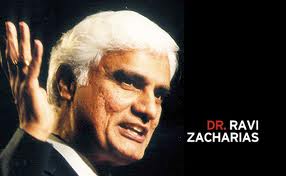
Ravi Zacharias Ministry – The Good Book

Ravi Z

In publishing his godless Bible for those with no faith, A. C. Grayling may have expected a mixed reception. The ‘religious Bible’ (as he calls the Christian original) often sparks controversy, so one might have assumed that his would prompt a powerful reaction.(1)

But although eyebrows were certainly raised, support given, and criticism leveled, I couldn’t help feeling that there was something a little flat about it all. Perhaps it was because we were in the midst of celebrating the 400-year anniversary of the King James translation of the Bible with its majestic impact on the English language, that one struggled to muster any strong reaction to this book. One of the repeated observations made about Grayling’s moral guide for atheists is that it just doesn’t seem to be as good or interesting as the original.

Jeannette Winterson, author of Oranges Are Not the Only Fruit, had this to say:

I do not believe in a sky god but the religious impulse in us is more than primitive superstition. We are meaning-seeking creatures and materialism plus good works and good behaviour does not seem to be enough to provide meaning. We shall have to go on asking questions but I would rather that philosophers like Grayling asked them without the formula of answers. As for the Bible, it remains a remarkable book and I am going to go on reading it.

Perhaps it has something to do with what seems to be a fundamental misunderstanding on Grayling’s part: the Bible is not merely a book containing moral guidance, as he seems to think it is. While Christians would say that it does contain the moral law of God and shows us how to live our lives, the actual text of the Bible is much more besides.

It is the history of a people and a grand narrative of redemption for all people. At its heart, it is the story of a relationship, and not a collection of platitudes. As the New Testament opens with God coming in human form, we encounter Jesus walking the earth, not simply to restate a moral code, but to offer us peace with God through himself. It’s about a personal God to encounter, not a set of propositions to understand or laws to follow. This is drama with a capital D.

The Bible also contains narrative history, at its most fascinating with well-preserved accounts recording personal perspectives on historical events. Whether it be a prophet like Jeremiah, writing in the 7th century BC, or the gospel writer Mark in the 1st century AD, this is compelling writing whatever our religious convictions. Who could not notice the honesty and detail of Mark’s turn of phrase when he recounts that “Jesus was in the stern sleeping on a cushion, the disciples woke him and said to him ‘Teacher don’t you care if we drown?’” (Mark 4:38). As history alone the Bible is compelling.

In as much as Grayling’s ‘Good Book’ cobbles together some of the finest moral teaching from our history, it will surely be useful to some. But from an atheist perspective is this really a legitimate task? Without God what is morality other than personal perspective or social contract? Do we need Grayling’s personal perspective any more than our own? And is he really in a position to tell us what a socially agreed set of morals should be? Great atheists of the past, like Bertrand Russell, rejected religious moral values arguing against overarching morality—do they really want Grayling to reconstruct one? “I don’t think there is a line in the whole thing that hasn’t been modified or touched by me,” he says. While his own confidence in his wisdom is clearly abundant, will others feel the same way? Readers might also note that from the 21st century, his is the only voice to make the cut and be included in the work.

In calling his worthy tome The Good Book, Grayling, perhaps unwittingly, references the story about a rich young ruler found in the Gospel of Mark. The man approaches Jesus and addresses him as “Good teacher.” “Why do you call me good?” Jesus answered. “No one is good—except God alone.” Jesus preempts centuries of philosophical debate about the nature of morality and locates goodness as an absolute in the being of God. We are challenged to question: “Without God, what is goodness?” As the debate over his book continues it will be intriguing to find out how Grayling knows his godless Bible to be a benchmark of “goodness.”

In the meantime, no doubt the Bible will continue to top best-seller lists, and engage audiences spanning all ages, backgrounds, and cultures. I for one will keep reading it.

Amy Orr-Ewing is UK director of Ravi Zacharias International Ministries in Oxford, England.

(1) Originally printed in Pulse Magazine, Issue 8, Summer 2011, 10-11.

Alistair Begg – God’s Jealousy For Believers

Alistair Begg

The Lord is a jealous and avenging God.

Nahum 1:2

Believer, your Lord is very jealous of your love. Did He choose you? He cannot bear that you should choose another. Did He buy you with His own blood? He cannot endure that you should think you are your own or that you belong to this world. He loved you with such a love that He would not remain in heaven without you; He would sooner die than have you perish, and He cannot endure that anything should stand between your heart’s love and Himself.

He is very jealous of your trust. He will not permit you to trust in yourself. He cannot stand the thought of you hewing out broken cisterns and neglecting the overflowing fountain that is always free to you. When we lean upon Him, He is glad; but when we transfer our dependence to another, when we rely upon our own wisdom or the wisdom of a friend-worst of all, when we trust in any works of our own-He is displeased and will chasten us, that He may bring us to Himself.

He is also very jealous of our company. There should be no one with whom we converse so much as with Jesus. To remain in Him alone, this is true love; but to commune with the world, to find sufficient satisfaction in our earthly comforts, to even prefer the company of our fellow Christians to secret fellowship with Him, this grieves our jealous Lord. He longs to have us abide in Him and enjoy constant fellowship with Himself; and many of the trials that He sends us are for the purpose of weaning our hearts from created things and fixing them more closely on Him who created everything. Let this jealousy that would keep us near to Christ also be a comfort to us, for if He loves us so much as to care about our love, we may be sure that He will allow nothing to harm us and will protect us from all our enemies. May we have grace today to keep our hearts in holy purity for Christ alone, with sacred jealousy closing our eyes to all the fascinations of the world!

Charles Spurgeon – The fatherhood of God

CharlesSpurgeon

“Our Father which art in heaven.” Matthew 6:9

Suggested Further Reading: Luke 11:1-13

A child, even though he is erring, always expects his father will hear what he has to say. “Lord, if I call thee King thou wilt say, “Thou art a rebellious subject; get thee gone.” If I call thee Judge thou wilt say, “Be still, or out of thine own mouth will I condemn thee.” If I call thee Creator thou wilt say unto me, “It repenteth me that I made man upon the earth.” If I call thee my Preserver thou wilt say unto me, “I have preserved thee, but thou hast rebelled against me.” But if I call thee Father, all my sinfulness doth not invalidate my claim. If thou be my Father, then thou lovest me; if I be thy child, then thou wilt regard me, and poor though my language be, thou wilt not despise it.” If a child were called upon to speak in the presence of a number of persons, how very much alarmed he would be lest he should not use right language. I may sometimes feel concerned when I have to address a mighty audience, lest I should not select choice words, full well knowing that if I were to preach as I never shall, like the mightiest of orators, I should always have enough of carping critics to rail at me. But if I had my Father here, and if you could all stand in the relationship of father to me, I should not be very particular what language I used. When I talk to my Father I am not afraid he will misunderstand me; if I put my words a little out of place he understands my meaning somehow. When we are little children we only prattle; still our father understands us.

For meditation: The Father always heard the Lord Jesus Christ (John 11:41,42); by the working of the Holy Spirit he can understand us even when we cannot understand ourselves (Romans 8:26,27). Never be afraid to go to him in prayer because words fail you.

Sermon no. 213

12 September (1858)

John MacArthur – Resisting the Devil

John MacArthur

“Take up the full armor of God, that you may be able to resist in the evil day, and having done everything, to stand firm” (Eph. 6:13).

Spiritual warfare has become a popular topic in recent years. Books, tapes, and seminars on the subject abound, but there is still much confusion. Some say we must rebuke and bind Satan to thwart his power and influence. Others say we must expel demonic spirits through “deliverance ministries.” Still others encourage us to band together to aggressively assault the strongholds of supposed territorial demons.

But spiritual warfare isn’t an outright frontal attack on the forces of darkness. Scripture says, “Submit . . . to God. Resist the devil and he will flee from you” (James 4:7); “Be on the alert. Your adversary, the devil, prowls about like a roaring lion, seeking someone to devour. But resist him, firm in your faith” (1 Pet. 5:8-9). The idea that Christians have the authority to rebuke or bind Satan is foreign to Scripture. Even Michael the archangel treated him with more respect than that (Jude 9).

Spiritual victory involves submitting to God, pursuing His will, keeping your spiritual armor on, being on the alert for Satan’s attacks, and then standing firm and resisting him “in the evil day” (Eph. 6:13).

“Evil day” is a general reference to the sin that exists in this world. As the “god of this world” (2 Cor. 4:4), Satan will continue to produce evil until he and his forces are cast into the lake of fire (Rev. 20:10-15). Then the evil day will give way to an eternal age of righteousness.

Countless people have pastored churches, taught Sunday School classes, led Bible studies, sung in choirs, and been involved in every conceivable area of ministry only to one day abandon their ministries and embrace the world. Somehow they stopped resisting the devil and lost the courage to stand firm.

How about you? Is your commitment strong? Are you willing to stand firm for the Lord today?

Suggestions for Prayer:

Ask God for the grace to boldly resist whatever might challenge your faith today.

Charles Stanley – The Source of Peace

Charles Stanley

Philippians 4:6-7

It is one of modern culture’s great tragedies: what many people seek and work so hard to achieve is, contrary to what they believe, not a product of all their accomplishments and effort. Millions of people are turning the world upside down looking for peace, while never realizing that the “genuine article” is simply not of this world. Money can’t buy it; success and fame can never guarantee it. Until you have peace with God, you will never experience inner serenity at all.

But here’s the good news: Since genuine peace is not dependent upon outward circumstances, it is possible to experience a tranquility beyond our comprehension, even in the midst of life’s most difficult trials. But this real peace isn’t possible unless there exists absolutely no impediment between us and God—and the only way the barrier of sin and self can be removed is by means of the cross of Jesus Christ.

If we’d simply bring our struggles and needs to the foot of the cross, we would find an abundant source of peace. A heart at rest is not rooted in some worldly principle or philosophy; it can be realized only through an intimate relationship with the person of Jesus Christ (Eph. 2:14-16).

The Devil will take every opportunity to destroy our calm by drawing attention away from Christ to things that may seem important at the time but in reality have no purpose other than to distract. Don’t waste your life looking for peace in all the wrong places—just remember, the Prince of Peace is its only true source.

Ravi Zacharias Ministry – The Weight of Hope

Ravi Z

Amid the darkness of the Thirty Years’ War, German pastor Martin Rinkart is said to have buried nearly five thousand fellow citizens and parishioners in one year, including his young wife. Conducting as many as fifty funerals a day, Rinkart’s church was absolutely ravaged by war and plague, famine and economic disaster. Yet in the midst of that dark year, he sat down with his children and wrote the following lines as a prayer for the dinner table:


Now thank we all our God

With heart and hands and voices;

Who wondrous things hath done,

In Whom his world rejoices.

Who, from our mother’s arms,

Hath led us on our way

With countless gifts of love

And still is ours today.


O may this bounteous God

through all our life be near us,

With ever joyful hearts

and blessed peace to cheer us;

And keep us still in grace,

and guide us when perplexed;

And free us from all ills,

in this world and the next.


In the midst of such gloom, Rinkart’s expressions of thankfulness seem either incredibly foolish or mysteriously important. Standing on this Christian notion, Rinkart saw the certainty of God and the significance of thanksgiving. He saw that to be thankful was to make the bold confession that encountering the presence and glory of God far outweighs everything else we encounter, whether a matter of despair or delight. Amidst the heaviness of darkness, he saw the wisdom in fixing his gaze on what he could not see—the light of the Gospel, the life of Christ, the eternal weight of the glory of a God who is among us.


The Apostle Paul, who lived similarly, wrote of his own dark encounters as “momentary affliction” in which he saw nonetheless an eternal weight of glory beyond all comparison. “For the things that are seen are transient, but the things that are unseen are eternal.”(1)


It is interesting to note that the general Greek word for glory used in secular writing took an entirely different shape in the New Testament. The word was particularly influenced by its Hebrew counterpart meaning “weighted” or “heavy,” and hence, denoting something of honor and importance. The word doxology, referring to an expression of praise, comes from the same Greek word. The etymology is fascinating because the word itself seems to cry out for comparison. Will the things I give most honor always measure up? Under the heaviness of life, what weight does the hope I profess actually carry?


Here, Paul proclaims the eternal weightiness of his hope in Jesus Christ. “[F]or it is the God who said, ‘Let light shine out of darkness,’ who has shone in our hearts to give the light of the knowledge of the glory of God in the face of Jesus Christ.” The peculiar message of hope in the midst of darkness originates for the Christian with the God who first spoke light into darkness, the God who made light to shine in the darkness of Christ’s grave, and the inextinguishable light of Christ given to shine upon us today. It is this God of intrinsic glory in whom we know light and life itself.


Martin Rinkart’s simple table grace was later made into a powerful hymn and sung at a celebration service at the war’s end. Adding a third stanza, Rinkart’s words continue with thanksgiving, concluding fittingly with words of doxology, words proclaiming the weightiness of the glory of God.


All praise and thanks to God

the Father now be given;

The Son and Him Who reigns

with Them in highest heaven;

The one eternal God,

Whom earth and heaven adore;

For thus it was, is now,

and shall be evermore.


Jill Carattini is managing editor of A Slice of Infinity at Ravi Zacharias International Ministries in Atlanta, Georgia.


(1) See 2 Corinthians 4:16.

(2) 2 Corinthians 4:6.

Alistair Begg – Not of the World

Alistair Begg

Be separate from them.

2 Corinthians 6:17

The Christian, while in the world, is not to be of the world. He should be distinguished from it in the great object of his life. To him, “to live” should be “Christ.”1 Whether he eats or drinks or whatever he does, he should do it all to God’s glory. You may lay up treasure; but lay it up in heaven, where neither moth nor rust destroy, where thieves do not break in and steal. You may work to be rich; but make it your ambition to be “rich in faith”2 and good works. You may pursue pleasure; but when you are happy, sing psalms and make melody in your hearts to the Lord.

In your spirit, as well as in your aim, you should differ from the world. Waiting humbly before God, always conscious of His presence, delighting in fellowship with Him, and seeking to know His will, you will prove that you are a citizen of heaven. And you should be separate from the world in your actions. If a thing is right, though you lose by doing it, it must be done; if it is wrong, though you would gain from it, you must reject the sin for your Master’s sake. You must have no fellowship with the unfruitful works of darkness but rather reprove them. Walk worthy of your high calling and dignity. Remember, Christian, that you are a son of the King of kings. Therefore, keep yourself unstained from the world. Do not soil the fingers that are to serve the King. Do not let your eyes become the windows of lust, eyes that will soon see the King in His beauty. Do not let your feet, which are soon to walk the golden streets, be defiled in dirty places. Do not allow your heart to be filled with pride and bitterness, but prepare it to be filled with heaven and to overflow with ecstatic joy.

Then rise my soul! and soar away,

Above the thoughtless crowd;

Above the pleasures of the day,

And splendors of the proud;

Up where eternal beauties bloom,

And pleasures all divine;

Where wealth, that never can consume,

And endless glories shine.

1 Philippians 1:21

2 James 2:5


Charles Spurgeon – Paul’s desire to depart

CharlesSpurgeon

“Having a desire to depart, and to be with Christ, which is far better.” Philippians 1:23

Suggested Further Reading: Romans 8:14-30

Here we are like Israel in the wilderness, who had but one cluster from Eschol. There we shall be in the vineyard. Here we have the manna falling small, like coriander seed, but there shall we eat the bread of heaven and the old corn of the kingdom. We have sometimes on earth, lusts, ungratified desires, that lack satisfaction; but there the lust shall be slain and the desire shall be satisfied. There shall be nothing we can want; every power shall find the sweetest employment in that eternal world of joy.There will be a full and lasting fruition of Christ, and last of all upon this point there shall be a sharing with Christ in his glory, and that for ever.“We shall see him,” yes, and let us have the next sentence, and “shall be like him when we shall see him as he is.” Oh Christian, anticipate heaven for within a very short time thou shalt be rid of all thy trials and thy troubles; thine aching head shall be encircled with a crown of glory; thy poor panting heart shall find its rest and shall be satisfied with fulness as it beats upon the breast of Christ. Thy hands that now toil shall know no harder labour than harp-strings can afford. Thine eyes now filled with tears shall weep no longer. Thou shalt gaze in ineffable rapture upon the splendour of him who sits upon the throne. Nay, more, upon his throne shalt thou sit. He is King of kings, but thou shalt reign with him. He is a priest after the order of Melchisedec, but thou shalt be a priest with him. Oh rejoice! The triumph of his glory shall be shared by thee; his crown, his joy, his paradise, these shall be thine, and thou shalt be co-heir with him who is the heir of all things.

For meditation: Being with Christ must be far better, because we will then be with Christ who is far better. God has prepared something far better for the believer (Hebrews 11:40).

Sermon no. 274

11 September (1859)

John MacArthur – Identifying the Real Enemy

John MacArthur

“Our struggle is not against flesh and blood, but against the rulers, against the powers, against the world forces of this darkness, against the spiritual forces of wickedness in the heavenly places” (Eph. 6:12).

Sometimes in the heat of battle we might lose perspective on who the real enemy is. Ephesians 6:12 reminds us that our struggle isn’t against sinful people, but against the evil system and the supernatural forces that influence their attitudes and actions.

In his assault on the kingdom of God, Satan has assembled a highly organized army of fallen angels. Paul categorized them as “rulers . . . powers . . . world forces of this darkness . . . spiritual forces of wickedness in the heavenly places” (Eph. 6:12).

That isn’t a detailed description of Satan’s hierarchy but simply a general indication of its power and sophistication. Apparently “rulers” and “powers” are high- ranking demons. “World forces of this darkness” are possibly demons who infiltrate various political systems of the world, attempting to direct human leaders to oppose God’s plans. An example is a demon called “the prince of the kingdom of Persia” in Daniel 10:13. He withstood God’s angelic messenger to Daniel until Michael the archangel came to the rescue.

“Spiritual forces of wickedness in the heavenly places” perhaps refers to demons involved in the most vile and perverted kinds of sins: gross immorality, occultic practices, Satan worship, and the like.

Those who reject Christ and God are unwitting prisoners of war–captured and mobilized by the enemy to accomplish his purposes. Tragically, when he’s finished with them he’ll abandon them to an eternal hell.

You probably know unbelievers who enjoy ridiculing your faith and making life difficult for you. Although that is hard to take, be patient and don’t become embittered toward them. Ask God to make you an instrument of His love as you reach out to them. Also pray that God will remove their spiritual blindness so they can see beyond Satan’s lies and recognize their need for a Savior.

Suggestions for Prayer:

Praise God for delivering you from the domain of darkness and transferring you into the kingdom of His beloved Son (Col. 1:13).

Ask Him to use you today to break through Satan’s deception in someone’s life.

For Further Study:

Read 2 Corinthians 4:3-7, noting why people reject the gospel.


Campus Crusade for Christ; Bill Bright – How to Test Your Experience: I

dr_bright

“Talk with each other much about the Lord, quoting psalms and hymns and singing sacred songs, making music in your hearts to the Lord. Always giving thanks for everything to our God and Father in the name of our Lord Jesus Christ by submitting to each other” (Ephesians 5:19,20).

Mary was one of those ardent, faithful church members – a Sunday school teacher, choir member and active participant in a home Bible study – who just assume they are filled with the Holy Spirit because they do everything their pastor or Christian leader asks of them.

“Why has no one, up to now, ever told me that I needed to be filled with the Holy Spirit?” she asked me just after I had publicly suggested that very thing.

To help Mary better understand her own spiritual condition, I read to her the above passage from Ephesians. Then I asked her several questions relating to that portion of Scripture.

“Are you talking about Christ to others? Is your heart filled with melody to the Lord? Do you spend time in God’s Word daily? Do you have a thankful spirit? Do you submit to others in the Lord?”

Mary hesitated only a moment. “If these are evidence of a Spirit-filled life, I must not be controlled by the Holy Spirit. But I would like to be. What should I do?”

With great delight and joy I shared appropriate Scriptures with her, and together we bowed in prayer as she claimed by faith the fullness and control of the Holy Spirit in her life. Surrendering to the lordship of Christ, turning from all known sin, hungering and thirsting after righteousness, she now knew with certainty that she was filled with the Spirit. Being filled with the Spirit is not a once-and-for-all-decision, but a way of life in which we claim the fullness of the Spirit moment by moment, day by day, by faith.

Bible Reading: Colossians 3:12-17

TODAY’S ACTION POINT: I will honestly compare myself with the evidences of the supernatural, Spirit-filled life listed in the fifth chapter of Ephesians. If these are not true in my life, I will claim by faith the fullness and control of God’s Holy Spirit, and ask Him to make these qualities a reality in my daily relationships with the Lord, with my loved ones and with others.

Greg Laurie – Preparation for Heaven

greglaurie

Abraham was confidently looking forward to a city with eternal foundations, a city designed and built by God. —Hebrews 11:10

We think so much about the here and now, but God thinks more about the by and by. We need to remember that heaven is being prepared for us, and we are being prepared for heaven.

As Randy Alcorn wrote, “We live between Eden and the new earth, pulled toward what we once were and what we yet will be.”

Heaven is not some mysterious, atmospheric realm of smoke and mirrors. Heaven is a real place for real people, where we will do real things. Hebrews 11:9 says that Abraham, “even when he reached the land God promised him, he lived there by faith—for he was like a foreigner, living in tents. And so did Isaac and Jacob, who inherited the same promise.”

Abraham did this because he “was confidently looking forward to a city with eternal foundations, a city designed and built by God (verse 10). Abraham recognized that this world was not really his home and that his real home was eternal, built by God.

Deep down inside, I hope we realize that too. Our real home is heaven and the new earth that is to come. Heaven is the real place that Abraham was searching for, and it is the place we are all searching for, really. The Bible says that God has placed eternity in our hearts (see Ecclesiastes 3:11).

Putting it in context, Paul wrote in 2 Corinthians 4:17, “For our present troubles are small and won’t last very long. Yet they produce for us a glory that vastly outweighs them and will last forever!” That is what God wants in our lives. He wants eternal weight.

The things that we go through in life are not just preparing us for the opportunities God will reveal during our time on this earth. God is also preparing us for heaven.

Campus Crusade for Christ; Bill Bright – Blessed are the Merciful

dr_bright

“Blessed are the merciful: for they shall obtain mercy” (Matthew 5:7, KJV).

If you and I have a desire to imitate God, seldom do we accomplish that purpose more than in the practice of showing mercy.

God delights in nothing more than in the exercise of showing mercy. One of the clear prerequisites to real happiness is this display of genuine mercy. Surely God has given us the supreme example, by giving His only Son to die in our place. That is mercy beyond comprehension, beyond description.

The world speaks often of having someone at its mercy. In a very real sense, God has us at His mercy – but He chose to be merciful and make a way of escape for us. The decision to take that way is ours.

To the degree that we show mercy to the poor, the wretched, the guilty – to that degree we are like God. And if He keeps us here on earth to be conformed more and more to His image, how important it is that we trust Him – by His indwelling Holy Spirit – to make us merciful.

When we do something to glorify God, like giving a cup of cold water in His name, in obedience to His commandments, and with a desire that He should be honored, He will consider it as done unto Him and reward us accordingly.

The lesson is clear: the merciful shall obtain mercy. And who among us is not a candidate for more of God’s mercy?

Bible Reading: Luke 6:31-36

TODAY’S ACTION POINT: “Dear Lord, with Your great mercy as the supreme example, I resolve to allow your Holy Spirit to show mercy through me.”


Greg Laurie – Appointment with a Stranger

greglaurie

Not a Default Destination

On the last day, that great day of the feast, Jesus stood and cried out, saying, “If anyone thirsts, let him come to Me and drink. He who believes in Me, as the Scripture has said, out of his heart will flow rivers of living water.” — John 7:37-38

Years ago there was a woman who went to draw water from a well. She had been married and divorced five times and was living with a man. This was not culturally acceptable, and as a result, she was an outcast. She would go to the well at the hottest time of the day when she most likely would be alone. On one such day, she was surprised to find a stranger sitting there, a Jew. And then the stranger asked her for some water.

This woman was a Samaritan, and Jews and Samaritans didn’t speak to each other. She asked, “How is it that You, being a Jew, ask a drink from me, a Samaritan woman?”

As they talked, this stranger, who happened to be Jesus, told her, “Whoever drinks of this water will thirst again, but whoever drinks of the water that I shall give him will never thirst. But the water that I shall give him will become in him a fountain of water springing up into everlasting life” (John 4:13–14).

Jesus was talking about the well as a metaphor for life. If you drink from the well of success, you will thirst again. If you drink from the well of accomplishments, you will thirst again. If you drink from the well of experiences, you will thirst again. Whatever it is, it will leave you empty.

Maybe you have tried to satisfy your spiritual thirst with the things this world has to offer and haven’t found the satisfaction you are looking for. You didn’t find it in that relationship. You didn’t find it in that object. You didn’t even find it in religious activities. The only place you will find it is in Jesus Christ.

Are you spiritually thirsty today? Christ can satisfy your deepest thirst.