
Tag Archives: Words of Hope

Words of Hope – Daily Devotional – Back to the Future

Read: John 16:28-33

I have said these things to you, that in me you may have peace. In the world you will have tribulation. But take heart; I have overcome the world. (v. 33)

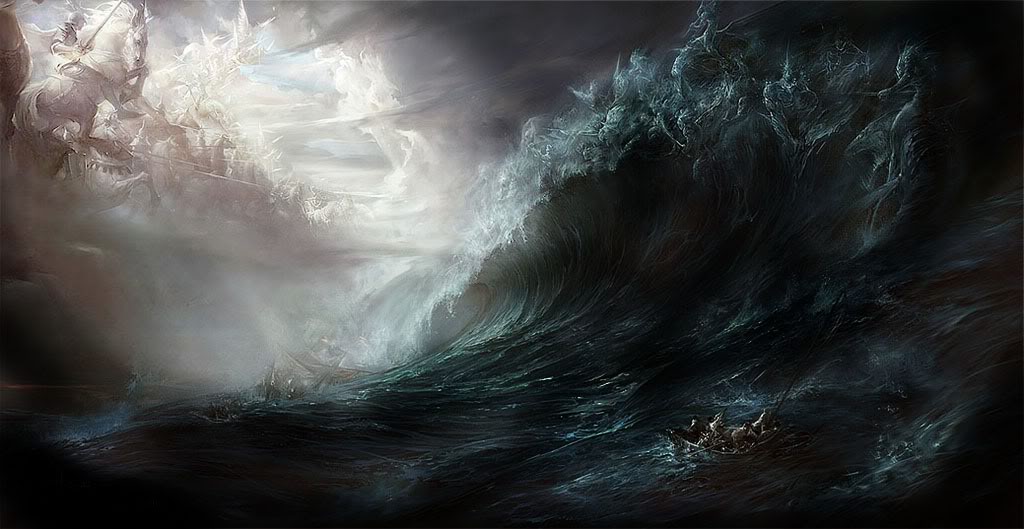
So much of Christian faith is about perspective, something I learned the hard way. In my worst and most painful crisis, I had to coach myself many times a day—out loud at times—“eyes on Jesus, not on the waves.” Eyes on the waves led to fear and panic.

My Old Testament professor, Dr. Thomas Boogaart, taught us that the ancient Hebrews lived in a way that embodied anamnesis, or remembering the saving deeds of God. God was concentric to everything—in the middle, he would explain, not on the fringe of life, or just tucked into the “religion” category somewhere. In this way, the Hebrew people always faced God, turned toward God’s saving acts and narrative of the world. As they faced the past, filled with stories of sin and redemption, they figuratively backed into the future remembering.

The Lenten season represents such a journey. With Christ’s incarnation, life, death, resurrection, and second coming at the center of everything, fears of the future become subject to his larger narrative: Christ has died, Christ is risen, Christ will come again. —Amy Clemens

Prayer: God at the center of creation and redemption, help me find courage as I back into the future with your bigger story speaking more loudly to me than any other voice. Help me “take heart” as I face your narrative of hope, rescue, and unconditional love.
 

https://woh.org/

Words of Hope – Daily Devotional – Enjoy Yourself!

Read: Ecclesiastes 9

Go, eat your bread with joy, and drink your wine with a merry heart, for God has already approved what you do. (v. 7)

I had a temper tantrum on July 20, 1969. I don’t know the dates of any of my other childhood temper tantrums, but I know this one because my snit almost caused me to miss watching Neil Armstrong walk on the moon. I don’t remember the details, but I was upset and my parents had to plead with me to come out and watch history being made. I’m glad they did.

There was a saying among the ancient Jewish rabbis that at the final judgment God will ask us to give account of all the good things in life we beheld and didn’t enjoy. While that idea isn’t exactly found in the Bible, its first cousin is—in verses like Ecclesiastes 9:7. In the midst of his fairly depressing ruminations about life (or, more accurately, about the inevitability of death), Qoheleth exhorts us to enjoy the life we’ve been given. We’ve seen him return to this theme frequently—life is a vanity; we’re all going to wind up riding in the back of a hearse—but that leads him to joy instead of despair.

This is your one life. Today is the only today you’re ever going to have. How are you embracing it? LIVE today in capital letters, telling those you love how you feel about them, reveling in God’s good gifts, eating your bread with joy, and drinking your wine (or morning coffee) with a merry heart.  —Jeff Munroe

Prayer: Thanks, Lord, for the gift of life today!


https://woh.org/

Words of Hope – Daily Devotional – The Garbage Collector

Read: Ecclesiastes 3:16-4:8

All are from the dust, and to dust all return. (3:20)

Christianity has been perverted by something called “the prosperity gospel.” The perversion comes from mistaking the God who provides for all for our needs with a God who will give us whatever we want. Prosperity preachers are popular—who doesn’t like hearing that God wants to make you rich and give you blessing after blessing? The Jewish people steer clear of this heresy by reading Ecclesiastes at the Feast of Tabernacles, when they are celebrating God’s abundant provision. Qoheleth’s words keep everyone’s feet on the ground, particularly here when reminding us that we are all heading towards dust. The life of faith isn’t some sort of rah-rah, get-rich-now scheme. The prosperity gospel is vanity.

In an article in the June 2017 issue of Christianity Today, Eugene Peterson calls Qoheleth “the garbage collector in the kingdom of God. He goes up and down our alleys and backyards, empties out our wastebaskets and attics, and hauls off everything that has accumulated.”

What idols and false gods have you been chasing? We all do it—wealth (and not even extravagant wealth, just enough so we never have to worry), success, respect, peace of mind, happiness—the list goes on and on. None of these things are bad in and of themselves. But over and over, as Peterson reminds us, Qoheleth is telling us that these are “gifts to be enjoyed, not goals to be pursued.” —Jeff Munroe

Prayer: Thanks, Lord, for this call to deeper faith.


https://woh.org/

Words of Hope – Daily Devotional – The Faithful Lover


Read: Song of Solomon 1:9-17

Behold, you are beautiful, my love. (v. 15)

Just as no one knows for sure if the Song of Solomon was actually written by King Solomon or is just “Solomonesque,” so also no one knows exactly why this love poem, with its tricky plot line and just a passing mention of God, was first included in the Bible. There is a clue, however, in the Jewish practice of reading the Song during the Passover Seder.

Many Jewish scholars consider the Song a midrash, or commentary, upon the book of Exodus, the great salvation story of Israel. The Song shows an image of God as a faithful lover within the bonds and bounds of a covenant relationship. This biblical relationship is built on love instead of just legal obligations.

Staying in love over time has its challenges. Husbands and wives take each other for granted, our hearts and minds (and eyes) wander, and lovable quirks become irritations. Over time our experience of salvation also has its challenges. We struggle to stay alert to the glories of God’s saving grace, and our prayers may become worn out and tired. One way to avoid this is to attend to the words of this Song. That’s why the Song is read at Passover, so people hear God’s voice saying, “Behold, you are beautiful, my love.” More than anything, God loves you. Do you believe it? Read the words of the Song as addressed just to you. —Jeff Munroe

Prayer: Lord, may we hear your voice of love.


https://woh.org/

Words of Hope – Daily Devotional – Learning to Ask for Help

Read: Romans 12:1-8

In Christ we, though many, form one body, and each member belongs to all the others. (v. 5 NIV)

The more people who found out I had cancer, the more offers for help I received. People like to have something they can do for me: meals, chores, driving. For a while I tried to find ways to turn down these offers with creative ways to keep doing everything myself. However, pain and exhaustion are insistent and instructive teachers. The lesson I had to learn was twofold: I needed other people and I was not in control.

In Romans 12, Paul tells us not to think of ourselves more highly than we should. Every person has a God-given gift and should use that gift for the body of Christ. Even when we are most able to do things, we shouldn’t try to do everything ourselves. And if we think we are, we are deluding ourselves. Few of us grow and make all the food we eat, pave the roads we drive, or even take note of the thousand ways we depend on other people every day. It isn’t a matter of “asking” for help when we need it. We always need help.

So eventually, when my sister offered to help weed my garden, I said yes. When my grandson said he would mow the lawn, I said yes. Each time I accepted help I saw that unless I asked for help, these people wouldn’t be able to use their God-given gift. Who can help you today? —Karen Bables

Prayer: Teach me, Lord, to ask for help when I need it.


https://woh.org/

Words of Hope – Daily Devotional – The Voice of Irony


Read: Luke 2:1-7

In those days a decree went out from Caesar Augustus that all the world should be registered. (v. 1)

One of our family’s favorite traditions around Christmas is watching A Charlie Brown Christmas. Its many memorable scenes and familiar soundtrack are known by heart including Linus reading at length the account of Christ’s birth from the Gospel of Luke. In recent years, however, what was once a 25.5-minute movie has been cut down to about 22 minutes to allow for more commercials. Alas! A movie that laments the over-commercialization of Christmas has been cut down to allow for more ads. Now that is irony.

In these opening verses of Jesus’ birth narrative, Luke is celebrating irony. Caesar thinks he is pursuing his plans by moving people around the empire to take a census. But really, God is arranging for Scripture to be fulfilled. Caesar on his throne thinks he is king. Jesus, “away in a manger, no crib for a bed,” turns out to be the real king. Caesar, who in many parts of the empire is called “Prince of Peace,” is preempted by angels saying, “Glory to God in the highest, and on earth peace among those with whom he is pleased!” (Luke 2:13-14).

You can almost hear Luke chuckling. It may look like business as usual: empires, taxes, armies, death. But there is another story. God is using Caesar’s plans to accomplish divine plans. With a laugh Luke is telling us, “No worries. God is in charge.” —Ken Eriks

Prayer: Lord God, how good to know you faithfully accomplish your plans whatever the situation. In Jesus’ name. Amen.


https://woh.org/

Words of Hope – Daily Devotional – The Voice of Gabriel: Nothing Is Impossible with God


Read: Luke 1:26-38

He will be great and will be called the Son of the Most High. (v. 32)

The angel Gabriel appears to young Mary with an amazing promise. God is about to perform an extraordinary act that was prefigured in Isaac’s birth to Abraham and Sarah and Samuel’s birth to Hannah. Yet Luke wants us to know that this is a miracle of another kind. The wording parallels the creation account where God’s Spirit is “hovering over” the chaotic waters before the world is formed and filled (Gen. 1:2). The conception and birth of Jesus our Savior is a special miracle of God’s creative power. Just as the earth was initially “without form and void,” Mary’s womb is void until God, through the Holy Spirit, “overshadows” her so she conceives a child who is “called holy—the Son of God” (Luke 1:35).

As Jesus came to Mary, he comes to each of us as a once-in-a lifetime gift of God’s creative grace. Our Lord brings order out of chaos and creates life where there is no life. If you are in Christ, you are God’s new creation (2 Cor. 5:17). Yet we will never discover what God can do through our individual lives or our congregations until we are ready to respond like Mary. There are still empty places in our lives where chaos reigns, but that’s where the Spirit is eager to bring order and create new life. Are you open to God’s initiatives? —Ken Eriks

Prayer: Lord God, by your Spirit, bring forth new life in us this Christmas. In Jesus’ name. Amen.


https://woh.org/

Words of Hope – Daily Devotional – The Voice of Mark: Work


Read: Mark 13:32-37

Be on guard, keep awake. For you do not know when the time will come. (v. 33)

The story is told of a day when St. Francis of Assisi was working in his garden. A neighbor came by and said, “Francis, if you knew Jesus was coming today, what would you do?” Without even glancing up, Francis replied, “I would continue to hoe my garden.”

It is also reported that in Hartford, Connecticut, during the 17th century, a judge was presiding in a court when an eclipse of the sun occurred. Because the people did not understand what was happening, they panicked. They were sure cosmic catastrophe was not far off; the end of time was near. But the judge rapped his gavel, calling for order. Then he said, “If this is the end of the world, let us at least be found doing our duty. Bring in the candles and let the trial continue.”

Although Mark 13 pertains to Jesus’ second coming, we can ask the question, “What does it mean to ‘watch’ during Advent?” Part of watching is to do our assigned tasks. It is like a man going on a journey who leaves his house in the care of servants, each with work to do. The best thing these servants can do is tend to their work. Watch! It’s another way of saying: do your best at work. Listen to your children. Help your neighbor. Find opportunity to share your faith. Serve God. Watch, and see how God comes to you. —Ken Eriks

Prayer: Lord, help us stay awake and keep working until you come. In Jesus’ name. Amen.


https://woh.org/

Words of Hope – Daily Devotional – A New Life


Read: 1 Thessalonians 5:12-22

Always seek to do good to one another and to everyone. (v. 15)

Sukh Ram, a Hindu man with a young family, lived in the center of a dangerous city in India. The streets there felt like a war zone. Then, when Sukh Ram’s wife died, he was left to care for his two small children alone. He hoped for something better. Wanting safety and security for his children, he moved his family to a remote village many hours away. In this new home, Sukh Ram also found new life. Christians in the village welcomed Sukh Ram into their community, and Sukh Ram welcomed Christ into his heart.

“They introduced me to the gospel and to Words of Hope radio,” Sukh Ram explains. “They prayed with me and helped me overcome my past. Through answered prayers, I found peace, joy, and freedom from sin—that wasn’t possible with Hinduism.” Today, Sukh Ram goes by the name Prabhu Das, meaning “servant of God.” A new name, a new life, and a new hope granted by God through the testimony of a faithful community of his people.

In our reading today, we see Paul’s picture of the same thing: believers building each other up, and testifying to God’s work through the example of their lives. Sukh Ram met Christ through the care of his neighbors. He saw the kingdom of God through their welcome. This is the hope that Jesus offers all of us. Do your neighbors see this same testimony in your life? —Christy Prins, WOH staff

Prayer: Help us, Lord, to reflect the kingdom of God in our churches and communities. Amen.


https://woh.org/

Words of Hope – Daily Devotional – True Beauty

Read: Revelation 21:1-8

And he who was seated on the throne said, “Behold, I am making all things new.” (v. 5)

Sadar was born blind in the country of Nepal. In developing countries, blindness can be an especially devastating impairment, since fewer resources and opportunities are available for disabled people. Unable to read, Sadar started to listen to radio programs from Words of Hope’s Nepali partner. Eventually, Sadar decided to call the producer because he wanted to learn more about Christ. Words of Hope’s Nepali radio producer, Joshua, says, “Conversations with Sadar made me realize that he was really looking forward to seeing a world created by God. He had a quest in his heart for God, and the eyes of his heart could sense the true beauty of God and his creation.”

New life comes in many forms. Sometimes it means the end of a long-standing conflict or troubling health problem. Sometimes it means gaining freedom from an addiction or mental illness. But often, it is a new way of seeing, a shift in the way we experience the same difficult things in our lives. Sadar’s blindness has not ended. His hope has not come from that kind of change in his life. Rather, Sadar hopes for the newness that God can bring. In the book of Revelation, the apostle John describes a new heaven and a new earth. It’s not fully here yet, but it is the kingdom of God that we all long to see. —Christy Prins, WOH staff

Prayer: Lord, we hope for the new kingdom that you are making.


https://woh.org/

Words of Hope – Daily Devotional – A Disciple’s Prayer

Read: Nehemiah 1:1-11

When I heard these things, I sat down and wept. For some days I mourned and fasted and prayed before the God of heaven. (v. 4 NIV)

  1. M. Bounds once said, “The church is looking for better methods; God is looking for better men.” There are plenty of how-to guides out there on prayer, but in the Bible God gives us his servant Nehemiah whose life and prayers challenge us to be people who pray.

When should we pray? When Nehemiah hears that Jerusalem is in ruins, the first thing he does is sit down and weep. Then for several days he mourns and fasts and prays. He doesn’t try to “fix” things. Instead, he gets alone with God. True disciples of Jesus do more than pray, but they don’t do anything until they pray.

Why should we pray? Nehemiah has a huge weight on his heart because of this news. Instead of wallowing in self-pity, he goes straight to the Lord. This shows Nehemiah’s dependence on God while allowing God to lighten Nehemiah’s load. His prayer of faith permits God’s power to be released.

How should we pray? If we look at today’s passage, we see that Nehemiah adores God’s character (v. 5). He focuses on God’s position, power, and promises to his people. Furthermore, instead of passing the blame, he admits to God that the Israelites, including himself and his father’s family, have sinned and need God’s forgiveness. And lastly, he claims God’s promises to the people of Israel. This reminds him of God’s faithfulness. —Bob Bouwer

Prayer: Father, thank you for godly examples of people who pray.


https://woh.org/

Words of Hope – Daily Devotional – Pray without Ceasing

Read: 1 Thessalonians 5:16-18

Rejoice always, pray without ceasing, give thanks in all circumstances; for this is the will of God in Christ Jesus for you. (vv. 16-18)

For many of us, learning to pray involved certain fixed times of prayer: before meals, before bedtime, and during church. The apostle Paul encourages something more in our prayer life: “pray without ceasing.” This biblical command draws us toward a lifetime of continual conversation with God. But how is this possible?

Does praying without end mean that we are to spend our waking hours with our eyes closed and hands folded? By no means! Paul encourages us to be in a continual, ongoing dialog with God our loving Father. Imagine reserving times of communication with our closest friends or family to only a few fleeting moments in a day. Or worse, suppose we limited those conversations to a set of memorized sentences that we simply repeat every day.

Our lives are meant to be a steady stream of conversation with our ever-present Lord. In times of fear, anxiety, or want, we must turn to the Lord as our comforter, helper, and provider. In times of gladness and joy, we should celebrate with him and share our thankfulness. When we’re angry and upset, we must seek his wisdom and guidance. “Do not be anxious about anything,” Paul says elsewhere, “but in everything by prayer and supplication with thanksgiving let your requests be made known to God.” (Phil. 4:6) —Brad Haitsma

Prayer: Father, keep us closely connected to you in prayer at all times. Amen.


https://woh.org/

Words of Hope – Daily Devotional – Praying for Harmony


Read: Romans 12:9-21

Be constant in prayer . . . Live in harmony with one another. (vv. 12, 16)

On average, pianos require being tuned two to three times a year. For centuries, the only surefire way to tell if a piano was in tune was by using a tuning fork. Simple to make and easy to use, tuning forks guaranteed pitch-perfect accuracy. Even in antique shops today, you can find 300-year-old tuning forks producing notes just as clear and crisp as the day they were made.

For the Christian, Jesus Christ is our tuning fork. He tells us if we are out of tune, but he also sets the standard to which we are to be tuned, over and over again. Pastor and author A. W. Tozer explains this phenomenon: “Has it ever occurred to you that one hundred pianos all tuned to the same fork are automatically tuned to each other? They are of one accord by being tuned, not to each other, but to another standard to which each one must individually bow. So one hundred worshippers met together, each one looking away to Christ, are in heart nearer to each other than they could possibly be were they to become ‘unity’ conscious and turn their eyes away from God to strive for closer fellowship” (The Pursuit of God, pp. 87-88).

When was the last time you found life in harmony with Jesus and others? Harmonious living requires constant prayer. Are you in need of retuning your heart to him? —Nathan Prairie

Prayer: Dear Jesus, may we live in harmony through the tuning of our hearts to you. Amen.


https://woh.org/

Words of Hope – Daily Devotional – On My Knees

Read: Ephesians 3:14-21

For this reason I bow my knees before the Father . . . that you may be filled with all the fullness of God. (v. 14)

The apostle Paul spent a lot of time on his knees praying, often from a prison cell as in today’s passage. In his prayer for the believers in the wealthy port city of Ephesus, Paul’s prayer is basically this: “Oh God, may they know you, and not only about you!” Perhaps more than any other activity, it is in prayer that we get to know God more intimately. In his book Knowing God, Christian theologian J. I. Packer says, “What matters supremely, therefore, is not, in the last analysis, the fact that I know God, but the larger fact which underlies it—the fact that he knows me” (p. 41). Why is Paul on his knees? He wants God’s agenda to be at the forefront of every faith community.

The more Paul realized God’s purpose in his life, the deeper and more robust his intercession became. When we find ourselves literally on our knees, somehow we can better express proper humility and devotion to God. A kneeling posture in prayer shows an attitude of reverence and submission. Even if we can’t physically kneel down, we can bow our heads in times of dire need and acknowledge with our hearts that everything we need comes only from our heavenly Father. And the goal, says Paul, is that we “may be filled with all the fullness of God.” —David Mojica

Prayer: Lord, let me comprehend the breadth and length and height and depth of the love of Christ. Amen.


https://woh.org/

Words of Hope – Daily Devotional – Worry or Wonder?

Read: Luke 1:26-38

Do not be afraid, Mary, for you have found favor with God. (v. 30)

In Luke 1, both Zechariah and Mary are surprised by angels who tell them not to fear. Zechariah says, “How shall I know this?” (v. 18). Mary says, “How will this be?” (v. 34). After all, the fulfillment of both promises will require a miracle. Zechariah’s wife is too old to conceive a child, and Mary is still a virgin.

Both receive comfort and encouragement from the angels who tell them about each of their promised sons. While Zechariah desperately wants a son to preserve his reputation and legacy, Mary knows that the timing of this birth could ruin her reputation. Zechariah’s and Mary’s attitudes and heart responses are also different. Zechariah’s fear causes him to be skeptical and he wants proof. Mary’s fear turns to curiosity, wonderment, and then acceptance. She replies, “I am the Lord’s servant . . . may your word to me be fulfilled” (Luke 1:38 NIV).

It is human nature to want a guarantee that when God promises something spectacular yet humanly impossible, it will happen. When God says, “Do not be afraid . . . your prayer has been heard,” or “You have found favor with God,” what will my response be? I would like to follow Mary’s example by humbly asking God how something will happen rather than following Zechariah and expecting proof. —Denise Vredevoogd

Prayer: Dear God, help us to surrender our fears and say, like Mary, “May your word to me be fulfilled.”


https://woh.org/

Words of Hope – Daily Devotional – Remove Fear with Action

Read: Genesis 26:6-25

Fear not, for I am with you and will bless you. (v. 24)

Genesis 26 reads like a contemporary novel, full of plot twists and intrigue, deception, ruined relationships, jealousy, and fear. In this chapter, Isaac has become very wealthy and his neighbors are jealous and nervous. After digging several wells that were either stopped up or confiscated by his enemies, Isaac finally digs a well that no one quarrels about, so he names it “Rehoboth,” saying, “For now the LORD has made room for us, and we shall be fruitful in the land” (v. 22). That night God appears and tells Isaac not to fear, assuring him of his presence and blessing.

Isaac responds to God’s visit and promise to bless him and his offspring with four positive actions: he builds an altar, calls on the Lord’s name, pitches his tent, and tells his servants to dig another well. Instead of wallowing in fear, Isaac responds with worship and prayer.

Perhaps you live or work in an environment that is hostile to Christians. Many things make it difficult to obey God’s call to follow him: governments, social pressures, secular culture, or neighbors; even our own family and friends can make it hard for us. To counteract our fear, like Isaac we can respond with positive action and obedience, trusting that God is with us. How will we follow Isaac’s example and build our own altars in worship, call on God’s name, pitch our proverbial tents, and dig in? —Denise Vredevoogd

Prayer: God of our fathers, show us positive actions we can take to eliminate fear and do your will.


https://woh.org/

Words of Hope – Daily Devotional – Strength to Speak

Read: Exodus 4:1-17

Then the LORD said to him, “Who has made man’s mouth? Who makes him mute, or deaf, or seeing, or blind? Is it not I, the LORD? Now therefore go, and I will be with your mouth and teach you what you shall speak.” (vv. 11-12)

When Marcus was a young boy, he stuttered. So, of course, he was nervous about reading in front of 300 people for his prep school’s chapel. To everyone’s surprise, including his, the words came out smoothly, without interruption. That was the day he stopped stuttering and found his strength. Today, Marcus Buckingham is a well-known, best-selling author, the leading expert in personal strengths, and an outstanding motivational speaker.

In 2016, the Chapman University Survey of American Fears reports that 25.9 percent of Americans fear public speaking. According to survey results, Americans fear public speaking more than dying! Back in ancient Egypt in Exodus, even Moses is anxious about speaking in public. He sees his speech impediment as a weakness, but God chooses Moses to speak in front of Pharaoh anyway. Moses is still unwilling. Instead of being confident in God’s strength, Moses allows his fear to stifle him. Aaron, Moses’ brother, becomes the newly appointed spokesperson for God, while Moses is to stand beside him.

Whatever God calls us to do, we don’t have to fear it. God’s power is with us. If he calls us to speak, then let’s be strong enough to open our mouths no matter who our audience is. —Ericka Loynes

Prayer: Lord, give us strength to speak the words you give us to say.


https://woh.org/

Words of Hope – Daily Devotional – Strength to Move Past Our Failures

Read: Luke 22:54-62;

Acts 2:36-41

But Peter said, “Man, I do not know what you are talking about.” And immediately, while he was still speaking, the rooster crowed. And the Lord turned and looked at Peter . . . And [Peter] went out and wept bitterly. (Luke 22:60-62)

Have you ever known people who are outspoken? They are not afraid to say what’s on their mind and may pride themselves on being the only honest folks in the room. Though honesty is admirable, people speaking without thinking are like bulls in a china shop. You can bet that they are going to cause some damage.

Out of all the disciples, Peter was probably the most vocal and to the point. He was quick to give his opinion and to let you know when he didn’t agree. So, it was no surprise that when Peter was told he would deny Jesus, he was quick to reject it. Later, however, it happened. Peter had failed Jesus, and his words left an ugly mark.

Whether we’re soft-spoken or outspoken, we all fall short of where we want to be. The true test of our character depends on what we do after we make a mistake. Judas Iscariot and Peter both betrayed Jesus, but Judas’ sorrow led to death, whereas Peter’s sorrow led to repentance and life (2 Cor. 7:10). We can stay down and wallow in self-pity, or we can reach out to God and ask for his strength to help us recover (Prov. 24:16). —Ericka Loynes

Prayer: Lord, thank you for the strength to get back up when we fail.


https://woh.org/

Words of Hope – Daily Devotional – Strength to Rise Above Ridicule


Read: Matthew 1:18-23;

Luke 1:26-38

And Mary said, “Behold, I am the servant of the Lord; let it be to me according to your word.” And the angel departed from her. (Luke 1:38)

Imagine you’re walking down the street, and everyone you pass is staring at you. Now imagine, that just by looking at you, they also know you broke the law. This is Hester Prynne’s predicament in Nathaniel Hawthorne’s novel The Scarlet Letter. Hester has a child by a man who is not her husband and, in those days (17th-century Boston, Massachusetts), her action is punishable by law. She is ordered to wear a scarlet letter A (for adulterer) on her dress and has to suffer through public humiliation. This label is hard to shake.

In the Gospels, Mary, the mother of Jesus, faces the same fate. Few people will believe or even understand the events leading up to her miraculous conception. She knows that she will be ridiculed for getting pregnant before she and Joseph are married. Despite what people will say about her, she decides to yield to God’s plan and look to him for strength.

If we are serious about obeying God, we can expect persecution (Matt. 5:11-12). When people say hurtful things about us, whether they are true or not, we can’t let insults keep us down. Rising above them won’t always be easy for us, but we must get up. We can find the strength we need for any situation when we look to God. —Ericka Loynes

Prayer: Lord, help us to stand strong when we are being persecuted for your sake.


https://woh.org/

Words of Hope – Daily Devotional – Hope


Read: Psalm 25

Indeed, none who wait for you shall be put to shame; they shall be ashamed who are wantonly treacherous. (v. 3)

Think about a movie you’ve watched more than one time. Why do you do that? You already know how the movie is going to end, right? The hero is going to swoop in at the last minute and save the world from disaster just like he did the first time you watched the movie. We watch good movies again because we become less concerned with the known destination of it and are able to enjoy and appreciate the subtle nuances along the way that we might have missed the first time through.

Psalm 25 was written during a time of suffering and troubles. But David’s faith walked in hope because he had the assurance that God’s will and ways would ultimately prevail. Knowing this allowed him to place his anxieties and fears in God’s hands and walk forward confidently even though his present situation was less than desirable. Even before his ultimate vindication, he was already walking in the victory of faith.

As God’s people, we already know the outcome. We have an incredible assurance that is unmovable and unconditional. The gift of that assurance frees us to have hope when nobody else does and points people’s eyes and ultimately their hearts to the one who makes hope possible in the middle of despair. Like David, we can walk in victory even in our most challenging times. —Joel Plantinga

Prayer: God, give me the assurance to walk with hope in you alone. Let that hope spread to everyone in my life. Amen.


https://woh.org/