Streams in the Desert for Kids – Believe!


Mark 11:24

A young boy who lived far away from his grandmother loved video games. His grandmother knew he loved to collect the different games and told him she would send him a special new game for his birthday. When his birthday came, there was no video game in the pile of gifts and no note from his grandmother saying she had changed her mind. When his friends asked him what he got for his birthday, he listed all the gifts he had opened and then he added, “And my grandma’s going to send me a new video game.”

His mother overheard him and asked him about it later, “The game from Grandma didn’t come,” she said. “Why did you tell your friends it was going to be here?”

“If Grandma said she would get it, she will. So it’s just the same as if I had it now.”

Days later when there still was no video game, he asked his mother, “Do you think it would do any good for me to email Grandma and ask her if it’s still coming?” His mother encouraged him to give it a try.

Grandma wrote back the same day she got her grandson’s message and said, “I haven’t forgotten your game. I have been looking everywhere trying to get exactly the one you wanted, but have not been able to find it. I’m sending you some money so you can buy it in Chicago. Would that be all right?”

This boy believed in his gift when he could not see it. He knew his grandmother would not let him down. She would keep her promise. That is what faith in God is all about. We know him and we know he will not fail us. We know he will keep his promises, and we live waiting for him to give us what we need.

Dear Lord, Help me to believe that you are at work even when I can’t see anything happening. I know you hear me when I pray. Thank you for listening. Amen.

Discovering God’s Design – The Making of Wise Stewards


Proverbs 4:5–9

Wise people devote themselves heart and soul to seeking more and more wisdom. Wisdom helps us know the truth and love the lovely. In New Testament terminology, we come to recognize Christ as the wisdom of God (see 1Co 1:24,30; Col 2:2–3), a treasure of supreme worth we are to seek (with mind, heart and soul) at the cost of all else (see Lk 14:33).

Best-selling author Philip Yancey reflects on the position of the believer in relation to Jesus’ supreme sacrifice:

The author and preacher Tony Campolo delivers a stirring sermon adapted from an elderly black pastor at his church in Philadelphia. “It’s Friday, but Sunday’s Comin’” is the title of the sermon, and once you know the title you know the whole sermon. In a cadence that increases in tempo and in volume, Campolo contrasts how the world looked on Friday—when the forces of evil won over the forces of good, when every friend and disciple fled in fear, when the Son of God died on a cross—with how it looked on Easter Sunday. The disciples who lived through both days, Friday and Sunday, never doubted God again. They had learned that when God seems most absent he may be closest of all, when God looks most powerless he may be most powerful, when God looks most dead he may be coming back to life. They had learned not to count God out.

Campolo skipped one day in his sermon, though. The other two days have earned names on the church calendar: Good Friday and Easter Sunday. Yet in a real sense we live on Saturday, the day with no name. What the disciples experienced in small scale—three days, in grief over one man who had died on a cross—we now live through on cosmic scale. Human history grinds on, between the time of promise and fulfillment. Can we trust that God can make something holy and beautiful and good out of a world that includes Bosnia and Rwanda, and inner-city ghettoes and jammed prisons in the richest nation on earth? It’s Saturday on planet earth; will Sunday ever come?

That dark, Golgothan Friday can only be called Good because of what happened on Easter Sunday, a day which gives a tantalizing clue to the riddle of the universe. Easter opened up a crack in a universe winding down toward entropy and decay, sealing the promise that someday God will enlarge the miracle of Easter to cosmic scale.

Proverbs 23:23 calls us to “Buy the truth and do not sell it.” We have been handpicked by God as trustees of the wisdom of the cross. Whatever else we do, we owe it to our Creator, Savior and Lord not to sell out.

Think About It

  • What can you do to “get wisdom”?
  • In what way is Jesus the “wisdom of God”?
  • In what ways do you feel we live on Saturday, the day between Good Friday and Easter Sunday?

Pray About It

Lord, sometimes it’s so hard to live here on earth. I long for your redemption. In the meantime, I will wait and seek to live wisely.

Night Light for Couples – Differing Assumptions


“May the God who gives endurance and encouragement give you a spirit of unity among yourselves as you follow Christ Jesus.” Romans 15:5

As in last night’s story, “The Argument,” a difficult day can quickly lead to an unnecessarily heated exchange between spouses. Fatigue, problems with the kids or job, illness, or financial worries can make anyone more susceptible to a fight. So can the condition I (jcd) call “differing assumptions.” For example, after a particularly grueling series of speaking appear‐

ances some years ago, I came dragging home on Friday night feeling I’d earned a day off. I planned to watch a USC‐Alabama football game on TV the next day. That seemed like a reasonable plan for a guy who had been out earning a living day and night. Shirley, on the other hand, had been running our home and watching the kids for six weeks and felt it was time I pitched in on a few chores. It was entirely reasonable for Shirley to think that she deserved some help at home after doing “domestic duty” for six weeks. Our assumptions collided about ten o’clock Saturday morning. Harsh words froze our relationship for three days. It was a stupid fight, but understandable in light of factors like overwork, fatigue, selfishness, and very different views of what the other was thinking.

When we’re making our own plans we need to remember to consider our partner’s mental and physical state. During stressful circumstances, we should take extra care to communicate our expectations ahead of time.

Just between us…

  • Have differing assumptions caused us to argue recently?
  • How can I do a better job of being aware of your mood?
  • Do we communicate our expectations ahead of time?

Lord, by Your Spirit, help us to be aware of each other’s needs and to take care in our communication. Draw us together in unity and in love of You. Amen.

From Night Light For Couples, by Dr. James & Shirley Dobson

Charles Stanley – Seeking After God


Read | 2 Chronicles 31:20-21

King Hezekiah of Judah served the Lord faithfully. He was committed to righteous living and intentionally pursued that course for most of his life. He sought God devotedly, and the Lord prospered him.

God wants to be intimately connected with us, like a father and child who share deep, mutual love. Our seeking after Him should be characterized by:

  • Wholeheartedness. When we approach God’s Word with a distracted mind or pray with our focus drifting to other topics, we have a divided heart. The Lord desires our full attention; He wants us to keep Him in first place, giving Him priority above everything else important to us (Jer. 29:13; Matt. 6:33).
  • Diligence. We should have a sense of devotion to God and give careful attention to what He is saying. This requires an unwavering effort to understand how God operates and what He wants us to do.
  • Persistence. Seeking the Lord is to be a continual, sustained effort toward deeper intimacy and involvement in His work (Ps. 42:1).
  • Confidence. We need to believe that God wants us to know Him—and that He desires the best for us. Trust is an essential component of confidence (Prov. 3:5).
  • Humility. We are totally dependent on God for everything in life, and He is pleased when we approach Him humbly (Isa. 66:2).

When our hearts yearn for God, He delights in revealing Himself and pouring out blessings on us (Heb. 11:6). Make an honest assessment of how earnestly you are seeking after Him.

Ravi Zacharias Ministry –   Letting Illusions Die


Cemetery at West Point Military Academy through a foggy window. Photo by Ben May.

“[W]e are perpetually disillusioned. The perfect life is spread before us every day, but it changes and withers at a touch.”(1)

The author of this comment did not have the dashed hopes of a person weary of contemporary political promises; nor the disappointment of a child after his once-adored electronic toy lost its thrill; nor the dispirited outlook of a modern youth disenchanted with rampant consumerism and the daunting purposelessness of life. No, long before computerized games existed, long before Generation Y was disillusioned with Generation X or X with the Baby Boomers before them, disillusionment reigned nonetheless. It was a social commentator in the late 1920’s who made this comment about his own disillusioned culture, words which in fact came more than a decade after a group of literary notables identified themselves as the “Lost Generation,” so-named because of their own general feeling of disillusionment.  In other words, disillusionment is epidemic.

As humans who tell and hear and live by stories, the possibility of taking in a story that is bigger than reality is quite likely. (Advertisers, in fact, count on it.) Subsequently, disillusionment is a quality that follows humanity and its stories around. Yet despite its common occurrence, disillusionment is a crushing blow, and the collateral damage of shattered expectations quite painful. With good reason, we speak of it in terms of the discomfort and disruption that it fosters; we frame the crushing of certain hope and images in terms of loss and difficulty. The disillusioned do not speak of their losses lightly, no more than victims of burglary move quickly past the feeling of loss and violation.

And yet, practically speaking, disillusionment is the loss of illusion. In terms of larceny, then, it is the equivalent of having one’s high cholesterol or a perpetually bad habit stolen. Disillusionment, while painful, is evidence which shows the myths that enchant us need not blind us forever, a sign that what is falsely believed can be shattered by what is genuine. In such terms, disillusion is far less an unwanted intrusion than it is a severe mercy, far more like a surgeon’s excising of a tumor than a cruel removal of hope.

The crucifixion of the Son of God is something like this. The death of God? There are no categories with which to understand it. For those who first held hope in the person of Jesus, it was the same. The death of the one thought to be the Messiah? It was an event that leveled them with disillusioned agony. New Testament scholar N.T. Wright describes the force of this dissonance:
”There were, to be sure, ways of coping with the death of a teacher, or even a leader. The picture of Socrates was available, in the wider world, as a model of unjust death nobly borne. The category of ‘martyr’ was available, within Judaism, for someone who stood up to pagans… The category of failed but still revered Messiah, however, did not exist. A Messiah who died at the hands of the pagans, instead of winning [God’s] battle against them, was a deceiver.”(2)

For those who loved Jesus most, it took time to see that it was not hope but their hopeful illusions that died with him on the cross. Everything they thought God was, every hope for a messiah wielding power and control, every image of God winning the battle and taking a stand against their oppressors, everything they thought they knew about religion, painfully, but mercifully died on a shameful, Roman cross. We, too, can bury our illusions with the body of God. But it is no simple journey. The powerful words of poet W. H. Auden describe what is often the case in a world filled with sickly sweet illusion:

We would rather be ruined than changed;

We would rather die in our dread

Than climb the cross of the moment

And let our illusions die.(3)

Yet if we will allow it, this death can be far more than loss. While advertisers count on our moving from one dead illusion to another, the death of Christ tells a completely different kind of story, a demythologizing story, which cuts through the storied layers of illusion we continually create about ourselves, the world, and others. Within such a story, disillusionment is the precursor to nothing short of resurrection. And faith is the audacity to confront our illusions with the cross upon which we find a self-giving God. In the words of author Parker Palmer, “[F]aith is the courage to face into our illusions and allow ourselves to be disillusioned about them, the courage to walk through our illusions and dispel them. Faith…[is] a disillusioned view of reality…that lets the beauty behind the illusions shine through.”(4) Burying our illusions with the body of Christ, we bury them with none other than the one who unites us to himself in life and in death. We may stand in painful disillusionment, but we stand with the vicarious humanity of the Incarnate Son. Thus, for any losses we mourn or graves of dead dreams and visions over which we lament, so we may stand equally aware that we will be mercifully startled by what emerges from the tomb.

Jill Carattini is managing editor of A Slice of Infinity at Ravi Zacharias International Ministries in Atlanta, Georgia.

(1) John Boynton Priestley, “The Disillusioned,” in The Balconinny and Other Essays (London: Methuen, 1929), 30.

(2) N.T. Wright, Jesus and the Victory of God (Minneapolis: Fortress Press, 1996), 658.

(3) W.H. Auden, Collected Poems (New York: Random House, 2007), 530.

(4) Parker Palmer, “Faith or Frenzy: Living Contemplation in a World of Action,” The Clampit Lectures, 1972.


Alistair Begg – Every Day


You have come…to the sprinkled blood that speaks a better word than the blood of Abel. Hebrews 12:22, 24

Reader, have you come to “the sprinkled blood”? The question is not whether you have come to a knowledge of doctrine or an observance of ceremonies or to a certain form of experience, but have you come to the blood of Jesus?

The blood of Jesus is the life of all vital godliness. If you have truly come to Jesus, we know how you came–the Holy Spirit kindly brought you there. You came to the sprinkled blood with no merits of your own. Guilty, lost, and helpless, you came to take that blood, and that blood alone, as your everlasting hope. You came to the cross of Christ with a trembling and an aching heart; and what a precious sound it was to you to hear the voice of the blood of Jesus!

The dropping of His blood is as the music of heaven to the penitents of earth. We are full of sin, but the Savior bids us lift our eyes to Him; and as we gaze upon His streaming wounds, each drop of blood, as it falls, cries, “It is finished; I have made an end of sin; I have brought in everlasting righteousness.”

Sweet language of the precious blood of Jesus! If you have come to that blood once, you will come to it constantly. Your life will be “looking to Jesus.” Your whole conduct will be epitomized in this–“to whom coming.” Not to whom I have come, but to whom I am always coming. If you have ever come to the sprinkled blood, you will feel your need of coming to it every day. He who does not desire to wash in it every day has never washed in it at all.

Believers constantly feel it to be their joy and privilege that there is still a fountain opened. Past experiences are doubtful food for Christians; a present coming to Christ alone can give us joy and comfort. This morning let us sprinkle our doorpost fresh with blood, and then feast upon the Lamb, assured that the destroying angel must pass us by.

Devotional material is taken from “Morning and Evening,” written by C.H. Spurgeon, revised and updated by Alistair Begg.

Charles Spurgeon – Little sins


“Is it not a little one?” Genesis 19:20

Suggested Further Reading: Romans 2:1-11

There is a deep pit, and the soul is falling down,—oh how fast it is falling! There! The last ray of light at the top has disappeared, and it falls on and on and on, and so it goes on falling—on and on and on—for a thousand years! “Is it not getting near the bottom yet? No, you are no nearer the bottom yet: it is the “bottomless pit;” it is on and on and on, and so the soul goes on falling, perpetually, into a deeper depth still, falling for ever into the “bottomless pit” and on and on and on, into the pit that has no bottom! Woe without termination, without hope of coming to a conclusion. The same dreadful idea is contained in those words, “The wrath to come.” Notice, hell is always “the wrath to come.” If a man has been in hell a thousand years, it is still “to come.” What you have suffered in the past is as nothing, in the dread account, for still the wrath is “to come.” And when the world has grown grey with age, and the fires of the sun are quenched in darkness, it is still “the wrath to come.” And when other worlds have sprung up, and have turned into their palsied age, it is still “the wrath to come.” And when your soul, burnt through and through with anguish, sighs at last to be annihilated, even then this awful thunder shall be heard, “the wrath to come—to come—to come.” Oh, what an idea! I know not how to utter it! And yet for little sins, remember you incur “the wrath to come.”

For meditation: This shocking description can give only a faint idea of the just punishment of our sins. Are you trusting in the Lord Jesus Christ to deliver you from the wrath to come? He is able to do it because he suffered the wrath of his loving heavenly Father on the cross (Romans 5:9;

1 Thessalonians 1:10).

“We may not know, we cannot tell, What pains He had to bear;

But we believe it was for us, He hung and suffered there.”

Do you?

Sermon no. 248

17 April (1859)

John MacArthur – Breaking the Bondage of Legalism


“Blessed are the pure in heart, for they shall see God” (Matt. 5:8).

Legalism can’t produce a pure heart.

By the time Jesus arrived, Israel was in a desperate condition spiritually. The Jewish people were in bondage to the oppressive legalism of the Pharisees, who had developed a system of laws that were impossible to keep. Consequently, the people lacked security and were longing for a savior to free them from guilt and frustration. They knew God had promised a redeemer who would forgive their sins and cleanse their hearts (Ezek. 36:25-27), but they weren’t sure when He was coming or how to identify Him when He arrived.

The enormous response to John the Baptist’s ministry illustrates the level of expectancy among the people. Matthew 3:5-6 says, “Jerusalem was going out to him, and all Judea, and all the district around the Jordan; and they were being baptized by him in the Jordan River, as they confessed their sins.” The uppermost question in everyone’s mind seemed to be, “How can I enter the kingdom of heaven?”

Jesus Himself was asked that question by many people in different ways. In Luke 10:25 a lawyer asks, “What shall I do to inherit eternal life?” In Luke 18:18 a rich young ruler asks exactly the same thing. In John 6:28 a multitude asks, “What shall we do, that we may work the works of God?” Nicodemus, a prominent Jewish religious leader, came to Jesus at night with the same question, but before he could ask it, Jesus read his thoughts and said, “Unless one is born again, he cannot see the kingdom of God” (John 3:3).

As devoutly religious as those people might have been, they would remain spiritually lost unless they placed their faith in Christ. That’s the only way to enter the kingdom.

Still today many people look for relief from sin and guilt. God can use you to share Christ with some of them. Ask Him for that privilege and be prepared when it comes.

Suggestions for Prayer

  • Pray for those enslaved to legalistic religious systems.
  • Be sure there is no sin in your life to hinder God’s work through you.

For Further Study

Read Galatians 3.

  • Why did Paul rebuke the Galatians?
  • What was the purpose of the Old Testament law?

Joyce Meyer – God Gives Us All We Need


And they who know Your name [who have experience and acquaintance with Your mercy] will lean on and confidently put their trust in You, for You, Lord, have not forsaken those who seek (inquire of and for) You [on the authority of God’s Word and the right of their necessity]. Psalm 9:10

In His Word God has given us the tools we need to help us through each new day. He has given us “the garment of praise for the spirit of heaviness” (Isaiah 61:3 KJV). So, when you wake up in the morning, decide that no matter what hap¬pens, you will not be depressed today.

Put on the garment of praise first thing in the morning. Listen to worshipful music, read the Word, and renew your thoughts to bring them into line with what God says you are —righteous and blessed. You can think right, talk right, and act right all day, if you spend time with God before trials come your way.


Campus Crusade for Christ; Bill Bright – He Listens and Answers 


“Mark this well: The Lord has set apart the redeemed for himself. Therefore He will listen to me and answer when I call to Him” (Psalm 4:3).

My 93-year-old mother has known and walked with the Lord since she was 16. In all the years that I have known her, now more than 60, I have never known her to say an unkind or critical word or do anything that would be contrary to her commitment to Christ, made as a teenage girl.

Hers has been a life of prayer, study of God’s Word and worship of Him. The radiance and joy of her godly life has inspired not only her husband and seven children, but also scores of grandchildren and great and great-great grandchildren, and thousands of neighbors and friends.

A few days ago I invited her – for the hundredth time, at least – to come and live with us, knowing that all the rest of the children have made similar invitations. She responded, “No, I prefer to live alone. But I am not really alone, for the Lord Jesus is with me, comforting me, giving me His peace and assurance that He will take care of me.”

So she spends her days in prayer, in study of the Word and in being a blessing to all who enter her home, as the love of God flows through her. Only eternity will record the multitudes of lives that have been transformed through her godly example and her dedicated prayers of intercession.

Surely every Christian needs a daily engagement – with priority claim over everything else – to meet the Lord in the secret place if his life is to be a benediction to others.

Bible Reading: Psalm 5:1-7

TODAY’S ACTION POINT:  I recognize that if I am going to live a supernatural life, I must set aside time which will take priority over every other consideration. Only a genuine emergency will take precedence over such an engagement of prayer, study of God’s Word, worship and praise of my wonderful Lord.


Presidential Prayer Team; J.R. – Service Sidestep


Many voters prefer a presidential candidate who has served, and served heroically, in the military. Bill Clinton drew scorn after it was learned he had once said he “loathed” the military, George W. Bush was criticized because he allegedly joined the National Guard to avoid Vietnam. But the history of future presidents sidestepping military service goes way, way back. Chester Arthur and Grover Cleveland both paid a “substitute” the sum of $300 to take their place in the Union Army during the Civil War. It was perfectly legal – though certainly lacking in patriotism by today’s standards.

If anyone would be first, he must be last of all and servant of all.

Mark 9:35

There is no “substitute” permitted when it comes to the work God has called you to do. It cannot be left to another and it must not be deferred. Supporting the work of the Lord financially – whether it’s the church you attend, a local food pantry, or a missionary on a foreign field – is important, but your first instinct should always be like that of the prophet Isaiah, who said: “Here I am! Send me.” (Isaiah 6:8)

As you pray for America today, tell God you are willing to be a “servant of all.” Be fervent, constant, and rejoicing in your service.

Recommended Reading: Romans 12:9-21

Greg Laurie – It Takes One to Make One


And Jesus came and spoke to them, saying, “All authority has been given to Me in heaven and on earth. Go therefore and make disciples of all the nations, baptizing them in the name of the Father and of the Son and of the Holy Spirit, teaching them to observe all things that I have commanded you; and lo, I am with you always, even to the end of the age.” Amen.—Matthew 28:18–20

To be growing Christians, we must be disciples of Jesus Christ. Why? Because Jesus told us to go into all the world and make disciples. It takes one to make one. So first we have to know what a disciple is so that we can then go and make other disciples.

In Matthew 28 we find what is known as the Great Commission, where Jesus said, “Go therefore and make disciples of all the nations, baptizing them in the name of the Father and of the Son and of the Holy Spirit, teaching them to observe all things that I have commanded you” (verses 19–20).

What has Jesus told us to do? Go. Go where? Into all the world. And do what? Make disciples of all the nations.

There are two things in the original language of the Great Commission that we need to understand. First, it is a command. Jesus wasn’t saying, “If you can work it into your busy schedules, would you mind—as a personal favor to Me—to please go. . . .” Rather, Jesus was saying, “You have submitted your life to Me. I am ordering you now to go into all the world.”

Second, these words are given to every follower of Jesus—young and old, men and women, new believers and older believers.

It is not the Great Suggestion; it is the Great Commission. The commission of the church is not to wait for the world to show up. Rather, the commission of the church is to go to the world. Every follower of Jesus should be doing this.

So here is my question for you: Are you doing this? If we are not making disciples of others, then we are not really being the disciples that Jesus wants us to be.

Max Lucado – Led by an Unseen Hand


For years I viewed God as a compassionate CEO and my role as a loyal sales representative. He encouraged me, rallied behind me, and supported me, but he didn’t go with me. At least I didn’t think he did. Then I read 2 Corinthians 6:1, “…we are God’s fellow workers.” Fellow workers? Co-laborers? God and I work together? Imagine the paradigm shift this truth creates. Rather than report to God, we work with God. We are always in the presence of God; there’s never a non-sacred moment.

Our awareness of his presence may falter, but the reality of his presence never changes. What if our daily communion never ceased? Would it be possible to live—minute by minute—in the presence of God? Is such a goal realistic? Within reach? If we are to be just like Jesus, you and I will strive for constant fellowship with God!

From Just Like Jesus

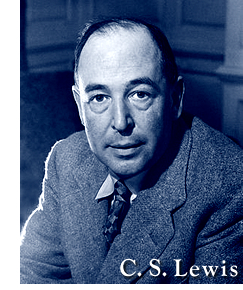
C.S. Lewis Daily – Today’s Reading


TO MARY WILLIS SHELBURNE: On the hard task of learning to depend only on God and on nothing and no one else.

6 December 1955

I was most distressed by the news in your letter of Dec. 2nd. . . . And I can’t help you, because under the modern laws I’m not allowed to send money to America. (What a barbarous system we live under. I knew a man who had to risk prison in order to smuggle a little money to his own sister, widowed in the U.S.A.) By the way, we mustn’t be too sure there was any irony about your just having refused that other job. There may have been a snag about it which God knew and you didn’t.

I feel it almost impossible to say anything (in my comfort and security—apparent security, for real security is in Heaven and thus earth affords only imitations) which would not sound horribly false and facile. Also, you know it all better than I do. I should in your place be (I have in similar places been) far more panic-stricken and even perhaps rebellious. For it is a dreadful truth that the state of (as you say) ‘having to depend solely on God’ is what we all dread most. And of course that just shows how very much, how almost exclusively, we have been depending on things. That trouble goes so far back in our lives and is now so deeply ingrained, we will not turn to Him as long as He leaves us anything else to turn to. I suppose all one can say is that it was bound to come. In the hour of death and the day of judgement, what else shall we have? Perhaps when those moments come, they will feel happiest who have been forced (however unwillingly) to begin practising it here on earth. It is good of Him to force us: but dear me, how hard to feel that it is good at the time….

All’s well—I’m half ashamed it should be—with me. God bless and keep you. You shall be constantly in my prayers by day and night.

From The Collected Letters of C.S. Lewis, Volume III

Compiled in Yours, Jack

Charles Stanley – Praying With Power

James 5:13-18

Have you ever watched a runner near the end of a race? Every muscle strains with the athlete’s desire to finish first. The moment is full of intensity and determination. This is the same kind of fervent desire God wants to see in the believer’s prayer life. “The effective prayer of a righteous man can accomplish much” (James 5:16).

Believers at times use certain key phrases—“in Jesus’ name” or “if it is Your will”—as if such expressions were enchanted. People convince themselves that if a particular phrase is used, God will surely be pleased and answer the petition. But strength is not found in the words we say, because the Lord cannot be forced to do anything outside His will. The power of prayer is in God’s reaction. He responds to petitions of the righteous by releasing His supernatural power toward the object of their concern.

A prayerless person is a powerless person. When we devote little time to communicating with the heavenly Father, we can’t expect to see dramatic results. God’s power is released in response to our zealous desire for His intervention. A fervent petitioner, believing his Lord will intercede, is determined to pray through every barrier that Satan erects. He stops only when God answers or if the Father makes clear that the request is outside His will.

Wise believers devote time and energy to requests of great importance. Through our relationship with Christ, we have been made righteous, which means that we have the opportunity to communicate with the Lord through prayer.

Our Daily Bread — The Best Fishing Holes


Read: Revelation 22:1-5
Bible in a Year: 1 Samuel 30-31; Luke 13:23-35


He was caught up into Paradise and heard inexpressible words. —2 Corinthians 12:4

My friend Gus passed away a few months ago. Gus was a fellow trout fisherman. Weekends usually found him in his little boat on a nearby lake, casting for fish. I got a letter from his daughter Heidi the other day. She told me she’s been talking about heaven with her grandkids since Gus went to his home in heaven. Her 6-year-old grandson, who also loves to fish, explained what heaven is like and what Great-Grandpa Gus is doing: “It’s really beautiful,” he mused, “and Jesus is showing Grandpa Gus where the best fishing holes are.”

When Paul reported his God-given vision of heaven, words failed him. He said, “I was caught up to paradise and heard things so astounding that they cannot be expressed in words” (2 Cor. 12:4 nlt). Words cannot convey the facts of heaven—perhaps because we humans are unable to comprehend them.

While we might gain some comfort from knowing more details about heaven, it is not the knowledge of heaven that assures us; it is our knowledge of God Himself. Because I know Him and I know how good He is, I can leave this life and everything in it with utter confidence that heaven will be beautiful and Jesus will show me “where the best fishing holes are”—because that’s the kind of God He is! —David Roper

Let us beg and pray Him day by day to reveal Himself to our souls more fully, to quicken our sense, to give us sight and hearing, taste and touch of the world to come. —John Henry Newman

Nothing on earth compares to being with Christ in heaven.

INSIGHT: In the book of Revelation, the apostle John writes of the new heaven and earth and the heavenly city of Jerusalem (21:1–22:5). In this marvelous scene we are brought back to a garden setting, reminiscent of the garden of Eden at the dawn of human history (Gen. 2–3). What was ruined by sin in Eden is now fully restored (Gen. 3:1-19; Rev. 22:1-3). The Tree of Life, representing never-ending physical life that was denied humanity because of sin, is now readily available and accessible (Gen. 3:22-24; Rev. 22:2). The curse brought about by sin is completely reversed (Gen. 3:14-19; Rev. 22:3). There will be purity, perfect service, and perfect communion with God. The greatest blessing will be the unhindered fellowship with God Himself, for we “shall see His face” (Rev. 22:4).

Ravi Zacharias Ministry –   Where Was God?


Over the last couple of weeks, Kenya, my homeland, has been thrust into the international news headlines due to the senseless massacre of students at the Garissa University. I am deeply saddened by the horrific nature of this tragedy, and I join the many across the world who have been praying for the victims. I especially pray with all sincerity for the parents, siblings, relatives, and friends of the 148 people who lost their lives, and those who were injured. I cannot even begin to imagine the agony the victims of this brutality have been going through.

It has been said that human beings are the only creatures in the world who have learned to ask questions instead of relying on instincts. In times like these, our questions are unleashed upon us in the fullest of force. What can we do? Where was God? These are perhaps two of the most frequent and important questions.

Short of turning back the clock, there is nothing any human being can do to erase the pain of what has taken place. But I would begin by encouraging you to pray sincerely for those affected by this tragedy. Only God can touch the hearts of the victims with his comforting presence. Pray that the authorities will be able to do all they can to bring the terrorists to justice. And yes, pray also for the perpetrators of this evil. From the very pages of the Scriptures to our own day, we meet people, like the Apostle Paul, who singled out others for extermination and who later became heroes of the faith.

In addition to prayer, we also need to remember the victims in an active manner. We are grateful that many world leaders have condemned these attacks, and a few have promised to stand with Kenya in the aftermath of this tragedy. But judging from previous experiences, it is reasonable to expect that the world will soon forget, and move on to another crisis. It can be overwhelming to think of trying to help in the midst of all that goes wrong in our world.

But if we really mean it when we ask what we can do, we need to identify whatever is within our power to do and get involved. These acts of terror and brutality are not just a problem for the victims; they are an affront to humanity. It is incumbent upon all of us to act, including those who insist that their religion has been hijacked by fanatics and that it has nothing to do with terrorism.

We need to let the victims know that they are not forgotten, and our promise to stand with them must be backed by action. Those who work with organizations like Wellspring International, RZIM’s humanitarian arm, know firsthand how meaningful it is to reach out to those who feel abandoned when their crisis no longer makes the headlines. We need to live up to the conviction many of us claim to hold: that all lives, from Los Angeles to Lagos and from Geneva to Garissa, matter.

So then, where was God? This is one question that inevitably comes up when tragedy strikes. It is most pertinent for those who claim that God is all-good and all-powerful. In other words, it is the very goodness of God that gives rise to the question. Deny God, and you lose the right to raise the question of evil, for without God there is no particular way things ought to be. But why would a morally perfect God fail to intervene to stop these atrocities?

One can approach this question in two ways: (1) from an intellectual perspective or (2) from an emotional perspective. In the face of tragedy, the most vexing issue is not whether or not there is a logical contradiction between believing in a perfect God given the reality of evil at the same time. That is actually easier to handle. By creating us as moral beings, God gave us the ability to choose, and with that ability came the possibility of evil.

Our ability to choose is at once God’s most powerful means of conferring dignity upon us as well as a deadly gift, depending on how we choose to use it. Nevertheless, we need to note that God’s jurisdiction extends beyond this life, and when all is said and done, every human being will be held accountable for his or her actions. So the intellectual side of the equation is easier to address. The most difficult problem is the emotional angst one inescapably feels while trying to understand why God would seemingly stand by and watch as these horrendous activities take place.

But it is in the very face of this troublesome question that the gospel message speaks with unparalleled authority and beauty. A day after the Garissa massacre, Christians all over the world celebrated Good Friday—a day in which we remember the ghastly murder of God’s innocent Son, Jesus Christ, on a Roman cross. The crucifixion was preceded by many hours of unbelievable flogging and humiliation.

In the face of this untold horror, Jesus raised this very question with God the Father: “My God, my God, why have you forsaken me?”(1)

So, where was God when his Son suffered a slow, excruciating death on the cross? In biblical terms, God made the arrangement for this event before the world began.(2) And about seven hundred years before the crucifixion, the prophet Isaiah wrote,

But he was pierced for our transgressions, he was crushed for our iniquities; the punishment that brought us peace was upon him, and by his wounds we are healed.(3)

God knew the choices we would make and the depth of the evil in the human heart. God made arrangements for a rescue plan—a plan that has proven to be incredibly effective to multitudes.

A story that has emerged from Garissa offers us a powerful analogy. One of the students, Hellen Titus, told the Kenyan media how she was able to escape from the tragedy as the shooters hovered over her and her fellow students. She covered herself with someone else’s blood and was thereby mistaken for dead.

That is exactly what Jesus has done for us; he invites us to be covered with his blood so that we can live. And when we are thus protected, we may grieve, but we do not grieve like those without hope, and we do not fear those who can only kill the body but cannot touch the soul.

So, why doesn’t God intervene in these types of situations? He has.

J.M. Njoroge is a member of the speaking team at Ravi Zacharias International Ministries in Atlanta, Georgia.

(1) Matthew 27:46

(2) Revelation 13:8

(3) Isaiah 53:5

Alistair Begg – Precious Blood!


…the precious blood of Christ.1 Peter 1:19

Standing at the foot of the cross, we see hands and feet and side all distilling crimson streams of “precious blood.” It is “precious” because of its redeeming and atoning efficacy. By it the sins of Christ’s people are atoned for; they are redeemed from under the law; they are reconciled to God, made one with Him.

Christ’s blood is also “precious” in its cleansing power; it cleanses from all sin. “Though your sins are like scarlet, they shall be as white as snow.”1 Through Jesus’ blood there is not a spot left upon any believer; no wrinkle nor any such thing remains. O precious blood that makes us clean, removing the stains of our iniquity and permitting us to stand accepted in the Beloved despite the many ways in which we have rebelled against our God.

The blood of Christ is also “precious” in its preserving power. We are safe from the destroying angel under the sprinkled blood. Remember, it is God’s seeing the blood that is the true reason for our being spared. Here is comfort for us when the eye of faith is dim, for God’s eye is still the same.

The blood of Christ is “precious” also in its sanctifying influence. The same blood that justifies by taking away sin also quickens the new nature and leads it onward to subdue sin and to obey the commands of God. There is no greater motive for holiness than that which streams from the veins of Jesus. And “precious,” unspeakably precious, is this blood because it has an overcoming power. It is written, “And they have conquered him by the blood of the Lamb.”2 How could they do otherwise? He who fights with the precious blood of Jesus fights with a weapon that cannot know defeat.

The blood of Jesus! Sin dies at its presence; death ceases to be death: Heaven’s gates are opened. The blood of Jesus! We shall march on, conquering and to conquer, so long as we can trust its power!

  1. Isaiah 1:18 2. Revelation 12:11

Devotional material is taken from “Morning and Evening,” written by C.H. Spurgeon, revised and updated by Alistair Begg.

Charles Spurgeon – Christ—our substitute


“For he hath made him to be sin for us, who knew no sin; that we might be made the righteousness of God in him.” 2 Corinthians 5:21

Suggested Further Reading: Isaiah 53:10-12

In no sense is he ever a guilty man, but always is he an accepted and a holy one. What, then, is the meaning of that very forcible expression of my text? We must interpret Scriptural modes of expression by the words of the speakers. We know that our Master once said himself, “This cup is the new covenant in my blood;” he did not mean that the cup was the covenant. He said, “Take, eat, this is my body”—none of us conceives that the bread is the literal flesh and blood of Christ. We take that bread as if it were the body, and it actually represents it. Now, we are to read a passage like this, according to the analogy of faith. Jesus Christ was made by his Father sin for us, that is, he was treated as if he had himself been sin. He was not sin; he was not sinful; he was not guilty; but, he was treated by his Father, as if he had not only been sinful, but as if he had been sin itself. That is a strong expression used here. Not only has he made him to be the substitute for sin, but to be sin. God looked on Christ as if Christ had been sin; not as if he had taken up the sins of his people, or as if they were laid on him, though that were true, but as if he himself had positively been that noxious—that God-hating—that soul-damning thing, called sin. When the judge of all the earth said, “Where is sin?” Christ presented himself. He stood before his Father as if he had been the accumulation of all human guilt; as if he himself were that thing which God cannot endure, but which he must drive from his presence for ever.

For meditation: God regarded Christ crucified just as if he were sin, not Son. The substitutionary atonement is the key which enables the Christian to make use of the description “Just as if I’d never sinned.”

Sermon no. 310

16 April (Preached 15 April 1860)

John MacArthur –  Commended or Condemned?


“Blessed are the merciful, for they shall receive mercy” (Matt. 5:7).

God commends merciful people but condemns the merciless.

Scripture shows that those whom God blessed most abundantly were abundantly merciful to others. Abraham, for example, helped rescue his nephew Lot even after Lot had wronged him. Joseph was merciful to his brothers after they sold him into slavery. Twice David spared Saul’s life after Saul tried to kill him.

But just as sure as God’s commendation is upon those who show mercy, His condemnation is upon those who are merciless. Psalm 109:14-16 says, “Let the iniquity of [the merciless person’s] fathers be remembered before the Lord, and do not let the sin of his mother be blotted out . . . because he did not remember to show [mercy].”

When judgment comes, the Lord will tell such people, “Depart from Me, accursed ones, into the eternal fire which has been prepared for the devil and his angels; for I was hungry, and you gave Me nothing to eat; I was thirsty, and you gave Me nothing to drink; I was a stranger, and you did not invite Me in; naked, and you did not clothe Me; sick, and in prison, and you did not visit Me” (Matt. 25:41-43). They will respond, “Lord, when did we see You hungry, or thirsty, or a stranger, or naked, or sick, or in prison, and did not take care of You?” (v. 44). He will reply that when they withheld mercy from those who represented Him, they were withholding it from Him (v. 45).

Our society encourages us to grab everything we can for ourselves, but God wants us to reach out and give everything we can to others. If someone wrongs you, fails to repay a debt, or doesn’t return something he has borrowed from you, be merciful to him. That doesn’t mean you excuse sin, but you respond to people with a heart of compassion. That’s what Christ did for you—can you do any less for others?

Suggestions for Prayer;  If there is someone who has wronged you, pray for that person, asking God to give you a heart of compassion for him or her. Make every effort to reconcile as soon as possible.

For Further Study; Read Romans 1:29-31. How did Paul characterize the ungodly?