Max Lucado – More Sponge, Less Rock

Make God’s presence your passion. How? Be more sponge and less rock. Put a rock in the ocean, and what happens? Its surface gets wet. The exterior may change color, but the interior remains untouched. Yet place a sponge in the ocean, and notice the change. It absorbs the water. The ocean penetrates every pore and alters the essence of the sponge. God surrounds us in the same way the Pacific surrounds an ocean floor pebble. He is everywhere—above, below, on all sides.

We choose our response—rock or sponge? Resist or receive? Hard hearts never heal. Spongy ones do. The Psalmist determined, “When I am afraid, I will trust in You.” Open every pore of your soul to God’s presence!

From You’ll Get Through This

Night Light for Couples – Healthy Hope


“Faith is being sure of what we hope for.” Hebrews 11:1

Hope based on the realistic expectation that something can or will change is a powerful, positive, driving force. It motivates us to do our best and helps us achieve what may seem impossible to others. But naive hope that’s grounded in wishful thinking can be deeply disappointing and even destructive. I (jcd) know a woman—I’ll call her Martha—who was hurt repeatedly by her father’s lack of interest in her. As long as Martha continued to hope he would change, she suffered a fresh wound whenever he missed an important family event or failed to consider her feelings. I urged Martha to realize that her father was emotionally blind—he was incapable of seeing her needs.

Once she began to accept his “handicap” as permanent, her pain lessened considerably. Your partner’s temperament or experiences may prevent him or her from fully comprehending your feelings and frustrations. My advice is that you change what can be altered, explain what can be understood, teach what can be learned, revise what can be improved, resolve what can be settled, and negotiate what is open to compromise.

Then determine to accept the rest. As you overlook these few “unresolvables” in your relationship, you’ll develop a perspective that brings realistic hope for an honest and satisfying marriage.

Just between us…

  • What kinds of changes do we hope to see in each other? Are our hopes realistic? ‘
  • Would it help our relationship to accept our “unresolvables”?
  • What in our marriage gives you the greatest sense of hope?

Father, thank You that You are “the God of all hope.” Tonight we look to You for help in bringing honest, healing hope to our marriage. Show us what we can change, show us what we should accept, and bless us with hope. Amen.

From Night Light For Couples, by Dr. James & Shirley Dobson

Charles Stanley – The Gospel of the Grace of God

Acts 20:16-24

The apostle Paul was consumed by a passion that was even greater than his desire for life or the dread of suffering. He had a ministry to fulfill and a message of salvation to deliver. His words in Acts 20:24 help us understand the foundational concept involved in our salvation. Paul called it “the gospel of the grace of God.”

We’re saved simply because the Lord is gracious. He knew we could never be good enough to bridge the gap between our? sin and His holiness. That’s why you will never hear of “the gospel of the Law of God.” That would not be good news at all! Can you imagine singing, “Amazing law, how fearful the sound, that saved a wretch like me”? We could never fulfill the requirements, especially the way?Jesus enlarged the meaning of the law?in the Sermon on the Mount (Matthew 5-7). But grace—that’s totally different. It has nothing to do with our worthiness or good performance but is solely based on God’s unmerited favor towards us.

What’s most amazing is that the avenue for our salvation is through faith alone. The grace that God extends in saving us is His gift, and there’s nothing we can add by our works (Ephesians 2:8-9). Otherwise, we’d have to clean up our lives in order to be saved, and that would nullify grace.

Praise the Lord for His wonderful plan of salvation. Christ paid our sin debt with His death, and all we have to do is believe it. Even after salvation, God’s grace keeps flowing. We never have to worry that we aren’t good enough and will fall out?of favor. His grace is forever.

Bible in One Year: Psalms 19-22

Our Daily Bread — Never Stop Learning


Read: 2 Timothy 3:10-17

Bible in a Year: Ezra 9-10; Acts 1

You must continue in the things which you have learned . . . and that from childhood you have known the Holy Scriptures. —2 Timothy 3:14-15

Sheryl is a voracious reader. While others are watching television or playing video games, she is deeply engrossed in the pages of a book.

Much of this zeal can be traced back to her early childhood. Her family often visited a great aunt and uncle who owned a bookstore. There, Sheryl would sit on Uncle Ed’s lap as he read to her and introduced her to the wonders and delights of books.

Centuries ago a young man named Timothy had his steps guided on the road to learning. In Paul’s last recorded letter, he acknowledged that Timothy was first introduced to the Bible by his grandmother and mother (2 Tim. 1:5). Then Paul exhorted Timothy to continue in the Christian way because “from childhood you have known the Holy Scriptures” (2 Tim. 3:14-15).

For the believer, learning about the spiritual life should never cease to delight us and help us grow. Reading and study can be a big part of that, but we also need others to encourage and teach us.

Who has helped you grow in your faith? And who in turn can you help? That’s a great way to enhance our appreciation of God and strengthen our relationship with Him. —Dennis Fisher

Lord, give us the desire to learn throughout life, so that we may grow increasingly closer to You each day. Thank You for those who have inspired us to learn about You.

Reading the Bible is meant not to inform but to transform.

INSIGHT: Timothy was of mixed parentage, having a Greek father and Jewish mother (Acts 16:1). Although his biological father probably did not play a significant role in his spiritual development, Timothy was taught the holy Scriptures from childhood and came to faith through the teaching and godly influence of his grandmother Lois and mother Eunice (2 Tim. 1:5). Timothy first met Paul in Derbe at the start of his second missionary journey (Acts 16:1), and Timothy soon became Paul’s protégé. The apostle Paul affectionately called him “a true son in the faith” (1 Tim. 1:2) and “a beloved son” (2 Tim. 1:2).

Alistair Begg – Delight Yourself in the Lord


Delight yourself in the Lord. Psalm 37:4

The teaching of these words must seem very surprising to those who are strangers to vital godliness, but to the sincere believer it is only the reminder of a recognized truth. The life of the believer is described as a delight in God, and we are reminded of the great fact that genuine faith overflows with happiness and joy.

Ungodly persons and mere professors never look upon religion as a joyful thing; to them it is service, duty, or necessity, but never pleasure or delight. If they attend to religion at all, it is either because of what they might get or because they are afraid of the consequences of neglect. The thought of delight in religious exercise is so strange to most men that no two words in their language stand further apart than holiness and delight.

But believers who know Christ understand that delight and faith are so wonderfully united that the gates of hell cannot manage to separate them. Those who love God with all their hearts find that His ways are ways of pleasantness, and all His paths are peace. The saints discover in Christ such joy, such overflowing delight, such blessedness that far from serving Him from custom, they would follow Him even though the whole world rejected Him. We do not fear God because of any compulsion; our faith is no shackle, our profession is no bondage, we are not dragged to holiness, nor driven to duty. No, our piety is our pleasure, our hope is our happiness, our duty is our delight.

Delight and true faith are as interwoven as root and flower, as indivisible as truth and certainty; they are, in fact, two precious stones glittering side by side in a setting of gold.

‘Tis when we taste Thy love,

Our joys divinely grow,

Unspeakable like those above,

And heaven begins below.

Devotional material is taken from “Morning and Evening,” written by C.H. Spurgeon, revised and updated by Alistair Begg.

Charles Spurgeon – Israel in Egypt


“And they sing the song of Moses the servant of God, and the song of the Lamb, saying, Great and marvellous are thy works, Lord God Almighty; just and true are thy ways, thou King of saints.” Revelation 15:3

Suggested Further Reading: Exodus 15:1-18

One part of the song of Moses consisted in praising the ease with which God destroyed his enemies. “Thou didst blow with thy wind, the sea covered them; they sank as lead in the mighty waters.” If we had gone to work to destroy the hosts of Pharaoh, what a multitude of engines of death should we have required. If the work had been committed to us, to cut off the hosts, what marvellous preparations, what thunder, what noise, what great activity there would have been. But mark the grandeur of the expression. God did not even lift himself from his throne to do it: he saw Pharaoh coming; he seemed to look upon him with a placid smile; he did just blow with his lips, and the sea covered them. You and I will marvel at the last how easy it has been to overthrow the enemies of the Lord. We have been tugging and toiling all our lifetime to be the means of overthrowing systems of error: it will astonish the church when her Master shall come to see how, as the ice dissolveth before the fire, all error and sin shall be utterly destroyed in the coming of the most High. We must have our societies and our machinery, our preachers and our gatherings, and rightly too; but God will not require them at the last. The destruction of his enemies shall be as easy to him as the making of a world. In passive silence unmoved he sat; and he did but break the silence with “Let there be light” and light was. So shall he at the last, when his enemies are raging furiously, blow with his winds, and they shall be scattered.

For meditation: Creation took God a matter of a few days; the destruction of a great power will take him only a fraction of the time (Revelation 18:8,10,17,19).

Sermon no. 136
14 June (1857)

John MacArthur – Defining True Religion


“This is pure and undefiled religion in the sight of our God and Father, to visit orphans and widows in their distress, and to keep oneself unstained by the world” (James 1:27).

True religion produces holiness and sacrificial love.

In this verse James continues his practical and penetrating assessment of true faith. So far he has said in effect, “Don’t just study the Bible—obey it! Don’t just dabble in external religion—have pure speech!” Now he adds, “Don’t just say you’re religious—demonstrate sacrificial love! Don’t just claim to love God—live a pure life!” Shallow claims to Christianity meant nothing to him. He wanted to see godly attitudes and righteous deeds.

The apostle John used the same approach when he wrote, “The one who says he abides in [Christ] ought himself to walk in the same manner as He walked. . . . The one who loves his brother abides in the light and there is no cause for stumbling in him. But the one who hates his brother is in the darkness and walks in the darkness, and does not know where he is going because the darkness has blinded his eyes” (1 John 2:6, 10-11). “Light” in that passage represents truth and righteousness; “darkness” speaks of error and sin. If you are truly saved, you are in the light and show it by your love for others.

In our society, the definition of religion is very broad. Almost any belief system qualifies. But to God, any religion that doesn’t produce holiness and sacrificial love is not true religion. That narrows the field considerably because anyone who isn’t saved through faith in Jesus Christ remains in bondage to sin and has no capacity to live a holy and selfless life.

How about you? Do you flee from sin and reach out to those in need? If so, you have true religion. If not, receive Christ now. He alone is the source of holiness and love.

Suggestions for Prayer

If you are a believer, God’s love is already shed abroad in your heart through the indwelling Holy Spirit (Rom. 5:5). Ask God to increase your capacity to love others as Christ loves you.

For Further Study

Read 1 John 3:10-18, noting John’s comparison of the children of God with the children of the devil.

Joyce Meyer – Free in Christ


In [this] freedom Christ has made us free [and completely liberated us]; stand fast then, and do not be hampered and held ensnared and submit again to a yoke of slavery [which you have once put off]. Galatians 5:1

As your relationship with God matures, you will find yourself living less by rules and regulations and more by the desires of your heart. As you learn more of the Word, you will find His desires filling your heart, and it will be easier for you to discern God’s will. God wants you to know His heart well enough that you will want to follow the prompting, leading, and guidance of the Holy Spirit.

Once you are free in Christ, stand fast in that liberty and do not become ensnared with legalism, which is the yoke of bondage you have put off. God wants to bring you into a new place, a place full of freedom to follow your heart.

Power Thought: I am free to live for Christ.

Campus Crusade for Christ; Bill Bright – The Simple, Wonderful Message


“He brought them out and begged them, ‘Sirs, what must I do to be saved?” They replied, ‘Believe on the Lord Jesus and you will be saved, and your entire household” (Acts 16:30- 31).

The story is told of a man who was very fond of the famous general, Robert E. Lee. He was eager for his four-year-old son to admire and respect this great, southern, Civil War general as much as he did. So every day, as they strolled through the park near their home, they would stop in front of the statue of General Lee astride his beautiful horse, Traveler, and the father would say to his little David, “Say good morning to General Lee,” The little lad would dutifully wave his hand in obedience to his father’s instructions and say, “Good morning, General Lee.” Months passed and one day, as they again stood in front of the statue of General Lee, the father said, “Say good morning to General Lee,” which the boy did. But as they walked on through the park together, David asked, “Daddy, who is that man riding General Lee?”

One of the biggest problems we have in life is communication. To David’s young mind the horse was more important that the rider. We all have a tendency to filter information through our own experiences. What I say is not necessarily what you hear, and what you say may not be what I hear. This is true even in communicating the gospel.

The most joyful news ever announced is found in Luke 2:10,11:” ‘Don’t be afraid!’ the angel said. ‘I bring you the most joyful news ever announced, and it is for everyone! The Savior – yes, the Messiah, the Lord – has been born tonight in Bethlehem!'” Yet that simple message has been diluted and profaned through the centuries.

One evening, I presented this message to a very mature, intelligent layman.

“Does it make sense?” I inquired.

It was as though a light suddenly went on and, for the first time, he understood what the gospel was all about. “Of course it does,” he answered.

“Would you like to receive Christ right now?”

“Of course I would. If what you say is true, I should think everyone would want to know Christ.”

If Spirit-filled, trained communicators properly presented the gospel, the majority of people would want to receive Christ.

Bible Reading: John 1:9-14

TODAY’S ACTION POINT: I will seek to present the good news of God’s love and forgiveness through Jesus Christ in such a logical, joyful, Spirit-filled way that those who hear will want to know my wonderful Savior. And I will trust God to use me to train other Christians as well to be better communicators of the greatest news the world has ever heard.

Presidential Prayer Team; A.W. – Incredible Trust


Many famous quotes have the words “if you can” in them. Walt Disney said, “If you can dream it, you can do it.” Henry Ford said, “If you think you can do a thing or think you can’t do a thing, you’re right.”

And Jesus said to him, “‘If you can?’ All things are possible for one who believes.”

Mark 9:23

In Mark 9, Jesus, Peter, James and John left His transfiguration and came upon a crowd. The people were criticizing the disciples because they couldn’t heal a young boy. Jesus questioned the father and he described his boy’s illness. The father said to Jesus, “If you can do anything, have compassion and help us.” Today’s verse records the Lord’s response. He wanted them to understand there’s no “if” involved. He can. Period.

Through Him, you can, too. Are you doubting your abilities today? You can do all things through Christ (Philippians 4:13). Know in your heart and mind He can accomplish anything according to His will. Pray for spiritual strength for yourself, the nation and its leaders to remember how powerful God is…and to trust in Him for the incredible!

Recommended Reading: Ephesians 3:14-21


Night Light for Couples – Tranquility


“Be at peace with each other.” Mark 9:50

If you don’t protect yourselves from outside stresses, married life can seem more like a marathon than a stroll in the park. With relentless pressure at work, a demanding schedule of carpooling and sports, and the stress of keeping up with home and church duties, moms and dads can begin to lose heart. Then fatigue and irritability set in, angry words are spoken, and soon every member of the family is at one another’s throats.

All of us, especially at the end of pressure‐packed days, need a safe retreat. As a working husband or wife, you need a chance to unwind privately for a while when you first come home. School kids (teenagers, too) need uninterrupted “down time” on a regular basis. No one can keep up a frenetic schedule for long without it affecting his or her attitude.

Jesus told His followers to “be at peace with each other.” If you’re finding hopefulness in short supply in your marriage, maybe it’s time you get off the treadmill of continuous stress. If it’s just the expectations of others that is keeping you on the run, say “no” more often. Take an afternoon off. Get a babysitter so you can have some time to yourself. Set aside quiet time regularly—and guard it. Slow down your mealtimes together. Simplify.

As you make a priority of creating tranquility at home, you’ll feel your heart lifting and hope returning.

Just between us…

  • When you feel overwhelmed by demands, do you ever lose hope?
  • How can we do a better job of protecting each other’s “down time”?
  • How can tranquility at home promote a better spiritual life?

Dear God, forgive us when we allow external demands to dictate the quality of our home life. Give us the foresight and discipline to create a sanctuary of peace and renewal. Amen.

From Night Light For Couples, by Dr. James & Shirley Dobson

C.S. Lewis Daily – Today’s Reading


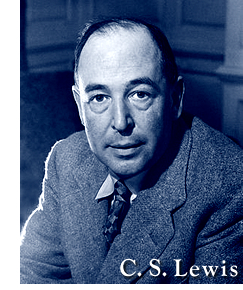
TO MRS. JOHNSON: On the real meaning of heaven—enjoying God forever.

25 May 1957

It was nice to hear from you again. I can’t remember how up to date you are with my news. Did I tell you that a new element of both beauty and tragedy had entered my life? I am newly married, and to a dying woman (She was the Joy Davidman whose Smoke on the Mountain, a lively modern treatment of the Ten Commandments, you may have read. An American). She is, and I try to be, very brave. I acquired two schoolboy stepsons. I myself am, not dangerously, but painfully and disablingly, ill with a slipped disc. So life is rather full. . . .

. . . Of course Heaven is leisure (‘there remaineth a rest for the people of God’ [Hebrews 4:9]): but I picture it pretty vigorous too as our best leisure really is. Man was created ‘to glorify God and enjoy Him forever.’ Whether that is best pictured as being in love, or like being one of an orchestra who are playing a great work with perfect success, or like surf bathing, or like endlessly exploring a wonderful country or endlessly reading a glorious story—who knows? Dante says Heaven ‘grew drunken with its universal laughter.’

Pray for us both.

From The Collected Letters of C.S. Lewis, Volume III

Compiled in Yours, Jack

The Collected Letters of C. S. Lewis

Charles Stanley – A Balanced Schedule


Proverbs 16:1-3

The Lord wants us to reach our full potential—to become the people He’s designed us to be and achieve the tasks He’s planned for us to do. In our pressurized society, we need to have balanced schedules if we’re going to live according to God’s purposes.

Consider the following five areas. When any is out of balance, our relationship with the Lord and others will be affected, diminishing our effectiveness as servants of Christ.

  1. To develop our relationship with the Lord and receive guidance, our top priority should be to spend private time with Him each day…
  2. Time with family and friends is also essential because relationships are such an important part of God’s plans for our lives.
  3. The area in which we are most likely to become imbalanced is our work. Although the Lord doesn’t approve of laziness, He doesn’t want us to be overly consumed with our careers either.
  4. If we are to accomplish the Lord’s purposes in our lives, we need to take care of our bodies, allocating adequate time for exercise, rest, and recreation.
  5. The Scriptures also clearly command meeting together regularly with other believers for worship (Heb. 10:24-25). While some people have limitations that hinder doing this, most of us have no excuse for being too busy for church.

These general areas all need space in your life, but I cannot tell you how to allocate time for them. The Lord has specific plans for each person, and He is the only one who can accurately direct your schedule. Seek His guidance, listen for His voice, and make the changes He brings to mind.

Bible in One Year: Psalms 15-18

Our Daily Bread — What Is That to You?


Read: John 21:15-22

Bible in a Year: Ezra 6-8; John 21

Jesus said to him, “. . . You follow Me.” —John 21:22

Social media is useful for many things, but contentment is not one of them. At least not for me. Even when my goals are good, I can become discouraged by continual reminders that others are accomplishing them first or with greater results. I am prone to this kind of discouragement, so I frequently remind myself that God has not short-changed me. He has already given me everything I need to accomplish the work He wants me to do.

This means I don’t need a bigger budget or the assurance of success. I don’t need a better work environment or a different job. I don’t need the approval or permission of others. I don’t need good health or more time. God may give me some of those things, but everything I need I already have, for when He assigns work He provides the resources. My only assignment is to use whatever time and talents He has given in a way that blesses others and gives God the glory.

Jesus and Peter had a conversation that got around to this subject. After making breakfast on the shore of Galilee, Jesus told Peter what would happen at the end of his life. Pointing at another disciple, Peter asked, “What about him?” Jesus responded, “What is that to you?”

That is the question I need to ask myself when I compare myself to others. The answer is, “None of my business.” My business is to follow Jesus and be faithful with the gifts and opportunities He gives to me. —Julie Ackerman Link

In what ways do I need to learn not to compare myself with others? How has God blessed me to fulfill His purposes?Share your answers to these questions with others at http://www.odb.org

Resentment comes from looking at others; contentment comes from looking at God.

INSIGHT: Today’s text is often used to show there is forgiveness for even the gravest of sins because Jesus forgave Peter for denying that he knew Him. What must not be overlooked in this wonderful story is that Peter’s confessed love for Jesus is met with Jesus’ expectation of service. Each time Peter says that he loves Jesus, Jesus asks Peter to do something for Him.

Alistair Begg – Who’s Going Thirsty?


Let the one who desires take the water of life without price. Revelation 22:17

The invitation is to “take . . . without price.” Jesus wants no payment or preparation. He seeks no recommendation from our virtuous emotions. If you have no good feelings, but if you are willing, you are invited; therefore come! If you have no belief and no repentance, come to Him, and He will give them to you. Come just as you are, and take without money and without price. He gives Himself to the needy.

In nineteenth-century Britain the drinking fountains at the corners of the streets were valuable institutions; it would have been a strange and foolish sight to see someone standing at the fountain declaring, “I cannot drink because I do not have any money.” However poor an individual may be, there is the fountain, and just as he is, he may drink of it without cost. Thirsty passengers, as they go by, whether they are dressed poorly or expensively, do not look for any authorization to drink; the existence of the fountain is sufficient warrant for taking its water freely. The generosity of some good friends has put in place the refreshing supply, and we take it and ask no questions.

Perhaps the only people who go thirsty through the street where there is a drinking fountain are the fine ladies and gentlemen who are in their carriages. They are very thirsty but cannot think of being so vulgar as to get out to drink. It would demean them, they think, to drink at a common drinking fountain: so they ride by with parched lips.

How many there are who are rich in their own good works and cannot therefore come to Christ! “I will not be saved,” they say, “in the same way as the prostitute or the blasphemer.” What! Go to heaven in the same way as a chimney sweep? Is there no pathway to glory but the path that led the dying thief there? I will not be saved that way. Such proud boasters must remain without the living water; but “Let the one who desires take the water of life without price.”

Devotional material is taken from “Morning and Evening,” written by C.H. Spurgeon, revised and updated by Alistair Begg.

Charles Spurgeon – The wicked man’s life, funeral, and epitaph


“And so I saw the wicked buried, who had come and gone from the place of the holy, and they were forgotten in the city where they had so done: this also is vanity.” Ecclesiastes 8:10

Suggested Further Reading: Luke 16:19-23

Go into Bunhill Fields, and stand by the memorial of John Bunyan, and you will say, “Ah! There lies the head that contained the brain which thought out that wondrous dream of the Pilgrim’s Progress from the City of Destruction to the Better Land. There lies the finger that wrote those wondrous lines which depict the story of him who came at last to the land Beulah, and waded through the flood, and entered into the celestial city. And there are the eyelids which he once spoke of, when he said, “If I lie in prison until the moss grows on my eyelids, I will never make a promise to withhold from preaching.” And there is that bold eye that penetrated the judge, when he said, “If you will let me out of prison today, I will preach again tomorrow, by the help of God.” And there lies that loving hand that was ever ready to receive into communion all them that loved the Lord Jesus Christ: I love the hand that wrote the book, “Water Baptism no bar to Christian Communion.” I love him for that sake alone, and if he had written nothing else but that, I would say, “John Bunyan, be honoured for ever.” And there lies the foot that carried him up Snow Hill to go and make peace between a father and a son, in that cold day, which cost him his life. Peace to his ashes! Wait, O John Bunyan, till thy Master sends his angel to blow the trumpet; and methinks, when the archangel sounds it, he will almost think of thee, and this shall be a part of his joy, that honest John Bunyan, the greatest of all Englishmen, shall rise from his tomb at the blowing of that great trump. You cannot say so of the wicked.

For meditation: In Heaven the saved are still known by name—Abraham, Lazarus; in hell the lost are at best known only by a description—Dives is just the Latin for “a rich man”. See the contrast in Proverbs 10:7. Are the names and burial-places of John Bunyan’s enemies well known even on earth?

Sermon no. 200
13 June (1858)

John MacArthur – Speaking from a Pure Heart


“If anyone thinks himself to be religious, and yet does not bridle his tongue but deceives his own heart, this man’s religion is worthless” (James 1:26).

Your speech reveals the condition of your heart.

In verse 22 James talked about the delusion of hearing the Word without obeying it. Here he talks about the deception of external religious activity without internal purity of heart.

That’s a common deception. Many people confuse love of religious activity with love for God. They may go through the mechanics of reading the Bible, attending church, praying, giving money, or singing songs, but in reality their hearts are far from God. That kind of deception can be very subtle. That’s why James disregards mere claims to Christianity and confronts our motives and obedience to the Word. Those are the acid tests!

James was selective in the word he used for “religious.” Rather than using the common Greek word that speaks of internal godliness, he chose a word that refers to external religious trappings, ceremonies, and rituals— things that are useless for true spirituality.

He focuses on the tongue as a test of true religion because the tongue is a window to the heart. As Jesus said, “The mouth speaks out of that which fills the heart” (Matt. 12:34). Corrupt speech betrays an unregenerate heart; righteous speech demonstrates a transformed heart. It doesn’t matter how evangelical or biblical your theology is, if you can’t control your tongue, your religion is useless!

You can learn much about a person’s character if you listen long enough to what he says. In the same way, others learn much about you as they listen to what you say. Do your words reveal a pure heart? Remember Paul’s admonition to “let no unwholesome word proceed from your mouth, but only such a word as is good for edification according to the need of the moment, that it may give grace to those who hear” (Eph. 4:29). Make that your goal each day so you can know the blessing and grace of disciplined speech!

Suggestions for Prayer

Ask the Lord to guard your tongue from speaking anything that might dishonor Him. Be aware of everything you say.

For Further Study

Read James 3:1-12.

  • What warning does James give?
  • What analogies does he use for the tongue?

Joyce Meyer – A Season of Preparation


Winter is a dormant season. It’s a time when trees become bare and most of the grass, plants and flowers die off. But winter is also a time of preparation—as roots and tree saps respond to soil and temperature changes to prepare for growth that comes in the spring.

In much the same way, you and I go through spiritually dormant seasons. These are the seasons when God seems silent…when our dreams and visions for the future seem lifeless. But although we may not see or feel anything exciting, it doesn’t mean nothing is happening. A lot has to happen on the inside of us before we are ready to handle the future God has for us.

Just as winter prepares plants and trees for warmer weather, a spiritually dormant season is a time of preparation—when our inner character is developed and strengthened. Strong character is essential for withstanding storms that will come during seasons of growth and harvest. I find there are a lot of people who have the gifts and talents to take them somewhere exciting, but if they don’t have strong, Christlike character, all the talent in the world won’t keep them there.

God has something planned for you, and if you’re not living in the fulfillment of His plan for you, then now is the season of preparation. Rest assured, you’re not alone. We all go through times like this. The Bible tells us that even Jesus needed time to grow and increase in wisdom, stature and in years before He was ready to make a global impact through His three-year ministry (Luke 2:52).

Here are three insights I’ve learned that can help you make progress toward your goals, plans and visions during dormant seasons.

Examine your motives.

When God first called me to teach His Word, I wasn’t doing it just because I had a deep desire to help people. I wanted to be somebody. I had problems from my past and was unaware of how insecure I was. I didn’t realize how much I got my sense of worth and value out of what I did. And because of it, my motives were way out of line with how God wanted me to be.

It seems that many people don’t really know themselves and understand why they do what they do. Self-deception is easy to fall into, and one of the hardest things to face. But when we are willing to face the truth about ourselves and examine our motives, God will help us change for the better and get on track with His will for our lives.

Get out of your comfort zone.

Before we can move forward into a new thing, we usually have to let go of something we’ve been doing awhile. God nudges us outside of our comfort zones toward unfamiliar experiences to encourage us to rely on Him. And all too often, we try to hang on to what is familiar before we have confidence that the new thing is right for us. We wrestle with ourselves, wondering if we really heard from God or if we can really trust Him.

If you keep one foot where you are while the other foot stretches toward someplace new, you will eventually lose your footing and fall over. God wants us to trust Him by doing what He wants us to do and going where He wants us to go. We must learn to let go of what we have before we take hold of something new, and learn to rely on God to meet all our needs.

Embrace discipline.

The Bible tells us that “no discipline brings joy, but seems grievous and painful; but afterwards it yields a peaceable fruit of righteousness to those who have been trained by it” (Hebrews 12:11 AMP). Discipline isn’t fun, but it is essential for our character development.

Self-discipline is a fruit of the Spirit that requires time to develop properly. Self-discipline is developed when we do the right thing consistently, over and over again for a long time. It may include paying off debts, not over-spending, getting proper nutrition and exercise, changing the way you speak about yourself and others, and spending quality time with God and in His Word every day. As you become disciplined in every area of your life, you will be better equipped to handle bigger responsibilities in the future.

God has amazing plans for your life! He wants you to fulfill your dreams and live a life of blessing, hope and promise. I hope you’re encouraged today. You will get there—as long as you are willing to do your part and trust God to do His part. And the more you lean on and trust in Him through that process, the sooner you’ll be ready for whatever He has prepared for you.

Campus Crusade for Christ; Bill Bright – Produce Lovely Fruit


“You didn’t choose Me! I chose you! I appointed you to go and produce lovely fruit always, so that no matter what you ask for from the Father, using My name, He will give it to you” (John 15:16).

Some time ago I asked a leading theologian and dean of faculty of a renowned theological seminary if he felt that one could be a Spirit-filled person without sharing Christ as a way of life.

His answer was an emphatic, “No!” On what basis could he make such a strong statement? The answer is obvious. Our Savior came to “seek and to save the lost” and He has “chosen and ordained” us to share the good news of His love and forgiveness with everyone, everywhere.

To be unwilling to witness for Christ with our lips is to disobey this command just as much as to be unwilling to witness for Him by living holy lives is to disobey His command. In neither case can the disobedient Christian expect God to control and empower his life.

There are those who say, “I witness for Christ by living a good life.” But it is not enough to live a good life. Many non-Christians live fine, moral, ethical lives.

According to the Lord Jesus, the only way we can demonstrate that we are truly following Him is to produce fruit, which includes introducing others to our Savior as well as living holy lives. And the only way we can produce fruit is through the power of the Holy Spirit.

Bible Reading: John 15:7-15

TODAY’S ACTION POINT: My part of the “bargain” is to share the good news which will produce lovely fruit; God’s part is to provide the wisdom, love and power, through the enabling of the Holy Spirit, to be a fruitful witness. “Lord help me to be faithful in my part, knowing You will be faithful in Yours.”

Presidential Prayer Team; C.H. – Overcomer


“What goes up must come down.” Sir Isaac Newton’s popular quote is in reference to the law of gravity. The Earth operates through scientific laws put into practice by God Himself. Even the most powerful rulers are still subject to these laws.

And in the fourth watch of the night he came to them, walking on the sea.

Matthew 14:25

Jesus, however, is ruler over all. He is “the head of all rule and authority.” (Colossians 2:10) Even the laws of nature must obey Jesus. He proved this when, late one night, He walked on the water to join His disciples in their boat. Not fully understanding who Jesus was, His followers were frightened. Jesus truly is the King of all kings.

When praying and thinking about your problems, remember Christ can do anything. All men and all of nature must obey the Son of God. If He can command those things, He can handle whatever life throws at you. Ask God to give this nation’s people and leaders the same peace He gives His followers in the face of difficulty: “I have said these things to you, that in me you may have peace. In the world you will have tribulation. But take heart; I have overcome the world.” (John 16:33)

Recommended Reading: Matthew 14:22-33