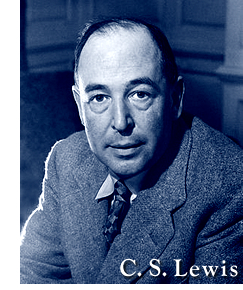
C.S. Lewis Daily – Today’s Reading


If the first and lowest operation of pain shatters the illusion that all is well, the second shatters the illusion that what we have, whether good or bad in itself, is our own and enough for us. Everyone has noticed how hard it is to turn our thoughts to God when everything is going well with us. We ‘have all we want’ is a terrible saying when ‘all’ does not include God. We find God an interruption. As St Augustine says somewhere, ‘God wants to give us something, but cannot, because our hands are full—there’s nowhere for Him to put it.’ Or as a friend of mine said, ‘We regard God as an airman regards his parachute; it’s there for emergencies but he hopes he’ll never have to use it.’ Now God, who has made us, knows what we are and that our happiness lies in Him. Yet we will not seek it in Him as long as he leaves us any other resort where it can even plausibly be looked for. While what we call ‘our own life’ remains agreeable we will not surrender it to Him. What then can God do in our interests but make ‘our own life’ less agreeable to us, and take away the plausible source of false happiness?

From The Problem of Pain

Compiled in A Year with C.S. Lewis

Charles Stanley – Repentance in the Believer’s Life


Proverbs 28:13

Is repentance necessary in the believer’s life? Yes, and we can see this critical truth in 1 John 1:9: “If we confess our sins, [God] is faithful and righteous to forgive us our sins and to cleanse us from all unrighteousness.” You may say, “The word repentance isn’t in that verse.” But let’s take a closer look.

Remember, “to repent” simply means to change your mind. For unbelievers, this refers to saving faith—that is, the decision to place trust in Jesus. But for Christians, repentance involves a change of heart with regard to behavior or attitude. We must make an ongoing decision to lead an obedient, Christlike life.

In 1 John, this choice is represented by the word confess, which originally had the sense of “agree with.” In other words, if you confess your wrongdoing to God, you are coming into agreement with Him about that sin and, in turn, disagreeing with your previous view. Here, confession isn’t a matter of salvation; rather, it means allowing the Father to continually reform your mind, molding you more and more into the image of His Son.

God absolutely hates sin. So if you agree with Him about sin, then you are changing your mind about the disobedience in your life. Thoughts, attitudes, and actions that once seemed perfectly natural will no longer fit with who you are. As God continues to work in your life, your mind will gradually reject old thought patterns, and you’ll more closely represent His way of thinking.

Is there sin in your life that has become too uncomfortable to bear? Confess the matter to God, and allow Him to change your mind about it today.

Bible in One Year: Ezekiel 7-9

Our Daily Bread — Baby Steps


Read: Psalm 18:31-36

Bible in a Year: Psalms 126-128; 1 Corinthians 10:19-33

He makes my feet like the feet of a deer. —Psalm 18:33 niv

My baby is learning to walk. I have to hold her, and she clings to my fingers because she is still unsteady on her feet. She is afraid of slipping, but I’m there to steady her and watch over her. As she walks with my help, her eyes sparkle with gratitude, happiness, and security. But sometimes she cries when I don’t let her take dangerous paths, not realizing that I am protecting her.

Like my baby girl, we often need someone to watch over us, to guide and steady us in our spiritual walk. And we have that someone—God our Father—who helps His children learn to walk, guides our steps, holds our hand, and keeps us on the right path.

King David knew all about the need for God’s watchful care in his life. In Psalm 18 he describes how God gives us strength and guidance when we are lost or confused (v. 32). He keeps our feet steady, like the feet of the deer that can climb high places without slipping (v. 33). And if we do slip, His hand is there for us (v. 35).

Whether we are new believers just learning to walk in the faith or we are further along in our walk with God, all of us need His guiding, steadying hand. —Keila Ochoa

Dear Father, hold my hand and lead me in the paths of right living.

God watches over me every step of the way.

INSIGHT: Charles Haddon Spurgeon wrote of Psalm 18: “It should be observed that the words of this song were not composed with the view of gratifying the taste of men, but were spoken unto Jehovah. It were well if we had a more single eye to the honour of the Lord in our singing. . . . That praise is little worth which is not directed solely and heartily to the Lord. David might well be thus direct in his gratitude, for he owed all to his God, and in the day of his deliverance he had none to thank but the Lord, whose right hand had preserved him. We too should feel that to God and God alone we owe the greatest debt of honor and thanksgiving.” Bill Crowder


Ravi Zacharias Ministry – Repentance in the Believer’s Life


Proverbs 28:13

Is repentance necessary in the believer’s life? Yes, and we can see this critical truth in 1 John 1:9: “If we confess our sins, [God] is faithful and righteous to forgive us our sins and to cleanse us from all unrighteousness.” You may say, “The word repentance isn’t in that verse.” But let’s take a closer look.

Remember, “to repent” simply means to change your mind. For unbelievers, this refers to saving faith—that is, the decision to place trust in Jesus. But for Christians, repentance involves a change of heart with regard to behavior or attitude. We must make an ongoing decision to lead an obedient, Christlike life.

In 1 John, this choice is represented by the word confess, which originally had the sense of “agree with.” In other words, if you confess your wrongdoing to God, you are coming into agreement with Him about that sin and, in turn, disagreeing with your previous view. Here, confession isn’t a matter of salvation; rather, it means allowing the Father to continually reform your mind, molding you more and more into the image of His Son.

God absolutely hates sin. So if you agree with Him about sin, then you are changing your mind about the disobedience in your life. Thoughts, attitudes, and actions that once seemed perfectly natural will no longer fit with who you are. As God continues to work in your life, your mind will gradually reject old thought patterns, and you’ll more closely represent His way of thinking.

Is there sin in your life that has become too uncomfortable to bear? Confess the matter to God, and allow Him to change your mind about it today.

Bible in One Year: Ezekiel 7-9


Alistair Begg – Mercy for the Believer


Have mercy on me, O God. Psalm 51:1

When one of God’s choice servants, William Carey, was suffering from a dangerous illness, the inquiry was made, “If this sickness should prove fatal, what passage would you select as the text for your funeral sermon?” He replied, “Oh, I feel that such a poor sinful creature is unworthy to have anything said about him; but if a funeral sermon must be preached, let it be from the words, ‘Have mercy on me, O God, according to your steadfast love; according to your abundant mercy blot out my transgressions.'” In the same spirit of humility he directed in his will that the following inscription and nothing more should be cut on his gravestone:

WILLIAM CAREY, BORN AUGUST 17th, 1761:

DIED – “A wretched, poor, and helpless worm

On Your kind arms I fall.”

Only on the footing of free grace can the most experienced and most honored of the saints approach their God. The best of men are conscious above all others that they are men at best. Empty boats float high, but heavily laden vessels are low in the water; mere professors can boast, but true children of God cry for mercy upon their unprofitableness. We need the Lord to have mercy upon our good works, our prayers, our preaching, our offerings, and our living sacrifices. The blood was not only sprinkled on the doorposts of Israel’s houses, but upon the sanctuary, the mercy-seat, and the altar, because as sin intrudes upon our holiest things, the blood of Jesus is needed to purify them from defilement. If mercy is needed to be exercised toward our duties, what will be said of our sins? How sweet the remembrance that inexhaustible mercy is waiting to be gracious to us, restore our backslidings, and make our broken bones rejoice!

The Family Bible Reading Plan

  • 1 Samuel 21, 22
  • 1 Corinthians 3

Devotional material is taken from “Morning and Evening,” written by C.H. Spurgeon, revised and updated by Alistair Begg.

Charles Spurgeon – The voice of the blood of Christ


“The blood of sprinkling, that speaketh better things than that of Abel.” Hebrews 12:24

Suggested Further Reading: Genesis 4:1-16

There is a cry heard in heaven; the angels are astonished; they rise up from their golden seats, and they enquire, “What is that cry?” God looks upon them, and he says, “It is the cry of blood; a man has been slain by his fellow; a brother by him who came from the bowels of the self-same mother has been murdered in cold blood, through malice. One of my saints has been murdered, and here he comes.” And Abel entered into heaven, blood-red, the first of God’s elect who had entered Paradise, and the first of God’s children who had worn the blood-red crown of martyrdom. And then the cry was heard, loud and clear and strong; and thus it spoke: “Revenge! Revenge! Revenge!” And God himself, upstarting from his throne, summoned the culprit to his presence; questioned him, condemned him out of his own mouth, and made him henceforth a fugitive and a vagabond, to wander over the surface of the earth, which was to be sterile henceforth to his plough. And now, beloved, just contrast the blood of Christ with this. There is Jesus Christ, the incarnate Son of God; he hangs upon a tree; he is murdered—murdered by his own brethren. “He came unto his own, and his own received him not”, but his own led him out to death. He bleeds; he dies; and then is heard a cry in heaven. The astonished angels again start from their seats, and they say, “What is this? What is this cry that we hear?” And the mighty Maker answers yet again, “It is the cry of blood; it is the cry of the blood of my only-begotten and well-beloved Son!” And God, uprising from his throne, looks down from heaven and listens to the cry. And what is the cry? It is not revenge; but the voice cries “Mercy! Mercy! Mercy!” Did you not hear it? It said, “Father, forgive them, for they know not what they do.”

For meditation: Abel died, but through his faith he still speaks to us (Hebrews 11:4). Christ died and is alive for evermore (Revelation 1:18); He is always speaking for us, if we come to God through him (Hebrews 7:25).

Sermon no. 211

29 August (1858)

John MacArthur – Seven Things God Hates


“There are six things which the Lord hates, yes, seven which are an abomination to Him: haughty eyes, a lying tongue, and hands that shed innocent blood, a heart that devises wicked plans, feet that run rapidly to evil, a false witness who utters lies, and one who spreads strife among brothers” (Prov. 6:16-19).

God is clear about the things that displease Him.

God hates sin in any form, but Proverbs 6:17-19 lists seven that are especially loathsome to Him. First is haughty eyes (v. 17), which pictures a proud and arrogant person with his nose in the air and his eyes uplifted. The pride in his heart is reflected in his mannerisms.

Pride is perhaps listed first because it is at the heart of all rebellion against God—beginning with Lucifer himself, who cried out against God, “I will ascend to heaven; I will raise my throne above the stars of God, and I will sit on the mount of assembly in the recesses of the north. I will ascend above the heights of the clouds; I will make myself like the Most High” (Isa. 14:13-14).

God also hates a lying tongue (v. 17). Men often toy with truth, denying or distorting it to gain some supposed advantage. But God can’t tolerate deception of any kind. He expects us to live according to His truth.

Third, He hates murderous hands (v. 17). That speaks of people whose hatred and greed are so strong they will kill rather than be denied what they want. God created life and established its sanctity. That’s why He ordained that murderers be put to death (Gen. 9:6).

God also hates a wicked heart and malevolent feet (v. 18). Sometimes people fall into sin inadvertently. But these people carefully plot their sinful activities, then hurry to execute their plans.

Finally, God hates a false witness and a divisive spirit (v. 19). Bearing false witness is telling lies about an innocent party. That can obstruct justice, destroy a reputation, and even destroy a life. A divisive spirit is one who creates divisions where there should be unity.

Those sins characterize unbelievers, but Christians aren’t immune from them. So be on guard not to stray into attitudes and actions that God hates.

Suggestions for Prayer

If you are practicing any of those things, confess it and repent.

For Further Study

According to Philippians 2:1-5, how should Christians treat one another?

Campus Crusade for Christ; Bill Bright – No Abuse Tolerated


“So shall they fear the name of the Lord from the west, and His glory from the rising of the sun. When the enemy shall come in like a flood, the Spirit of the Lord shall lift up a standard against him” (Isaiah 59:19, KJV).

A prominent secular columnist and a businessman were united in their efforts to destroy a well-known godly Christian leader. It seemed that they would stoop to whatever mischief was necessary to accomplish their goal: Discredit this man of God.

One day they were warned of the danger of attacking God’s anointed. They were shown that they were not simply attacking an individual, but they were actually tempting God, because this man was His servant and it was God’s responsibility to take care of him. The warning was given in these words, “If I were you, I’d be petrified with fear because you are not attacking a man, but a servant of God. I’d be afraid of what God would do to me to punish me if I were guilty of doing what you are doing.”

They laughed at such a warning, but only a few hours later one of them was killed in a tragic accident. The other was very sobered by this dramatic demonstration of how God protects His own.

I agree with the man who gave the warning. In fact, I would hate to be a critic or an enemy, not just of a godly Christian leader, but of any child of God who seeks to live a holy life because that individual can be assured that God will fight for Him. Whenever a person who desires to please the Lord with all of his attitudes and actions and desires and motives is attacked, the Spirit of the Lord will raise up a standard against the adversary.

If you are a man or woman of God, I would be scared to death to criticize you, or to find fault with you, or to attack you in any way. All who belong to the Lord Jesus Christ have been purchased with His own precious blood, and he will not tolerate the abuse of His blood-purchased followers.

Bible Reading: Isaiah 59:16-21

TODAY’S ACTION POINT: With God’s help, I will guard my tongue, my attitudes and actions concerning other believers, following the admonition, “Judge not, that you be not judged” (Matthew 7:1). I will seek to love all men as an expression of the supernatural life-style.

Presidential Prayer Team; H.L.M. – Heavenly Invitation


Imagine seeing a glimpse of Heaven! The disciple John had that opportunity. As a result of his relationship with the Lord, God chose to give John a vision to open the door to Heaven. John didn’t have to knock on that door. He didn’t have to push it open. The door was opened from the inside with His Heavenly Father encouraging him to enter. In the book of Revelation, John describes Heaven with God on the throne and orchestrating all the events that he will record as an encouragement to all believers.

Behold, a door standing open in heaven! And the first voice…said, “I will show you what must take place.”

Revelation 4:1

Hebrews 4:16 says, “Let us then with confidence draw near to the throne of grace, that we may receive mercy and find grace to help in time of need.” God extends the same invitation for you to see Heaven every day. Prayer is the window that He has placed in the walls of your world. When you open that window, you enter the throne room of God.

Intercede for your nation’s leaders today. Pray they will experience His incredible presence and be transformed by His majesty.

Recommended Reading: Isaiah 6:1-7

Greg Laurie – Two Things You Need To Know (. . .Actually Four)


“And as you go, preach, saying, ‘The kingdom of heaven is at hand.'”—Matthew 10:7

There are two “secret weapons” that God has given the church which are rarely used today.

They are not whine and complain. Nor are they protest and boycott.

The two secret weapons God has given us are pray and preach.

First we need to pray. Pray for our country, pray for friends and neighbors who have not yet put their faith in Christ. Pray that they will see their need for Jesus.

That brings us to the second word: preach. Having prayed for them, now you must preach to them. When I say preach, I do not mean you have to raise your voice, but simply to communicate the gospel to them.

One final set of two: come and go.

These two words in the Bible show us what our focus as Christians should be. First we come to Christ and receive His forgiveness (see Revelation 22:17), then we are to go into all the world with the message of the gospel.

Pray and preach.

Come and go.

Those are your marching orders from Jesus Himself.

Let’s get to it!

Night Light for Couples – Out with the Garbage and Flannel Pajamas


“My lover is mine and I am his.” Song of Songs 2:16

Were you surprised by the definition of romance your spouse offered last night? Romance can mean vastly different things to women and men, but for most of us the word describes that wonderful feeling of being noticed, wanted, and pursued— of being at the very center of our lover’s attention. Women are inclined to define romance as the things a husband does to make them feel loved, protected, and respected. Flowers (if they aren’t too cheap), compliments, nonsexual touching, and love notes are all steps in the right direction. So is helping with the chores. As author Kevin Leman once said, “The greatest of all aphrodisiacs is for a man to take out the garbage for his wife.”

Men, on the other hand, rely more on their senses. They appreciate a wife who makes herself as attractive to her husband as possible. A man wants to be respected—and even better, admired—by his wife. He likes to hear his wife express genuine interest in his opinions, hobbies, and work.

Obviously, these are generalizations, so take your spouse’s definition to heart. Knowing how he or she perceives romance can help you avoid many misunderstandings and disappointments. With a little care and forethought, you can keep the flame of romance burning brightly.

Just between us…

  • What’s the most romantic thing I’ve ever done for you?
  • How do you feel about our personal definitions of romance?
  • How can our differing views of romance strengthen our marriage?

Dear God, thank You for making us unique as a man and woman. Please help us understand and celebrate our carefully crafted differences. We want to become experts at pursuing and cherishing each other. Amen.

From Night Light For Couples, by Dr. James & Shirley Dobson

Streams in the Desert for Kids – I Know You


Psalm 119:42

Have you ever met someone who you are sure you’ve met before, but you can’t remember when or where? Then all of a sudden, it comes to you and you say, “I know you!” You recognize the person. You remember where you met. That’s a little bit like it is with God. You go along living your life day after day, then something happens that seems familiar. All at once you know. This is God at work. God has come to help.

What do you know about God? Where have you learned what you know? God’s Word is the best place to learn about God. When we know God’s Word, we get to know him too. We learn he is a good, kind, loving God who expects certain things from us. His Word also builds our faith and strength in him. It’s not hard to trust and believe in him when we know him. So get acquainted with God in the pages of his Book today.

Dear Lord, I want to know more about you. I want to recognize you when you speak to me. I want my faith in you to grow stronger. I want to love you more. Amen.

Charles Stanley – A Right View of Repentance


Acts 2:37-39

Preaching the truth about Jesus Christ in Acts 2, Peter left thousands of listeners asking the same question: “What shall we do now?”

The apostle’s response is simple: “Repent, and . . . be baptized in the name of Jesus Christ for the forgiveness of your sins” (Acts 2:38). As a result, 3,000 people were added to the new church that day (Acts 2:41).

Is this the message of most churches today? Does it seem strange that Peter said “repent” instead of “believe”? Actually, Scripture often uses these concepts interchangeably. You see, repentance and faith are really two sides of the same coin: Both are essential for salvation, and each is dependent upon the other.

In terms of salvation, you cannot separate faith and repentance—both happen simultaneously. In order to be saved, you must place faith in Christ for the forgiveness of sins, and that faith decision requires a change of mind (repentance) about your way of life. Yet many people mistakenly believe they must change their way of living long before they can make a faith decision for the Savior. The truth is, repentance does not mean that we must completely change our ways and “clean ourselves up” so we can receive Christ as Lord.

If you’re holding off on a decision for Christ until you think you are “ready” or “worthy,” you’re waiting in vain. Jesus is ready to receive you right now. Only as a child of God will you find the power—His power—to truly become the person you were created to be.

Bible in One Year: Ezekiel 4-6

Our Daily Bread — Disappointing Heroes


Read: Hebrews 3:1-6

Bible in a Year: Psalms 123-125; 1 Corinthians 10:1-18

Think carefully about this Jesus whom we declare to be God’s messenger and High Priest. —Hebrews 3:1

A recent book that puts a fictional flavor on a slice of US history portrays Old West gunslingers Wyatt Earp and Doc Holliday as shiftless bums. In an interview with National Public Radio, the author said of the real Earp, “He didn’t do anything remarkable his whole life, ever.” Through the years, in books and Hollywood movies, they’ve become heroes. Yet reputable historical accounts show that they were not.

In contrast, the Bible is full of flawed people who became real heroes. But don’t lose sight of the vital source of their heroic actions. The object of their faith was God, who chooses flawed human beings for His remarkable purposes.

As biblical heroes go, Moses stands tall. We tend to forget that he was a murderer and a reluctant leader who once directed a rant at God: “Why are you treating me, your servant, so harshly?” he demanded. “What did I do to deserve the burden of all these people? Did I give birth to them?” (Num. 11:11-12 nlt).

How very human of Moses! And yet Hebrews reminds us: “Moses was certainly faithful in God’s house as a servant. His work was an illustration of the truths God would reveal later” (Heb. 3:5 nlt).

Real heroes point to the Hero who never disappoints. “Jesus deserves far more glory than Moses” (v. 3 nlt). —Tim Gustafson

Lord, thank You for being the only Hero we can rely on without fail. Help us not to conceal our flaws and mistakes, but to give them to You. We trust You to use us for Your good purpose.

Looking for someone who won’t disappoint you? Look to Jesus

INSIGHT: The book of Hebrews was written to encourage Jewish Christians who were facing persecution and hardship for their faith and who were now in danger of drifting away and reverting back to Judaism. The writer warns them against abandoning Christ (2:1-3; 3:7-15; 6:4-6; 10:26-31) and presents the absolute supremacy and sufficiency of Jesus as Savior. Jesus is superior to the angels (chs. 1-2), to Moses (chs. 3-4), and to the Aaronic priesthood (chs. 5-7), and He is the perfect High Priest (chs. 8-10). In today’s passage Moses is compared with Christ. While Moses was one of God’s most faithful servants, Jesus is far greater than Moses because Jesus is God’s Son (vv. 5-6). Sim Kay Tee

Ravi Zacharias Ministry – Redirection


A special report on This American Life follows the lives of several people currently living what they unequivocally call “Plan B.” Host Ira Glass expounds his thoughts on an informal poll and a seemingly universal human reality. He asked a room of hundred people to think back to the beginning of adulthood when they were first formulating a plan for their lives. He called it Plan A, “the fate you were sure fate had in store.” He then asked those who were still following this plan to raise their hands. Only one person confessed she was still living Plan A; she was 23 years old.

It seems a trend among us: There is the thing we plan on doing with our lives, and then there’s the thing we end up doing, which becomes our life. Here, Christians often have a nuanced view of Plan A: it is God’s plan they are trying to follow. But there is still very much an initial picture of what this plan, and subsequently our lives, will—or should—look like. God’s best becomes something like a divine Plan A, while any other plan leads the follower to something else.

But akin to the statistics in the room with Mr. Glass, it is likely that the number of Christians who find themselves living the plan they first imagined are also few and far between. For some, this is seen as good news. Many discover along their carefully laid out plans that they are doing far more leading than being led, and God seems to mercifully redirect them. “Many are the plans in a human heart,” the proverb reads, “but it is the Lord’s purpose that prevails.” Others find the journey with God from Plan A to B to C to D an interesting part of the pilgrimage itself, maybe even the gift of following an unfathomable creator, a creator who we discover is far more creative than we! Yet there are still many others who walk away from Plan A thoroughly defeated. Regretful turns and drastic detours may now be behind us, but the deviation from the journey is writ large before us. We have failed at Plan A, the plan we believed divinely inspired; God’s best is now merely God’s backup. Wrestling with the guilt or disappointment of such a deviation can be found with or without the Christian spin.

When life turns out to be something you didn’t plan on, when missteps and unplanned detours loom with guilt, a life of alternative routes and broken roads seems certain. It is easy to wonder in despair what it means to have missed God’s best, and to believe that somehow God must now step back into the picture, disappointed, and find a secondary plan for your life. I find it equally despairing to encounter those who maintain they are living God’s Plan A and smugly insist it was their own virtue that accomplished it. How significant, then, are Christ’s words to his despairing disciples after an evening of mistakes, both to those of us who have ever felt the sting of falling off track and to those of us who want a pat on the back for getting it right. To these men who repeatedly failed to follow his instructions, Jesus simply said, “Rise, let us be going.”

A wise friend of mine says that following God is something like following the directions on a GPS system. At the beginning of the journey, the plan for arriving at the desired destination is before you. But when you accidentally turn left or are forced to take an unforeseen detour, the computer doesn’t scold you. It doesn’t force you to start over or announce that you can no longer make it to your final destination because you have ruined the route. In fact, it doesn’t even make you feel guilty. The end still in mind, it simply adjusts the plan from that point onward, as if the “wrong” turn was a part of the journey all along. The destination has not changed. Plan A may have switched to Plan B in your mind, but the outcome remains the goal, not self-invented praise for the journey.

Although Blaise Pascal was a mathematician who saw the created world as one of equations and precision, he saw the God who created this world as one who is innately personal, guiding, and accommodating. “[T]he God of the Christians is a God of love and consolation,” Pascal wrote in his Pensees, “a God who fills the soul and heart of those whom he possesses, a God who makes them inwardly aware of their wretchedness and his infinite mercy, who united himself with them in the depths of their soul…who makes them incapable of having any other end but him.“(1)

What if the God you followed is well aware that there are turns in life we can never undo, choices we cannot erase, and detours we were never expecting? Some of these turns God no doubt laments with us. But God is never deterred by our position. Plan B may be a phrase you use to punish yourself or others, but the God of Christianity is not any farther away in what you are calling Plan A than Plan A or C or D. In fact, God sees only one plan: “For I know the plans I have for you,” declares the LORD to a struggling people, “plans to prosper you and not to harm you, plans to give you hope and a future.” In this, God is ever at work redirecting your steps, while the end—God alone—remains the same. Despite broken roads and secondary paths, God is forever showing that the destination is unchanging, and in the end, “God’s best” comes into our lives not because of our own careful steps toward the divine but because of divine steps toward us. The God of the Christian is one whose plans are all-encompassing, whose arm is not too short to save, who goes the extra mile, and who takes every detour without mention, that even one will not remain lost.

Jill Carattini is managing editor of A Slice of Infinity writer at Ravi Zacharias International Ministries in Atlanta, Georgia.

(1) Blaise Pascal, Pensees (London: Peguin Books, 1993), 141-142, emphasis mine.

Alistair Begg – Oil and Light from God


Oil for the lamps. Exodus 25:6

My soul, you really need this, for your lamp will not continue to burn for long without it. Your snuff will smoke and become an offense if light is gone, and gone it will be if you run out of oil. You have no oil well springing up in your human nature, and therefore you must go to them who sell and buy for yourself, or like the foolish virgins you will have to cry, “My lamp has gone out.” Even the consecrated lamps could not give light without oil; though they shone in the tabernacle, they needed to be fed; though no rough winds blew upon them, they required to be trimmed, and your need is just as great. Under the most happy circumstances you cannot give light for another hour unless fresh oil of grace is given to you.

Not every kind of oil could be used in the Lord’s service; neither the petroleum that exudes so plentifully from the earth, nor the produce of fish, nor that extracted from nuts would be accepted; only one oil was selected, and that was the best olive oil. Pretended grace from natural goodness, fancied grace from priestly hands, or imaginary grace from outward ceremonies will never serve the true child of God; he knows that the Lord would not be pleased with rivers of such oil. He goes to the olive-press of Gethsemane and draws his supplies from Him who was crushed there. The oil of gospel grace is pure and free from sediment and dregs, and so the light that is fed by it is clear and bright. Our churches are the Savior’s golden candelabra, and if they are to be lights in this dark world, they must have plenty of holy oil. Let us pray for ourselves, our ministers, and our churches that they may never lack oil for the light. Truth, holiness, joy, knowledge, love-these are all beams of the sacred light; but we cannot send them out into the darkness unless in private we receive oil from God the Holy Spirit.

The Family Bible Reading Plan

  • 1 Samuel 20
  • 1 Corinthians 2

Devotional material is taken from “Morning and Evening,” written by C.H. Spurgeon, revised and updated by Alistair Begg.

Charles Spurgeon – Limiting God


“They… limited the Holy One of Israel.” Psalm 78:41

Suggested Further Reading: Daniel 3:13-28

He is not limited to means—to any means, much less to one of thy choosing. If he deliver thee not by calming the tempest, he has a better way in store; he will send from above and deliver thee; he will snatch thee out of the deep waters lest the floods overflow thee. What might Shadrach, Meshach and Abed-nego have said? Suppose they had got it into their heads that God would deliver them in some particular way. They did have some such idea, but they said, as if to prove that they trusted not really to their thought about the deliverance—“Nevertheless, be it known unto thee, O king, we will not worship thy gods, nor bow before the image which thou hast set up.” They were prepared to let God have his will, even though he used no means of deliverance. But suppose, I say, they had conferred with flesh and blood, and Shadrach had said, “God will strike Nebuchadnezzar dead; just at the moment when the men are about to put us into the furnace the king will turn pale and die, and so we shall escape.” O my friends, they would have trembled indeed when they went into the furnace if they had chosen their own means of deliverance, and the king had remained alive. But instead of this, they gave themselves up to God, even if he did not deliver them. And, though he did not prevent their going into the furnace, yet he kept them alive in it, so that not so much as the smell of fire had passed upon them. It shall be even so with you. Repose in God. When thou seest him not, believe him; when everything seems to contradict thy faith, still stagger not at the promise. If HE hath said it, he can find ways and means to do it.

For meditation: Our ways are not God’s ways (Isaiah 55:8-9). Where our ways can multiply complications, his ways can humble us by their straightforward simplicity (Numbers 11:21-23,31; 2 Kings 5:10-14; Luke 9:12-17). How are you limiting God?

Sermon no. 272

28 August (1859)

John MacArthur – Holy Hatred


“Hate evil, you who love the Lord” (Ps. 97:10).

God’s hatred for evil is an extension of His love.

After spending this month exploring fifteen characteristics of godly love, it might seem odd to shift suddenly to the topic of hatred. Additionally, “holy hatred” will sound like a contradiction in terms to those who view all hatred as evil. But love and hate are inseparable. You can’t truly love something and be complacent about the things that oppose or threaten it.

If you love your spouse, you hate anything that would defile or injure him or her. If you love your children, you hate anything that would harm them. If you love good, you hate evil. If you love unity, you hate discord. If you love God, you hate Satan. That’s why Scripture says, “Hate evil, you who love the Lord” (Ps. 97:10) and, “The fear of the Lord is to hate evil; pride and arrogance and the evil way, and the perverted mouth, I [God personified] hate” (Prov. 8:13).

Unquestionably God is a God of love. First John 4 says, “Beloved, let us love one another, for love is from God; and every one who loves is born of God and knows God. The one who does not love does not know God, for God is love. . . . Beloved, if God so loved us, we also ought to love one another. . . . And we have come to know and have believed the love which God has for us. God is love, and the one who abides in love abides in God, and God abides in him” (vv. 7-8, 11, 16).

How are we to respond to that love? The psalmist wrote, “From Thy precepts I get understanding; therefore I hate every false way. . . . I hate those who are double-minded, but I love Thy law. . . . I esteem right all Thy precepts concerning everything, I hate every false way. . . . I hate and despise falsehood, but I love Thy law” (Ps. 119:104, 113, 128, 163).

Is that your prayer? Do you hate the things that oppose God? Are you offended by what offends Him? Remember, holy hatred is as much a part of godly love as any of its other characteristics. If you love God, you must necessarily hate evil.

Suggestions for Prayer

Ask God to increase your love for Him and your hatred for evil.

For Further Study

Meditate on Psalm 119:101-104 and commit it to memory.

Campus Crusade for Christ; Bill Bright – To Be Approved


“Study to show thyself approved unto God, a workman that needeth not to be ashamed, rightly dividing the word of truth” (2 Timothy 2:15, KJV).

Most of all of my adult life has been centered around the university world – as a student, a teacher, and one who works with students, professors and administrators in the intellectual realm. I count many of the leading scholars of our time as beloved friends, yet if I had to choose between a Ph.D. from the most prestigious university in the world and a thorough knowledge of and comprehension of the Word of God, I would gladly choose the latter. Fortunately, it is not necessary to choose because one can have both academic training and a knowledge of God’s Word.

A recommendation which I have made to our two sons and to thousands of our staff and students with whom we work is that degrees are very important in today’s world, but they will not only be meaningless and worthless in terms of eternity, but can contribute to one’s moral and spiritual disintegration unless at the same time one is studying to show himself approved unto God. In all of our academic pursuits and in our commitment to excellence in the business and professional realms, we must be careful to give God and His Holy inspired Word their rightful place in our daily schedule. Ultimately, it is our knowledge of God learned through the study of Scripture and our response to Him that makes all the difference in our life-style. It makes the difference in the choosing of our mate, in the rearing of our children, in the choosing of our friends, our business or professional career, in all of our attitudes and actions and in the contribution which we make to society. Let us give priority to priorities, the highest of which is to seek after God through the diligent study of His holy revelation to man and to encourage others to join with us in rightly dividing the word of truth.

Bible Reading: II Timothy 2:19-25

TODAY’S ACTION POINT: With God’s help I will seek not only to be a student of God’s Word but also to acquire the ability to teach His word to others.

Presidential Prayer Team; A.W. – Staying in the Light


Henry Durbanville’s book The Best Is Yet to Be contains the story of a young woman who loved to grow flowers but lived in the attic of a dilapidated tenement house in London. She grew the plants as best she could in an old cracked teapot. She entered her flowers into a show where she surprisingly won an award. When asked how she grew award-winning flowers in such unlikely conditions, she said she constantly moved them to always be in the sunlight.

She did not depart from the temple, worshiping with fasting and prayer night and day.

Luke 2:37

Today’s verse is about another woman who knew the importance and reward of staying in the light…of her Lord. Anna was a prophetess who was widowed for 84 years. She continually prayed and fasted in the temple, longing to see the “redemption of Jerusalem.” (Luke 2:38) Present when Mary and Joseph brought Jesus to His purification ceremony, she knew she’d been awarded the privilege of seeing the Messiah. Anna tirelessly and persistently abided in God and her wish was fulfilled. Her joy was made complete.

What amazing things might you see accomplished in your life and in the nation through prayer, fasting and abiding in Christ? Pray and read the Bible…and you’ll find out. Stay in His light!

Recommended Reading: John 15:1-11