Night Light for Couples – Words You Can Count On


“I have put my hope in your laws.” Psalm 119:43

Just as you must trust the Lord in all you do, so also should you trust His Word.

Years ago, shortly after I (jcd) left my positions at Children’s Hospital of Los Angeles and the University of Southern California School of Medicine, I discovered that my frequent travel and speaking engagements on behalf of families were taking a toll on my own family. As I wrestled with this problem, I came across a Scripture passage that showed me the solution. Moses was exhausted from solving all his people’s disputes. Jethro, his father‐in‐law, recognized this and advised Moses to appoint others to help, saying “If you do this, and God so commands, you will be able to stand the strain, and all these people will go home satisfied” (Exodus 18:23). The next day I canceled all but two of my speaking appointments for the following year and determined to stay home. That decision led to the start of Focus on the Family and a film series seen by 80 million people!

The wisdom contained in the world’s leading bestseller—the Bible— has sustained husbands and wives for thousands of years. Wouldn’t it be foolish to trust God, yet ignore His Word?

Just between us…

  • What Scripture verse has made the biggest difference in your life?
  • Do you feel that we spend enough time reading the Bible as a couple?
  • How can we allocate more time for reading the Word?
  • Which book of the Bible would you like to study next?
  • How can we get even more out of our Scripture reading?\

Dear God, thank You so much for giving us a trustworthy, written guide to show us how we should live. Help us to increasingly rely on the Bible for Your wisdom for our lives. Amen.

From Night Light For Couples, by Dr. James & Shirley Dobson

Charles Stanley – Motivated for Commitment


Daniel 1:1-20

Although Daniel was living as a captive in Babylon, he resolved in his heart not to violate God’s laws. He never wavered from his commitment. What motivated this young man to live out such a pledge?

Devotion to God. Daniel’s deep love for the Lord made him determined not to defile himself with the king’s food and wine. Dedication to God means choosing to be set apart to love, worship, and obey only Him. It amounts to declaring, “Lord, every part of me is Yours. I want what You want.” When we keep Jesus Christ as the focus, our hearts will overflow with thanksgiving, and we will be motivated to stand firm.

Clear direction. If Daniel refused outright to eat the king’s food, he would likely have lost his life. So he and his friends turned to God for direction. The Lord gave them the wisdom they needed to develop an alternate plan—and then also provided them with the courage to ask permission to follow His way. Notice there were no loud demands, no arguments, and no rebellious spirit. Their behavior was marked by trust in God and dependence on Him. Jesus promises that the Holy Spirit will give us guidance and understanding (John 16:13). When we listen closely to His direction, we will be motivated to act.

Through daily prayer and meditation upon God’s Word, we can keep our eyes centered on Christ, our ears attuned to His voice, and our hearts motivated to obey. We’ll be able to make the same wholehearted commitment Daniel did. So ask yourself, How eager am I to do God’s will?

Bible in One Year: Jeremiah 46-48

Alistair Begg – Longing For Christ


I adjure you, O daughters of Jerusalem, if you find my beloved, that you tell him I am sick with love. Song of Solomon 5:8

Such is the language of the believer panting after present fellowship with Jesus-he is sick for his Lord. Gracious souls are never perfectly at ease except when they are in close communion with Christ; for when they are away from Him, they lose their peace. The nearer to Him, the nearer to the perfect calm of heaven; the nearer to Him, the fuller the heart is, not only of peace, but of life and vigor and joy, for these all depend on constant fellowship with Jesus. What the sun is to the day, what the moon is to the night, what the dew is to the flower, such is Jesus Christ to us. What bread is to the hungry, clothing to the naked, the shadow of a great rock to the traveler in a sun-scorched land, such is Jesus Christ to us. And therefore if we are not consciously one with Him, we should not be surprised if our spirit cries in the words of the Song, “I adjure you, O daughters of Jerusalem, if you find my beloved, that you tell him I am sick with love.”

This earnest longing after Jesus has a blessing attending it: “Blessed are those who hunger and thirst for righteousness”;1 and therefore, supremely blessed are those who thirst for the Righteous One. Blessed is that hunger, since it comes from God: If I do not experience the blessedness of being filled, I will come again in my emptiness and eagerness until I am filled with Christ. If I do not yet feed on Jesus, I will continue to hunger and thirst after Him. There is a hallowedness about that hunger, since it sparkles among the beatitudes of our Lord. But the blessing involves a promise. These hungry ones “shall be satisfied” with what they desire. If in this way Christ causes us to long after Him, He will certainly satisfy those longings; and when He does come to us, as come He will, how sweet it will be!

1) Matthew 5:6

The Family Bible Reading Plan

  • 1 Samuel 14
  • Romans 12

Devotional material is taken from “Morning and Evening,” written by C.H. Spurgeon, revised and updated by Alistair Begg.

Charles Spurgeon – As thy days, so shall thy strength be


“As thy days, so shall thy strength be.” Deuteronomy 33:25

Suggested Further Reading: Psalm 91

What a varying promise it is! I do not mean that the promise varies, but adapts itself to all our changes. “As thy days, so shall thy strength be.” Here is a fine sunshiny morning; all the world is laughing; everything looks glad; the birds are singing, the trees seem to be all alive with music. “My strength shall be as my day is,” says the pilgrim. Ah! Pilgrim, there is a little black cloud gathering. Soon it increases; the flash of lightning wounds the heaven, and it begins to bleed in showers. Pilgrim, “As thy days, so shall thy strength be.” The birds have done singing, and the world has done laughing; but “as thy days, so shall thy strength be.” Now the dark night comes on, and another day approaches—a day of tempest, and whirlwind, and storm. Dost thou tremble, pilgrim?—“As thy days, so shall thy strength be.” “But there are robbers in the wood.”—“As thy days so shall thy strength be.” “But there are lions which devour me” “As thy days, so shall thy strength be.” “But there are rivers; how shall I swim them?” Here is a boat to carry thee over; “As thy days, so shall thy strength be.” “But there are fires: how shall I pass through them?” Here is the garment that will protect thee: “As thy days, so shall thy strength be.” “But there are arrows that fly by day.” Here is thy shield: “As thy days, so shall thy strength be.” “But there is the pestilence that walketh in darkness.” Here is thy antidote: “As thy days, so shall thy strength be.” Wherever you may be, and whatever trouble awaits you, “As thy days, so shall thy strength be.” Children of God, cannot you say that this has been true hitherto? I can.

For meditation: We often spoil our lives by trying to live tomorrow today. God does not promise to provide for the needs of his people before they have them (Matthew 6:34; 1 Corinthians 10:13).

Sermon no. 210

22 August (1858)

John MacArthur – Rejoicing in Righteousness


“[Love] does not rejoice in unrighteousness” (1 Cor. 13:6).

Love never justifies sin.

To most Christians, the idea of rejoicing over unrighteousness is repulsive because it suggests enjoying deliberate, wanton sin. We’ve seen sin’s tragic effects on mankind and know how it offends God, so how could we ever rejoice in such a thing? But rejoicing in unrighteousness includes any attempt to justify sin in your own life or the lives of others, so it can be a very subtle thing.

There are many ways to rejoice in unrighteousness. One is to exchange right for wrong. That’s what the prophet Isaiah condemned when saying, “Woe to those who call evil good, and good evil; who substitute darkness for light and light for darkness” (Isa. 5:20). In our society, for example, virtues such as virginity and fidelity in marriage are branded as old-fashioned and prudish, while promiscuity and adultery are heralded as contemporary and liberating. Social pressures can cause undiscerning or weak Christians to yield to confused and godless moral standards.

Another way to rejoice in unrighteousness is to be undiscerning about what you expose yourself to. The humanistic philosophies and blatant immorality of our society can quickly dull your moral and spiritual senses. Therefore you must carefully evaluate what you read, view, and listen to. Do they denigrate God and exalt violence, crime, immorality, slander, and the like? If so, and you find them entertaining, you are rejoicing in sin.

Some believers actually do rejoice over the sins of others. That’s what Jonah did when he refused to preach at Nineveh for fear the people would repent and God would forgive them. He preferred to see them continue in sin rather than reconcile with God. That attitude is not so far removed from today as we’d like to think. I’ve known professing Christians who wanted out of their marriages so badly that they hoped their spouses would commit adultery so they would feel justified in getting a divorce. What a convoluted perspective!

True love cannot rejoice in sin, but glories whenever righteousness prevails. If you love God, the things that please Him will please you, and the things that offend Him will offend you. Let that always be your standard.

Suggestions for Prayer

Ask God for the grace to live a life that pleases Him.

For Further Study

Read Matthew 18:15-20, carefully noting the procedure for confronting a sinning Christian.

Joyce Meyer – It’s Okay to Walk with a Limp


And as he passed Penuel [Peniel], the sun rose upon him and he was limping because of his thigh. – Genesis 32:31

Jacob was a man with many weaknesses, yet he pressed on with God and was determined to receive God’s blessing. God likes that kind of determination. He actually told Jacob in Genesis 32:28 that he (Jacob) had contended with God and man, and that God would be glorified in him. God can always be glorified through people who will not allow their personal weaknesses to stop Him from flowing through them.

In order for God to flow through us, we must first come face-to-face with the fact that we have weaknesses—and then we must determine not to let them bother us. Our imperfections will not stop God from working through us unless we let them. We need to accept ourselves completely—weaknesses and all—because God does.

God will bless all of us even though we limp (are not perfect in all of our behavior). Remember, God looks at our hearts. If we have faith in Him and hearts that long to obey Him and bring Him glory, then He will work wonders through us in spite of our weaknesses.

Love Yourself Today: Don’t let your weaknesses stop you. Be determined to let God work through you in spite of them.

Campus Crusade for Christ; Bill Bright – Put God to the Test 


“Oh, put God to the test and see how kind He is! See for yourself the way His mercies shower down on all who trust in Him” (Psalm 34:8).

Sam wanted to receive Christ, but he was reluctant. Somehow, he just could not bring himself to make that necessary commitment of the will to exercise his faith and receive Christ. Because of unfortunate experiences in his youth, he had a distorted view of the goodness of God.

I encouraged Him to make his commitment, but he still hesitated. Finally, I turned to that wonderful promise of our Scripture for today and asked him to read it. As he read, the Holy Spirit gave him the faith to believe that he could trust God.

Put God to the test. Taste and see how good and kind He is. Sam discovered that day, and for the rest of his life, the faithfulness and the goodness and the kindness of God.

Do you have reservations, uncertainties, fears about the trustworthiness of God? If so, I encourage you to place your trust in Him, and you will find, as millions have found, and as I have found, that God is good, faithful, and true.

Similarly, you and I can put God to the test and find a friendly haven in the midst of enemy territory. More important, perhaps, is the certainty we can have that God does hear and answer our prayers – in situations where He and He alone knows the end from the beginning and can provide deliverance.

How vital to the supernatural life to know that we have immediate access to the God of the universe, the very one who alone can guarantee victory and deliverance.

Bible Reading: I Peter 2:1-5

TODAY’S ACTION POINT: Realizing that, as a believer, I am constantly in “enemy territory,” I will trust God and encourage others to trust Him moment by moment for deliverance, for I know that He is just and kind and good. He is a loving, heavenly Father whom I can trust. I will encourage others to put God to the test and see how kind He is, to discover for themselves His mercies that He showers on all who place their trust in Him.

Presidential Prayer Team; A.W. – Boldly Be


There are many well-known poets who spoke of boldness. “Fortune befriends the bold,” said Emily Dickinson; “Boldness be my friend,” said William Shakespeare; “Freedom lies in being bold,” said Robert Frost. Many consider these poets bold with their words. Perhaps boldness is what made them famous and their words so impactful and lasting.

So he went in and out among them at Jerusalem, preaching boldly in the name of the Lord.

Acts 9:28

Today’s verse tells of Paul, who also spoke and acted boldly. Paul, formerly Saul, was a fierce persecutor of Christians until he met Jesus on the road to Damascus and had a life-changing experience. His encounter eventually resulted in him writing 14 letters that became part of the Bible and going on at least five missionary journeys where he led countless others to Christ.

Have you had an encounter with Jesus that has changed you? Do you want your words about Christ to make a difference? Speak and act boldly as God’s Word commands, and pray for boldness as did Paul and the other disciples. Then you’ll be impactful and lasting in your family, community and nation – to His glory!

Recommended Reading: Acts 4:1-4, 8-13

Greg Laurie – What is the Best Posture for Prayer?


“Pray in the Spirit at all times and on every occasion. Stay alert and be persistent in your prayers for all believers everywhere.”—Ephesians 6:18

I heard the story of three ministers debating the best posture for prayer.

One minister shared that he felt that the key was in the hands. He always held his hands together and pointed them upward as a symbolic form of worship.

Another minister suggested that real prayer was conducted on one’s knees. That was the only way to really pray.

The third said that they were both wrong. The only position in which to pray was to lie on the floor, flat on your face.

As they were talking, a telephone repairman had been working in the background, listening. Finally, he couldn’t take it any longer. He blurted out, “For me, the most powerful prayer I ever prayed was while I was dangling upside down by my heels from a power pole, 40 feet above the ground!”

Listen: the posture of prayer is not the most important thing.

The main thing is to pray!

  • You can pray in any position, at anytime, anywhere.
  • You can pray publically, privately, verbally, silently.
  • You can be kneeling, standing, sitting, lying down, or even driving.
  • You can pray with your eyes open or closed! (Ever make eye contact with someone while praying?)

Sometimes we think that perhaps the Lord will hear our prayers more readily if they are prayed in a church building. But that is not necessarily true.

  • Daniel prayed in a lion’s den.
  • David prayed in a field.
  • Peter prayed on and under the water.
  • Jonah’s prayer was heard from the belly of a whale!

It doesn’t matter where you are . . . Just pray!

Night Light for Couples – The Wheelbarrow of Trust


“I will trust and not be afraid.” Isaiah 12:2

Most of us struggle to “be anxious for nothing,” but we can learn to rely on God if we know the difference between faith and trust.

Let’s imagine you’re near the beautiful but dangerous Niagara Falls. A circus performer has strung a rope across the falls with the intention of pushing a wheelbarrow from one side to the other. Just before stepping on the rope, he asks you, “Do you think I can accomplish this feat?”

His reputation has preceded him, so you reply that you believe he can walk the tightrope. In other words, you have faith that he will succeed. Then he says, “If you really believe I can do it, how about getting in the wheelbarrow and crossing with me?” Accepting his invitation would be an example of remarkable trust.

It isn’t difficult for some people to believe that God is capable of performing mighty deeds. After all, He created the entire universe. Trust, however, requires that we depend on Him to keep His promises to us even when there is no proof that He will. It’s not so easy to get into that wheelbarrow and put our lives in His care. Yet it’s a step we must take if we are to “be anxious for nothing” in all of life’s circumstances.

Just between us…

  • Do you find it easy or difficult to trust God?
  • Have you ever felt that the Lord has abandoned you, or that He hasn’t heard your prayer? How did you deal with that feeling?
  • How could putting our trust in God help our marriage?

Dear Lord, You alone are worthy of our complete trust. But responding to You in trust is often difficult. Teach us to trust You—to lean on Your strength, to count on Your goodness, and to expect Your faithfulness always. Amen.

From Night Light For Couples, by Dr. James & Shirley Dobson

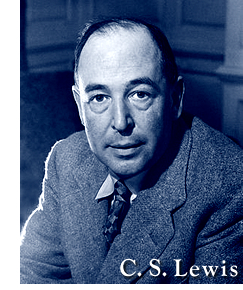
C.S. Lewis Daily – Today’s Reading – On time


[The demon Screwtape writes:] The humans live in time but our Enemy destines them to eternity. He therefore, I believe, wants them to attend chiefly to two things, to eternity itself, and to that point of time which they call the Present. For the Present is the point at which time touches eternity. Of the present moment, and of it only, humans have an experience analogous to the experience which our Enemy has of reality as a whole; in it alone freedom and actuality are offered them. He would therefore have them continually concerned either with eternity (which means being concerned with Him) or with the Present—either meditating on their eternal union with, or separation from, Himself, or else obeying the present voice of conscience, bearing the present cross, receiving the present grace, giving thanks for the present pleasure.

Our business is to get them away from the eternal, and from the Present. With this in view, we sometimes tempt a human (say a widow or a scholar) to live in the Past. But this is of limited value, for they have some real knowledge of the past and it has a determinate nature and, to that extent, resembles eternity. It is far better to make them live in the Future. Biological necessity makes all their passions point in that direction already, so that thought about the Future inflames hope and fear. Also, it is unknown to them, so that in making them think about it we make them think of unrealities. In a word, the Future is, of all things, the thing least like eternity. It is the most completely temporal part of time—for the Past is frozen and no longer flows, and the Present is all lit up with eternal rays.

From The Screwtape Letters

Compiled in Words to Live By

Streams in the Desert for Kids – High and Low


Luke 4:1–2

Have you ever noticed that after you’ve had a “high” day like a birthday or passing a test or a vacation, sometimes you have a “low” day? On high days everything seems to be going great and you are happy. On low days nothing seems to go right. You are grumpy and sad and you may not even know why.

Everyone has high days and low days. Jesus had a wonderful day when he was baptized by his cousin John in the Jordan River. The Bible says he was full of the Holy Spirit, and being full of the Holy Spirit makes you feel great. But immediately, the same Holy Spirit led him out into the desert, and there the Devil came to visit him and to tempt him. It was an awful time for Jesus. So how did he get through it? He responded to every temptation by quoting God’s Word, and the Devil finally gave up and left him.

So when a high day comes your way, don’t be surprised if a low day follows. And when the low day comes, believe that it will go away in time. Hide God’s Word in your heart for those low days, and use it to help you resist the temptations that you face.

Dear Lord, I love high days, and I wish they could stay all the time. I hate low days, but help me to realize they won’t last forever. Help me to hide your Word in my heart for those low days. Amen


Charles Stanley – Perseverance in Prayer


Romans 12:10-13

As a pastor, I speak with many people about their spiritual journey. From these interactions, I know that most individuals are not satisfied with their prayer life. They lack anticipation and faith, and time with God often feels empty. This is, no doubt, why many Christians pray so little and so indifferently.

Yesterday, we began looking at obstacles to a healthy prayer life. Let’s explore one more hindrance to vibrant communication between God and us: impatience.

Most of us have at some point brought fervent supplication to Jesus but did not see the desired results. Unfortunately, humans are by nature faint-hearted. We get weary of asking when all we perceive is silence. Remember, though, that God does not act on our cue like some cosmic bellhop. If we could see the big picture as He can, we’d gladly wait for His way and timing.

The truth is, I believe we benefit by not receiving all that we request. To understand this concept is a sign of spiritual maturity. When we are thoroughly satisfied with the Lord’s presence, our relationship with Him will flourish, even when we don’t get everything we ask. When that’s the case, we grasp what prayer is—not a long list of wants, but regular communication in a relationship.

Barriers can develop if we persistently cry out to God and nothing changes. But by continuing to pray, we’ll both sense God’s presence beyond the “wall” and find peace, joy, and awesome glimpses of His glory. This will be completely satisfying, even if He never gives exactly what was requested.

Bible in One Year: Jeremiah 41-45


Our Daily Bread — Continuing with Christ


Read: 1 Kings 19:19-21

Bible in a Year: Psalms 107-109; 1 Corinthians 4

Whoever loses his life for My sake will find it. —Matthew 16:25

As a child, my favorite week of the summer was the one I spent at a Christian youth camp. At the end of the week, I’d sit elbow-to-elbow with friends in front of an enormous bonfire. There, we would share what we had learned about God and the Bible and sing. One song I still remember focused on deciding to follow Jesus. The chorus contained an important phrase: “no turning back.”

When Elisha decided to follow the prophet Elijah, Elisha did something incredible that made it difficult, impossible really, for him to return to his prior occupation of farming. After going home and having a farewell banquet, Elisha “took a yoke of oxen and slaughtered them” (1 Kings 19:21). Leaving his way of life, he burned up his plowing equipment. He roasted the freshly butchered meat over the blaze and fed everyone present. Then “[Elisha] arose and followed Elijah, and became his servant” (v. 21).

Giving ourselves to God, who deserves our devotion, often comes with a price. At times, it means making difficult decisions about relationships, finances, and living arrangements. However, nothing compares with what we gain when we continue on with Christ. Jesus said, “Whoever desires to save his life will lose it, but whoever loses his life for My sake will find it” (Matt. 16:25). —Jennifer Benson Schuldt

Father, help me to see if there’s something You want me to leave behind to follow You completely.

Jesus is looking for fulltime followers.

INSIGHT: It is often difficult to understand the significance of some events in Scripture without a knowledge of the cultural context. Today’s story of Elijah and Elisha is an example of this. Two elements that carry significance are the placing of the cloak on Elisha (19:19 niv) and the slaughtering of the oxen to feed the people (v. 21). The placing of the cloak represented a significant calling. A person could not simply choose to be Elijah’s apprentice; that person was chosen and it was a great honor. The slaughtering of the oxen, the burning of the plowing equipment, and the feeding of the people signified a deliberate leaving of Elisha’s former life to follow Elijah. It was a public statement of Elisha’s new identity. J.R. Hudberg

Ravi Zacharias Ministry – Good Sleep


The Christian Vision Project was an initiative that began three consecutive years with a question. The aim was to stir thought, creativity, and faithfulness within the Christian church around the subjects of culture, mission, and gospel. In 2006, project leaders asked a group of Christian thinkers how followers of Christ could be countercultural for the common good. Their answers ranged from becoming our own fiercest critics to experiencing life at the margins, from choosing wisely what to overlook and what to belabor to packing up and moving into the city.

But today one answer in particular comes to mind. To the question of counterculturalism for the common good, professor and author Lauren Winner proposed: More sleep. She quickly admitted the curious nature of her retort. “Surely one could come up with something more other-directed, more sacrificial, less self-serving,” she wrote. Still, she carefully reasoned through the forces of culture that insist we give up an hour of sleep here, or two hours there—the grinding schedules, the unnerving stock piles of e-mail in need of responses, the early-taught/early-learned push for more and more productivity. Thus, Winner concluded, “It’s not just that a countercultural embrace of sleep bears witness to values higher than ‘the cares of this world, the deceitfulness of riches, and the desire for other things.’ A night of good sleep—a week, or month, or year of good sleep—also testifies to the basic Christian story of Creation. We are creatures, with bodies that are finite and contingent.”(1) We are also bodies living within a culture generally terrified of aging, uncomfortable with death, and desperate for our accomplishments to distract us. “The unarguable demands that our bodies make for sleep are a good reminder that we are mere creatures,” Winner concludes. “[I]t is God and God alone who ‘neither slumbers nor sleeps.’”(2)

It is indeed a strange part of the Christian story, the countercultural proclamation that the distinction matters deeply—that our humanity’s particular condition is as vital to who we are as God’s identity is to God. In fact the most momentous part of the Christian story—Christ has died, Christ has risen, Christ will come again—is often confessed liturgically beside the humble beginnings of creatureliness. The ashes of Ash Wednesday starkly remind us of the dust we came from and the dust to which we will return—as Christ’s own. Foreheads are marked with a bold and ashen cross of dust, recalling both our history and our future, invoking repentance, inciting stares. Marked with his cross, we are Christ’s: pilgrims on a journey that proclaims death and suffering, life and resurrection all at once. The journey through the light and darkness of Christ’s life is for those made in dust who will return to dust, those willing to trace the breath that began all of life to the place where Christ breathed his last. It is a journey that expends everything within us. To pick up the cross and follow him is to be reminded at every step that we are mere creatures, and he has come near our humanity to show us what that word originally meant.

To be sure, there are times when we may feel like the disciples in the garden of Gethsemane, weary with sorrow, our own eyes heavy with sleep. Current world events and worn-out cries of anguish only deepen this wearied exhaustion. Arguably, this innate instinct is fitting. “[T]o sleep, long and soundly,” says Winner, “is to place our trust not in our own strength and hard work, but in him without whom we labor in vain.”(3) We cannot carry all that Christ carried anymore than we can carry the sorrows we now see all around us. Yet, where we are quite prone to exchange sound and trusting sleep for fretful slumber, helpless sorrow, or apathetic fatigue, Christ emerges through his own weariness to wake us. “Are you still sleeping and taking your rest? See, the hour is at hand.”(4)

The way toward the cross is one that will show both the Christian and a world of contrasting beliefs that we are all finite, fragile creatures in need of a guide, in need of sleep, in need of one who can bear far more than we are able. The cross will also show that the one we desperately need truly exists. While his friends slept, Jesus stepped closer toward betrayal and agony, going all the way to his death, so that one day he could wake us for good: “Wake up, O sleeper, rise from the dead, and Christ will shine on you!”(5)

Jill Carattini is managing editor of A Slice of Infinity at Ravi Zacharias International Ministries in Atlanta, Georgia.

(1) Lauren Winner, Books & Culture, January/February 2006, Vol. 12, No. 1, Page 7.

(2) Ibid.

(3) Ibid.

(4) Matthew 26:45.

(5) Ephesians 5:14.

Alistair Begg – God’s Comfort For Those Who Comfort Others


Whoever brings blessing will be enriched, and one who waters will himself be watered. Proverbs 11:25

We are taught here the great lesson that to get, we must give; to accumulate, we must scatter; to make ourselves happy, we must make others happy; and in order to become spiritually vigorous, we must seek the spiritual good of others. In watering others, we are ourselves watered. How? Our efforts to be useful bring out our powers for usefulness. We have latent talents and unused gifts that become apparent by exercise. Our strength for work is even hidden from ourselves until we take our stand and fight the Lord’s battles or climb the mountains of difficulty. We do not know what tender sympathies we possess until we try to dry the widow’s tears and soothe the orphan’s grief.

We often find in attempting to teach others that we gain instruction for ourselves. What gracious lessons some of us have learned in visiting the sick! We went to teach the Scriptures, and we came away blushing that our knowledge of them was so poor. In our conversation with humble saints, we are taught the way of God more perfectly for ourselves and get a deeper insight into divine truth. So watering others makes us humble. We discover how much grace there is where we had not looked for it, and how much the humble saint may outstrip us in knowledge.

Our own comfort is also increased by working for others. We endeavor to cheer them, and the consolation gladdens our own heart. Consider the two men in the snow-one massaged the other’s limbs to keep him from dying, and in doing so kept his own blood circulating and saved his own life. Remember the poor widow who supplied the prophet’s needs from her own meager resources, and from that day she never experienced need again. Give, and it will be given to you-good measure, pressed down, shaken together and running over.

The Family Bible Reading Plan

  • 1 Samuel 13
  • Romans 11

Devotional material is taken from “Morning and Evening,” written by C.H. Spurgeon, revised and updated by Alistair Begg.

Charles Spurgeon – Faith illustrated


“For the which cause I also suffer these things: nevertheless I am not ashamed: for I know whom I have believed, and am persuaded that he is able to keep that which I have committed unto him against that day.” 2 Timothy 1:12

Suggested Further Reading: Hebrews 6:13-20

Joab, when he fled from the sword of Solomon, laid hold on the horns of the altar, thinking that surely when he had laid hold on the altar he was safe. His was vain confidence, for he was dragged from the horns of the altar and slain. But if you can lay hold on the horns of the altar of God, even Christ, you are most surely safe, and no sword of vengeance can ever reach you. I saw the other day a remarkable picture, which I shall use as an illustration of the way of salvation by faith in Jesus. An offender had committed a crime for which he must die, but it was in the olden time when churches were considered to be sanctuaries in which criminals might hide themselves and so escape. See the transgressor—he rushes towards the church, the guards pursue him with their drawn swords, all athirst for his blood, they pursue him even to the church door. He rushes up the steps, and just as they are about to overtake him and hew him in pieces on the threshhold of the church, out comes the Bishop, and holding up the crucifix he cries, “Back, back! Stain not the precincts of God’s house with blood! Stand back!” and the guards at once respect the emblem and stand back, while the poor fugitive hides himself behind the robes of the priest. It is even so with Christ. The guilty sinner flies to the cross—flies straight away to Jesus, and though Justice pursues him, Christ lifts up his wounded hands and cries to Justice, “Stand back! Stand back! I shelter this sinner; in the secret place of my tabernacle do I hide him; I will not suffer him to perish, for he puts his trust in me.”

For meditation: We should never be ashamed to be seen hiding behind Jesus (Mark 8:38).

Sermon no. 271
21 August (1859)

John MacArthur – Forgiving Others


“[Love] does not take into account a wrong suffered” (1 Cor. 13:5).

If you love someone, you won’t keep a record of their offenses.

It is reported that when the Moravian missionaries first went to the Eskimos, they couldn’t find a word in their language for forgiveness. They had to combine a series of shorter words into one compound word: Issumagijoujungnainermik. Although the word appears formidable, its meaning is beautiful, being translated: “Not-being-able-to-think-about-it-anymore.”

You’ve probably noticed that unforgiving people usually have good memories. Some can hold a grudge for a lifetime. But love never keeps a record of wrongs committed against it. It forgives and is unable to think about them anymore.

That’s what Paul had in mind when he said that love “does not take into account a wrong suffered” (1 Cor. 13:5). The Greek word translated “take into account” was used of the entries in a bookkeeper’s ledger. Those entries helped the bookkeeper remember the nature of each financial transaction. In contrast, love never keeps a record or holds others accountable for the wrongs they’ve committed against it.

The greatest example of that kind of love is God Himself. Romans 4:8 says, “Blessed is the man whose sin the Lord will not take into account.” Second Corinthians 5:19 adds, “God was in Christ reconciling the world to Himself, not counting their trespasses against them.”

Every sin we commit as believers is an offense against God, but He never charges them to our account. We are in Christ, who bore our penalty on the cross. When we sin, we are immediately forgiven.

If you love others, you’ll forgive them as God has forgiven you. Instead of holding them accountable for their offenses, you’ll look beyond their sin to their potential in Christ. You’ll heed Paul’s admonition to “be kind to one another, tender-hearted, forgiving each other, just as God in Christ also has forgiven you” (Eph. 4:32). That’s the character of true love.

Suggestions for Prayer

  • Is there someone from whom you’ve been withholding forgiveness? If so, recognize it as sin and confess it to the Lord. Then be reconciled to that person right away.
  • Thank God that He doesn’t keep an account of your sins (cf. Ps. 130:3).

For Further Study

What does Matthew 18:21-35 say about forgiving others?


Joyce Meyer – Stepping Into the Unknown


And I said to you, You have come to the hill country of the Amorites, which the Lord our God gives us. Behold, the Lord your God has set the land before you; go up and possess it, as the Lord, the God of your fathers, has said to you. Fear not, neither be dismayed.- Deuteronomy 1:20–21

Parents, teachers, and other role models can teach children how to fear or they can teach them to be bold. A mother who is fearful herself will transmit that fear to her children. She will be overly cautious about many things, and a silent fear sinks into the heart of her children. We should not teach our children to live recklessly, but we should teach them to be bold, take action, and to never be so afraid of making mistakes that they won’t try things.

I believe we should teach our children and those under our authority to take chances in life. If we never take a chance, we will never make progress. Progress always requires stepping into the unknown. Experience gives us confidence, but we never get experience unless we step out and try things we have not tried before.

I encourage you to teach others by word and example how to be bold and courageous. Tell people to try things, reminding them that making a mistake is not the worst thing that can happen.

Lord, help me both in word and deed to show others to be bold and courageous. I will gladly follow You into the unknown. Amen.

Campus Crusade for Christ; Bill Bright – His Ways Will Satisfy 


“Don’t copy the behavior and customs of this world, but be a new and different person with a fresh newness in all you do and think. Then you will learn from your own experience how His ways will really satisfy you” (Romans 12:2).

“The trouble with living sacrifices,” someone has well said, “is that they keep crawling off the altar.” That may be true. We “crawl off the altar” when we sin, and the only way to put ourselves back on the altar is to breathe spiritually – confess our known sins in accordance with the promise of 1 John 1:9 and appropriate the fullness of the Holy Spirit as we are commanded to do by faith (Ephesians 5:18).

When we do this, we will be living supernaturally and our lives will produce the fruit of the Spirit in great abundance.

Only by being filled with the Spirit, and thus realizing the fruit of the Spirit, can spiritual gifts be effectively utilized in witnessing and building up the Body of Christ.

We begin by totally yielding ourselves by faith to Christ in a full irrevocable surrender to His lordship.

“He died once for all to end sin’s power, but now He lives forever in unbroken fellowship with God. So look upon your old sin-nature as dead and unresponsive to sin, and instead be alive to God, alert to Him, through Jesus Christ our Lord.

“Do not let sin control your puny body any longer; do not give in to its sinful desires. Do not let any part of your bodies become tools of wickedness, to be used for sinning; but give yourselves completely to God – every part of you -for you are back from death and you want to be tools in the hands of God, to be used for His good purposes” (Romans 6:10-13).

Bible Reading: Romans 12:3-18

TODAY’S ACTION POINT: Knowing that God’s ways will really satisfy me, I will seek first His kingdom, resist the devil at his every appearance and watch with joy as he flees.