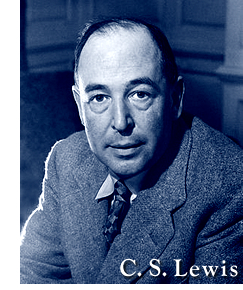
Charles Stanley – Building Trust When Faith Wavers


Mark 9:21-24

Since faith is the core of our Christian experience, the consequences of wavering faith are far-reaching. Vacillating trust can lead us to make wrong decisions. Sometimes, after praying for direction, we might receive an answer that leads us to think, I can’t do that. So, instead of asking God to strengthen our faith, we make excuses. We may choose to postpone our obedience—even indefinitely—in order to do something else we consider just as worthwhile. But partial obedience is still disobedience, and it leads to situations that can be dire.

When our faith falters, not only can it result in poor choices, but it also is costly. The Israelites wandered 40 years in the desert because the nation allowed unbelief to overtake their faith. Wavering trust can make us miss out on the blessings of God; it often proves detrimental to those we love as well.

Our confidence will also be affected by shifting faith. When we are spiritually unsteady, we can easily be shaken by little things—even insignificant matters. Instead of standing firm, we may find our confidence eroding. Then we become less willing to take the risks God is asking of us. Rather than acting with certainty, we question and doubt what we are hearing from the Lord. We may also find joy diminishing because our wavering faith has led us away from God’s will. The inner peace of God that we once enjoyed evaporates as our faith weakens.

No matter how unsteady our faith, God invites us to draw near so He can strengthen our trust in Him. When He does, accept His invitation and give Him the glory.

Bible in One Year: Ezekiel 20-22

Our Daily Bread — The Babel Project


Read: Genesis 11:1-9

Bible in a Year: Psalms 137-139; 1 Corinthians 13

Unless the Lord builds the house, the builders labor in vain. —Psalm 127:1

Two workmen were asked what they were building together. One said he was building a garage. The other replied that he was building a cathedral. A day later there was only one man laying bricks. When asked where the second was, the first replied, “Oh, he got fired. He insisted on building a cathedral instead of a garage.”

Something similar happened on the ancient worksite of Babel. A group of people decided they would build a city and a tower that would reach to the heavens and unite their world (Gen. 11:4). But God didn’t want them working on a grand, self-centered plan based on the idea that they could rise to the heights of God and solve all of their own problems. So He came down, stopped the project, scattered the people “over all the earth,” and gave them different languages (vv. 8-9).

God wanted people to see Him as the solution to their problems, and He revealed His plan for them to Abraham (12:1-3). Through the faith of Abraham and his descendants, He would show the world how to look for a city “whose architect and builder is God” (Heb. 11:8-10).

Our faith does not rise out of our own dreams and solutions. The foundation of faith is in God alone and what He can do in and through us. —Mart DeHaan

Dear heavenly Father, forgive me for focusing on my own schemes and dreams. Help me to look to You for guidance in all that I do.

God wants to do what only He can do in and for us.

INSIGHT: Genesis 11 holds a pivotal place in the early Old Testament story, as it forms something of a bridge from the days of the early patriarchs (Adam, Seth, Noah) to the days of Abraham. In Genesis 1-10 we find not only the creation narrative but also the record of humanity’s early failures, which are proof we need the Rescuer that God promised in Genesis 3:15. This promise will find its ultimate fulfillment through the line of Abraham—in Jesus the Messiah—through whom all the people of the world will be blessed (22:18).  Bill Crowder

Ravi Zacharias Ministry – We Demand Windows


“We demand windows,” said C.S. Lewis speaking of the role of literature in our lives. Why occupy our time and hearts with accounts of characters and events that are not real? Why enter vicariously into the fictional life of one who behaves in ways we wouldn’t or shouldn’t? Lewis explains, “We want to see with other eyes, to imagine with other imaginations, to feel with other hearts, as well as with our own…. We demand windows. Literature as Logos is a series of windows, even of doors….”(1)

The literature I have loved most has taken me to windows of other worlds and other countries. Whether a Hobbit in the Shire or a rationalist in 19th century Russia, I have been a thousand characters in a thousand places and know more about myself and my world because of it. Crossing the bridge into Terabithia, I was introduced to another world and my own at once. The characters that came bounding out of Katherine Paterson’s pages pulled me through their window and voiced my very first questions about life, death, and my own mortality. When I first followed Charles Wallace and Meg through a wrinkle in time and a window to Camazotz, I saw that darkness can overwhelm, and wondered at the idea that there is yet a light that cannot be overcome. Likewise, Lewis’s own wardrobe provided the door that carried me to Narnia, a world that introduced the suggestion of signs and possibilities of another Kingdom within my own.

The windows we find in our literature teach us to see windows in our own worlds. The stories and places that pull us in and spit us out again show us our own lives as stories, our own place in a bigger story, our role in a better country. Perhaps we demand windows into other worlds simply because we are looking for another world, a world without suffering, or injustice, or our own pettiness.

The ancient psalmist voiced something similar about the world he was a part of and the world he imagined, “Hear my prayer, O LORD, listen to my cry for help; be not deaf to my weeping. For I dwell with you as an alien, a stranger, as all my fathers were” (39:12). Years later, the author of Hebrews wrote of Abraham, “By faith he made his home in the Promised Land like a stranger in a foreign country… For he was looking forward to the city with foundations, whose architect and builder is God” (11:8-10). God made humanity, Elie Wiesel once said, because God loves stories.

As we wake to life, whether in our own story or vicariously in other, we wake with questions. “How did we get here?” the Pevensie children asked with good reason. “And why are we here?” Of course, they got to Narnia through a wardrobe, but how they didn’t know. And what did it all mean? Who among us has at times not been floored with the same questions of our own world: How did we get here? Why are we here? And what is the point of it all?

Our questions of this world are as valid as our questions of any other. Had the Pevensies’ settled into Narnia without asking questions such as these, a great deal of the story would have been incomplete. Likewise, Annie Dillard writes of life in this place where we find ourselves, “Some unwonted, taught pride diverts us from our original intent, which is to explore the neighborhood, view the landscape, to discover where it is that we have been so startlingly set down, even if we can’t learn why.”(1) We are citizens in a world that would be easy to settle into and go about our lives. But what crucial part of the story do we miss by doing so?

The Christian story imagines a world where there are windows and doors that open to the Kingdom of God all around us—here and now and coming. There are places where heaven and earth meet at great crossroads, moments when we are given opportunities to see things beyond us, to see things as they really are. God is always leading us toward the many-roomed house Christ left us to imagine. The question is whether or not we will take the time to thoroughly explore and enjoy the neighborhood.

Jill Carattini is managing editor of A Slice of Infinity at Ravi Zacharias International Ministries in Atlanta, Georgia.

(1) “We Demand Windows,” Leland Ryken, ed. The Christian Imagination, (Colorado Springs: Shaw, 2002), 51.

(2) Annie Dillard, Pilgrim at Tinker Creek, (Bantam, 1977), 12.

Alistair Begg – The Great Physician


Now Simon’s mother-in-law lay ill with a fever, and immediately they told him about her. Mark 1:30

This is a very interesting little peep into the house of the apostolic fisherman. We quickly observe that household joys and cares are no hindrance to the full exercise of ministry; rather they furnish an opportunity for personally discovering the Lord’s gracious work in one’s own family. They may provide better instruction for the teacher than any other earthly discipline. There are those who decry marriage, but true Christianity and family life live well together. Peter’s house was possibly a poor fisherman’s hut, but the Lord of Glory entered it, lodged in it, and worked a miracle in it. If these words are being read this morning in some very humble cottage, let this fact encourage the inhabitants to seek the company of King Jesus. God is more often in little huts than in rich palaces.

Jesus is looking around your room now and is waiting to be gracious to you. Into Simon’s house illness had entered; fever in a deadly form had prostrated his mother-in-law; and as soon as Jesus came, they told Him of the sad affliction, and He hurried to the patient’s bed. Do you have any illness in the house this morning? You will find Jesus the best physician by far; go to Him at once and tell Him all about the matter. Immediately lay the case before Him. It concerns one of His people, and therefore He will not regard it as trivial. Notice that immediately the Savior restored the ill woman; none can heal as He does. We dare not assume that the Lord will remove all illness from those we love, but we dare not forget that believing prayer for the sick is far more likely to be followed by restoration than anything else in the world; and where this does not happen, we must meekly bow to His will by whom life and death are determined. The tender heart of Jesus waits to hear our griefs; let us pour them into His patient ear.

The Family Bible Reading Plan

  • 1 Samuel 26
  • 1 Corinthians 7

Devotional material is taken from “Morning and Evening,” written by C.H. Spurgeon, revised and updated by Alistair Begg.

Charles Spurgeon – Three homilies from one text


“And Jesus went about all Galilee, … healing all manner of sickness and all manner of disease among the people. And his fame went throughout all Syria: and they brought unto him all sick people that were taken with divers diseases and torments, …and he healed them. ” Matthew 4:23-25

Suggested Further Reading: 2 Kings 6:11-23

Take care that you bring your relatives to Christ on the arms of your faith. Faith is that which puts strength into prayer. The reason why we do not receive the answer to our supplications is, because we do not believe we shall be heard. You remember my sermon the other sabbath morning from the text, “Whatsoever things ye shall desire when ye pray, believe that ye receive them and ye shall have them.” (See August 13) If you can exercise faith for a dead soul, that dead soul shall be quickened and receive faith itself. If you can look to Christ with the eye of faith for a blind soul, that blind soul shall have sight given it and it shall see. There is a wonderful power in vicarious faith—faith for another. Not that any one of you can be saved without faith yourself; but that when another believes for you and on your account, and quotes the promise before God for you, you may be unconscious of it, but God hears and answers that faith, and breathes on your soul, and gives you faith to believe in the Lord Jesus Christ. I do not think Christians exercise enough of this power. They are so busy with faith about their troubles, faith about their sins, faith about their personal experience, that they have not time to exercise that faith for another. Oh but surely that gift was never bestowed upon us for our own use merely, but for other people. Try it, Christian man; try it, Christian woman; see whether God is not as good as your faith when your faith is exercised concerning the soul of your poor neighbour, of your poor drunken kinsman, or of some poor soul who thus far has defied every effort to reclaim him from the error of his ways.

For meditation: Sometimes Jesus healed the sick as the result of the faith of others (Matthew 8:10,13; 15:28; Mark 2:5; 9:23,24; Luke 8:50; John 4:50). Are you praying like this for the conversion of some who at present can’t and won’t pray for themselves?

Sermon no. 333

2 September (1860)

John MacArthur – Preparing for Battle


“Be strong in the Lord, and in the strength of His might. Put on the full armor of God, that you may be able to stand firm against the schemes of the devil” (Eph. 6:10-11).

Adequate preparation is the key to spiritual victory.

The Gulf War introduced some highly sophisticated weapons that had never been proven under live battle conditions. Most of the troops hadn’t experienced war either. Yet troops and machinery combined in a display of military conquest unparalleled in history.

Thorough preparation proved to be an indispensible element in that overwhelming victory. That included developing and testing high-tech weaponry, recruiting and training troops, and engaging in mock battles. Generals know that if they dare enter a battlefield ill-prepared, they’re destined for defeat. Consequently, they do everything possible to prepare their troops for victory.

Similarly, your success in spiritual warfare is directly proportional to your preparedness. You must “be strong in the Lord, and in the strength of His might” (Eph. 6:10), and also put on your armor (v. 11). God is your strength and source of victory, but you must trust Him and appropriate your spiritual resources. As Oliver Cromwell said, “Trust in God and keep your powder dry.”

If you delay preparation until the battle is upon you, then it’s too late. If your armor isn’t in place, you’re vulnerable to the arrows of the enemy. If you neglect prayer, worship, Bible study, accountability, and the other disciplines of faith, you can’t expect to prevail when spiritual skirmishes arise.

No soldier who values his own life would step onto a battlefield unprepared. How much more should soldiers of Christ prepare themselves to fight against Satan’s forces? Be diligent. Christ guarantees ultimate victory, but you can lose individual battles if you’re unprepared. It’s even possible to lapse into periods of spiritual lethargy, indifference, impotency, and ineffectiveness, but that’s utterly inconsistent with your mandate to fight the good fight (1 Tim. 1:18).

Don’t be caught off guard! Keep your armor on and remain alert to the advances of the enemy.

Suggestions for Prayer

  • Ask God to keep you alert to the reality of spiritual warfare and the need to be prepared at all times for battle.
  • Thank Him for the times He protected you when your armor wasn’t as secure as it needed to be.

For Further Study

Memorize 2 Timothy 2:4 as a reminder to be spiritually prepared at all times.

Joyce Meyer – Enjoying Your Life Begins with a Choice


The thief comes only in order to steal and kill and destroy. I came that they may have and enjoy life, and have it in abundance (to the full, till it overflows).- John 10:10

Although we do not always have the power to change every unpleasant circumstance in our lives, we do have the power to change our outlook. We can look out at life from our inmost being with our hearts filled with positive thoughts and attitudes, or we can allow the events of life to shape how we think and feel. This is a decision only we can make-no one can make it for us!

I firmly believe that the bottom line of what we want from life is to be happy. We want to enjoy it! Sadly, we can waste most of life with the misconception that joy and enjoyment come from our circumstances. The truth is that they come from our attitude toward each circumstance rather than the circumstance itself. Obviously, nobody enjoys a troubling or painful circumstance, but if we look at it in a hopeful, faith-filled way, we can watch God work all things out for our good (see Romans 8:28).

Enjoying life begins with the thoughts you choose to think. Yes, it’s that simple! No matter what is going on in your life today, if you will choose happy, hope-filled thoughts, you will feel happier.

Our thoughts are connected to our feelings, so if we want to feel better, we need to think better. Nothing good comes from thinking sour, critical and negative thoughts, but something good always comes when we think according to God’s plan for our life. God offers each of us an opportunity to have a good life. His promises are for all who will believe! We all believe something, so why not make it something good?

Good thinking begins with a choice. I urge you to make yours today and every day of your life.

Campus Crusade for Christ; None of These Diseases


“And said, If thou wilt diligently hearken to the voice of the Lord thy God, and wilt do that which is right in His sight, and wilt give ear to His commandments, and keep all His statutes, I will put none of these diseases upon thee, which I have brought upon the Egyptians: for I am the Lord that healeth thee” (Exodus 15:26, KJV).

Prior to a recent minor operation the surgeon came to my hospital room for prayer and to explain the nature of the hernia correction. He explained, “It is God alone who heals. It is my responsibility, along with my staff, to treat and care for you.”

In his excellent book, None of These Diseases, Dr. S.I. McMillen abundantly amplifies and proves the point of this promise: that if we always do that which is right in God’s sight, at the very least our health will be greatly improved.

This highly qualified physician contends that most of our physical problems are caused by stress, but the person who is doing that which is right in God’s sight is not likely to be continually under stress – at least not the kind of stress that impairs one physically.

“I am the Lord that healeth thee.” And He is the same yesterday, today and forever. That would indicate that His healing is available for all today – which of course brings up that sticky question of method and means.

Whatever our persuasion about this, the fact remains that if we really do believe that it is God who heals, then it should follow that He would be our first resource in time of physical need. And it may well be that His direction would take us to the physician. But He alone would be the healer.

Bible Reading: Exodus 15:22-26

TODAY’S ACTION POINT: As I approach each task today, I will make a conscious effort to be concerned about doing that which is right in God’s sight.

Presidential Prayer Team; J.R.- Faulty Forecast


On Election Day, November 7, 2000 between 7:49 p.m. and 8:00 p.m. all of the major networks – ABC, NBC, CBS, CNN and Fox – declared that Al Gore had won the State of Florida in the race for President of the United States. The problem with this prediction was that it was wrong; the race was, in reality, still too close to call. Even worse, when the “results” were broadcast the polls were still open in Florida’s Panhandle. Many people waiting in line, believing the outcome now decided, simply went home without voting.

We speak of what we know, and bear witness to what we have seen, but you do not receive our testimony.

John 3:11

“How can these things be?” Nicodemus asked Jesus when told he must be born again. Jesus was explaining to the rabbi that his past did not determine his future and that the man-made forecast was faulty. “We speak of what we know, and bear witness to what we have seen,” but that is not the full story. Far from it.

Remember this as you pray. God is not restricted by human expectations or limitations. He is able to do “far more abundantly than all that we ask or think.” (Ephesians 3:20.) Tap into that power today as you pray for the nation.

Recommended Reading: Ephesians 3:14-21

Greg Laurie – No Spiritual Vacations


In the spring of the year, when kings normally go out to war, David sent Joab and the Israelite army to fight the Ammonites. They destroyed the Ammonite army and laid siege to the city of Rabbah. However, David stayed behind in Jerusalem.—2 Samuel 11:1

Years ago when I was speaking in Hawaii, I met someone who told me he was on a spiritual vacation. He said he was taking some time off from his Christian life.

I told him that was no vacation, and we had a long talk. He ended up recommitting his life to Christ, and I’m glad to say that he is still serving the Lord today.

The moment we back off in the spiritual battle, we will be vulnerable. The moment we fall asleep, we will be weak. That is what happened to King David. He was plucked from obscurity as a shepherd to become the great king of Israel, leading his troops into battle. He was a powerful and godly man. But after years of walking with the Lord, David put his spiritual life on cruise control. We read in 2 Samuel 11:2 that “late one afternoon, after his midday rest, David got out of bed and was walking on the roof of the palace. As he looked out over the city, he noticed a woman of unusual beauty taking a bath.”

What was David doing? He was kicking back. Interestingly, his troops were out on the battlefields. And David, the warrior king, should have been leading them as he always did. Instead, he was taking some time off.

That is why the apostle Paul told Timothy, “Run from anything that stimulates youthful lusts. Instead, pursue righteous living, faithfulness, love, and peace. Enjoy the companionship of those who call on the Lord with pure hearts” (2 Timothy 2:22). These words are not merely directed to young people. You can be an older man or an older woman and still chase after youthful lusts.

You don’t feed lust; you starve it. Stay away from anything that would encourage immoral living.

Max Lucado – More Than Conquerors


God spoke. Joshua listened and Israel’s Glory Days began. The Jordan River opened up and Jericho’s walls fell down. Evil was booted, and hope was rebooted. Joshua 21:43 says, “So the Lord gave to Israel all the land of which He had sworn to give to their fathers, and they took possession of it. The Lord gave them rest all around…not a man of all their enemies stood against them!”

Perhaps you need a new season. You don’t need to cross the Jordan River, but you need to get through the week. You aren’t facing Jericho, but you are facing rejection or heartache. The story of Joshua dares us to believe God has a Promised Land for us to take! It’s not real estate, but a real state of the heart and mind! A Promised Land…a promised land life!

From Glory Days

Night Light for Couples – “Ordinary” Love


“Live a life of love, just as Christ loved us.” Ephesians 5:2

We’ve been talking about romantic love and how to preserve it. There are times in every marriage, however, when husbands and wives feel apathetic and “flat” toward each other. Jim wrote me the following note during just such a time, which occurred on our eighth wedding anniversary: “I’m sure you remember the many occasions during our eight years of marriage when the tide of love and affection soared high above the crest. This kind of intense emotion often accompanies a time of particular happiness. We felt this closeness when the world’s most precious child came home from the maternity ward. But emotions are strange! We felt the same closeness when you were hospitalized last year. I felt it intensely when I knelt over your unconscious form after a grinding automobile accident.

“Both happiness and threat bring overwhelming appreciation and affection for our sweethearts. But most of life is composed of calm, everyday events. During those times, I enjoy the serene love that actually surpasses the effervescent display. I find myself in that kind of love on this anniversary. I feel the steady, quiet affection that comes from a devoted heart. I am committed to you and your happiness now more than ever.

“When events throw us together emotionally, we will enjoy the thrill and romantic excitement. But during life’s routine, my love stands undiminished. Happy anniversary to my wonderful wife.”

Just between us…

  • When has our marriage provided the most romantic excitement?
  • How can serene love enhance romance between us?
  • Do we enjoy this kind of love? Why or why not?

Dear God, thank You for the intense feelings that accompany romantic love. Help us cherish them. May our love also remain strong and enduring on ordinary days or when feelings are at ebb tide. Amen.

From Night Light For Couples, by Dr. James & Shirley Dobson

C.S. Lewis Daily – Today’s Reading


The Christian doctrine of suffering explains, I believe, a very curious fact about the world we live in. The settled happiness and security which we all desire, God withholds from us by the very nature of the world: but joy, pleasure, and merriment, He has scattered broadcast. We are never safe, but we have plenty of fun, and some ecstasy. It is not hard to see why. The security we crave would teach us to rest our hearts in this world and oppose an obstacle to our return to God: a few moments of happy love, a landscape, a symphony, a merry meeting with our friends, a bathe or a football match, have no such tendency. Our Father refreshes us on the journey with some pleasant inns, but will not encourage us to mistake them for home.

From The Problem of Pain

Compiled in A Year with C.S. Lewis