Alistair Begg – What We Must Do


“A sword for the Lord and for Gideon!” Judges 7:20

Gideon ordered his men to do two things: Covering up a torch in an earthen pitcher, he had them, at an appointed signal, break the pitcher and let the light shine. Then he had them blow the trumpet, crying, “A sword for the LORD and for Gideon!”

This is precisely what all Christians must do. First, you must shine: Break the pitcher that conceals your light, throw aside the container that has been hiding your candle, and shine. Let your light shine before men; let your good works be such that when men look at you, they will know that you have been with Jesus.

Then there must be the sound, the blowing of the trumpet. There must be active exertions for the gathering of sinners by proclaiming Christ crucified. Take the Gospel to them. Carry it to their door; put it in their path; do not allow them to escape it; blow the trumpet right against their ears. Remember that the true battle-cry of the church is Gideon’s watchword, “A sword for the LORD and for Gideon!” God must do it; it is His own work.

But we are not to be idle; He uses instruments–“A sword for the LORD and for Gideon!” If we only cry, “A sword for the LORD!” we will be guilty of idle presumption; and if we shout, “A sword for Gideon!” alone, we shall display an idolatrous reliance on man: We must blend the two in practical harmony: “A sword for the LORD and for Gideon!” We can do nothing in ourselves, but we can do everything by the help of our God; let us, therefore, in His name determine to go out personally and serve Him with our flaming torch of holy example and with our trumpet blasts of sincere declaration and testimony, and God will be with us, and the enemy will be put to confusion, and the Lord of hosts will reign forever and ever.

The Family Bible Reading Plan

  • 2 Samuel 16
  • 2 Corinthians 9

Devotional material is taken from “Morning and Evening,” written by C.H. Spurgeon, revised and updated by Alistair Begg.

Charles Spurgeon – Things that accompany salvation


“Things that accompany salvation.” Hebrews 6:9

Suggested Further Reading: 1 Thessalonians 5:8-11

The “things that accompany salvation” make a glorious march in the forefront of it— from election down to these precious opening buds of virtue in the sinner’s heart. What a godly array! Sure the angels do sometimes fly along in admiration, and see this long array that heralds salvation to the heart. And now comes the precious casket set with gems and jewels. It is of God-like workmanship; no hammer was ever lifted on it; it was smitten out and fashioned upon the anvil of eternal might, and cast in the mould of everlasting wisdom; but no human hand hath ever defiled it, and it is set with jewels so unutterably precious, that if heaven and earth were sold they could never buy another salvation! And who are those that are close around it? There are three sweet sisters that always have the custody of the treasure—you know them; their names are common in Scripture—Faith, Hope, and Love, the three divine sisters; these have salvation in their hearts and do carry it about with them in their loins. Faith, who lays hold on Christ, and trusts all in him; that ventures everything upon his blood and sacrifice, and has no other trust. Hope, that with beaming eye looks up to Jesus Christ in glory, and expects him soon to come: looks downward, and when she sees grim death in her way, expects that she shall pass through with victory. And thou sweet Love, the sweetest of the three; she, whose words are music and whose eyes are stars; Love, also looks to Christ and is enamoured by him; loves him in all his offices, adores his presence, reverences his words; and is prepared to bind her body to the stake and die for him, who bound his body to the cross to die for her.

For meditation: Faith, Hope and Love are close companions of one another and of salvation (1 Corinthians 13:13; 1 Thessalonians 1:3;Hebrews 6:9-12). How well are you acquainted with them?

Sermon no. 152

20 September (1857)

John MacArthur – Repelling Discouragement and Doubt


“Take the helmet of salvation” (Eph. 6:17).

Discouragement and doubt are deflected when you know you’re secure in Christ.

The Roman soldier’s helmet was a crucial piece of armor designed to deflect blows to the head—especially the potentially lethal blow of a broadsword. Soldiers of that day carried a swift and precise dagger designed for close- quarter hand-to-hand combat. But they also carried a giant broadsword, which was a two-edged, three to four-foot long sword. It had a massive handle that, similar to a baseball bat, was held with both hands. With it they could take broad swipes from side to side or deliver a crushing blow to an opponent’s skull.

To protect us from Satan’s crushing blows, Paul tells us to “take the helmet of salvation.” Now considering all he’s been telling us so far, he was not saying, “Oh, by the way, go get saved.” Paul was addressing believers. Unbelievers don’t have to put on spiritual armor. They aren’t even in the battle. Satan doesn’t attack his own forces.

In 1 Thessalonians 5:8 Paul describes the helmet of salvation as “the hope of salvation.” That implies Satan’s most fierce and powerful blows are directed at the believer’s assurance and security. Therefore Paul was encouraging believers to have confidence in the salvation they already possess. He knew that doubting their security in Christ would render them ineffective in spiritual warfare—just as a blow to the head renders one’s physical body incapable of defending itself.

As a believer, you should have the assurance that you are secure in Christ. If you don’t, you haven’t put your helmet on, and that makes you vulnerable to discouragement and doubt. Romans 8:29-30 assures us that all whom God justifies, He sanctifies and glorifies. No one is lost in the process.

Jesus said, “My sheep hear My voice, and I know them, and they follow Me; and I give eternal life to them, and they shall never perish; and no one shall snatch them out of My hand” (John 10:27-28). That’s a wonderful promise. So don’t let your enemy rob you of the joy and assurance of knowing you belong to Christ, for the Lord will never let you go (Heb. 13:5).

Suggestions for Prayer

Praise God for your eternal security in Christ!

For Further Study

Read John 6:37-40.

  • Who receives eternal life?
  • How does Christ respond to those who come to Him?

Joyce Meyer – Whatever You Face


And the Lord turned and looked at Peter. And Peter recalled the Lord’s words, how He had told him, Before the cock crows today, you will deny Me thrice. And he went out and wept bitterly [that is, with painfully moving grief].- Luke 22:61–62

The apostle Peter was a man who began with phony boldness. He thought he was bold, but in reality he was forward, presumptuous, rude, and foolish on many occasions. Peter was usually the first one to speak, but what he said was often prideful and completely out of place. Peter thought more highly of himself than he should have. He needed to trade his self-confidence for confidence in God.

Jesus tried to warn Peter that he would deny Him three times in a very short period of time, but Peter thought that was absolutely impossible. After Jesus allowed Himself to be captured, Peter was recognized as one of His disciples. He immediately denied that he even knew Him. Peter continued on with the same fearful response until he quickly denied Christ three times. Peter, who appeared to be so bold, fell apart in fear during a real crisis (Luke 22).

What are you facing right now? Are there threatening circumstances looming in front of you? If so, remember that God is with you and He will never leave you or forsake you.

Lord, it’s always humbling to read about Peter’s denial. I need the strength that comes from You more than I can possibly realize. Help me to draw so close to You today that I can face any challenge. Amen.


Campus Crusade for Christ; Bill Bright – Maturity – In His Timing 


“But when the Holy Spirit controls our lives He will produce this kind of fruit in us: love, joy, peace, patience, kindness, goodness, faithfulness, gentleness and self- control” (Galatians 5:22,23).

One of my dear friends had a 25-year old son who had never grown past the baby stage mentally or physically. He had greeted the birth of his beautiful baby boy with great joy, but his joy turned to heartache and sorrow with the passing years as his son never matured.

Unfortunately and tragically, many Christians never pass the baby or childhood stages. Think of the heartache and sorrow that God experiences when He looks upon those of His children who have never matured, though they have been Christians for many years.

Martha, a new Christian, approached me with this question, “With all my heart I want to be a woman of God, but I do not experience the consistency of Galatians 5:22,23 in my life. What is wrong?”

Maybe you are asking the same question, if so, it will be helpful for you to understand that the Christian life is a life of growth. Just as in our physical lives we begin as babies and progress through childhood into adolescence, young adulthood and mature adulthood, so it is in our spiritual lives.

The Holy Spirit takes up residence within every believer at the moment of new birth. The growth process is greatly accelerated when a believer consciously yields himself to the lordship of Christ and the filling and control of the Holy Spirit. A believer who is empowered by the Holy Spirit and is a faithful student of God’s Word, who has learned to trust and obey God, can pass through the various stages of spiritual growth and become a mature Christian within a brief period of time. Some Spirit-filled Christians demonstrate more of the fruit of the Spirit within one year than others who have been untaught, uncommitted believers for 50 years.

Bible Reading: Romans 5:1-5

TODAY’S ACTION POINT: I am determined that I will become a spiritually mature Christian, in whose life the fruit of the Spirit will be demonstrated. Through the enabling of the Holy Spirit I will dedicate myself to prayer, reading the Word and witnessing, and living a life of obedience.

Presidential Prayer Team; G.C. – Out of the Haze


Fire engineers read smoke. Its behavior and its color provide clues about the emanating blaze. In today’s verse, Zechariah the priest is going about his duties burning incense before the altar of God. Out of the smoke he’s startled to see someone standing with him – the angel Gabriel, who speaks to Zechariah the comforting words of today’s verse.

Do not be afraid, Zechariah: for your prayer has been heard.

Luke 1:13

That particular day, Zechariah’s duty was to bring an offering covering the sins of an entire nation, yet the prayer God promised to answer was personal. Zechariah wanted a son. He and his wife were old and well past a reasonable expectation for bearing children. One would imagine that improbable prayer might have been tucked away years earlier. Then, literally out of the haze, God gives an answer…the desired answer. “Yes, you may have a son.”

Are you struggling to understand what God is doing in your life or for America’s future? Remember Zechariah. The smoke clouding his vision was coming from his faithful service, but be assured God can read that smoke! He understands the silent cry of your heart as well as the needs of the nation. In His timing, He will attend to both.

Recommended Reading: Psalm 20:2-7

John Piper – DesiringGod.org


Is Kim Davis Right to Refuse Marriage Licenses?

Welcome to this special weekend edition of the Ask Pastor John podcast. In the last week or so we have gotten about 50 emails from listeners about Kim Davis, a county clerk in the state of Kentucky. Here’s one such email from Sherry, one of our faithful podcast listeners, who simply asks, “Pastor John, is Kim Davis wrong for not signing same sex marriage licenses?”

I don’t know Kim Davis’s heart, so I can’t assess her motives. And I don’t know her theology. It is possible to do right actions for wrong reasons, and so be wrong in doing right. So I will just try to say something about her actions and what appear to be some of her convictions and perhaps touch on some wider implications.

First, I think she is right in rejecting so-called same sex marriage as contrary to God’s design for what marriage is. And she is right in assessing this departure from God’s will as massive, not marginal, and as personally and culturally deadly, not trivial. And therefore it’s not something that you can just go along with as if that were a loving thing to do.

The Bible says in 1 Corinthians 6:9–10 that the endorsement of same sex practice — which is what the approval of so-called same sex marriage does — endorses the destruction of persons (along with idolatry, greed, theft, drunkenness). Those who impenitently practice such things will not inherit the kingdom of God. Calling such behaviors “legal” in no way removes the capital punishment that will follow in eternity. Therefore this judgment of the Supreme Court is massively evil and deadly for persons. Kim Davis is right if she believes that. It seems she does.

Second, I think she is morally right and probably legally right to refuse to put her name on the marriage license of two men or two women. She is morally right because God has given civil authorities to the world to reward the right and punish the evil. So when those authorities promote evil and punish good, those authorities may rightly be disobeyed for the sake of obeying God. Here are the two key texts.

1 Peter 2:13–14, “Be subject for the Lord’s sake to every human institution, whether it be to the emperor as supreme, or to governors as sent by him to punish those who do evil and to praise those who do good.” So be subject to governors as they are sent to punish evil and do good.

Romans 13:13–4, “Let every person be subject to the governing authorities. For there is no authority except from God. . . . For [here is the ground] rulers are not a terror to good conduct, but to bad. . . . He is God’s servant for your good.”

Now I don’t think Peter and Paul are naïve in writing this way. This is what governments do. They reward the good. They punish the evil. What they mean is that this is what governments ought to do. This is the way it ought to be. For example, when Paul says, “Rulers are not a terror to good conduct” (Romans 13:3), we are liable to scratch our heads and think of a hundred cases where governments have slaughtered people in great wickedness. What in the world, Paul?

Well, Paul says rulers are not a terror to good conduct, like when a dad says to his children, “We tell the truth in this family.” That is the indicative statement ofwhat ought to be. “We treat other with kindness in this family. That is what we do.” He doesn’t mean sin never happens in this family. The kids are not always good. He means this is what we ought to do. And when we don’t act this way, we are acting out of character. It ought not to be. Something should change. So it is with governments. They exist to support the good and resist the bad.

And here is an interesting thing: A few verses later in 1 Peter 2:1820, Peter gives an illustration of how slaves are to be subject to masters. So he is carrying this submission theme through for governments and slaves and wives and husbands and children and so on. And then he says, “Servants, be subject to your masters, even to the unjust. . . . For what credit is it if, when you sin and are beaten for it, you endure? But if when you do good and suffer for it you endure, this is a gracious thing in the sight of God.” Peter envisions someone under authoritydoing something good that gets him a beating. Authorities don’t ordinarily punish people for being completely compliant.

Now of course, it may be the slave was slandered and then punished for something he did not do. That is possible. But that is not what the text says. It seems to me he has done something good. Maybe he stood up for a fellow Christian slave or maybe he shared the gospel. Or maybe he refused to have sex with the master. When you do good, suffer, and endure, this is a gracious thing with God. So it may well be that this slave or citizen or wife knew he would pay a price. And that was a gracious thing with God to suffer for doing good.

Now I think Kim Davis was right not to sign the marriage licenses and thus to not treat evil as marriage. It is not marriage! If she blesses with her authority and her signature a union which leads to destruction, she endorses and participates in that destruction. Encouraging homosexual behavior is the participation in someone’s destruction. I think she is right not to do that. Now I said she may be also legally right and not just morally right. This thinking is complicated, but here are just a few observations:

Was she legally bound to resign instead of obstructing the licensing process? Now there are two angles on this question — two ways to come at it. One is to observe that perhaps she is not the one breaking the law, but that that Supreme Court broke the law by their ludicrous claim that they found in the Constitution a right to the non-existent illusion called “same sex marriage.” That is absolutely ludicrous that they could find such a thing in the Constitution. They came up with that out of thin air, because they want it to be. There comes a point when people with eyes look at the Supreme Court and say: This strutting court has no clothes on. They may wear a tiny little one-inch-across tyrannical crown on their heads, but they are not robed with the royal power to make the Constitution condone the killing of children nor to condone so-called ‘same sex marriage. It cannot be done. Out of nothing they create mirages.

The other angle that suggests Kim Davis was not only morally right, but, perhaps, legally right, is that she was drawing the line — the hill to die on — not at whether so-called “gay marriage” could be authorized by anyone in Kentucky, but by whether it would have to be authorized by her. The specific issue was whether her name or her official authority as clerk was put on the licenses.

So the legal question is, “Does an employee, even an elected employee, have to comply with every aspect of the job description if it compromises the conscience? Or are there legal — that is the key word here — legal provisions that mandate an employer adjust the employee’s job requirements to avoid a conflict with conscience?” And the answer is yes. Both the federal Civil Rights Act and Kentucky’s Religious Freedom Restoration Act have such provisions in them. And so the question for the court, if she pursues it this way, is whether the adjustment in her job description can be made without an undue burden on that office — on the employer.

Kim Davis’s case is not unique. People need to really be aware of this issue. Can she keep her job and not do part of her job because of her conscience? All of these are real litigations:

  • Can nurses, who have religious objections to participating in abortions, keep their jobs and not participate in abortions, even though the hospital says they must?
  • Can Muslim truck drivers not transport alcohol?
  • Can a pacifist postal worker not process draft registration forms?
  • Can a Jehovah’s Witness employee not be required to raise the flag at the school?
  • Can a vegetarian bus driver not be required to hand out hamburger coupons?

Those are all real cases I read about — whether or not legally one can have his job description adjusted without resigning so as to avoid the conflict with conscience.

So for Kim Davis the legal question is, Can she be given an exemption so that she can carry out her clerk’s duties while not giving any of her official authority to the licensing of so-called “same sex marriage”? And the answer is, We will see. I don’t know what is going to happen.

Morally, she is in the right. She is, of course, just one prominent case of what will be hundreds in the months and years to come as Christians and others draw a line of conscience beyond which they will not go. And the upshot for us, all of us, is that we should all be pondering now what that line is in our vocation, in our schooling, in our civil life, in our finances, and in our friendships. Because if we are not fixed and strong in our resolve and we are taken off guard with the threat of loss, we will cave in. Now is the time to be clear and resolved — before they knock on your door.

Night Light for Couples – Taken For Granted


“Honor one another above yourselves.” Romans 12:10

Each of us has a heartfelt need to be honored and respected. All too often, however, we take our spouses for granted at home. Is it any wonder that so many mothers hold down jobs in the workplace today? Many work for financial reasons, but some do so to find the recognition and praise they don’t get from their mates. Could this also be why many men spend excessive hours at work—to receive from colleagues the accolades that they don’t get at home?

Your partner is a jack‐of‐all‐trades who brings a host of skills to your marriage: provider, short‐order cook, nurse, counselor, financial planner, gardener, arbiter of sibling disputes, spiritual leader, comforter, and much more. We encourage you to show your appreciation for these talents and services. Tell your wife how much you enjoy her cooking. Send your husband to work with a note praising him for his good judgment with the family budget. In front of guests, compliment her taste in home decor and his wise guidance of the children.

If we don’t make our mate feel honored and respected, we may find our partner looking for recognition somewhere else.

Just between us…

  • What couple do we know who is an example to us of honoring each other?
  • Do we honor each other well?
  • What opportunities to bestow honor have we missed?

Have we sought recognition elsewhere because we weren’t receiving enough at home?

Heavenly Father, forgive us for any self-centeredness or lack of consideration in our marriage. Please teach us to make honoring our spouse a reflex action, not a begrudging afterthought. Amen.

From Night Light For Couples, by Dr. James & Shirley Dobson

Charles Stanley – The Godly Quality of Generosity


Proverbs 11:24-25

When I was a child, I lived with my mother in a single-room home. She made just enough money for food, clothing, and rent. Most Saturdays, this one boy would come to the door and ask, “Do y’all have anything to eat?” I’d look in the icebox and see perhaps a piece of fruit or a few eggs and a little bacon, and not much else. But my mother always found some food for that boy.

Generosity is an attitude of sharing gladly whatever we might have, regardless of wealth. Scripture reveals liberality is an attribute of God (see Deut. 28:12 and Eph. 3:20). And as part of His transformative plan for believers, the Father desires that we develop a generous spirit.

A bighearted approach to our time and material goods starts by giving ourselves to God. When we accept that He owns everything, we can hold our small share with an open hand. But the choice to nurture generosity is based on our trust. Instead of adding figures to see what little amount might safely be set aside for charity, Christians should give sacrificially by faith. Hebrews 13:16 (NIV) tells us, “Do not forget to do good and to share with others, for with such sacrifices God is pleased.” The Lord responds by supplying enough to cover the gift and our own need (Luke 6:38). Only through giving do we learn that we can never outgive God.

Some believers choose selfishness and rebellion, but God promised a form of poverty—whether financial, emotional, or spiritual—to those who do. Instead, make a decision today to cultivate a generous spirit for the Lord.

Bible in One Year: Hosea 10-14

Our Daily Bread — Lessons in Suffering


Read: 2 Corinthians 11:21-30

Bible in a Year: Ecclesiastes 1-3; 2 Corinthians 11:16-33

If I must boast, I will boast of the things that show my weakness. —2 Corinthians 11:30

The close-up image on the giant screen was big and sharp, so we could see the deep cuts on the man’s body. A soldier beat him while an angry crowd laughed at the man whose face was now covered with blood. The scenes appeared so real that, in the silence of the open-air theater, I cringed and grimaced as if I could feel the pain myself. But this was only a film reenactment of Jesus’ suffering for us.

Reminding us of Jesus’ suffering, Peter wrote, “To this you were called, because Christ suffered for you, leaving you an example, that you should follow in his steps” (1 Peter 2:21). While suffering comes in different forms and intensity, it is to be expected. Ours may not be as intense as that experienced by Paul, who for the sake of Christ was beaten with rods, stoned, and shipwrecked. He was attacked by bandits, and he endured hunger and thirst (2 Cor. 11:24-27). Likewise, we may not suffer like those who endure severe persecution in cultures where Christianity is not welcomed.

In some form or another, however, suffering will come our way as we deny ourselves, endure harassment, bear insults, or refuse to engage in activities that do not honor the Lord. Even exercising patience, avoiding revenge, and forgiving others in order to foster good relationships are forms of following in His steps.

Whenever we encounter suffering, may we remember what Jesus endured for us. —Lawrence Darmani

What have you learned about God through your trials?

The school of suffering teaches us lessons that we could learn in no other classroom.

INSIGHT: Today’s passage lists the trials that Paul suffered in service for the gospel. Most of us have not experienced the persecution that Paul faced. But for him, suffering was a small price to pay. In fact, it was an honor for him to suffer because of the gospel (v. 30). Because Christ suffered for us, suffering for Him is a privilege. J.R. Hudberg

Alistair Begg – Freedom


For freedom Christ has set us free. Galatians 5:1

This “freedom” is established in heaven’s charter-the Bible. Here is a choice passage, believer: “When you pass through the waters, I will be with you.”1 Here is another: “The mountains may depart and the hills be removed, but my steadfast love shall not depart from you.”2

These Scriptures set you free in believing. You are a welcome guest at this table of promises. Scripture is a never-failing treasury filled with boundless stores of grace. It is the bank of heaven; you may draw from it as much as you wish, without any hindrance.

Come in faith; you are welcome to all the covenant blessings. There is not a promise in the Word that will be withheld. In the deepest tribulations let this freedom comfort you; overwhelmed by waves of distress let it cheer you; when sorrows surround you let it be your solace. This is your Father’s love-token; you are free in it at all times.

You are also given free access to the throne of grace. It is the believer’s privilege to have access at all times to his heavenly Father. Whatever our desires, our difficulties, our wants, we are at liberty to spread them all before Him. It does not matter how much we may have sinned, we can ask and expect pardon. No matter how poor we are, we may plead His promise that He will provide everything we need. We have permission to approach His throne at all times-in midnight’s darkest hour or in noontide’s most burning heat.

Exercise your right, believer, and enjoy this privilege. You are set free to all that is treasured up in Christ-wisdom, righteousness, sanctification, and redemption. It does not matter what your need is, for there is abundant supply in Christ, and it is there for you. What a “freedom” is yours! Freedom from condemnation, freedom to the promises, freedom to the throne of grace, and at last freedom to enter heaven!

1) Isaiah 43:2

2) Isaiah 54:10

The Family Bible Reading Plan

  • 2 Samuel 15
  • 2 Corinthians 8

Devotional material is taken from “Morning and Evening,” written by C.H. Spurgeon, revised and updated by Alistair Begg.

Charles Spurgeon – His name — Wonderful


“His name shall be called Wonderful.” Isaiah 9:6

Suggested Further Reading: Luke 1:26-35

It is just the simple name that he deserves. They that know him best will say that the word does not overstrain his merits, but rather falls infinitely short of his glorious deserving. His name is called Wonderful. And mark, it does not merely say, that God has given him the name of Wonderful—though that is implied; but “his name shall be called” so. It shall be; it is at this time called Wonderful by all his believing people, and it shall be. As long as the moon endures, there shall be found men, and angels, and glorified spirits, who shall always call him by his right name. “His name shall be called Wonderful.” I find that this name may bear two or three interpretations. The word is sometimes in Scripture translated “marvellous.” Jesus Christ may be called marvellous; and a learned German interpreter says, that without doubt, the meaning of miraculous is also wrapt up in it. Christ is the marvel of marvels, the miracle of miracles. “His name shall be called Miraculous,” for he is more than a man, he is God’s highest miracle. “Great is the mystery of godliness; God was manifest in the flesh.” It may also mean separated, or distinguished. And Jesus Christ may well be called this; for as Saul was distinguished from all men, being head and shoulders taller than they, so is Christ distinguished above all men; he is anointed with the oil of gladness above his fellows, and in his character, and in his acts, he is infinitely separated from all comparison with any of the sons of men. “Thou art fairer than the children of men; grace is poured into thy lips.” He is “the chief among ten thousand and altogether lovely.” “His name shall be called the Separated One,” the distinguished one, the noble one, set apart from the common race of mankind.

For meditation: It is not possible to exaggerate when we speak of the Lord Jesus Christ—the one who is to be called Saviour, Son and Sinless (Luke 1:31-35)—no less than “God with us” (Matthew 1:21-23).

Sermon no. 214

19 September (1858)

John MacArthur – Extinguishing Satan’s Fiery Darts


“In addition to all, [take] up the shield of faith with which you will be able to extinguish all the flaming missiles of the evil one” (Eph. 6:16).

Don’t elevate Satan’s will above God’s will in your life.

In Ephesians 6:13 Paul characterizes Satan as “the evil one” who attacks believers with flaming missiles. The Greek word translated “evil one” literally means “bad,” “vile,” or “wretched.” All are apt descriptions of the archenemy of our souls, who seeks to maim and destroy us spiritually.

The term “flaming missiles” pictures one of the Roman weapons of Paul’s day: arrows that had pitch-soaked cotton material affixed to their tips. In battle they were set on fire and shot at the enemy. As the arrow hit its target, flaming pitch spread onto clothing and other flammable surfaces. Under such attacks a Roman soldier without a shield was in a perilous situation indeed.

Satan’s flaming arrows come in many forms: solicitations to impurity, selfishness, doubt, fear, disappointment, greed, vanity, covetousness, and the like. But whatever the specific form, all are seducing temptations aimed at eliciting ungodly responses.

Your faith protects you from such attacks when you elevate God’s will above Satan’s in your life. When tempted by Satan, Jesus responded by saying in effect, “I will not violate my Father’s will by yielding to your devious schemes. In His own time He will feed Me, anoint Me as Messiah, and give Me the kingdoms of the world. I will not elevate your will and timing above His” (Matt. 4:1-11).

Jesus could have created food. He is the Messiah and the sovereign Lord over the kingdoms of the world. But He trusted the Father and yielded to His will, even though it meant personal discomfort and, eventually, the cross. When Satan saw that Jesus’ trust in the Father was unshakable, he left Him (v. 11). That’s the power of faith.

I pray you will show similar strength in times of testing. Satan will flee from you if you “resist him, firm in your faith” (1 Pet. 5:9).

Suggestions for Prayer

Praise Jesus for His sinless character and His example of how to triumph over temptation.

For Further Study

Memorize James 4:7 as a reminder of the importance of resisting Satan.

Joyce Meyer – Spirit-Led Persistence


Then what am I to do? I will pray with my spirit [by the Holy Spirit that is within me], but I will also pray [intelligently] with my mind and understanding. – 1 Corinthians 14:15

I really want to encourage you to pray persistent, persevering prayers by the leading of the Holy Spirit—not mere repetitious prayers that do not come from your heart, but prayers that refuse to give up. It is possible to use your mouth to speak words of prayer that have no meaning behind them at all, and those prayers are nothing but dead works. I could quote the entire Lord’s Prayer while I am thinking about something else, and that would not bless God or do me any good, but if I am sincere and pray from my heart, God hears and works in my behalf.

Lip service doesn’t do anything for God or accomplish anything in our lives, so even when we pray about the same thing over and over again, we need to be careful not to fall into meaningless repetition. Instead, we need to allow the Holy Spirit to lead us in a fresh way, even when we are addressing a subject about which we have prayed for a long time. Sometimes He will lead us to be diligent and persistent about a matter, but there is a difference between Spirit-led persistence and repetition.

Words spoken in prayer that are not connected to our hearts are words without power. When we pray we should focus and concentrate on what we are saying. We should never merely verbalize things we have memorized while our hearts are far from God. The earnest (heartfelt, continued) prayer of a righteous man avails much and makes tremendous power available (see James 5:16).

Campus Crusade for Christ; Bill Bright – How to Find Your Life


“For anyone who keeps his life for himself shall lose it; and anyone who loses his life for Me shall find it again” (Matthew 16:25).

From all outward appearances Tom and Mary were the ideal couple. They lived in a beautiful mansion. They possessed several fine cars – more than they needed. Both of them dressed elegantly and they entertained lavishly. They were the life of the party and everything seemed too good to be true. And it was.

Beneath the facade they were miserable creatures, though outwardly they seemed to be loving and considerate of each other. I soon learned that they had great resentments and deep-seated antagonisms toward each other. Their quarrels had become more frequent, sometimes exploding into temper tantrums, and sometimes resulting in physical abuse. They had tried in a number of ways to find happiness and fulfillment, including several around-the-world trips. But the harder they had tried, the more miserable they had become.

It was in this context that I shared with them the importance of surrendering their lives to Christ and inviting Him to be their Savior. I counseled them to lose themselves, as His representatives, in bringing happiness into the lives of others.

Receiving Christ was not so hard for them to do . They both realized they were sinners and needed as Savior. But they had lived such selfish lives for so long that it was not easy for them to begin to consider others as the Scripture admonishes. After a time they did begin to work with elderly people in convalescent homes and with prisoners through the ministry of the local church. On occasion, they gave their testimony at the skid row mission.

With the passing of time, the miracle happened and that illusive goal of happiness, fulfillment and satisfaction became a reality. In losing their lives they truly found them in service to others in the name of Christ. They found the abundant life which He promised and for which they had sought so long.

God’s loyalty has been proven over and over again. In reviewing my own experiences, and in observing the lives of many others, I have become aware that the individual who seeks happiness never finds it, but the one who is committed to taking happiness to others always finds it. And he also finds meaning, purpose, joy and peace in the process.

Bible Reading: Matthew 16:24-27

TODAY’S ACTION POINT: I am determined to experience the reality of this promise by surrendering the control of my life to Him and demonstrating my commitment through serving others.

Presidential Prayer Team; H.L.M. – All of You


Actress Candace Cameron Bure, known best for playing D.J. in the television series Full House, has never tried to hide her faith in Hollywood. “For me, my faith is who I am and I carry that with me wherever I go,” she says. “I don’t think of it in terms of ‘I have to live it out, or act this way or that.’ I’m just myself.”

May the God of hope fill you with all joy and peace in believing.

Romans 15:13

When Bure appeared on Dancing with the Stars, she found parallels between performing on the show and her faith. Bure’s partner, Mark Ballas, asked her to give 100 percent all of the time, even during rehearsals. For an actress who was used to doing that only when the camera was filming, the request proved a challenge. Bure said, “I thought, ‘Wow, isn’t that like our Christian walk?’ It’s so easy to say, ‘God, I’m giving you 50 to 80 percent,’ and that’s pretty good. But the Bible says God wants all of you, 100 percent of the time – the good stuff and bad stuff, too.”

As you spend time with the Lord, remember to thank Him for those who are shining lights for Him in American culture. Pray also for boldness and courage for those Christian leaders serving in Washington D.C.

Recommended Reading: Colossians 1:1-8

Greg Laurie – The Clock of Life Is Ticking


“So teach us to number our days, that we may gain a heart of wisdom.”—Psalm 90:12

It seems the older you get, the faster time goes.

When I was in elementary school, time seemed to crawl at a snail’s pace. Now, not only do years go by quickly, but so do entire decades!

I read an interesting thing about what “time” it is in your life, depending on your age.

If you are 15, the time is 10:25 A.M.

20, the time is 11:34 A.M.

25, the time is 12:42 P.M.

30, the time is 1:51 P.M.

35, the time is 3:00 P.M.

40, the time is 4:08 P.M.

45, the time is 5:15 P.M.

50, the time is 6:25 P.M.

55, the time is 7:34 P.M.

60, the time is 8:42 P.M.

65, the time is 9:51 P.M.

70, the time is 11:00 P.M.

I don’t know where that puts you, but for me it’s about 8:45 P.M.

That’s sad, because I go to bed around 10:00!

Seriously, time is passing by so quickly. Let’s take the counsel of Scripture: “Teach us to number our days, that we may gain a heart of wisdom.”

What “time” is it for you, and what would you like to do before “midnight”?

Night Light for Couples – Unsung Heroes


“Yours, O Lord, is the kingdom…. Wealth and honor come from you.” 1 Chronicles 29:11–12

As a society, we are inclined to honor heroes and high achievers. We award a Purple Heart to soldiers wounded in action. We admire All‐Americans who excel in college football, basketball, or baseball. We celebrate winners of the Nobel Peace Prize. We applaud students who graduate magna cum laude. We fawn over movie stars at the Academy Awards. But who takes time to honor the wives and husbands who diligently fulfill their responsibilities each day? Who cares about these unsung heroes who give of themselves, sacrificing for their children or caring for each other? Most often, the only cheering section for such couples is themselves—but when one partner doesn’t seem to notice, it’s pretty tough for the other to feel valued or motivated.

Scripture is clear regarding this matter. The apostle Paul says, “Honor one another above yourselves” (Romans 12:10). There’s no better place to apply this verse than in your home—with the husband or wife sitting next to you.

Just between us…

  • What do you think honoring each other means in the context of marriage?
  • Do you feel “honored” by me?
  • Do you know, without a doubt, that I hold you in highest esteem?

When in our marriage have you most felt this way? When have you not?

Dear Lord, in our rush to admire and celebrate the achievements of others, help us to remember the loving life partner right beside us who most deserves our appreciation and respect. Open our eyes to simple but meaningful ways we can show honor. Amen.

From Night Light For Couples, by Dr. James & Shirley Dobson

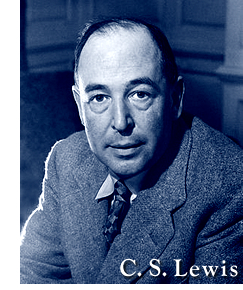
C.S. Lewis Daily – Today’s Reading


When I attempted . . . . to describe our spiritual longings, I was omitting one of their most curious characteristics. We usually notice it just as the moment of vision dies away, as the music ends, or as the land- scape loses the celestial light. . . . . For a few minutes we have had the illusion of belonging to that world. Now we wake to find that it is no such thing. We have been mere spectators. Beauty has smiled, but not to welcome us; her face was turned in our direction, but not to see us. We have not been accepted, welcomed, or taken into the dance. We may go when we please, we may stay if we can: “Nobody marks us.” A scientist may reply that since most of the things we call beautiful are inanimate, it is not very surprising that they take no notice of us. That, of course, is true. It is not the physical objects that I am speaking of, but that indescribable something of which they become for a moment the messengers. And part of the bitterness which mixes with the sweetness of that message is due to the fact that it so seldom seems to be a message intended for us, but rather something we have overheard. By bitterness I mean pain, not resentment. We should hardly dare to ask that any notice be taken of ourselves. But we pine. The sense that in this universe we are treated as strangers, the longing to be acknowledged, to meet with some response, to bridge some chasm that yawns between us and reality, is part of our inconsolable secret. And surely, from this point of view, the promise of glory, in the sense described, becomes highly relevant to our deep desire. For glory means good report with God, acceptance by God, response, acknowledgement, and welcome into the heart of things. The door on which we have been knocking all our lives will open at last.

From The Weight of Glory

Compiled in a Year with C.S. Lewis

Streams in the Desert for Kids – I Know for Sure


Hebrews 11:1

Mark was a young boy whose grandmother told him he could ask for one thing for his birthday from a catalogue. Mark spent the next few days pouring over the catalogue, looking at all the different things he could ask for. Should he ask for a new ski coat or new running shoes? Should he ask for a new book or a DVD? Should he ask for new swimming gear for the summer or a video game?

It took a long time, but Mark finally decided. He wrote a letter to his grandmother telling her that he wanted a brand new swim suit that he could use at her cottage on the lake that summer. He went to the mailbox to mail his letter, but instead of letting it go he held onto the end of it. He stood there for quite a while, thinking, Did I really ask for what I wanted most? Should I think some more about what to ask for? Maybe I want a red swim suit instead of the green one. Did my grandmother really mean it when she told me to ask for a present?

Finally, Mark pulled the letter out of the box and put it in his pocket and went home to worry about it some more. Guess what? He didn’t get a gift from his grandmother until he finally made up his mind to let the letter go. Then soon there was a package from her with his gift inside.

Having faith in God is something like that. If we trust God completely, we tell him what we need then we let it go. We go on about our business and see what he will do for us. That is what it means to be certain about what we do not see.

Dear Lord, I’m going to ask for something I really need. Then I’m going to let go and wait to see what you will do. Amen.