Charles Stanley – Falling in Love With Jesus


Psalm 63

When we fall in love, we want to spend time with the object of our affection and willingly give our attention to the relationship. Falling in love with Jesus should be no different, but believers often hurry through Bible reading and prayer. The result is a superficial faith kept alive by habit rather than worship. To attain lasting intimacy, we must approach God with a sense of purpose and determination.

Purpose. “Now set your heart and your soul to seek the lord your God,” King David advised the leaders of Israel (1 Chron. 22:19). Believers must choose whether to pursue God or chase after idols. If we desire intimacy with Him, it is necessary for us to approach the spiritual disciplines purposefully. Before opening Scripture, ask the Lord what He wants to say to you. Pray to understand His ways—He loves answering that request. And enter church with the intention of taking home a new truth from the Lord.

Determination. Indeed, my spirit within me seeks You diligently,” Isaiah told Yahweh (Isa. 26:9). But even when we do not feel like putting time into our relationship with Christ, we must determine to do so. A revelation from God won’t come every day, but a believer need not despair. Those who diligently seek the Savior experience His presence frequently in their worship.

Getting to know Jesus brings pure joy into a believer’s life. However, we must be willing to offer Him prime time, not our leftover minutes. Giving God attention and spending time with Him is one way to show Him we love Him. God gives us His best; we should put forth no less in return.

Bible in One Year: Mark 13-14


Our Daily Bread — The Cross and the Crown


Read: John 19:21-30

Bible in a Year: Isaiah 53-55; 2 Thessalonians 1

I am the resurrection and the life. The one who believes in me will live, even though they die. —John 11:25

Westminster Abbey in London has a rich historical background. In the 10th century, Benedictine monks began a tradition of daily worship there that still continues today. The Abbey is also the burial place of many famous people, and every English monarch since ad 1066 has been crowned at the Abbey. In fact, 17 of those monarchs are also buried there—their rule ending where it began.

No matter how grandiose their burial, world rulers rise and fall; they live and die. But another king, Jesus, though once dead, is no longer buried. In His first coming, Jesus was crowned with thorns and crucified as the “king of the Jews” (John 19:3,19). Because Jesus rose from the dead in victory, we who are believers in Christ have hope beyond the grave and the assurance that we will live with Him forever. Jesus said, “I am the resurrection and the life. The one who believes in me will live, even though they die; and whoever lives by believing in me will never die” (11:25-26).

We serve a risen King! May we gladly yield to His rule in our lives now as we look forward to the day when the “Lord God Almighty” will reign for all eternity (Rev. 19:6). —Bill Crowder

Thank You, Jesus, for rising from the dead and that You are alive forever.To learn more about the crown and cross Christ bore, check out The Mockery and Majesty of the Cross at discoveryseries.org/hp081

Jesus’ resurrection spelled the death of death.

INSIGHT: At Jesus’ crucifixion, all of the disciples (except John) were in hiding (Matt. 26:56; John 19:26). However, a group of women from Galilee kept vigil at the execution grounds until His burial (Matt. 27:55; Luke 23:55-46). “Many other women” were also there (Mark 15:41), but only four are identified in John 19:25: “his mother” (Mary); “his mother’s sister” (whom scholars say is Salome, the mother of Zebedee’s sons James and John); “Mary the wife of Clopas” (believed to be “Mary the mother of James the younger and of Joseph”); and “Mary Magdalene” (see Matt. 27:56; Mark 15:40). Sim Kay Tee


Alistair Begg – Overflowing with Abundance

Your wagon tracks overflow with abundance. Psalm 65:11

Many of the Lord’s tracks overflow with abundance, but a special one is the track of prayer. A believer, who is often in private prayer, will not need to cry, “My leanness has risen up against me.”1 Starving souls live at a distance from the mercy-seat and become like the parched fields in times of drought. Consistent wrestling in prayer with God is sure to make the believer strong-if not happy. The nearest place to the gate of heaven is the throne of heavenly grace. Often alone, you will have plenty of assurance; seldom alone with Jesus, your faith will be shallow, polluted with many doubts and fears and not sparkling with the joy of the Lord. Since the soul-enriching path of prayer is open to the very weakest saint, since no high achievements are required, since you are not invited to come because you are an advanced saint but freely invited if you are a saint at all, see to it, dear reader, that you are often in the place of private devotion. Be regularly on your knees, for in this way Elijah drew the rain upon Israel’s famished fields.

There is another special track overflowing with abundance to those who walk in it. It is the secret walk of communion that affords the delights of fellowship with Jesus! Earth has no words that can convey the holy calm of a soul leaning on Jesus. Few Christians understand it; they live in the lowlands and seldom climb to the top of the mountain; they live in the outer court and fail to enter the holy place; they do not take up the privilege of priesthood. They see the sacrifice from a distance, but they do not sit down with the priest to eat the meal and enjoy the overflowing abundance.

But, reader, learn to sit under the shadow of Jesus; come up to that palm tree, and take hold of its branches. Let your Beloved be to you as the apple tree among the timber, and you shall be satisfied with goodness and abundance. Come, Lord Jesus, and visit us with Your salvation!

1) Job 16:8

The Family Bible Reading Plan

  • 1 Kings 21
  • 1 Thessalonians 4

Devotional material is taken from “Morning and Evening,” written by C.H. Spurgeon, revised and updated by Alistair Begg

Charles Spurgeon – The true Christian’s blessedness


“We know that all things work together for good to them that love God, to them who are the called according to his purpose.” Romans 8:28

Suggested Further Reading: Philemon 4-20

All things work together for the Christian’s eternal and spiritual good. And yet I must say here, that sometimes all things work together for the Christian’s temporal good. You know the story of old Jacob. “Joseph is not, and Simeon is not, and ye will take Benjamin away; all these things are against me,” said the old patriarch. But if he could have read God’s secrets, he might have found that Simeon was not lost, for he was retained as a hostage—that Joseph was not lost, but gone before to smooth the passage of his grey hairs into the grave, and that even Benjamin was to be taken away by Joseph in love to his brother. So that what seemed to be against him, even in temporal matters, was for him. You may have heard also the story of that eminent martyr who was wont always to say, “All things work together for good.” When he was seized by the officers of Queen Mary, to be taken to the stake to be burned, he was treated so roughly on the road that he broke his leg; and they jeeringly said, “All things work together for good, do they? How will your broken leg work for your good?” “I don’t know,” he said, “but for my good I know it will work, and you shall see it so.” Strange to say, it proved true that it was for his good; for being delayed a day or so on the road through his lameness, he just arrived in London in time enough to hear that Elizabeth was proclaimed queen, and so he escaped the stake by his broken leg. He turned round upon the men who carried him, as they thought, to his death, and said to them, “Now will you believe that all things work together for good?”

For meditation: We are called upon to rejoice in our sufferings, not for their own sake, but because of the outcome (Romans 5:3,4; James 1:2-4). If we, like God, knew the end from the beginning, we would laugh in the midst of our trials, as we shall later (Luke 6:21).

Sermon no. 159

18 October (1857)

John MacArthur – God’s Transforming Word


“The law of the Lord is perfect, restoring the soul” (Ps. 19:7).

God can transform you through His Word into the person He wants you to be.

Many today doubt the power of Scripture in dealing with the deeper aspects of the human heart and mind. The Bible may be helpful for certain superficial or “spiritual” problems, they say, but it’s too simplistic and inadequate for the more complex psychological issues of modern man. The truth is, however, the best psychology can do is modify external behavior. It cannot redeem and transform the soul. Only God can do that through the power of His Word.

That’s the truth behind Psalm 19:7, which calls Scripture “the law of the Lord,” thus emphasizing its didactic nature. It is the sum of God’s instruction to man, whether for creed (what we believe), character (what we are), or conduct (what we do).

The law of the Lord is “perfect.” That represents a common Hebrew word that speaks of wholeness, completeness, or sufficiency. Commentator Albert Barnes wrote that Scripture “lacks nothing [for] its completeness; nothing in order that it might be what it should be. It is complete as a revelation of Divine truth; it is complete as a rule of conduct. . . . It is absolutely true; it is adapted with consummate wisdom to the [needs] of man; it is an unerring guide of conduct. There is nothing there which would lead men into error or sin; there is nothing essential for man to know which may not be found there” (Notes on the Old Testament: Psalms, Vol. 1 [Grand Rapids: Baker, 1974], p. 171).

Man’s reasoning is imperfect, but God’s Word is perfect, containing everything necessary for your spiritual life. It is so comprehensive that it can restore your soul. That is, convert, revive, refresh, and transform every aspect of your being to make you precisely the person God wants you to be.

Don’t look to impotent human alternatives when God’s Word stands ready to minister to your every need. Spiritual warfare is fought with spiritual weapons, not fleshly techniques, theories, or therapies (2 Cor. 10:4).

Suggestions for Prayer

Ask God to keep you focused on His counsel regarding every situation you face today.

For Further Study

Memorize 2 Corinthians 9:8 as a reminder of God’s super- abounding grace to you.

Joyce Meyer – Shake It Off


Let us strip off and throw aside every encumbrance (unnecessary weight)…and let us run with patient endurance and steady and active persistence the appointed course of the race that is set before us- Hebrews 12:1

One of my favorite stories is about a farmer’s donkey that fell into a dry well. The animal cried pitifully for hours as the farmer tried to figure out what to do for his poor donkey. Finally, he concluded that the well was too deep, and it really needed to be covered up anyway. Besides, the donkey was old, and it would be a lot of trouble to get him out of the pit. The farmer decided that it was not worth trying to retrieve the animal, so he asked his neighbors to help him fill in the well and bury the donkey.

They all grabbed shovels and began to toss dirt into the well. The donkey immediately realized what was happening, and he began to bray horribly. Crying would be our normal response if somebody was mistreating us this badly, so this donkey was responding the same way we would at first, but then he got real quiet. A few shovel loads of dirt later, the farmer looked down the well and was astonished at what he saw. With every shovel of dirt that hit the donkey’s back, the donkey would shake it off and step on top of it.

As the neighbors and the farmer continued to shovel dirt on top of the animal, he continued to shake it off and take a step up. Pretty soon the donkey shook off the last shovel full of dirt, took a step up, and walked right out of the well. We can learn from this story. When trouble comes, if we will get still and listen, God will tell us what to do. By the grace and mercy of God, I was able to shake off a lot of things in my life, a lot of hurt feelings, a lot of mistreatment, a lot of abuse, a lot of unfair, unjust, unkind things. Just like the donkey, in order to keep pressing on and have victory in our lives, we are going to have to learn to shake off the troubles that come our way.

From the book New Day, New You by Joyce Meyer.

Campus Crusade for Christ; Bill Bright – His Life in Us


“Jesus said, ‘I will only reveal Myself to those who love Me and obey Me. The Father will love them too, and We will come to them and live with them. Anyone who doesn’t obey Me doesn’t love Me” (John 14:23,24).

Millions of Christians throughout the world profess their love for Christ each week by attending church services, singing songs, studying their Bibles, attending prayer meetings, etc. Yet, all the talk in the world will never convince anyone that you or I truly love the Lord unless we obey His commandments.

How can we know His commandments unless we study His word? When we study His Word, how can we comprehend what He is saying unless the Holy Spirit illumines our minds and teaches us? It is God the Holy Spirit who inspired the writing for His holy Word through holy men. He alone can help us understand the true meaning of the Scripture and enable us to obey His commands.

Thus, the reality of Christ abiding in us is made possible through a supernatural enabling of the Holy Spirit who came to glorify Christ and through whose indwelling presence the Lord Jesus will reveal Himself to us.

Is Jesus Christ a reality in your life? If not, it is quite likely that you are not demonstrating your love for Him by studying His Word and obeying His commandments.

Bible Reading: John 14:15-22

TODAY’S ACTION POINT: With the help of the Holy Spirit who enable me to live the supernatural life, I will endeavor to demonstrate my love for Christ by studying His word and obeying His commandments.

Presidential Prayer Team; C.P. – Selective Hearing


The ability to focus on one sound and block out the rest is called selective hearing. People who live by railroad tracks are able to thrive in their homes because of selective hearing. However, there can be a downside, such as children blocking out their parents’ instructions as they focus on texting.

So we fasted and implored our God for this, and he listened to our entreaty.

Ezra 8:23

Selective hearing seems to be in operation when it comes to fasting, too. People remember to pray, but forget about fasting. Ezra knew what to do when he found himself in threatening situations, such as leading the Israelites from Babylon back to Jerusalem. He didn’t want to request protection from the king because he had previously boasted how God would take care of them (Ezra 8:22). So he called a fast.

Fasting isn’t just for way back then. It’s also required in this day and age. Jesus said “when” you fast, not if you do (Matthew 6:16). Set aside a regular day to fast, pray and seek God’s face. The Lord will respond to your requests, and because you will be in tune with His Spirit, you will be better able to recognize His answers.

Recommended Reading: Matthew 6:5-18

Night Light for Couples – Fight Fair


“Remind the people… to be peaceable and considerate, and to show true humility toward all.” Titus 3:1–2

Since some conflict in marriage is inevitable, learning to fight fair just might be the most important skill a couple can master. The key is to understand the difference between healthy and unhealthy combat. In an unstable marriage, hostility is aimed at the partner’s soft underbelly with comments such as “You never do anything right!” “Why did I marry you in the first place?” and “You’re getting more like your mother every day!”

These offensive remarks strike at the heart of self‐worth. Healthy conflict, by contrast, focuses on the issues that cause disagreement: “It upsets me when you don’t tell me you’re going to be late for dinner,” or “I was embarrassed when you made me look foolish at the party last night.” Can you hear the difference?

Even though these approaches may be equally contentious, the first assaults the dignity of the partner, while the second addresses the source of conflict. Couples who learn this important distinction are much better prepared to work through disagreements without wounds and insults.

Just between us…

  • When we have a fight, are we more likely to attack the person and miss the problem, or to attack the problem and protect the person?
  • What did Jesus say about yielding to others when we are unfairly attacked or criticized? (See Matthew 5:38–41; Luke 6:27–31.)
  • How would doing a better job of fighting fair help our relationship?
  • How can we support each other in doing this?

Father, we need Your help to show love and respect while we resolve differences. We don’t want disagreements to hurt the relationship You’ve graciously given us. We know Your power and wisdom can be ours each day, and we humbly ask for them. Amen.

From Night Light For Couples, by Dr. James & Shirley Dobson

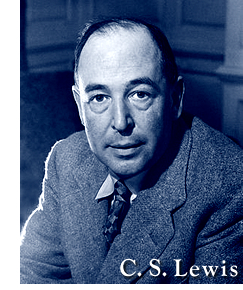
C.S. Lewis Daily – Today’s Reading


Niceness’—wholesome, integrated personality—is an excellent thing. We must try by every medical, educational, economic, and political means in our power to produce a world where as many people as possible grow up ‘nice’; just as we must try to produce a world where all have plenty to eat. But we must not suppose that even if we succeeded in making everyone nice we should have saved their souls. A world of nice people, content in their own niceness, looking no further, turned away from God, would be just as desperately in need of salvation as a miserable world—and might even be more difficult to save.

For mere improvement is not redemption, though redemption always improves people even here and now and will, in the end, improve them to a degree we cannot yet imagine. God became man to turn creatures into sons: not simply to produce better men of the old kind but to pro- duce a new kind of man. It is not like teaching a horse to jump better and better but like turning a horse into a winged creature. Of course, once it has got its wings, it will soar over fences which could never have been jumped and thus beat the natural horse at its own game. But there may be a period, while the wings are just beginning to grow, when it cannot do so: and at that stage the lumps on the shoulders—no one could tell by looking at them that they are going to be wings—may even give it an awkward appearance.

From Mere Christianity

Compiled in A Year with C.S. Lewis

Streams in the Desert for Kids – God’s Secrets


Psalm 25:14

Paleontologists study prehistoric life—that is, life that came before recorded history. They labor under harsh conditions, digging up ancient bones and fossils that help scientists understand more about God’s amazing diversity of creatures. This work isn’t easy: paleontologists work in the dust and the heat, digging slowly and carefully so they won’t damage any specimens. Because of this painstaking work, we have learned a great deal about life that came before us.

There are wonders and mysteries about God that we only get to know by being determined to learn about him. Those who fear God, dig deep into study about him, and pray and listen for his voice are the ones who get to know those secret mysteries and wonders. It’s like uncovering ancient bones or fossils that we didn’t even know existed until we started searching for them. Often people learn the most about God in hard times. What would you like to know about God and his great love?

Dear Lord, As I grow up, I want to know more about you. Please share your secrets, mysteries, and wonders with me. Amen.