Charles Stanley – Defend Against Temptation


James 1:12-16

To build a defense against temptation, we must understand how it works. Every sin originates as a thought, often the result of a flaming arrow Satan shoots our way (Eph. 6:16). If a believer holds on to the thought, it becomes a fantasy—the chance to imagine what it would be like to pursue that notion, without actually doing so. The problem with fantasies is that they can easily become entangled with a person’s emotions. This creates a desire, which brings the believer to the point where a choice must be made. And he or she must either consent to the sin or refuse. This process is quite dangerous, as the progression from thought to choice can be almost instantaneous.

Wise believers determine ahead of time to resist temptation—before it enters their consciousness. There are two cornerstones to a good defense: the commitment to obey God, and the recognition that He is in control and has limited what Satan can do (1 Cor. 10:13).

We can further fortify our defense when temptation actually comes. Satan has a way of spotlighting the pleasure of sin until it’s all we see. But with conscious effort, we can retrain our focus to take in the bigger picture: Is this choice a violation of God’s Word? What are the consequences? Am I prepared to pay that price?

No defense against temptation is complete without Scripture and prayer. Every moment spent meditating on the Word and communicating with God builds our faith. As the bulwark around our mind and heart strengthens, we are ever more prepared to douse Satan’s flaming arrows.

Bible in One Year: Matthew 22-24

Our Daily Bread — Love Comes First


Read: 1 John 4:7-19

Bible in a Year: Isaiah 34-36; Colossians 2

We love [God] because he first loved us. —1 John 4:19

One evening my friend showed me one of the three decorative plaques that would be part of a wall arrangement in her living room. “See, I’ve already got Love,” she said, holding up the plaque with the word written on it. “Faith and Hope are on order.”

So Love comes first, I thought. Faith and Hope soon follow!

Love did come first. In fact, it originated with God. First John 4:19 reminds us that “We love [God] because he first loved us.” God’s love, described in 1 Corinthians 13 (known as the “love chapter”), explains a characteristic of real love when it says, “Love never fails” (v. 8).

Faith and hope are essential to the believer. It is only because we are justified by faith that “we have peace with God through our Lord Jesus Christ” (Rom. 5:1). And hope is described in Hebrews 6 as “an anchor for the soul, firm and secure” (v. 19).

One day we will have no need of faith and hope. Faith will become sight and our hope will be realized when we see our Savior face to face. But love is eternal, for love is of God and God is love (1 John 4:7-8). “Now these three remain: faith, hope and love. But the greatest of these is love”—it’s first and last (1 Cor. 13:13). —Cindy Hess Kasper

Thank You, Lord, for Your faithful love and for the love of family and friends. Please help me find ways to show Your love to others today.

We love because God first loved us.

INSIGHT: John’s gospel carries the themes of light (1:5; 8:12) and truth (1:14; 18:38) throughout his record of Christ’s earthly ministry. In 1 John, he revisits both of those themes (1:5-6). Today’s reading focuses primarily on the character of God’s great love. Bill Crowder

Alistair Begg – Blameless


Jude 24

Let your mind revolve around that wonderful word “blameless”! We are far from it now; but since our Lord never stops short of perfection in His work of love, we will reach it one day. The Savior who will keep His people to the end will also present them finally to Himself as “the church . . . in splendor, without spot or wrinkle or any such thing.”1 All the jewels in the Savior’s crown are pure and without a single flaw. All the maids of honor who assist the Lamb’s wife are pure virgins without spot or stain.

But how will Jesus make us blameless? He will wash us from our sins in His own blood until we are as white and fair as God’s purest angel; and we will be clothed in His righteousness, that righteousness that makes the saint who wears it positively blameless-yes, perfect in the sight of God. We will be unblameable and unreprovable even in His eyes. Not only will His law have no charge against us, but it will be magnified in us. Moreover, the work of the Holy Spirit within us will be altogether complete. He will make us so perfectly holy that we will have no lingering tendency to sin. Judgment, memory, will-every power and passion will be set free from the tyranny of evil. We will be holy even as God is holy, and in His presence we will dwell forever. Saints will not be out of place in heaven; their beauty will be as great as that of the place prepared for them.

Oh, the intense delight of that hour when the everlasting doors will be lifted up, and we, being made fit for the inheritance, will dwell with the saints in light. Sin gone, Satan shut out, temptation past forever, and ourselves “blameless” before God-this will be heaven indeed!

Let us be joyful now as we rehearse the song of eternal praise that will soon sound forth in full chorus from all the blood-washed host; let us copy David’s exultings before the ark as a prelude to our ecstasies before the throne.

1 Ephesians 5:27

Family Bible reading plan

1 Kings 13

Phillipians 4

Charles Spurgeon – Self-examination


“Examine yourselves, whether ye be in the faith; prove your own selves. Know ye not your own selves, how that Jesus Christ is in you, except ye be reprobates?” 2 Corinthians 13:5

Suggested Further Reading: 1 Corinthians 11:23-32

“Examine:” that is a scholastic idea. A boy has been to school a certain time, and his master puts him through his paces—questions him, to see whether he has made any progress,—whether he knows anything. Christian, catechise your heart; question it, to see whether it has been growing in grace; question it, to see if it knows anything of vital godliness or not. Examine it: pass your heart through a stern examination as to what it does know and what it does not know, by the teaching of the Holy Spirit. Again: it is a military idea. “Examine yourselves,” or renew yourselves. Go through the rank and file of your actions, and examine all your motives. Just as the captain on review-day is not content with merely surveying the men from a distance, but must look at all their equipment, so look well to yourselves; examine yourselves with the most scrupulous care. And once again, this is a legal idea. “Examine yourselves.” You have seen the witness in the box, when the lawyer has been examining him, or, as we have it, cross-examining him. Now, mark: never was there a rogue less trustworthy or more deceitful than your own heart, and as when you are cross-examining a dishonest person—you set traps for him to try and find him out in a lie, so do with your own heart. Question it backward and forward, this way and that way; for if there be a loophole for escape, if there be any pretence for self-deception, rest assured your treacherous heart will be ready enough to avail itself of it. And yet once more: this is a traveller’s idea. I find in the original Greek, it has this meaning: “Go right through yourselves.”

For meditation: Is self-examination a foreign concept to you? It should be done as least as regularly as we observe the Lord’s Supper (1 Corinthians 11:28); God is able to assist us in our self-examination (Psalm 26:2; 139:23,24).

Sermon no. 218

10 October (1858)

John MacArthur – Searching for Truth


“Thy law is truth. . . . And all Thy commandments are truth. . . . The sum of Thy word is truth” (Ps. 119:142, 151, 160).

Scripture is the source of divine truth.

It amazes me how people can spend so much time searching for truth but ignore the Bible. In his poem Miriam, John Greenleaf Whittier reflected on the same conundrum:

We search the world for truth. We cull

The good, the pure, the beautiful,

From graven stone and written scroll,

From all old flower-fields of the soul;

And, weary seekers of the best,

We come back laden from the quest,

To find that all the sages said

Is in the Book our mothers read.

God never intended for truth to be mysterious or unattainable. His Word is a repository of truth, containing every principle we need for life and thought.

But knowing truth begins with knowing God, who is its author. First John 5:20 says, “We know that the Son of God has come, and has given us understanding, in order that we might know Him who is true, and we are in Him who is true, in His Son Jesus Christ. This is the true God and eternal life.”

The psalmist proclaimed, “The works of His hands are truth and justice; all His precepts are sure. They are upheld forever and ever; they are performed in truth and uprightness” (Ps. 111:7-8).

As Christians, we are those who walk in truth. That’s how Jesus described us when He prayed to the Father, “Sanctify them in the truth; Thy word is truth” (John 17:17). Similarly John said, “I have no greater joy than this, to hear of my children walking in the truth” (3 John 4). In contrast, unbelievers “suppress the truth in unrighteousness,” thus making themselves targets for the wrath of God (Rom. 1:18).

To love God is to love truth; to love truth is to love the Word. May you walk in the truth of God’s Word today and every day.

Suggestions for Prayer

Thank God for the privilege of knowing Him and being able to walk in His truth.

For Further Study

How does Jesus describe the Holy Spirit in John 14:17, 15:26, and 16:13?

Joyce Meyer – Looking Forward


Listen to and obey My voice, and I will be your God and you will be My people…But they would not listen to and obey Me or bend their ear [to Me], but followed the counsels and the stubborn promptings of their own evil hearts and minds, and they turned their backs and went in reverse instead of forward. —Jeremiah 7:23-24

I believe you are going to act on these devotional readings and begin living boldly and fearlessly as a confident woman. It doesn’t matter how you lived before now; this is a new beginning. Every day God’s mercy is new, and it is available for all of us today. Don’t look back; look forward!

Be decisive, follow your heart, and don’t be overly concerned about what other people think of you and your decisions. Most of them are not thinking about you as much as you might imagine that they are anyway.

Don’t live constantly comparing yourself with others; be your unique self. (See 2 Corinthians 10:12.) Celebrate who God has made you to be. There is only one who has the unique traits and skills that make up who you are. Enjoy the fact that God knew what He was doing, and rely on the thought that surely God said the same thing about you as He did when He called the world into creation: “And it was good.”

Lord, I will look forward today, and I will follow Your voice and obey. I take hold of Your mercy and rejoice in who You’ve made me to be. Amen.

From the book The Confident Woman Devotional: 365 Daily Devotions by Joyce Meyer.

Campus Crusade for Christ; Bill Bright – He Has Not Deserted Me


“And He who sent Me is with Me – He has not deserted Me – for I always do those things that are pleasing to Him” (John 8:29).

If we have a conscience free of offense, and if we have evidence that we please God, it matters little if men oppose us or what others may think of us. “Enoch, before his translation, had this testimony – that he pleased God.”

It would not be fair for you or me to profess ignorance in this matter of pleasing God. If we had never known before, we know now that it comes from doing always those things He commands – which of course are the things that please Him.

Jesus is saying here, among other things, that God is with Him in the working of miracles. Though men had forsaken and rejected Him, yet God stayed by Him and worked in and through Him.

In the same way, God has made it possible for us to please Him by giving us His Holy Spirit to indwell, enable and empower us for service. With the available enablement, we are without excuse in the matter of doing the “greater things” He has promised for those who love and serve Him.

What better goal for today, tomorrow and all our coming days than to seek to please Him?

Bible Reading: John 8:25-28

TODAY’S ACTION POINT: So that Christ might be magnified in my body, whether by life or by death, I will seek to do only those things today which please Him.

Presidential Prayer Team; J.K. – Keep Doubt Away


Unbelief is instability. Abraham was to be the father of a great nation, and for years he waited; his trust waivered and he went ahead of God, having a son by Hagar. But then he doubted the Lord’s promise no longer, giving only glory to Him and growing stronger in his faith until the promise was fulfilled in Isaac. “That is why his faith was ‘counted to him as righteousness.’” (Romans 4:22)

No unbelief made him waver concerning the promise of God, but he grew strong in his faith.

Romans 4:20

Has your faith weakened? Is there instability in your life, uncertainty on the job or an attitude of rebellion at school? Is government corruption making you doubt that any good will prevail? Or is it closer to home…has pain or sorrow made you doubt God’s goodness?

God’s promise is true. He “will never leave you nor forsake you.” (Hebrews 13:5) His plan is to work all things together for good for those who believe (Romans 8:28). In everything, give Him thanks and praise – keep unbelief and doubt away. Trust Him to give you peace. Grow in your faith as you study His Word. Then intercede for this nation and your family…for the stability that only belief in God can give.

Recommended Reading: Psalm 118:4-9, 28-29

Greg Laurie – The Problem with Self


“You should know this, that in the last days, there will be very difficult times. For people will love only themselves . . .” —2 Timothy 3:1–2

We are living in a culture that is completely self-absorbed. Consider these stats:

  • The Incidence of Narcissistic Personality Disorder is nearly three times as high for people in their twenties as for the generation that’s now 65 or older.
  • 58% more college students scored higher on a narcissism scale in 2009 than in 1982.
  • 40% of Millennials believe they should be promoted every two years, regardless of performance.

In the 1970s, people wanted to improve their kids’ chances, so the “self-esteem” movement was born. We were told that all of the social ills of the day were due to low self-esteem, and that we all needed to learn to love ourselves more.

As one expert said, “The problem is that when people tried to boost self-esteem, they boosted narcissism instead. All that self-esteem leads them to be disappointed when the world refuses to affirm how great they know they are.”

So, we enter into our marriages saying things like: “What’s in it for me?” and “What about my needs?” This leads to such inane statements as “I’m no longer happy in this marriage,” and “I need to find myself!”

Where does this selfishness come from? “Where do you think all these appalling wars and quarrels come from? Do you think they just happen? Think again. They come about because you want your own way, and fight for it deep inside yourselves” (James 4:1–2 MSG).

This is something the Bible says would be a sign of the end times: “You should know this, that in the last days, there will be very difficult times. For people will love only themselves . . .” (2 Timothy 3:1–2 NLT).

So, what is the antidote to selfishness? It is selflessness!

Philippians 2:2–8 tells us, “Don’t be selfish; don’t live to make a good impression on others. Be humble, thinking of others as better than yourself. Don’t think only about your own affairs, but be interested in others, too, and what they are doing. Your attitude should be the same that Christ Jesus had. Though he was God, he did not demand and cling to his rights as God. He made himself nothing; he took the humble position of a slave and appeared in human form. And in human form he obediently humbled himself even further by dying a criminal’s death on a cross” (NLT).

Night Light for Couples – Side By Side


“Encourage one another daily.” Hebrews 3:13

The Greek translation for the word encouragement is parakletos, which literally means “called alongside to help.” It brings to mind the scriptural image of two people yoked side by side, as when Jesus said, “Take my yoke upon you and learn from me…. For my yoke is easy and my burden is light” (Matthew 11:29–30). This kind of encouragement includes offering an uplifting word, but it is more than that. It is standing by your husband and keeping an attitude of good cheer when he is laid off his job. It is pitching in to finish the dishes when your wife is too tired to stand. It’s crouching down to a four‐year‐old’s eye level and listening sympathetically as she tearfully tells you about her skinned knee.

The act of encouraging doesn’t include instructing your partner on what to do about a problem. It doesn’t include giving advice, offering tips for improving in the future, or uttering hollow words such as “You really should have known better than to make that foolish mistake” or “Get over it.” Instead, encouragement is a participation game. When you stand alongside your mate and share his or her troubles, you’ve become a practitioner of parakletos and an exceptional source of courage, hope, and happiness.

Just between us…

  • Do you know anyone who always makes you feel good about yourself?
  • How do they do it? Why is it often so difficult to think about the other person first? • How has God used me to “come alongside” you?
  • How can I do better?

Lord Jesus, thank You that You put it within our power to encourage others. May we grow in that ministry. May we become experts at it—starting in our marriage. Amen.

Encourage one another daily.

From Night Light For Couples, by Dr. James & Shirley Dobson

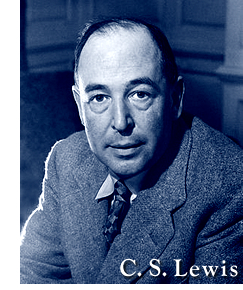
C.S. Lewis Daily – Today’s Reading


TO SHELDON VANAUKEN, who had asked whether he should continue with his postgraduate work in history or study theology: On the danger of combining one’s vocation with one’s spiritual interest.

5 January 1951

We must ask three questions about the probable effect of your research subject to something more theological.

(1.) Would it be better for your immediate enjoyment? Answer, probably but not certainly, Yes.

(2.) Would it be better for your academic career? Answer, probably No. You would have to make up in haste a lot of knowledge which could not be very easily digested in the time.

(3.) Would it be better for your soul? I don’t know. I think there is a great deal to be said for having one’s deepest spiritual interest distinct from one’s ordinary duty as a student or professional man.

St. Paul’s job was tent-making. When the two coincide I should have thought there was a danger lest the natural interest in one’s job and the pleasures of gratified ambition might be mistaken for spiritual progress and spiritual consolation: and I think clergymen sometimes fall into this trap.

Contrariwise, there is the danger that what is boring or repellent in the job may alienate one from the spiritual life. And finally someone has said ‘None are so unholy as those whose hands are cauterised with holy things’: sacred things may become profane by becoming matters of the job. You now want truth for her own sake: how will it be when the same truth is also needed for an effective footnote in your thesis? In fact, the change might do good or harm. I’ve always been glad myself that Theology is not the thing I earn my living by. On the whole, I’d advise you to get on with your tent-making. The performance of a duty will probably teach you quite as much about God as academic Theology would do. Mind, I’m not certain: but that is the view I incline to.

From The Collected Letters of C.S. Lewis, Volume III

Compiled in Yours, Jack

Streams in the Desert for Kids – Everyone, Come Now!


Joel 2:32

Jeremy was just about the meanest kid in town. He beat up smaller kids. He stole candy from the store. He picked on animals. He had even been in trouble with the law for some of the things he had done. Some people called him “incorrigible.” Incorrigible means that a person is impossible to correct. They are incurably bad, and punishment doesn’t seem to make any difference.

There have been some real bad guys in history, but even they are included when God said, “Everyone who calls on the name of the Lord will be saved.” If they had asked God to forgive their sins, he would have. Wow! Every single person who asks God to save him will be saved.

So when you are in a bad situation or facing a tough time, remember that you too can call on the Lord. He answers anyone—bad guys, good guys, in easy times, in hard times. There is never a reason to keep you from asking God for his salvation and help.

Dear Lord, You answer prayers, even from people who are so bad it seems they can’t be saved. But your Word says that anyone can come to you for help and salvation. Please remind me of that promise whenever I am in a tough spot. Amen.