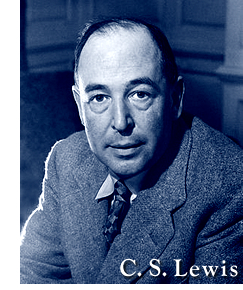
C.S. Lewis Daily – Today’s Reading


TO GENIA GOELZ: On the reality of our individuality in the body of Christ; and on the five sources of discernment: the scripture, the church, Christian friends, books, and meditation.

20 June 1952

Thanks for yours of the 10th. I would prefer to combat the ‘I’m special’ feeling not by the thought ‘I’m no more special than anyone else’ but by the feeling ‘Everyone is as special as me.’ In one way there is no difference, I grant, for both remove the speciality. But there is a difference in another way. The first might lead you to think, ‘I’m only one of the crowd like anyone else’. But the second leads to the truth that there isn’t any crowd. No one is like anyone else. All are ‘members’ (organs) in the Body of Christ [I Corinthians 12:27]. All different and all necessary to the whole and to one another: each loved by God individually, as if it were the only creature in existence. Otherwise you might get the idea that God is like the government which can only deal with the people as the mass.

About confession, I take it that the view of our Church is that everyone may use it but none is obliged to. I don’t doubt that the Holy Spirit guides your decisions from within when you make them with the intention of pleasing God. The error would be to think that He speaks only within whereas, in reality, He speaks also through Scripture, the Church, Christian friends, books et cetera.

From The Collected Letters of C.S. Lewis, Volume III

Compiled in Yours, Jack

Charles Stanley – Falling in Love With Jesus


Psalm 63

When we fall in love, we want to spend time with the object of our affection and willingly give our attention to the relationship. Falling in love with Jesus should be no different, but believers often hurry through Bible reading and prayer. The result is a superficial faith kept alive by habit rather than worship. To attain lasting intimacy, we must approach God with a sense of purpose and determination.

Purpose. “Now set your heart and your soul to seek the lord your God,” King David advised the leaders of Israel (1 Chron. 22:19). Believers must choose whether to pursue God or chase after idols. If we desire intimacy with Him, it is necessary for us to approach the spiritual disciplines purposefully. Before opening Scripture, ask the Lord what He wants to say to you. Pray to understand His ways—He loves answering that request. And enter church with the intention of taking home a new truth from the Lord.

Determination. Indeed, my spirit within me seeks You diligently,” Isaiah told Yahweh (Isa. 26:9). But even when we do not feel like putting time into our relationship with Christ, we must determine to do so. A revelation from God won’t come every day, but a believer need not despair. Those who diligently seek the Savior experience His presence frequently in their worship.

Getting to know Jesus brings pure joy into a believer’s life. However, we must be willing to offer Him prime time, not our leftover minutes. Giving God attention and spending time with Him is one way to show Him we love Him. God gives us His best; we should put forth no less in return.

Bible in One Year: Mark 13-14


Our Daily Bread — The Cross and the Crown


Read: John 19:21-30

Bible in a Year: Isaiah 53-55; 2 Thessalonians 1

I am the resurrection and the life. The one who believes in me will live, even though they die. —John 11:25

Westminster Abbey in London has a rich historical background. In the 10th century, Benedictine monks began a tradition of daily worship there that still continues today. The Abbey is also the burial place of many famous people, and every English monarch since ad 1066 has been crowned at the Abbey. In fact, 17 of those monarchs are also buried there—their rule ending where it began.

No matter how grandiose their burial, world rulers rise and fall; they live and die. But another king, Jesus, though once dead, is no longer buried. In His first coming, Jesus was crowned with thorns and crucified as the “king of the Jews” (John 19:3,19). Because Jesus rose from the dead in victory, we who are believers in Christ have hope beyond the grave and the assurance that we will live with Him forever. Jesus said, “I am the resurrection and the life. The one who believes in me will live, even though they die; and whoever lives by believing in me will never die” (11:25-26).

We serve a risen King! May we gladly yield to His rule in our lives now as we look forward to the day when the “Lord God Almighty” will reign for all eternity (Rev. 19:6). —Bill Crowder

Thank You, Jesus, for rising from the dead and that You are alive forever.To learn more about the crown and cross Christ bore, check out The Mockery and Majesty of the Cross at discoveryseries.org/hp081

Jesus’ resurrection spelled the death of death.

INSIGHT: At Jesus’ crucifixion, all of the disciples (except John) were in hiding (Matt. 26:56; John 19:26). However, a group of women from Galilee kept vigil at the execution grounds until His burial (Matt. 27:55; Luke 23:55-46). “Many other women” were also there (Mark 15:41), but only four are identified in John 19:25: “his mother” (Mary); “his mother’s sister” (whom scholars say is Salome, the mother of Zebedee’s sons James and John); “Mary the wife of Clopas” (believed to be “Mary the mother of James the younger and of Joseph”); and “Mary Magdalene” (see Matt. 27:56; Mark 15:40). Sim Kay Tee


Alistair Begg – Overflowing with Abundance

Your wagon tracks overflow with abundance. Psalm 65:11

Many of the Lord’s tracks overflow with abundance, but a special one is the track of prayer. A believer, who is often in private prayer, will not need to cry, “My leanness has risen up against me.”1 Starving souls live at a distance from the mercy-seat and become like the parched fields in times of drought. Consistent wrestling in prayer with God is sure to make the believer strong-if not happy. The nearest place to the gate of heaven is the throne of heavenly grace. Often alone, you will have plenty of assurance; seldom alone with Jesus, your faith will be shallow, polluted with many doubts and fears and not sparkling with the joy of the Lord. Since the soul-enriching path of prayer is open to the very weakest saint, since no high achievements are required, since you are not invited to come because you are an advanced saint but freely invited if you are a saint at all, see to it, dear reader, that you are often in the place of private devotion. Be regularly on your knees, for in this way Elijah drew the rain upon Israel’s famished fields.

There is another special track overflowing with abundance to those who walk in it. It is the secret walk of communion that affords the delights of fellowship with Jesus! Earth has no words that can convey the holy calm of a soul leaning on Jesus. Few Christians understand it; they live in the lowlands and seldom climb to the top of the mountain; they live in the outer court and fail to enter the holy place; they do not take up the privilege of priesthood. They see the sacrifice from a distance, but they do not sit down with the priest to eat the meal and enjoy the overflowing abundance.

But, reader, learn to sit under the shadow of Jesus; come up to that palm tree, and take hold of its branches. Let your Beloved be to you as the apple tree among the timber, and you shall be satisfied with goodness and abundance. Come, Lord Jesus, and visit us with Your salvation!

1) Job 16:8

The Family Bible Reading Plan

  • 1 Kings 21
  • 1 Thessalonians 4

Devotional material is taken from “Morning and Evening,” written by C.H. Spurgeon, revised and updated by Alistair Begg

Charles Spurgeon – The true Christian’s blessedness


“We know that all things work together for good to them that love God, to them who are the called according to his purpose.” Romans 8:28

Suggested Further Reading: Philemon 4-20

All things work together for the Christian’s eternal and spiritual good. And yet I must say here, that sometimes all things work together for the Christian’s temporal good. You know the story of old Jacob. “Joseph is not, and Simeon is not, and ye will take Benjamin away; all these things are against me,” said the old patriarch. But if he could have read God’s secrets, he might have found that Simeon was not lost, for he was retained as a hostage—that Joseph was not lost, but gone before to smooth the passage of his grey hairs into the grave, and that even Benjamin was to be taken away by Joseph in love to his brother. So that what seemed to be against him, even in temporal matters, was for him. You may have heard also the story of that eminent martyr who was wont always to say, “All things work together for good.” When he was seized by the officers of Queen Mary, to be taken to the stake to be burned, he was treated so roughly on the road that he broke his leg; and they jeeringly said, “All things work together for good, do they? How will your broken leg work for your good?” “I don’t know,” he said, “but for my good I know it will work, and you shall see it so.” Strange to say, it proved true that it was for his good; for being delayed a day or so on the road through his lameness, he just arrived in London in time enough to hear that Elizabeth was proclaimed queen, and so he escaped the stake by his broken leg. He turned round upon the men who carried him, as they thought, to his death, and said to them, “Now will you believe that all things work together for good?”

For meditation: We are called upon to rejoice in our sufferings, not for their own sake, but because of the outcome (Romans 5:3,4; James 1:2-4). If we, like God, knew the end from the beginning, we would laugh in the midst of our trials, as we shall later (Luke 6:21).

Sermon no. 159

18 October (1857)

John MacArthur – God’s Transforming Word


“The law of the Lord is perfect, restoring the soul” (Ps. 19:7).

God can transform you through His Word into the person He wants you to be.

Many today doubt the power of Scripture in dealing with the deeper aspects of the human heart and mind. The Bible may be helpful for certain superficial or “spiritual” problems, they say, but it’s too simplistic and inadequate for the more complex psychological issues of modern man. The truth is, however, the best psychology can do is modify external behavior. It cannot redeem and transform the soul. Only God can do that through the power of His Word.

That’s the truth behind Psalm 19:7, which calls Scripture “the law of the Lord,” thus emphasizing its didactic nature. It is the sum of God’s instruction to man, whether for creed (what we believe), character (what we are), or conduct (what we do).

The law of the Lord is “perfect.” That represents a common Hebrew word that speaks of wholeness, completeness, or sufficiency. Commentator Albert Barnes wrote that Scripture “lacks nothing [for] its completeness; nothing in order that it might be what it should be. It is complete as a revelation of Divine truth; it is complete as a rule of conduct. . . . It is absolutely true; it is adapted with consummate wisdom to the [needs] of man; it is an unerring guide of conduct. There is nothing there which would lead men into error or sin; there is nothing essential for man to know which may not be found there” (Notes on the Old Testament: Psalms, Vol. 1 [Grand Rapids: Baker, 1974], p. 171).

Man’s reasoning is imperfect, but God’s Word is perfect, containing everything necessary for your spiritual life. It is so comprehensive that it can restore your soul. That is, convert, revive, refresh, and transform every aspect of your being to make you precisely the person God wants you to be.

Don’t look to impotent human alternatives when God’s Word stands ready to minister to your every need. Spiritual warfare is fought with spiritual weapons, not fleshly techniques, theories, or therapies (2 Cor. 10:4).

Suggestions for Prayer

Ask God to keep you focused on His counsel regarding every situation you face today.

For Further Study

Memorize 2 Corinthians 9:8 as a reminder of God’s super- abounding grace to you.

Joyce Meyer – Shake It Off


Let us strip off and throw aside every encumbrance (unnecessary weight)…and let us run with patient endurance and steady and active persistence the appointed course of the race that is set before us- Hebrews 12:1

One of my favorite stories is about a farmer’s donkey that fell into a dry well. The animal cried pitifully for hours as the farmer tried to figure out what to do for his poor donkey. Finally, he concluded that the well was too deep, and it really needed to be covered up anyway. Besides, the donkey was old, and it would be a lot of trouble to get him out of the pit. The farmer decided that it was not worth trying to retrieve the animal, so he asked his neighbors to help him fill in the well and bury the donkey.

They all grabbed shovels and began to toss dirt into the well. The donkey immediately realized what was happening, and he began to bray horribly. Crying would be our normal response if somebody was mistreating us this badly, so this donkey was responding the same way we would at first, but then he got real quiet. A few shovel loads of dirt later, the farmer looked down the well and was astonished at what he saw. With every shovel of dirt that hit the donkey’s back, the donkey would shake it off and step on top of it.

As the neighbors and the farmer continued to shovel dirt on top of the animal, he continued to shake it off and take a step up. Pretty soon the donkey shook off the last shovel full of dirt, took a step up, and walked right out of the well. We can learn from this story. When trouble comes, if we will get still and listen, God will tell us what to do. By the grace and mercy of God, I was able to shake off a lot of things in my life, a lot of hurt feelings, a lot of mistreatment, a lot of abuse, a lot of unfair, unjust, unkind things. Just like the donkey, in order to keep pressing on and have victory in our lives, we are going to have to learn to shake off the troubles that come our way.

From the book New Day, New You by Joyce Meyer.

Campus Crusade for Christ; Bill Bright – His Life in Us


“Jesus said, ‘I will only reveal Myself to those who love Me and obey Me. The Father will love them too, and We will come to them and live with them. Anyone who doesn’t obey Me doesn’t love Me” (John 14:23,24).

Millions of Christians throughout the world profess their love for Christ each week by attending church services, singing songs, studying their Bibles, attending prayer meetings, etc. Yet, all the talk in the world will never convince anyone that you or I truly love the Lord unless we obey His commandments.

How can we know His commandments unless we study His word? When we study His Word, how can we comprehend what He is saying unless the Holy Spirit illumines our minds and teaches us? It is God the Holy Spirit who inspired the writing for His holy Word through holy men. He alone can help us understand the true meaning of the Scripture and enable us to obey His commands.

Thus, the reality of Christ abiding in us is made possible through a supernatural enabling of the Holy Spirit who came to glorify Christ and through whose indwelling presence the Lord Jesus will reveal Himself to us.

Is Jesus Christ a reality in your life? If not, it is quite likely that you are not demonstrating your love for Him by studying His Word and obeying His commandments.

Bible Reading: John 14:15-22

TODAY’S ACTION POINT: With the help of the Holy Spirit who enable me to live the supernatural life, I will endeavor to demonstrate my love for Christ by studying His word and obeying His commandments.

Presidential Prayer Team; C.P. – Selective Hearing


The ability to focus on one sound and block out the rest is called selective hearing. People who live by railroad tracks are able to thrive in their homes because of selective hearing. However, there can be a downside, such as children blocking out their parents’ instructions as they focus on texting.

So we fasted and implored our God for this, and he listened to our entreaty.

Ezra 8:23

Selective hearing seems to be in operation when it comes to fasting, too. People remember to pray, but forget about fasting. Ezra knew what to do when he found himself in threatening situations, such as leading the Israelites from Babylon back to Jerusalem. He didn’t want to request protection from the king because he had previously boasted how God would take care of them (Ezra 8:22). So he called a fast.

Fasting isn’t just for way back then. It’s also required in this day and age. Jesus said “when” you fast, not if you do (Matthew 6:16). Set aside a regular day to fast, pray and seek God’s face. The Lord will respond to your requests, and because you will be in tune with His Spirit, you will be better able to recognize His answers.

Recommended Reading: Matthew 6:5-18

Night Light for Couples – Fight Fair


“Remind the people… to be peaceable and considerate, and to show true humility toward all.” Titus 3:1–2

Since some conflict in marriage is inevitable, learning to fight fair just might be the most important skill a couple can master. The key is to understand the difference between healthy and unhealthy combat. In an unstable marriage, hostility is aimed at the partner’s soft underbelly with comments such as “You never do anything right!” “Why did I marry you in the first place?” and “You’re getting more like your mother every day!”

These offensive remarks strike at the heart of self‐worth. Healthy conflict, by contrast, focuses on the issues that cause disagreement: “It upsets me when you don’t tell me you’re going to be late for dinner,” or “I was embarrassed when you made me look foolish at the party last night.” Can you hear the difference?

Even though these approaches may be equally contentious, the first assaults the dignity of the partner, while the second addresses the source of conflict. Couples who learn this important distinction are much better prepared to work through disagreements without wounds and insults.

Just between us…

  • When we have a fight, are we more likely to attack the person and miss the problem, or to attack the problem and protect the person?
  • What did Jesus say about yielding to others when we are unfairly attacked or criticized? (See Matthew 5:38–41; Luke 6:27–31.)
  • How would doing a better job of fighting fair help our relationship?
  • How can we support each other in doing this?

Father, we need Your help to show love and respect while we resolve differences. We don’t want disagreements to hurt the relationship You’ve graciously given us. We know Your power and wisdom can be ours each day, and we humbly ask for them. Amen.

From Night Light For Couples, by Dr. James & Shirley Dobson

C.S. Lewis Daily – Today’s Reading


Niceness’—wholesome, integrated personality—is an excellent thing. We must try by every medical, educational, economic, and political means in our power to produce a world where as many people as possible grow up ‘nice’; just as we must try to produce a world where all have plenty to eat. But we must not suppose that even if we succeeded in making everyone nice we should have saved their souls. A world of nice people, content in their own niceness, looking no further, turned away from God, would be just as desperately in need of salvation as a miserable world—and might even be more difficult to save.

For mere improvement is not redemption, though redemption always improves people even here and now and will, in the end, improve them to a degree we cannot yet imagine. God became man to turn creatures into sons: not simply to produce better men of the old kind but to pro- duce a new kind of man. It is not like teaching a horse to jump better and better but like turning a horse into a winged creature. Of course, once it has got its wings, it will soar over fences which could never have been jumped and thus beat the natural horse at its own game. But there may be a period, while the wings are just beginning to grow, when it cannot do so: and at that stage the lumps on the shoulders—no one could tell by looking at them that they are going to be wings—may even give it an awkward appearance.

From Mere Christianity

Compiled in A Year with C.S. Lewis

Streams in the Desert for Kids – God’s Secrets


Psalm 25:14

Paleontologists study prehistoric life—that is, life that came before recorded history. They labor under harsh conditions, digging up ancient bones and fossils that help scientists understand more about God’s amazing diversity of creatures. This work isn’t easy: paleontologists work in the dust and the heat, digging slowly and carefully so they won’t damage any specimens. Because of this painstaking work, we have learned a great deal about life that came before us.

There are wonders and mysteries about God that we only get to know by being determined to learn about him. Those who fear God, dig deep into study about him, and pray and listen for his voice are the ones who get to know those secret mysteries and wonders. It’s like uncovering ancient bones or fossils that we didn’t even know existed until we started searching for them. Often people learn the most about God in hard times. What would you like to know about God and his great love?

Dear Lord, As I grow up, I want to know more about you. Please share your secrets, mysteries, and wonders with me. Amen.

Charles Stanley – The Best Friend You Will Ever Have


Song of Solomon 5:16

Many of us are familiar with the popular hymn “What a Friend We Have in Jesus.” We all agree that the Savior is a great friend, but few of us have an exhaustive knowledge of the heights and depths of His friendship. Let’s consider some of the elements of His relationship with us.

He is committed to us as a friend for life. In fact, this commitment is for more than a lifetime. It’s eternal. He will never leave you or me, no matter what we do. And though life is bound to hold some disappointments, the Lord Himself will never let us down.

He is open and transparent to us at all times. Jesus will show us as much about Himself as we desire to learn and are able to appreciate. He isn’t going to keep from us anything that we need to know about Him.

He is renewing His loving overtures on a daily basis. He knows how to meet our deepest longings, and He’s sensitive to our wants as well as our needs.

He is an inspiring, comforting listener who will never interrupt or be quick to criticize. He attends wholeheartedly to our requests. His eyes are so lovingly fixed on us that His heart hears exactly what we are saying.

What kind of friend is Jesus? John 15:13 answers that question: “Greater love has no one than this, that one lay down his life for his friends.” Because He gave Himself for all people, we as His followers can give ourselves for a few. Who in your circle of influence needs the sacrifice of your time or care? Take time to minister to them and provide for their needs, because there is no greater privilege than being the hands and feet of Jesus.

Bible in One Year: Mark 10-12

Our Daily Bread — The Rugged Road


Read: Psalm 25:4-11

Bible in a Year: Isaiah 50-52; 1 Thessalonians 5

Ask where the good way is, and walk in it, and you will find rest for your souls. —Jeremiah 6:16

A fishing buddy of mine told me about an alpine lake located high on the north flank of Jughandle Mountain here in Idaho. Rumor had it that large cutthroat trout lurked up there. My friend got a pencil and scrap of napkin and drew a map for me. Several weeks later I gassed up my truck and set out to follow his directions.

His map put me on one of the worst roads I’ve ever driven! It was an old logging road that had been bulldozed through the forest and never regraded. Washouts, fallen timber, deep ruts, and large rocks battered my spine and bent the undercarriage of my truck. It took half a morning to reach my destination, and when I finally arrived I asked myself, “Why would a friend send me up a road like this?”

But the lake was magnificent and the fish were indeed large and scrappy! My friend had put me on the right road—one I would have chosen myself and patiently endured had I known what I knew at the end.

There is a faithful saying: “All the ways of the Lord are loving and faithful toward those who keep the demands of his covenant” (Ps. 25:10). Some of God’s paths for us are rough and rugged, others tedious and boring, but all are filled with His love and faithfulness. When we come to the end of our journey and know what we then will know, we will say, “God’s path was best for me.” —David Roper

Father, we don’t see the end of the road, but You do. We trust You for what we can’t see. We know that You are bringing us through it.

Our path may have obstacles, but God will lead us.

INSIGHT: In verse 8 of today’s reading, David describes the Lord as good and upright. What God’s character causes Him to do, however, is quite surprising. Rather than His holiness leading Him away from us—who are sinful and far from holy—His mercy leads Him to instruct us in His ways. Because we know God is good, we can trust Him. J.R. Hudberg

Ravi Zacharias Ministry – Is Anything “Wrong”?

Ravi Zacharias Ministry –  Is Anything “Wrong”?

Posted by Tanya Walker on September 25, 2015 – RZIM – Just Thinking.

We live in a generation rife with contradictions in its understanding of moral values. On the one hand, we are witnessing the confused blurring of lines between good and evil, and a desecrating of boundaries that were intended to keep us from harm. On the other, there is widespread dogmatism and an indignant moral outrage at the real or imagined offenses of others.

The prophetic voice of the church is desperately needed in this mix of confusion and contradiction. Questions about the very concept of moral absolutes have never been more important. Do moral absolutes—unchanging moral values that are independent of humankind and are discovered rather than constructed by us—even exist? What is the reference point for the content of our moral values? And how are they to be grounded?

God and Morality

You may have heard Christian voices making this argument, but you might be surprised to learn that an impressive array of atheist academics concur that if God does not exist, objective moral values do not exist, because there is no way of ultimately grounding them.

The theist goes on to note that belief in the existence of objective moral values is one of the most deeply ingrained, intuitive beliefs of the human race. As such, it gives us good reason to believe in God:

If God does not exist, objective moral values do not exist.

Objective moral values do exist.

Therefore God exists.

The atheist insists that there is no God, and therefore has to force the issue on morality:

If God does not exist, objective moral values do not exist.

God does not exist.

Therefore objective moral values do not exist.

This final conclusion is at odds with what appears to be a self-evident moral sense, and thus has warranted further explanation from the atheist camp. The narrative offered goes something like this: human beings—and in fact our whole universe—are the product of matter, time and chance, together with the processes of evolution, which are geared towards the survival of the fittest. We have what appears to be a very deeply ingrained sense of an objective right and wrong, as though it has been hard-wired into our systems.

In a sense it has been hard-wired: it is an illusion (atheists argue) brought about by our genes, because it enhances our chance of survival. So there is no issue or contradiction within atheism with regards to our sense of moral absolutes—the sense of these absolutes is an evolutionary illusion.

There are significant problems with this line of reasoning, and I will raise two. Firstly, the broader systemic problem. The atheist tells us that selfish genes, fighting for survival through the processes of evolution, have brought about what we refer to as human beings. The entirety of the human framework, controlled by our genes, is geared towards the aims of that evolutionary process, namely survival, and not (ultimately) towards understandings of truth and reality.1It, therefore, becomes possible to argue that however much we may think and feel that there is an objective morality, and however much it appears to us to be self-evidently the case that there are some things that are genuinely evil and others that are good, this is just an illusion brought about by genes that ultimately have no regard for truth but only for that which is convenient in the aim of survival.

If this is in fact the case, the atheist has a much bigger problem than the explaining of morality at hand. Our very reasoning (our minds) can no longer be trusted, because we can only assume that our minds, controlled by our genes, are not geared towards truth but towards whatever might aid our survival. In fact, the atheist philosopher John Gray concedes exactly that when he writes, “The human mind serves evolutionary success, not truth.”2 It is a staggering claim.

Our colleague John Lennox responds to Gray with a serious rebuttal:

But what about Gray’s own mind…one must suppose, according to Gray, that his writing this sentence [“The human mind serves evolutionary success, not truth”] serves evolutionary success. Well, it certainly would appear to serve the success of evolutionary theory, if it were true. But then Gray has undermined the very concept of truth, and so has removed all reason for us to take him seriously. Logical incoherence reigns once more.3

Again, there is a significant systemic problem in the atheist explanation of morality being just an illusion of our genes. All rationality becomes undependable in that framework.

Leaving aside this issue, secondly, we hit another, more immediate problem. The claim that morality is an evolutionary construct geared towards the survival of the fittest doesn’t seem to be borne out intuitively by the kinds of things that morality seems to demand of us, in contrast to the kinds of things that would seem to ensure the survival of the fittest. Greg Koukl writes: “Consider two cavemen in neighboring villages. One kills the other in cold blood. We’re being asked to believe he feels guilt, because he realizes such an act ultimately undermines his own survival status…. In the rest of the animal kingdom, killing the opposition seems to secure just the opposite.”4

It’s a little tongue in cheek, but the point remains. It is not necessarily clear how caring for the weak, the vulnerable, the sick, the dying or the elderly helps the survival of the selfish gene. One might expect self-sacrifice in such a system to be considered morally good only if weaker persons sacrifice themselves for stronger individuals. And yet it is a person like Mother Teresa who captures the public imagination in setting for us an incredible standard of moral living. We applaud the courage and the character of those who lay their lives down for the weakest among us. There is a significant gap between what we actually find honorable, valiant, good, kind, righteous, and pure, and what we’re being told is the impetus for that belief.

This kind of forced reasoning—the idea that there is no God, and therefore the need to fudge the lines on objective morality—has raised some important questions and a backlash from within the atheist camp itself. Peter Cave, the humanist philosopher, writes, “Whatever skeptical arguments may be brought against our belief that killing the innocent is wrong, we are more certain that the killing is morally wrong, than that the argument is sound.”5 It is a telling insight.

Religious Atheism

We have, as a result, a growing field of “religious atheism” as it’s been dubbed by some: atheists who have wanted to hold on to an objective morality but deny the need for its grounding in God. Sam Harris has been the most prominent voice in this field at the popular level. In 2010, he published the book The Moral Landscape: How Science Can Determine Human Values and in it he says that we do not need God, as the world of science can give us the grounding and the context in which we encounter moral truth. Harris writes, “We simply must stand somewhere. I am arguing that, in the moral sphere, it is safe to begin with the premise that it is good to avoid behaving in such a way as to produce the worst possible misery for everyone.”6

With that statement taken as a given, he goes on, throughout the book, to bring various definitions of what the opposite of that misery (what he calls “human well-being”) would look like, and to suggest ways in which neuroscience might, in the future, provide us with ways of measuring that well-being. If science achieves such a feat, Harris argues, we would be able to say (with objectivity) whether one culture or another—or one set of ideas or another—enhanced or diminished human wellbeing and was therefore “true” or “false” with regard to moral values. In other words, we would encounter moral truth grounded in science, as opposed to God.

Can you see the problem? Harris starts by assuming that moral truths exist, and even outlining that they can be boiled down to the idea of well-being. He hasn’t used science to get him there. It is not science that underpins the foundations of Harris’s theory. These are just his starting assertions, his intuitions. It is only after positing those two assumptions that he then goes on to bring a kind of pseudoscience in to measure his own construction of morality. (I am calling it a “pseudoscience” because, by his own admission, the field of neuroscience is not yet capable of doing what Harris says would need to be done, even within his own construct). This kind of logical leap is representative of the field and it fails to achieve its objective. Moral absolutes remain impossible to ground in a godless universe.

To be clear, it is important to note that we are not arguing that you need a belief in God in order to lead a moral life. It is quite obviously the case that there are many people who do not believe in God but who lead exemplary lives, just as there are, unfortunately, many who profess to believe in God whose lives leave questions unanswered. Similarly, we are not arguing that a belief in God is necessary in order to recognize objective moral values or to know and to formulate a system of ethics. In fact, if the Christian worldview is to be taken, it provides us with reasons for believing that by very nature of being human each of us would have something of the moral law imprinted on us regardless of the status of our relationship with God. The Bible tells us that we are made in “the image of God”—hence we are moral beings—and given consciences that speak to the moral law within (see Romans 2:14-15). Whether we acknowledge its source or don’t acknowledge God, that God-given faculty is not incapacitated. The question at hand is a more foundational one: the question of whether we can coherently ground absolute moral values in a world without God.

I think the vast majority of people in this universe believe it to be the case that torturing babies is not just frowned upon as a societal norm, or a personal preference, but that it is in reality objectively wrong. Or again, that rape and genocide are not just matters of preference or cultural norms but are objectively wrong. That even if, for example, Hitler had won the Second World War, and had succeeded in exterminating all of the Jews, conquering the whole world, and indoctrinating everyone to believe in his ideology, that the Holocaust would still be wrong. You cannot coherently ground that view without reference to God—but this is where it becomes essential to clarify which God we are talking about.

The Person at the Center of the Story

It would be a mistake to think that you can posit any God you like and still account for our understanding of the moral law. Everything hinges on the character of the creator at the center of the story. In the Islamic worldview, you have a God whose nature is not essentially good and who defines morality by his commands. Many philosophers grappling with the theistic answer to the question of an absolute morality have unknowingly assumed an Islamic perspective and raised some important and significant challenges to it.

If good is defined simply by whatever God commands, then morality is arbitrary—God could command us to kill everyone who disagrees with us, and we would have to consider that, by definition, to be good. If we push back and say, “God commands things because they are good,” then there must be some objective standard outside of God by which He measures good and evil, and, if there is such a thing, then we don’t need God in the first place—why not go to the standard directly ourselves?

The Christian reality is profoundly different. God Himself is the plumb line. “HOLY HOLY HOLY is the Lord God Almighty”7 is the wonderful, ringing affirmation of Scripture. The Bible presents to us the God who “is light” and in whom there is “no darkness at all.”8 The God who “does not change like shifting shadows.” The God who keeps his promises. The God who is faithful. The God who does not lie. The God who is truth. The God who hates injustice. The God who judges justly. The God who is righteous. The God who cares for the weak, the destitute, the widow, and the fatherless. The God who is kind. The God who is gentle. The God who is love.

The moral law is not grounded in the commands of God but rather in the character of God. This is why the command of God in Scripture is not simply to “be holy according to my commands.” No; the reality is far more profound: “Be holy as I am holy.”9 It is a unique command. No other God either makes or sustains the claim to absolute holiness.

When Christians make the claim that there is such a thing as an objective moral standard, we are saying that there is a God whose character provides that standard and whose commands flow entirely in keeping with that character. I think David saw this when he was writing in the Psalms, “Open my eyes that I may see wonderful things in your law.”10 The moral law is a glimpse into the glory of God himself.

What About the Personal Questions?

There is, of course, much more that could be written as we consider the conceptual questions raised by moral absolutes. What about the personal questions?

A couple of years ago, I found it interesting that while doing a mission at a university in the UK that had few professing Christians on campus, the vast majority of students filling out our surveys said that they struggled with guilt. The truth is that we can think about moral values as abstract concepts for hours, and it has no impact, but it takes one second’s worth of a bad decision to make a lifetime’s worth of regret.

We have gotten so good at convincing ourselves that we are relatively good that we never seem to stop and think: “Well, what about the bad parts then? Does anything happen to them? Do they need to be accounted for?” One of the most famous letters written to a newspaper was by G.K. Chesterton. The Times had run an article entitled “What’s wrong with the world?” to which Chesterton had written the following reply:

Dear Sir,

I am.

Yours, G.K. Chesterton.

This is no glib reply. In two little words, Chesterton points us to the profound reality that we are, each and every one of us, broken, and in desperate need of forgiveness. Isaiah writes these solemn words: “We all, like sheep, have gone astray, each of us has turned to our own way; and the Lord has laid on him the iniquity of us all.”11 We all stand on the same ground before the cross. We all carry guilt. We are in need of forgiveness. And we long for justice.

The atheist tells us that there will be no judgment, no day of reckoning, and that the only justice we can hope for is whatever can be meted out by our law courts in this life. You are left with cases like Jimmy Savile: a legend in his own lifetime, enjoying public praise and adoration, huge wealth, being awarded an OBE and being knighted, and then dying a hero. There is nowhere to go with the horror of the broken lives that we are only now discovering have been left behind in his wake. No justice.

Richard Dawkins writes in his book River out of Eden, “The universe we observe has precisely the properties we should expect if there is, at bottom, no design, no purpose, no evil and no good, nothing but blind, pitiless indifference.”12

It is hard to believe that he could be serious. The world is still reeling from the shock of the images of decapitated heads of children and adults paraded like trophies. Are we really to believe that this was ultimately neither good nor bad? I couldn’t disagree more with Dawkins.

Immanuel Kant famously wrote in Critique of Practical Reason, “Two things fill the mind with ever increasing wonder and awe…the starry heavens above me and the moral law within me.” He was right to be awed by it.

There is the persistence of a plumb line—a standard that is independent of us that simply will not go away—and we all know we have transgressed it. No explanation outside of the Judeo-Christian worldview will account for the existence of that standard, the guilt that is very real, the need for forgiveness, and the longing for justice.

Look again at the Cross: the justice of God, the judgment of God, the mercy of God, the love of God, the holiness of God, and the forgiveness of God are all in the person of Christ. God himself embodies the good, overcomes evil, and makes a way for us.

The existence of objective moral values not only gives us a compelling reason to believe in God but points us to some of our most profound needs and draws us to the God who deals with our guilt, offers us forgiveness, and ensures justice.

Tanya Walker is a member of the RZIM Zacharias Trust speaking team in the UK.

________________________

1 Although, of course, connecting with truth and reality aids our survival in many instances, this is not necessarily always the case. The considerations of truth and reality remain distinct from the considerations of survival.

2 John Gray, Black Mass: Apocalyptic Religion and the Death of Utopia (Farrar, Straus and Giroux: London, 2007), 26.

3 John Lennox, Gunning For God: Why the New Atheists Are Missing the Target (Lion Hudson: Oxford, 2011), 108.

4 See Greg Koukl, “Did Morals Evolve?” online at http://www.bethinking.org/morality/did-morals-evolve.

5 Peter Cave, Humanism (Oneworld Publications: Oxford, 2009), 146.

6 Sam Harris, The Moral Landscape: How Science Can Determine Human Values (Free Press: New York, 2010), 39.

7 See Rev. 4:8.

8 See 1 John 1:5. For references for the subsequent descriptions of God in this paragraph, see James 1:17; Josh. 23:14 and 2 Cor. 1:20; Deut. 7:9; Num. 23:19; John 14:6; Isa. 61:8; 1 Pet. 2:23; Rom. 3; Psa. 10:14 and 68:5; Tit. 3:4; Isa. 40:11; and 1 John 4:8.

9 Lev. 19:2.

10Psa. 119:18.

11 Isa. 53:6.

12 Richard Dawkins, River Out of Eden: A Darwinian View of Life (Basic Books: New York, 1996), 155.

Alistair Begg – Argue from the Past


Then David said in his heart, “Now I shall perish one day by the hand of Saul.” 1 Samuel 27:1

The thought in David’s heart at this time was a false thought, because he certainly had no ground for thinking that God’s anointing him by Samuel was intended to be left as an empty, unmeaning act. On no occasion had the Lord deserted His servant; he had often been placed in perilous positions, but not one instance had occurred in which divine intervention had not delivered him. The trials to which he had been exposed had been varied; they had not assumed one form only, but many-yet in every case He who sent the trial had also graciously ordained a way of escape. David could not put his finger on any entry in his diary and say of it, “Here is evidence that the Lord will forsake me,” for the entire course of his past life proved the very reverse. He should have argued from what God had done for him that God would be his defender still.

But is it not in the same way that we doubt God’s help? Is it not mistrust without a cause? Have we ever had the shadow of a reason to doubt our Father’s goodness? Hasn’t His loving-kindness been marvelous? Has He ever once failed to justify our trust? Our God has never left us at any time. We have had dark nights, but the star of love has shone out amid the blackness; we have been in tough battles, but over our head He has held high the shield of our defense. We have gone through many trials but never to our detriment, always to our advantage; and the conclusion from our past experience is that He who has been with us in six troubles will not forsake us in the seventh.

What we have known of our faithful God proves that He will keep us to the end. Let us not, then, reason contrary to the evidence. How can we ever be so ungenerous as to doubt our God? Lord, throw down the Jezebel of our unbelief, and let the dogs devour it.

The Family Bible Reading Plan

  • 1 Kings 20
  • 1 Thessalonians 3

Devotional material is taken from “Morning and Evening,” written by C.H. Spurgeon, revised and updated by Alistair Begg.

John MacArthur – A Psalm of Sufficiency


“The law of the Lord is perfect, restoring the soul; the testimony of the Lord is sure, making wise the simple. The precepts of the Lord are right, rejoicing the heart; the commandment of the Lord is pure, enlightening the eyes. The fear of the Lord is clean, enduring forever; the judgments of the Lord are true; they are righteous altogether.

“They are more desirable than gold, yes, than much fine gold; sweeter also than honey and the drippings of the honeycomb. Moreover, by them Thy servant is warned; in keeping them there is great reward.

“Who can discern his errors? Acquit me of hidden faults. Also keep back Thy servant from presumptuous sins; let them not rule over me; then I shall be blameless, and I shall be acquitted of great transgression.

“Let the words of my mouth and the meditation of my heart be acceptable in Thy sight, O Lord, my rock and my Redeemer” (Ps. 19:7-14).

God’s Word addresses the soul’s every need.

King David was a man of stark contrasts. He knew the humility of shepherding a flock and the prestige of reigning over a nation. He experienced glorious triumphs and bitter defeats. He sought after God, yet also suffered immense guilt and pain from immorality and murder. That led to even his own son’s seeking to take his life. Some of his psalms reflect great hope and others, despair. But through it all he continued to look to God, being assured of God’s sovereignty and the sufficiency of His divine resources.

In Psalm 19 David penned the most monumental statement ever made on the sufficiency of Scripture. As we study it in the days ahead, keep in mind that every need of your soul or inmost being is ultimately spiritual, and God has supplied sufficient resources to meet those needs completely. That was David’s confidence. May it be yours as well.

Suggestions for Prayer

Throughout our study of Psalm 19, ask God to give you fresh insights that will enable you appreciate and rest more fully in His gracious provisions.

For Further Study

Reread Psalm 19:1-14.

  • What terms did David use for God’s Word?
  • What benefits does the Word bring to believers?
  • Are you enjoying those benefits?

Joyce Meyer – Victory Is Worth the Cost


For by You I can run through a troop, and by my God I can leap over a wall.- Psalm 18:29

Throughout the Bible, we find the commands of God always come with the promise of reward. God is not a taker; He is a giver. He never tells us to do anything unless it is for our ultimate benefit. I assure you: Everything God ever asks you to do, even if it is difficult, He asks because He has something great in mind for you—but in order to experience it, you will need to press through the hard place.

Don’t think or say, “This is just too hard” when you know you need to do something. Be grateful that God never requires you to handle more than you can bear. With every difficulty, He always provides a way to overcome. You never have to say, “There is no way,” because He is the way (see John 14:6) and He makes a way for you. You can do whatever God calls you to do in life! You have what it takes!

Prayer of Thanks: I am grateful, Father, that You won’t ask me to handle more than I can bear. Today, as I press through the difficult areas in my life, I thank You that I am not pressing through alone—You are with me!

From the book The Power of Being Thankful by Joyce Meyer.

Presidential Prayer Team; J.K. – Purified and Empowered


Within a short period of time, God would be silent for the next 400 years. Ezra, Nehemiah and Malachi were contemporaries in a time of Israel’s subjugation and captivity. Nehemiah mourned the devastation of Jerusalem, and in God’s sovereignty he was allowed to return, uniting a remnant of Israel to complete the task of rebuilding the wall. Once there was physical security, the people needed spiritual inspiration. Ezra read the law of Moses to the people. The remnant wept and repented. In today’s verse, Nehemiah told them to let their grief turn to rejoicing and to trust in the Lord.

Do not be grieved, for the joy of the Lord is your strength.

Nehemiah 8:10

So it is for you. Understand where your unbelief has caused you to doubt God’s truth and presence in your life. You will have “seasonable sorrows…but we should never lose sight of all that God has done for us. It is our privilege to walk joyfully before the Lord.” (Rev. Charles Simeon)

It was once said that weeping will cleanse, but joy is the strengthener. Pray that as you study God’s Word, your heart will be purified and your faith empowered. Then intercede for the leaders and citizens of this nation…that their repentance will turn to joy in the Lord.

Recommended Reading: I John 1:1-9

Campus Crusade for Christ; Bill Bright – He Brings You Comfort


Jesus said, “But I will send you the Comforter – the Holy Spirit, the source of all truth. He will come to you from the Father and will tell you all about Me” (John 15:26).

For years I was among the more than 95 percent of church members who, according to various surveys, are not knowledgeable concerning the person and ministry of the Holy spirit. Then God, in His gracious love and wisdom, showed me how simple it is to release His power into and through my life by faith, just as years before I had received assurance of my salvation by faith.

If I had only one message to proclaim to the Christian world, it would be this: how to know and experience, moment by moment, day by day, the reality of the fullness and power of the Holy Spirit. Everything that has to do with the Christian life involves God the Holy Spirit, the third person of the Trinity.

We are born again through the ministry of the Spirit (John 3). The Holy Spirit inspired men of old to record the holy, inspired Word of God (2 Peter 1:21). Only those who are filled, controlled and empowered with His presence can comprehend what He communicated to those writers centuries ago, which is the message that He has for us today (1 Corinthians 2:14).

We cannot live holy lives apart form the Holy Spirit, for He alone can produce the fruit of the Spirit (Galatians 5:22,23) in our lives. We cannot pray intelligently unless the Holy Spirit enable us, for He makes intercession for us with groanings too deep for words (Romans 8:26). We have no power to witness for Christ apart form His power (Acts 1:8). Only the Holy Spirit can enable us to live a supernatural life.

Bible Reading: John 14:16-21

TODAY’S ACTION POINT: I determine to learn everything I can about the Holy Spirit. I will refer to the concordance in my Bible and study every reference to Him in the Scriptures, and ask my pastor, or other spiritual leaders in whim I have confidence, to recommend books on the person and ministry of the Holy Spirit. I will not be satisfied with anything less than the love, joy, peace, victory and power that comes from living daily in the fullness of the Holy Spirit.

