Charles Stanley – Seek the Lord


Psalm 27:4-8

My life was radically influenced by the example of my grandfather, who wholeheartedly sought the Lord. I wanted the same kind of relationship that he had with God, and I knew the only way this would happen was if I, too, earnestly sought Him. All these years later, I can truthfully say that the most exciting aspect of my life is getting on my face before God in intimate fellowship.

This kind of relationship won’t happen accidentally. It requires continual, deliberate decisions that reset your priorities in order to make room for the pursuit of God. Intimacy with Him is not something that can be achieved in an inspiring weekend conference, nor can it be accomplished by reading a chapter or two in the Bible and praying for 10 minutes a day. Seeking God is a persevering lifetime commitment—day by day, decade by decade.

Too many believers are satisfied to have a shallow, superficial relationship with the Lord. They’ll approach God for relief from suffering or fulfillment of other needs but are unwilling to sit quietly for an extended period of time just getting to know Him through prayer and His Word. Yet the most important pursuit in a believer’s life is building a relationship with God. To forfeit this great blessing is a tragedy.

God doesn’t need anything from you, but He desires your loving devotion and intimate fellowship. Ask yourself, Is this what I want, too? If your answer is yes, are you willing to make the necessary commitment? Seeking the Lord cannot be something you hurry through. It will cost you time and effort, but the rewards are worth any sacrifice.

Bible in One Year: John 17-19


Our Daily Bread — Mention the Name


Read: Acts 4:5-20

Bible in a Year: Jeremiah 40-42; Hebrews 4

I am in the Father, and . . . the Father is in me. —John 14:10

A church group invited a speaker to address their meeting. “Talk about God,” the group leader told him, “but leave out Jesus.”

“Why?” the man asked, taken aback.

“Well,” the leader explained, “some of our prominent members feel uncomfortable with Jesus. Just use God and we’ll be fine.”

Accepting such instructions, however, was a problem for the speaker who said later, “Without Jesus, I have no message.”

Something similar was asked of followers of Jesus in the days of the early church. Local religious leaders conferred together to warn the disciples not to speak about Jesus (Acts 4:17). But the disciples knew better. “We cannot help speaking about what we have seen and heard,” they said (v. 20).

To claim to believe in God and not in His Son Jesus Christ is a contradiction in terms. In John 10:30, Jesus clearly describes the unique relationship between Himself and God: “I and the Father are one”—thus establishing His deity. That is why He could say, “You believe in God; believe also in me” (John 14:1). Paul knew that Jesus is the very nature of God and equal with God (Phil. 2:6).

We need not shy away from the name Jesus, for “salvation is found in no one else, for there is no other name under heaven given to mankind by which we must be saved” (Acts 4:12). —Lawrence Darmani

Jesus, You are God. Thank You for showing Yourself to us in the Bible and in our lives. You have done so much for us. Help us to share with others what we know of You and have experienced of You.

The name of Jesus is at the heart of our faith and our hope.


Alistair Begg – I Have Engraved You


Behold, I have engraved you on the palms of my hands. Isaiah 49:16

No doubt part of the wonder that is concentrated in the word “Behold” is on account of the contrast with the unbelieving lament of the preceding sentence. Zion said, “The Lord has forsaken me; my Lord has forgotten me.” How amazed the divine mind seems to be at this wicked unbelief!

What can be more astounding than the unfounded doubts and fears of God’s favored people? The Lord’s loving word of rebuke should make us blush.

He cries, “How can I have forgotten you, when I have engraved you on the palms of My hands? How dare you doubt My constant remembrance when the memorial is carved upon My own flesh?” O unbelief, what a strange marvel you are! We do not know what to wonder at most-the faithfulness of God or the unbelief of His people. He keeps His promise a thousand times, and yet the next trial makes us doubt Him.

He never fails; He is never a dry well; He is never as a setting sun, a passing meteor, or a melting vapor; and yet we are as continually troubled with anxieties, molested with suspicions, and disturbed with fears as if our God were a mirage of the desert.

“Behold” is a word intended to stir our admiration. Here, indeed, we have a theme for marveling. Heaven and earth may well be astonished that rebels should obtain such a closeness to the heart of infinite love as to be written on the palms of His hands. “I have engraved you.” It does not say, “your name.”

The name is there, but that is not all: “I have engraved you.” Consider the depth of this! “I have engraved your person, your image, your circumstances, your sins, your temptations, your weaknesses, your wants, your works; I have engraved you, everything about you, all that concerns you; I have put all of this together here.”

Will you ever say again that your God has forsaken you when He has engraved you on His own palms?

The Family Bible Reading Plan

  • 2 Kings 20
  • Hebrews 2

Devotional material is taken from “Morning and Evening,” written by C.H. Spurgeon, revised and updated by Alistair Begg.

Charles Spurgeon – The Christian’s heaviness and rejoicing


“Wherein ye greatly rejoice, though now for a season, if need be, ye are in heaviness through manifold temptations.” 1 Peter 1:6

Suggested Further Reading: Philippians 2:25-30

“Though now for a season, if need be, ye are in heaviness.” It does not say, “Though now for a season you are suffering pain, though now for a season you are poor”; but “you are in heaviness;” your spirits are taken away from you; you are made to weep; you cannot bear the pain; you are brought to the very dust of death, and wish that you might die. Your faith itself seems as if it would fail you. That is the thing for which there is a ‘need be’. That is what my text declares, that there is an absolute ‘need be’ that sometimes the Christian should not endure his sufferings with a gallant and a joyous heart; there is a ‘need be’ that sometimes his spirits should sink within him, and that he should become even as a little child, smitten beneath the hand of God. Ah! Beloved, we sometimes talk about the rod, but it is one thing to see the rod, and it is another thing to feel it; and many a time have we said within ourselves, “If I did not feel so low spirited as I now do, I should not mind this affliction;” and what is that but saying, “If I did not feel the rod I should not mind it?” It is that breaking down of the spirit, that pulling down of the strong man, that is the very festering of the soreness of God’s scourging—the blueness of the wound, whereby the soul is made better.

For meditation: Whenever you are overwhelmed by such distress, remember that your Saviour also experienced it on your behalf (Mark 14:33-34). He knows what it is like and can help you (Hebrews 2:18; 4:15-16).

Sermon no. 222

7 November (1858)

John MacArthur – Worshiping God His Way


“By faith Abel offered to God a better sacrifice than Cain” (Heb 11:4).

True worship requires coming to God on His terms.

At the heart of every false religion is the notion that man can come to God by any means he chooses—by meditating, doing good deeds, and so on. But Scripture says, “There is no other name under heaven that has been given among men, by which we must be saved” (Acts 4:12). That name is Jesus Christ, and we come to Him by confessing and repenting of our sin, trusting in His atoning death on the cross, and affirming His bodily resurrection from the grave (cf. Rom. 10:9-10). There is no other way to God.

Centuries before Christ’s death, God provided a means of worship and sacrifice. Genesis 4:3-5 says, “It came about in the course of time that Cain brought an offering to the Lord of the fruit of the ground. And Abel, on his part also brought of the firstlings of his flock and of their fat portions. And the Lord had regard for Abel and for his offering; but for Cain and for his offering He had no regard.”

Apparently God had designated a special time for sacrificing because “in the course of time” (v. 3) literally means, “at the end of days”—at the end of a certain period of time. Additionally, He initiated a particular pattern for worship and sacrifices. Otherwise Cain and Abel would have known nothing about how it was to be done.

God required a blood offering for sin. Abel came in faith, acknowledged his sin, and made the appropriate sacrifice. His offering was better than Cain’s because Cain neglected the prescribed sacrifice, thereby demonstrating his unwillingness to submit to God and deal with his sin.

There was nothing intrinsically wrong with Cain’s offering. Grain, fruit, or vegetable offerings were included in the Mosaic covenant. But the sin offering had to come first. Like so many today, Cain wrongly assumed he could approach God on his own terms. In doing so he became the father of all false religions, and his name became synonymous with rebellion and apostasy (cf. Jude 11).

Suggestions for Prayer

  • Thank God for graciously providing salvation through faith in Jesus Christ.
  • Be careful never to approach Him irreverently or presumptuously.

For Further Study

Read Jude 11. How did Jude describe the false teachers of his day?

Joyce Meyer – You Are Responsible for Your Own Life


Be doers of the Word, and not hearers only. —James 1:22 KJV

One of the biggest problems in society today is that people don’t want to take responsibility for their lives. They want quick fixes. Society has trained them to believe that if they have problems, somebody else is responsible. Their parents are responsible. Their spouses are responsible. Their schools or employers are responsible. The company that made the cigarettes or vehicle or junk food is responsible.

I’m not saying you are responsible for the current state of your life. Lots of uncontrollable events occur in our lives. Sometimes we do get very bad messages in childhood. Sometimes we have bad people in our lives who hurt us. The situation you find yourself in may or may not be your fault. But it is your fault if you take it lying down! You do not have to stay in that bad situation. You get to make a choice. And that choice is 100 percent yours.

No matter how you got to where you find yourself today, don’t let it be an excuse to stay there. I had many excuses and reasons for my poor health, bad attitude, and unbalanced life. As long as I offered excuses, I never made progress.

The time has come to be very honest with yourself and with God. When you have a moment of privacy, take a deep breath, clear your head, and repeat this phrase: “I am responsible for my own life. No one can take charge of it but me. If I am unhappy or unhealthy, I know I have the power to change that. I have all the help and knowledge I need; and with God’s hand today, I start becoming the person of excellence I have always known I could be.”

From the book New Day, New You by Joyce Meyer.


Campus Crusade for Christ; Bill Bright – No Other Savior


“There is salvation in no one else! Under all heaven there is no other name for men to call upon to save them” (Acts 4:12).

As a young sceptic, I had difficulty believing in the resurrection, for I could not believe in the supernatural. But as I became aware of the uniqueness of Jesus and of the different quality of life that was His, I was forced to reconsider the biblical claim to His resurrection.

Since it is a matter of historical fact that the tomb in which His dead body was placed was empty three days later, I set out to discover if the tomb could have been empty on any other basis than the biblical claim that He had been raised from the dead. In my research, I learned that there were three different theories explaining the empty tomb.

First, it was proposed that He was not really dead but had fainted from the loss of blood on the cross, and that He recovered in the cool of the tomb (this notion is today expounded by certain skeptics under the name of the “swoon theory”). Second, it was conceivable that Jesus’ body was stolen by His enemies; or third, that it was stolen by the disciples.

Experience and logic have forced me to discount all three of these theories as impossibilities. First, Jesus could never have moved the stone or escaped from the guards in His weakened condition. Second, Jesus’ enemies had no reason to steal His body since they did not want to give credence to a belief in His resurrection. Even if they had stolen the body, they could simply have produced it to discount the resurrection.

Third, the disciples who deserted Jesus at His trial and crucifixion were the same men who, having seen Him after His resurrection, spent the rest of their lives telling everyone who would listen, even at the cost of their own lives, that Jesus was alive. Ask yourself this question, “Would the disciples be willing to die as martyrs propagating a lie?”

Christianity alone has a living Savior; in Him alone is salvation.

Bible Reading: Romans 10:9-13

TODAY’S ACTION POINT: Several times today, as the Holy Spirit prompts me, I will remember to thank God for the gift of His Son as my personal Savior and will tell someone else that Jesus is alive and wants to be his Savior, too

Presidential Prayer Team; C.P. – Grace Gratefulness


November is a month Americans are reminded to be thankful for the many blessings God has given this nation. People list family, friends, homes, health and material possessions as things to be grateful for. In today’s verse, Paul thanks God for the people He ministered to, those who received God’s grace in Christ.

I give thanks to my God always for you because of the grace of God that was given you.

I Corinthians 1:4

Grace is often defined as God’s undeserved favor, but it is so much more than that. Grace is the ability to do God’s will (Philippians 2:13). It extends God’s love (II Thessalonians 2:16) and forgiveness of sin (Romans 5:20) to mankind. Grace enables people to fellowship with God (Hebrews 4:16) and invites all to live forever (John 3:16). Through God’s grace, Christians love others (I John 4:19).


This Thanksgiving month, praise God in gratefulness for His grace and for those who have already received it. Thank Him for your brothers and sisters in Christ. Then pray for everyone you know who have yet to receive God’s grace through Jesus. Ask for the eyes of this nation to turn to Him in humble gratitude.

Recommended Reading: Ephesians 2:1-10

Greg Laurie – Disaster or Deliverance


“And we know that all things work together for good to those who love God, to those who are the called according to His purpose.”—Romans 8:28

Chuck Swindoll tells the story of a man who was shipwrecked on an uninhabited island. He painstakingly built a little hut for protection from the elements where he could keep the few items he had salvaged from the wreck.

For weeks he lived in this little hut, with only the hot sun and cold nights to keep him company. Prayerfully, he scanned the horizon for the approach of a ship, but nothing appeared.

Then one evening, when he returned from a search for food, he was terrified to find his little hut in flames! He tried to put the fire out, but it was too late. Everything he had in the world had gone up in smoke.

He went to sleep that night listening to the pounding of the surf, amazed at his misfortune. The next morning he awoke to find a ship anchored at the shore! It was the first ship he had seen in all the weeks he had been marooned.

Still trying to believe his eyes, he heard footsteps, and then heard the captain’s voice: “We saw your smoke signal and came to rescue you!”

What may seem like a disaster in your life might be just the thing that leads to your deliverance!

Has God used bad things in your life to bring about good?

Night Light for Couples – Time and Wisdom


“For if the willingness is there, the gift is acceptable according to what one has, not according to what he does not have.” 2 Corinthians 8:12

Generosity comes in many forms. One version is material gifts. Another is the sharing of our time and wisdom. I (jcd) recall the example of one man who gave up two hours and influenced my life for years. When I was in college, my aunt heard a speech by a well‐known Christian psychologist, Dr. Clyde Narramore. “We need Christian young men and women in the field of mental health,” Dr. Narramore said to the audience. “If you know of promising students who are interested, I’ll be glad to meet with them.” My aunt told me of this invitation, and I called Dr. Narramore for an appointment. He graciously agreed to see me, even though he was busy and didn’t know me from Adam.

As we talked in his living room, he laid out a plan for how I could become a psychologist. It’s been over forty years since that conversation took place, yet I still remember the advice he gave me that day. It shaped the next five years of my life and helped channel me into a profession I love.

You may not have the financial means to help people in need, but you can offer them your time and insights. It may be just what they need to point them in the right direction.

Just between us…

  • Who has influenced us through their gifts of time and wisdom?
  • In what areas do we have expertise, insights, or available time that might help someone else?
  • Who do we know who might benefit from our generosity?

Heavenly Father, tonight we reach for a truly generous life together. Guide and strengthen our willingness to share. Thank You for putting us on earth for something bigger and more meaningful than our own comfort or happiness. Amen.

From Night Light For Couples, by Dr. James & Shirley Dobson

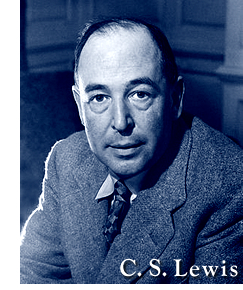
C.S. Lewis Daily – Today’s Reading


An ordinary simple Christian kneels down to say his prayers. He is trying to get into touch with God. But if he is a Christian he knows that what is prompting him to pray is also God: God, so to speak, inside him. But he also knows that all his real knowledge of God comes through Christ, the Man who was God—that Christ is standing beside him, helping him to pray, praying for him. You see what is happening. God is the thing to which he is praying—the goal he is trying to reach. God is also the thing inside him which is pushing him on—the motive power. God is also the road or bridge along which he is being pushed to that goal. So that the whole threefold life of the three-personal Being is actually going on in that ordinary little bed- room where an ordinary man is saying his prayers. The man is being caught up into the higher kinds of life—what I called Zoe or spiritual life: he is being pulled into God, by God, while still remaining himself.

From Mere Christianity

Compiled in A Year with C.S. Lewis

Streams in the Desert for Kids – Above the Clouds


Job 37:21

When you read a verse like the one above from Job, you may begin to wonder what was going on with Job and his friends to bring up such a conversation.

These guys said to Job, “Do you know how God controls the clouds and makes his lightning flash? Do you know how the clouds hang poised?… Can you join him in spreading out the skies, hard as a mirror of cast bronze?… Now no one can look at the sun, bright as it is in the skies after the wind has swept them clean.” In other words, “Job, you don’t know enough to understand God’s ways.”

Then God answered Job (chapters 38–41; read it sometime—it’s beautiful). God said that he is the one who has created everything the way it is. God sees the sun even when to us it is covered by clouds. Now Job knows he can hear from God. He can understand what God is doing in the world when he learns to consider that God’s perspective is so different from ours.

Do you want to hear from God and see his bigger perspective? You can if you will pray with all your heart and ask God to show you his plan and his way.

Dear Lord, I know you made everything, understand everything, yet you want to talk with me. You give me understanding. Amen.