Joyce Meyer – You Don’t Have to Burn Out


And Jesus said to them, The Sabbath was made on account and for the sake of man… —Mark 2:27

Are you excessively tired all the time, and even after sleeping, do you wake up feeling tired all over again? You may be experiencing some of the symptoms of exhaustion, or what is commonly called “burnout.” Long periods of overexertion and stress can cause constant fatigue, headaches, sleeplessness, gastrointestinal problems, tenseness, a feeling of being tied in knots, and an inability to relax. Some other signals of “burnout” are crying, being easily angered, negativity, irritability, depression, cynicism (scornful, mocking of the virtues of others), and bitterness toward others’ blessings and even their good health.

“Burnout” can cause us to not exercise self-control, and when this happens, we will no longer produce good fruit in our daily lives. “Burnout” steals our joy, making peace impossible to find. When our bodies are not at peace, everything seems to be in turmoil.

God established the law of resting on the Sabbath to prevent “burnout” in our lives. The law of the Sabbath simply says we can work six days, and rest one day. We need to rest and worship and play. Even God rested after six days of work. He, of course, never gets tired, but gave us this example so we would follow the pattern. In Exodus 23:10–12, we find that even the land had to rest after six years, and the Israelites were not to plant in it the seventh year. During this rest, everything recovered and prepared for future production.

Today in America, almost every business is open seven days a week. Some of them are even open twenty-four hours a day, seven days a week. When we make ourselves available at all times, we are in danger of “burnout.” People today are quick to argue that they cannot afford to take a day off, but I say they cannot afford not to.

Trust in Him: Some people feel guilty anytime they try to rest, but that guilty feeling is not from God. God wants us to live balanced lives, and if we don’t, we open a door for the devil to bring some kind of destruction (see 1 Peter 5:8). Trust God that your resting time is just as valuable as your working time.

From the book Trusting God Day by Day by Joyce Meyer.

Campus Crusade for Christ; Bill Bright – Mighty Weapons


“I use God’s mighty weapons, not those made by men, to knock down the devil’s strongholds. These weapons can break down every proud argument against God and every wall that can be built to keep men from finding Him. With these weapons I can capture rebels and bring them back to God, and change them into men whose hearts’ desire is obedience to Christ” (2 Corinthians 10:4,5).

Joe came to share with me how his leader in a particular Christian organization had been most unfair to him. He was being relieved of his responsibilities and replaced by another who, in his opinion, was not nearly as well qualified. As we talked it became apparent that Satan easily could sabotage the ministry.

After listening to Joe’s grievances for some time, seeking to know the truth of the matter, I inquired as to his walk with God. “Is there any sin in your life? Do you know for sure that you’re filled with the Holy Spirit?” Then I brought the other party into private conference and inquired as to his relationship with God. “Is there any sin in your life? Do you know for sure that you’re filled with the Holy Spirit?” Both assured me that they were filled with the Spirit and that they genuinely desired to know and do the will of God. I was convinced that they were both sincere.

How then could two men without sin in their lives and who claimed to be filled with the Holy Spirit be at such odds? I sought further truth. In the meantime, we brought to bear the weapons of prayer and the Word of God. God says that when brothers are at odds we should claim in prayer the release of His supernatural wisdom to resolve the matter, and, finally, claim by faith that Satan will be routed, that all of his influence will be overcome.

The counseling required several hours. I talked to one individual, then the other, then both of them together. Finally, we were on our knees praising God and then embracing each other, and the men genuinely felt that their relationship with each other and with the Lord had been fully restored. Satan had lost another battle. Another miracle had happened. Another tragedy had been averted and the Body of Christ had been spared another scandal.

What are those weapons? A holy life, the Holy Spirit, prayer, the Word of God, faith, truth – these are the weapons of God for supernatural warfare. Learn how to use them for His glory.

Bible Reading: Ephesians 6:10-17

TODAY’S ACTION POINT: Whenever Satan attacks me, or I observe conflicts in the Body of Christ due to his influence, I will seek to defeat him by using God’s mighty weapons and will teach other Christians how to apply them in times of spiritual battle

Presidential Prayer Team; C.H.- Greater Benefits


Reading a paper or hard copy of a text is better than reading it from an electronic device, shows a new study. Students’ retention level is much higher after reading printed text. Another way to increase retention is to hand write notes versus typing them. There is something that happens in the brain when you physically write the words.

Blessed is the one who reads aloud the words of this prophecy…and who keep what is written in it.

Revelation 1:3

Retention is just the thing John is referring to in today’s passage. Those who read and hear the Word of God are more likely to “keep what is written.” Many Christians only open their Bibles on Sunday, but John says those who read aloud and keep God’s commands are blessed.

Find time to read the Bible today and every day. Speak it and write it down. There are benefits even greater than increased retention. “I have stored up your word in my heart, that I might not sin against you.” (Psalm 119:11) Ask God to bless the reading of His Word both in your life and the lives of your national leaders.

Recommended Reading: Psalm 119:9-16

Night Light for Couples – Balloons and Children


“My time has not yet come.” John 2:4

I (jcd) once attended a wedding in a beautiful garden setting. After the minister told the groom to kiss the bride, about 150 colorful, helium‐filled balloons were released into the blue sky. Within a few seconds the balloons were scattered, some rising hundreds of feet overhead and others cruising toward the horizon. A few balloons struggled to clear the upper branches of the trees, while the showoffs became mere pinpoints of color in the sky.

Like balloons, some boys and girls are born with more helium than others. They soar effortlessly to the heights, while others wobble dangerously close to the trees. Their frantic folks run along underneath, huffing and puffing to keep them airborne.

Are you a parent of a low‐flying child? Over the years, I’ve worked with hundreds of families whose children were struggling in one way or another. Based on what I’ve seen, let me pass along a word of encouragement to worried parents: Sometimes the child who has the most trouble getting off the ground eventually reaches the greatest height!

Just between us…

  • What kinds of balloons do our kids most resemble?
  • Do we tend to panic when our low‐fliers drift in the wrong direction?
  • Do we love them any less than those who soar?
  • How can we avoid prematurely judging how a child will turn out?
  • How can we pump more “helium” into our relationship with our low‐flier?

Heavenly Father, tonight we ask for wisdom and patience as we raise our children. We let go of our own requirements and timelines for their lives. We trust Your providence and grace. Every day, help us obey You in this great calling of being a parent. Amen.

From Night Light For Couples, by Dr. James & Shirley Dobson

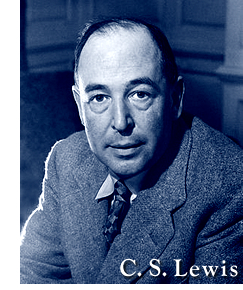
C.S. Lewis Daily – Today’s Reading


The Teacher explains our power to choose:

‘There are only two kinds of people in the end: those who say to God, “Thy will be done,” and those to whom God says, in the end, “Thy will be done.” All that are in Hell, choose it. Without that self-choice there could be no Hell. No soul that seriously and constantly desires joy will ever miss it. Those who seek find. To those who knock it is opened.’

From The Great Divorce

Compiled in A Year with C.S. Lewis

Charles Stanley – Brokenness: The Process


Romans 8:29-31

How tempting it is to think we need very little improvement. Ask around, and you’ll hear many people concede they could probably use a little bit of “maintenance” on one or two problem areas, but preferably without being caused any discomfort. Yet most will add, “But I’m a good person.” Don’t be fooled—the Father refuses to settle for humanity’s meager vision of “good enough.”

We could say that God is our “interior designer.” God sees each believer as the person he or she will be when fully yielded to Jesus Christ. He then sets about achieving that complete renovation by transforming the individual’s present self into the image of His Son.

An essential step in God’s remodeling work involves removing whatever is unnecessary, damaged, or outmoded. In our case, what must go are the areas of self-will. I can tell you from experience that being a man under construction is uncomfortable! God targets habits, attitudes, and even relationships wherein we act independently of His purposes. He applies pressure to direct our attention to those places so we will surrender them to Him. Then the Lord even takes hold of interests that are dear to us. He does so until we ask a humbling question: “What would You have me submit to You, Father?”

Conforming our will to God’s changes who we are. In the midst of our transformation, pain from His tools may temporarily obscure the beauty of His design. But nothing is more splendid to God than a committed, obey-at- all-costs follower. Submit to Him so that He might remake you into the son or daughter He desires.

Bible in One Year: Acts 27-28


Our Daily Bread — Winning the Big One


Read: Philippians 3:7-14

Bible in a Year: Ezekiel 16-17; James 3

I press on toward the goal to win the prize for which God has called me heavenward in Christ Jesus. —Philippians 3:14

In every field of endeavor, one award is considered the epitome of recognition and success. An Olympic gold medal, a Grammy, an Academy Award, or a Nobel Prize are among “the big ones.” But there is a greater prize that anyone can obtain.

The apostle Paul was familiar with first-century athletic games in which competitors gave their full effort to win the prize. With that in mind, he wrote to a group of followers of Christ in Philippi: “Whatever were gains to me I now consider loss for the sake of Christ” (Phil. 3:7). Why? Because his heart had embraced a new goal: “I want to know Christ—yes, to know the power of his resurrection and participation in his sufferings” (v. 10). And so, Paul said, “I press on to take hold of that for which Christ Jesus took hold of me” (v. 12). His trophy for completing the race would be the “crown of righteousness” (2 Tim. 4:8).

Each of us can aim for that same prize, knowing that we honor the Lord in pursuing it. Every day, in our ordinary duties, we are moving toward “the big one”—“the heavenly prize for which God, through Christ Jesus, is calling us” (Phil. 3:14 nlt). —David McCasland

Dear Lord, when I get discouraged, help me to keep pressing on, looking ahead to when I will be with You forever.

What is done for Christ in this life will be rewarded in the life to come.

INSIGHT: Paul’s letter to the church at Philippi is one of warmth and affection, perhaps rooted in his founding of this congregation—the first church planted in Europe. While presenting the theme of joy, the letter to the Philippians also focuses on Paul’s care for them (1:3-4), the matchless person of Christ (2:5-11), and the need for unity (4:2-3). Today’s Bible reading (3:7-14) draws our attention to the “surpassing worth of knowing Christ Jesus my Lord” (v. 8) and the impact that knowledge should have on our living.  Bill Crowder

Alistair Begg – The Role of the Holy Spirit


Do not grieve the Holy Spirit. Ephesians 4:30

All that the believer has must come from Christ, but it comes solely through the channel of the Spirit of grace. Just as all blessings flow to you through the Holy Spirit, so also no good thing can come out of you in holy thought, devout worship, or gracious act apart from the sanctifying operation of the same Spirit.

Even if the good seed is sown in you, it still lies dormant until He works in you to will and to do of His own good pleasure.

Do you desire to speak for Jesus-how can you unless the Holy Spirit touches your lips?

Do you desire to pray? Sadly, what dull work it is unless the Spirit makes intercession for you!

Do you desire to subdue sin? Would you be holy? Would you imitate your Master? Do you desire to rise to superlative heights of spirituality? Are you looking to be made like the angels of God, full of zeal and love for the Master’s cause? You cannot without the Spirit-“Apart from me you can do nothing.”1

O branch of the vine, you can have no fruit without the sap! O child of God, you have no life within you apart from the life that God gives you through His Spirit!

So let us not grieve Him or provoke Him to anger by our sin. Let us not quench Him even in one of His faintest motions in our soul; let us foster every suggestion and be ready to obey every prompting.

If the Holy Spirit is indeed so mighty, let us attempt nothing without Him; let us begin no project and carry on no enterprise and conclude no transaction without seeking His blessing.

Let us give Him the due homage of feeling our entire weakness apart from Him, and then depend alone upon Him, having this for our prayer: “Open my heart and my whole being to Your fullness, and uphold me with Your Spirit when I have received that Spirit in my inward parts.”

1) John 15:5

The Family Bible Reading Plan

  • 1 Chronicles 16
  • James 3

Devotional material is taken from “Morning and Evening,” written by C.H. Spurgeon, revised and updated by Alistair Begg.

 Charles Spurgeon – Samson conquered


“And she said, The Philistines be upon thee, Samson. And he awoke out of his sleep, and said, I will go out as at other times before, and shake myself. And he wist not that the Lord was departed from him. But the Philistines took him, and put out his eyes, and brought him down to Gaza, and bound him with fetters of brass; and he did grind in the prison house.” Judges 16:20,21

Suggested Further Reading: Colossians 2:1-8

Do any of you wish to be backsliders? Do you wish to betray the holy profession of your religion? My brethren, is there one among you who this day makes a profession of love to Christ, who desires to be an apostate? Is there one of you who desires like Samson to have his eyes put out, and to be made to grind in the mill? Would you, like David, commit a great sin, and go with broken bones to the grave? Would you, like Lot, be drunken, and fall into lust? No, I know what you say, “Lord, let my path be like the eagle’s flight; let me fly upwards to the sun, and never stay and never turn aside. Oh, give me grace that I may serve thee, like Caleb, with a perfect heart, and that from the beginning even to the end of my days, my course may be as the shining light, which shineth more and more unto the perfect day.” I know what is your desire. How, then, shall it be accomplished? Look well to your consecration; see that it is sincere; see that you mean it, and then look up to the Holy Spirit, after you have looked to your consecration, and beg of him to give you daily grace; for as day by day the manna fell, so must you receive daily food from on high. And, remember, it is not by any grace you have in you, but by the grace that is in Christ, and that must be given to you hour by hour, that you are to stand, and having done all, to be crowned at last as a faithful one, who has endured unto the end.

For meditation: The best way to guard against backsliding is not to keep still, but to grow in the grace and knowledge of the Lord Jesus Christ (2 Peter 3:17,18).

Sermon no. 224

21 November (1858)

John MacArthur – Defeating Death


“By faith Isaac blessed Jacob and Esau, even regarding things to come. By faith Jacob, as he was dying, blessed each of the sons of Joseph, and worshiped, leaning on the top of his staff. By faith Joseph, when he was dying, made mention of the exodus of the sons of Israel, and gave orders concerning his bones” (Heb. 11:20-22).

Faith triumphs over death.

Commentator Matthew Henry said, “Though the grace of faith is of universal use throughout the Christian’s life, yet it is especially so when we come to die. Faith has its great work to do at the very last, to help believers to finish well, to die to the Lord so as to honor Him, by patience, hope and joy so as to leave a witness behind them of the truth of God’s Word and the excellency of His ways.”

God is honored when His people die triumphantly. When we’ve lived a life to His glory, and joyfully left the world behind to enter into His presence for all eternity, He is pleased, for “precious in the sight of the Lord is the death of His godly ones” (Ps. 116:15).

Many believers who have dreaded facing death have experienced a special measure of God’s grace that made their final hours the sweetest and most precious of their lives.

Isaac, Jacob, and Joseph are examples of men who faced death with great faith and confidence. Each “died in faith, without receiving the promises, but having seen them and having welcomed them from a distance, and having confessed that they were strangers and exiles on the earth” (Heb. 11:13). They hadn’t seen all God’s promises fulfilled, but by faith they passed them on to their children.

These men didn’t have perfect faith. Joseph was exemplary, but Isaac and Jacob often vacillated in their walk with God. Yet each ended his life triumphantly. That’s the reward of all who trust God and cling to His promises.

Like every believer before you, you haven’t seen the fulfillment of all God’s promises. But certainly you’ve seen far more than Isaac, Jacob, or Joseph did. How much more then should you trust God and encourage those who follow you to do the same?

Suggestions for Prayer

Thank God for His marvelous grace, which triumphs over sin and death.

For Further Study

Read the final words of Jacob and Joseph in Genesis 48:1—49:33 and 50:22-26.

Joyce Meyer – Freedom from Anxiety


Do not fret or have any anxiety about anything, but in every circumstance and in everything, by prayer and petition (definite requests), with thanksgiving, continue to make your wants known to God. —Philippians 4:6

I highly recommend speaking the Word of God when a “worry attack” comes upon you. Doing this is what it means to wield the two-edged sword against the enemy (see Hebrews 4:12 and Ephesians 6:17). A sword in its sheath won’t do any good during an attack; God has given us the sword of His Word so we can use it! Learn scriptures like Philippians 4:6, and when the enemy attacks, counter his attack with the same weapon that Jesus used: the Word.

The Word coming from a believer’s mouth, with faith to back it up, is the single most effective weapon that can be used to win the war against worry and anxiety.

Power Thought: I am free from worry and anxiety.

From the book the book Power Thoughts Devotional by Joyce Meyer.

Campus Crusade for Christ; Bill Bright – Able to Keep Promises


“He was completely sure that God was well able to do anything He promised” (Romans 4:21).

Occasionally, I hear people say, “Bill Bright is a man of great faith.” The statement is made because our ministry is involved with millions of Christians from many thousands of churches of all denominations and other Christian organizations in gargantuan undertakings – massive worldwide programs of evangelism and discipleship in which we have, by faith, trusted God for the salvation of at least one billion additional souls for Christ and His kingdom.

As a new Christian, I trusted God for one soul, then six, then ten souls; then hundreds, thousands, millions. And now, after more than 35 years of witnessing His mighty, miraculous power and blessing in response to faith, I am praying and believing God for a billion souls for Christ by the year 2000.

These goals are not built on careless presumptions or figures plucked out of the air in some kind of mystical, emotional, spiritual experience, but they are based upon my confidence in the sovereignty, holiness, love, wisdom, power and grace of the omnipotent God whom I serve and upon His gracious blessings on past efforts that have been undertaken for His glory and praise. No credit should be given to me or to the ministry of which I am a part, but only to the one in whom I place my faith.

Faith must have an object, and the object of my faith is God and His inspired Word. The right view of God generates faith. Faith is like a muscle; it grows with exercise. The more we see God accomplish in and through our lives, the more we can be assured that He will accomplish as we trust and obey Him more.

Bible Reading: Romans 4:13-20

TODAY’S ACTION POINT: I will place my faith in God alone – not in myself or in other men’s efforts or abilities – and I will encourage others to trust God, too

Presidential Prayer Team; C.P. – Grateful Celebration


When what is traditionally known as the first Thanksgiving was celebrated in America in 1621, Native Americans met with the European transplants for a three-day festival and feasted on venison, shellfish, and home-grown vegetables. They celebrated the harvest, perseverance through harsh times, and the unity among the two people groups. However, it wasn’t until 1863, under President Abraham Lincoln after a campaign by writer Sara Hale, that Thanksgiving became an annual national tradition.

There was gladness and joy among the Jews, a feast and a holiday.

Esther 8:17

When Esther won favor with the king and saved the Jewish people from Haman’s evil plan of destroying them, the Jews celebrated with a holiday feast. They had joy and gladness in their hearts. The celebration was an act of thanksgiving for what the Lord had done.

During this upcoming Thanksgiving week, praise God for all the blessings He gives to you and the rest of the nation. Celebrate with a glad, humble and thankful heart. Pray for the leaders and people of America to recognize that all good things come from the good and loving Heavenly Father.

Recommended Reading: Psalm 34:1-10

Greg Laurie – And now, a word from President Abraham Lincoln about Thanksgiving


“Oh, give thanks to the LORD, for He is good! For His mercy endures forever.” —Psalm 136:1

Thanksgiving is now here, and from this point on, we will eat, drink, and breathe Christmas. I don’t mean that we will be reflecting on the Christ’s birth, but we will be experiencing that commercial extravaganza, Christmas!

Commercial culture has pretty much hijacked every holiday. Christmas, instead of being about the birth of Jesus, is instead about Santa, Frosty, presents, and shopping till you drop. Easter, instead of being about the resurrection of Jesus, is about bunnies, eggs, and Spring Break.

But the one holiday that’s remained fairly untouched is Thanksgiving, although it’s quickly being encroached upon by “Black Friday.”

Marshal Cohen, chief industry analyst at NPD Group, a retail research consultant, has said, “Retailers have basically ruined every holiday. They have commercialized every single holiday by creating a good reason to promote something and drive traffic.”

But we as Christians should not lose the focus of Thanksgiving. It has officially been an annual tradition since 1863, when, during the Civil War, President Abraham Lincoln proclaimed a national day of “Thanksgiving and praise to our beneficent Father who dwelleth in the heavens” to be celebrated each year.

Giving thanks is something we are commanded to do again and again as Christians. For us, every day should be Thanksgiving (minus the turkey, etc.)! The Bible reminds us to “give thanks unto the Lord, for He is good, and His mercies endure forever” (Psalm 136:1).

Now, if God ceases to be good, I suppose you can cease to give thanks. But since that will never happen, Scripture is commanding me to give thanks always.

So, have a blessed Thanksgiving!

P.S. – Don’t forget to set your scales back 10 pounds.

Night Light for Couples – Just Waitin’ For You, Dad


In you our fathers put their trust; they trusted and you delivered them. Psalm 22:4

A husband and wife on vacation at a lake didn’t notice their three‐year‐old son Billy wandering toward the dock to investigate a boat. He tried to stretch his short legs from the dock to the boat, but didn’t quite make it—and fell into six‐feet‐deep water. The splash brought Dad running. He dove into the murky water, groping with his arms and legs trying to find Billy. His lungs nearly bursting, he pushed toward the surface—and touched Billy, whose arms were locked around a piling four feet underwater. Dad pried him loose, and they hit the surface together, gasping for air. When they had recovered,

Dad asked little Billy what he was doing hanging onto that piling. Billy’s answer: “Just waitin’ for you, Dad.” When his life was on the line, Billy knew his dad would come through. It’s true that fathers bear heavy responsibility for the welfare and protection of their children. We parents have a tough assignment, but most of us wouldn’t have it any other way. The most difficult, important, and wonderful task of all is to teach our kids to trust their heavenly Father even more than they depend on Dad.

Just between us…

  • Did you as a child ever have a close call like Billy’s?
  • Was your father there for you?
  • Are we teaching our kids to depend on the Lord? How can we learn to trust God as much as Billy trusted his dad?

Father, we praise You that You are strong and trustworthy at all times. We say with the psalmist—“The Lord is the stronghold of my life—of whom shall I be afraid?” May our words, attitudes, and behavior model complete trust in You as a way of life in our home. Amen.

From Night Light For Couples, by Dr. James & Shirley Dobson

Streams in the Desert for Kids – Night Songs


Psalm 77:6

Animals that are active at night rather than during the day are called nocturnal. For example, nightingales are birds that sing at night. That’s how they got their name. People aren’t like that: we’re awake and working while the sun shines, and we go to bed and sleep during the night.

Do you ever have trouble sleeping at night because you are worried about something? David, the man who wrote the psalm above, sometimes couldn’t sleep. While he was awake at night, he used the time to pray, sing, and think about God. In another place David says, “My eyes stay open through the watches of the night, that I may meditate on your promises” (Psalm 119:148). Instead of worrying about his problems, David took the time to think about God’s promises.

The next time you are lying awake, try singing a song from church. Or ask Mom or Dad to pray with you. Perhaps it would help just to remember that God said he would never leave you alone.

Dear Lord, Your promises are just as good in the night as they are in the daytime. Thank you for your love. Amen.

C.S. Lewis Daily – Today’s Reading  On humility


For each of us the Baptist’s words are true: “He must increase and I decrease.” He will be infinitely merciful to our repeated failures; I know no promise that He will accept a deliberate compromise. For He has, in the last resort, nothing to give us but Himself; and He can give that only in so far as our self-affirming will retires and makes room for Him in our souls.

From The Weight of Glory

Compiled in Words to Live By

Charles Stanley – Victory Over Unforgiveness


Matthew 18:21-35

Immediately after teaching His followers to pray, Jesus gave a warning about allowing unforgiveness to reside in the heart. He said that those who refuse to forgive others won’t be forgiven by the Father.

Do not misunderstand Jesus’ meaning here. Believers don’t lose their salvation when they refuse to forgive. Rather, they break fellowship with God because their unrepentant attitude gets in the way of regular confession and repentance. The Lord cannot ignore sin, and His Spirit will bring wrong behavior to the believer’s attention until he or she deals with it.

Forgiveness is an act of will more than an act of the heart. Often people don’t feel like being merciful to someone who has wronged them. But a resentful spirit grows into a terrible burden. The Lord knows that forgiveness is best, even when it is difficult.

You won’t deal with a sin until you see it as God does. So assume full responsibility for your unforgiving attitude, and acknowledge that it is a violation of His Word. Claim the divine mercy He offers, and ask Him to enable you to lay aside anger and resentment. As part of the decision to move forward in grace, make a habit of praying for those who hurt you. And if God so leads, seek their forgiveness for your wrong attitude.

A bitter and resentful spirit doesn’t fit who we are in Christ. Nor is it healthy to carry an angry attitude through life. That’s why Scripture emphasizes the need to forgive. Choose to be liberated from your burden; Jesus promised to make us free when we confess our sins to Him (John 8:36).

Bible in One Year: Acts 25-26

Our Daily Bread — Our Main Concern


Read: Galatians 1:6-10

Bible in a Year: Ezekiel 14-15; James 2

If I were still trying to please people, I would not be a servant of Christ. —Galatians 1:10

Peer pressure is part of everyday life. Sometimes we base our decisions on what other people will think or say rather than on our convictions and on what will please God. We’re worried that we’ll be judged or made fun of.

The apostle Paul experienced his fair share of peer pressure. Some Jewish Christians believed that Gentiles should be circumcised to be truly saved (Gal. 1:7; see 6:12-15). However, Paul stood his ground. He continued to preach that salvation is by grace through faith alone; no further works are required. And for that he was accused of being a self-appointed apostle. They further asserted that his version of the gospel had never received the apostles’ approval (2:1-10).

Despite the pressure, Paul was very clear about whom he served—Christ. God’s approval mattered most, not man’s. He made it his goal not to win the approval of people, but of God (1:10).

Similarly, we are Christ’s servants. We serve God whether people honor or despise us, whether they slander or praise us. One day “each of us will give an account of ourselves to God” (Rom. 14:12). That doesn’t mean that we shouldn’t consider what people think or say, but ultimately, we make pleasing God our main concern. We want to hear our Savior say, “Well done, good and faithful servant!” (Matt. 25:23). —Jaime Fernández Garrido

Dear Lord, no matter what others may say or do, give me the courage to be faithful to You today.

Keep following Jesus.

INSIGHT: Because the risen Christ called Paul to be an apostle on the Damascus Road (Acts 9:1-18; 22:1-15; 26:9-18), Paul acknowledges that his apostleship was different from the original 12 apostles (Gal. 1:11-17), but it was clearly accepted by them (1:18; 2:7-10). Because Christianity was birthed in Judaism, adhering to the Mosaic law became an issue as more Gentiles became believers. The Judaizers taught that Christians must follow Jewish laws and practices in order to be saved. Paul wrote this letter to counter and condemn this false teaching (vv. 8-9), affirming that salvation is by grace through faith in Jesus Christ, not by observing the law (Gal. 2:16,20-21; 3:11,24).

Ravi Zacharias Ministry – The Property of Tears


Five year-old Samantha was the victim of a cruel and tragic murder, and her own tears were the evidence that sealed the case against her abductor. “[S]he solved the crime,” said her young mother. “She was her own hero.”(1) DNA in the form of teardrops was found on the passenger-side door of the killer’s car, irrevocably making their mark on the crime scene and everyone who imagines them.

It is impossible to hear stories like this, of heinous murders, of calculated school shootings, without retreating to the deepest whys and hows of life. The abrupt ending to these lives is another wretched symptom of a sick and desperate world. The problem of evil is a problem that confronts us, sometimes jarringly. The problem of pain is only intensified by the personal nature of our experience with it.

The first time I heard Samantha’s story my numbed mind was startled by this property of tears. I had no idea that our tears were so personally our own. Samantha’s tears solved the case because there were none others like hers. They were unique to the eyes they came from, intricately a part of Samantha herself. In the pains and joys that cause us to weep and to mourn, we leave marks far more intimate than I ever realized. We shed evidence of our own makeup, leaving behind a complex, yet humble message: I was here, and my pain was real. There are a lot of really bad and unhelpful things that people say in the face of tragedy and to those who mourn. For me this brings new meaning to the wisdom of being silent with the grief-striken, sharing tears instead of advice.

There is something deeply necessary in the Christian hope that pain will one day be removed and tears will be no more. We are rightly comforted by the hope of a God who will wipe away every tear from the eyes of the weeping and the promise that there will one day be no more death or mourning or crying or pain.(2) But perhaps there is something deeply necessary about a God who has marked our tears so specifically even now, declaring that our pain is far from a generic or empty occurrence.

There is a line uttered by the psalmist that was comforting to my grandmother through many years of loss and life. To God the psalmist confesses, “You have kept count of my tossings, put my tears in your bottle” (Psalm 56:8). Tear-bottles were small urns of glass or pottery created to collect the tears of mourners at the funerals of loved ones. They were placed in the sepulchers at Rome and in Palestine where bodies were laid to rest. In some ancient tombs these bottles are found in great numbers, collecting tears that were shed with great meaning to the ones unique to them.

How assuring to know that our pain is not haphazardly viewed by the one who made tear ducts able to spill over with grief and anguish. God keeps count of our sorrowful struggling, each tear recorded and collected as pain steeped with the life of the one who wept it. Like a parent grieving at a child’s wound, God knows our laments more intimately than we realize.

But also more than a parent wiping eyes and collecting tears, God has shed tears of his own, taking on the limitations and sufferings of creation personally, declaring in body that embodiment is something God takes very seriously. In her book Creed or Chaos, Dorothy Sayers writes:

“For whatever reason God chose to make man as he is—limited and suffering and subject to sorrows and death—He had the honesty and the courage to take His own medicine… He has Himself gone through the whole of human experience, from the trivial irritations of family life and the cramping restrictions of hard work and lack of money to the worst horrors of pain and humiliation, defeat, despair and death. When He was a man, He played the man. He was born in poverty and died in disgrace and thought it well worthwhile.”(3)

I know of no equal comfort in the midst of life’s sorrows, no other answer within the problem of pain and evil. God has sent as unique and personal a savior as the very tears we shed crying out for answers and consolation. Every tear is marked with the intricacies of a Creator, every cry heard by one who wept at the grave of Lazarus, every lament collected in his bottle until the day when tears will be no more.

Jill Carattini is managing editor of A Slice of Infinity at Ravi Zacharias International Ministries in Atlanta, Georgia.

(1) “Justice for Samantha,” People, June 06, 2005, Vol. 63, No. 22, pp. 73-74.

(2) Revelation 21:4.

(3) Dorothy Sayers, Creed or Chaos? (New York: Harcourt Brace, 1949), 4.