Charles Stanley – Peace Beyond Comprehension


Philippians 4:6-7

Once, after I gave a sermon on peace, a woman came up to speak with me on the status of her son, who’d been in a terrible accident. Doctors had given him little chance of survival, but he was slowly recovering. “What you said about peace passing our understanding is true,” she said to me. Even when her son was on the brink of death, her heart had been assured that the heavenly Father was near and in control.

Paul wrote from a prison cell to remind believers that giving their concerns over to God would result in peace. Having a quiet spirit in a storm of trouble doesn’t make any human sense—we’re “supposed” to become anxious; it’s only natural. But our God is supernatural, and He is living inside us in the form of the Holy Spirit, so we can remain peaceful.

No matter what harsh circumstances may challenge our faith, peace grounded in Christ can’t be broken. With the Father’s omnipotent hand protecting and providing for us, what reason do we have to be afraid or fretful? What we must do is keep our eyes and our faith focused upon the Lord. “The steadfast of mind You will keep in perfect peace, because he trusts in You” (Isa. 26:3).

We live in a world of conflict, and we often find ourselves suffering heartache. It’s easy to become fixated on a situation and how it has disrupted our lives. But peace comes from choosing to trust that God will bring about a resolution in His time and in His way.

Bible in One Year: Galatians 1-3

Our Daily Bread — What Christmas Is All About


Read: Luke 2:8-14

Bible in a Year: Daniel 1-2; 1 John 4

There were shepherds living out in the fields nearby, keeping watch over their flocks at night. —Luke 2:8

Fifty years ago A Charlie Brown Christmas was first broadcast on American television. Some network executives thought it would be ignored, while others worried that quoting the Bible would offend viewers. Some wanted its creator, Charles Schulz, to omit the Christmas story, but Schulz insisted it stay in. The program was an immediate success and has been rebroadcast every year since 1965.

When Charlie Brown, the frustrated director of the children’s Christmas play, is discouraged by the commercial spirit of the holiday season, he asks if anyone can tell him the real meaning of Christmas. Linus recites Luke 2:8-14 including the words, “For unto you is born this day in the city of David a Saviour, which is Christ the Lord. And this shall be a sign unto you; Ye shall find the babe wrapped in swaddling clothes, lying in a manger. And suddenly there was with the angel a multitude of the heavenly host praising God, and saying, Glory to God in the highest, and on earth peace, good will toward men” (vv. 11-14 kjv). Then Linus says, “That’s what Christmas is all about, Charlie Brown.”

During this season filled with our own doubts and dreams, it’s good to ponder afresh God’s great love expressed in the familiar story of Joseph, Mary, the baby Jesus, and the angels who announced the Savior’s birth.

That’s what Christmas is all about. —David McCasland

Father in heaven, as we approach Christmas, may we grasp in a deeper way Your amazing gift to us.

God broke into human history to offer us the gift of salvation!

INSIGHT: Two angels are named in the Bible: archangels Michael (Dan. 10:13; Jude 9; Rev. 12:7) and Gabriel (Dan. 8:16; 9:21; Luke 1:19, 26). Angels appeared a number of times in connection with Christ’s birth. Gabriel appeared to Zacharias (Luke 1:11-20) and then to Mary, announcing that she would become the mother of the Messiah (v. 26). An unnamed angel, which most scholars believe was Gabriel, appeared three times in dreams to Joseph (Matt. 1:20; 2:13, 19). Gabriel also announced the birth of Jesus to the shepherds and, joined by a “multitude of the heavenly host,” declared glory to God (2:8-14).

Alistair Begg – Hospital of the Cross


Ask, and it will be given to you.

Matthew 7:7

There was a place in England that no longer exists, where a loaf of bread was served to every passerby who chose to ask for it. Whoever the traveler was, he had only to knock at the door of St. Cross Hospital, and the loaf of bread was his to enjoy. Jesus Christ loves sinners so much that He has built a St. Cross Hospital, so that whenever a sinner is hungry, he has only to knock and have his needs supplied.

He has actually done better: This Hospital of the Cross has a bath; and whenever a soul is marred and filthy, it may go to this effective fountain and be cleansed. No sinner ever went into it and found that it could not wash away his stains. Sins that were scarlet and crimson have all disappeared, and the sinner was made whiter than snow.

As if this were not enough, there is attached to this Hospital of the Cross a dressing room, and a sinner making application simply as a sinner may be clothed from head to foot; and if he wishes to be a soldier, he will be provided not just with street clothes, but with armor that will cover him from the sole of his foot to the crown of his head. If he asks for a sword, that will be given to him, and a shield too. He will be denied nothing that is good for him. He will have spending money as long as he lives, and he will have an eternal heritage of glorious treasure when he enters into the joy of his Lord.

If all these things are available by simply knocking at mercy’s door, then, my soul, knock hard this morning, and make large requests of your generous Lord. Do not leave the throne of grace until all your wants have been spread before the Lord and until by faith you are confident that they will all be supplied.

You need not be shy about taking Jesus up on His invitation. No unbelief should hinder when Jesus promises. No coldheartedness should restrain when such blessings are to be obtained.

Family Bible Reading Plan

  • 2 Chronicles 5, 6:1-11
  • 1 John 4

Devotional material is taken from “Morning and Evening,” written by C.H. Spurgeon, revised and updated by Alistair Begg.

Charles Spurgeon – Compel them to come in


Compel them to come in

“Compel them to come in.” Luke 14:23

Suggested Further Reading: John 3:31-36

I beseech you by him that liveth and was dead, and is alive for evermore, consider my master’s message which he instructs me now to address you. But do you spurn it? Do you still refuse it? Then I must change my tone a minute. I will not merely tell you the message, and invite you as I do with all earnestness, and sincere affection—I will go further. Sinner, in God’s name, I command you to repent and believe. Do you ask me my authority? I am an ambassador of heaven. My credentials, some of them secret, and in my own heart; and others of them open before you this day in the seals of my ministry, sitting and standing in this hall, where God has given me many souls for my hire. As God the everlasting one has given me a commission to preach his gospel, I command you to believe in the Lord Jesus Christ; not on my own authority, but on the authority of him who said, “Go ye into all the world and preach the gospel to every creature;” and then he annexed this solemn sanction, “He that believeth and is baptised shall be saved, but he that believeth not shall be damned.” Reject my message, and remember “He that despised Moses’ law died without mercy under two or three witnesses: of how much sorer punishment, suppose ye, shall he be thought worthy, who hath trodden under foot the Son of God.” An ambassador is not to stand below the man with whom he deals, for we stand higher. If the minister chooses to take his proper rank, girded with the omnipotence of God, and anointed with his holy unction, he is to command men, and speak with all authority compelling them to come in: “command, exhort, rebuke with all longsuffering.”

For meditation: Do we regard the Gospel as a take-it or leave-it option? The opposite of trusting in Christ is disobedience (Romans 1:5 and 16:26).

Sermon no. 227

5 December (1858)

John MacArthur – God’s Final Revelation


“God, after He spoke long ago to the fathers in the prophets in many portions and in many ways, in these last days has spoken to us in His Son” (Heb. 1:1-2).

Jesus not only brought but in fact was God’s full and final revelation.

A Samaritan woman declared, “I know that Messiah is coming (He who is called Christ); when that One comes, He will declare all things to us” (John 4:25). The expectation of that day, even among the Samaritans, was that Messiah would unfold the full and final revelation of God. The Holy Spirit, through the writer of Hebrews, affirms that to be true: “God . . . in these last days has spoken to us in His Son” (Heb. 1:1-2).

The Old Testament had given divine revelation in bits and pieces. Every piece was true, yet incomplete. But When Jesus came, the whole picture became clear, and though rejected by His own people, He was, in fact, the fulfillment of the messianic hope they had cherished for so many centuries.

The Old Testament age of promise ended when Jesus arrived. He is God’s final word: “As many as may be the promises of God, in Him they are yes; wherefore also by Him is our Amen to the glory of God through us” (2 Cor. 1:20).

God fully expressed Himself in His Son. That’s why John said, “The Word became flesh, and dwelt among us, and we beheld His glory, glory as of the only begotten from the Father, full of grace and truth. . . . No man has seen God at any time; the only begotten God, who is in the bosom of the Father, He has explained Him” (John 1:14, 18). Paul added that in Christ “all the fulness of Deity dwells in bodily form” (Col. 2:9).

The practical implications of that truth are staggering. Since Christ is the fullness of divine revelation, you need nothing more. In Him you have been made complete (Col. 2:10), and have been granted everything pertaining to life and godliness (2 Pet. 1:3). His Word is sufficient, needing no additions or amendments.

Suggestion for Prayer

Ask God to teach you how to rely more fully on your resources in Christ.

For Further Study

Read John 1:1-18 as a reminder of the fullness of God’s revelation in His Son.


Joyce Meyer – My Feelings


Because if you acknowledge and confess with your lips that Jesus is Lord and in your heart believe (adhere to, trust in, and rely on the truth) that God raised Him from the dead, you will be saved. For with the heart a person believes (adheres to, trusts in, and relies on Christ) and so is justified (declared righteous, acceptable to God), and with the mouth he confesses (declares openly and speaks out freely his faith) and confirms [his] salvation. —Romans 10:9-10

“But I can’t help the way I feel,” Angie moaned.

Most of us hear this statement often. It means that the way the person feels is settled, and they believe they have to go with those feelings. It’s like an unchallenged fact of life.

We have feelings, and sometimes they are strong, but we get confused. We allow our feelings to determine our decisions and, ultimately, our destiny. With that type of mindset, it means that if we feel discouraged, we are discouraged; if we feel victorious, we are victorious. It means that if we feel depressed, we must be depressed.

Someone once said, “My feelings are emotions; they are not reality.” In other words, just because we feel a certain way doesn’t make that feeling a fact. It only means that we feel that way. We must learn to press past our feelings.

Perhaps an example will help. Janet sells real estate, and when she makes a sale, she feels wonderful and successful. Last month she sold five upscale homes and made an excellent commission. This month she has sold only one, and she feels as if she’s a failure. Is Janet a failure? No. It’s just that on dark days, she feels that way; but that doesn’t mean it’s true.

Today I may not feel God at work in my life. But is that true, or is that the way I feel? I know many people who don’t feel loved by God—that’s how they feel, but it isn’t the truth.

The devil gains a stronghold in this area. If he can convince us that our feelings are reality, he has made great progress, and we are easily defeated.

Years ago, I spoke in a church, and many people came up to me to tell me how my message had encouraged them. I beamed because I was still new in the ministry, and I really needed lots of compliments in order to feel successful. One man said, “I didn’t agree with anything you said. You need to get your theology straight.” And he walked away.

Immediately discouragement overwhelmed me. I had tried hard to be God’s instrument to the people, and I had failed. As I left the church, I thought about what had happened. At least fifty people had told me how my words blessed them. One man came to me with a negative message. How did I react? I believed the negative. I allowed his words to shift my thinking, and I convinced myself I had failed.

I hadn’t failed. I had listened to the wrong voice and allowed it to control my feelings. I determined that never again would I allow one negative voice to discourage me and make me feel that I had failed. Perhaps I had failed to help that man—and I couldn’t do anything about it—but my teaching had touched many others. One woman had tears in her eyes when she told me that I had given her exactly the right word she needed to hear.

I did something else that night. I reminded myself that what I experienced had been a negative feeling, but it had not been reality. I began to quote Bible verses, reminding myself that Satan attacks us where we’re weak and vulnerable. I was new to public speaking, and the man with the negative word knew that.

I thought of Romans 10:9-10. We often quote these two verses when we speak to people about their salvation; however, the principle is there no matter what the subject. Paul says that we need to believe in our heart and confess with our lips. I stopped and said aloud, “God, I believe I am in Your service. I believe I did my best for You. I believe You used my words to bless many people. I do not have to listen to that one negative voice.”

Within minutes, I felt better. (See how quickly our feelings can change?) Reality hadn’t changed, but I had. I refused to allow negative, wrong thinking to turn me from reality.

Loving and caring God, forgive me for thinking wrong thoughts and for allowing wrong feelings to determine my attitude. I ask You, in the name of Jesus, to help me believe Your Word and to entertain positive thoughts. Amen.

From the book Battlefield of the Mind Devotional by Joyce Meyer.

Campus Crusade for Christ; Bill Bright – Fishers of Men


“And He saith unto them, Follow Me, and I will make you fishers of men” (Matthew 4:19, KJV).

Each morning I kneel to acknowledge Christ’s lordship of my life and ask Him to have complete, unhindered control of my life for that day, to walk around in my body, to think with my mind, to love with my heart, to speak with my lips and to continue seeking and saving the lost through me.

Sometime ago I was at a conference in a midwestern city, anticipating an early adjournment so that I could catch a plane to Los Angeles and rejoin my waiting family.

When I arrived at the airport, I discovered that flight after flight had been cancelled because of poor weather conditions. Rushing from one airline ticket counter to another, I hoped to find one that was still flying its planes. Finally, to my disappointment, I had discovered that all the airlines had cancelled their flights.

On one hand I was discouraged, but on the other I was encouraged by the promise of the Bible, “And we know that all that happens to us is working for our good if we love God and are fitting into His plans” (Romans 8:28, LB).

Back at the hotel for the night, in the lobby I met a businessman who was hungry for God. As I shared Christ with him, I learned that he and his wife had been visiting a different church every Sunday for the past couple of years. They were looking for God but had not been able to find Him.

I explained to my new friend how to receive Christ. Together, we knelt and prayed, and he received Christ into his life as his personal Lord and Savior.

With great joy and enthusiasm my new brother in Christ announced, “I want to take these things to my wife because she too is eager to receive Christ.” It is our responsibility to follow Christ. It is His responsibility to make us fishers of men.

Bible Reading: Matthew 4:18-22

TODAY’S ACTION POINT: As I follow Christ today, I will recognize that even the delays, hindrances and closed doors may well be opportunities for me to share my faith in Jesus Christ. I shall remember, with God’s help, to share Him with others at every opportunity.

Presidential Prayer Team; C.H. – Just Ask


Christmas is a time for gifts, yet most don’t openly ask for them. But Achsah, Caleb’s daughter, did just that. In today’s passage, Caleb gave his daughter’s hand to Othniel for conquering the land of Kiriath-Sepher. Once married, Achsah told her new husband to ask her father for a gift – land.

She said to him, “Give me a blessing”…and Caleb gave her the upper springs and the lower springs.

Judges 1:15

Caleb granted the newlyweds some desert land, but Achsah went to her father to ask for more. “Since you have set me in the land of the Negeb, give me also springs of water.” (Judges 1:15) Her father responded with a gift of not only one spring, but two! Achsah’s story is a great example of how you should go boldly before your Heavenly Father and ask for good gifts.

“If you then, who are evil, know how to give good gifts to your children, how much more will your Father who is in heaven give good things to those who ask him!” (Matthew 7:11) Don’t hesitate to take your requests before God. Ask Him for healing in this nation as well as worldwide. He can do more than you can imagine. Just ask.

Recommended Reading: Ephesians 3:14-21

Greg Laurie – Some Thoughts on Drinking This Holiday Season


“Don’t be drunk with wine, because that will ruin your life. Instead, be filled with the Holy Spirit.”—Ephesians 5:18

Is it acceptable for a Christian to drink?

The Bible tells us the story of John the Baptist, who was set apart by God from the time he was in his mother’s womb. In Luke 1:15, the angel said of John, “He will be great in the sight of the Lord, and shall drink neither wine nor strong drink. He will also be filled with the Holy Spirit, even from his mother’s womb” (NKJV).

John gives us a good model for life: he drank neither wine nor strong drink. Personally, I don’t drink at all. That is due, to some degree, to coming from an alcoholic home and seeing the devastation that drinking can bring. I can’t think of a single good thing that comes from drinking, but I can think of many bad things that come from it: broken homes, violence, accidents, people killed on the road by drunk drivers, addiction, destroying your health . . . the list goes on.

Drinking will never make anything better, only worse. Every illustration of drunkenness in the Bible is a disaster:

Noah became drunk, and in his nakedness, he acted shamelessly.

Lot became drunk and his daughters committed incest with him.

Belshazzar, in Daniel 5, had a drunken feast and worshipped his false gods. He lost his kingdom that night.

Many a kingdom, family, career, ministry, and life have been lost through drinking.

“But I have the liberty to drink, Greg!” some would say. I would not completely dispute that. I personally drink as much as I want to, but I don’t want to drink! As Paul told the Corinthian believers, “‘I have the right to do anything,’ you say—but not everything is beneficial. ‘I have the right to do anything’—but I will not be mastered by anything” (1 Corinthians 6:12 NIV). I don’t want to be under the power of anyone or anything but Jesus Christ!

Here’s a revolutionary thought: If you don’t drink, you will never get drunk. If you do drink, you may get drunk. Is it worth the risk?

But here’s another question for you: Could your so-called liberty ever cause another believer to stumble in their faith? 1 Corinthians 8:9 says, “Be careful, however, that the exercise of your rights does not become a stumbling block to the weak.”

John never touched alcohol, but was instead “filled with the Spirit.” The Bible says, “Don’t be drunk with wine, because that will ruin your life. Instead, be filled with the Holy Spirit” (Ephesians 5:18 NLT). It’s better to be filled with the Spirit than with the spirits.

Night Light for Couples – Two Hundred Laughs


“A cheerful heart is good medicine, but a crushed spirit dries up the bones.” Proverbs 17:22

It’s been said that the average child laughs two hundred times a day, while the typical adult laughs only four times every twenty‐four hours. So what has happened to us grown‐ups? Maybe it has something to do with those grueling hours at the office, long lines at the grocery store, and piles of bills on the kitchen counter.

Of course, life can be very difficult, and some people face serious obstacles and hardships. But many of us frown or complain over relatively minor inconveniences. I (jcd) knew a woman who made herself and her husband miserable just because she had one more child than she had bedrooms in which to put them. Too many irritations come from a complete inability to appreciate the humor and blessings that exist around us. When your husband forgets to take the kids to their dentist appointment, or your wife accidentally gives away your favorite sweatshirt, or your toddler draws his version of the Mona Lisa on the living room wall—wouldn’t it be easier on everyone if you looked on the funny side of the situation?

Kevin Jones, dealing with increasing paralysis from Lou Gehrig’s disease, was asked to describe the worst thing about his condition. He replied, “My wife’s driving! She has to take me everywhere.”

No matter what you’re facing, a smile can only make it better.

Just between us…

  • How often do you laugh each day?
  • Do we keep our heavenly destination in mind when adversity strikes?
  • How could we add humor to the next difficult situation we face?

Dear God, when problems threaten to affect how we treat each other, help us to see them in the perspective of Your unfailing goodness. Amen.

From Night Light For Couples, by Dr. James & Shirley Dobson

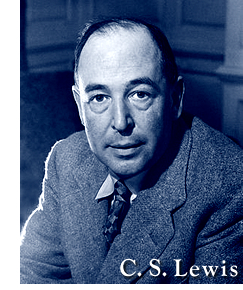
C.S. Lewis Daily – Today’s Reading


When we are praying about the result, say, of a battle or a medical consultation the thought will often cross our minds that (if only we knew it) the event is already decided one way or the other. I believe this to be no good reason for ceasing our prayers. The event certainly has been decided—in a sense it was decided ‘before all worlds’. But one of the things taken into account in deciding it, and therefore one of the things that really cause it to happen, may be this very prayer that we are now offering. Thus, shocking as it may sound, I conclude that we can at noon become part causes of an event occurring at ten a.m. (Some scientists would find this easier than popular thought does.) The imagination will, no doubt, try to play all sorts of tricks on us at this point. It will ask, ‘Then if I stop praying can God go back and alter what has already happened?’ No. The event has already happened and one of its causes has been the fact that you are asking such questions instead of praying. It will ask, ‘Then if I begin to pray can God go back and alter what has already happened?’ No. The event has already happened and one of its causes is your present prayer. Thus something does really depend on my choice. My free act contributes to the cosmic shape. That contribution is made in eternity or ‘before all worlds’; but my consciousness of contributing reaches me at a particular point in the time-series.

From Miracles

Compiled in A Year with C.S. Lewis

Streams in the Desert for Kids – Full to the Top


Matthew 14:17-18

God is not stingy. When he gives, he gives a lot. Think about places where flowers cover a hillside. Are that many flowers really necessary? Think about water spilling over a waterfall. More water than we can use.

There’s a wonderful story of God’s abundant giving in the New Testament. It happened when Jesus was teaching many people out in the countryside away from any town. He and the people had been out there all day, and the people had grown hungry. The disciples wanted to send them away. But Jesus told the disciples to feed the crowd. They had no food to share except a little boy’s lunch of five loaves of bread and two fish. That was enough for God to work with. Jesus took the loaves and fish and broke them up in pieces. Soon they had enough food to feed 5,000 men along with women and children. And here’s God’s abundance part of the story: twelve baskets of leftovers fed the disciples and their families. God gives abundantly. So whatever you need from him, be sure that he will give it to you, sometimes beyond what you need.

Dear Lord, I know you have enough to meet my needs. I want to trust you to give me what I need and more. Amen.